Pharaoh Boasted Then Froze Like Dry Wood
The doors shut. Pharaoh promised hanging, burning, a head on a pole. Moses walked back in, and the king's arms hung like kindling.
Table of Contents
The doors shut. Then Pharaoh boasted.
 Click for full size
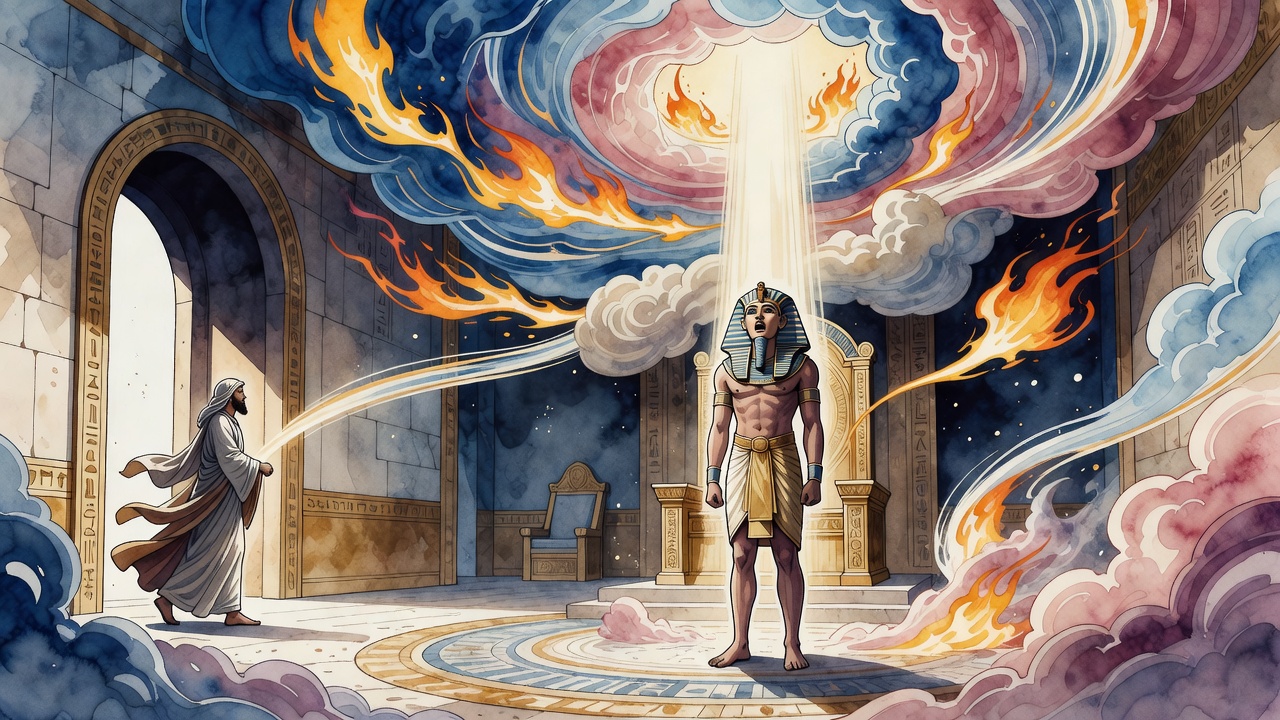
He paced the polished floor and told his servants what he would do if that son of Amram dared show his face again. Behead him. Hang him. Burn him. The threats came easy when the room held only Egyptians and the weight of the Nile. Guards nodded. Scribes smiled with their teeth only.
The next day Moses walked back in.
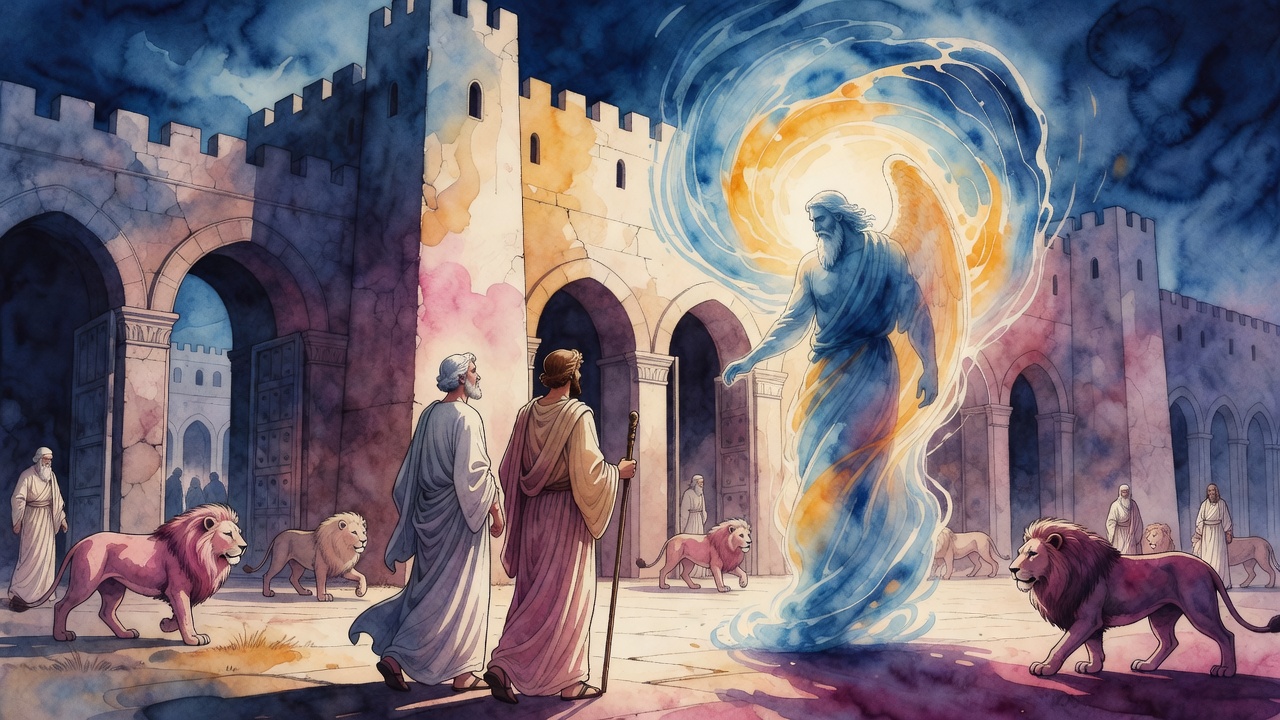
The king froze. He became like a dry piece of wood. He did nothing. The venom dried in his throat. A servant who had laughed the night before looked at the floor and kept looking there.
The Serpent in the River
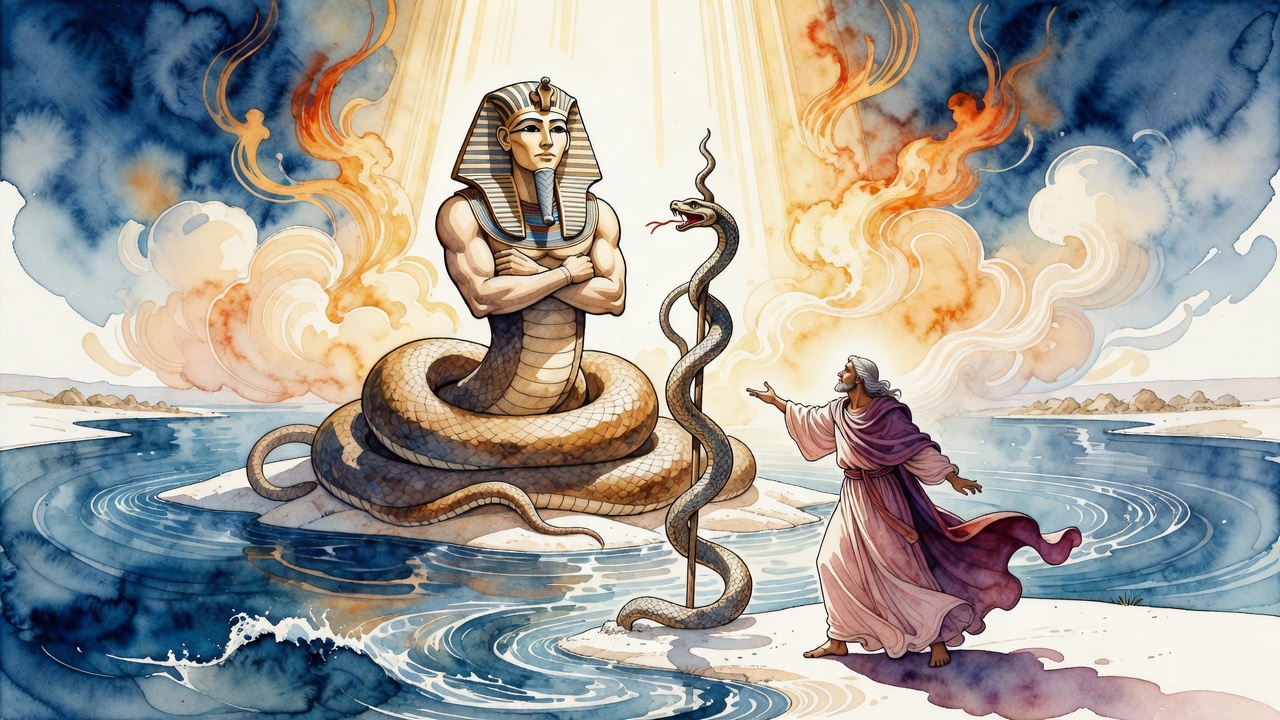
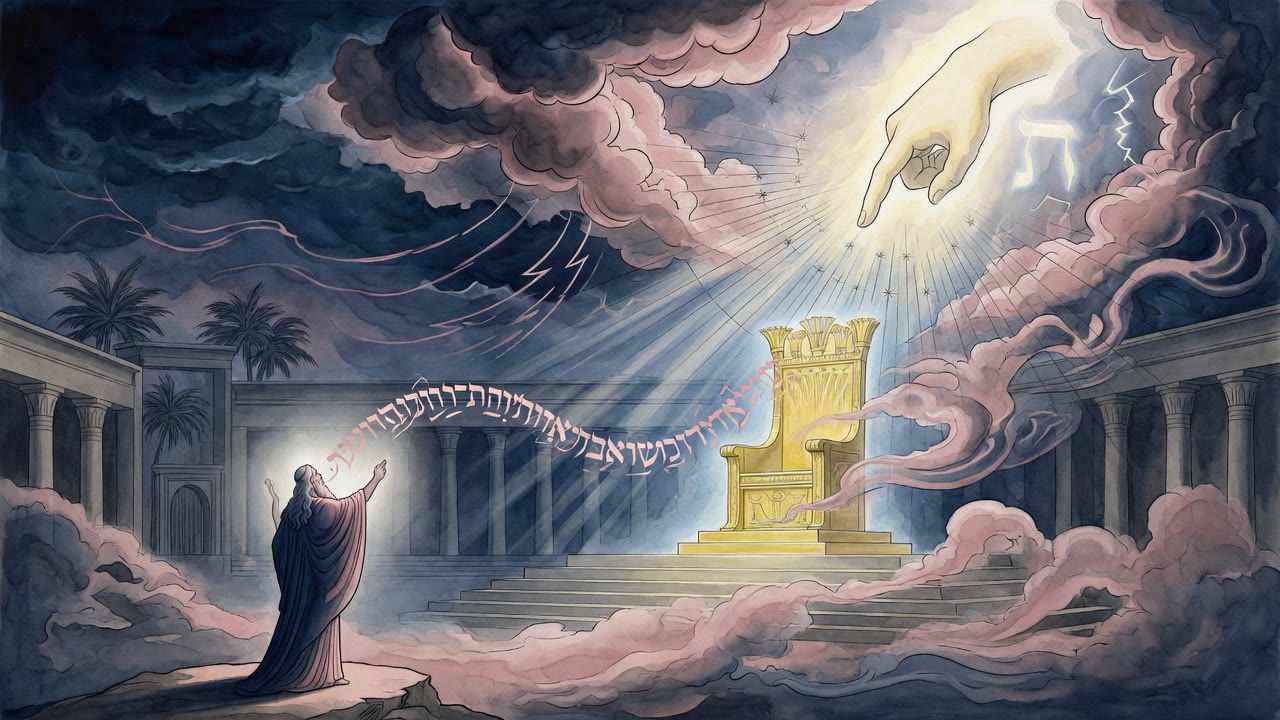
Ezekiel had already named the shape of that throne. "Behold, I am against you, Pharaoh, king of Egypt, the great serpent that lies in the midst of his rivers" (Ezekiel 29:3). The Hebrew calls him a tanin (תנין), the great serpent coiled in the Nile, claiming the water as his body and the people as his meat. Pharaoh liked that image when he chose it himself. He liked it less when a prophet put it in God's mouth.
Moses and Aaron came with a staff. Aaron threw it down. It became a serpent and slid across the tiles with a sound like wet rope. Pharaoh's magicians threw their own staves and made serpents of their own, or something that looked enough like serpents for a court that wanted to laugh. Courtiers clapped. Then Aaron's rod turned, opened, and swallowed their rods whole. The palace floor cleared. The serpent of heaven ate the serpents of Egypt, and still Pharaoh's jaw stayed set.
He had practiced this theater. When Moses left, he roared and promised blood. When Moses returned, the roar died in his chest and his arms hung useless at his sides. Outside the throne room he was the crocodile of the river. Inside the room where Moses stood, he was kindling that had not caught fire.
Blood in the Diggers' Hands
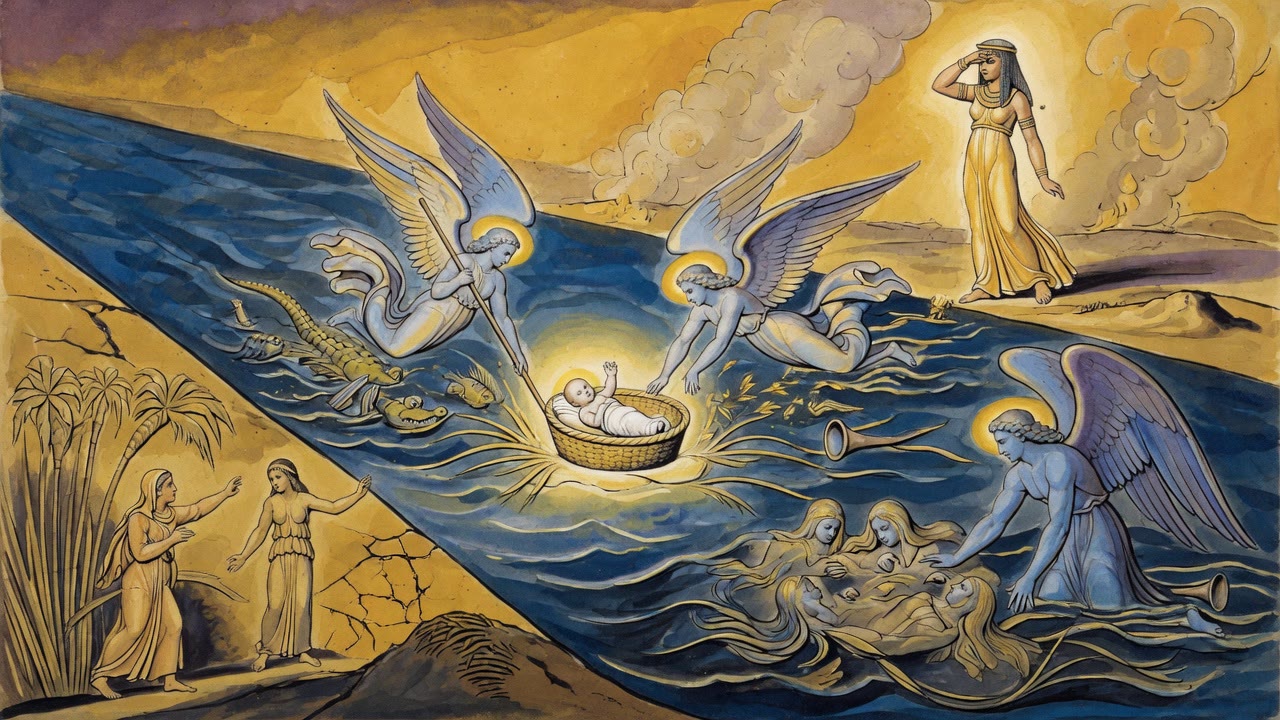
The Nile turned. Fish floated belly-up against the reeds. Egyptians dug in the banks for water they could swallow, and the pits answered red. Some said only the river itself had soured. Others said every cistern and well and jar in the land had gone to blood the moment Moses looked at it. The diggers kept digging anyway. Hands caked. Throats raw. Fingernails split on wet clay. They believed that if the prophet's eyes missed a hidden pool, that pool might still be water.
The magicians "did so with their spells" (Exodus 7:22). They darkened more water, or stained what little remained, and called it matching. The court clapped for the imitation because clapping was safer than thirst. Pharaoh turned, walked home through streets that smelled of iron, and did not take it to heart. Hardening is not always a shout. Sometimes it is a man closing a door on a smell he refuses to name.
Moses and Aaron moved water because God sent them. The magicians moved appearances with lahat, the flame-work of destructive craft, the same root that guards Eden with a turning sword (Genesis 3:24). One force answered a command from above. The other burned and mimicked and left people thirstier than before. Children in Goshen still found clear cups. Children along the Nile licked cracked lips and watched their fathers dig.
Swarms at the Border of Goshen
When the earlier blows failed to open the king's fist, the next stroke mixed beasts and birds and crawling things until the air itself had teeth. They came from above and from below at once. Egypt had piled multitudes on God's children. God piled multitudes back, intermingled, inescapable. Wings filled windows. Hooves and claws found beds. No room stayed empty long enough to sleep.
Goshen stayed clean.
The line was not a suggestion. Houses on one side filled with noise and bite and wing. Houses on the other side held ordinary dust and ordinary night. "I will distinguish on that day the land of Goshen, in which My people dwell, that no swarms will be there" (Exodus 8:18). Pharaoh could ride the border and smell the difference. He could watch his own servants slap and curse while Israelite children slept without covering their faces. The ransom between the two peoples was not gold. It was a seam cut through the land itself, and even the insects kept to their side of it.
A Stick on the Palace Floor
Still he returned to his boasts whenever Moses left. Still he stiffened when Moses returned. The serpent of the rivers kept discovering that its coil only worked in empty air. Against the staff of Aaron, against blood that would not drink clean, against swarms that honored a boundary the king had never drawn, the dry wood of his body told the truth his mouth would not. He threatened hanging. He performed nothing.
He wanted six hundred thousand slaves bent to brick. He wanted the son of Amram dead between two poles. He got a throne that would not move when the true King entered the room, and a river that would not serve him, and a land split so cleanly that even insects knew which side to spare.
In the end the image that remained was small and ugly and exact. Not the crocodile at full length in the current. A stick on a palace floor. A king who had sworn murder, standing useless while the man he meant to hang walked out alive again into a noon that still belonged to Egypt, for a little while longer.
← All myths