Pharaoh Chose the Hour When the Frogs Would Die
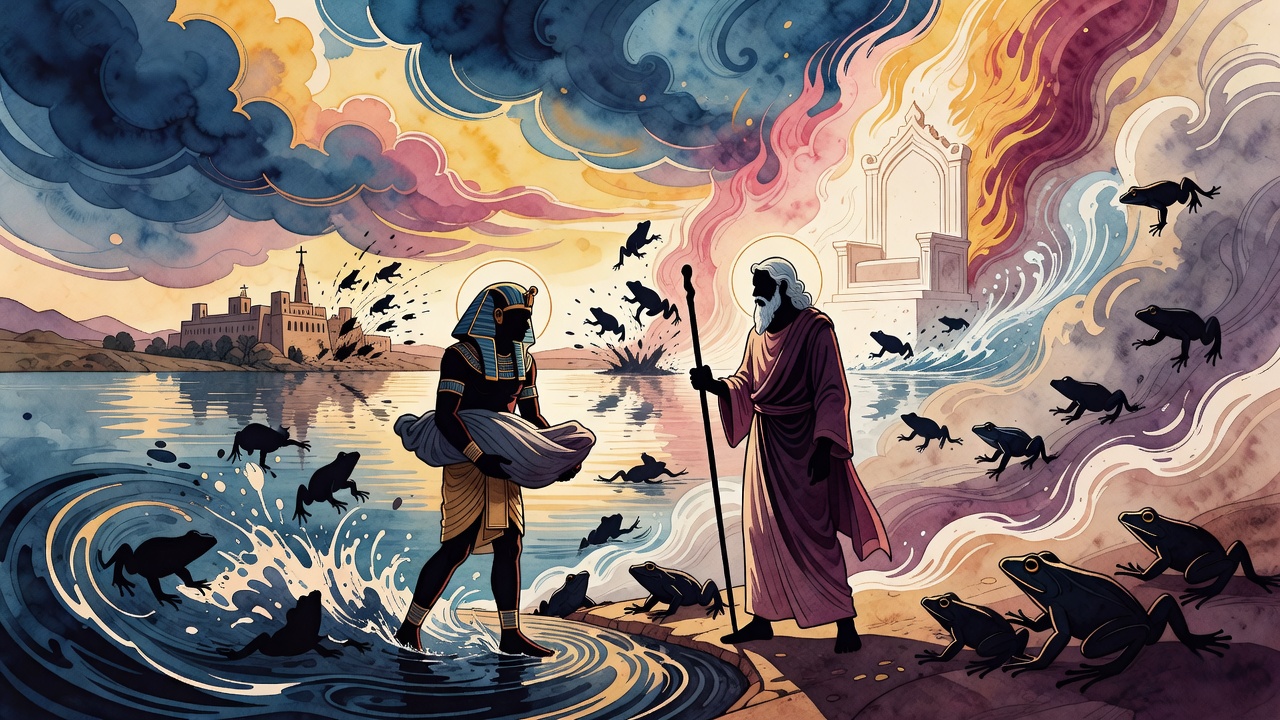
Frogs filled the beds and the ovens. Moses would not name the minute they would die. He handed the clock to the king who still called himself a god.
Table of Contents
 Click for full size
The King Who Picked the Clock
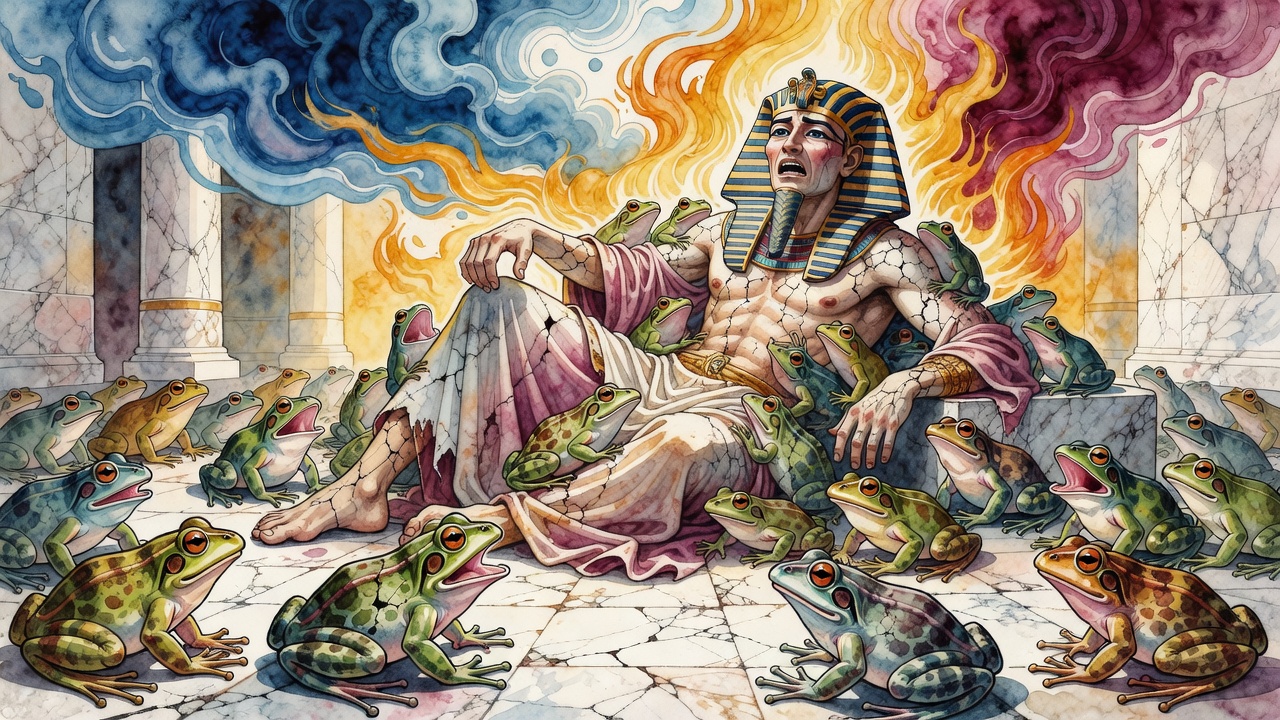
Frogs were in the beds, in the ovens, in the kneading bowls. They filled the soft edges of every private room. Pharaoh begged with a voice that still tried to sound like a king. He asked Moses to pray them away.
Moses did not name the hour himself.
"Glorify yourself over me," he said. "At what time shall I pray for you, for your servants, and for your people, that the frogs be destroyed and left only in the river?"
It was a strange courtesy in a season of ruin. Moses handed Pharaoh the timing like a scepter the king had not earned. Dawn. Noon. Tomorrow. The plague would end when Pharaoh chose.
Moses wanted no escape route for doubt. If the frogs vanished the moment he prayed, palace wise men could claim the swarm was already dying and the Hebrew only rode the luck. When Pharaoh picked the exact breath, the clock itself became a witness against him. The miracle would wear the king's own signature.
"Tomorrow," Pharaoh said.
He would not say now. Now would have been too clean. Tomorrow left a night in which he could hope the frogs would leave on their own, and then he could call Moses a thief of credit. Moses prayed for the hour Pharaoh named. The frogs died in heaps. The land stank. The heart under the crown stayed hard.
Dawn at the Diviner's River
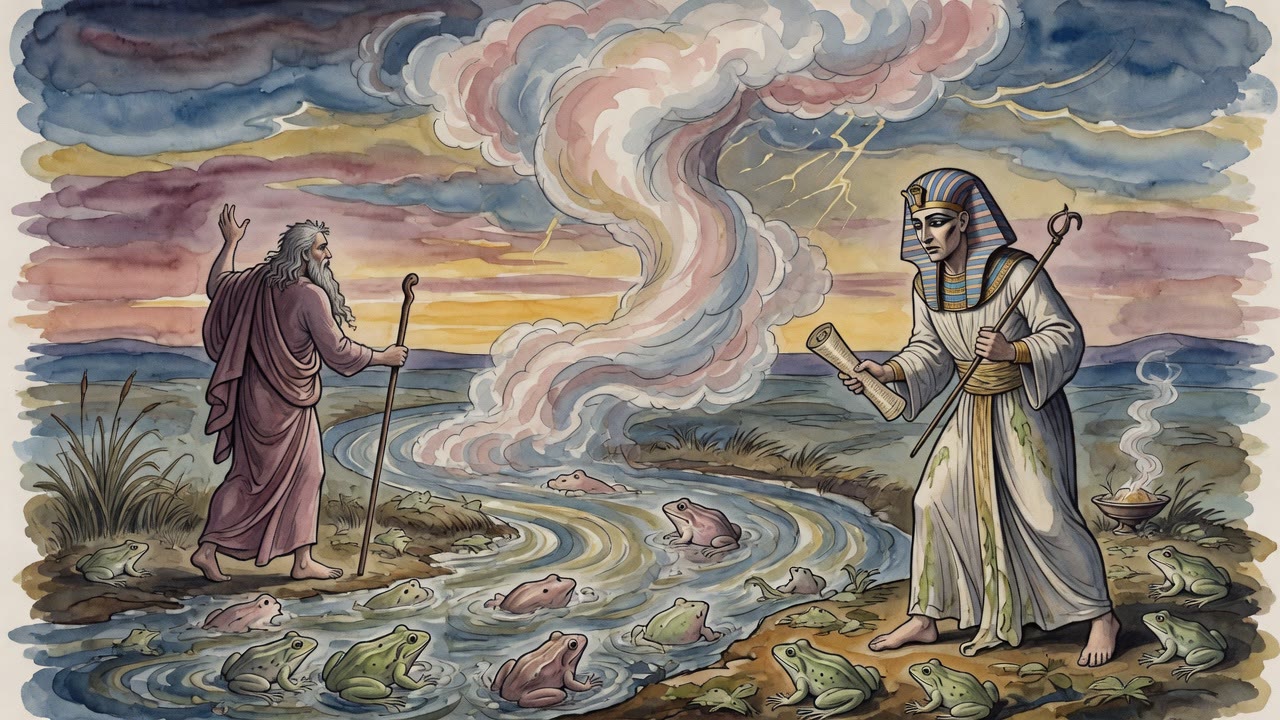
Before the next plague, God sent Moses back to the water at first light. Pharaoh still went down to the Nile each morning to read omens from its surface, as a magician does when confidence has cracked. Three plagues in, the man Egypt treated as a god still needed the river to tell him the day would hold.
Moses stood where the king practiced his fear.
"Emancipate My people, that they may worship before Me."
Pharaoh extracted forecasts from water. Israel was being called to thank the Maker of water. One was religion as panic. The other was service as relationship. The shoreline held both, and the frogs' corpses still stank upwind.
Sheep Egypt Called Sacred
Later Pharaoh offered a bargain that sounded almost reasonable. Sacrifice inside the land. Do not leave. Stay where Egypt can watch.
Moses refused. "It will not be right," he said. "We shall take sheep, which are the abomination of the Mizraee, and offer them before the Lord our God. If we offer the abomination of Egypt before their eyes, they would stone us with stones as an act of justice."
He was not afraid of dying for worship. He was refusing to stage a riot Egyptians would call holy. The ram was sacred in their eyes. Public slaughter in the streets would not free Israel. It would only paint freedom as blasphemy against a neighbor's god. So the demand held: three days into the wilderness, away from the stones and the sacred animals.
The Stink Was the Receipt
Night after the frogs died, Egyptians stepped carefully between carcasses that had been living proofs an hour before. Children asked why the king had been allowed to pick the minute. Mothers answered that the Hebrew wanted the king to remember he had chosen and still lost.
In the palace Pharaoh washed his hands twice and still smelled the river on them. He had glorified himself over Moses for a single decision, and the decision had only proved whose word the frogs obeyed. Servants stacked dead frogs until their arms shook. Magicians pretended to sleep. The stink was the receipt for a schedule Pharaoh himself had signed.
Moses slept outside the city with Aaron nearby, not celebrating. Courtesy is a weapon that leaves less blood and more memory. The next dawn would find the king at the water again, reading omens from a surface that no longer flattered him.
The Same Demand at the Same Water
When Moses later refused the bargain of sacrifice inside Egypt, the same courtesy showed another face. He would not free Israel by forcing Egyptians into a riot they would call holy. Sheep sacred to Mizraim would not die in streets where stoning would look like justice. Three days into the wilderness was not only a religious demand. It was a refusal to win freedom by trampling a neighbor's god in public view while plagues still rained.
Pharaoh heard both moves as weakness. Soft speech about hours. Soft care about Egyptian feelings. He did not understand that soft speech can still empty a river of frogs on command, and soft care can still refuse a compromise that keeps slaves in reach.
The king kept reading the Nile at dawn. The prophet kept arriving at the exact spot of that reading with the same demand, until the water itself became a witness stand.
← All myths