5 min read

Pharaoh Tried to Steal the Deposit Named Israel

Israel was left in Egypt as a deposit in God's care, and Pharaoh reached for what was not his until Moses struck words against him like iron on iron.

Curated by Arthur · Told by Maggid ·
Table of Contents
  1. A Deposit Is Not Yours
  2. Iron Against Iron
  3. The Arm That Reached In
  4. Forgiveness After the Theft
  5. Sea as Receipt
Pharaoh Tried to Steal the Deposit Named Israel Click for full size

A Deposit Is Not Yours

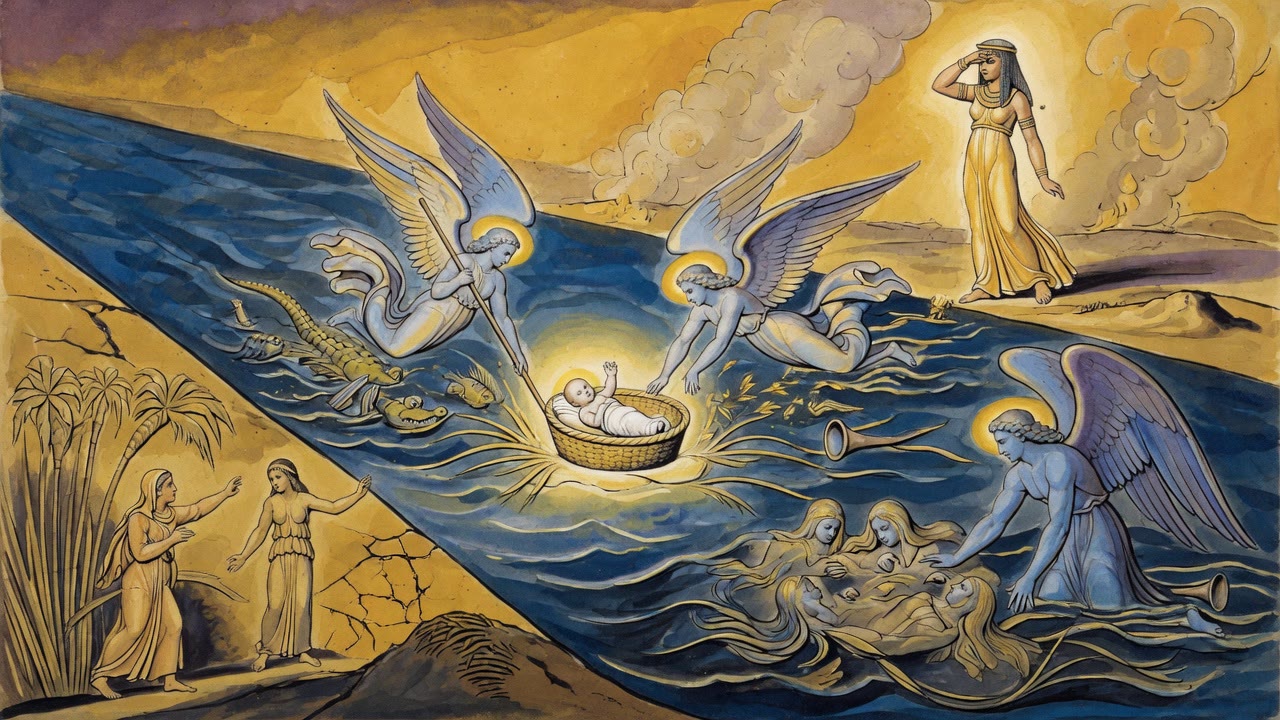
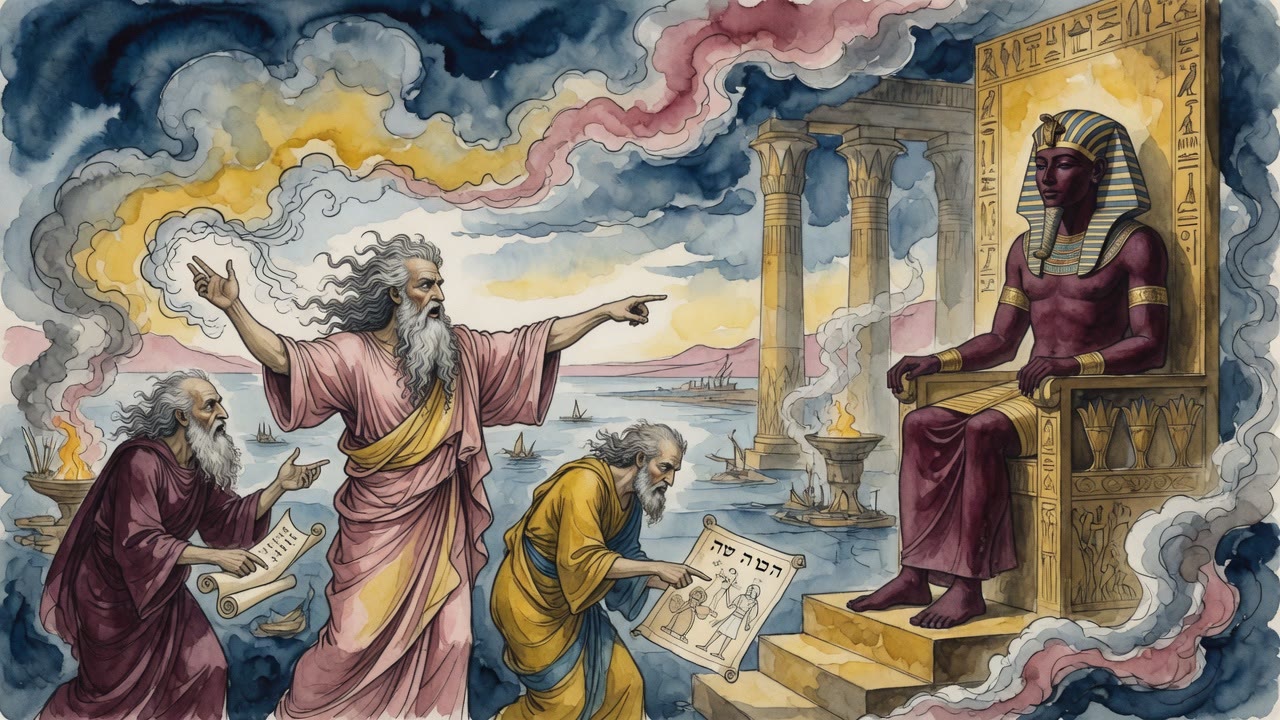
Pharaoh set his seal on the bricks and called the workers his. The store cities rose on backs that had come down in famine as guests. He drowned sons in the river as if the river were his too. In the midrash's courtroom language, he was not a host who had grown cruel. He was a man who reached into a bag left in his care and tried to keep what was never his.

A deposit is not yours. If a man leaves goods in your keeping and you reach in to take them, you owe him. The sages add a sharper line: whoever lays his hand on a deposit entrusted by his fellow deserves to have his arm broken. Israel was that deposit under the eye of God. The children of Jacob were wards in a foreign house. Generations later, a king who did not know Joseph treated them like plunder and built his name on stolen labor.

Iron Against Iron

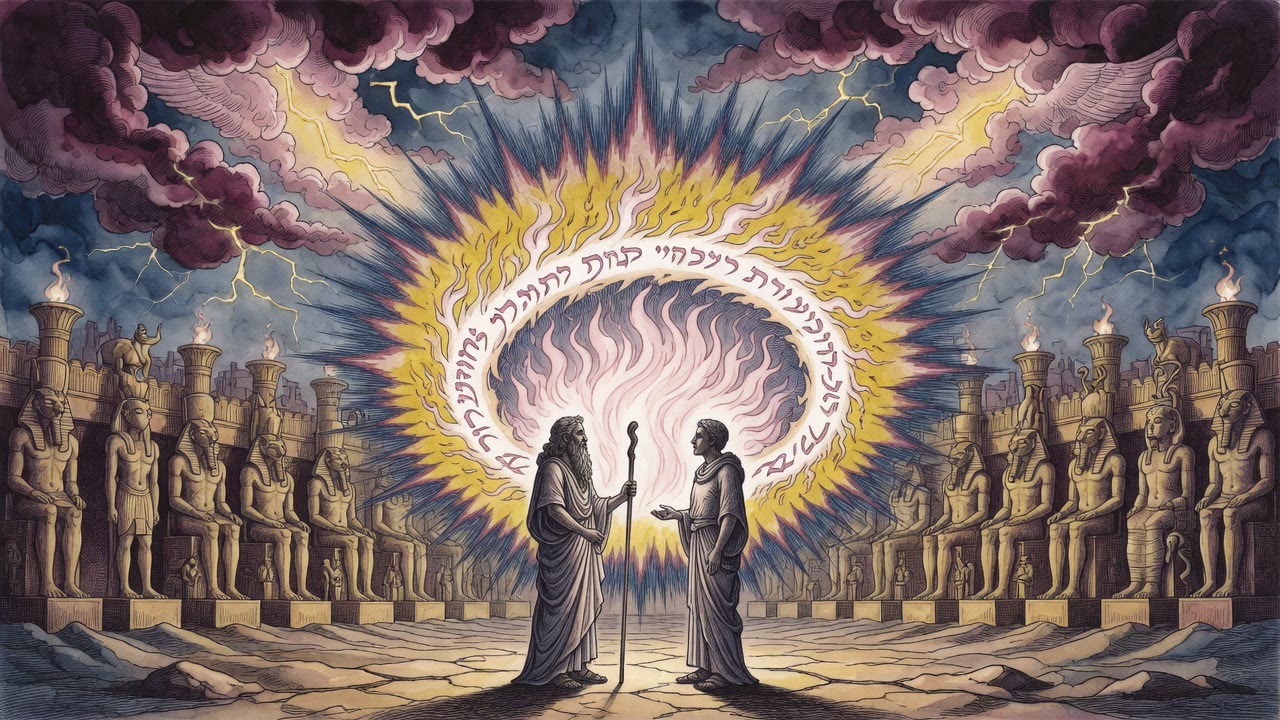
When Moses finally stood in the court, Proverbs' image of iron sharpening iron became a clash of two unbending wills. Moses and Pharaoh traded words like blade against blade. Another reading hears Aaron's staff striking the sorcerers of Egypt. Either way, the contest is hard against hard. Soft speech would have been swallowed by the throne room. Heaven chose collision.

Rabbi Zeira stages the contest as mutual honing. Pharaoh's stubbornness did not invent Moses' force. It revealed it. Each refusal sharpened the next demand. Let My people go is not a suggestion when spoken against a man who has already stolen a deposit. It is the owner arriving to collect what the warehouse tried to keep.

The Arm That Reached In

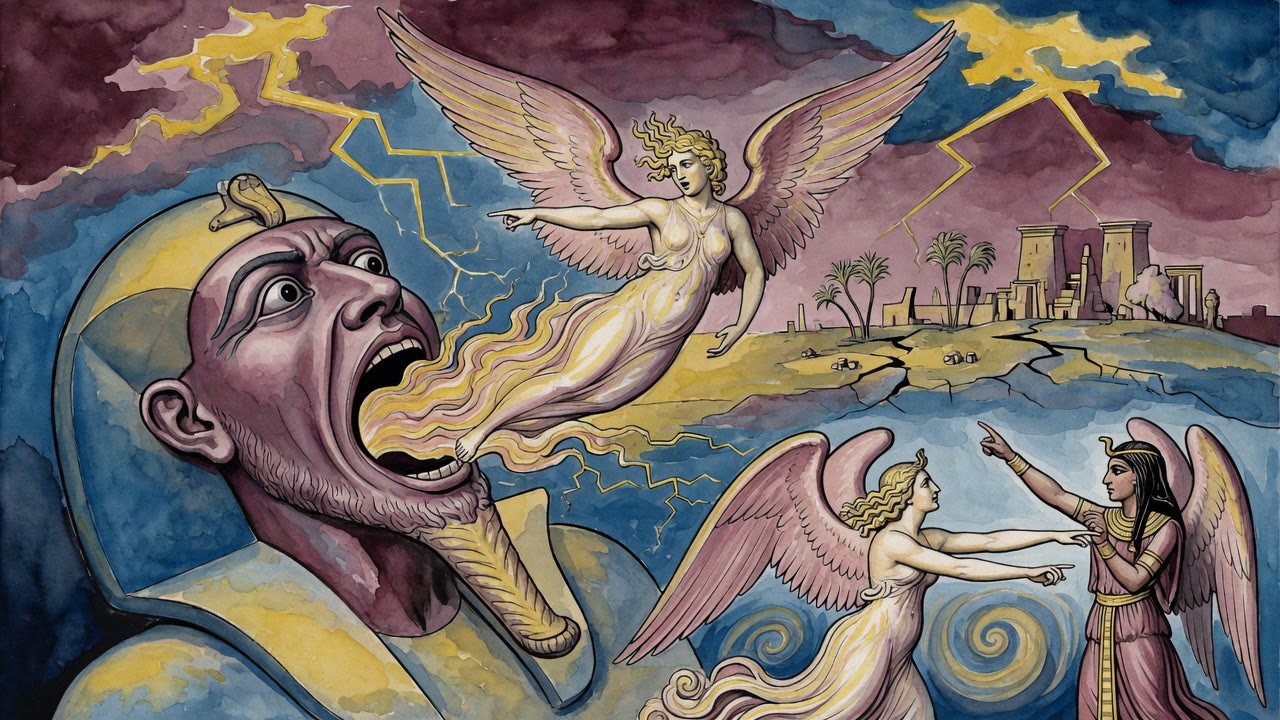
Egypt's crime was not only cruelty. It was theft dressed as statecraft. A deposit-holder who starves the goods, brands them, and claims their children has not merely sinned. He has announced that the Owner is dead or absent. The plagues answer that announcement. Blood, frogs, darkness, death of firstborn: each blow is a receipt. You took what was Mine. Watch Me take back the house around you.

Moses did not invent the legal frame. He carried it into a palace that thought itself above law. The midrash's deposit language makes the Exodus less a jailbreak and more a repossession. Israel leaves not as escapees who got lucky, but as property restored to the One who never signed them over.

Forgiveness After the Theft

Later, after the sin of the spies, Moses would plead for a different kind of debt. Forgive this people according to the greatness of Your kindness. He submitted the petition in the names of Abraham, Isaac, and Israel, and the answer came back in his own name: I have forgiven according to your word. The midrash loves that reverse of Hezekiah's path. One king prayed in his own merit and was answered for David's sake. Moses prayed on the fathers' merit and was answered for his own.

That later prayer does not cancel Egypt's crime. It shows the same mouth that once repossessed a deposit also knows how to beg when Israel becomes the debtor. Iron that sharpened against Pharaoh can also bow. The deposit story is the hard beginning. The forgiveness story is the hard middle. In both, Moses stands between a people and a claim, refusing to let either Heaven or empire misfile the ledger.

In the night of the firstborn, Egypt finally understood what the sages would later name in court language. The slaves were never inventory. They were a trust. The arm that reached into the trust was broken, not by metaphor alone, but by a sea that closed like a fist.

Sea as Receipt

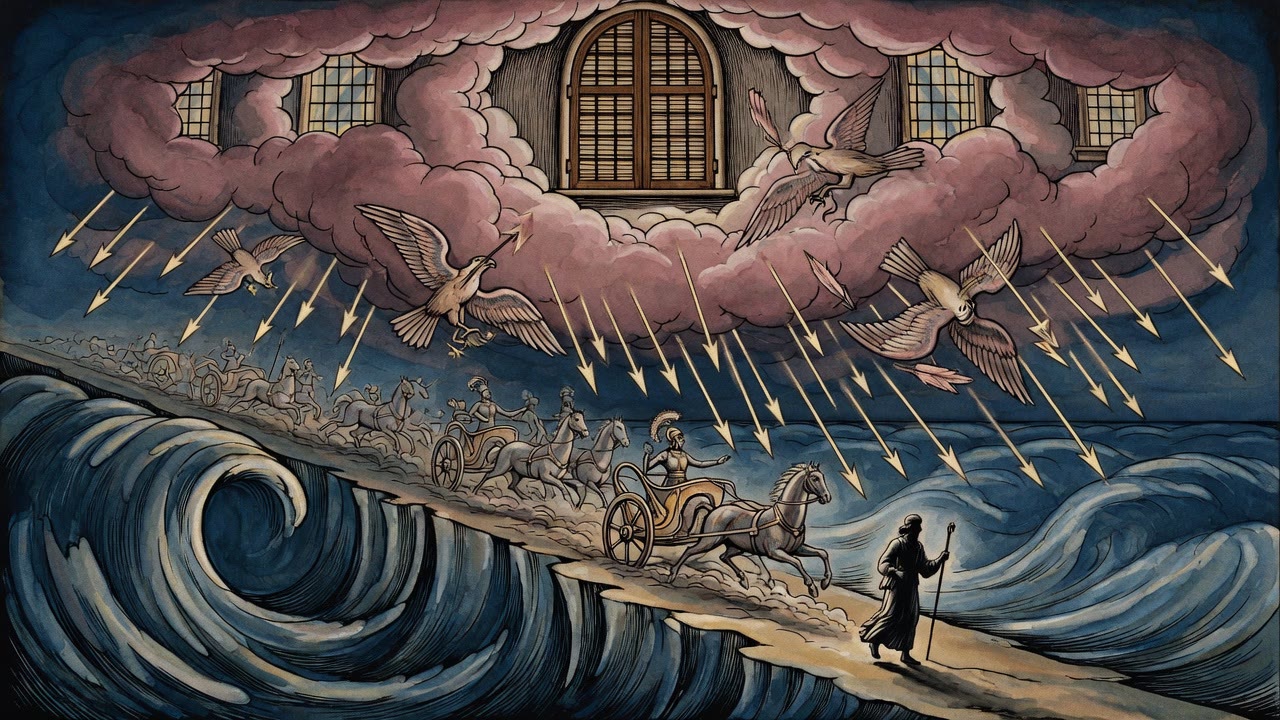
When the water stood like walls, Egypt learned the deposit language without a courtroom. The people who had been bricks and quotas walked out on dry ground as property restored. Pharaoh's chariots followed as if theft could be completed by speed. The sea closed. The arm that reached into the trust was not only broken in midrash speech. It was buried under a wave that kept a ledger better than any scribe.

Moses, iron still in his mouth from the palace clashes, sang on the far bank. Later he would know how to plead when Israel itself became the debtor. That range is the point of his office: repossession and intercession, both under one staff. The deposit story refuses to let Egypt be only a setting. Egypt is a warehouse that went criminal. The Exodus is the Owner collecting.

Every generation that reads "Let My people go" can hear either slogan or law. The midrash chooses law. A deposit is not yours. A king who forgets that meets a prophet who remembers. Iron sharpens iron until one blade is the will of Heaven and the other is only a throne that thought it owned the guests.

Moses would carry that legal fire into every later crisis. The people were never Egypt's invention. They were a trust with a Name on the tag, and the tag could not be scraped off by brick quotas.


← All myths
From the tradition

Sources

3 sources

The texts behind this telling. Some cards carry a translation of the source; others are our own retelling of it, and each card says which. Every card links out to the original.

Pesikta Rabbati 19:1Pesikta Rabbati

Translation of the source text.Pesikta Rabbati, ed. Meir Friedmann (Ish-Shalom), Vienna 1880 · Public Domain

"And it came to pass when Pharaoh let the people go" (Exodus 13:17). Let our master teach us: one who lays a hand on a deposit entrusted to him by his fellow, how is it collected from him? Thus our masters taught: one who lays a hand on a deposit - the House of Shammai say he is liable for both the decrease and the increase, the House of Hillel say according to the value at the time of the theft, and Rabbi Akiva says according to the value at the time of the claim. And our masters said: certainly, whoever lays his hand on the deposit of his fellow deserves to have his arm broken. From whom do you learn this? From Pharaoh, for Israel were placed in his hand as a deposit, and he sought to lay a hand upon them, and the Holy One broke his arm, as it is said, "Son of man, I have broken the arm of Pharaoh king of Egypt" (Ezekiel 30:21).

And how do we know that Israel were a deposit in his hand? For He said to Moses to tell Israel, "I have surely remembered you" (Exodus 3:16). And because Israel were despairing of the redemption, the Holy One said: go, tell them, just as the owner of a deposit takes back his deposit whenever he wishes, so you - whenever your time arrives, at once I will bring you out of his hand. Israel said to Him: Master of the worlds, see how he denies You and refuses to send us, as it is said, "I do not know the LORD, neither will I let Israel go" (Exodus 5:2). The Holy One said to them: by your lives, you shall see - the mouth that said "Who is the LORD" will in the end say "the LORD is righteous" (Exodus 9:27); and the mouth that said "I do not know the LORD" will in the end say "Entreat the LORD" (Exodus 9:28); and the mouth that said "I will not let Israel go" will in the end take hold of each one by the hand and send him off. From where? From what we read in the matter of "And it came to pass when Pharaoh let the people go."

"And it came to pass when Pharaoh let go..." Thus Rabbi Tanhuma son of Rabbi opened: "Say to God, How awesome are Your works" (Psalms 66:3). Rabbi Yohanan in the name of Rabbi Eliezer son of Rabbi Yose the Galilean: they say to a good worker, well done. "Say to God, How awesome are Your works." The slain do the slaying, the destroyed do the destroying, the impaled do the impaling: from the gallows that Haman prepared for Mordecai, to rise early and impale him on it, Haman himself rose early and was impaled upon it. Therefore, "Say to God, How awesome are Your works."

"Through the greatness of Your power Your enemies will cringe before You" (Psalms 66:3). Our masters said: "Your enemies will cringe before You" - your foes will be shattered before You; when the wicked one comes in his strength to exalt himself before You, through the greatness of his strength he will be broken by the greatness of Your power. And Rabbi Berekhiah said: "will lie to You," like "and deals falsely with his fellow" (Leviticus 5:21). David said: Master of the world, when the wicked come to exalt themselves before You, with their own mouths they will turn back and lie and break their words, so that they will be put to shame. And so you find with many of the wicked. Nebuchadnezzar at first, when dealing with Hananiah, Mishael, and Azariah, says to them, "and who is the God who will deliver you out of my hands?" (Daniel 3:15). The Holy One said to him: you were exalting yourself before Me, saying, who is the God? When the measure of judgment is done to you, you will have to say, He is God. David said: "Say to God, How awesome are Your works; through the greatness of Your power Your enemies will cringe before You."

Full source
Midrash Mishlei 27:2Midrash Mishlei

Translation of the source text.Midrash Mishlei (Buber) · CC-BY

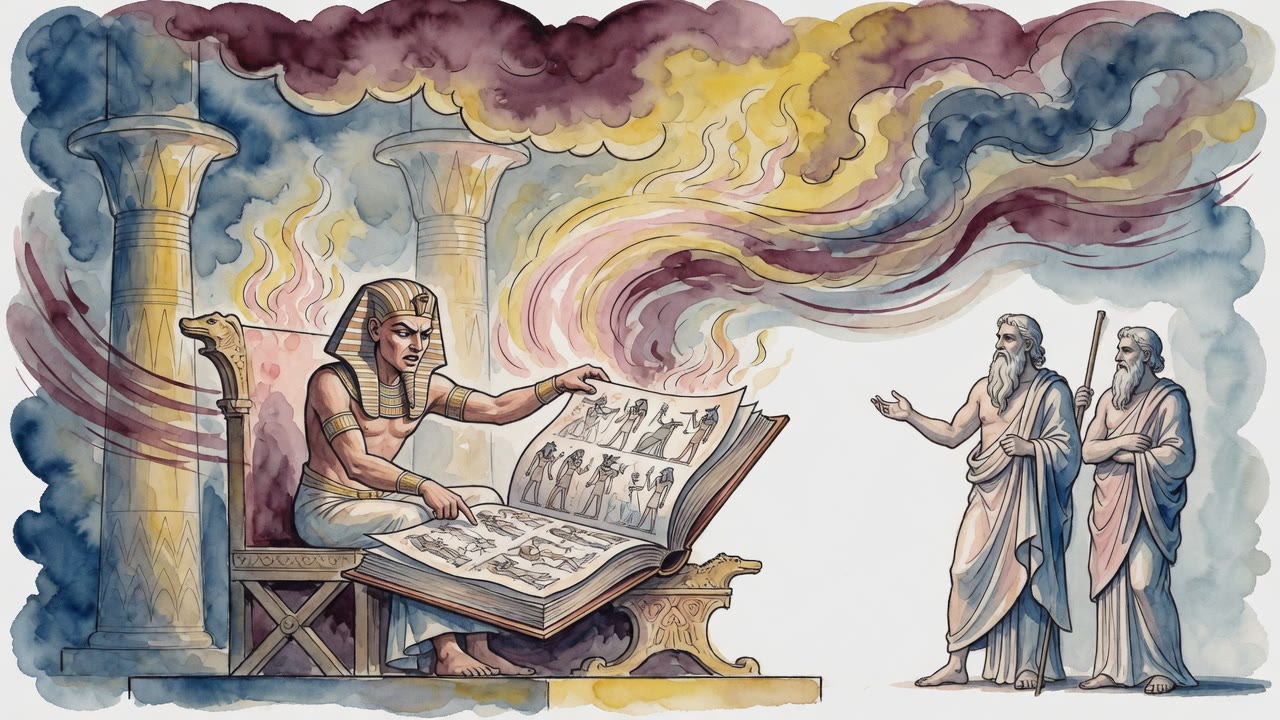
(Proverbs 27:17): "Iron sharpens iron" - this is Moses and Pharaoh the wicked, who struck against one another with words. Another interpretation: this is the staff of Aaron and the magicians of Egypt, who struck against one another with sorceries. Rabbi Zeira said: At the time Moses entered before Pharaoh, he [Pharaoh] said to him, 'Who sent you?' He said to him, 'The God of the Hebrews.' He said to him, 'And what did He say?' He said to him, 'Send out My people that they may serve Me.' He said to him, 'Is there then a god in the world whom I do not know? (Exodus 5:2): "I do not know the LORD!"' And he said to him, 'By your life, every deity that I know, each and every one has sent me a letter, but the god you mention has never in his days sent me a letter. Wait for me a little until I bring my register in which all the letters of kings are recorded.' Immediately he sent and brought his archive, and seventy scribes who knew the seventy languages, and they began reading the letters before him. Since they did not find the name of the Holy One, blessed be He, he said before him, 'Did I not say to you so - I do not know the LORD!' Immediately he sent and brought the sages of Egypt. He said to them, 'Have you ever in your days heard the name of the god of these people?' They said to him, 'So we have heard, that he is a son of sages and a son of the kings of old,' as it is said (Isaiah 19:11): "Surely the princes of Zoan are fools, the wise counselors of Pharaoh, a brutish counsel; how can you say to Pharaoh, 'I am a son of sages, a son of the kings of old?'" The Holy One, blessed be He, said to them, 'Fools of the world, you have called yourselves sages and Me the son of sages? By your lives, I will destroy your wisdom from the world,' as it is said (Isaiah 29:14): "And the wisdom of its sages shall perish, and the understanding of its discerning ones shall be hidden."

When Moses saw that he [Pharaoh] was reviling himself with words, he returned before the Almighty and said before Him, 'Master of the worlds, did I not say so before You at the outset (Exodus 4:13): "Send, I pray, by the hand of him whom You will send?" For he sits and reviles with words and says to me, "I do not know the LORD!"' He said to him, 'By your life, he has said "I do not know the LORD," but in the end he will know; and he says "and also I will not send Israel," but in the end he will send against his will.' A parable to a king who said to his servant, 'Go out and bring me a fish from the market.' He went and brought him a spoiled fish. He said to him, 'By decree, either eat the fish, or take a hundred lashes, or pay a hundred maneh.' He said to him, 'I will eat the fish.' He had not managed to eat it before he said, 'I will take the hundred lashes.' He was lashed up to sixty or up to seventy, and had not managed to finish the lashing before he said, 'I will pay a hundred maneh.' He is thus found eating the spoiled fish, taking the blows, and paying a hundred maneh. So it was done to the Egyptians: they were stricken, and they sent them out, and they gave their wealth. What caused this for them? Because they hardened themselves before the Omnipresent; therefore the Omnipresent hardened Himself all the more against them through Moses. Therefore it is said, "Iron sharpens iron."

Full source
Pesikta DeRav Kahana 25:4Pesikta de-Rav Kahana

Translation of the source text.Pesikta de Rav Kahana according to an Oxford manuscript, Dov Mandelbaum ed., N.Y. 1987 · CC-BY

[4] "Pardon, I pray, the iniquity of this people according to the greatness of Your lovingkindness" (Numbers 14:19). Rabbi Yose bar Rabbi Chanina and Rabbi Samuel bar Nachman. One said: The Holy One, blessed be He, said to Moses, "From Egypt until now" (Numbers 14:19) - behold, they have not sinned before Me. And the other said: Moses said before the Holy One, blessed be He, "Master of the worlds, from Egypt until now: just as You have pardoned and forgiven them for what is past, pardon and forgive them for what is to come." Rabbi Alexandri said: It is like two men who presented gifts to a king - one presented his in his own name and it came out in his grandfather's name, and one presented his in his grandfather's name and it came out in his own name. Hezekiah presented his in his own name: "O LORD, remember now how I have walked before You" (2 Kings 20:3), and it came out in his grandfather's name: "And I will defend this city to save it, for My own sake and for the sake of David My servant" (2 Kings 20:6). Moses presented his in his grandfather's name and it came out in his own name. He presented it in his grandfather's name: "Remember Abraham, Isaac, and Israel Your servants" (Exodus 32:13); and it came out in his own name: "And the LORD said, I have pardoned according to your word" (Numbers 14:20). Finished.

Full source