Pinchas Drove a Spear Through Two People and Stopped a Plague
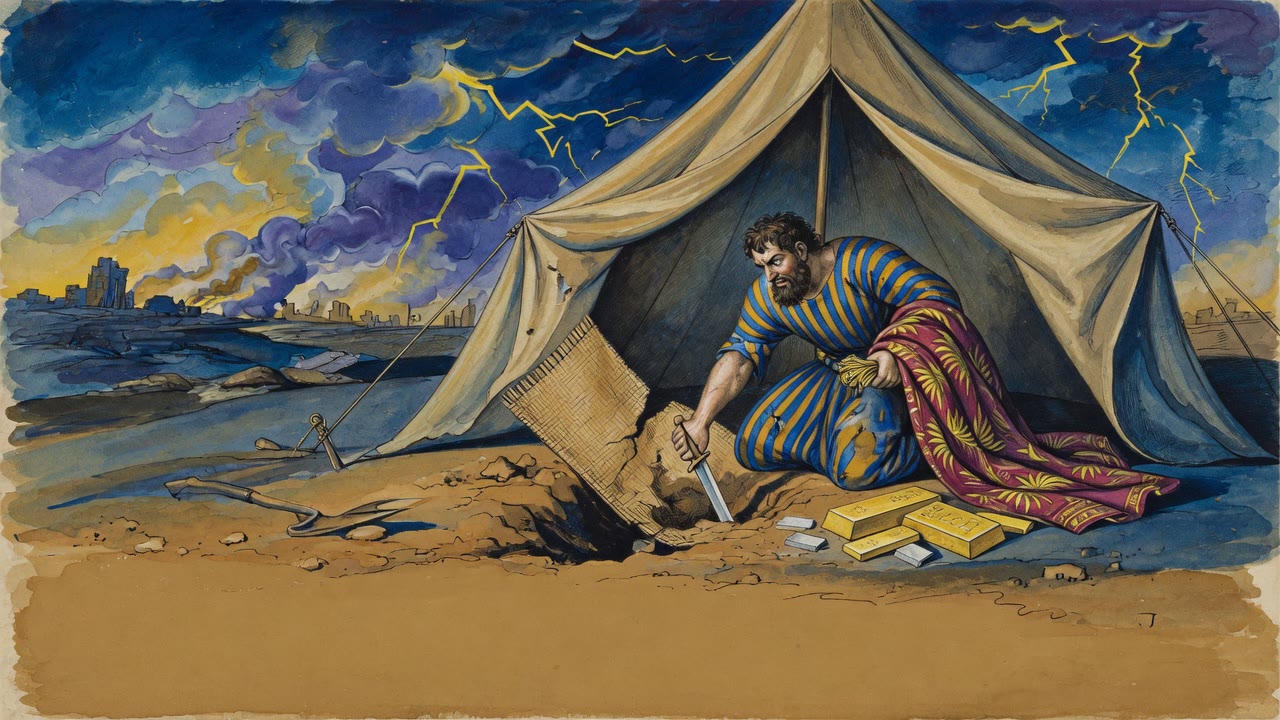
Moses' hands went slack at the tent door. Zimri dragged Kozbi past the elders by the hair, and twenty-four thousand were already dying.
Table of Contents
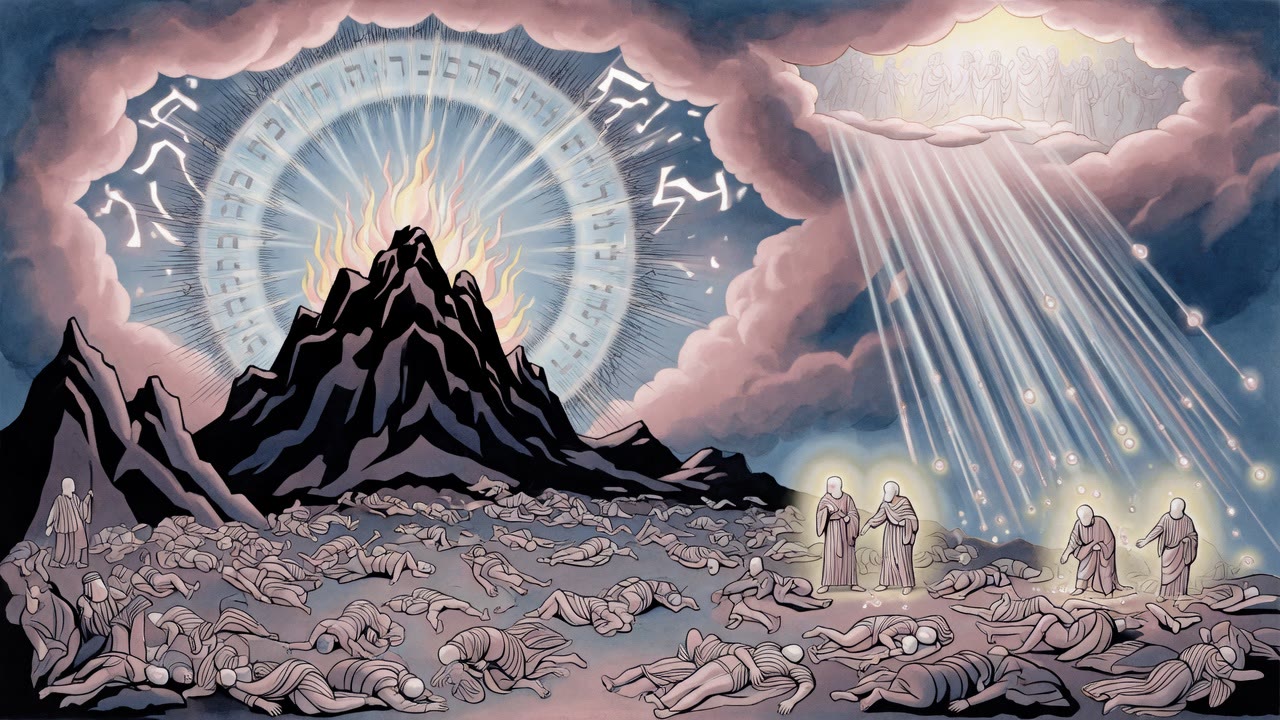
Zimri dragged Kozbi by the hair past the Tent of Meeting. He did not hide her. He did not wait for night. Twenty-four thousand Israelites were already dying at Shittim, and he walked the scandal through the center of the camp while the plague was still burning.
 Click for full size
Moses stood at the entrance with the elders, and they were weeping. Not commanding. Not judging. Weeping. Zimri stopped in front of him and asked whether the woman was permitted or forbidden. Moses answered, "Forbidden, she is a Midianite." Then his hands went slack.
Kozbi Was Aimed at Moses
Kozbi was the daughter of a Midianite chief. Her father had not sent her for Zimri. He had sent her for Moses. Balak had reasoned that Moses annulled every decree against Israel. Seduce Moses and the whole people would fall into his hand. Kozbi had refused Zimri when he first approached her. She wanted the king, she said, not his subjects.
Zimri boasted that he was greater than Moses, seized her by the hair, and dragged her before the man himself. Balaam had failed to curse Israel from the heights. So before leaving, the prophet had given Balak his parting advice. Send your most beautiful women into the camp. Let the young men fall in love. When they are desperate enough to keep those women, have the women demand one thing. Let them abandon the God of Israel and worship the gods of Midian. It had worked. The women came in. The men were overwhelmed. Zimri brought it to its public conclusion in front of Moses.
The elders wept. The Holy Spirit cried out that the stout-hearted were despoiled. Eleazar did not rise. The princes did not rise.
Pinchas Took the Spear
Pinchas, son of Eleazar, son of Aaron, watched Moses freeze. He watched Zimri walk toward the tent with Kozbi. He remembered a line Moses had taught him. A zealot may strike the man who does this in public. He remembered Levi at the Calf, three thousand down for the Name. He rose out of the assembly. He took a spear. He followed them in.
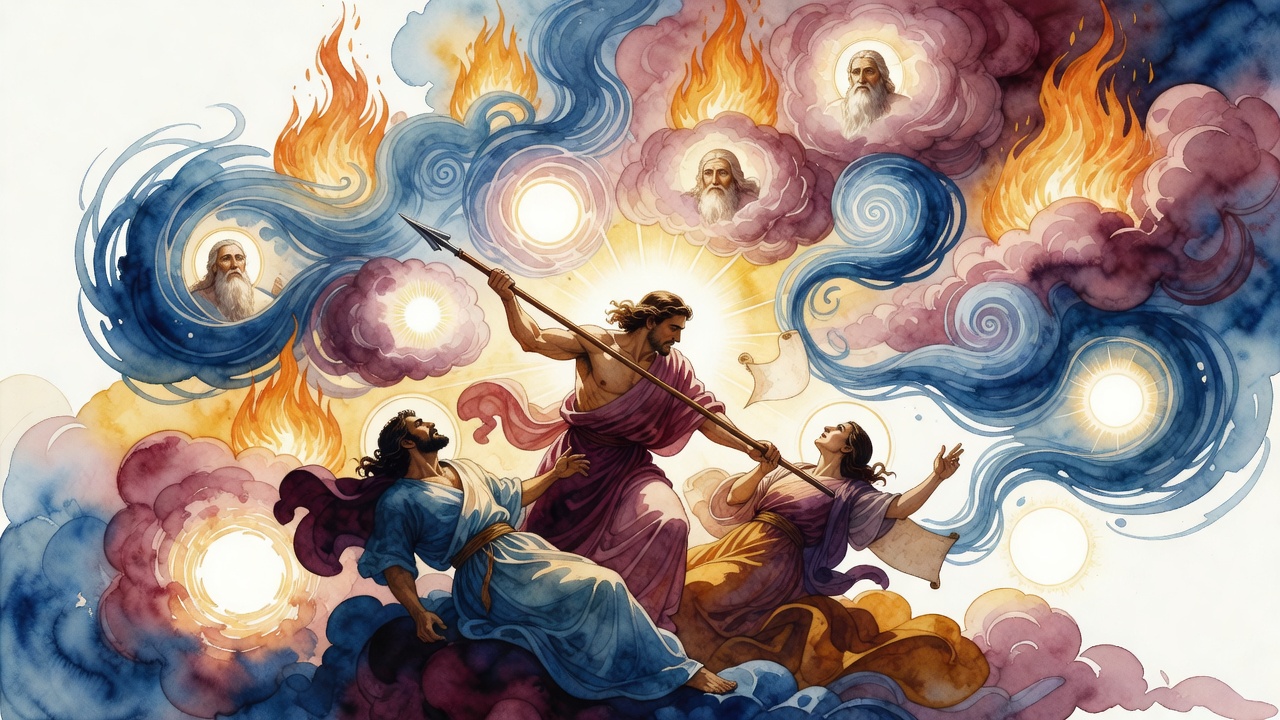
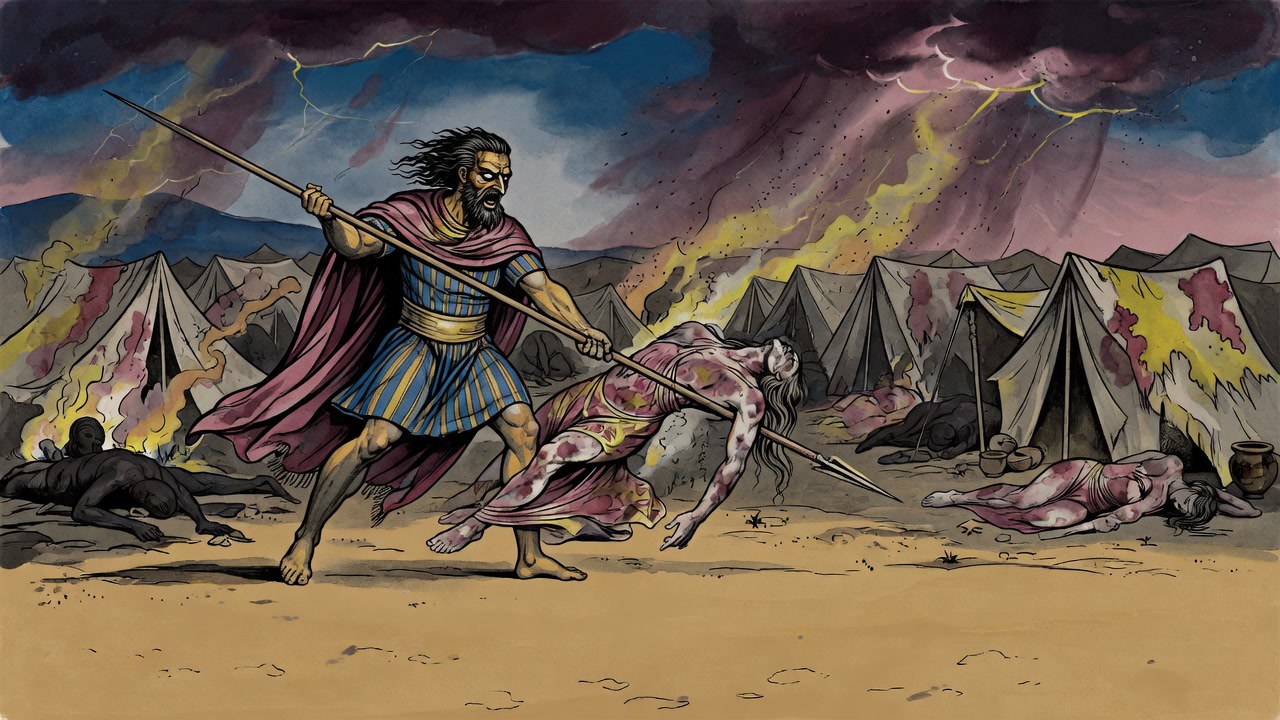
They lay together. He drove the iron through both of them in one thrust. They should have sprung apart. An angel held them joined. Their mouths should have screamed. The angel stopped the sound. The iron did not bend. Pinchas found the strength to lift both bodies and carry them out of the tent on the spear, and the lintel rose so he could pass with the weight on his shoulders. Blood did not defile him. Israel saw what he had done.
The angel of destruction that was moving through the camp stopped. The plague stopped. Twenty-four thousand were already dead. Then it was over.
The Tribes Counted His Names
Over the corpses the tribes began to mutter. Zimri, they said, had more than one name, and each name was an epitaph. Zimri, because he had gone rotten in the act. Son of Salu, because he had magnified his family's iniquity. Shaul, because he had lent himself to transgression. Son of the Canaanite woman, because the act was a Canaanite act.
Then they turned the counting on Pinchas. Have you seen, they said, this son of Putiel, whose mother's father fattened calves for idol worship, kill a prince of Israel?
That is why the verse traced him again. Pinchas, son of Eleazar, son of Aaron the priest. God spoke the lineage aloud so the muttering could not unmake the spear.
The Covenant Was Peace
God spoke to Moses in the aftermath. Pinchas had made peace. He had stood in the breach between divine fury and the people Israel, and where there might have been total annihilation, he had placed his body. God is zealous against foreign worship. That zeal, unchecked, might have devoured the whole camp. Pinchas channeled it with a single act and it stopped.
The reward God declared was unusual. Not honor. Not military rank. Peace. Because Pinchas had brought peace between Israel and their God, he received a covenant of peace in return, along with the covenant of eternal priesthood, and a shield so that no hand among the people could rise to harm him. The man who had done the most violent act in the wilderness was given peace as his inheritance.
The camp did not cheer. It breathed. Pinchas had not acted for vengeance. He had acted because the plague was consuming the tents and he was the one who remembered what could be done, and then he did it.
The spear still held both bodies where Israel could see them. The dying had stopped. Moses' hands were no longer slack. The camp had air again.
← All myths