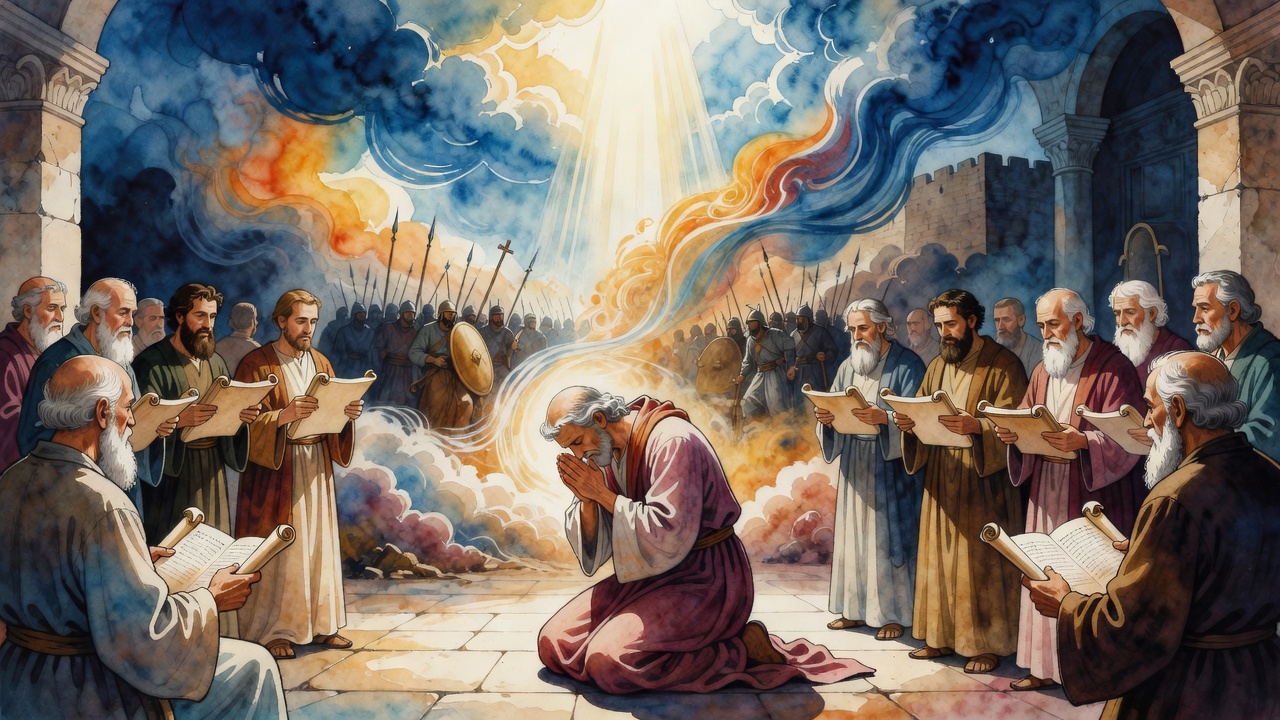
Priests Offer a Goat for the Diminished Moon
The moon stood as bright as the sun and asked how two kings could share one crown. God told her to make herself small.
Table of Contents
 Click for full size
Two Kings Cannot Share One Crown
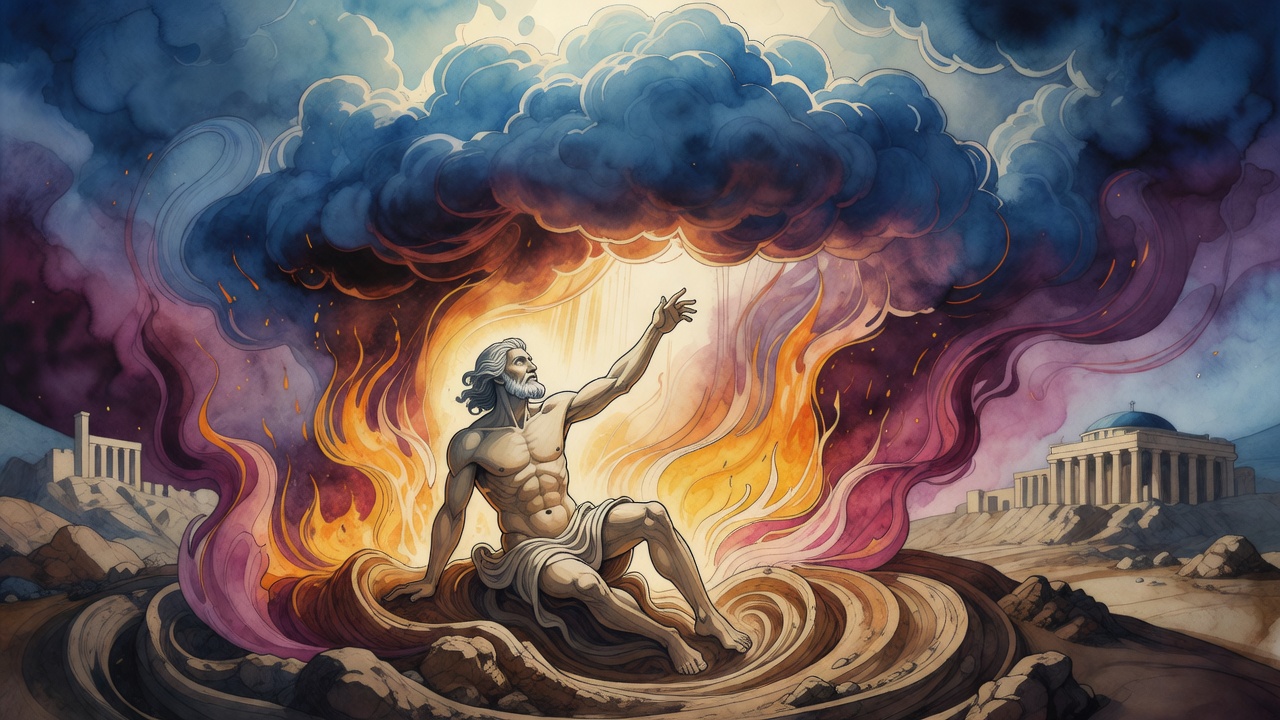
On the fourth day the sky held two equal fires. God had made "the two great lights" (Genesis 1:16), and the moon looked at the sun and saw her own size looking back. She came before the Throne with a question that sounded like wisdom.
"Master of the World," she said, "is it possible for two kings to use one crown?"
The answer came without delay. "Go diminish yourself."
She stood there. She had named a problem of honor, and honor had been taken from her for naming it. The sun did not speak. The sun kept its size.
Every Gift Fails to Console Her
"Because I said a proper thing before You, I should make myself small?"
"Go rule by day and by night," God said.
She answered that a lamp in daylight does no work. What greatness is that? A candle at noon is a waste of wick.
"Go. Israel will count days and years by you."
She knew the sun already marked the seasons. The verse had said they shall be for signs, for appointed times, for days and years (Genesis 1:14). Counting was not a crown.
"Go. The righteous will be called by your name. Jacob the Small. Samuel the Small. David the Small."
The names were an honor laid on smallness. They were not her old fire returned. God looked at her and saw that her mind was not settled. The gifts had piled up. The wound had not closed.
The Goat on the First of the Month
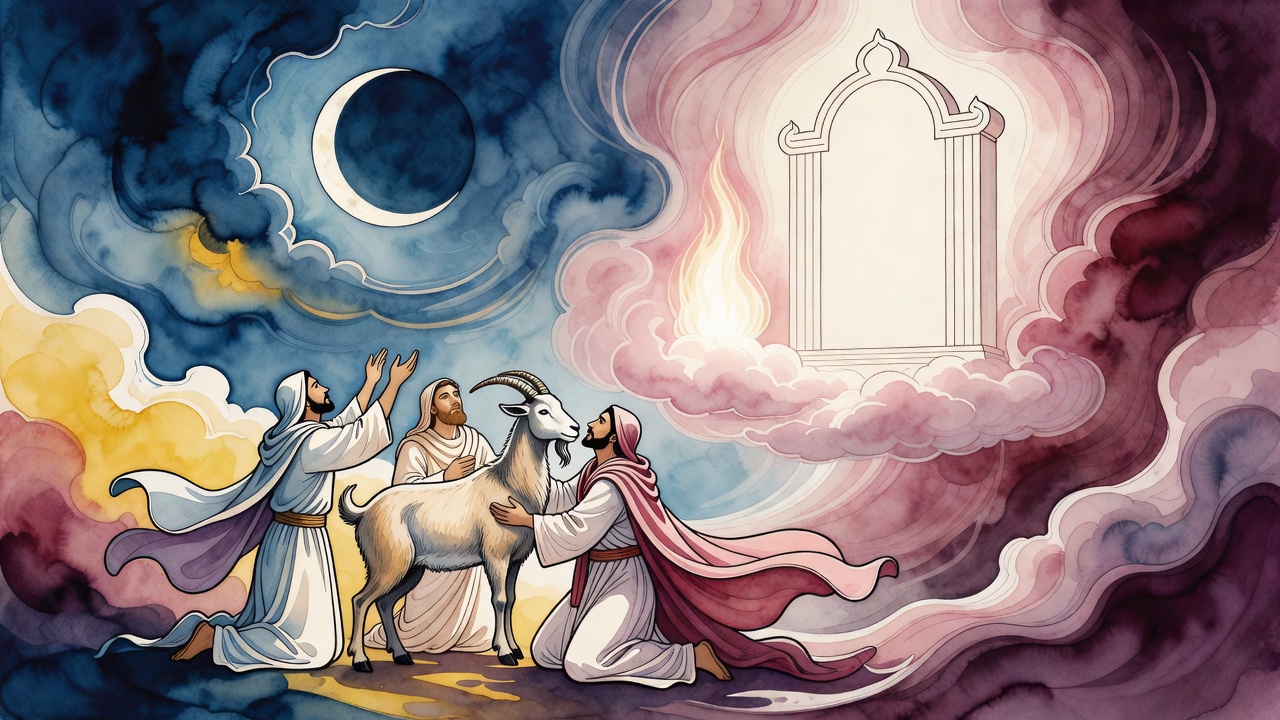
"Bring a sin-offering for Me," God said, "because I diminished the moon."
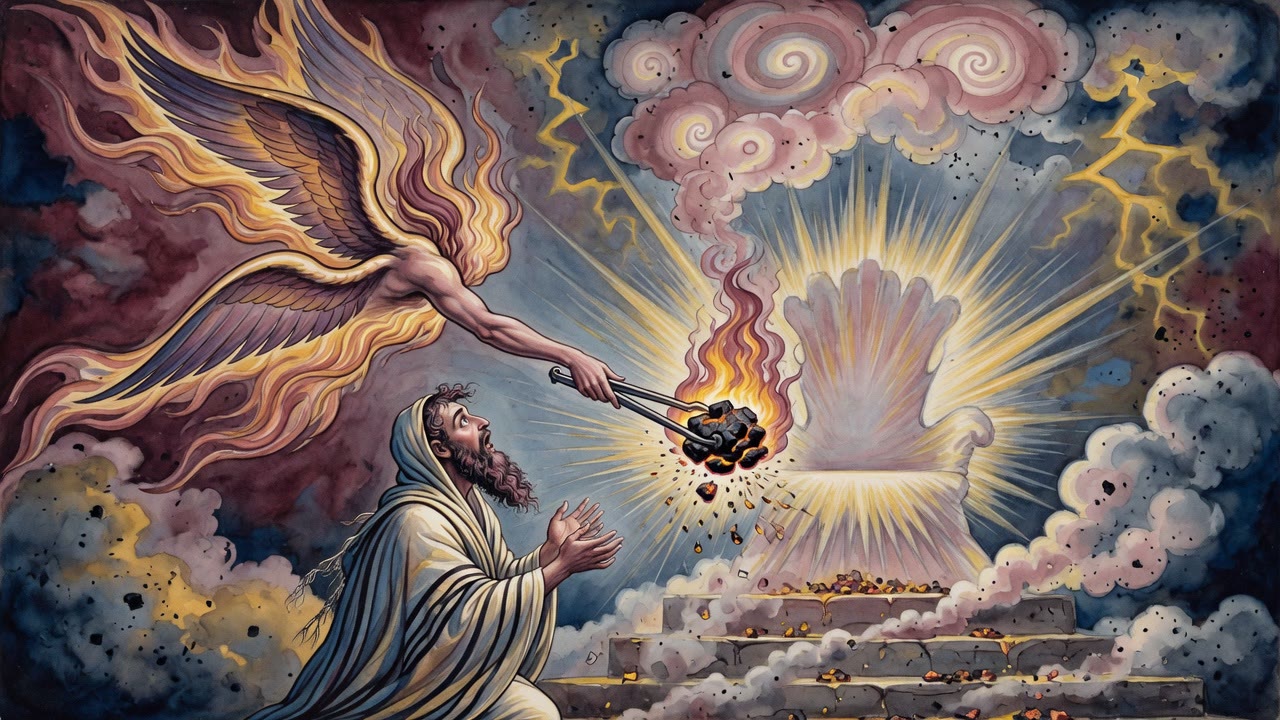
The priests heard it as a schedule. On Rosh Chodesh, the first of the month, when the moon is a thin blade over Jerusalem, they brought a he-goat, a chatat (חטאת), a sin-offering "to the Lord" (Numbers 28:15). Ordinary sin-offerings answer a human failure. This one answered a cut in the sky.
A young kohen held the rope in the Temple court. Goat. Stone. Incense. He did not climb to scold the Maker. He held until other hands took the animal. After the blood, someone washed the court. The thin moon kept its thinness.
The people went home under a sky that had been marked, not repaired. The priests washed their hands and waited for the next sliver.
The Lamp That Does Not Shrink
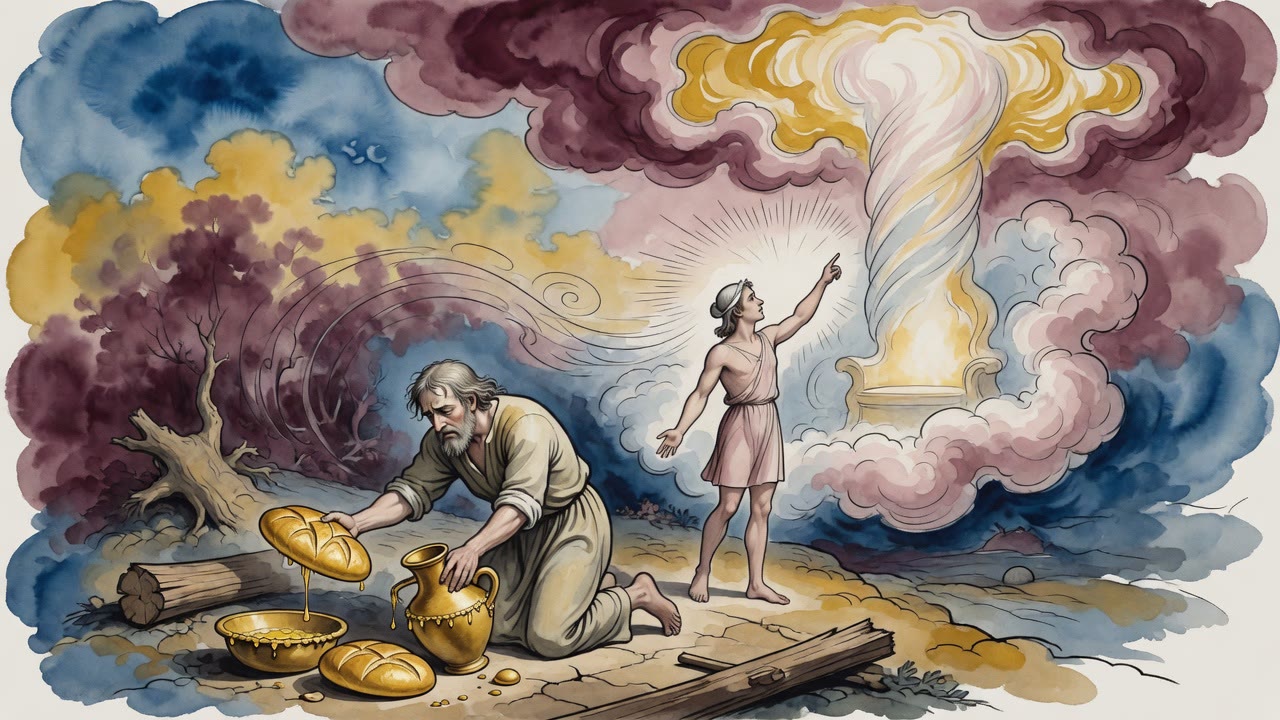
In a later room, a lamp stood on a table. Rabbi Yehuda Ashlag, called Baal HaSulam, Master of the Ladder, put wick to wick. One flame. Then ten. Then more than the students could count without losing the number. The first lamp did not dim.
"Whether a man lights thousands of candles from it, or lights none," he said, "the lamp itself does not change."
The students watched the flame stay the same size. One of them looked through the window at the sliver overhead. The moon had been told two kings cannot share one crown. The lamp shared and lost nothing.
Ashlag spoke of a vessel in Beria, red as a body that can hold light. Light clothes a vessel. It does not float free of form. When the moon was ordered smaller, the clothing of light changed shape. The goat did not put the old size back. It answered the fitting, month after month, while the lamp on the table burned as if sharing cost nothing.
The Thin Blade Over the Court
Every month the blade returned. While the Temple stood, the goat answered. After the Temple fell, a father stood on a roof in a later century and blessed the new moon with his face lifted. No goat. Same thin light. His child pointed at the sliver.
Neither of them could fix the sky. Both of them refused to pretend the cut never happened.
Older priests had taught the young ones not to smirk at a sin-offering offered for a decision in heaven. It is not a joke. It is a posture. Israel answers what it cannot reverse.
The father finished the blessing. The child kept pointing. The lamp in the house below did not dim when another wick took flame. Overhead, the moon stayed small.
← All myths