Laban Poisoned the Dinner and Rebekah Rode Away by Morning
The servant would not touch the meal until he had said his errand. He talked half the night. By morning Rebekah's father was dead in the house.
Table of Contents
 Click for full size
The Servant Counted the Trips to the Well
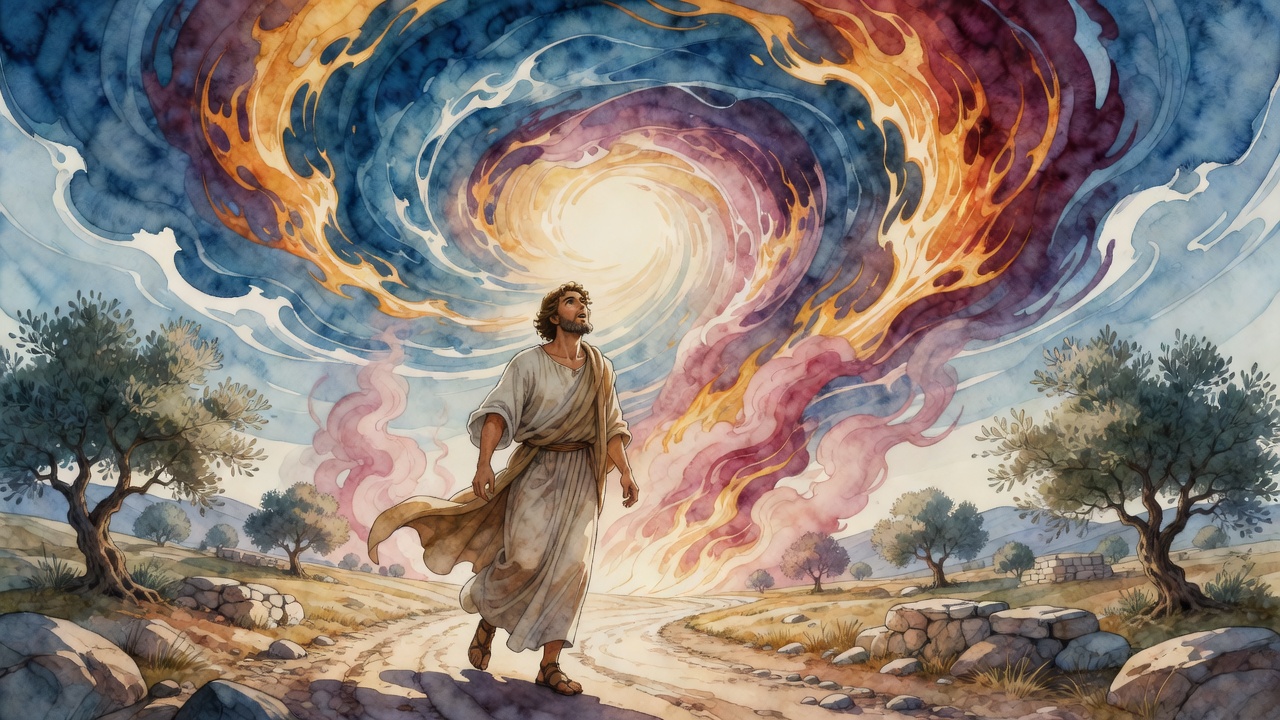
He brought the ten camels down on their knees outside the city at evening, the hour the women come out to draw, and he prayed with his eyes open. Let the girl who offers water to me and then offers it to the animals be the one.
He had not finished saying it when Rebekah came out with the pitcher on her shoulder.
"Give me a little water," he said.
"Drink, my lord." She dropped the pitcher down onto her hand for him. Then she said the other half of it, the half he had not asked for. "I will draw for your camels too, until they have finished."
She emptied the pitcher into the trough and ran back to the well and filled it and ran back, and did it again, and kept doing it. Ten camels drink an enormous amount of water. The servant of Abraham stood there and said nothing at all, watching to find out whether God had answered him or not.
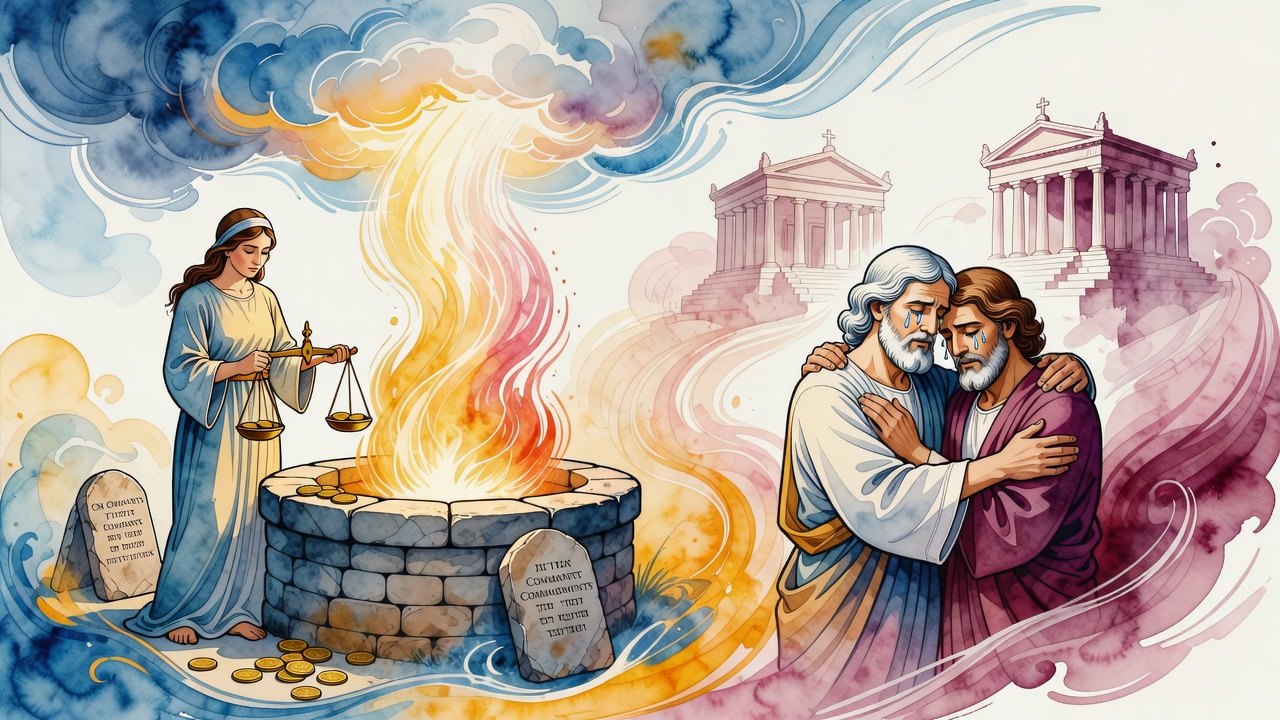
When the last animal lifted its head he went into his pack and took out gold. A ring for her face, weighing one beka, which is a half shekel, which is exactly what every one of her children would one day hand over for the work of the sanctuary. Two bracelets for her wrists, ten pieces of gold between them, one for each of the words that would be cut into two stone tablets at a mountain none of them had heard of yet.
She thought she had been given jewelry.
Laban Ran Out to the Well and Looked at the Ring
Her brother heard about it and ran.
Whatever else Laban was, he was quick. He came out of the city to the spring and he looked the stranger over the way a man looks over livestock, and then he looked at the gold on his sister's hands and did the sum. Eliezer had come here once with ten camels and he was only a servant. This one arrives with treasure and hands it out at a well.
"Come in, blessed of the Lord," Laban said. "Why are you standing outside? I have cleaned the house of strange worship and I have made a place ready for the camels."
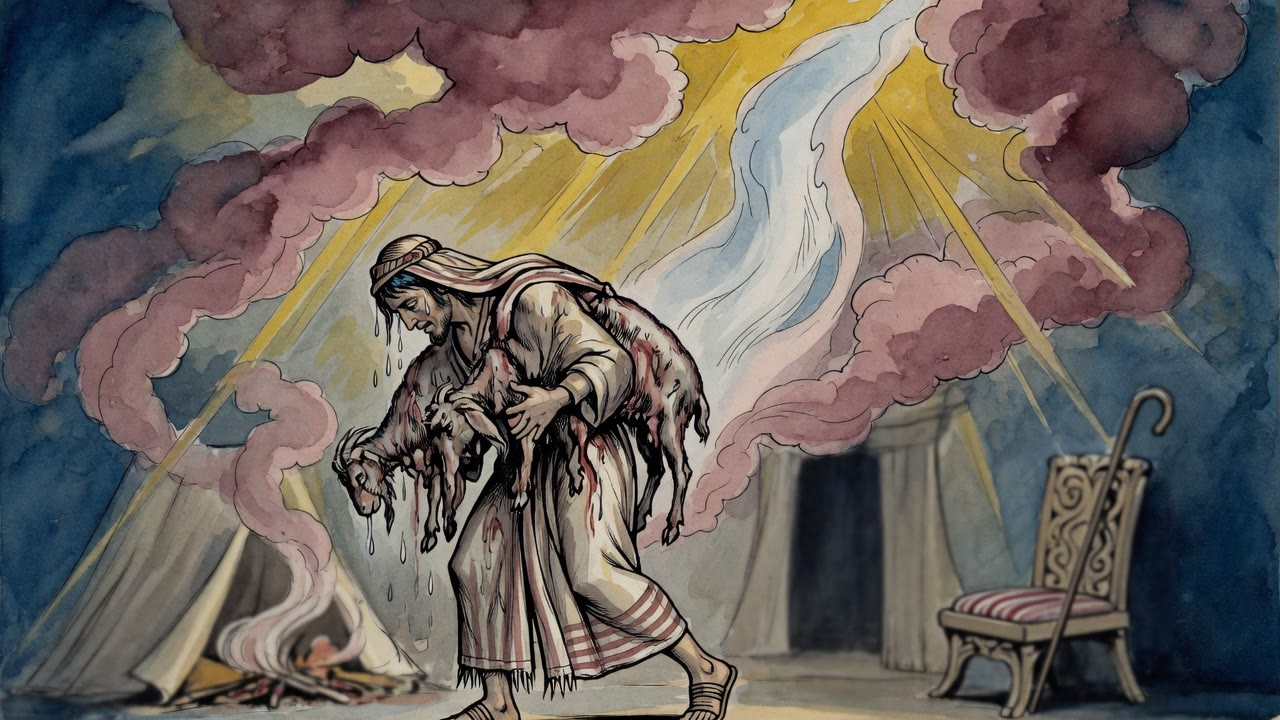
He took the gear off the animals himself. He brought straw and feed. He brought water for the men to wash their feet. Then he set food out on the table in front of the guest, and there was poison in it, enough to kill.
The Man Would Not Eat Until He Had Spoken
The servant looked at the dish and pushed it away.
"I will not eat until I have said what I came to say."
"Speak, then."
So he spoke, and he took his time. The oath his master made him swear with his hand on the sign of the covenant. The son born to a woman past the age for it. The refusal to take a wife for that son from the daughters of Canaan. The prayer at the well and how fast it had been answered.
They talked into the evening and the food sat there getting cold, and at some point in the night Rebekah's father ate it.
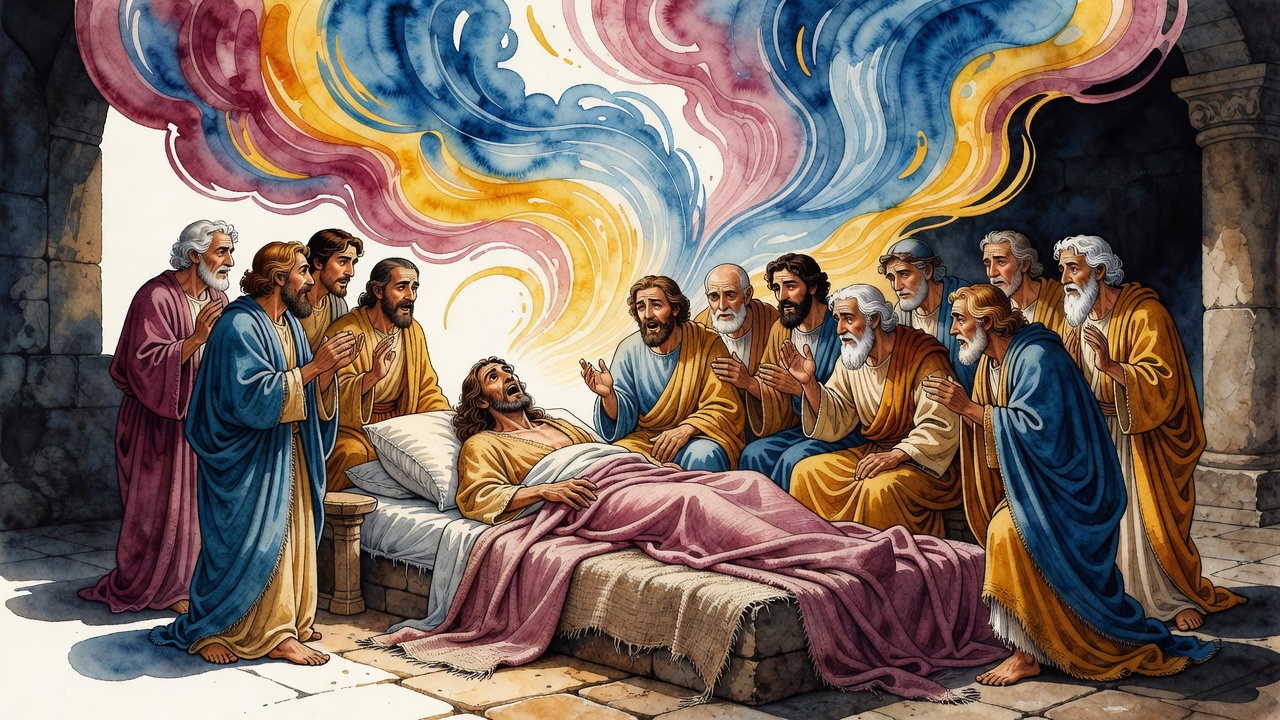
In the morning they found Bethuel dead.
The house that had a wedding to arrange now had a burial, and the brother and the mother came to the guest with a reasonable request. Let the girl stay with us a year. Ten months at least. There has been a death.
"Do not hold me back," the servant said. "The Lord has prospered my road. Send me to my master."
They Asked the Girl and She Said She Would Go
"We will call Rebekah," they said, "and hear what she says."
They brought her in. Her father was lying dead in the same house. Her brother had put the food on the table. Nobody in the room told her any of that.
"Will you go with this man?"
"I will go."
They blessed her on the way out, and the blessing had teeth in it. Until now you were our sister. Now you are going to be married to a righteous man. May thousands of ten thousands come out of you, and may your sons take the cities of the people who hate them.
She got up on a camel with her nurse and rode. The road that had taken so long coming folded itself under them, and they went in a single day.
The Lamp Came Back On in Sarah's Tent
Isaac was walking back from the study house of Shem, past the well in the wilderness where the Living and Eternal One had shown himself to him, the One who sees and is not seen. It was evening. He went out into the open field to pray, and when he looked up there were camels coming.
Rebekah saw the man in the field and came down off the camel and asked who he was, and when the servant told her she took her veil and covered her face.
Isaac brought her into his mother's tent. The lamp there had gone out the day Sarah died and had stayed out. It came back on with Rebekah standing under it.
He loved her because her hands did what his mother's hands had done. That was the end of his mourning.
Her Grandsons Wept in Egypt for Houses Not Yet Built
The gold on her wrists went down into Egypt eventually, in the blood of her grandsons.
Joseph fell on Benjamin's neck in a room in Egypt and cried, and he was not crying about the twenty years. He was crying because the Temple would stand in Benjamin's portion of the land and would be pulled down twice. Benjamin cried on Joseph's neck for the tent at Shiloh, which would stand in Joseph's portion and would also fall.
Joseph dried none of it. He kissed the rest of his brothers one by one and wept over each of them, because he could see their children's children going into slavery in the country he had just brought them to.
Only after the tears stopped could any of them speak to him.
← All myths