Reuben Missed the Pit, Simeon Wore the Chain
Reuben sat in sackcloth on a hill, saving his own soul. Below him Joseph waited in the pit for a rope that never came.
Table of Contents
 Click for full size
Throw Him In, Do Not Kill Him
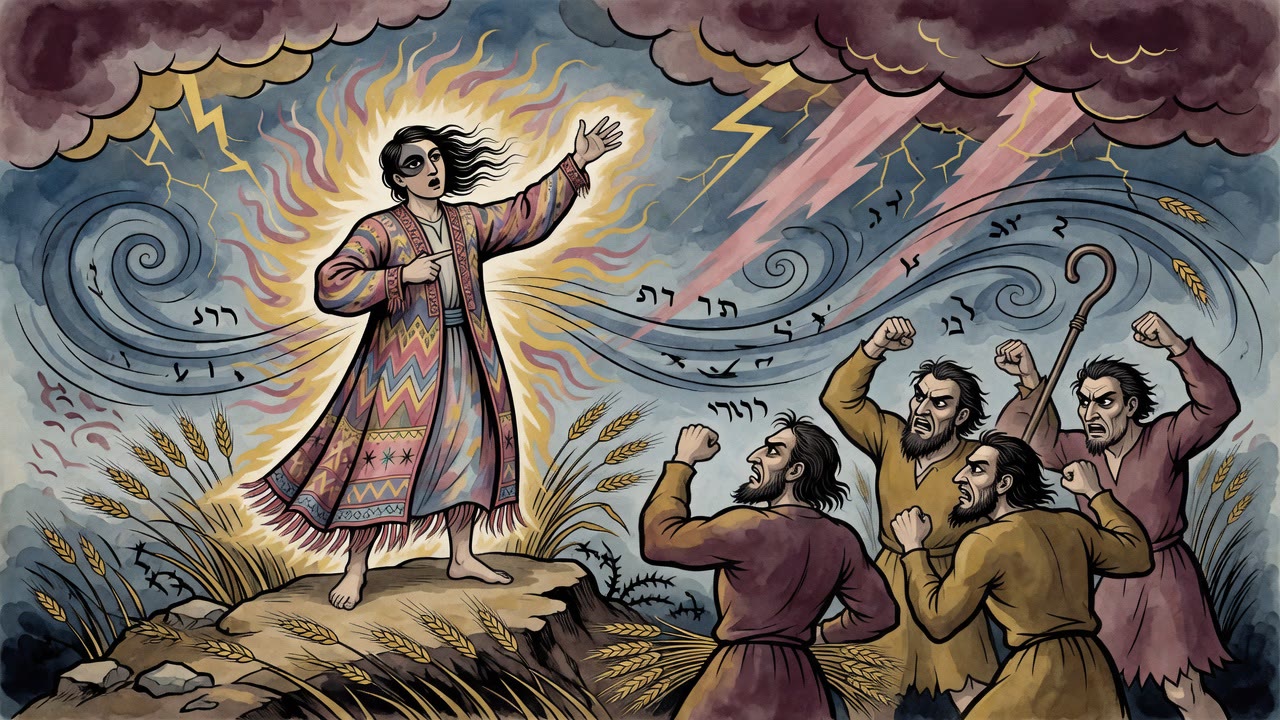
At Dothan the brothers' voices rose toward killing. Coats were grabbed. Eyes went hard. Reuben did not preach. He knew sermons would burn in that heat. He offered a cruelty that looked like theirs and hid a door.
"Throw him into this pit in the wilderness, but let no hand of a slayer stretch against him."
A pit is reversible. A sword is not. Reuben meant to come back alone at night, pull Joseph out, and restore him to Jacob (Genesis 37:22). The plan was quiet because quiet was the only language rage would accept. The brothers heard punishment. Reuben heard a pause he could fill with rope later.
Joseph went down into cold stone and a circle of sky. The dreamer of sheaves looked up at faces that had decided he was surplus. His wrists scraped rock. His mouth filled with dust.
Sackcloth on the Wrong Hill
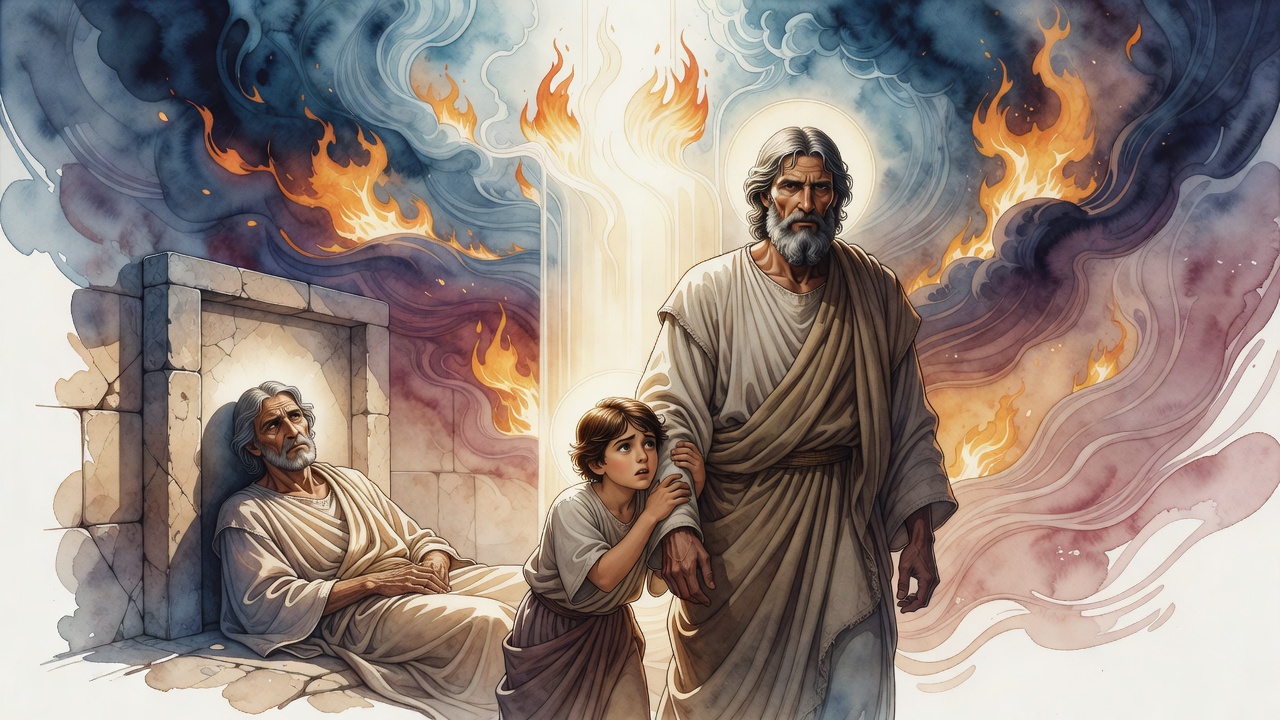
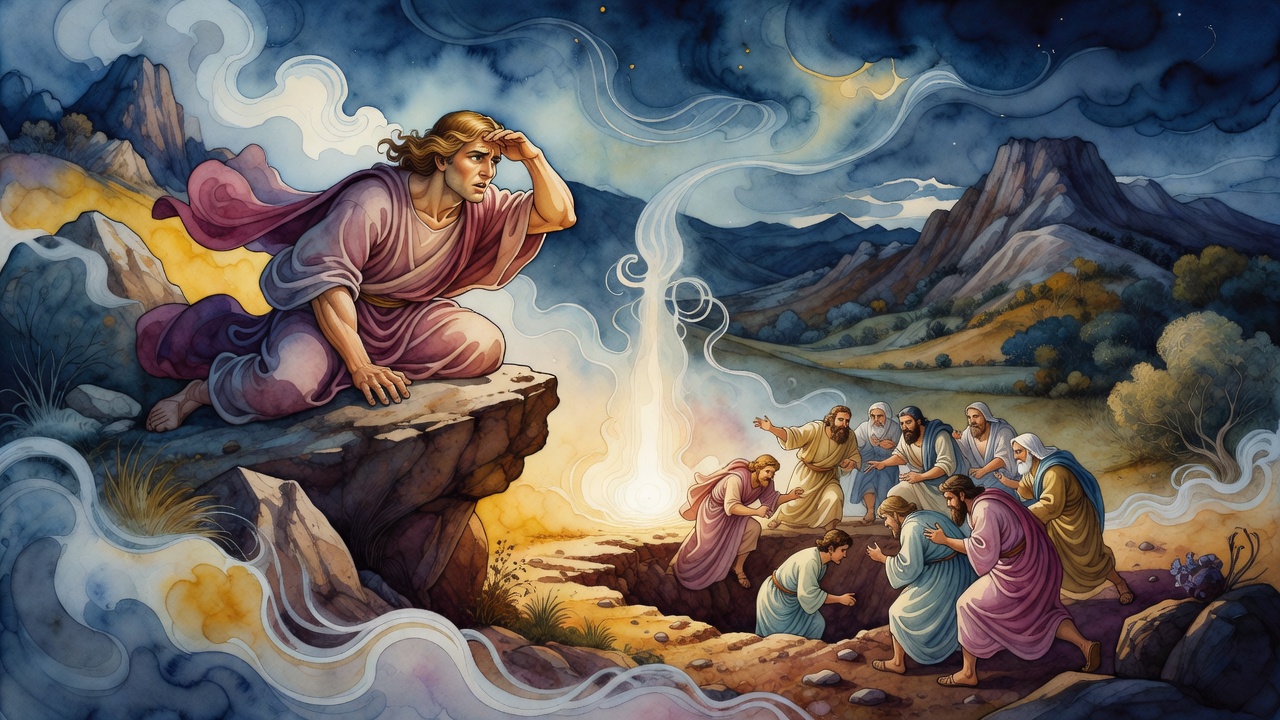
While Joseph waited in the hole, Reuben was not at the rim. He sat on the hills in sackcloth, fasting, doing teshuvah (תשובה), the hard work of return, for the old wound of the matter with Bilhah. The eldest son was busy saving his own soul at the hour his youngest brother needed a rope. Guilt is a jealous workman. It keeps a man on the wrong hill.
When he returned, the pit was empty. Midianite dust and a coat headed for home were all that remained of the rescue. Love missed its moment, not from indifference, but from the cost of earlier guilt. Reuben tore his clothes into a sound the field already knew. He had planned mercy and delivered absence.
The brothers sold a life and bought a silence they would carry for years. Reuben carried a different silence: the night he did not arrive. Every later meal with Jacob tasted of that empty circle of stone.
Joseph Bound Simeon
Years later ten men stood before Egypt's second throne and did not know the face they feared. Grain was the excuse. Fear was the weather. Joseph withdrew, wept where they could not see, came back with water still on his lashes, and chose Simeon for the chain (Genesis 42:24).
Simeon had counselled them to kill him. The sharp edge of Shechem, the loud voice at the pit, stayed behind while the others rode north with grain and dread. Joseph cried before he bound. He did not take the weakest. He took the one whose words had pushed the crime forward. Simeon felt iron and remembered a pit. The past had learned to wear Egyptian linen.
In the cell, Simeon had time to count what a loud mouth costs. The brothers rode with one place empty at the fire and a story they still could not tell their father whole.
They Held Out the Silver
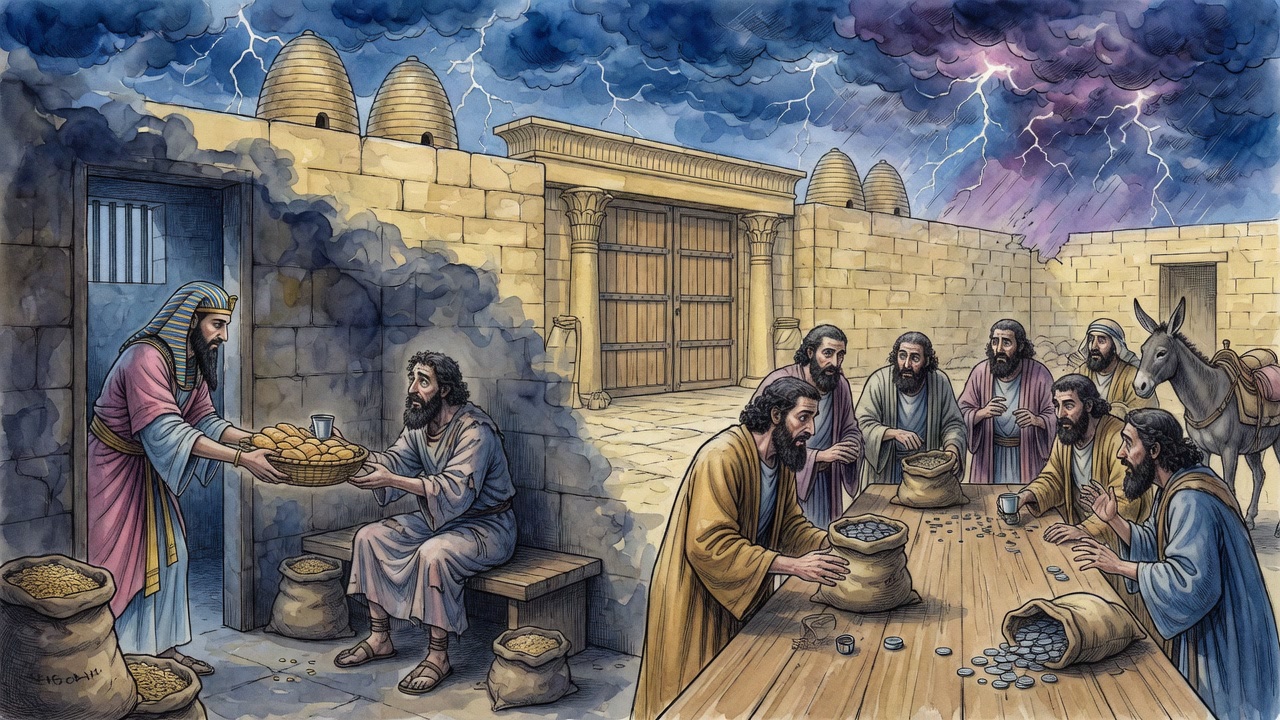
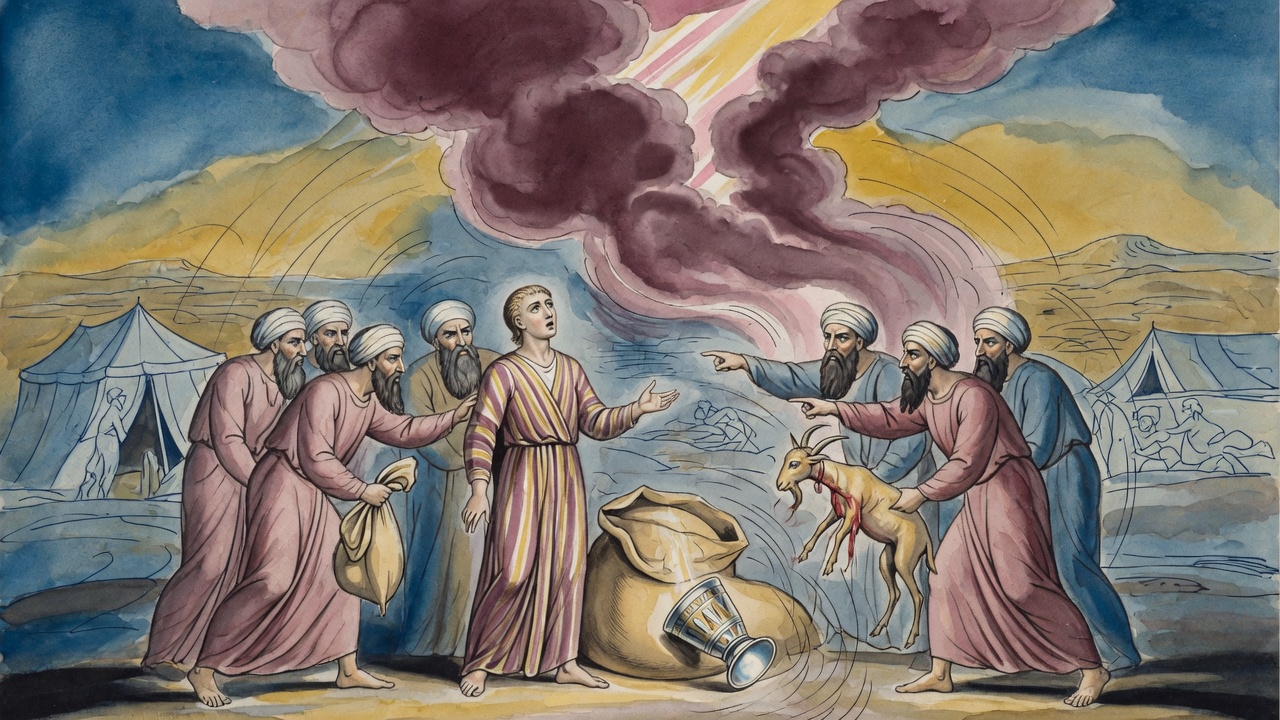
On the next journey the brothers stopped themselves at the steward's door. They did not wait to be searched. They held out the silver found in their sacks and confessed the mystery before any charge was spoken (Genesis 43:21). Hands open. Voices careful. The men who once stained a coat with kid's blood now practiced a smaller honesty, a rehearsal for a larger return.
"We opened our sacks at the lodging," they said, "and the money of a man was in the mouth of his sack. We have brought it back in our hand."
The steward's calm answer would come. The harder work had already begun in their palms. Returning silver is practice for returning a brother. They still did not know the man on the throne was the boy from the pit. Their bodies knew something their minds refused. The old crime was no longer a private family silence.
The Empty Pit Kept Its Shape
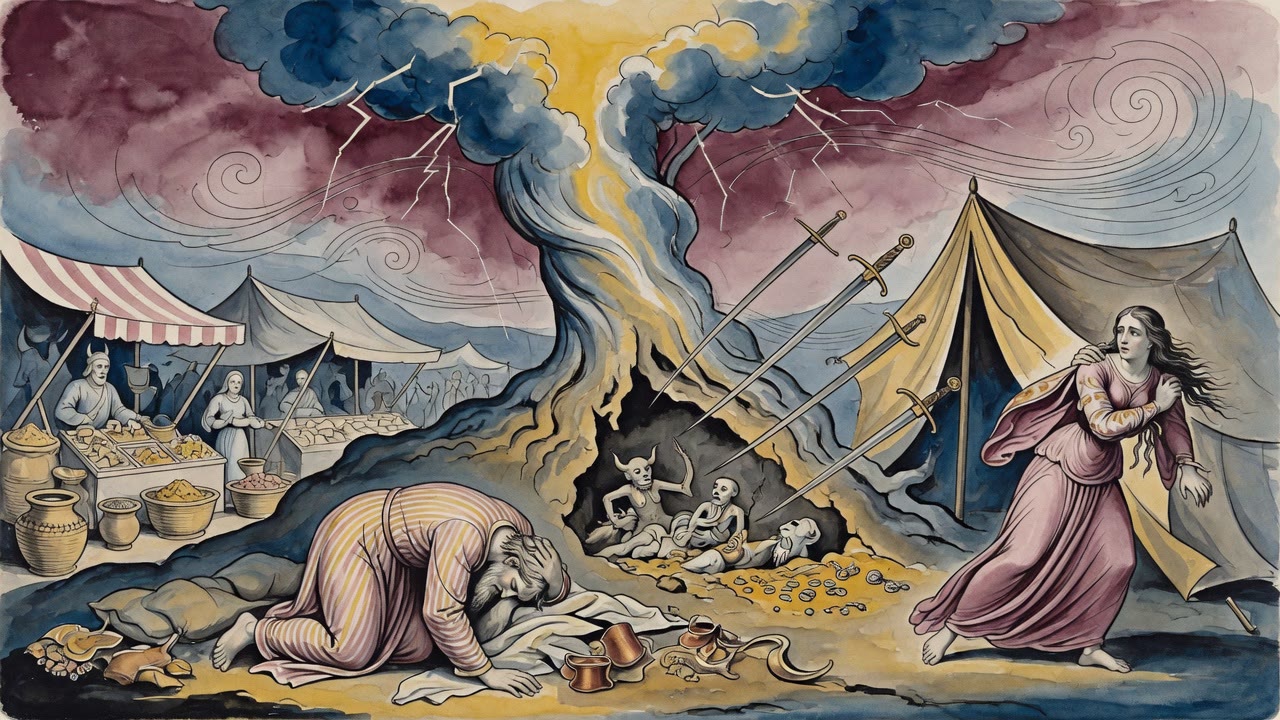
Reuben lived to see the rope he never threw replaced by a forgiveness he did not design. That is not comfort. It is the shape of a late mercy. Night wind moved over the empty pit at Dothan and made a low note in the stone. Reuben's sackcloth caught on thorns as he ran down too late. The Midianite track was already a line of scuffed dirt pointing toward Egypt and every year that would follow.
In Joseph's house the steward weighed the returned silver and saw men who flinched from their own honesty. Simeon, still chained, heard footsteps and wondered which brother would be next to learn what a pit feels like from the inside.
The eldest had meant well. The violent one paid first. The rest learned to carry truth in their hands before it was demanded.
← All myths