Reuben Overturned Bilhah's Bed and Stayed Among the Twelve
Jacob set his bed beside Bilhah after Rachel died. Reuben turned the frame over for Leah. The next line of Torah still named him among the twelve.
Table of Contents
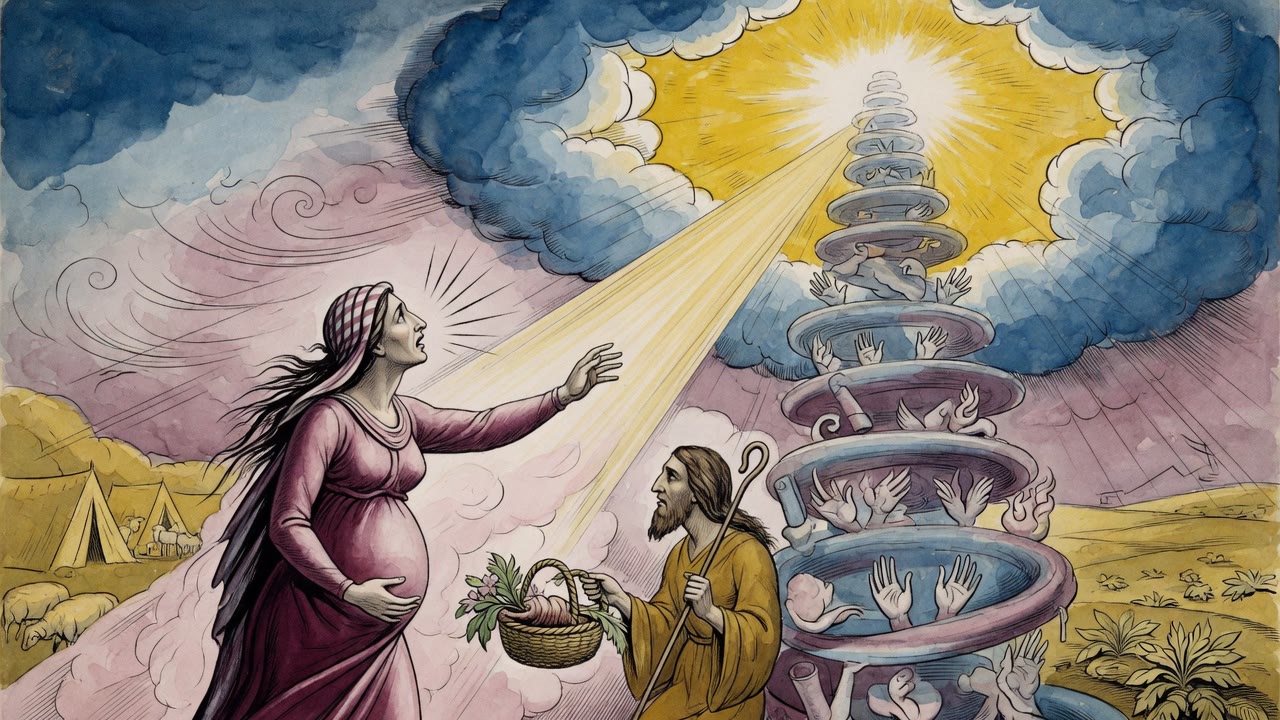
Rachel came to Jacob with the demand she had been carrying for years. "Give me children."
 Click for full size
His anger came up fast. "He has withheld it from you," he said. "Not from me. I have sons already. My father Isaac did not know whether the fault lay in him or in Rebekah, so he had to pray. I know where it lies."
Rachel did not step back. "Your grandfather Abraham already had Ishmael, and he still would not hold himself back from asking mercy."
Jacob gave her the household's older answer. "Do as Sarah did. She gave her maidservant to Abraham."
Rachel did it that day. Bilhah went into the tent, and the arrangement of beds in Jacob's camp changed again.
Fire Between Two Camps
Years on, the household was moving with blood behind it. Simeon and Levi had emptied Shechem, and the towns of the land gathered to answer for it. They meant to overtake the camp, cut the sons off, and kill them.
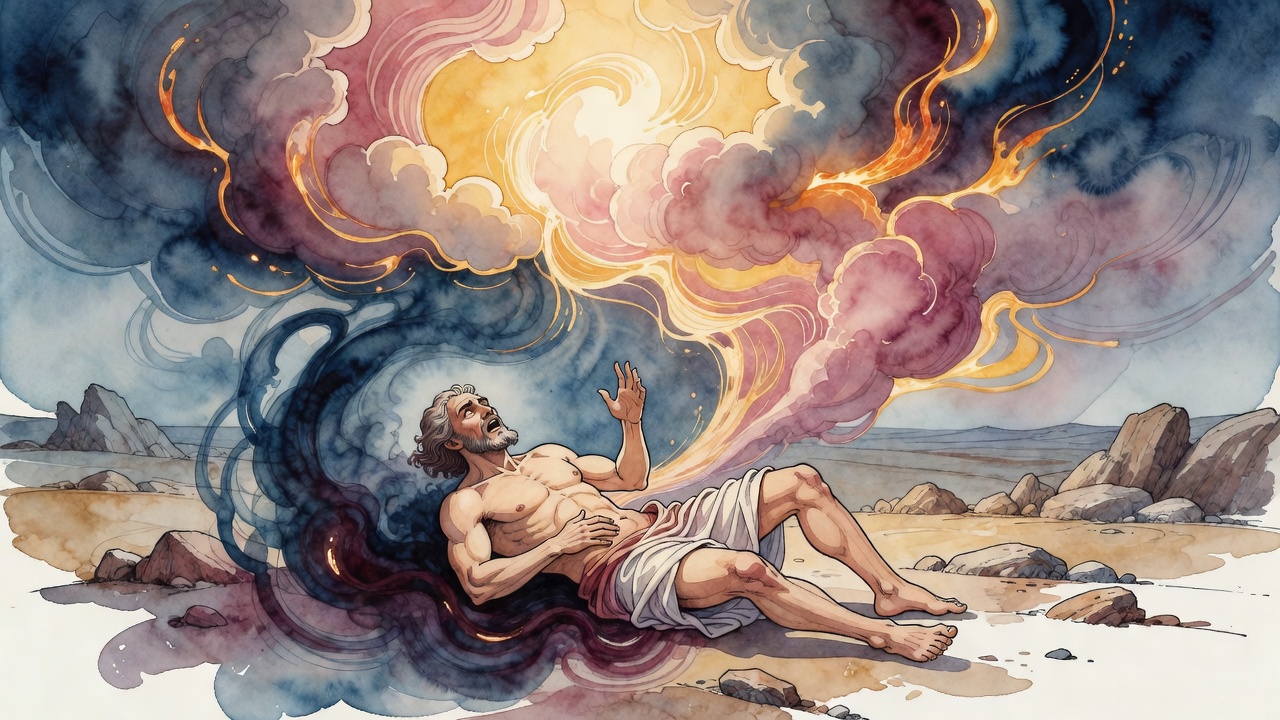
Then the ground opened. The Holy One split the earth under the pursuers and drove the crack down to the lowest deep, so that a man who took one more step would drop into it before he reached a tent rope. Fire rose in the gap between Jacob's camp and the camp of the Perizzite, and it stood there, holding.
The nations stopped where they were. Between the pit and the flame there was nowhere to put a foot. A man who leaned forward to see the camp better felt heat on his face and pulled back. They did not pursue the sons of Jacob, and the family that should have died on that road walked on with every son alive. Reuben, the eldest, walked at the front of them, past the crack in the earth, with the fire still standing at their backs.
The Bed Moved on the Road From Ephrath
Rachel died on that same road, in labor, and they buried her where she fell.
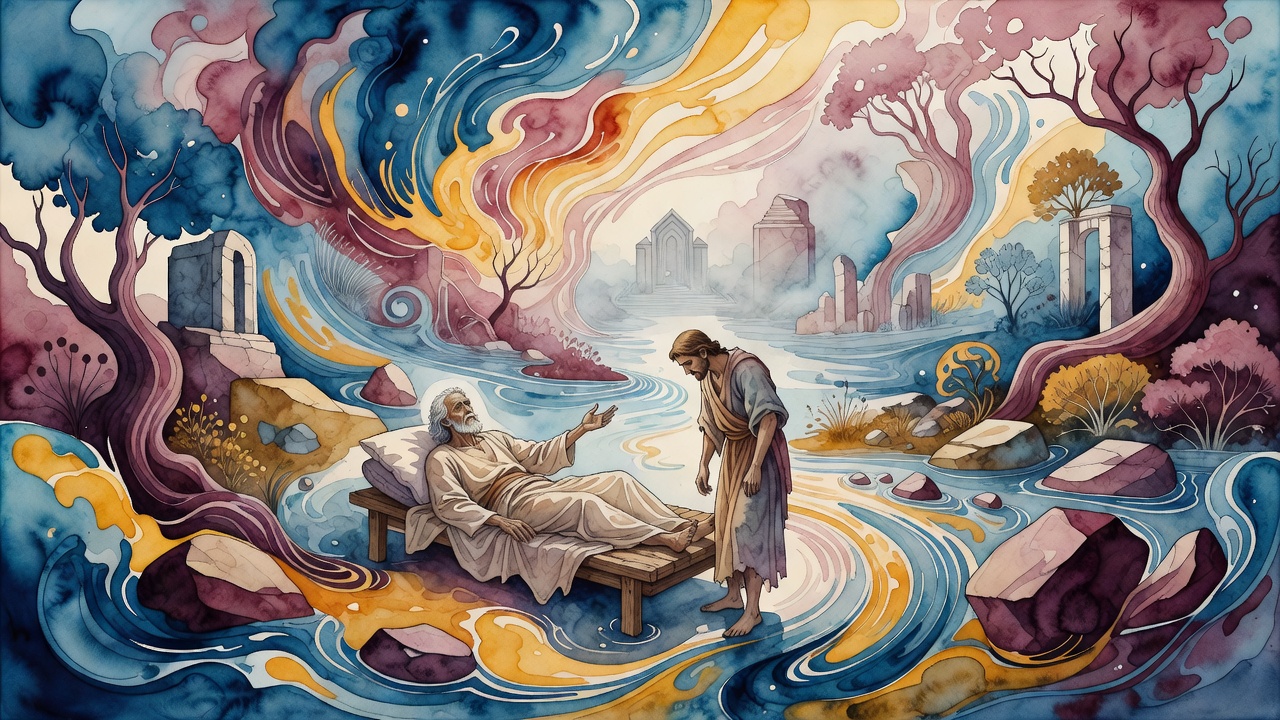
Jacob carried his own bed into Bilhah's tent and set it down beside her couch. Bilhah had been Rachel's maid. Where Rachel had slept, her handmaid would sleep now, and the father's bed would stand at her side.
Reuben counted the tents. Leah had borne him. Leah had borne Simeon and Levi and Judah. Leah had waited out every year of Rachel's favor, and now Rachel was under a stone on the road and the handmaid had the place beside Jacob and Leah's tent stayed dark.
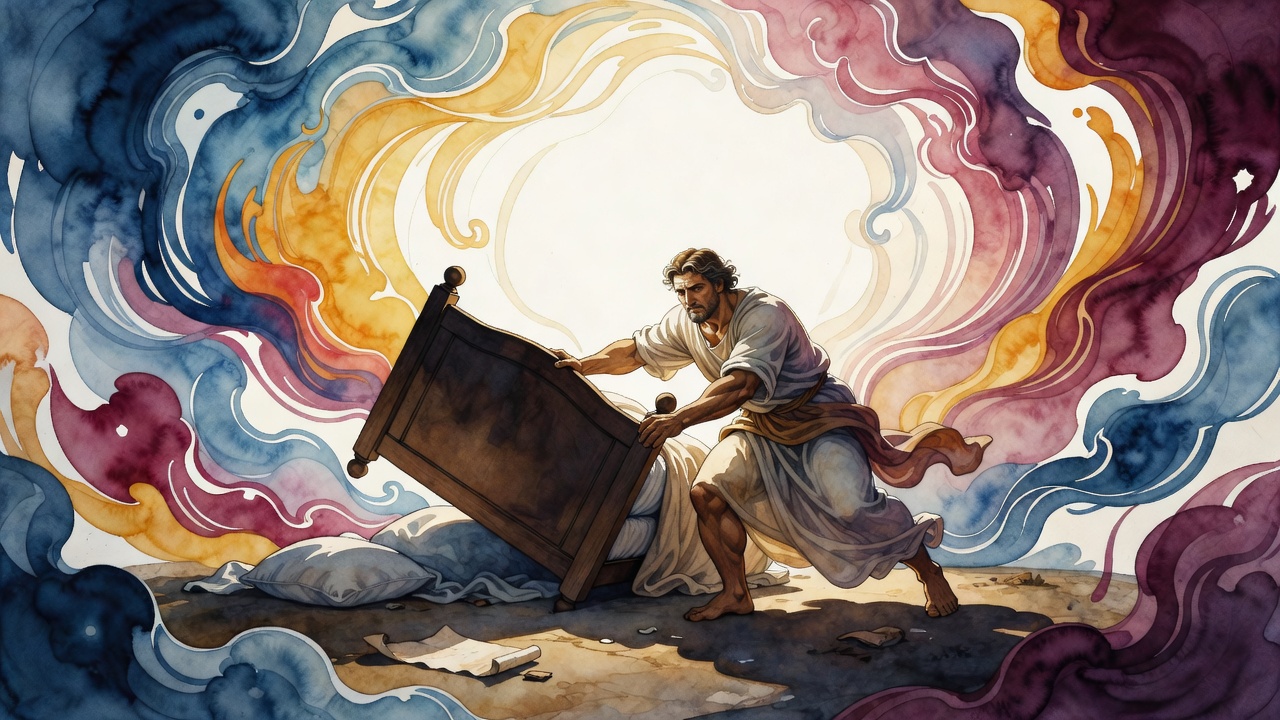
He went in. He put his hands on the frame. The legs scraped across the floor, a long ugly sound in a quiet tent. The bed came off its place. Dust rose. His father's blanket slid and bunched against the wall. Then the room was rearranged, and Jacob's bed no longer stood where Jacob had set it. Reuben walked out of a tent that was not his.
That was all. He had overturned a bed. He stayed outside, breathing hard in the dark between Leah's tent and the one he had just left. No one called after him. The camp went on sleeping as if a firstborn had not just rearranged his father's house with his bare hands.
The Verse Wrote the Worse Charge
He never put a hand on her. He put a hand on furniture.
The writing that came down did not say furniture. It wrote the sentence a son does not come back from: and he lay with Bilhah his father's concubine. A hand that reached into the arrangement of his father's bed was set down as a hand that had done the thing the arrangement was for. No hedge. No softening clause. The charge went into the text at full weight and stayed there.
A son who is jealous for his mother is still a son who moved his father's bed without being asked. Reuben had defended one woman's dignity by walking past his own place in the house, and the words that came down on him did not distinguish between the two.
Twelve, and the Count Did Not Change
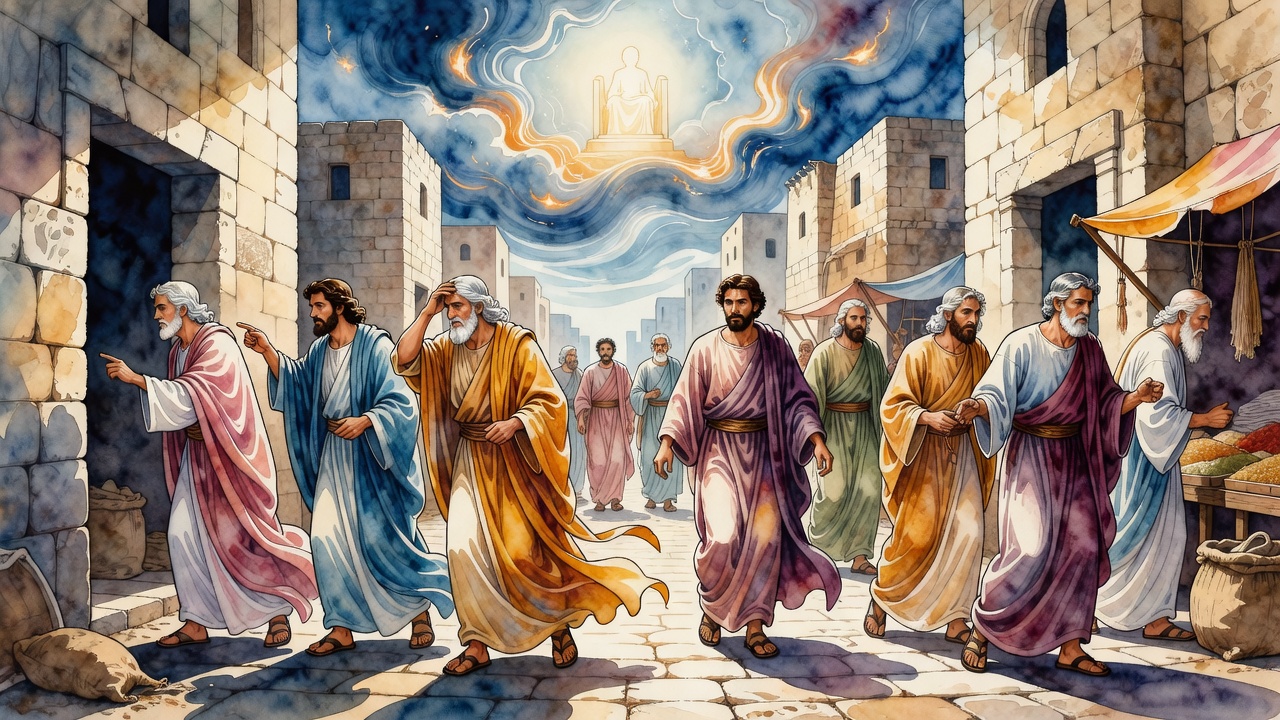
Then the next breath of the same passage counts the family. The sons of Jacob were twelve.
Not eleven and a disgrace. Twelve, weighed one against another, none of them lighter than the rest. Reuben stays in the count. The verse that had just buried him under the worst charge in the language turned around and put him back in the number.
He kept the name as well, four times over. Firstborn in conception. Firstborn in inheritance. Firstborn in service. Firstborn in repentance. That last one belongs to him alone among the twelve. Of all the brothers, the one caught reaching past his place was the first to turn back from it.
The bed went back where it belonged. The verse did not.
← All myths