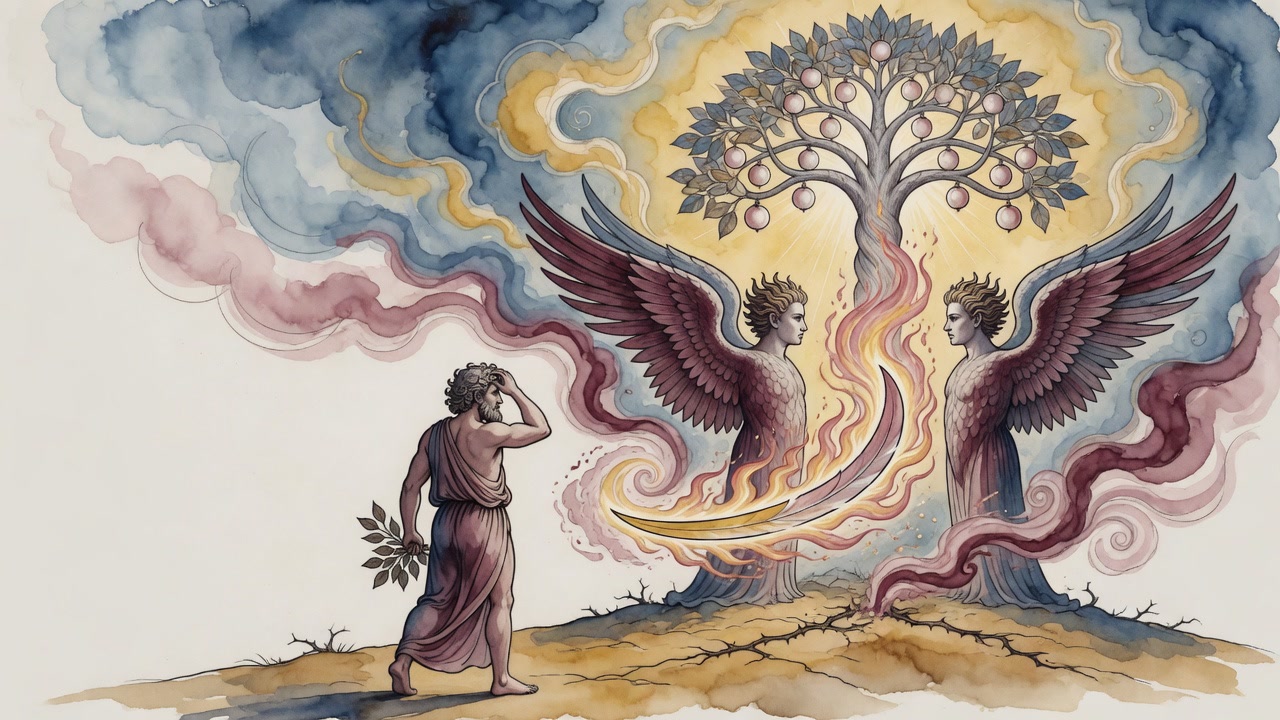
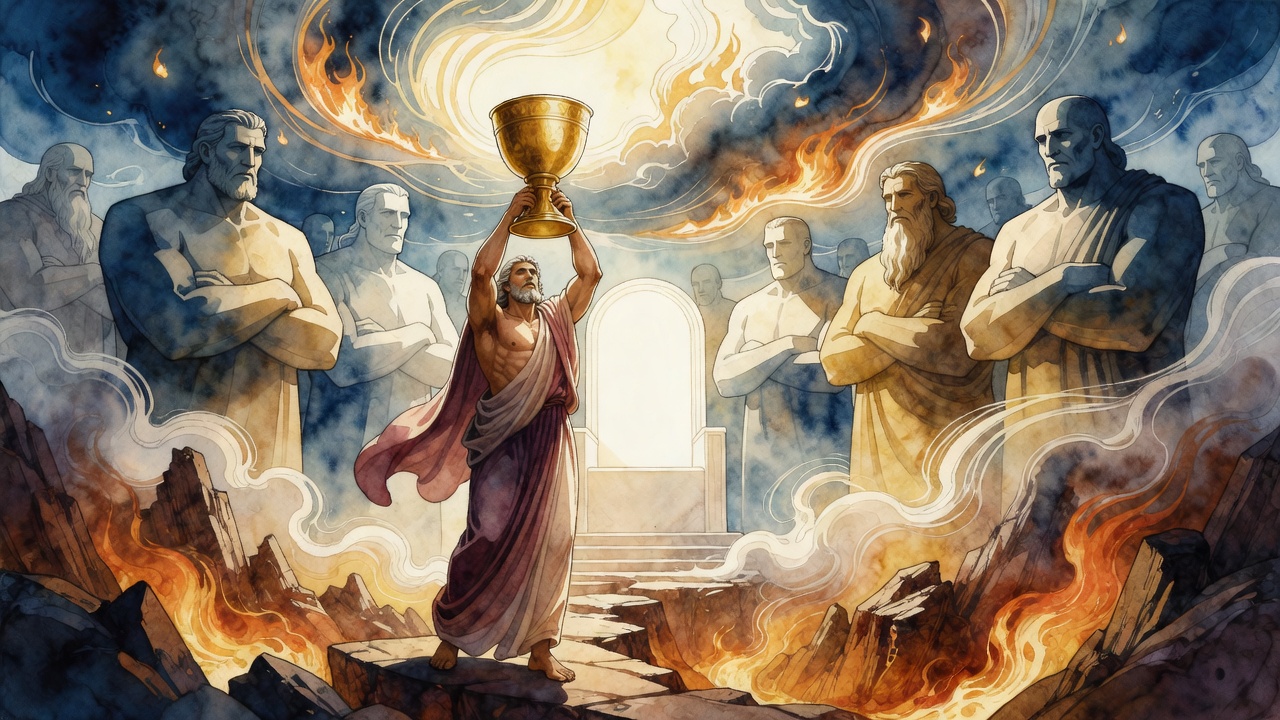
Righteous Souls Wait Under the Sapphire Throne
After the shroud is knotted, a righteous soul slips under the purple-blue Throne of Glory and waits for resurrection in the dark of sapphire.
Table of Contents
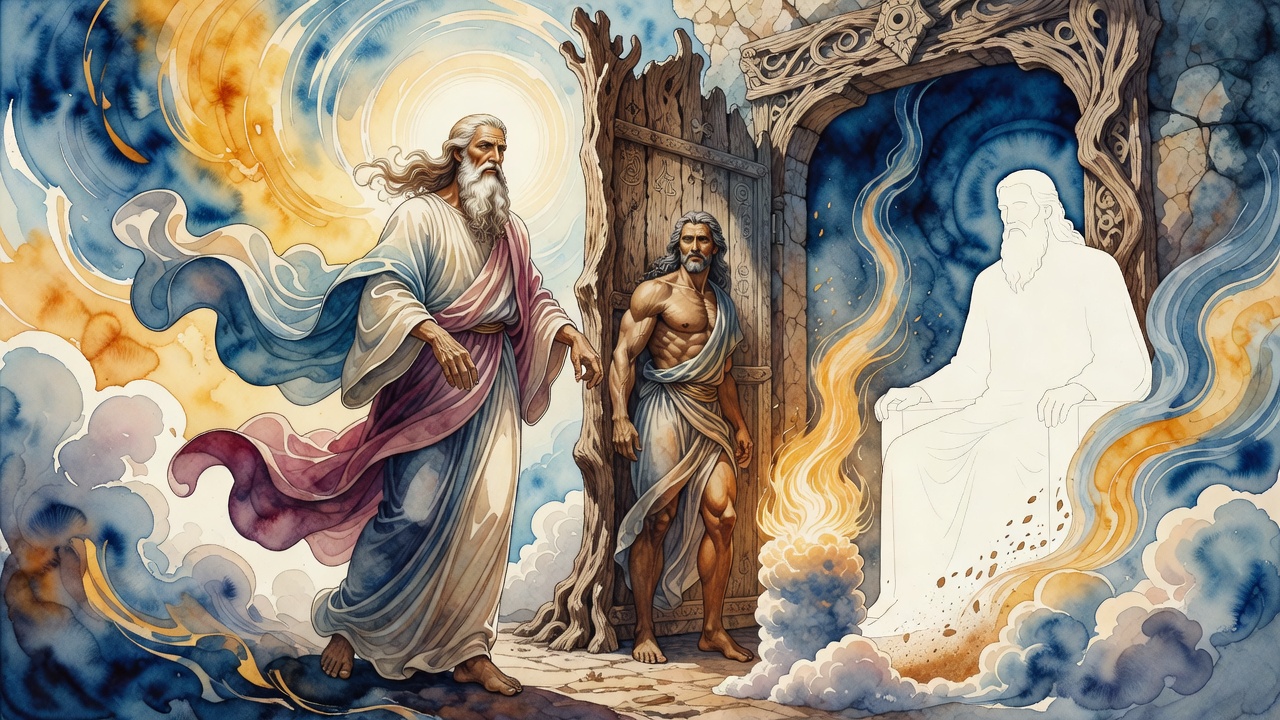
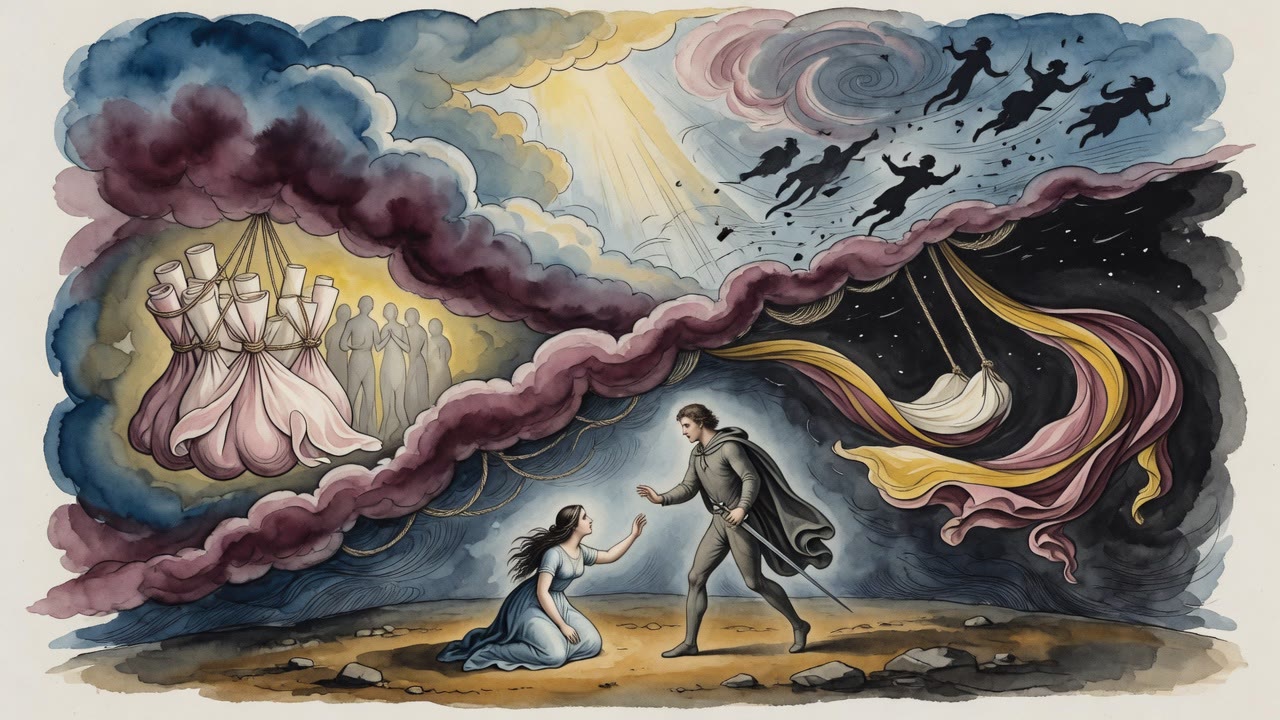
The last knot of the shroud tightened under the mourners' fingers, and the soul slid free. It did not rise like smoke. It fell upward, if falling can point at the highest place in the universe, and came to rest in a purple-blue dark the color of a sapphire floor. There, under the Throne of Glory, the righteous were concealed: not lost, not scattered, held like coins under a king's seat until the day the seat itself gives them back.
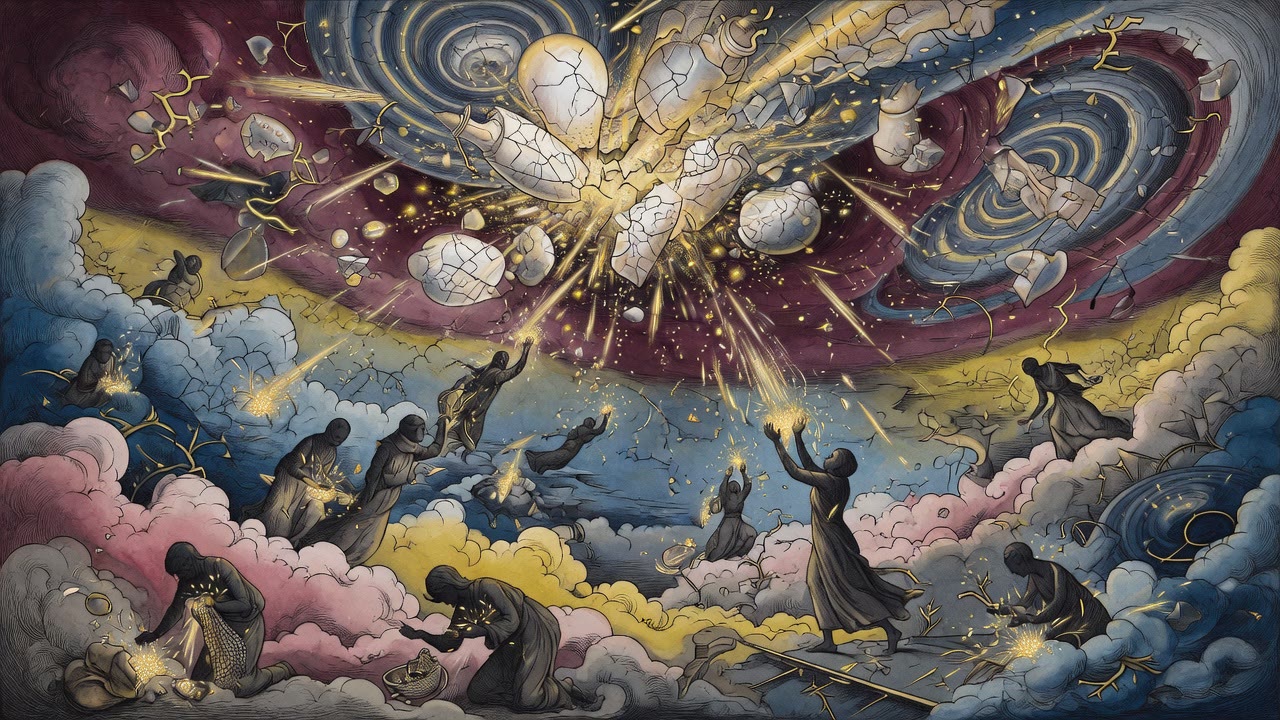 Click for full size
The soul pressed against something hard and cool. Above it the Throne occupied the top of all heights. The color matched the stone the Israelites had seen under God's feet at Sinai and the stone Ezekiel later named in his vision (Exodus 24:10). Same pavement. Same blue. Same refusal to be ordinary sky.
The Seat Older Than the World
The Throne had been made before the world, counted with the things that preceded clay and light and the first evening. The soul learned this the way a swimmer learns depth: not from a lecture, but from the pressure of water that has always been there. Torah rested in that same priority. So did this seat. Creation was the latecomer.
Under the seat the air did not move. Souls brushed one another without collision, each waiting, each sealed. R. Eliezer's teaching held: the righteous are stored here until restoration. No marketplace noise. No argument about Beth-Shean or Damascus or the dry south where mapmakers still hunted the earthly gate of Eden. Those debates belonged to living mouths. The dead had already arrived at the address that mattered.
Somewhere far below, sages still pointed at springs and river mouths and said, if Eden is in the land, try this entrance; if between rivers, try that. The soul under the Throne did not smile. It had passed the only gate that opened for it: death without a debt heavy enough to drag it elsewhere.
The Face Engraved Above
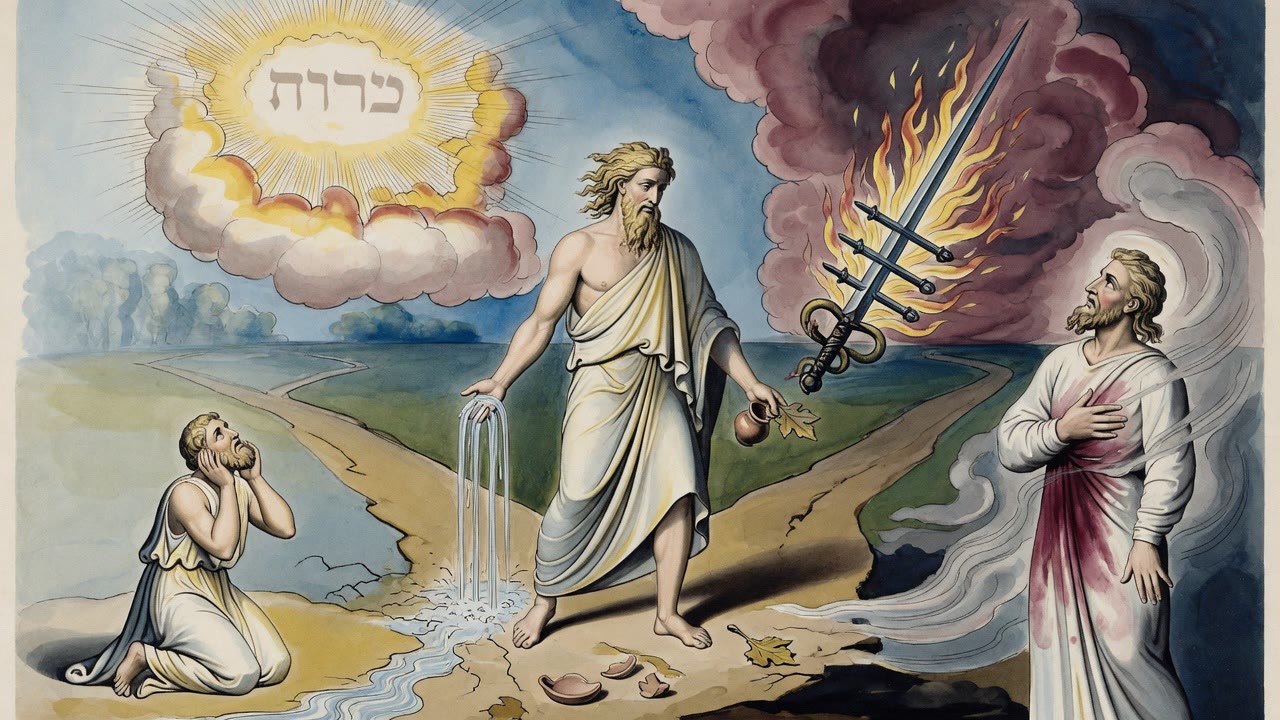
On the Throne itself, if a soul dared to look up through the blue, the likeness of Jacob was engraved. The patriarch's face rode at the heart of heaven so that the God of Abraham, Isaac, and Jacob never lacked a human contour in the highest place. The waiting soul found that face the way a child finds a known window in a strange city. Fear loosened one notch.
Once, long before this soul's death, Moses had climbed and the angels had closed around him. The Torah was too precious for dust, they said. God told Moses to hold the Throne and answer. A human hand had gripped the very seat under which the righteous now hid. The memory of that grip still lived in the wood or light or sapphire of the structure. The waiting soul felt it as a warm seam in the cold blue: proof that flesh had been welcome here when flesh still breathed and argued.
That seam did not let the soul climb into life again. It only said: you are not stored in a dump. You are stored under the place a prophet once held onto while heaven argued.
Two Edens and One Waiting Room
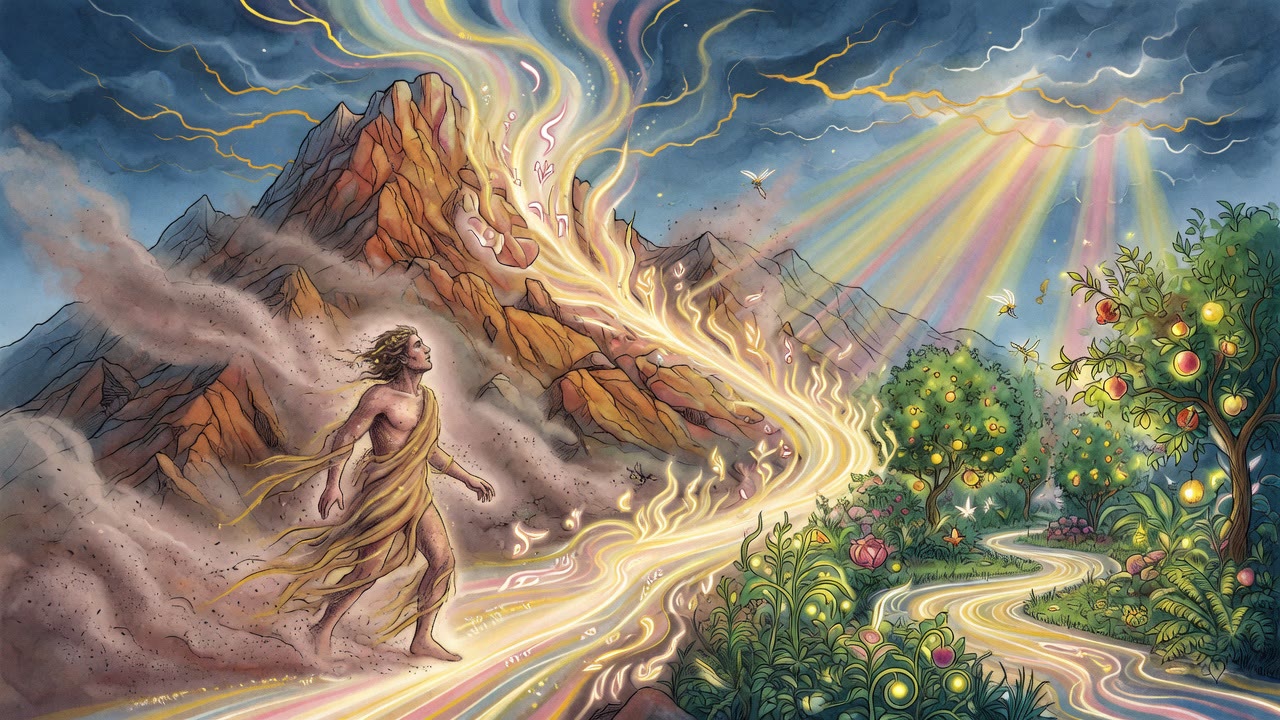
The books of the living spoke of two gardens: a lower Eden of earth and a higher Eden of souls. Some called the higher place the world of souls, where the righteous enter at once when the body cools. Under the Throne and in the higher Gan Eden (the Garden of Eden) the maps overlapped until the difference became a matter of name, not of journey. Lined up like stars, the righteous shone in rows. Heaven itself was said to have been spoken into being with the same Word that made the garden, so that stars and souls kept a kind of twin accounting.
The soul under the sapphire seat sometimes thought it heard the spicy odor of Eden, the scent strong enough in the old tales to push back the toxic breath of the leviathan. Whether the smell rose from the higher garden or from memory, it steadied the wait. Other times the soul felt only the blue pressure and the long quiet of being kept.
It did not sleep. Sleep belonged to bodies. It attended. That was the work of the concealed: to remain intact for the day the Throne releases what it holds.
What the Living Still Hunt
On the earth, Resh Lakish and others still sorted entrances. If paradise is in Palestine, Beth-Shean. If in Arabia, Bet Gerim. If between the rivers, Damascus. Alexander stories sent searchers into the interior of Africa. Canals and gulfs and equatorial lines filled books. None of those paths ran under the Throne. They ran through dust Adam had tilled after the expulsion, through a world where the original garden was likely always more heaven than map.
A living mystic might taste a corner of the upper rooms and return with his face changed. A dead righteous person did not return with reports. The soul under the seat had no mouth for the study house. Its silence was not ignorance. It was storage.
Mourners above ground tore garments and sat low and spoke the name of the dead into the week of grief. Under the Throne the name was already filed in a quieter ledger. The purple-blue did not brighten for tears. It did not dim for them either. It held.
The Day the Seat Opens
Resurrection, when it comes, will not be a polite invitation. The soul expects a pull, a command, a return into bone that has learned dust thoroughly. Until then the Throne remains the highest point and the safest dark. Jacob's face stays engraved. The sapphire keeps the color of the Sinai floor. The grip-mark of Moses stays as a seam only the waiting can feel.
One soul, pressed close to that seam, shaped a thought without lips: I am not under a rock. I am under the seat that was older than the world. The thought did not need an answer. Above it the glory did not shift. Below it, in Beth-Shean and Damascus and every wrong gate, the living kept hunting a garden whose better half had already taken the dead home.
The shroud on earth yellowed. The soul under the sapphire did not.
← All myths