Parshat Beshalach6 min read

The Same Hand at the Red Sea and the Walls of Jerusalem

At the Red Sea the hand pulled Israel free. At the walls of Jerusalem the same hand handed them over. Moses cursed the sun for it.

Curated by Arthur · Told by Maggid ·
Table of Contents
  1. The Word That Saves
  2. The City That Burned
  3. Moses Goes Looking for the Fathers
  4. The Curse on the Sun

The water was still warm where the sea had been. Moses stood on the far shore with the wind off the waves stinging salt into his beard, and below him, washed up along the wet sand, lay the bodies of the men who had chased him out of Egypt. Chariot wheels, broken and tangled in weed. Horses on their sides. Soldiers face down at the tide line, the same soldiers who had stood over Israel with whips. The people around him were laughing and weeping at once, gripping each other, and the children kept pointing at the dead and going quiet.

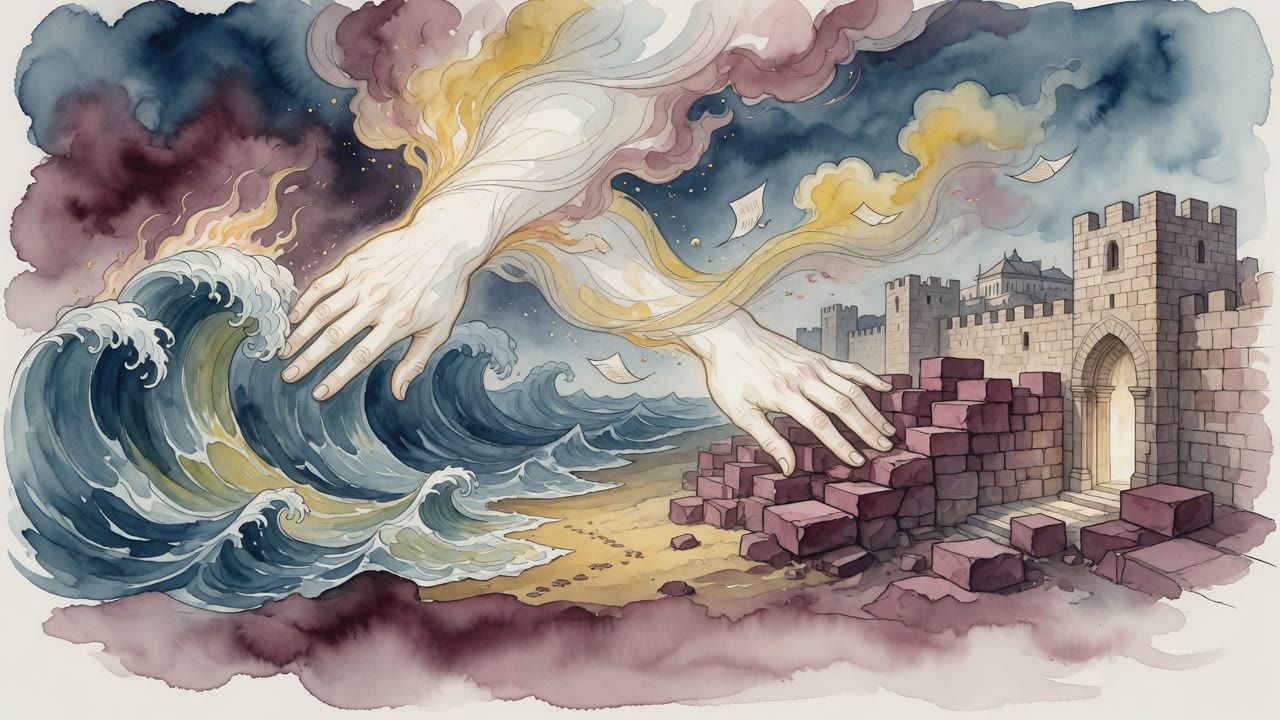
He opened his mouth to sing, and the word that came out was a word for being pulled free. The hand had reached down into the narrow place and lifted them out of the grip that held them. So God delivered Israel that day from the hand of Egypt, and Israel saw the Egyptians dead on the shore of the sea (Exodus 14:30). The hand had closed the water over the enemy and set Israel loose on dry land. There was no stronger word in the language for rescue, and Moses sang it standing in the wreckage of an army that had wanted them all dead by morning.

The Word That Saves

The hand in that song was a hand that took hold. It went into Egypt the way you reach into a fire to pull out something burning, fingers closing fast, and it dragged Israel up and out before the heat could finish them. That was the whole shape of the day. They had been held, and now they were not held. They had been inside the fist of another nation, and the hand of God had pried the fist open and carried them clear.

The people had no map and no bread and no idea what waited in the wilderness ahead. None of that touched the joy on the shore. The thing they had been most afraid of in the world, the army at their backs, lay drowned at their feet. The hand had done it. Moses sang about the hand. He could not have imagined the same word turning on them.

The City That Burned

It did turn. The sea dried, the wilderness passed, the land was given and built and walled, and the walls rose around a city with a house for God at its center. And the walls came down. The siege engines worked at the stone for months until the stone gave, and the enemy poured through the breach into the streets, and the house at the center went up in fire that did not stop until there was nothing left to burn.

The survivors were chained and marched out the way Israel had once marched out of Egypt, except this time no sea opened and no song rose. A voice came up out of the ash and the rubble and said the thing no one wanted to hear. The Lord has given me into the hands of those I cannot stand against (Lamentations 1:14). Given over. Handed across. The same hand that had reached into Egypt and pulled them free now reached down and set them into a grip too strong to break. The word for rescue and the word for surrender were turning out to be the same word, run backward, the hand opening this time to let go instead of to lift.

Moses Goes Looking for the Fathers

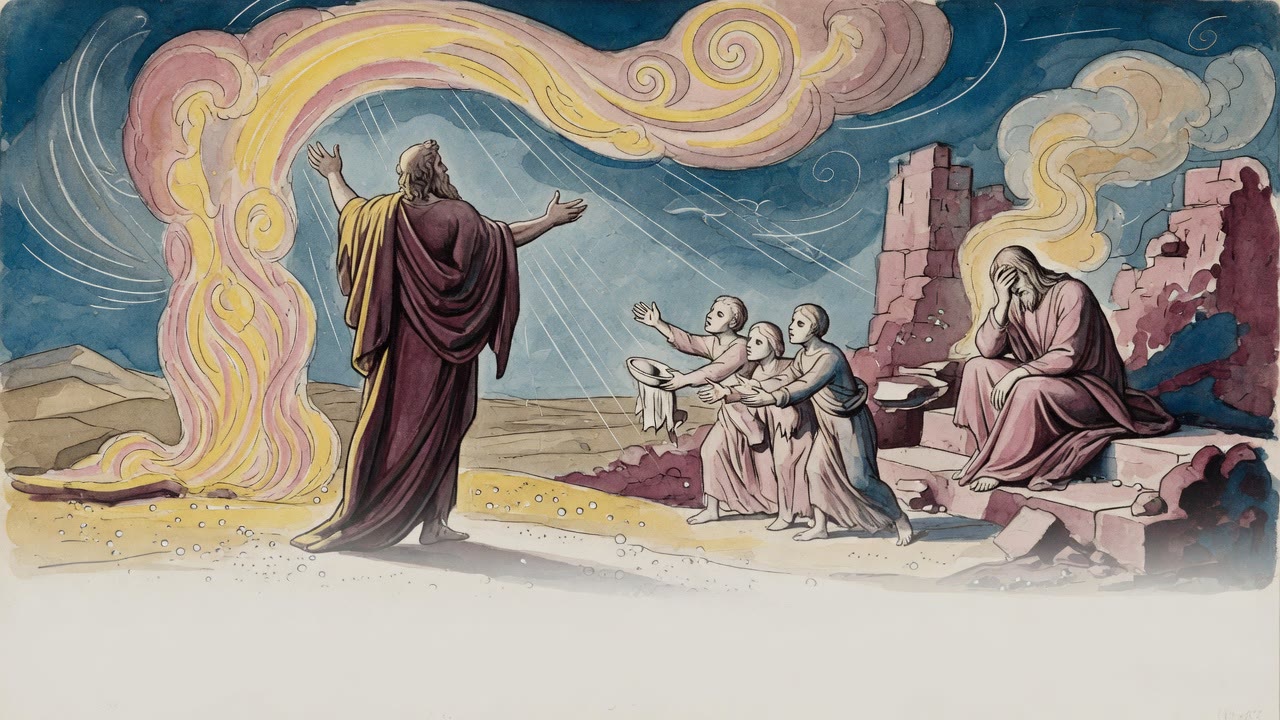
Moses could not stand it. He went looking for the dead, for the fathers of the people, Abraham and Isaac and Jacob, the Avot, the ancestors who had been promised that their children would be more than the stars. He came to them and he told them what he had seen. He described the chains. He described the children. He described the house burning.

They did not comfort him. They could not. They listened, and they broke, and the grief moved from him into them so that now it was four of them weeping instead of one. The sound of that weeping did not stay on the ground. It climbed. It pierced up through the air and reached the very heavens, a long chain of mourning stretched from the burning city back through every generation to the men who had first been promised a future for their seed, and every link in that chain was crying.

The Curse on the Sun

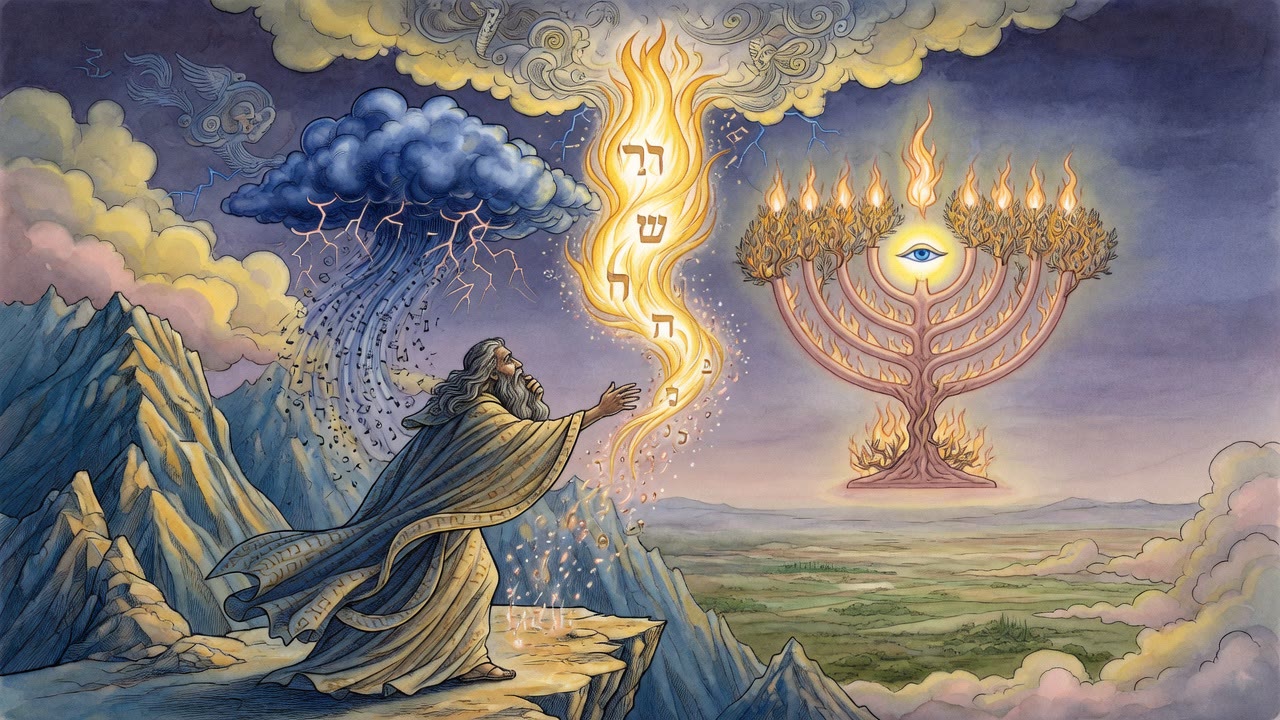
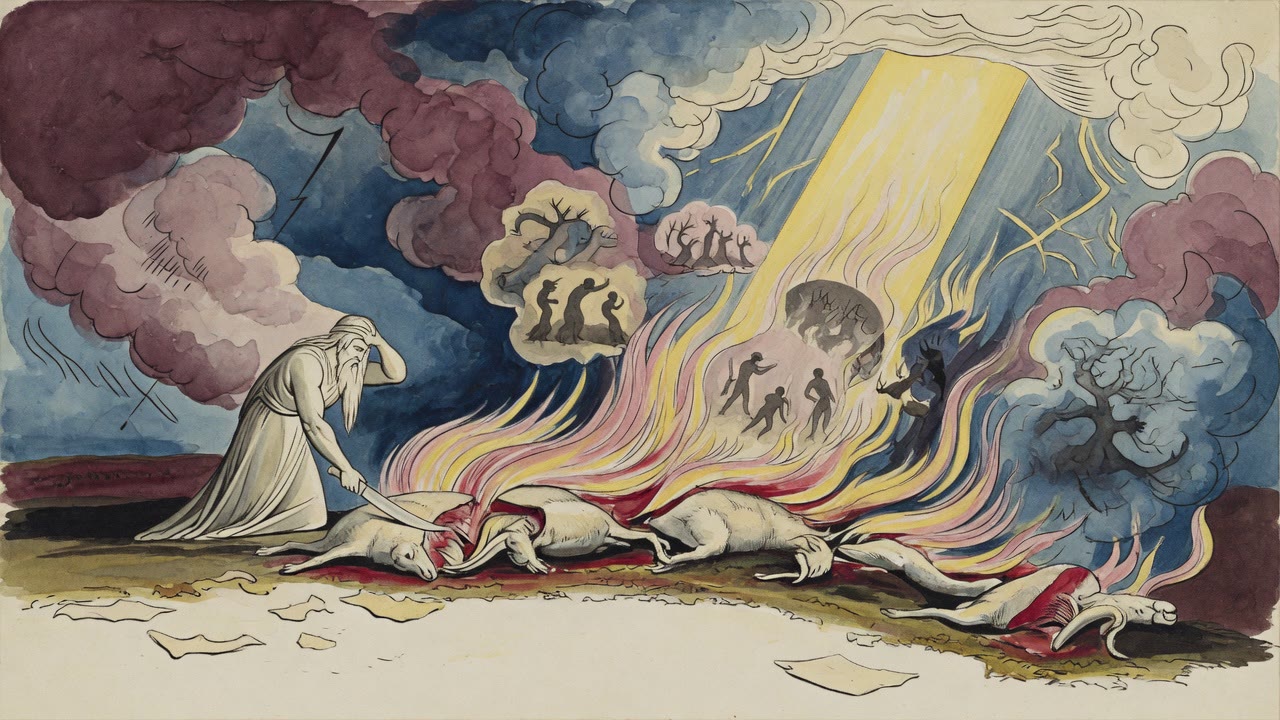
What broke loose in Moses last was not a prayer. It was a curse, and he threw it at the sky. He looked up at the sun that had gone on shining all through the slaughter, the sun that had lit the enemy's path into the holy place and never dimmed for it, and he cursed it to its face.

"Be cursed, O sun," he said. "Why was your light not put out in the hour when the enemy walked into the sanctuary? Why did you keep burning." The source of all light, the thing that rises every morning whether or not the world deserves it, and Moses stood under it and cursed it for refusing to go dark when the worst thing happened. The man who had sung on the shore about a hand that saves was now screaming at the daylight because the same hand had let go. He had carried the first word his whole life. He had no word left for the second one except a curse at the sky.


← All myths

From the tradition

Sources

2 sources

The texts this telling draws on, in full. Open a card to read inline, or expand it for a wider, quieter read.

Yalkut Shimoni on Nach 1026:6Yalkut Shimoni

This teaching is part of a series in which the sages set the triumphant words of Moses at the Exodus against the mournful words of Jeremiah at the fall of Jerusalem, drawing out how completely Israel's situation was reversed. When Israel went out of Egypt, the moment of redemption was sealed at the sea, and the text records that the Lord saved Israel that day from the hand of the Egyptians (Exodus 14:30). The verb is one of deliverance: God reached out and rescued His people, removing them from the grip of their enemies and setting them free on the far shore.

Against that verse of rescue the midrash places a verse of surrender. When Israel went out of Jerusalem into exile, Jeremiah voiced the lament that the Lord has given me into the hands of those I cannot withstand (Lamentations 1:14). The same divine hand that once delivered Israel from Egypt is now described as handing Israel over to enemies too strong to resist. The contrast is deliberate and painful. At the Exodus, God took His people out of the hand of the oppressor; at the destruction, He placed them into the hand of the oppressor. By laying the two verses side by side, the sages turn the memory of the first redemption into a measure of the depth of the later loss, and they keep alive the hope that the God who once delivered can deliver again.

Full source
Legends of the Jews 10:36Legends of the Jews

“the sound of their grief pierced to the very heavens.” It paints a vivid picture of despair.

Where is Moses, their leader, during all this? He’s gone to plead with the Avot, the Patriarchs – Abraham, Isaac, and Jacob. According to Ginzberg's retelling in Legends of the Jews, Moses returns to these ancestral figures, bearing witness to the horrors faced by the exiled Jews. And what happens? They, too, are overcome with sorrow, joining in the chorus of woe.

It's a powerful image, this chain of grief stretching from earth to heaven, from the present generation back to the very roots of the Jewish people. But it's Moses's personal anguish that really grabs you. He cries out, cursing the sun! "Be cursed, O sun," he exclaims, "why was not thy light extinguished in the hour in which the enemy invaded the sanctuary?"

Think about the audacity of that statement. Cursing the sun, the source of all light and life! But it shows the depth of his pain, his feeling of abandonment.

And the sun… it answers him! The sun replies, defending itself. "O faithful shepherd, I sware by the life, I could not grow dark. The heavenly powers would not permit it. Sixty fiery scourges they dealt me, and they said, 'Go and let thy light shine forth.'" According to this version, the sun was forced to shine, even amidst the darkness, highlighting the idea that even celestial bodies are subject to a higher power, and perhaps even to a divine plan beyond our comprehension.

Did the sun want to go dark? The story leaves that hanging.

But Moses isn’t done. He has one last, agonizing complaint, this time directed to God himself. "O Lord of the world," he cries, "Thou hast written it in Thy Torah: 'And whether it be cow or ewe, ye shall not kill it and her young both in one day.' How many mothers have they slaughtered with their children and Thou art silent!" (The source for this is found in Legends of the Jews.)

This is a direct challenge to divine justice. How can a God who commands compassion even towards animals allow such unspeakable cruelty to human beings, mothers and children, no less? The contrast between the divine law and the reality of suffering is stark and deeply unsettling.

It's a question that echoes through the ages. How do we reconcile faith with suffering? How do we maintain hope in the face of despair? These stories, these legends, don't offer easy answers. But they do offer a space to confront these questions, to voice our pain, and to remember that even in the darkest of times, the cries of the Jewish people. And their leaders, have always pierced the heavens.

Full source