The Three Things Moses Wanted More Than Canaan
Moses prayed to cross the Jordan 515 times and was refused. But the rabbis preserved three deeper desires he had long before he asked about the land.
Table of Contents
 Click for full size
The Requests Before the Land
Everyone knows Moses wanted to cross the Jordan. He prayed about it five hundred and fifteen times, the numerical value of the word va'etchanan, with which his final plea begins. God said no each time, firmly, and Moses accepted it, and that is the story most people remember about his last days on earth.
But before he ever thought about the land, Moses had wanted three things that had nothing to do with geography. The tradition preserved them separately, as an older and in some ways deeper record of what the man actually wanted from his time as God's closest human partner. Two of the three God granted. The third required a conversation about the nature of mercy itself.
The Divine Presence Among Israel
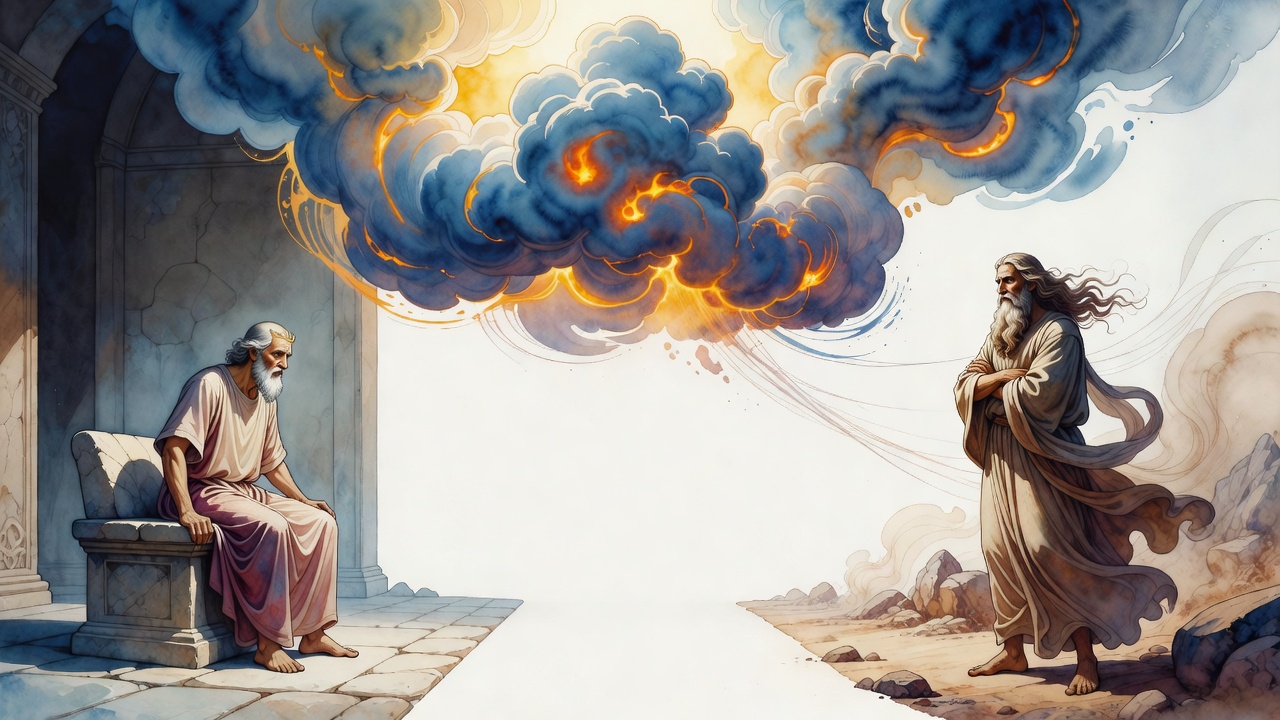
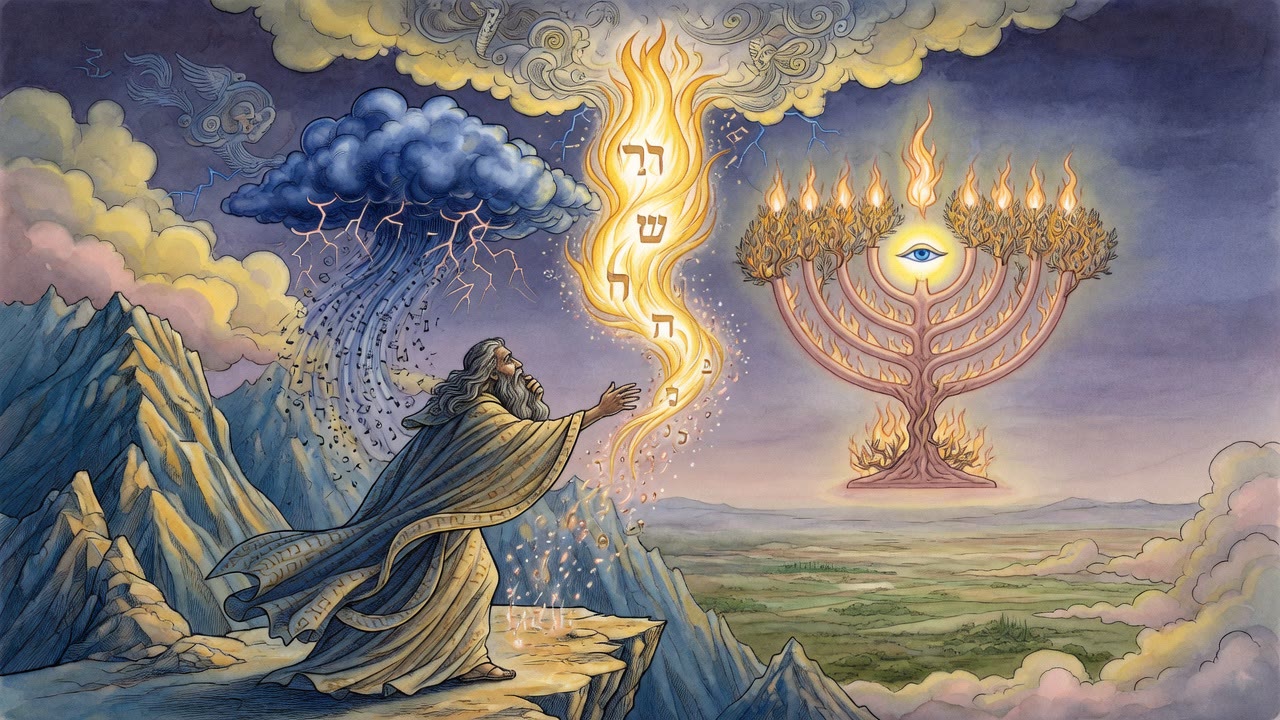
The first desire was this: Moses wanted the Shekhinah, the divine presence, to dwell among the people of Israel. Not to visit. Not to appear occasionally at the Tabernacle entrance when Moses entered. To dwell: to take up residence, to make Israel's camp its permanent home the way a person makes a home in a place and stops traveling.
God granted this. The cloud by day and the fire by night were the visible signs of a presence that had committed to staying. The Tabernacle was built as a dwelling, not a meeting-place, and the tradition took seriously the idea that God had moved in. Moses had asked for this and received it, and the entire wilderness period, its difficult years notwithstanding, was the sustained fulfillment of his first request.
The Attribute of Mercy
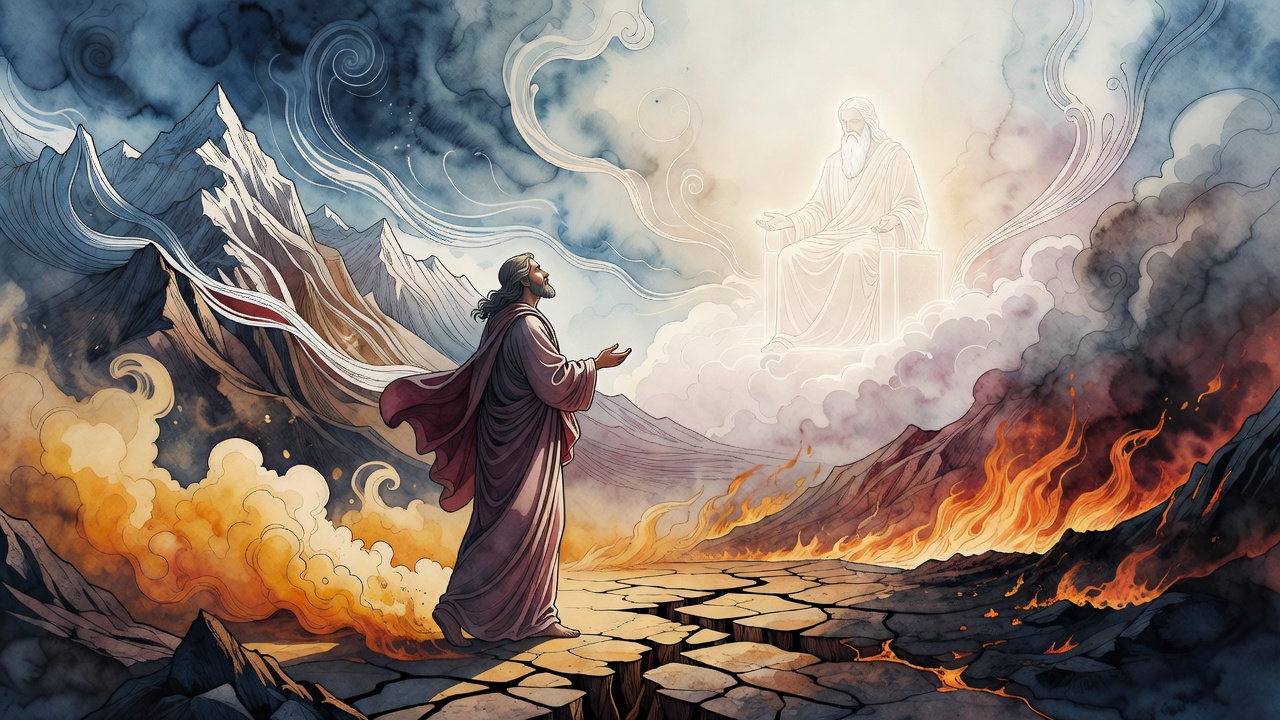
The second desire was stranger: Moses wanted to know which attribute God used to govern the world. Not power, not justice alone. What attribute was primary? He had seen God write the words erekh apayim, slow to anger, into the Torah, and something in that phrase arrested him. He asked God directly: tell me the principle by which you rule. God answered: loving-kindness. Mercy above all other attributes.
Moses asked for something further: when justice demands punishment and mercy argues against it, let mercy win. Let that be the rule. God told him the rule was already in place. The entire system of divine response to human failure was built around the priority of mercy. Moses was asking God to confirm what God had already decided. But the asking mattered. It showed Moses understood what he had been working with for forty years in the wilderness, not a God who measured precisely and punished automatically, but a God whose default setting was to find a reason to hold back.
The Third Desire and Its Answer
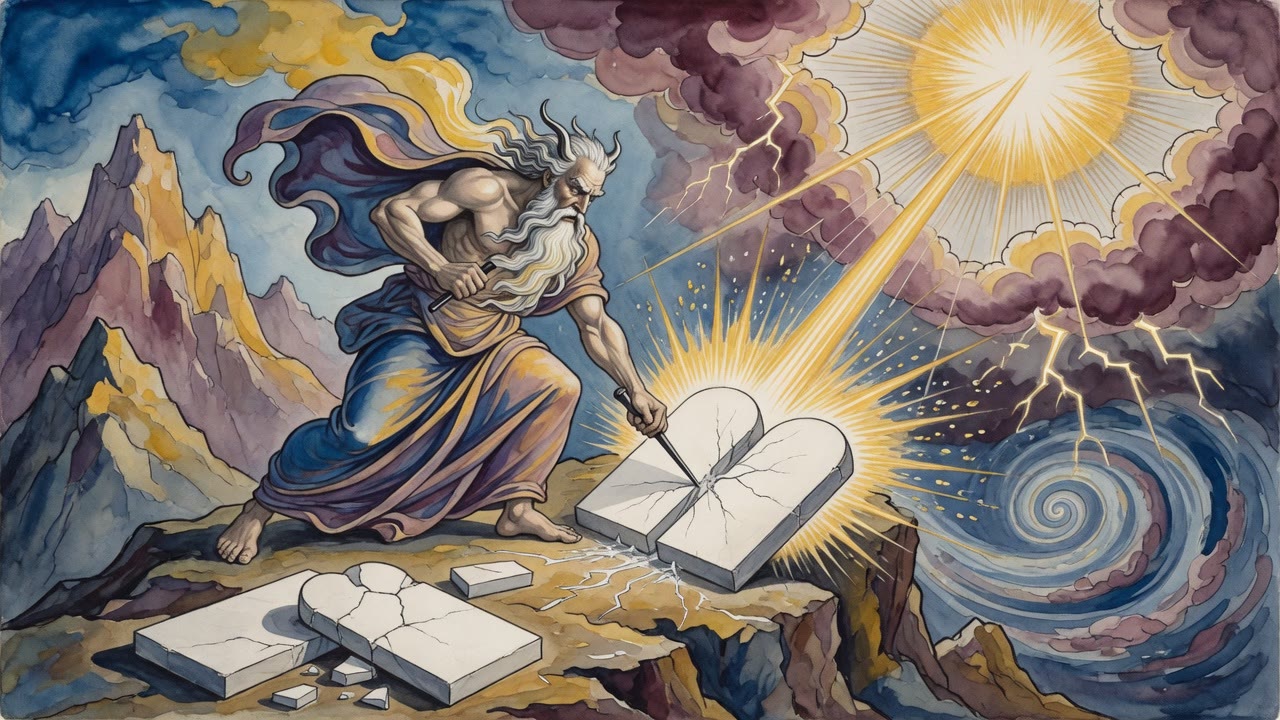
The third desire: Moses wanted the wicked to repent rather than be destroyed. He had stood between God and Israel often enough during the wilderness years to know what divine wrath looked like up close. He had broken the tablets, he had ground the golden calf to powder and made the people drink it, he had watched Korach's followers go down into the earth. He did not want more of that. He wanted the wicked to turn back. He wanted teshuvah (repentance, the turn back toward God) to work before the punishment arrived rather than after.
God granted this desire conditionally: the possibility of repentance would always exist, always be accessible, never be closed. What God did not grant was a guarantee that the wicked would make use of it. Moses had wanted both the door and its use. He received only the door, permanently open. The walking through it remained in human hands.
What the Hidden Wisdom Contained
The esoteric tradition added something to Moses's portrait that the narrative alone does not convey: he carried within him a level of soul-knowledge that placed him in direct contact with the roots of divine wisdom. The Kalach Pitchei Chokhmah, a kabbalistic text, describes the layered spiritual hierarchy that Moses navigated not as external territory but as internal structure. His understanding of mercy was not abstract theology. It was intimate knowledge of how the divine operated at its foundational level, the kind of knowledge that comes from having been inside the system rather than studying it from outside.
← All myths