Parshat Vayera5 min read

Sarah Wept While Dressing Isaac for Moriah

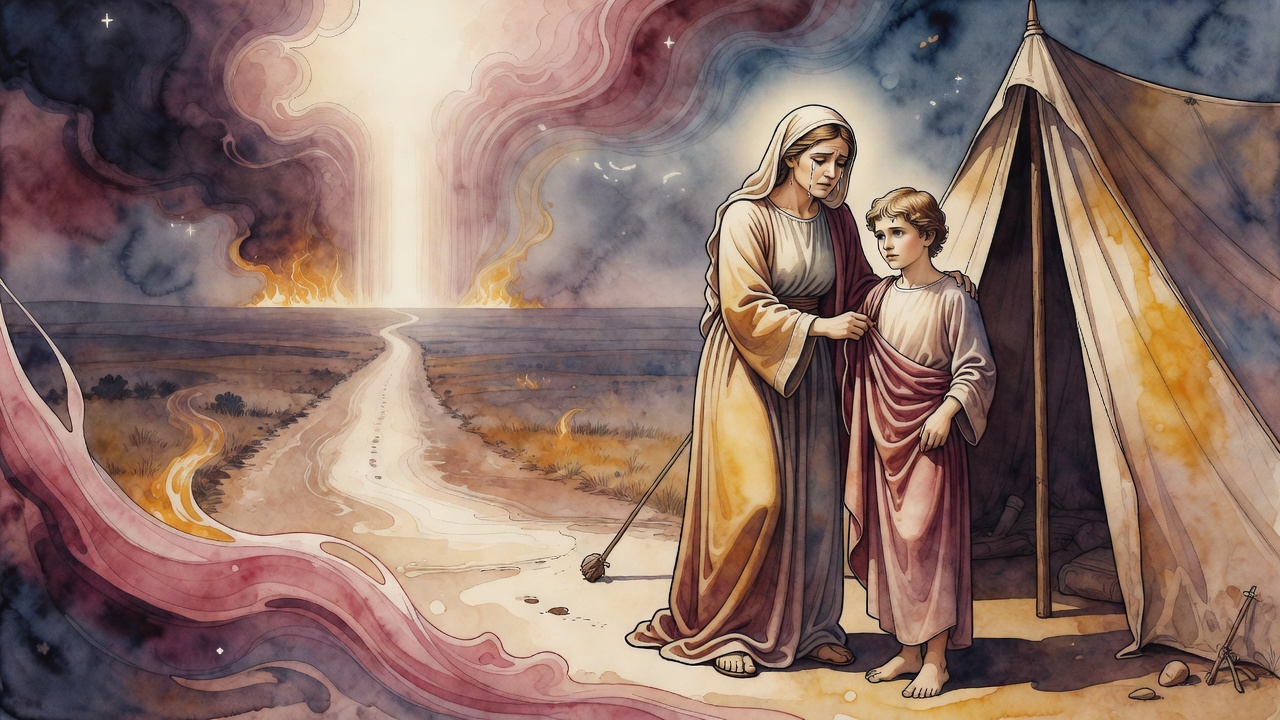
Sarah packed bread and water as if the road were ordinary. Out on the open land Isaac's voice broke her, and even the servants wet the ground weeping.

Curated by Arthur · Told by Maggid ·
Table of Contents
  1. Night Cloth and Morning Cloth
  2. Wood, Fire, and the Missing Lamb
  3. The Ram and the Sweet Savour
  4. What the Mountain Sent Home
Sarah Wept While Dressing Isaac for Moriah Click for full size

Night Cloth and Morning Cloth

Sarah did not sleep. She sat with the cloth of a fine garment across her knees, one of the gifts Abimelech had pressed into her hands in another season of danger, and she wept until the threads held salt. Before dawn she rose and called Isaac. She dressed him herself. Sleeves. Sash. A turban set with a precious stone that caught the first gray light like a small moon. She packed bread and water as if the road were ordinary, as if a mother could still choose what a day becomes.

They walked out together. Abraham led. The servants followed. Sarah kept pace until the dust of the tent was gone and the open land began to measure distance in heartbeats. When they gently urged her to turn back, Isaac's voice broke her open. She held him hard enough to feel the stone on his brow press her cheek. "Who knoweth if I shall ever see thee again after this day?" The great weeping rose from her throat, from Abraham's, from Isaac's, until even the servants wet the ground with them. Then the men went on, and Sarah stood alone with a question no answer could quiet.

Wood, Fire, and the Missing Lamb

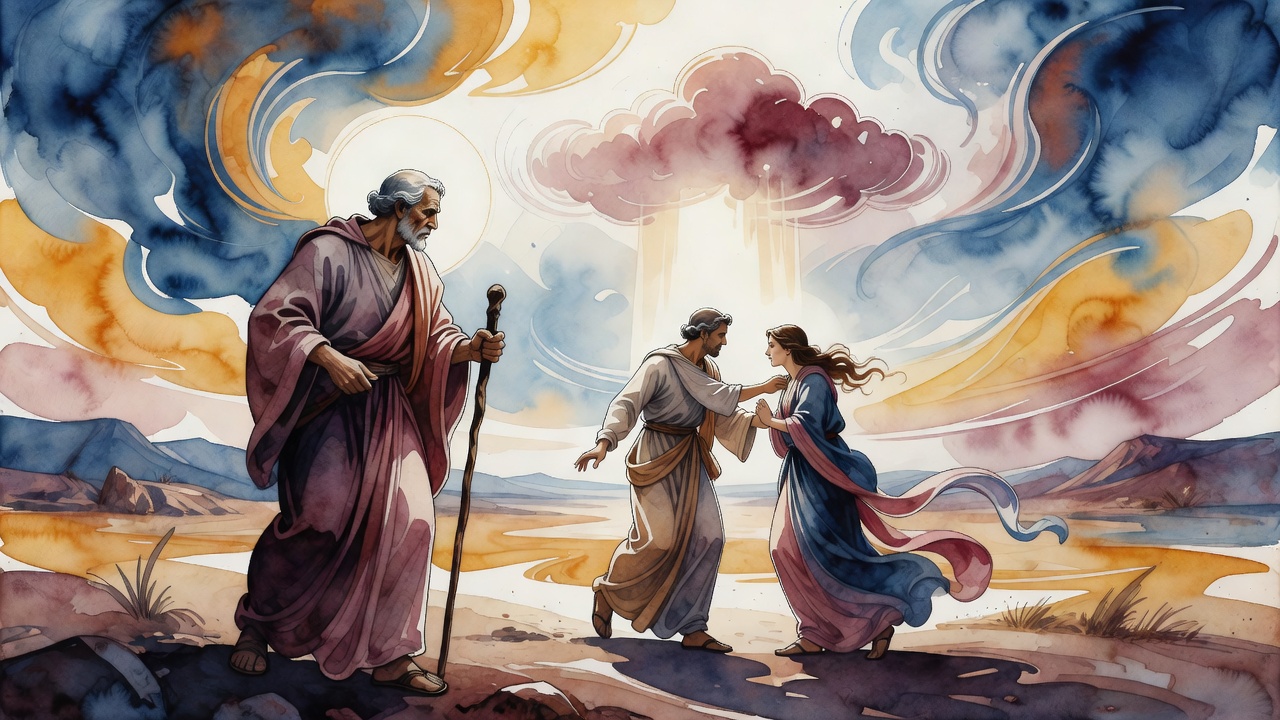
On the climb, Isaac carried wood. Abraham carried fire and the knife. The boy watched the path and the silence between them. At last he spoke the sentence that hangs over every later telling. "Here are the fire and the wood, but where is the lamb for a burnt offering?" (Genesis 22:7). Abraham answered with a weight that left no room for play. "You are the lamb for the burnt-offering." The words landed like a second knife. Isaac did not run. He walked. The altar rose under their hands, stones stacked with the care of men who still believe order can hold terror.

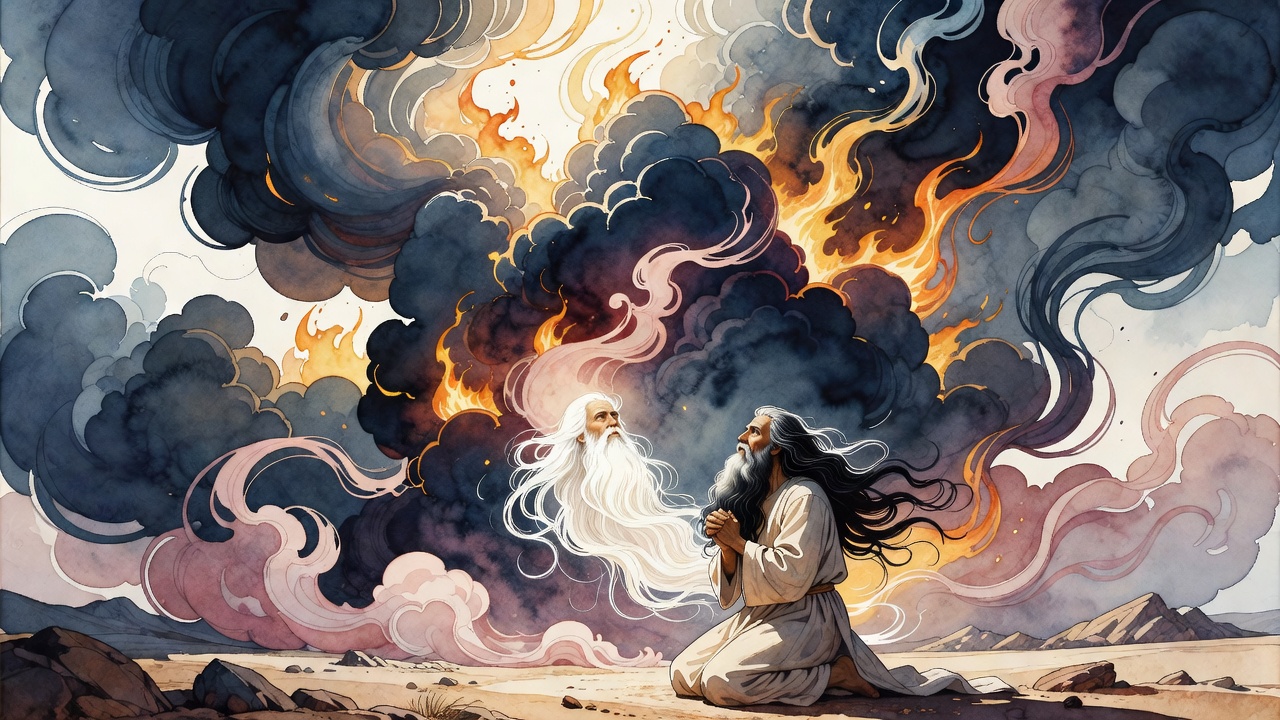
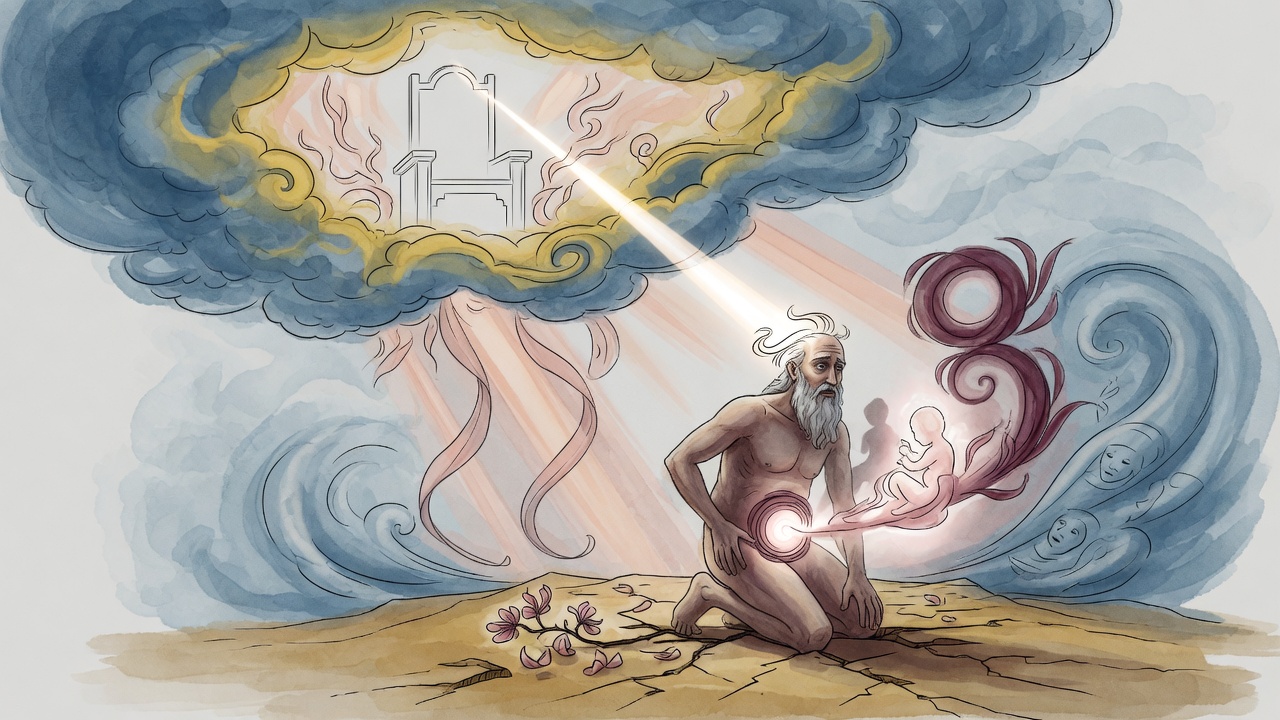
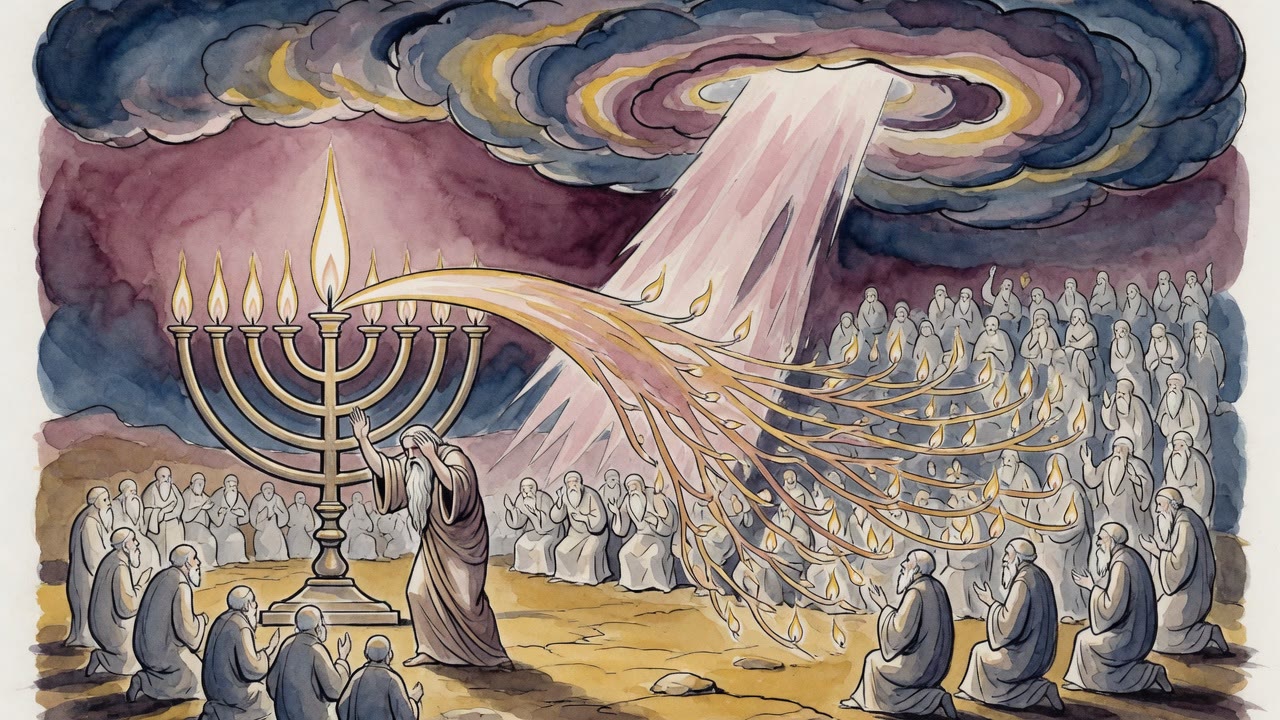
Ropes found wrists. The wood took the shape of a bed. Above them the air thinned. According to the old kabbalistic telling, the heavens opened while Isaac lay bound, and the Shekhinah (שכינה), the Divine Presence, appeared poised to receive him. He saw what most never see and still live. In that open sky he broke into the song of sacrifice, a music without a recorded score, only the sound of a son turning terror into praise before the blade can move.

The Ram and the Sweet Savour

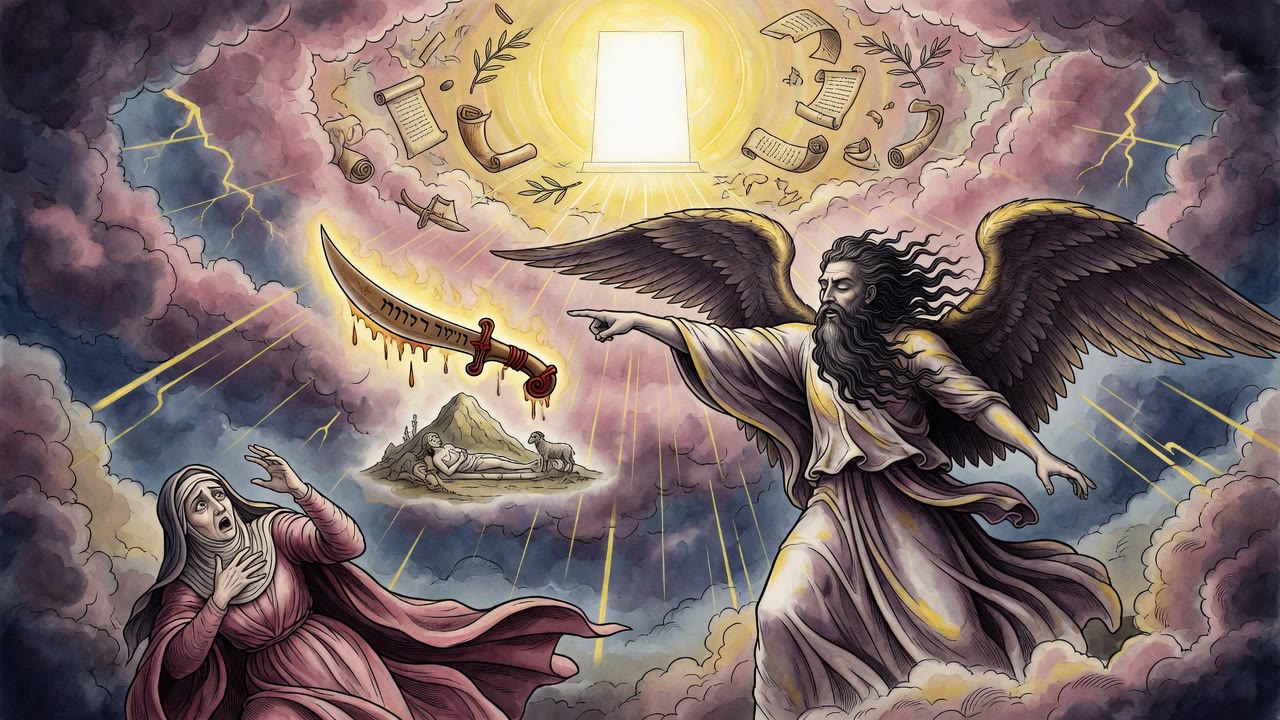
The angel's voice stopped the knife. In a thicket a ram struggled, horns caught, breath hot, already appointed. Abraham offered the beast in place of the boy. Rabbi Berachiah taught that the sweet savour rising from the fire did not smell like ordinary meat. It rose as if it were the scent of Isaac himself. The substitution did not cheapen the gift. Heaven received the ram as the full measure of the son who had already consented on the wood.

Because of that hour God swore by Himself. "Because you have done this and have not withheld your son, your only son, I will surely bless you" (Genesis 22:16-17). The oath doubled: blessing in this world, blessing in the world to come, seed like stars and like sand. The thicket held more than a lucky animal. It held a ledger rewritten in smoke.

What the Mountain Sent Home

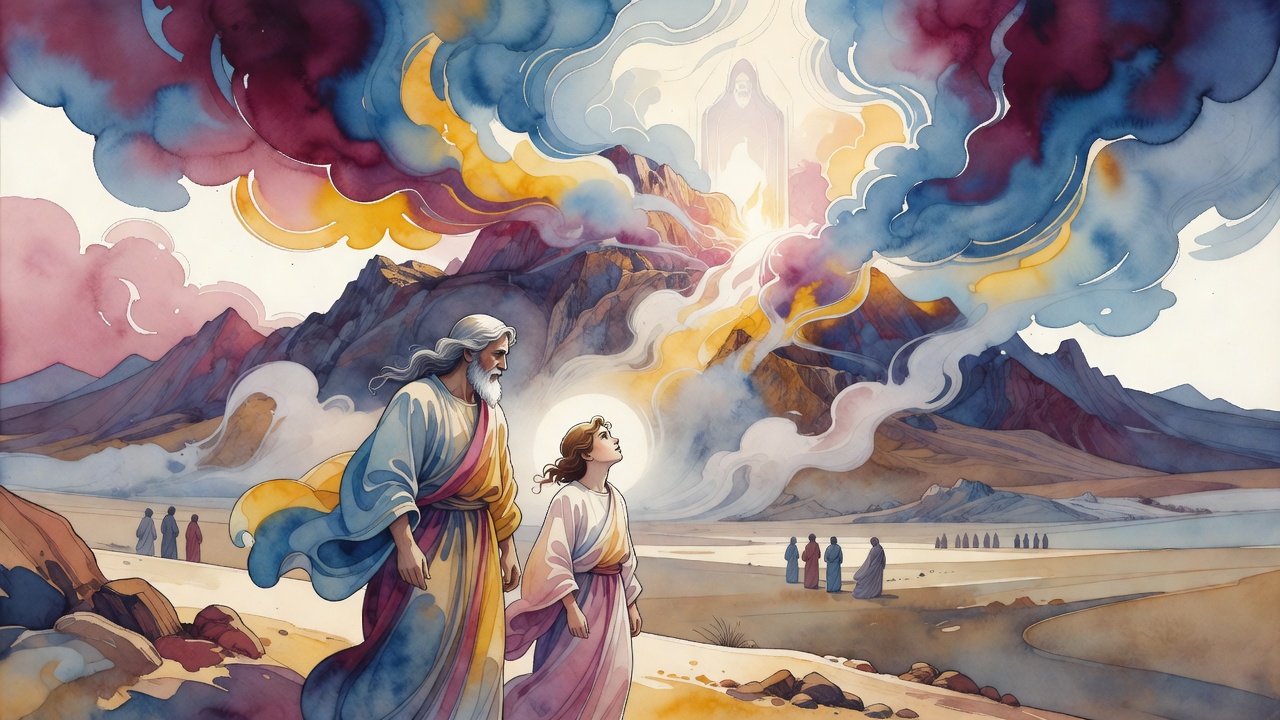
Isaac came down with a song still burning behind his eyes and a life the knife had already claimed in intent. Abraham came down with the ram's ashes on his hands and an oath ringing louder than any private grief. Sarah had already spent her night and her morning on a road that never reached the peak. The garment Abimelech once gave for honor became travel cloth for a boy Heaven nearly took. The stone in the turban did not stop the test. It only marked a son dressed for a road his mother could not finish beside him.

Three scenes seal one cut. A mother weeps and clothes the offering. A son sees the Presence and sings on the wood. A ram burns as Isaac's own scent, and God swears. The mountain does not return anyone unchanged. Sarah's question rides the wind long after the men are gone. Who knoweth. The stone catches light. The thicket keeps its empty hooks.

On the third day the mountain showed its ridge. Abraham laid the wood in order as if he were building a bed for sleep and not for fire. Isaac watched his father's hands and did not ask a second time about the lamb. The first answer had been enough. When the ropes tightened, the song that left him was not a bargain. It was the sound a body makes when it has already crossed a line the legs never walked. The Shekhinah (the Divine Presence) above him did not remove the wood. It received a son who had agreed to be wood's guest.

Below, on the road home of the heart, Sarah's garment gift still held the shape of Isaac's shoulders. Abimelech's cloth had once meant political safety. Now it meant a mother packing honor onto a child Heaven might keep. The servants who wept with her would remember the sound longer than any sermon. Great weeping is not decoration. It is the price the tent paid before the thicket paid its ram.


← All myths
From the tradition

Sources

3 sources

The texts behind this telling. Some cards carry a translation of the source; others are our own retelling of it, and each card says which. Every card links out to the original.

Legends of the Jews 5:226Legends of the Jews

Retold in our words. Read the original at the link below.The Legends of the Jews by Louis Ginzberg (1909) · Public Domain

That feeling, that universal human experience, echoes powerfully in the story of Sarah and Isaac's parting.

Sarah, having spent the entire night weeping for Isaac. This isn’t just a casual sadness; it's a deep, primal sorrow. But morning arrives, and with it, a mother's love manifesting in a tangible way. She chooses a beautiful, fine garment – one of the gifts Abimelech had bestowed upon her, a symbol perhaps of blessings received. She dresses Isaac in it, places a turban on his head adorned with a precious stone, a symbol of protection and honor, and prepares provisions for his journey. As described in Legends of the Jews, it’s a scene steeped in love and impending loss.

Sarah doesn't just send him off. She walks with them, accompanying them on their way. We can almost feel the weight of each step, the unspoken anxieties hanging in the air. When they gently suggest she return to the tent, her son's words pierce her heart.

Then comes the weeping. Not just a few tears, but a "great weeping." Sarah weeps, Abraham weeps with her, and Isaac joins in their sorrow. Even the servants, witnesses to this raw display of familial love, are overcome with emotion. As Ginzberg retells it in Legends of the Jews, it's a scene of communal grief, a shared understanding of the pain of separation.

Sarah's final act is perhaps the most poignant. She holds Isaac in her arms, embracing him tightly, her tears flowing freely. "Who knoweth if I shall ever see thee again after this day?" she cries. It's a question that resonates across time, a universal fear whispered by mothers and loved ones throughout history.

This short passage, found within the broader narrative of Isaac's life, isn't just a historical account. It's a mirror reflecting our own experiences with love, loss, and the bittersweet nature of goodbyes.

Full source
Pirkei DeRabbi Eliezer 31:12Pirkei DeRabbi Eliezer

Retold in our words. Read the original at the link below.Pirke de Rabbi Eliezer, trans. Rabbi Gerald Friedlander, London (1916) · CC-BY

God tests Abraham, tells him to offer Isaac as a sacrifice, and then at the last possible second, sends an angel to stop him, providing a ram instead. But what really happened in that moment?

Pirkei DeRabbi Eliezer, a fascinating and often imaginative collection of stories and elaborations on Biblical narratives, sheds some light. Specifically, chapter 31. It focuses on the aftermath, on what happened after the angel stayed Abraham's hand.

Rabbi Berachiah, a sage whose name echoes blessings, tells us something He says that the aroma, the "sweet savour" of the ram that was sacrificed, ascended to God. But not just as the smell of a burnt offering. It was as if it were the sweet savour of Isaac himself. What does that imply? That God saw the ram's sacrifice as equivalent to Isaac's. That Abraham's willingness was so complete, so unwavering, that the substitution didn't diminish the offering in God's eyes.

Here's the kicker: because of this, God swore an oath.

This oath, says Rabbi Berachiah, promised blessing in this world and in the world to come. And he backs it up with the famous verse from (Genesis 22:16-17): "By Myself I have sworn, declares the Lord, because you have done this and have not withheld your son, your only son, I will surely bless you and make your descendants as numerous as the stars in the sky and as the sand on the seashore."

But Rabbi Berachiah doesn't stop there. He unpacks the verse, revealing layers of meaning. "I will surely bless you" – that's for this world, the one we're living in right now. "I will bless you" – that's for the olam haba, the world to come. And "I will surely multiply your seed" – that’s for the future, for generations yet unborn.

So, what does this all mean? It tells us that Abraham’s near sacrifice wasn't just a test. It was an act that unlocked unimaginable blessings for himself and for all of his descendants. It reveals the profound power of intention, the idea that even an act left undone can be just as powerful, just as transformative, as one fully completed.

And perhaps that's a lesson for us all. What are we willing to offer, even if we're ultimately spared from making the ultimate sacrifice? What blessings await us if we show that level of commitment, that unwavering faith?

Full source
Sefer ha-PardesSefer HaPardes

Retold in our words. Read the original at the link below.Sefaria-hosted English translation · CC-BY

Sefer HaPardes turns to Isaac Sees The Shekhinah.

The familiar story is this: Abraham, tested to his limits, is commanded to sacrifice his beloved son. It’s a gut-wrenching tale of faith, obedience, and ultimately, divine intervention. But have you ever stopped to consider what it must have been like for Isaac in that moment?

As we read in Bereshit (Genesis) 22:7, Isaac, ever the observant son, turns to Abraham and asks the question that hangs heavy in the air: "Here are the fire and the wood, but where is the lamb for a burnt offering?" Abraham's response, heavy with unspoken pain, echoes through the ages: "You are the lamb for the burnt-offering."

The weight of those words. The realization. The sheer terror.

But then, something extraordinary happens.

As Isaac is bound upon the altar, ready to fulfill what he believes is his destiny, he experiences something miraculous. The Shekhinah (the Divine Presence), God’s divine presence, manifests before him. According to Sefer ha-Pardes, Isaac saw the heavens open. He saw the Shekhinah above him, poised, ready to receive him.

And how does Isaac react? He sings.

The Midrash (rabbinic interpretive commentary) ha-Gadol tells us that he broke forth into song, specifically, "the song of sacrifice." Now, what exactly is the song of sacrifice? We aren't told the exact words, but we can imagine it’s a song of acceptance, of surrender, of profound connection to something far greater than himself. It's a song born of unimaginable fear transformed into unwavering faith.

This moment, this vision of the Shekhinah, isn't just a random occurrence. It speaks to a deeper tradition within Judaism. The Zohar tells us that when the righteous, the tzadikim, truly see the Shekhinah, they are overcome with such profound joy and connection that they spontaneously erupt in song. It's a physical, emotional, spiritual release – a recognition of the divine within and without. In the face of ultimate sacrifice, Isaac finds not despair, but a pathway to the divine. He transforms a moment of potential tragedy into an experience of profound spiritual connection.

What songs are waiting to be sung within us, even in our darkest hours? What Shekhinah awaits our recognition? Perhaps, like Isaac, all we need is the courage to look up.

(For more on Isaac's visions, you might want to explore other tales, such as the "Isaac's Ascent" narrative.)

Full source