5 min read

Satan Found the Scales Empty on Yom Kippur

The two pans hung dead level. The Accuser went out to fetch more evidence, and while he was gone the sins he had already weighed came off the scale.

Curated by Arthur · Told by Maggid ·
Table of Contents
  1. The Accuser Came With Names
  2. The Beam and the Two Pans
  3. What Happened While He Was Out
  4. David Called Them Happy and Heaven Went One Better
  5. The Soul David Bowed for a Generation Not Yet Born
Satan Found the Scales Empty on Yom Kippur Click for full size

The Accuser Came With Names

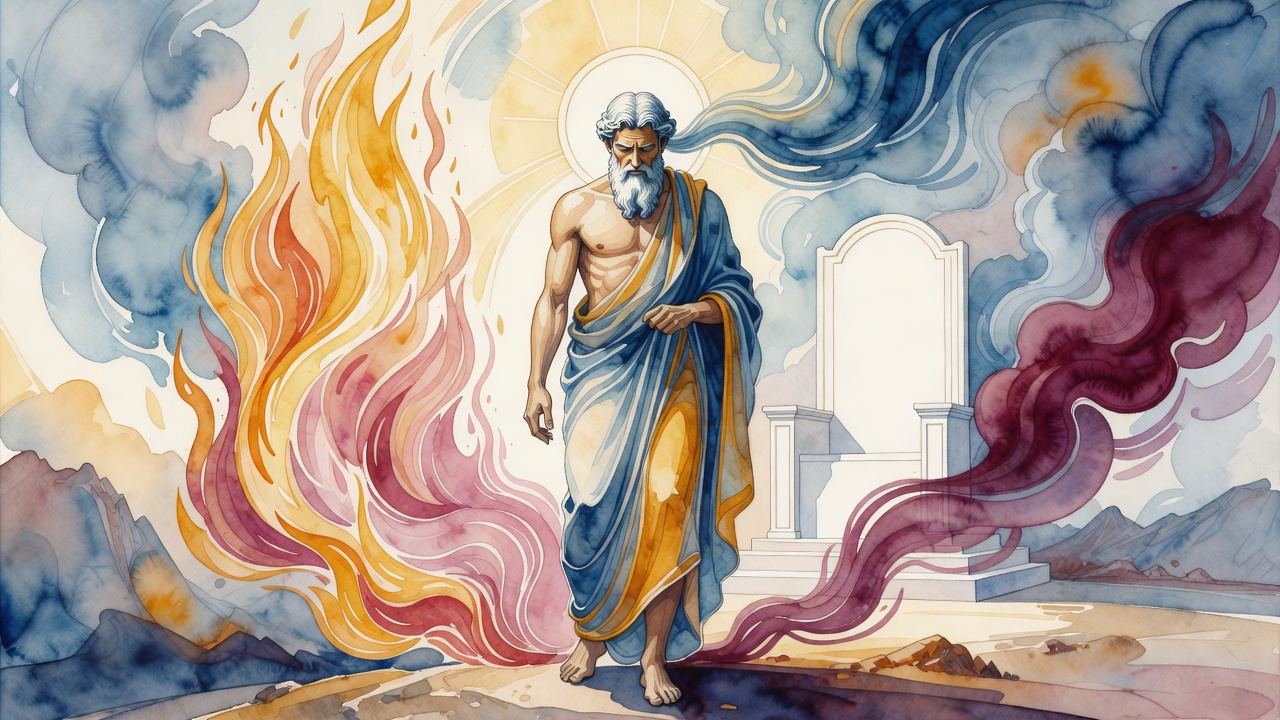
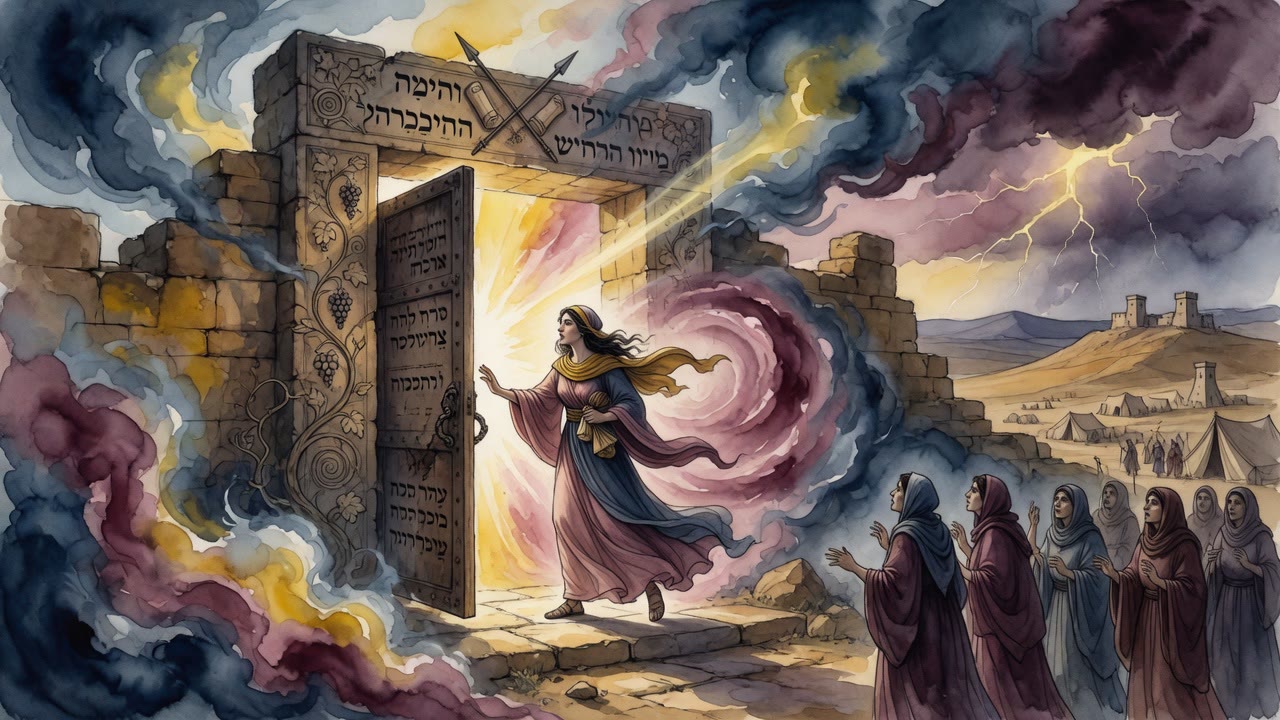
Ha-Satan came into the court on Yom Kippur, the tenth day of Tishri with a year of Israel's work in his hands, and he did not exaggerate any of it. That was the strength of his case. He read it out plainly.

"Master of the universe. There are adulterers among the nations of the world. There are adulterers in Israel. There are thieves among the nations of the world. There are thieves in Israel."

No fire, no theatrics. A prosecutor with a list who only needed the list to be true. If the same sins live on both sides of the border, then either both peoples are forgiven this morning or neither is, and he was content to let the King choose which.

God answered him item for item. He read out Israel's merits the same way, one after another, until the two accounts stood side by side and the room had nothing left to say.

The Beam and the Two Pans

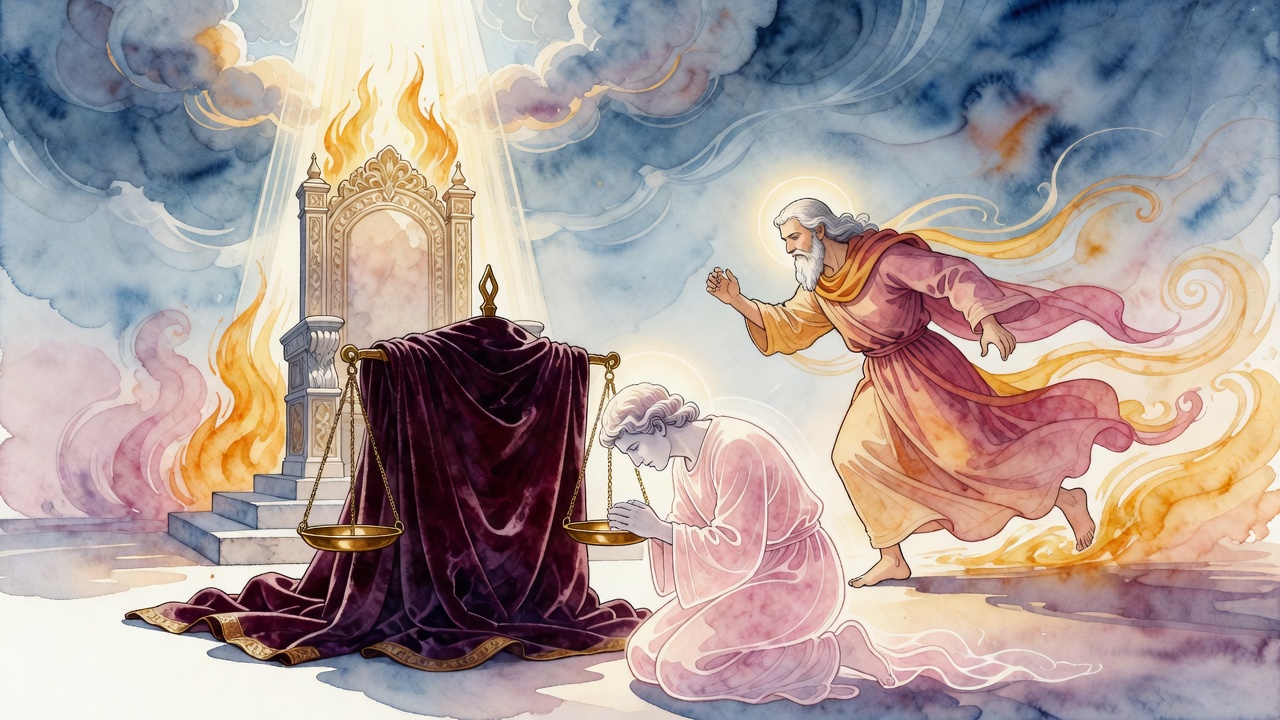
Then He took the beam of the great scales and hung it.

Into one pan went the sins. Into the other went the merits. The pans came down, swung, settled, and stopped exactly even. Nothing tipped. The court on the Day of Atonement looked at a balance that would not choose.

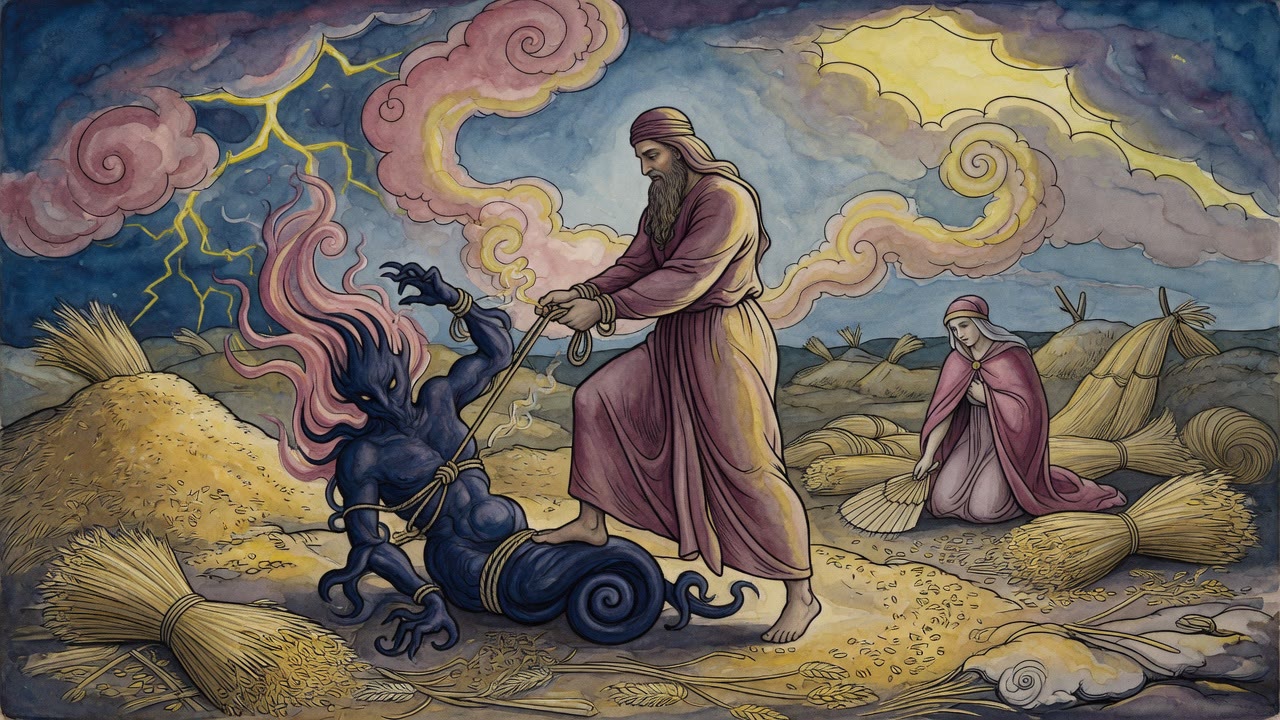
Ha-Satan (the Accuser) read the beam and understood what an even scale means. One more sin, any sin, a small one, and the whole year drops. So he turned and went out to find some, because a year holds more than anybody can carry into a room at once, and there was plenty still lying around down there.

He should not have left.

What Happened While He Was Out

God reached into the pan and lifted the sins out of it. All of them. Then He gathered them into the purple of His own robe and let the cloth fall closed over them.

Ha-Satan came back with his arms full and stopped in the doorway. The pan he had loaded was empty. Not lighter. Empty. He walked around the beam and looked underneath it and searched the floor of the court, and the iniquity of Israel was sought and it was not there.

He put down what he had brought. Nobody had broken a rule of the court. The evidence had simply gone into the King's sleeve, and there is no motion a prosecutor can file against that.

"Master of the universe," he said, and it came out of him almost as a complaint, "You have lifted the iniquity of Your people."

David Called Them Happy and Heaven Went One Better

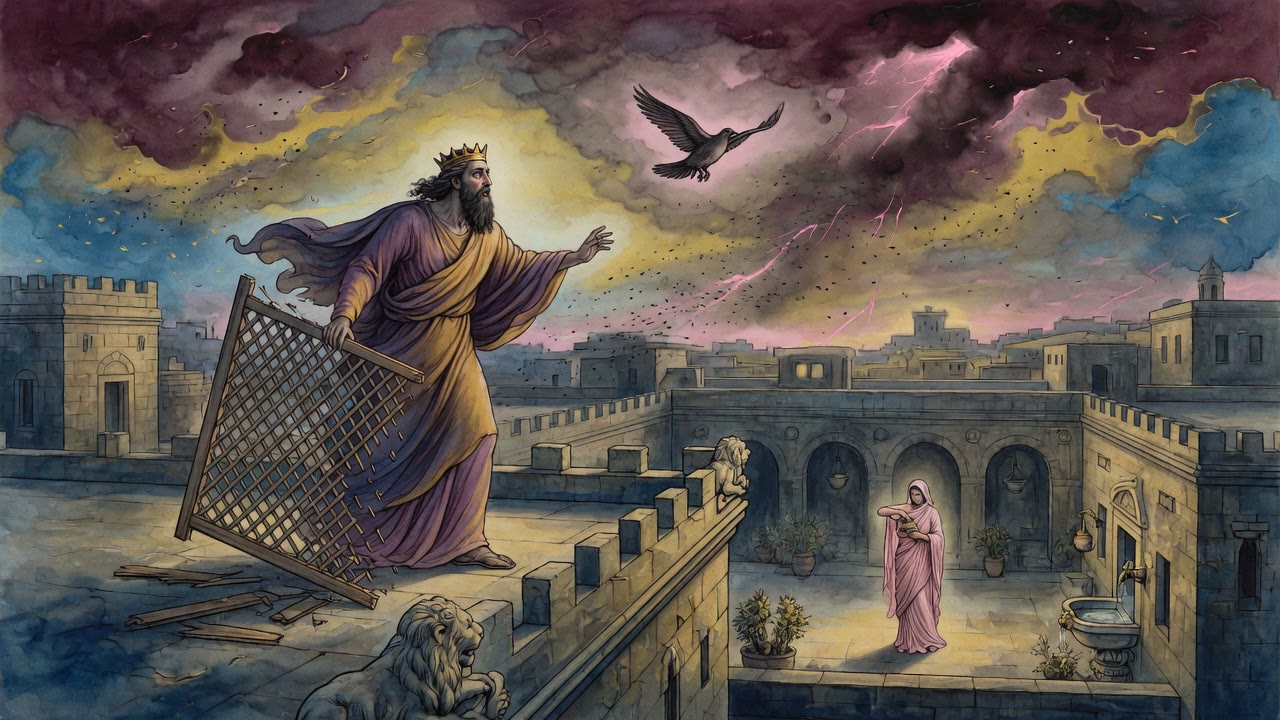
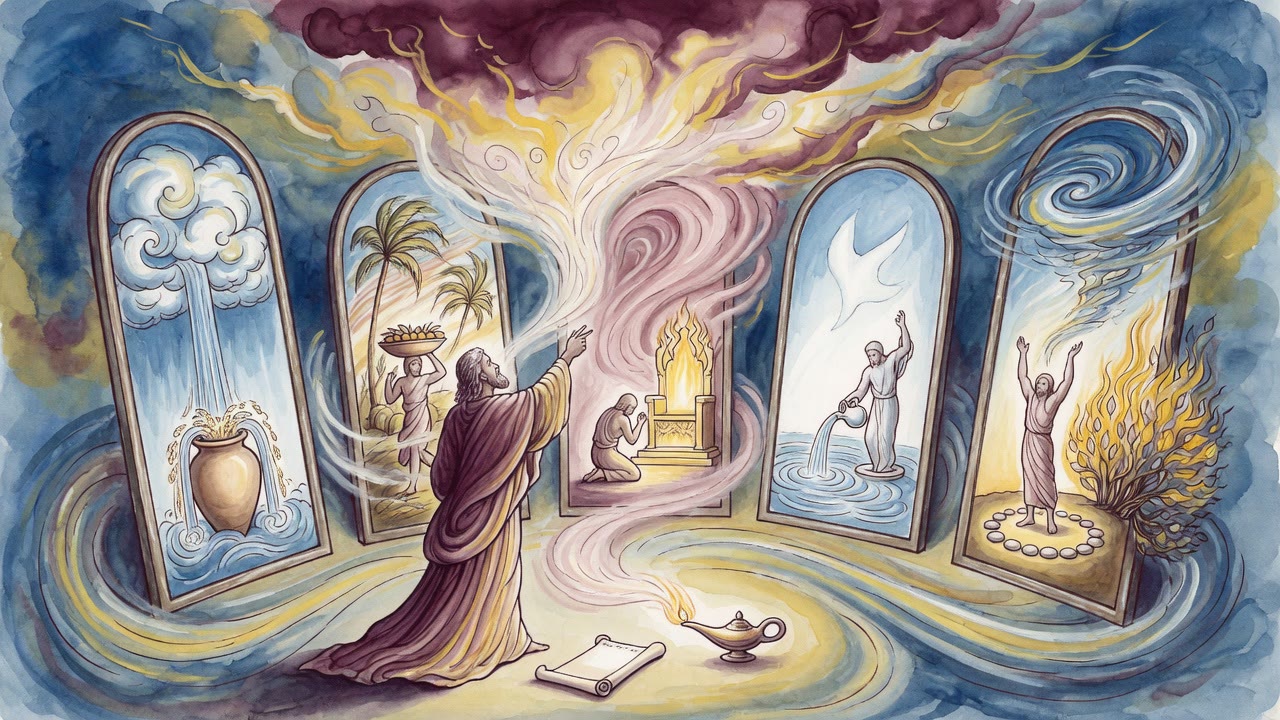
David saw the empty pan and reached for the harp. Happy is the man whose wrongdoing is lifted off him, he sang, whose sin is covered over.

Heaven let him finish and then corrected him. Rabbi Shimon ben Lakish put the correction in a picture. A woman suspected by her husband drinks the bitter water in the Temple court and comes out of it clean, and someone in the crowd calls out, "Happy is she." Someone standing further back says, "Happy is the woman who never had to drink it at all."

So the answer came back to David across the court. Happy is the man whose sin is covered. Happier is the man the Lord charges with nothing.

And the covering has a price at the door. The one who hides what he did gets nowhere. The one who says it out loud and walks away from it is shown mercy. So on that day Israel stood and itemized their own sins, out loud, in the same manner the prosecutor had itemized them, and the prophet watching it could only ask who else is a God like this one, who pardons and passes over and wants to love.

The Soul David Bowed for a Generation Not Yet Born

Later David lifted his soul to God again, and this time not for himself.

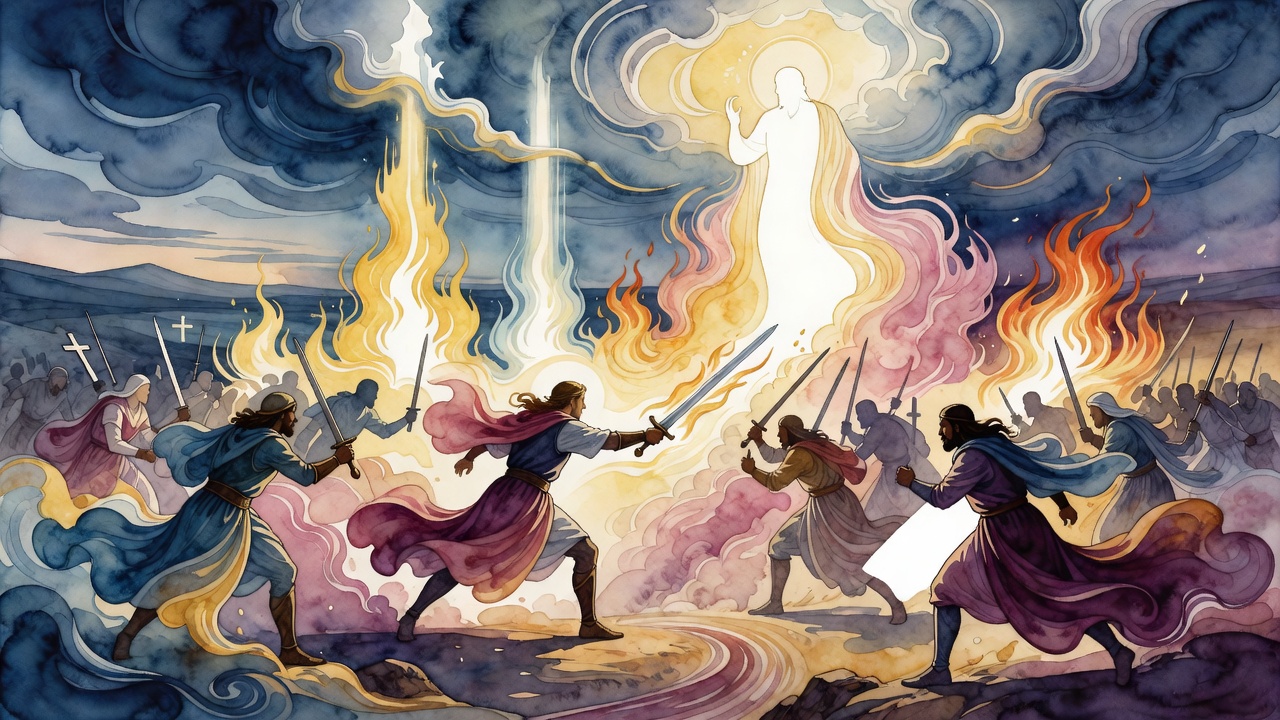
"Master of the worlds, let my soul bow down for the ones who are going to hand over their lives for the sanctification of Your Name." He meant a generation still centuries off, the generation of the persecution, Jews who would be tortured rather than say the words that would end it.

"David," God said, "and have they lost anything? Their portion is in life, and out of My hidden treasure their bellies are filled."

"Have I a portion with them?"

"It does not say their treasure. It says My treasure. Yours and theirs."

David would not take the compliment straight. Those men come before You by the strength of Torah and by what they did with their hands, he said. I come only asking to look at Your face and be found right.

Rabbi Chiya bar Ba heard that exchange and drew the hard line under it. If a man tells you to give your life for the Name, he said, give it. Only ask that they take your head off in one stroke, and not the way it went in the generation of the persecution, when they pressed balls of fire under the arms and drove splinters of reed under the fingernails.


← All myths
From the tradition

Sources

2 sources

The texts behind this telling. Some cards carry a translation of the source; others are our own retelling of it, and each card says which. Every card links out to the original.

Pesikta Rabbati 45:1Pesikta Rabbati

Translation of the source text.Pesikta Rabbati, ed. Meir Friedmann (Ish-Shalom), Vienna 1880 · Public Domain

"A maskil of David. Happy is the one whose transgression is forgiven, whose sin is covered. Happy is the man to whom the LORD imputes no iniquity" (Psalms 32:1-2). Let our master teach us: one who has a seminal emission on the Day of Atonement, what of him, may he wash as is his custom on the Day of Atonement? Thus our masters taught: one who saw an emission on the Day of Atonement washes as is his custom on the Day of Atonement (Tosefta Yoma 4), only that he should go and wash in a private place, for nothing is more beloved before the Omnipresent than modesty, "and walk humbly with your God" (Micah 6:8). Even though purification was permitted to you on the Day of Atonement, and why so? It is all for your purification, for on the Day of Atonement the Holy One, blessed be He, purifies Israel and atones for their iniquities, as it is said, "for on this day He shall atone for you to cleanse you" (Leviticus 16:30). And should you say, for another nation? No, but for Israel alone, for so the prophet Micah said, "who is a God like You, pardoning iniquity and passing over transgression for the remnant of His inheritance" (Micah 7:18); for Israel alone He forgives. When David saw how the Holy One, blessed be He, forgives the iniquities of Israel and has mercy upon them, he began to call them happy and to praise them, "happy is the one whose transgression is forgiven, whose sin is covered."

"A maskil of David. Happy is the one whose transgression is forgiven, whose sin is covered." This is what Scripture says, "You forgave the iniquity of Your people, You covered all their sin, selah" (Psalms 85:3). You find on the Day of Atonement Satan comes to accuse Israel, and he details the iniquities of Israel and says, Master of the universe, there are adulterers among the nations of the world and likewise in Israel, there are thieves among the nations of the world and likewise in Israel. And the Holy One, blessed be He, details the merits of Israel. What does He do? He takes the beam of the scales and weighs the iniquities against the merits, and they are weighed, the iniquities and the merits, these against those, and the two pans of the scale are found balanced. And Satan goes to bring iniquities and to place them in the pan of iniquities to tip it; what does the Holy One, blessed be He, do? While Satan is going back to seek iniquities, the Holy One, blessed be He, takes the iniquities out of the pan and hides them under His royal robe, and Satan comes and does not find any iniquity there, as it is said, "the iniquity of Israel shall be sought and there shall be none" (Jeremiah 50:20). When Satan sees this he says before the Holy One, blessed be He, Master of the universe, "You forgave the iniquity of Your people", astonishing! When David saw this he said, how does He forgive iniquity and cover their sin? He began to praise them, "happy is the one whose transgression is forgiven, whose sin is covered."

Another interpretation. "Happy is the one whose transgression is forgiven [nesui]." Do not read it with a samekh but with a shin [nashui, "lent"]. Rabbi Berekhiah the priest said: He is the one who lends out our debts before Himself, for He forgives our iniquities every single year, as it is said, "and this shall be an everlasting statute for you, to make atonement for the children of Israel" (Leviticus 16:34), and so it says, "once a year he shall make atonement for it, throughout your generations" (Exodus 30:10). Therefore it says, "happy is the one whose transgression is forgiven."

"Happy is the man to whom the LORD imputes no iniquity." Rabbi Shimon ben Lakish said: to what may the matter be likened? To one who drank the bitter waters and was found pure. One began to say to her, happy is the mother who need not drink them at all. So David said, "happy is the one whose transgression is forgiven, whose sin is covered." The Holy One, blessed be He, said to him, happy is the man to whom the LORD imputes no iniquity. And who are these whose transgressions the Holy One, blessed be He, forgives? These are Israel, who are found worthy on the Day of Atonement and detail their iniquities and transgressions, and the Holy One, blessed be He, bears their iniquities. Scripture says, "he who conceals his transgressions will not prosper, but he who confesses and forsakes them will obtain mercy" (Proverbs 28:13). Since Israel detail their iniquities and confess before the Holy One, blessed be He, He forgives them and passes over their transgressions, as it is said, "for on this day He shall atone for you to cleanse you from all your sins; before the LORD you shall be clean" (Leviticus 16:30). When the prophet saw this, he began to praise the Holy One, blessed be He, for this and said, "who is a God like You, pardoning iniquity and passing over transgression for the remnant of His inheritance, and does not retain His anger forever, for He delights in steadfast love" (Micah 7:18).

Full source
Pesikta DeRav Kahana 11:14Pesikta de-Rav Kahana

Translation of the source text.Pesikta de Rav Kahana according to an Oxford manuscript, Dov Mandelbaum ed., N.Y. 1987 · CC-BY

[14] "Of David. To You, O LORD, do I lift up my soul" (Psalms 25:1). It is written "essa" [I lift up / let it bow]. David said before the Holy One, blessed be He: Master of the worlds, let my soul be cast down over those who are destined to give their lives for the sanctification of the Name. And who are these? This is the generation of the persecution. The Holy One said to him: David, and have they lost out? Is their portion not in life? "Their portion is in life, and with Your treasured store You fill their belly" (Psalms 17:14). David said before the Holy One, blessed be He: Master of the worlds, do I have my portion with them? He said to him: It is not written here "and with their treasured store You fill their belly," but rather "and with Your treasured store You fill their belly", Yours and theirs. David said before the Holy One, blessed be He: Master of the worlds, these and those come by virtue of Torah and good deeds, but as for me, "in righteousness I shall behold Your face" (ibid. 17:15).

Rabbi Hiyya bar Ba said: If a man says to you, Give your life for the sanctification of the Name, say, I will give it, provided that they cut off my head at once, but not like the generation of the persecution, who would place balls of fire under their armpits and splinters of reed under their fingernails.

Full source