Seven Secrets Heaven Keeps From Every Eye
He wanted the hour of his death written down. The sage named seven things no eye owns. A Friday lamp still burned at week's end.
Table of Contents
The man set a coin on the table and asked for a date. Not a price. The day he would die. Heaven keeps seven secrets from every eye, and the sage left the coin where it lay.
 Click for full size
"That door does not open," he said. "Not for gold. Not for learning either."
The man had finished counting his profits that morning. He knew every crate in the storehouse. He wanted one more number so the future would stop feeling like weather. His mouth stayed open after the refusal, hunting a smaller question that might still slip through.
He Tried the Other Doors
"Then tell me when my trouble ends," he said. "Name the day comfort arrives."
The sage shook his head. That day is one of the seven. A woman may pray for years and never know which hour will open relief. The man leaned in anyway, as if closeness could pry a hinge.
"How will Heaven weigh me?" he asked. "Where will next year's bread come from? What sits in my neighbor's heart when he smiles in the market?"
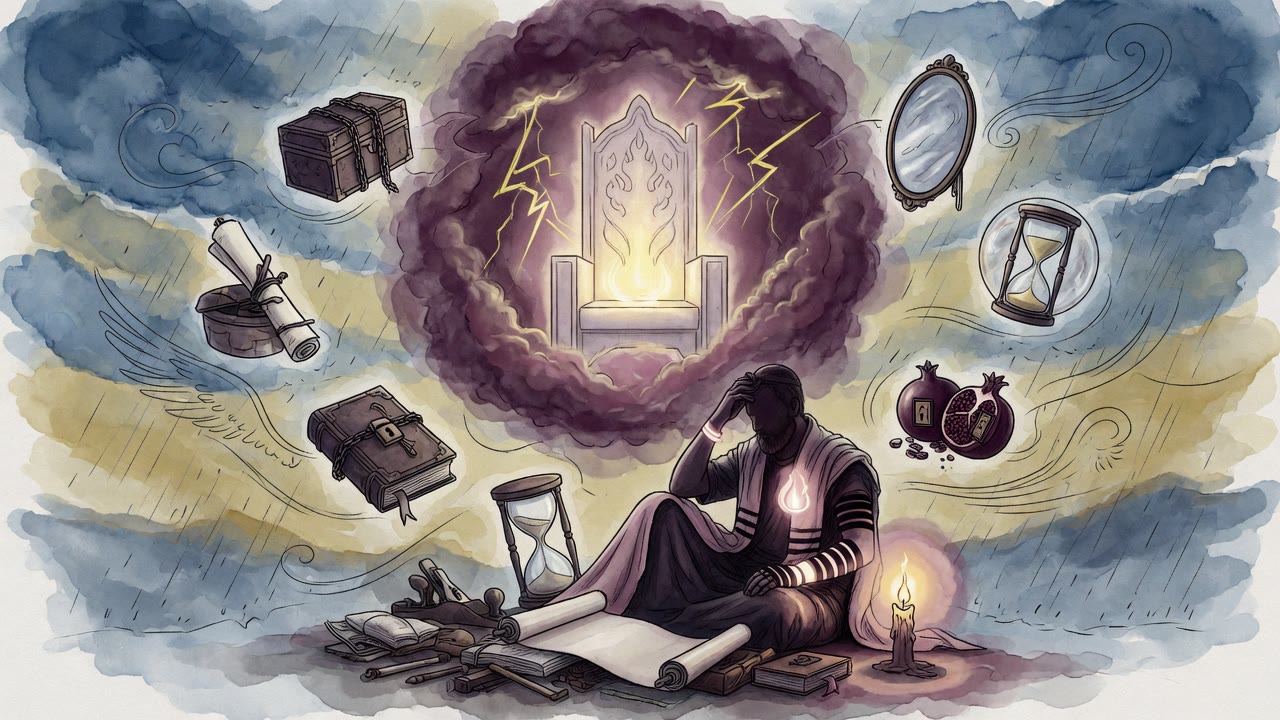
Each time the answer was a wall. The depth of judgment stays hidden. The source of a living stays hidden. What is in a neighbor's heart stays hidden. The man named the throne of David, because national hope felt safer than his own death. Sealed. He named the fall of the guilty kingdom that had torn the Temple down. Sealed. Seven things concealed from every eye. The coin still sat between them. He did not pick it up.
Students at the edge of the room offered loopholes. Dreams. Stars. Secret names. The sage did not take them. "These seven are not prizes for the clever," he said. A man who sold death-dates in the market had been driven out as a thief of fear. Climbing the wall is not holiness.
Friday Wrote on the Body
The sage did not send him out with nothing. He sent him toward a day a body can keep.
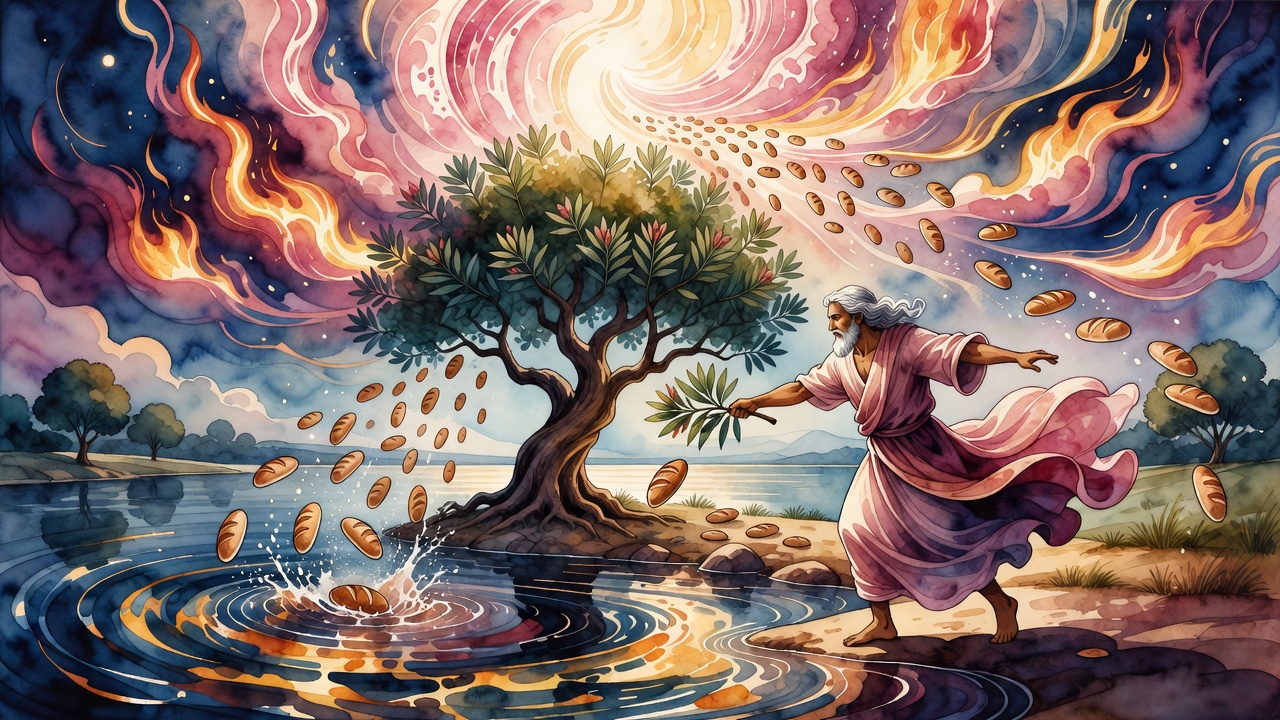
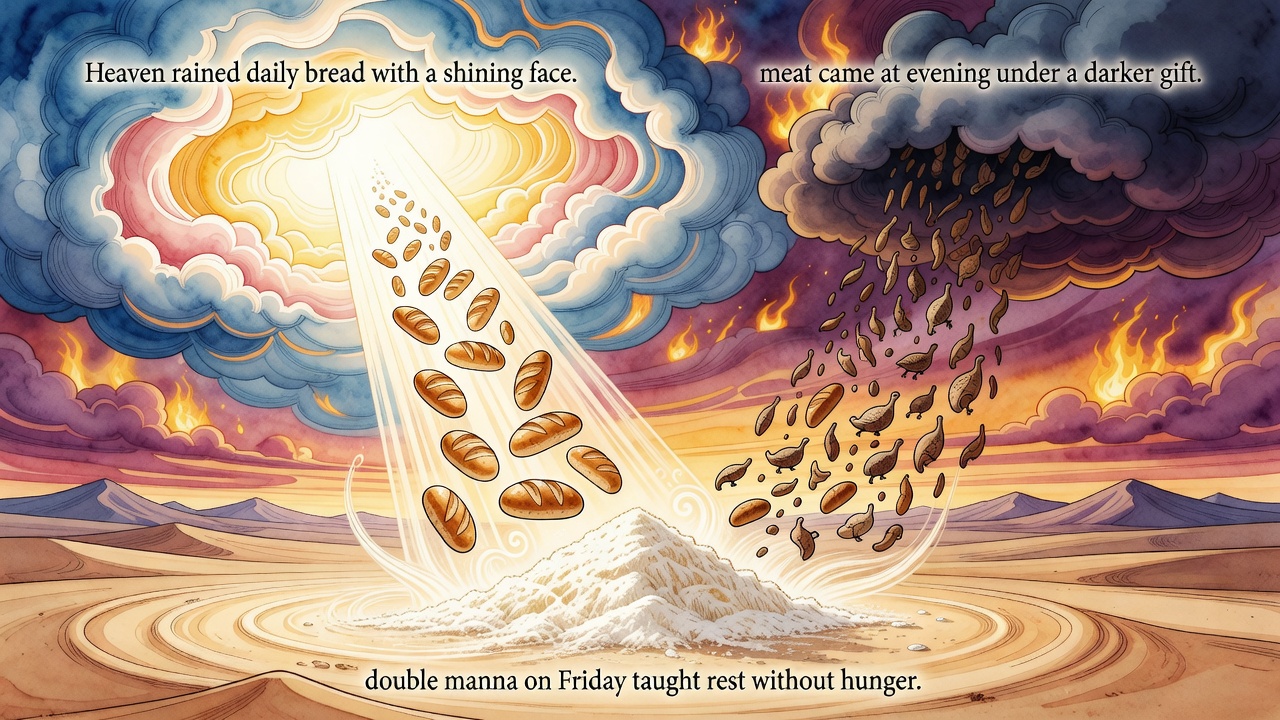
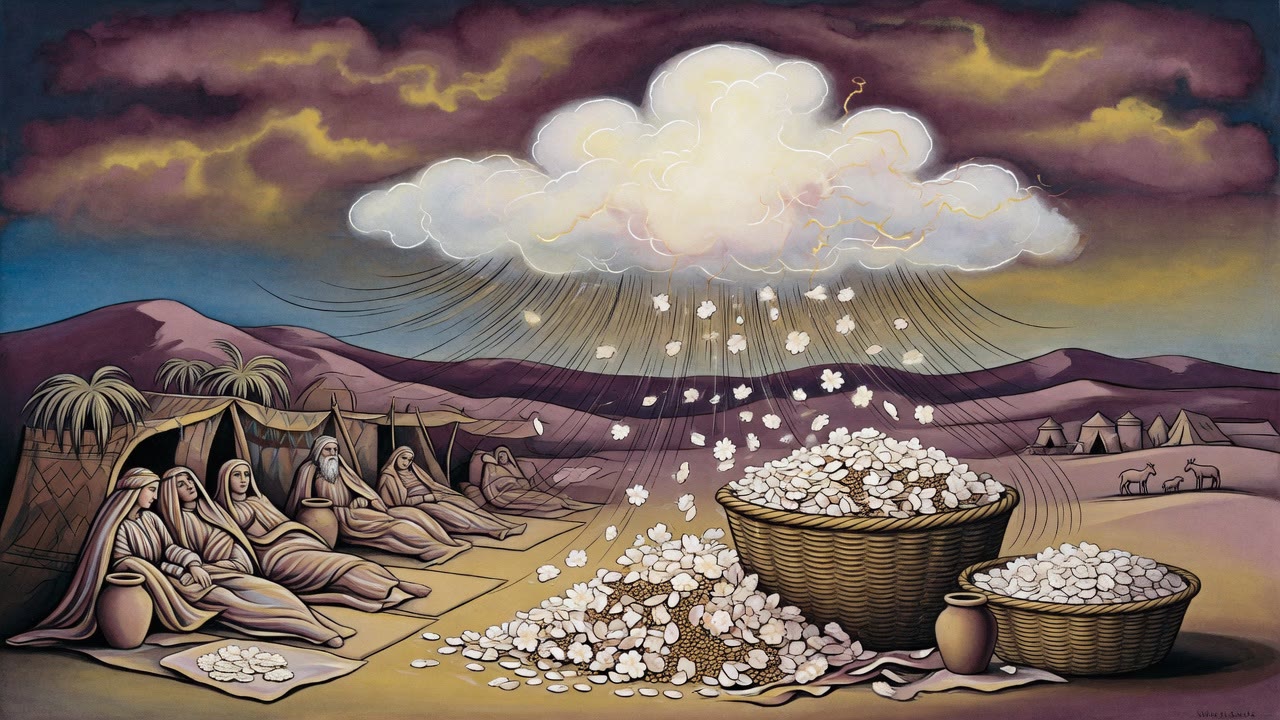
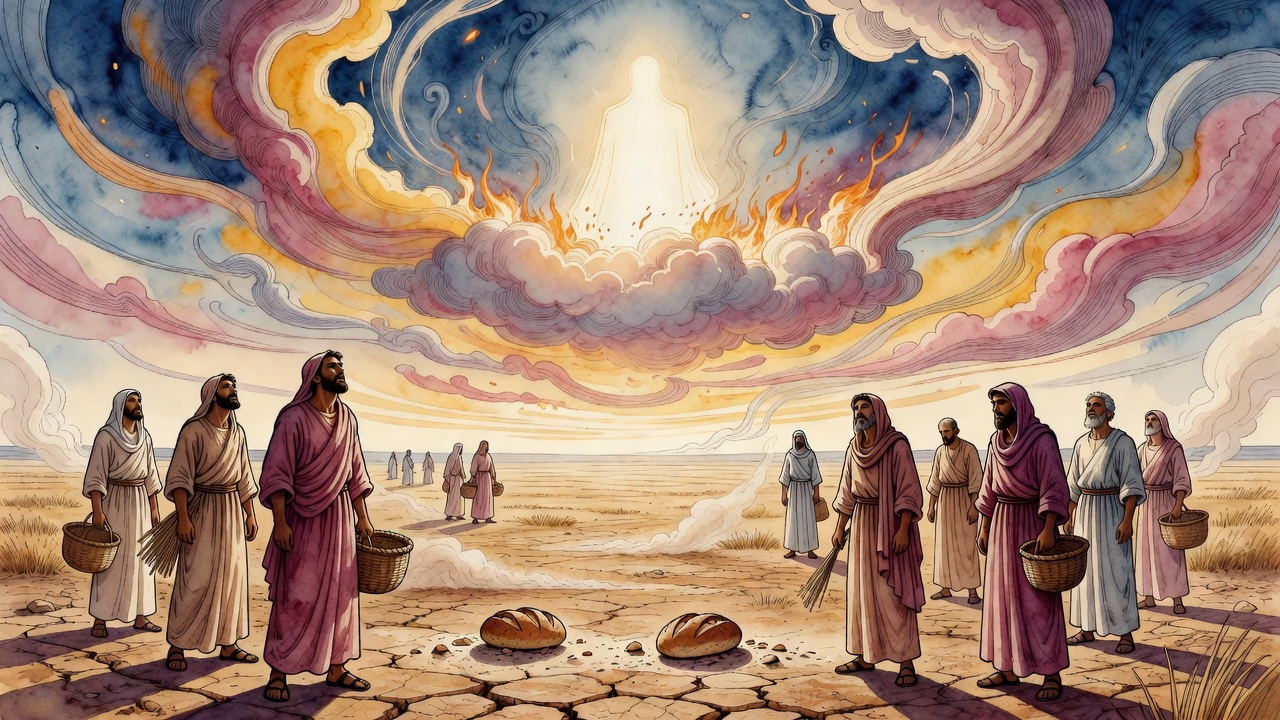
In the wilderness the manna fell one omer through the week. On Friday it fell two, so no one would step into the seventh day hungry. On Shabbat not a grain came down. The ground itself rested. Blessing in the double portion. Separation in the empty dust. The man had wanted a calendar of doom. He was given a calendar of bread.
He muttered that bread was not a death-date. The sage agreed. "If the last day hung on the wall like a market fair," he said, "some would freeze and some would riot. With the clock face blank, a person still works, still loves, still turns. The legs keep moving because they do not know when they must stop."
The Lamp Still Held Its Oil
Rabbi Eliezer spoke from his own house, not from a verse. "He blessed it through the lamp," he said. "It happened to me. I lit a lamp on Friday eve, and at the close of Shabbat I found it still burning. The oil had not gone down at all."
The man listened with his arms folded, the way a buyer listens to a miracle he did not order. Around him the argument about honor ran its usual course. Rav Kahana said, "Change your clothes for the day." Rabbi Yochanan said, "Mingle the cooked dishes." Abba bar Chisdai said, "Let the garments hang with dignity." Then someone named the blessing that needs no proof text. The light of a human face is not the same on weekdays as on Shabbat. The day writes on skin.
That Friday the man went home and lit before sunset. After the candles he bent over a basin of water. He did not see a miracle. He saw a man who had stopped counting inventory for one evening. The face in the water looked like rest, and rest shamed the demand he had dropped on the sage's table.
Leather Had to Rest
A traveler in the same town wrapped tefillin (תפילין), the small leather boxes of scripture, on Shabbat because he feared forgetting God. His fingers fumbled the strap. Rabbi Yitzchak caught his wrist.
"Shabbat is called a sign," Rabbi Yitzchak said. "Tefillin are called a sign. One sign is not laid on top of the other."
"Two signs are stronger," the traveler said. His voice had panic in it, the panic of a man who thinks Heaven goes deaf if his arm is bare.
Rabbi Yitzchak did not grant him the pile. Shabbat is called sign and covenant. Tefillin are called only a sign. The heavier mark already sat on the day. The leather could rest. The traveler blushed and sat with empty arms and a full table.
Later a sick man asked if he should bind the straps because he could not feel Shabbat in his bones. Rabbi Yitzchak's rule held. The day's sign stands without leather. Healing might return the straps on Sunday. It would not dress Shabbat in weekday costume.
He Lit the Lamp Anyway
The man went home without a number for his end. He went home with a lamp to light before sunset. He taught his apprentices to close the ledgers early on Friday and did not explain the seven seals. Some knowledge is for the body before it is for the mouth.
Years later, when comfort finally entered his house, he did not claim he had predicted the hour. He stood in the same room and lit the Friday lamp with a hand that no longer asked the flame for dates.
← All myths