Seven Wedding Days Cost Rabbi Yehuda the Lead
The lamp left a ring of soot on the ceiling. When Yehuda came back from the canopy, Elazar's hand was already further down the page.
Table of Contents
Rabbi Yehuda came back to the study hall with wedding wine still faint on his breath and found Rabbi Elazar already seven days deeper into the page.
 Click for full size
The bench felt the same under him. The scroll's letters had not moved. His friend's eyes had. Elazar's mouth shaped arguments Yehuda had not heard born. A student in the corner stopped mid-question when he saw Yehuda's face. The gap was only a week on the calendar. In the room it felt like a wall built overnight.
Seven Days of Song
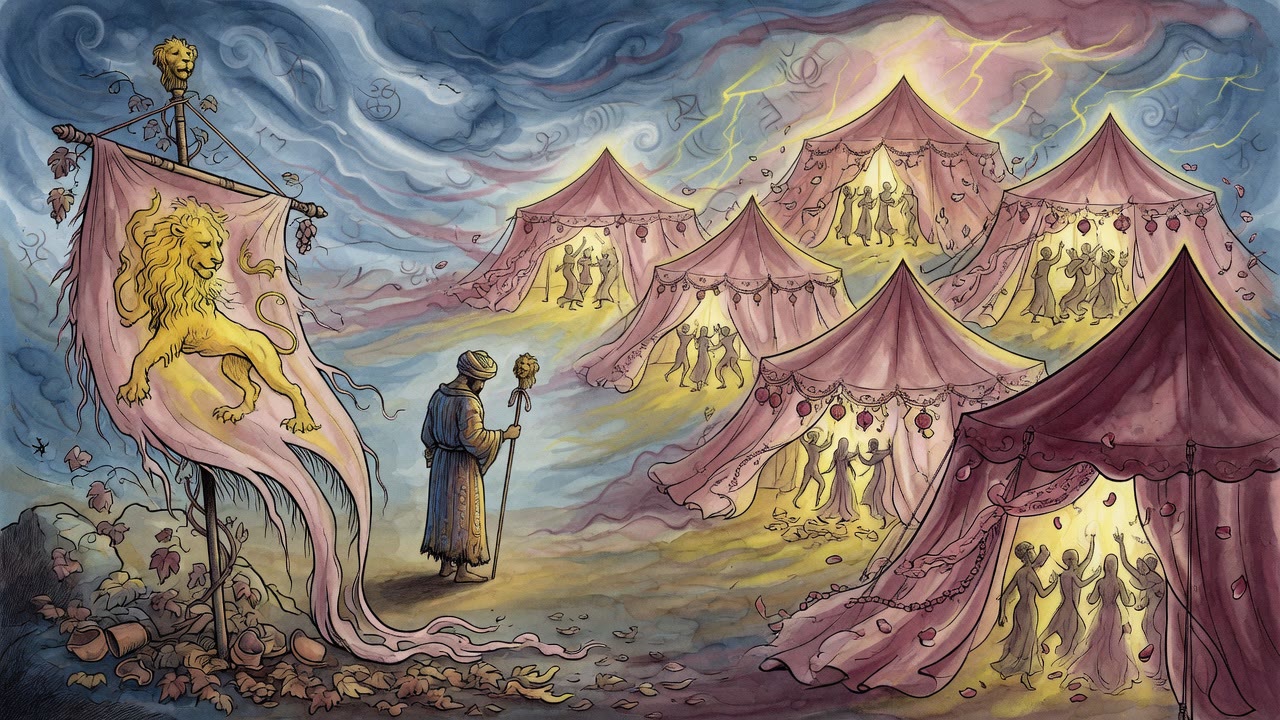
They had studied as a pair, two minds leaning on one text until the seams showed. Ink stained both sets of fingers the same way. They finished each other's proofs and argued until dawn made the window pale. Then Yehuda married. Seven days of feast pulled him from the hall: song, guests, the public joy a new household owes the street. He blessed cups. He danced until his sandals wore thin. He listened to blessings he would later forget in the rush of joy.
Elazar stayed with the page under a lamp that burned past midnight and left a ring of soot on the ceiling. He did not begrudge the canopy. He used the hours. When the week's singing ended, Yehuda came back ready to resume the old pace.
The old pace no longer existed.
The Page Had Moved
Elazar had used every hour Yehuda spent blessing cups. The arguments had branched. The citations had stacked. Yehuda opened his notes and chased. Morning after morning he chased. Season after season he chased. He rose while the sky was still gray. He sat until the lamp smoked. The lead did not shrink. What had been lacking could not be counted back into his portion (Ecclesiastes 1:15).
He asked neighbors to stop knocking with small talk. He skipped meals and still lost ground. He could still learn. He could still grow. He could not erase the seven-day hole as if it had never opened. When they sat side by side again, Elazar's hand moved to a place on the page Yehuda had not yet earned.
One morning Elazar read the verse they were on, the one about things warped that cannot be straightened, and Yehuda heard his own week inside it. He did not say so. He dipped the quill and kept going.
Salt That Would Not Sweeten
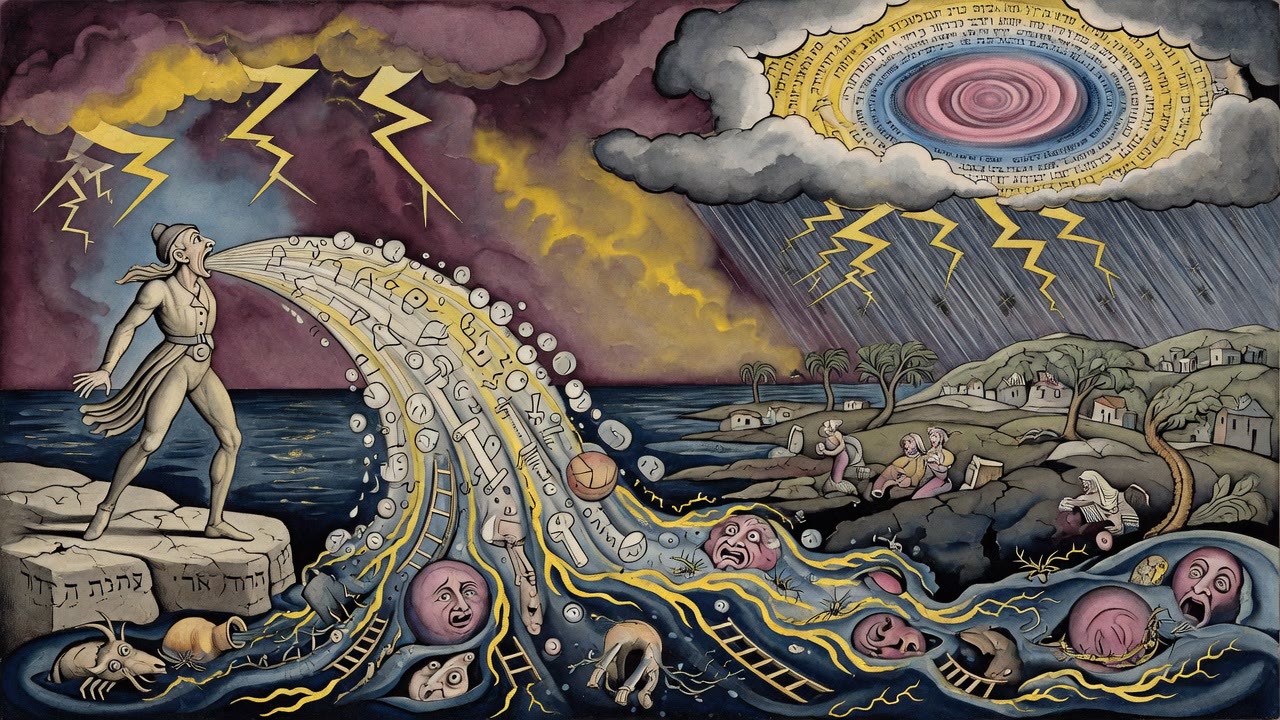
The same hard sentence that held Yehuda's gap also walked back to the first week of the world. In the six days of making, the waters were warped, nitavetu (נתעוותו), and turned salt. Ages later the seas still bite the tongue. No prophet has stood on a shore and sweetened every wave. Fishermen still spit the taste and haul nets that smell of it. Children still learn not to drink what looks like endless water. The warp holds.
The lunar year runs shorter than the solar year. God subtracted eleven days, and no stack of intercalations makes the two clocks lock forever into one clean measure. Scribes still argue over which month to double. The eleven days never quite disappear from the math.
Yehuda, late to the bench, lived a small version of that permanence. Repair is real for a person who turns back to Torah and does not divert from it. Neglect, once spent, does not always refund the identical hours to the identical race. He could add new learning. He could not unspend the feast.
He Chased for Years
Before Yehuda's wedding, long before any study hall, the generation of the Flood warped itself past the point of collective repair. Their ways bent until heaven set a limit on flesh: one hundred and twenty years (Genesis 6:3). The shortening did not reverse when a few of them felt fear in the rain. The decree stood. Doors closed against neighbors. Water rose past thresholds. The crooked stayed crooked under the boards of the ark.
The age of Enosh and the age that drowned inherited a world they did not invent and deepened it with their own hands. A man toils in wisdom and skill, then leaves the fruit to someone who did not sweat for it (Ecclesiastes 2:21). Yehuda toiled. The seven days still belonged to Elazar. Several years passed in which he tried to catch up and could not. That is the verse on the lacking that cannot be counted.
He rose earlier. He slept less. Elazar's back receded down the same road. The feast had been real joy. The cost sat on the bench between them and did not stand up to leave.
The Hours That Remain
Despair is not the last word for a living student. If a person does not divert himself from Torah, he can still repair himself, even after sin. If he does not detract from his study, he can still be counted among those who learn. Divert, detract, and the count may close without his name.
Yehuda kept returning to the hall. He wiped the bench. He unrolled the scroll with hands that still remembered the wedding dance. He nodded when Elazar offered a point and did not pretend he had reached it first. He had not quit. He could still become great. He could not become the man who never left for seven days.
Outside the hall, salt water still found the shore. Somewhere in the old genealogies, Enosh's generation still stood as a warning carved into the years before the rain. Inside, two rabbis shared a room and an unequal depth of page. Yehuda turned another leaf. Elazar was already further.
He dipped his quill. The ink took. A drop fell and he blotted it with his sleeve. The missing week stayed missing, a private sea that would not turn sweet, and he studied anyway because the living still own the hours that remain.
← All myths