Shabbat Measured as One-Sixtieth of Coming Rest
God answers a request for a sample of the World to Come by pointing at Shabbat, then doubles wick-light and bread.
Table of Contents
 Click for full size
Israel Asked for a Sample
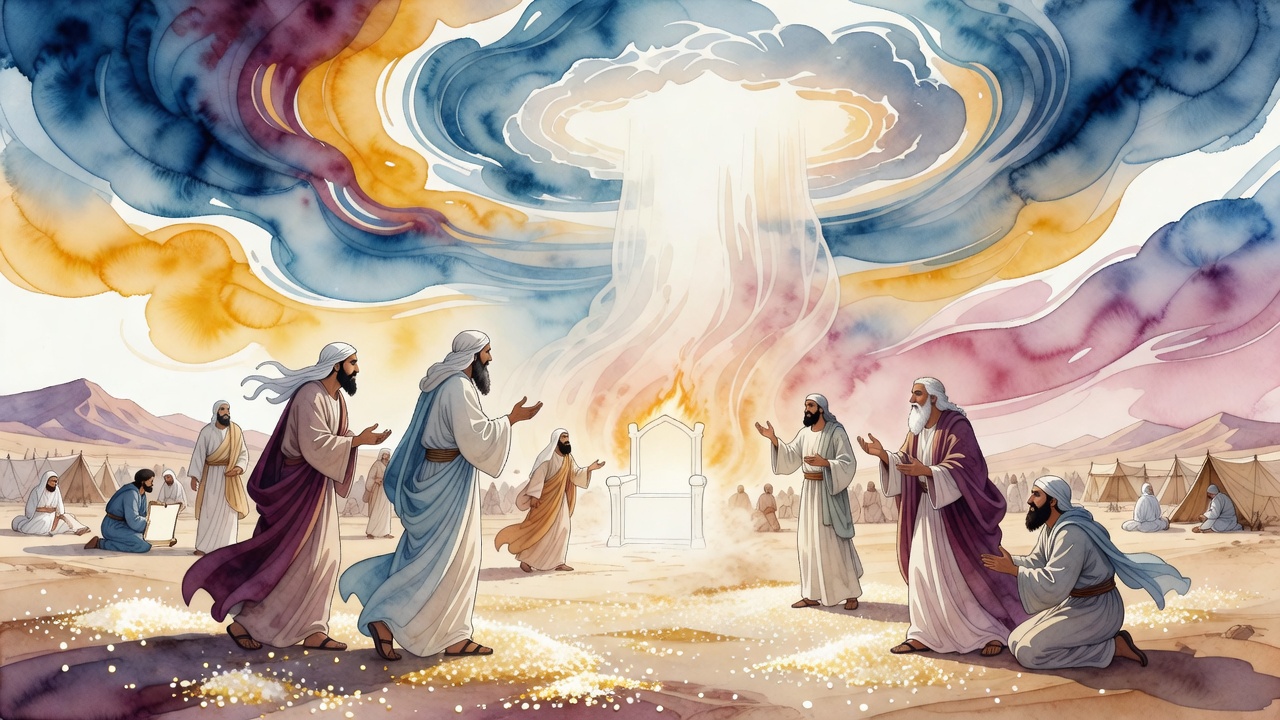
Israel asked for the World to Come and asked for it now, in the middle of a week that still had grain on the threshing floor and a debt coming due at the new moon. Not a description of the place. A sample. Something a person could hold for one evening and hand back.
God opened no door in the sky and gave no tour of palaces. God pointed at a day already standing on the calendar. One-sixtieth of the world that is entirely rest, cut down small enough to fit between two sunsets and set inside ordinary time where hands could reach it. The Aleph Bet of Rabbi Akiva, a midrash written in the eighth century, keeps the portion exactly that size. Sixty parts down, the flavor is still on the tongue.
So the sample came with a schedule. It arrived on Friday, when the light went orange along the rooftops, and it left when three stars stood out over the same rooftops the following night. Whatever it was, it had to be tasted in a house.
The Second Wick
The lamp went first in the household Tikkunei Zohar describes, a work of fourteenth-century Kabbalah that hands the sample over as three things a person can do before dark.
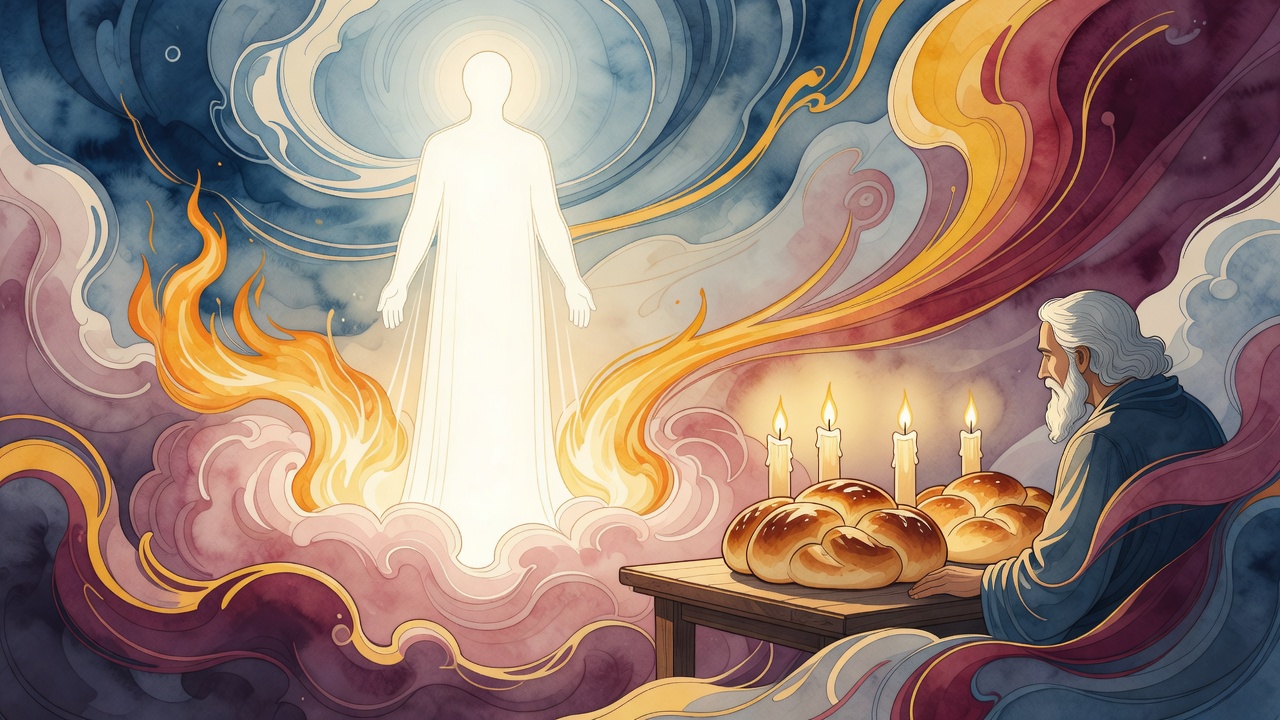
All week she had lit one wick, and one was enough to find the doorway by. On Friday she pinched the char off the old wick, laid a second beside it in the oil, and held the flame to both until they caught. The room did not merely brighten. The corner where the loom stood came out of the dark, and the face across the table stopped being a shape and became a face.
A child who had been shouting about a bowl broke off mid-word. Two shadows now leaned on the wall where one had leaned all week, and the second moved when the first did, a little behind it, like something that had followed the household in.
Two Loaves and the Desert Under Them
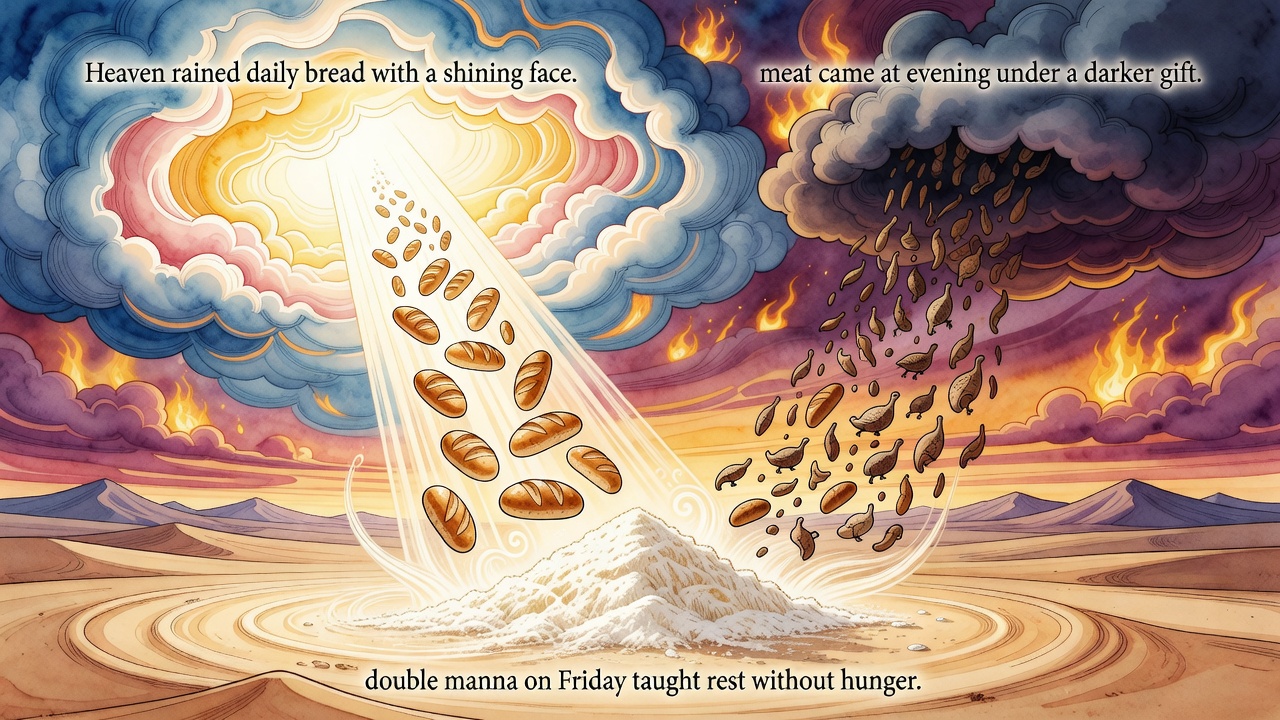
Bread came next. Six days the blessing fell on a single loaf. On the seventh the table carried two, and the second loaf was older than the table by a wilderness.
The gatherers had walked out on the sixth morning in the desert and come back with their baskets doubled, twice what the other mornings gave, and nobody had lifted a finger extra to earn it. On the seventh morning a few went out anyway. They crossed the same ground, turned the same stones, and carried home empty hands. Provision had arrived a day early so the resting would not be bought with hunger.
Now two loaves sat on the cloth under the doubled light, and the hands that broke them had shaped them the day before. Flour, salt, the crust cracking. Under the crust, a desert nobody at that table had crossed.
The Quarrel Left in the Lane
Third came the bed, and it kept a schedule as strict as the lamp and the loaves. The scholars set their appointment from Sabbath eve to Sabbath eve, and the rest of the week bent around it.
Something had gone wrong on Wednesday. It usually did. Words said too fast over money, or over a broken jar, or over nothing at all, and after that the two of them moved around each other in three small rooms for two days without touching, passing the water jug hand to hand like strangers at a well.
On Friday he came up the lane while the light was still good and left the grievance there with the dust on his sandals. She had already lit. He washed, sat down, and did not reopen it. "Not tonight," she said, and he took the cup she handed him and spoke the blessing over it. The argument was not settled. It was set outside the door with the shoes, the door closed on it, and the quiet that stayed in the room was a different quiet from the one that had held the house since Wednesday.
The Sample Goes Back
Three stars stood out over the rooftops on Saturday night and the sample was called in. Wine went into the cup until it ran over the lip and spread on the plate beneath. Someone lifted the braided candle and drowned it in the spilled wine, and the hiss was the sound of the sixtieth part closing.
The week reopened at once. The knives came back out of the drawer. The coins came back into the hand that had refused to hold them since Friday. The man who had left a grievance in the lane went out and found it lying where he dropped it, and picked it up again, though it weighed less than it had on Wednesday, and he could not have said why.
In the dish the second wick lay burned down to a black curl in a shallow pool of oil. Nobody cleared it away. It stayed there through the market days and the threshing, and on Friday a hand reached in, lifted the spent curl out, and laid a fresh wick beside the first one for the flame to catch again.
← All myths