5 min read

Shekhinah Comes Wherever Two Speak of God

Two sit and speak of the Holy One in awe. Presence arrives, and heaven's storehouses open for those who ask for Torah.

Curated by Arthur · Told by Maggid ·
Table of Contents
  1. The Angels Looked Down and Asked
  2. The Man Who Would Not Let Go
  3. If You Come to My House
  4. Rabbi Yoshiyah Turned the Verse Around
  5. State Your Requests
Shekhinah Comes Wherever Two Speak of God Click for full size

The Angels Looked Down and Asked

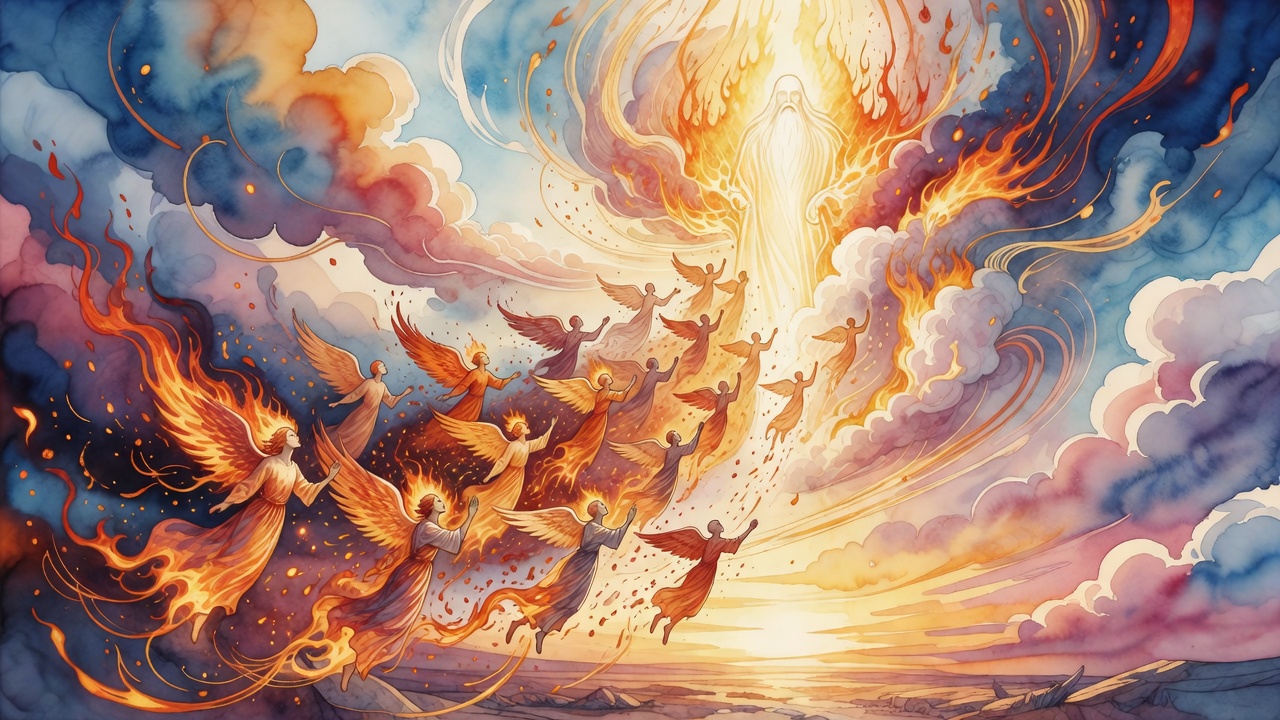
God set the heavens out where the angels could see the work, moon and stars fixed where fingers had put them, and said that the righteous among men would be worth looking at as well. The angels were not persuaded. They had the whole of it in front of them, and underneath it a creature made out of dust that had to be fed twice a day.

"What is man, that You should remember him?"

They were not asking for information. They were asking why the attention was going downward at all, since God fills heaven and earth and had no shortage of company up where the question was being put.

The Man Who Would Not Let Go

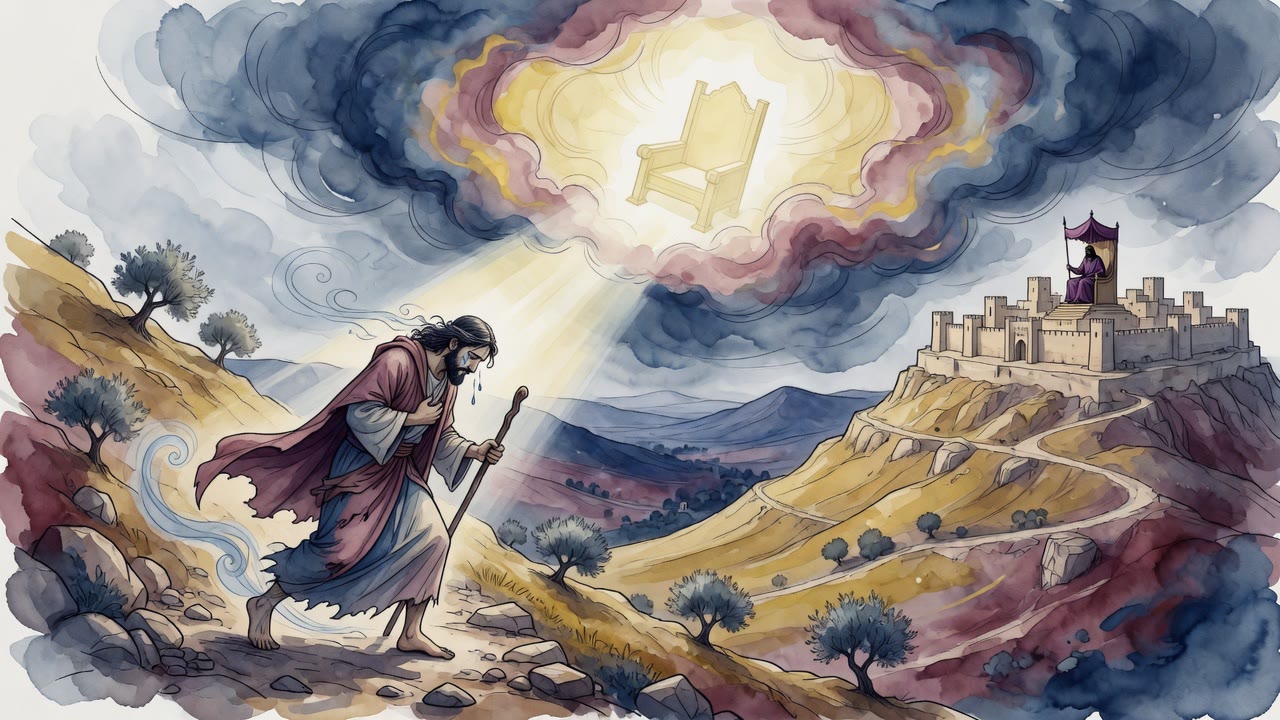
The answer came back as bodies. Jacob was left alone at the ford at night with his wives and his children already across the water, and something took hold of him in the dark, and he took hold of it back. He was outmatched from the first minute. He did not let go until the sky went grey, and he came away limping, and he came away with a new name.

A little less than the angels, the psalm says of man. Here was the little that was less, hanging on with a wrenched hip.

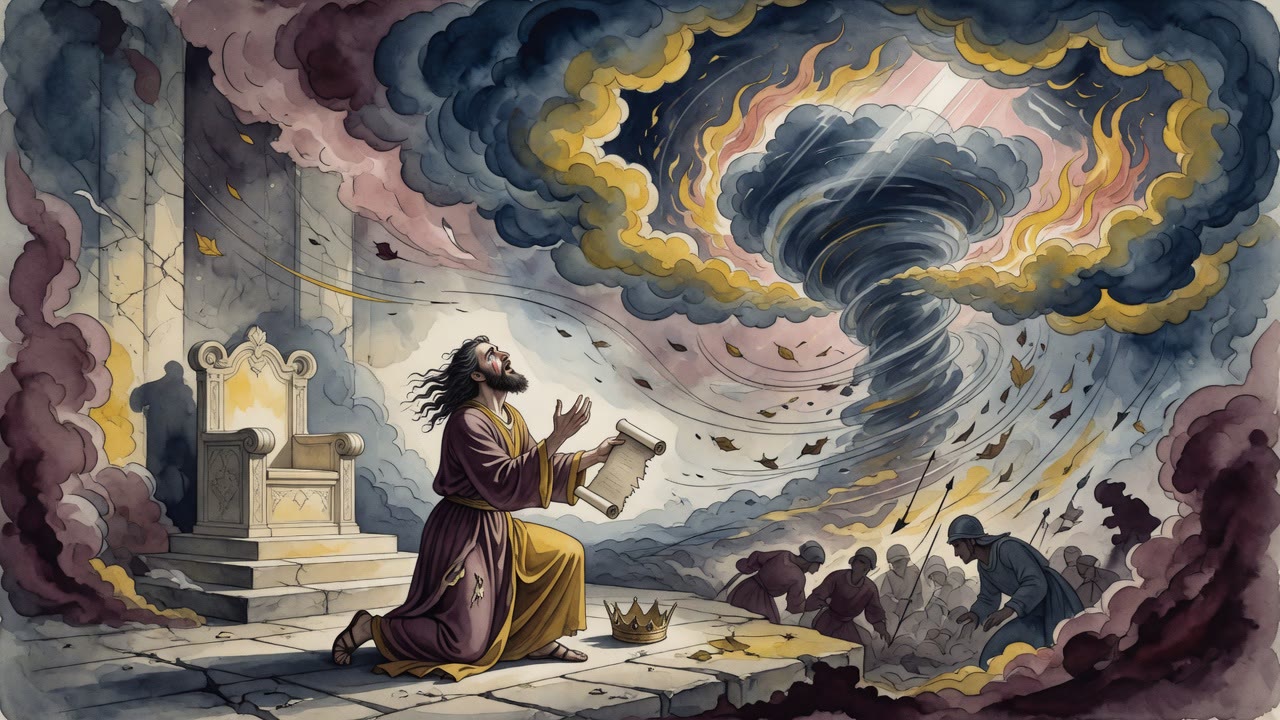
Daniel walked out of the lions' den in the morning without a mark on him. The angels had asked what man was, and the answer kept arriving in the form of somebody who should not have survived the night and did.

If You Come to My House

Rabbi Eliezer ben Yaakov heard God make a neighbor's offer, in a neighbor's words: if you come to My house, I will come to your house. The place my heart goes, my feet take me. The place my heart loves, my feet take me.

From that the rungs come down. Ten men walk into a synagogue and the Presence is with them, because God stands in the divine assembly (Psalms 82:1). Three sit down to judge a case and He is in the middle of them, since the same verse puts Him among the judges. Two who fear the Lord speak to one another, and Malachi says He listened and heard it (Malachi 3:16). Even one man who mentions the Name is met where he stands.

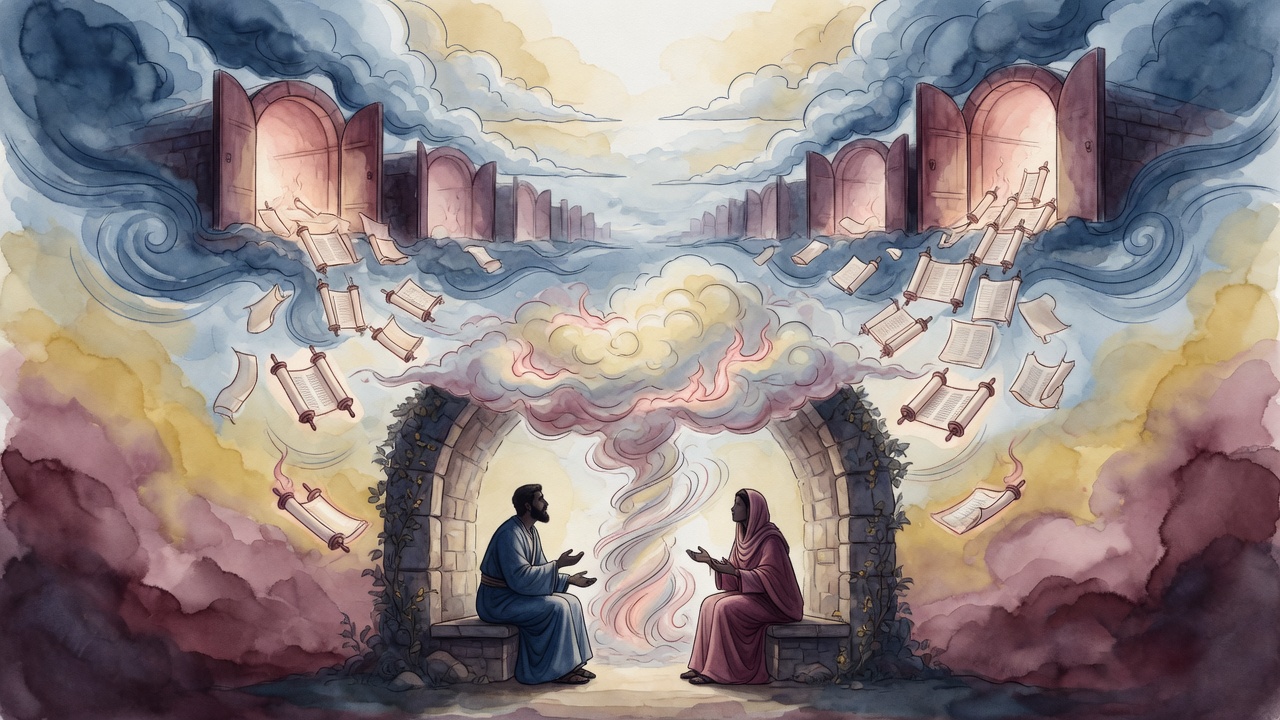
Two is not a crowd. Two is a bench against a wall after the market has shut, one man saying a verse he half remembers and the other correcting him, both of them careful with the Name because they were raised careful. Nothing announces anything. The Shekhinah (the indwelling presence of God) comes wherever the Name is handled that way, and the rung holds all the same.

Rabbi Yoshiyah Turned the Verse Around

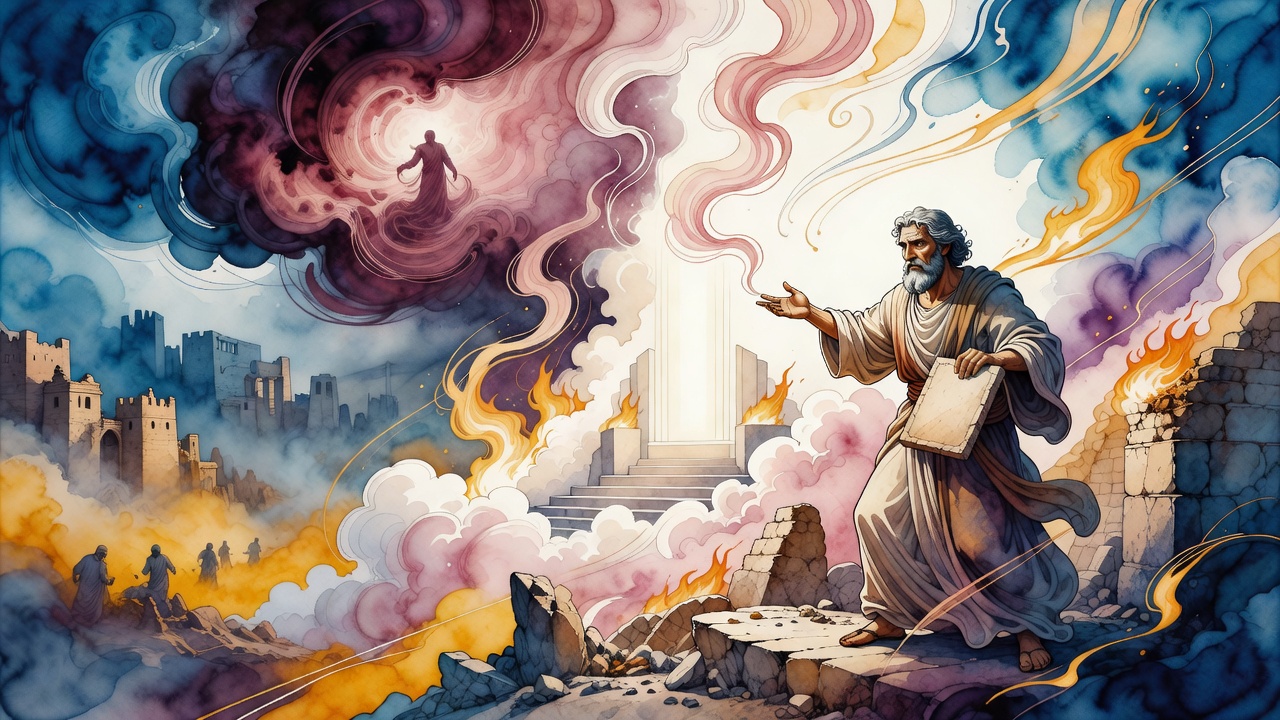
Not everyone would let "in every place" stand loose. "Could it really mean every place?" Rabbi Yoshiyah said, and he read the words of Exodus as transposed on purpose: in every place where I come to you and bless you, there I will cause My name to be mentioned. And where is that? In the chosen house. That is why the Explicit Name was forbidden out in the provinces, guarded, kept for one address.

So the Temple kept the Name, and the bench in the alley kept the visits, and neither reading was made to give way.

State Your Requests

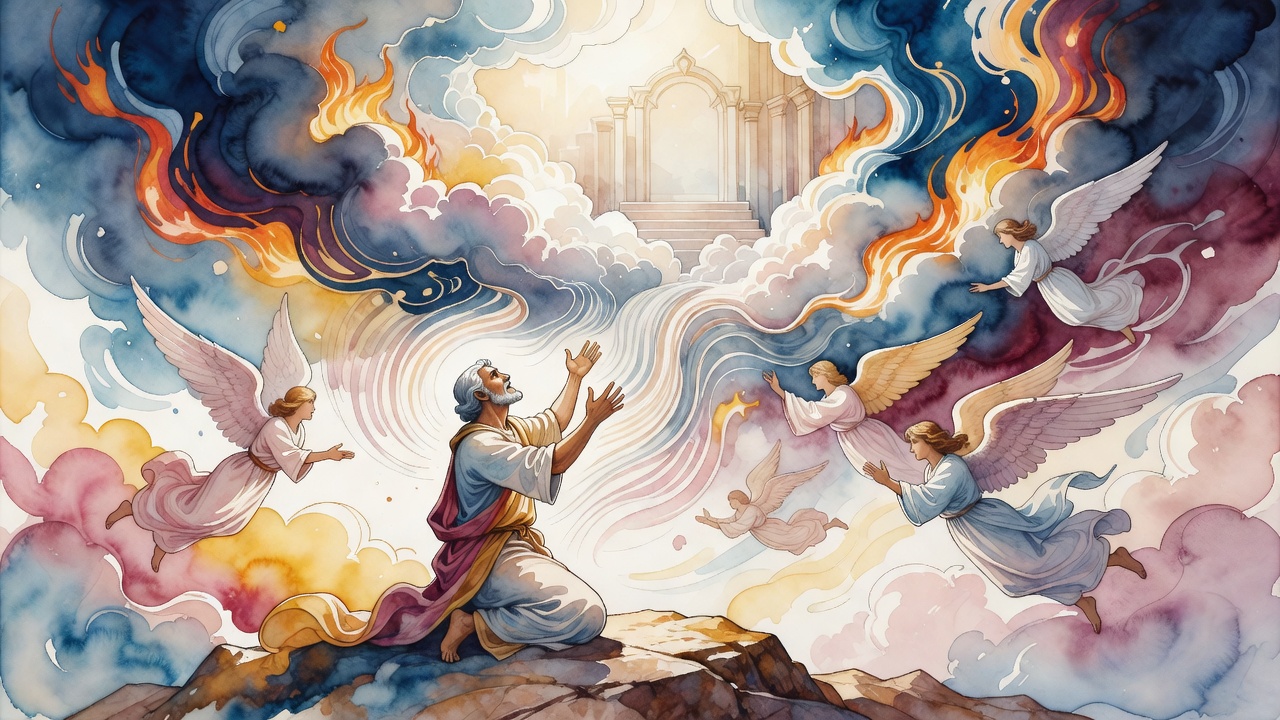
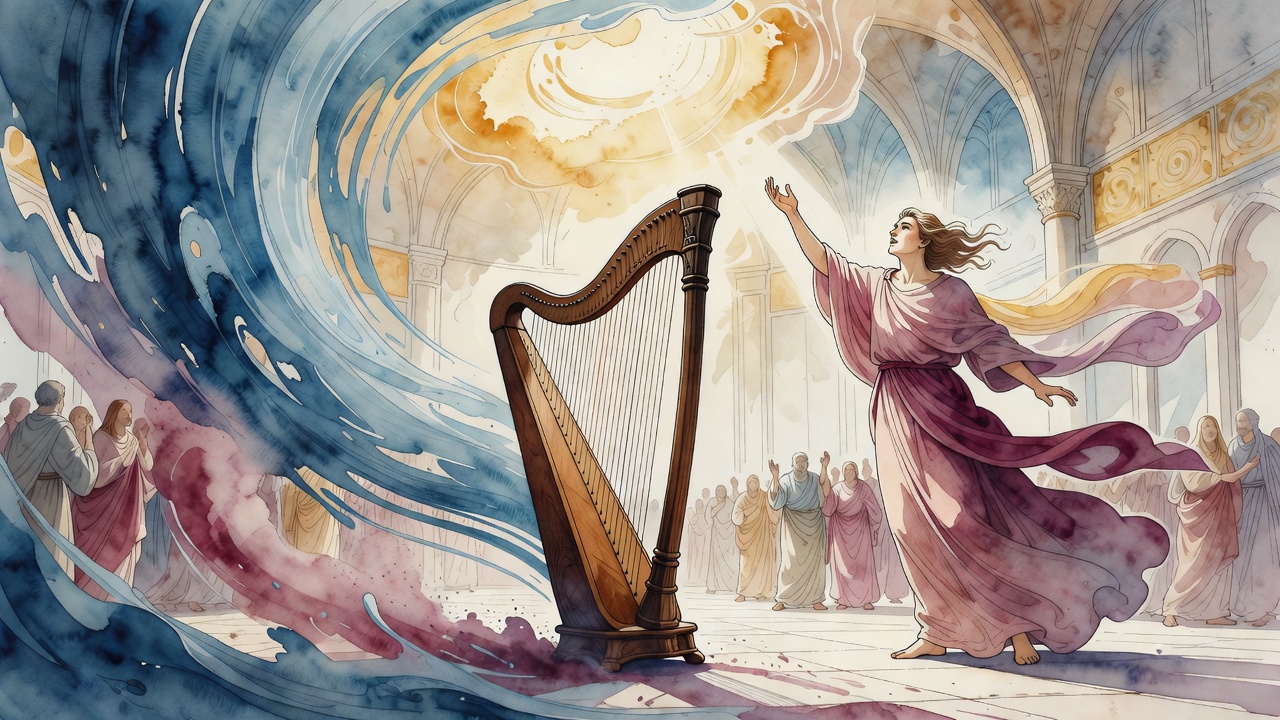
Higher up, the men who climbed into the palaces stood in front of the storehouses and heard an offer with no ceiling on it. "My storehouses and My treasuries, nothing in them is lacking. State your requests and they shall be given you, and the desire of your hearts shall be done forthwith, for there is no time like this time, for the love of you clings to My heart."

They could have asked for anything at all. What they asked for was more Torah: a multitude of Talmud, halakhic traditions in quantity, questions to put on points of law, secrets by the pile, testimony in mountains upon mountains and wisdom in hills upon hills, learning thick in the streets and subtleties in the roads, laws as the sand of the sea and rabbis as the dust of the world.

"I know what you request," came the answer, "and My heart perceives what you desire."

The angels who had asked what man was worth were still above all of it, watching the request come up from the dust with nothing modest in it. When they had seen the whole of it they said, "O Lord our God, how majestic is Your name in all the earth."


← All myths
From the tradition

Sources

3 sources

The texts behind this telling. Some cards carry a translation of the source; others are our own retelling of it, and each card says which. Every card links out to the original.

Yalkut Shimoni on Torah 305:2Yalkut Shimoni on Torah

Translation of the source text.Torat Emet (Yalkut Shimoni) · CC-BY-NC

"In every place where I cause My name to be mentioned" (Exodus 20:24) - that I reveal Myself to you only in the chosen house [the Temple]. From here they said: the Explicit Name is forbidden to be uttered in the outlying provinces.

Rabbi Eliezer ben Yaakov says: if you come to My house, I will come to your house; the place My heart goes, there my feet lead me; the place my heart loves, my feet lead me. From here they said: ten people who enter a synagogue, the Divine Presence is with them, as it is said, "God stands in the divine assembly" (Psalms 82:1). And from where do we learn even three? As it is said in the same verse, "in the midst of the judges He renders judgment." And from where even two? As it is said, "Then those who feared the LORD spoke, each man to his fellow" (Malachi 3:16). And from where even one? As it is said, "In every place where I cause My name to be mentioned [I will come to you and bless you]."

Rabbi Yoshiyah says: behold, it says, "In every place where I cause My name to be mentioned I will come to you and bless you." Could it really mean in every place? Rather, this verse is transposed: "In every place where I will come to you and bless you, there I will cause My name to be mentioned." And where is that? In the chosen house.

Full source
Heikhalot Rabbati 29:5Heikhalot Rabbati

Retold in our words. Read the original at the link below.Sefaria-hosted English translation · CC-BY

The ancient mystics certainly did. And in the Heikhalot (the heavenly palaces) Rabbati, a text that pulls back the curtain on the heavenly realms, we find a powerful message about just that yearning and how it's met.

Standing before the Divine, and hearing these words: "My storehouses and My treasuries – nothing in them is lacking." Think about the sheer abundance implied! It’s a promise, a boundless offer. "State your requests and they shall be given you, and the desire of your hearts shall be done forthwith, for there is no season like to this season, and no time like to this time."

Why this season? Why this time? Because, the text continues, "My soul bowed down till I beheld you, and there is no time like to this time, for the love of you cling to My heart. The Divine, yearning for us, just as we yearn for the Divine.

What exactly are these mystics asking for? The text clarifies: "I know what ye request, and My heart perceiveth what ye desire. Ye request much [knowledge of] Law, and a multitude of Talmud and many halakhic traditions." Halakha, by the way, refers to the body of Jewish law and practice. They aren't just looking for personal gain; they seek to deepen their understanding of Jewish tradition, to confront its complexities.

They “hope to ask questions on points of law, and ye covet a multitude of secrets.” They want to "multiply testimony in mountains upon mountains, to make wisdom wonderful in hills upon hills, to increase knowledge of the Talmud in the streets, and subtleties in the roads, to multiply laws as the sand of the sea, and rabbis as the dust of the world."

It's a vision of intellectual and spiritual flourishing. A desire not just to know the tradition, but to expand it, to enrich it, to make it vibrant and alive in every corner of the world. To have wisdom resonate from the highest peaks to the most traveled roads.

What's striking is the sheer audacity of the request. It's not a small, timid wish for personal comfort. It’s a grand, sweeping vision of endless learning, of countless interpretations, of a tradition constantly growing and evolving. And the text suggests that this desire, this yearning, is not only understood but actively welcomed by the Divine.

Perhaps it's an invitation to embrace our own yearnings, our own desires for knowledge and understanding. Maybe it's a reminder that the Divine is not some distant, unapproachable figure, but a partner in our quest for meaning. And maybe, just maybe, the boundless treasures we seek are already within reach, waiting for us to ask.

Full source
Midrash Tehillim 8:5Midrash Tehillim

Retold in our words. Read the original at the link below.Rabbi Mike Feuer, Jerusalem Anthology · CC-BY

That feeling, that confrontation with the vastness of creation, is something Jewish tradition wrestles with too. How do we, tiny humans, fit into this grand cosmic tapestry?

Midrash Tehillim, a collection of rabbinic interpretations on the Book of Psalms, explores this very question, specifically focusing on Psalm 8: "For I will behold Your heavens, the work of Your fingers…"

Rabbi Ibbo, in Midrash Tehillim, presents us with not one, but three different perspectives on this verse. The first? Pure awe. Imagine, says one opinion, that “If He had created me only to contemplate the heavens and the earth and the constellations, it would have been sufficient for me.” Just to witness the wonder! That's a powerful sentiment.

The second opinion takes a completely different tack: "Whatever I have to give for the future, let me give it now." A sense of urgency, of wanting to contribute while we can. And then there's the third opinion, attributed to, shall we say, "lazy workers": "Give us what our fathers had." A longing for the past, a reliance on inherited merit. It’s fascinating how much human nature is captured in these three simple interpretations of looking at the stars.

But the Psalm continues, "What is man, that You should remember him?" This is where it gets really interesting. Rabbi Berechiah tells us that when God created the world, He wanted to show the angels just how praiseworthy the righteous could be. The angels, being angels, were skeptical: "What is man?" they asked. After all, God fills heaven and earth (as Rabbi Joshua ben Levi reminds us, citing (Jeremiah 23:2)4). What makes humans so special?

The Midrash (rabbinic interpretive commentary) goes on to offer a series of answers, identifying key figures in Jewish history as embodiments of humanity's potential. Each of them, in different ways, demonstrated a unique aspect of what it means to be human.

Abraham, remembered by God. Isaac, similarly blessed through his mother Sarah. Jacob, who, though "a little less than the angels," wrestled with one and prevailed, as we read in (Genesis 32:25-30). The Midrash points out that Jacob was only lacking in giving his soul for his flock. He was willing to risk everything for them.

Then comes Moses, whose face shone with divine light, as described in (Exodus 34:29). Joshua, who commanded the sun to stand still (Joshua 10:12-13). David, whose enemies fell before him, crushed like dust. Solomon, wise and eloquent, speaking of trees and all of creation. And even Samson, with his incredible strength, demonstrated when he caught three hundred foxes, according to Rabbi Huna bar Pappa.

Rabbi Simon even brings up Daniel, unharmed in the lions' den. And it doesn’t stop there! The Midrash even connects figures to elements of the natural world. Elijah, soaring through the world like a bird, sustained by ravens (1 Kings 17:6). Jonah, swallowed by the great fish (Jonah 2:1). And the Israelites themselves, miraculously crossing the sea on dry land (Exodus 14:29).

All these figures, these stories, are woven together to answer the angels' question. "What is man?" Man is potential. Man is struggle. Man is capable of both great righteousness and profound laziness. Man can even, through connection with the Divine, transcend his limitations.

The angels, witnessing all this, can only respond with awe: "O Lord our God, how majestic is Your name in all the earth! Your glory is above the heavens!" (Psalms 8:1). It's a reminder that even though we may feel small in the face of the universe, our actions, our choices, our very existence, have meaning. We are part of something grand, something divine.

So, the next time you look up at the stars, remember those figures, those stories. Remember that within each of us lies the potential for greatness, for connection, for a spark of the divine. And maybe, just maybe, you'll see yourself a little differently.

Full source