5 min read

Snakes Bowed When Israel Entered the Desert

Israel followed Moses into a wilderness of snakes without delay. The reptiles lay down on the sand, then thirst uncovered a fear still buried underfoot.

Curated by Arthur · Told by Maggid ·
Table of Contents
  1. Into the Frightful Sand
  2. When the Snakes Lay Down
  3. What Shall We Drink
  4. A Song for the Strong Tower
  5. Trust Measured Twice
Snakes Bowed When Israel Entered the Desert Click for full size

Into the Frightful Sand

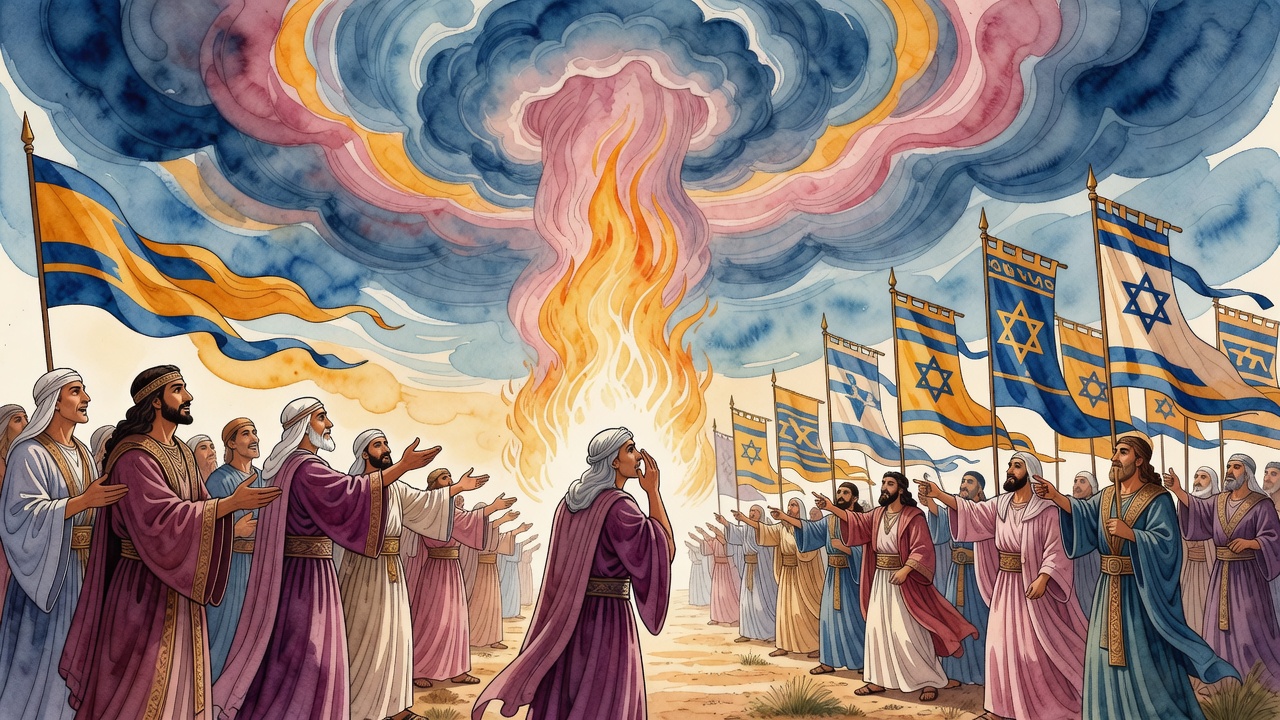
Moses did not dress the desert as a garden. The land ahead was frightful, a long throat of heat and thorn, and the people still went in. They obeyed without murmur and without the delay that turns fear into mutiny. That first step was the proof God weighed later. Trust was not a speech on the shore. It was feet on sand that had killed travelers for generations.

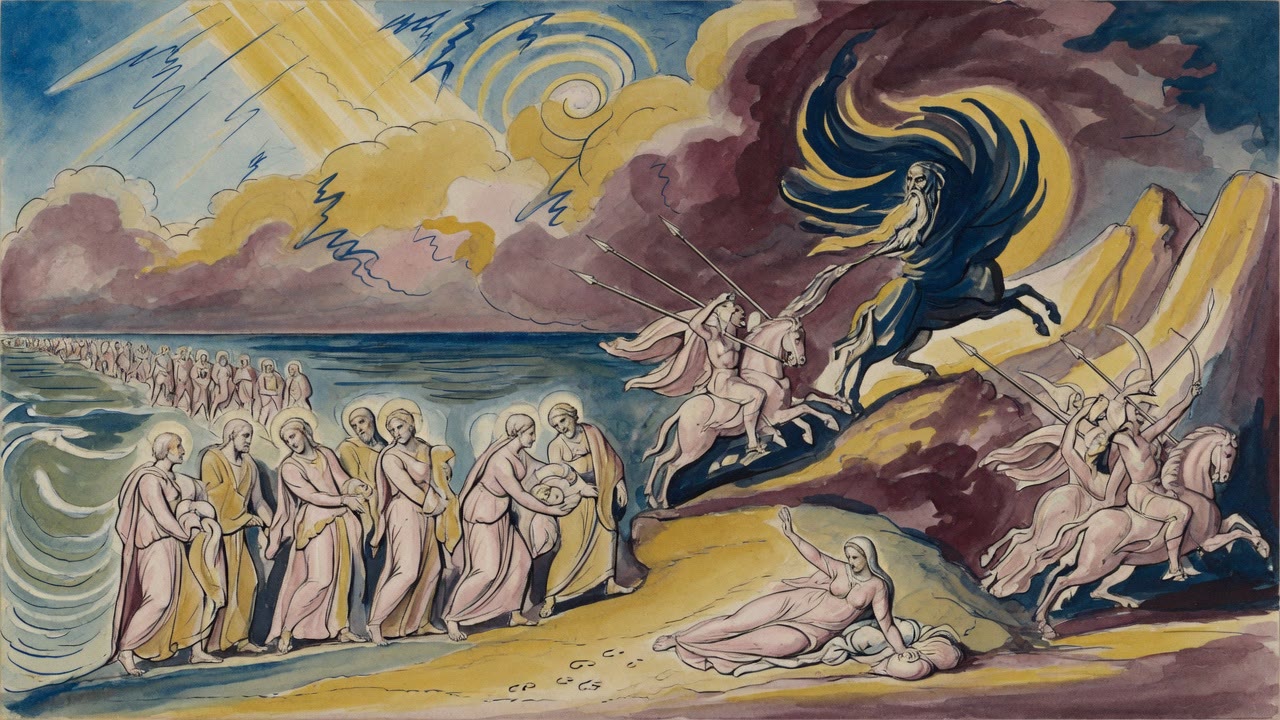
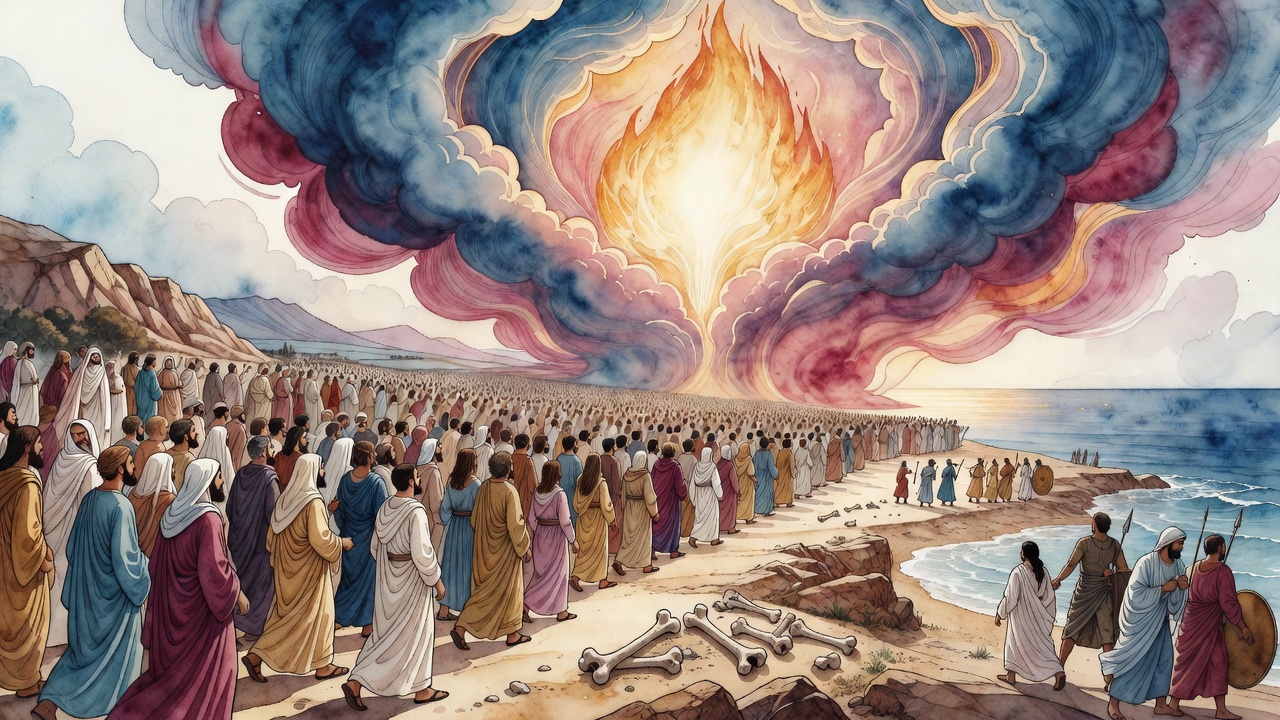
Israel carried the memory of the sea, where water had split and then flowed sweet enough to drink. The camp knew what miracle tasted like. Now the miracle was quieter. No walls of water. Only a command and a road that looked like a sentence.

When the Snakes Lay Down

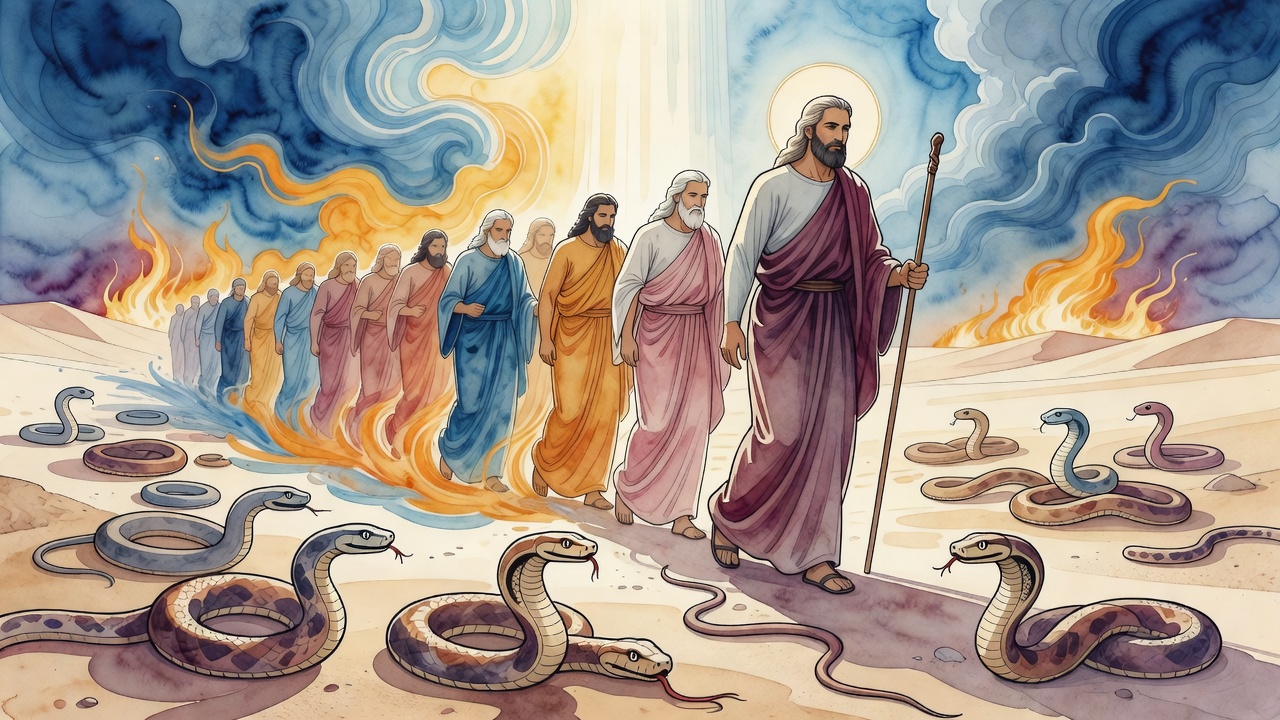
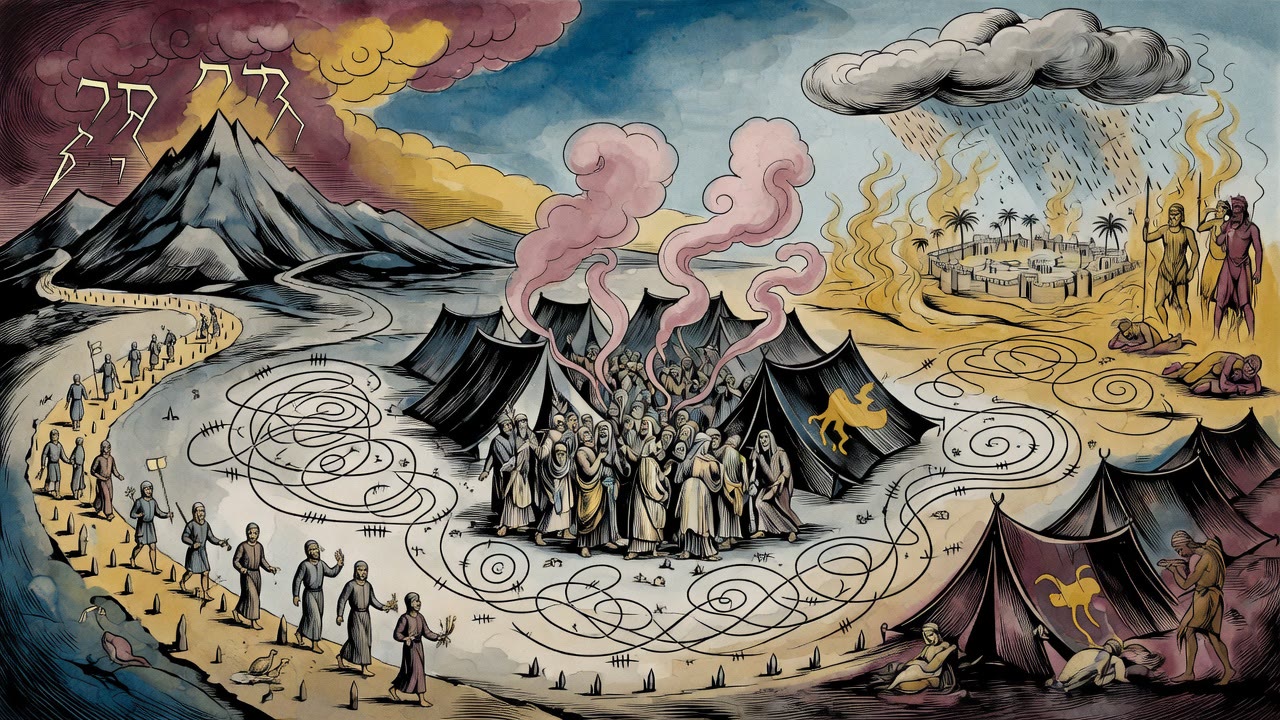
Snakes and scorpions owned that wilderness by right of poison. For many years of wandering the tradition says they did not harm the people who had trusted enough to enter. More than that, the fear itself loosened. As soon as the snakes saw Israel, they lay down on the sand, meek as rope. The desert did not become soft. The creatures that made it hard simply refused to strike.

Picture a child who has been taught to freeze at the sound of a rattle. Now the rattle is silent, and the body on the path is only a dark line, head lowered, waiting for the column to pass. Adults still watched their steps. They also learned a new kind of courage: the courage that follows because the path has been ordered, not because the path has been emptied of every danger.

Three days they marched without complaint. Three days is long enough for a nation to invent a grievance and short enough for a leader to hope the quiet will hold. The quiet held until the skins of water lightened and the question rose like dust.

What Shall We Drink

"What shall we drink?" The cry did not wait for empty gourds. The supply was failing, not finished, and already the camp turned its face against Moses and against God. On the Red Sea crossing they had drawn water while the path was wet with wonder. Here, with ground still firm and a little water left, they spent their courage early.

The tradition sharpens the rebuke. Under the very ground they walked, water was running. They did not know it. God had set the test to see how they would act when the surface looked dry and the leader had not yet struck a rock or sweetened a bitter pool. Faintheartedness showed itself as a refusal to ask. Instead of counsel they chose murmur. Instead of petition they chose accusation.

Thirst is honest. Panic before thirst is a different animal. It eats tomorrow's strength with today's imagination. The people who had watched snakes bow still could not bow their own speech when the skins sagged.

A Song for the Strong Tower

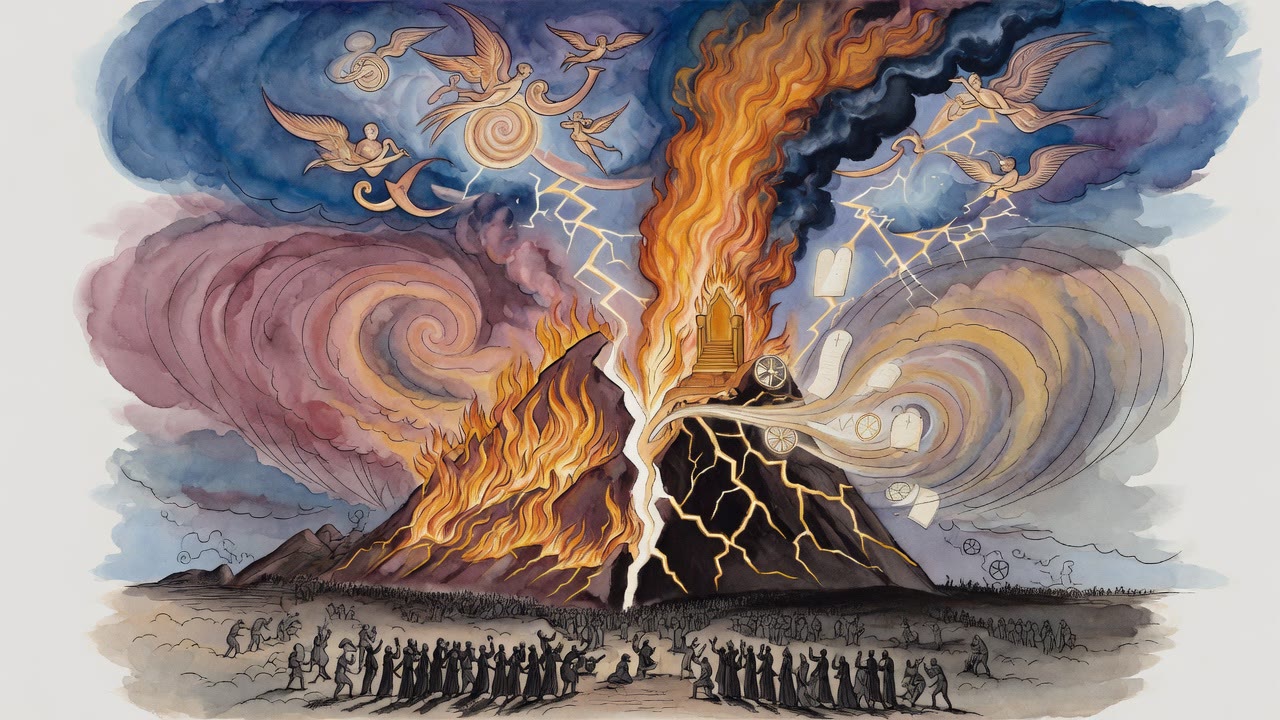
Later mouths would sing what the camp forgot in the third day's heat. "Thou hast done mighty things, O Lord." "Thou art the strength of my salvation." "In Thee, O God, did we trust; we said, Thou art our God, for Thou wast our shelter and our strong tower against our enemies." The song names kings of the earth and princes of the world, but its center is a people that once trusted enough to enter a frightful road.

The song and the murmur are not two religions. They are two hours in one people. In one hour the reptiles lie down. In another hour the same throats invent drought before drought arrives. God remains the fortress in the hymn even when the camp treats Moses as the enemy of their dry mouths.

What the song calls a strong tower, the desert called a test. The tower does not mean the walls never shake. It means the One who set snakes to bow can also hide water under sand and wait to see whether Israel will seek or accuse.

Trust Measured Twice

So the wilderness becomes a ledger with two columns. Column one: they followed Moses into terror without delay, and heaven answered with a desert that would not bite. Column two: they complained while water still remained, and heaven answered by revealing that the trial had been arranged, water underfoot, eyes unready.

Faith that enters a frightful place is not the same as faith that stays calm when the gourd is light. Israel learned both lessons in the same stretch of sand. The snakes remembered their place. The people forgot theirs, then had to learn it again at bitter water and at rock.

When the song rises later, it does not erase the murmur. It frames it. Mighty deeds include the hour the reptiles lay down and the hour the camp failed a test it did not know it was taking. The God of the strong tower is the same God who lets a nation feel its own thin courage while the ground itself holds a secret stream.

Walk that road in the mind and the drama is plain. A column of freed slaves. A prophet at the front. Poison that will not strike. Then a cry that strikes the leader instead. Between them stands the whole problem of leaving Egypt: the body can exit a house of bondage while the mouth still builds one out of fear.


← All myths

From the tradition

Sources

2 sources

The texts behind this telling. Some cards carry a translation of the source; others are our own retelling of it, and each card says which. Every card links out to the original.

Legends of the Jews 1:76Legends of the Jews

Retold in our words. Read the original at the link below.The Legends of the Jews by Louis Ginzberg (1909) · Public Domain

What's remarkable is that their faith was rewarded in the most astonishing ways. According to Legends of the Jews, the snakes and scorpions, those ever-present dangers of the desert, posed absolutely no threat to them. Can you picture it? The moment the snakes saw the Israelites, they would simply lie down on the sand, harmless.

For three whole days, they journeyed through that barren landscape, and remarkably, they didn't complain. But, as The familiar version gives us, resources eventually dwindle. When their water supply ran out, the murmuring began. "What shall we drink?" they cried out to Moses. We find this moment of desperation captured in various sources, including the Legends of the Jews.

Think back to the miraculous crossing of the Red Sea. The waters had turned sweet for them, providing a life-saving drink. But now, as the water dwindled, their faith seemed to evaporate just as quickly. They started grumbling, not just against Moses, but against God Himself.

What’s striking about this episode is that they hadn’t even suffered yet. There was still water left, but the anticipation of thirst was enough to trigger their complaints.

This was a test, a way for God to see how they would act under pressure. And according to the Legends of the Jews, they didn't exactly ace it. The irony is almost painful: the very ground they walked on had running water beneath it! They were completely unaware of this hidden blessing. As we find in Midrash Rabbah and other texts, God wanted to see if their faith would be strong enough even in the face of perceived scarcity.

It begs the question: How often do we, too, complain and worry, completely oblivious to the blessings and solutions that are right under our feet? It's a powerful reminder to look for the hidden water, to trust in the unseen provision, and to cultivate a little more faith in the face of uncertainty. Maybe, just maybe, we'll find that the desert isn't as desolate as it seems.

Full source
Legends of the Jews 1:22Legends of the Jews

Retold in our words. Read the original at the link below.The Legends of the Jews by Louis Ginzberg (1909) · Public Domain

That feeling – that primal need to praise – it's woven deep into the fabric of Jewish tradition. It’s a feeling that echoes through the ages, finding its voice in the words

The weight of history, the trials and triumphs of a people. How do you even begin to express that? Well, let's listen to the voices of those who tried.

"Thou hast done mighty things, O Lord, Thou hast performed great deeds. Who is like unto Thee? My lips shall sing unto Thy name." Isn't there something so powerful in that simple declaration? Acknowledging not just the what, but the who behind it all. A power so immense, so beyond comprehension, that all you can do is offer up your voice in awe.

It's not just about grand pronouncements from on high. It's personal too. "My goodness and my fortress, my refuge," the words continue, "I will sing a new song unto Thee, with thanksgiving I will sing unto Thee, Thou art the strength of my salvation." That's not just reciting a prayer; that’s a heartfelt connection. It's recognizing that this power, this God, is not some distant, untouchable force, but a personal shield, a source of strength in times of need. A fortress. It speaks to the intimate relationship between the individual and the divine.

But the song doesn't stop with the individual. It expands, encompassing the entire world. "All the kings of the earth shall praise Thee, the princes of the world shall sing unto Thee, the children of Israel shall rejoice in Thy salvation, they shall sing and praise Thy power." A universal chorus, a harmony of praise rising from every corner of the globe. It’s a vision of unity, of recognition of a power that transcends borders and beliefs.

And at the heart of it all is trust. Undying, unwavering trust. "In Thee, O God, did we trust; we said, Thou art our God, for Thou wast our shelter and our strong tower against our enemies." Through everything, through the darkest of times, that trust remains. That declaration – "Thou art our God" – it's a defiant act of faith, a refusal to be broken, evidence of the enduring bond between a people and their God.

These words, drawn from the wellspring of Jewish tradition, aren't just pretty poetry. They're a reminder of the power of praise, the importance of gratitude, and the enduring strength of faith. They're an invitation to find your own voice in that ancient song, to add your own verse to the eternal chorus. So, what song will you sing today?

Full source