Solomon Named Himself Brutish Before His Own Throne
Seven hundred wives and three hundred concubines were already in the file. The judges wanted an eighth name on the list of the damned. Heaven stood up first.
Table of Contents
 Click for full size
The Judges Wanted an Eighth Name
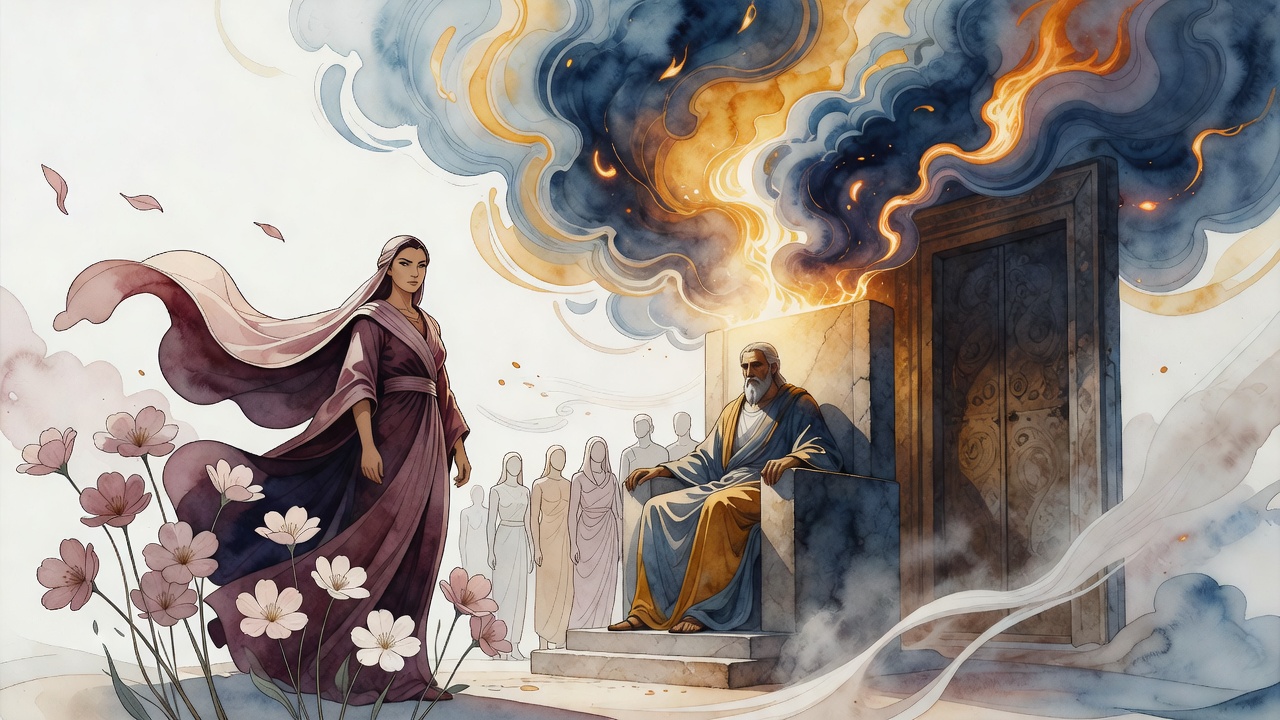
The judges leaned over the list. Seven names already sat there, shut out of the world to come. Three kings who had ruined Israel and four commoners whose wickedness had earned them the same sentence. They wanted an eighth.
They wanted Solomon.
Nobody in the room disputed the wisdom. That was never the charge. The charge was the seven hundred royal wives and the three hundred concubines, the shrines that went up on the hills around Jerusalem to keep foreign queens comfortable, and a heart that had gone where they went. The man had built the house of the LORD and then built altars within sight of it. The court weighed the two halves and reached for the pen.
The strongest evidence against him was a document he had written himself.
He Signed the Page Agur
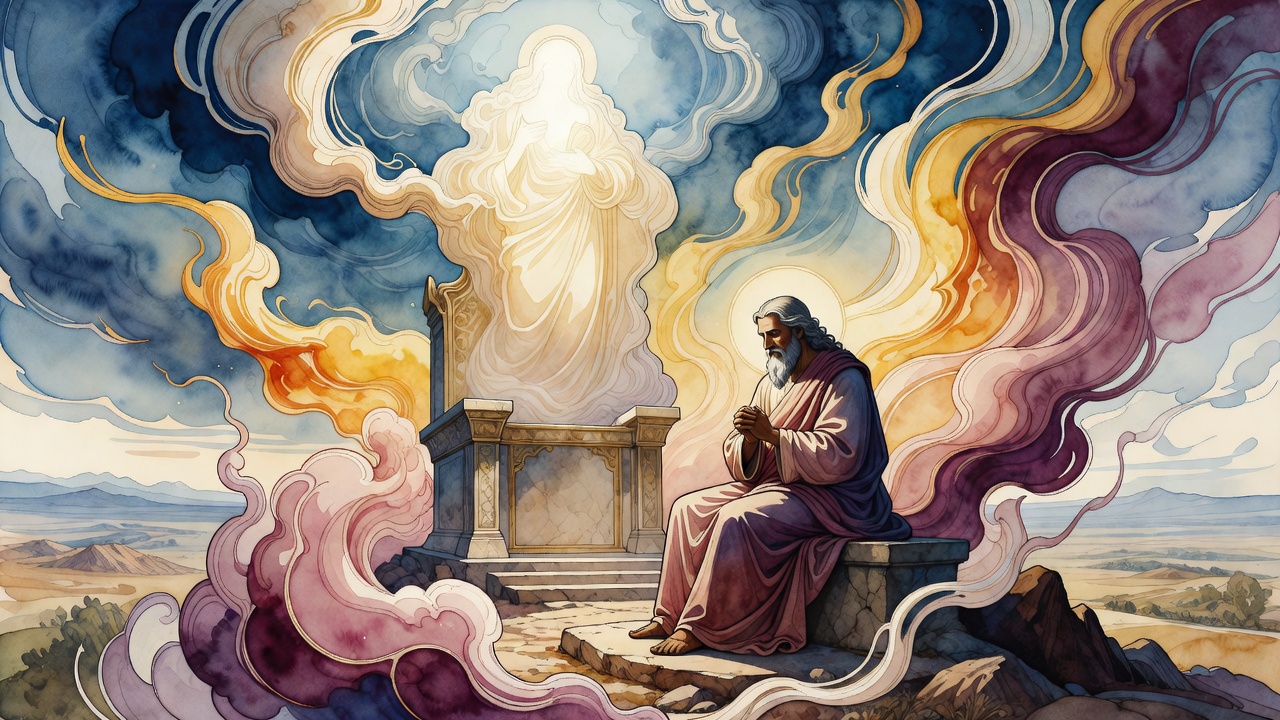
He had not signed it Solomon. He signed it Agur son of Yakeh, a stranger's name, and every syllable of the alias was an accusation he had drawn up against himself. He had girded his loins. He had been clean of sin. He had carried the yoke of Heaven on his shoulders. He had understood the very letters of God and had been strong enough to bear them. All of that was true. He had ruled the worlds above and below, and his dominion had run from Tiphsah to Gaza, and the trade winds had bent toward his court.
Then, under the mask, in a room a few paces from his own throne, he named himself with a word the judges would later read out against him.
"Surely I am more brutish than a man."
Which man. He meant Noah, who drank his wine and was punished for it and is still called righteous in the scroll. Solomon had that warning in front of him his whole life and had never once studied it.
"I have not the understanding of a man." Now he meant Adam, who had exactly one wife, and she turned his heart, and that was enough to lose a garden. Solomon married a thousand. He wrote the count down himself, in public language, on a page anyone could pick up. A king does not usually leave the prosecution its best exhibit.
Seven Years for the House
What the court left out of the file was the stonework.
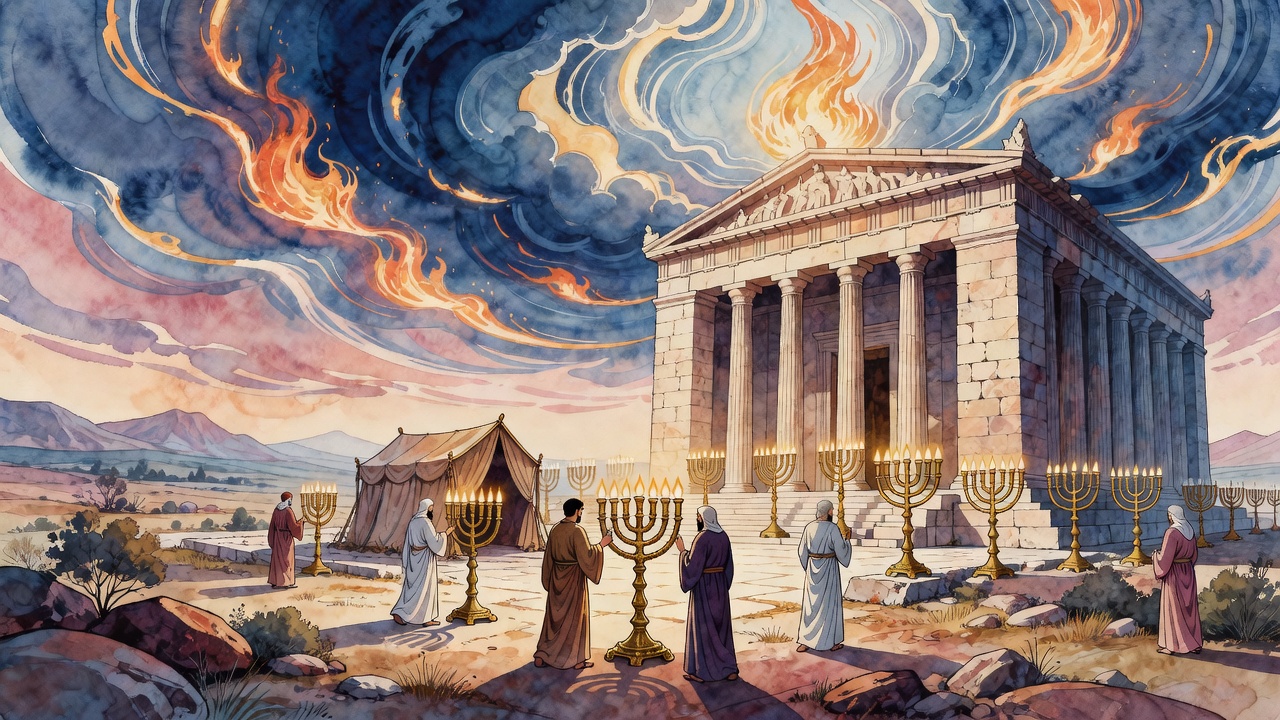
The house of God went up in seven years. Cedar came down from Lebanon on rafts. The quarry sent stone already cut. The work moved fast because the king pushed it. His own palace took thirteen. Nearly twice as long for the room he slept in, because the craftsmen were somewhere else, on the other hill, finishing the sanctuary first.
He had written a line about that kind of skill before anyone needed it as a defense. "Do you see a man skilled in his work? He shall stand before kings." The judges had the wives in the file and the shrines in the file. They did not have the seven years and the thirteen.
On the Temple hill the last beam went up while the palace still waited for its doors. Solomon walked the sanctuary first. He slept later, in a house that took its time because God's house had taken his.
The Presence Stood Up to Argue
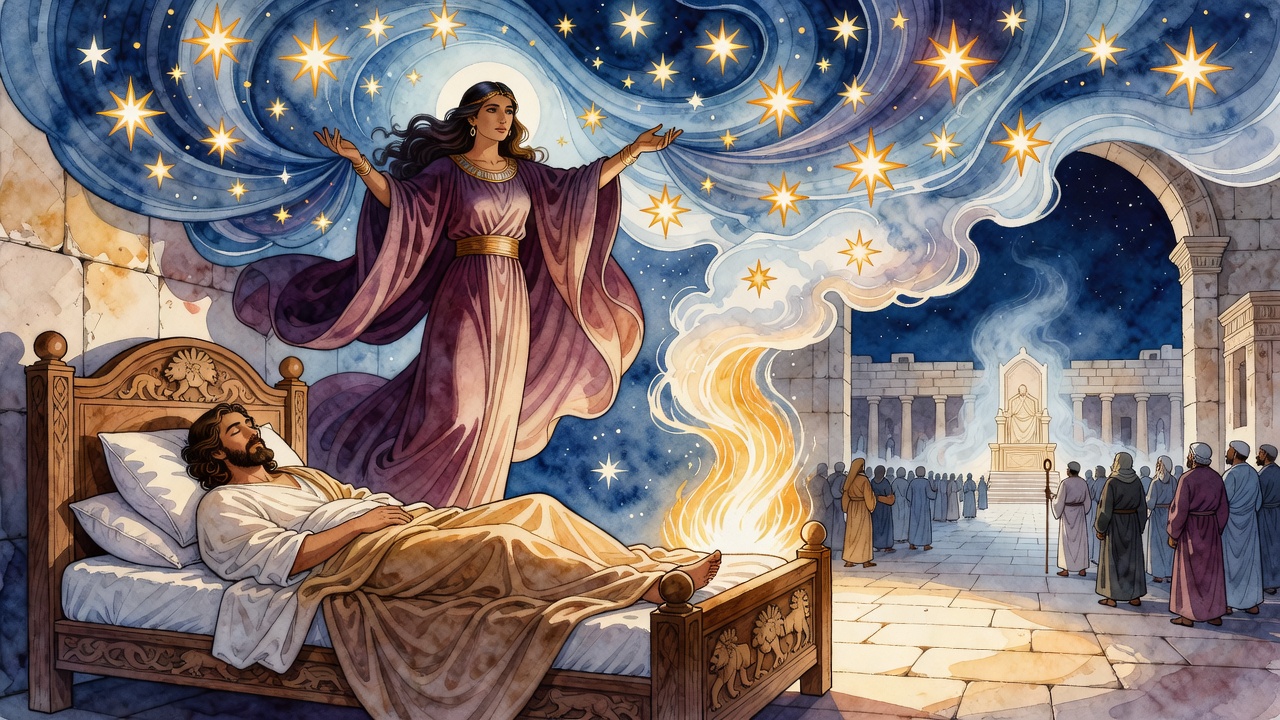
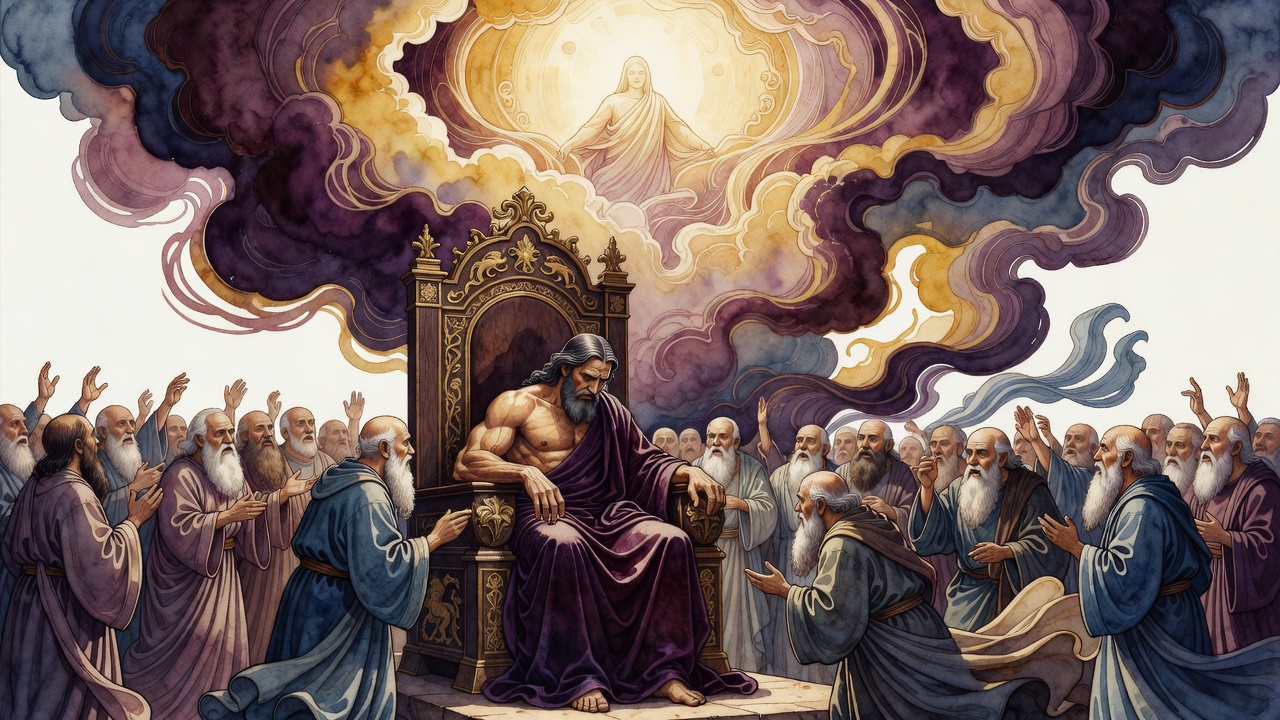
The Shechinah (שכינה), God's indwelling presence, came and stood before the Holy One while the judges were still drafting.
"Master of the worlds. Do you see this man skilled in his work? They mean to seat him among the obscure."
The answer did not come from the bench. It came out of the air over the room, in the king's own words, turned back on the men holding the pen. He shall stand before kings. He shall not stand before the obscure.
The eighth name never went on the list. The one thing the court had not entered into evidence, the seven years and the thirteen, was the thing Heaven picked up and used. A man who kept the craftsmen on God's roof and let his own roof wait had bought himself an advocate he never knew he had hired.
The pen went down. The list stayed at seven.
He Called Heaven and Earth as Witnesses
There is one more thing on the record, and Rabbi Alexandrai is the one who kept insisting on it. Solomon did not teach wisdom out of his books. He taught it out of his own conduct, and once he stood up in front of the whole world and swore to it.
"I call heaven and earth as witnesses against me. Of all the wisdom the Holy One gave me, I never once let a false word leave my mouth. Everything I said, I said in justice."
That is a strange oath from a man whose gifts made lying frictionless. He could have bent any judgment in any direction and left no mark on it. Divination sits on the lips of a king, the proverb says, and in judgment his mouth does not transgress. The wives turned his heart and the shrines went up and the court nearly wrote him out of eternity. His mouth stayed clean the entire time.
Both things belong to the same man. He filed the indictment himself and Heaven filed the defense, and the wisest king in the world spent his last strength arguing on both sides of his own case. The list on the table did not take his name. The page he signed Agur still sat in the room, accusing him, after the Presence had already won.
← All myths