Translation of the source text.Tanna debei Eliyahu Rabbah, Warsaw 1880 · Public Domain
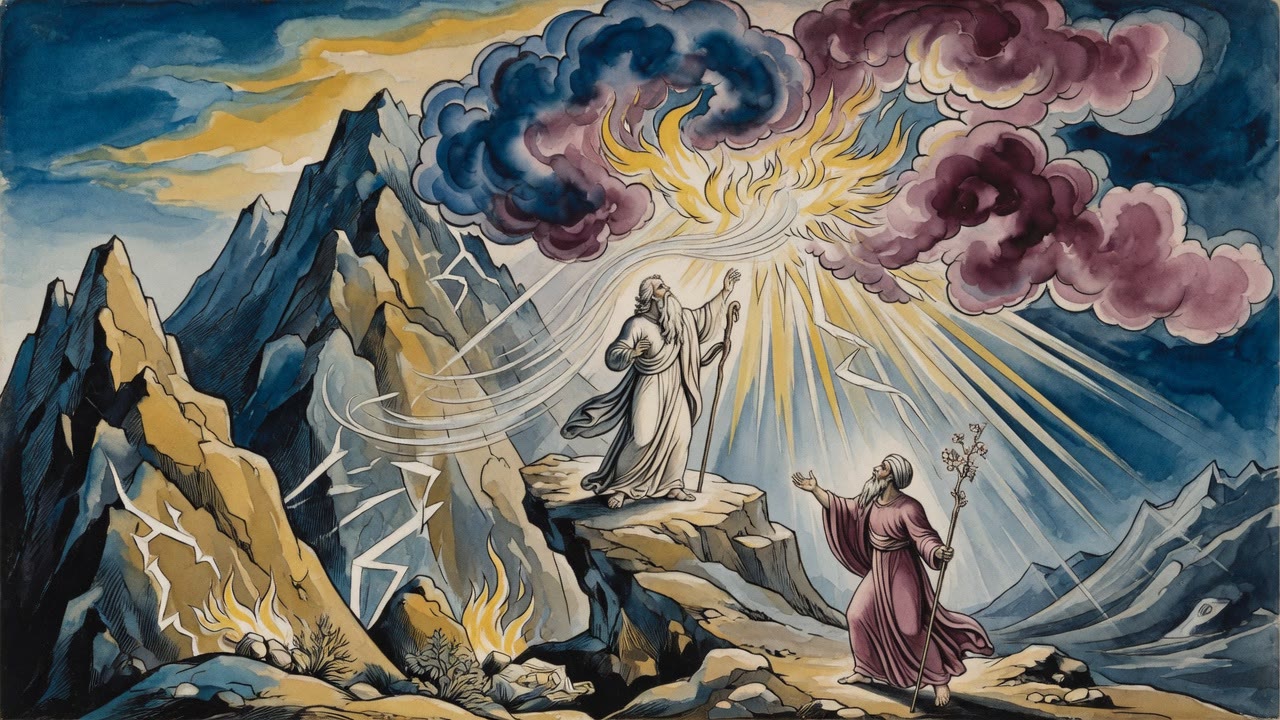
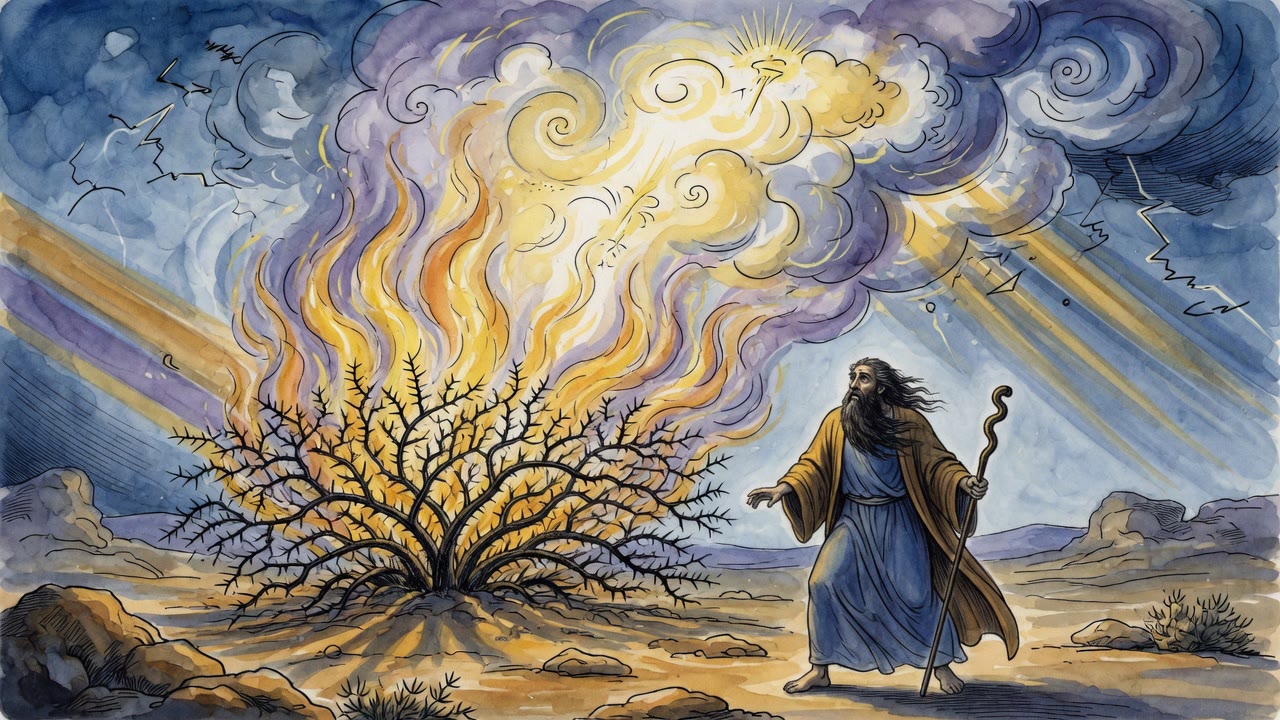
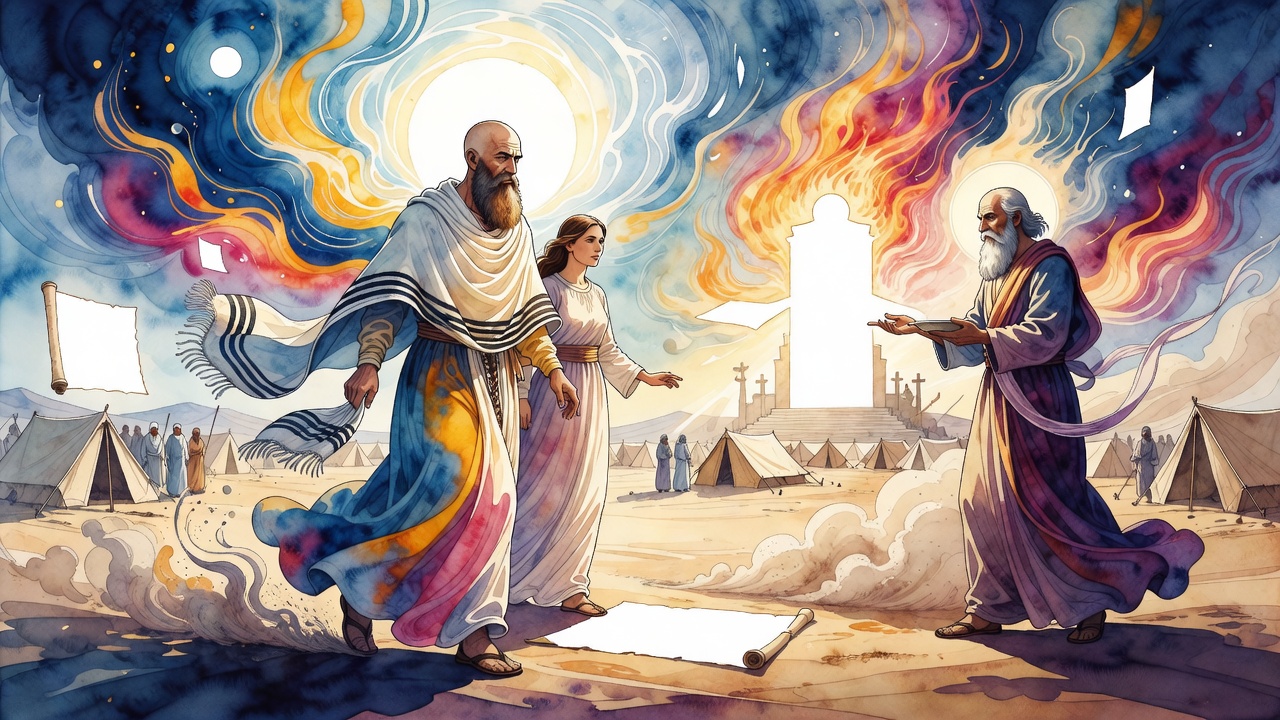
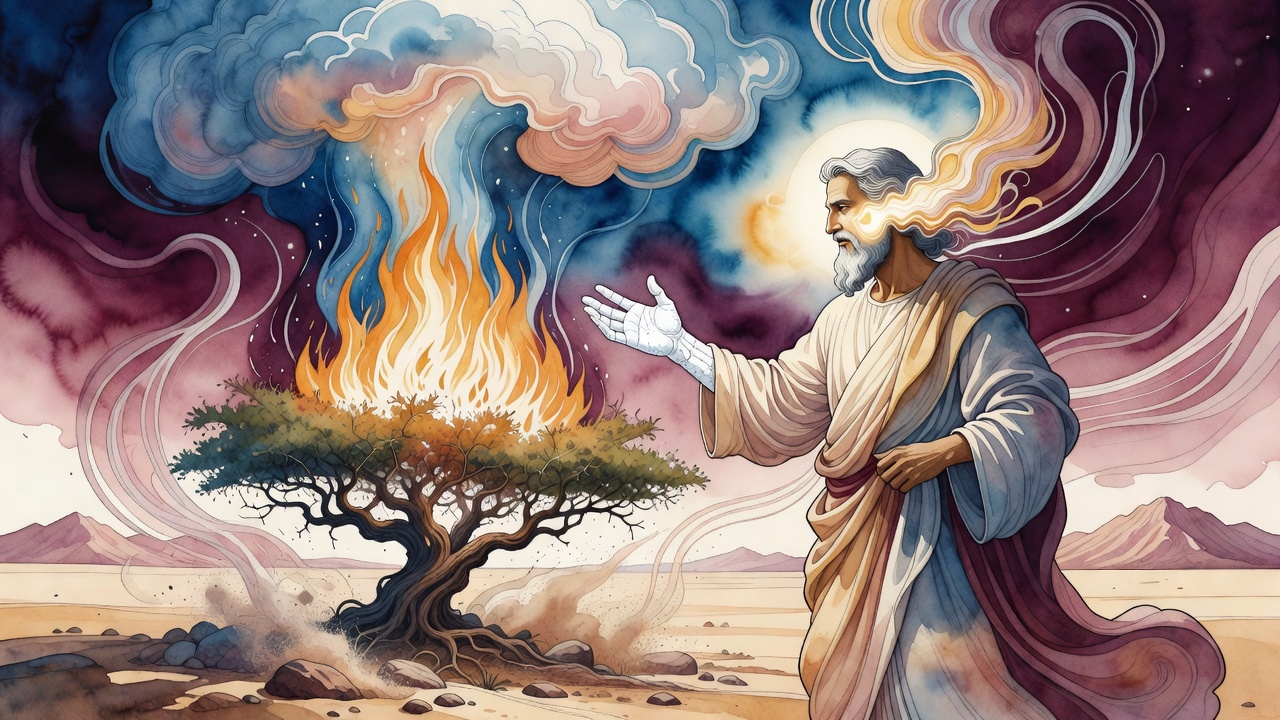
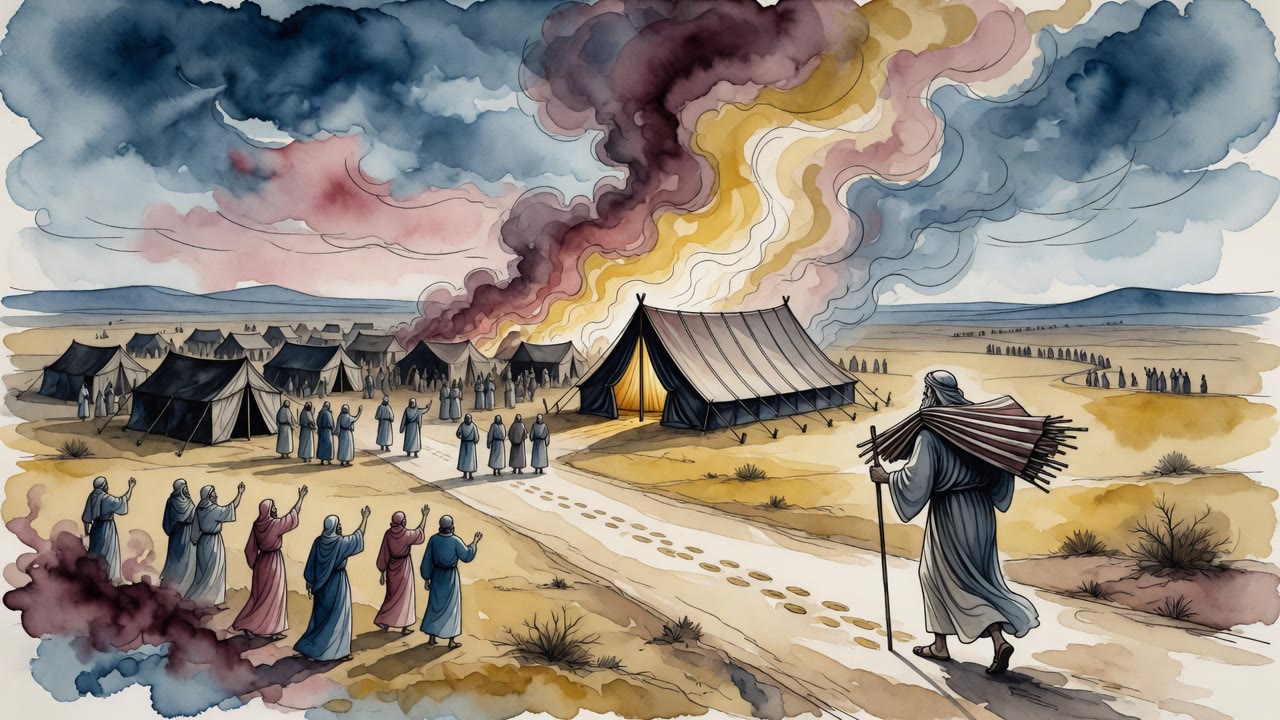
For what reason did Moses merit the radiance of the face in this world - that which the Holy One, blessed be He, will in time to come give to the righteous in the World to Come? Because he did the will of the Holy One, blessed be He, and grieved over the honor of the Holy One, blessed be He, and of Israel, and all his days he longed and yearned and waited that there should be peace between Israel and their Father in heaven. And from where do you know this? You may know it: when Israel were in the wilderness and were corrupt in their deeds, the Holy One, blessed be He, said to Moses (Exodus 32), "And now, let Me alone, that My wrath may burn against them and I may consume them, and I will make of you a great nation." Immediately there was an opening of the mouth for Moses to reply: "And Moses entreated the face of the Lord his God and said, Why, O Lord, should Your wrath burn against Your people, whom You brought out of the land of Egypt with great power and a mighty hand? Why should the Egyptians say, saying," and so on, "Remember Abraham, Isaac, and Israel," and so on. Immediately there was a response: "And the Lord relented of the evil," and so on. Moses said before the Holy One, blessed be He: Master of the world, You are righteous and pious, but the attribute of justice accuses before You concerning all who come into the world and concerning all the works of Your hands that You created in the world. I will go down from before You and execute upon them the attribute of justice: if they all served the calf with a whole heart, let them all die in a single day. Immediately Moses went down from before the Holy One, blessed be He: "And Moses took the calf," and so on, "and scattered it upon the water and made the children of Israel drink it. And Moses stood in the gate of the camp and said, Whoever is for the Lord, to me!" and so on. And he said to them, "Thus says the Lord, the God of Israel," and so on, "Let each man kill his brother," and so on, "And there fell of the people," and so on, "about three thousand men." I call heaven and earth to witness concerning me that the Holy One, blessed be He, did not tell Moses to stand in the gate of the camp and say "Whoever is for the Lord, to me" and to set each man his sword upon his thigh and to kill each his brother and his fellow and his kin; but he said, "Thus says the Lord, the God of Israel," and so on. Rather, Moses reasoned within himself and said in his heart: If I say to Israel, "Kill each man his brother and his fellow and his kin," Israel will reason and say to me, "Did you not thus teach us, our master: A Sanhedrin that executes a single soul of Israel once in seven years is called destructive; for what reason do you kill three thousand in a single day?" Therefore he ascribed it to the honor of the One above and said, "Thus says the Lord, the God of Israel, set each man his sword upon his thigh," and so on. What is the matter that follows? Since he spoke in the name of the Holy One, blessed be He, immediately "the sons of Levi did according to the word of Moses." Moses the righteous returned and stood in prayer before the Omnipresent and said before Him: Master of the world, You are righteous and pious, and all Your works are in faithfulness; and shall, because of three thousand who served the calf with a whole heart, six hundred thousand from twenty years old and upward die, apart from those nineteen and fifteen and ten and two and one years old, and how many converts and servants who were added to them, without end? Immediately the mercies of the Holy One, blessed be He, were stirred, and He was reconciled with them. They told a parable: To what may the matter be compared? To a king of flesh and blood whose firstborn son sinned before him. He seized him by his hand and gave him to his servant, the steward of the house, and said to him, "Go out and kill this one and give him to the beasts and the dogs." What did that servant do? He took him out from before him and set him outside and hid him in another house, and the servant came and stood before the king. At the end of thirty days, when the king's heart was merry over him, and his servants and the people of his house were reclining before him, when he lifted his eyes and did not see his firstborn, he brought grief and sighing into his heart; and no creature recognized it and brought grief and sighing into his heart except the servant of the house. Immediately he ran and set him before him. Immediately the king took the fine crown that was set before him and placed it on the head of his servant, the steward of the house. To this Moses the righteous was likened: since he stood in prayer in four and five places and saved Israel from death, the fine [crown] that was set aside for Israel, that it should be for them and their children forever, on account of the Torah they received and said "We will do and we will hear" - that crown shall be set on the head of Moses forever, as it is said, "And the children of Israel saw the face of Moses, that the skin of the face of Moses shone" (Exodus 34). And lest you say, since Moses entered his eternal home, perhaps that crown of the radiance of the face was annulled from him - Scripture teaches (Deuteronomy 34), "And there has not arisen a prophet since in Israel like Moses, whom the Lord knew face to face." Just as the radiance of the face above endures forever and ever and ever, so the radiance of the face of Moses entered with him into his eternal home, as it is said, "And Moses was a hundred and twenty years old when he died; his eye had not dimmed, nor had his vigor fled" (Deuteronomy 34). And not Moses alone, but every Torah scholar who engages in Torah from his youth to his old age and dies - in truth he has not died, but he is still alive forever and ever and ever, as it is said (1 Samuel 25), "And the soul of my lord shall be bound in the bundle of life with the Lord your God." It compares the righteous Torah scholar to God: just as God - may His great name be blessed - lives and endures forever and ever and ever, so a Torah scholar who engaged in Torah all his days and died, lo, he is alive and has not yet died, and he lives forever and ever and ever. And where is his soul? Beneath the Throne of Glory. From this they said: Let a man not multiply weeping and lamentation over his dead, nor grief and sighing, except by the measure that the Sages gave - three days for weeping and lamentation, seven days for mourning, thirty days for pressing of garments and for haircutting and for other matters. And whoever weeps from this point onward, it is as though he injures himself, and lo, he is liable for his life, as it is said (Jeremiah 22), "Do not weep for the dead nor bemoan him," and so on. The Holy One, blessed be He, said: Do you not have more mercy on him than I? How does a man do? He makes a quarrel with his fellow, and he goes to him to appease him, and he does not become reconciled to him until he gathers to him many people, and afterward he becomes reconciled to him; and even though he is reconciled to him, he has a bit of jealousy in his heart. But I am not so: if a man commits a transgression before Me, if he returns and repents, lo, I am with him in mercy, and I accept his repentance, and I do not remember to him even a bit of his iniquities; therefore it is said, "Do not weep for the dead," and so on. "Weep, weep for him who goes away" - this is the one who committed a transgression and repeated it and tripled it and did not repent; over that one weep, who is uprooted from the world, as it is said, "For he shall not return again nor see the land of his birth." And not this alone, but the reward of Moses the righteous, who stood in prayer in four and five places and saved Israel from death - Scripture reckons it for him as though he created them, as it is said, "And he remembered the days of old, Moses, His people" (Isaiah 63). And so every wise man of Israel in whom there are words of Torah in truth, and who grieves over the honor of the Holy One, blessed be He, and over the honor of Israel all his days, and longs and yearns and waits for the honor of Jerusalem and for the Temple and for the salvation that will sprout soon in our days and for the ingathering of the exiles - immediately the Holy Spirit rests within him, as it is said, "Where is He who put within him His holy spirit?" (Isaiah 63). From this they said: Every Torah scholar who engages in Torah every day constantly, in order to increase the honor of Heaven, needs neither sword nor spear nor any thing to guard him, but the Holy One, blessed be He, guards him Himself, and the ministering angels stand around him with a sword in the hands of all of them and guard him, as it is said (Psalms 149), "The high praises of God are in their throat, and a two-edged sword in their hand," and so on. Life without sorrow and without the evil inclination, for the days of the son of David and the World to Come. How? The Holy One, blessed be He, will in time to come sit in His house of study, and the righteous of the world sit before Him, and the Holy One, blessed be He, gives to them, to their wives and their sons and their daughters and their menservants and their maidservants, the needs of their houses, and the Holy Spirit rests upon them, as it is said (Joel 3), "And it shall come to pass afterward that I will pour out My spirit upon all flesh, and your sons and your daughters shall prophesy," and so on, "and also upon the menservants and the maidservants in those days I will pour out My spirit." And it says (Isaiah 32), "Rise up, you complacent women; hear my voice, you confident daughters; give ear to my speech." I said: without the evil inclination, as it is said (Ezekiel 36), "And I will give you a new heart, and a new spirit I will put within you, and I will remove the heart of stone from your flesh and give you a heart of flesh, and a new spirit I will put within you" - these are good deeds; "and I will remove the heart of stone from your flesh" - this is the evil inclination; "and I will give you a heart of flesh" - this is the good inclination, to fulfill all the words of the Torah, which are doubled in every place. Ten commandments were said at Mount Sinai; ten commandments were said in the book of admonitions (Deuteronomy), as it is said (Exodus 20; Deuteronomy 25), "I am the Lord your God," and so on; the laws of damages were said before Mount Sinai, the laws of damages were said in the book of admonitions; "When you buy a Hebrew servant" was said before Mount Sinai (Exodus 21), "When your brother, a Hebrew, is sold to you" was said in the book of admonitions (Deuteronomy 15), and so in several places; mixed kinds was said at Mount Sinai, mixed kinds was said in the book of admonitions; "You shall not cook a kid" was said at Mount Sinai (Exodus 23, 34), and so in the book of admonitions (Deuteronomy 14), and so in several places. The signs of cattle and beast and fowl were said at Mount Sinai (Leviticus 11), and likewise the signs of cattle, beast, and fowl were said in the book of admonitions (Deuteronomy 14); and all the communal and individual offerings were said before the Tent of Meeting at Horeb, and likewise all the communal offerings were said before the death of Aaron; "a covenant I cut with you when you went out of Egypt," and likewise "a covenant I cut with you" in the book of admonitions. Lo, you have learned that words of Torah are doubled in every place. But you are not so; rather, you make them daubing of plaster, and you mock those words as though there is no substance in them, as in the matter that is said (Ezekiel 13), "And behold, they daub it with plaster"; do you not make it vomit and filth that is not vomit and filth - I am astonished - as in the matter that is said, "vomit and filth without a clean place" (Isaiah 28)? I commanded you when you went out of Egypt; I commanded you in the book of admonitions; I waited for you four hundred and eighty years before the Temple was built; I waited again and waited for you four hundred and ten years from when the Temple was built, as it is said (Isaiah 28), "For it is command upon command, line upon line," and I found from you no contentment of spirit. What is your reward before Me? They told a parable: To what may the matter be compared? To a king who was angry at his servant and commanded concerning him, and they put him in chains of iron, and they would drag the chain behind him and throw him on his face and kick him in his face and in his belly, as it is said (Isaiah 28), "And the word of the Lord was to them, command upon command, line upon line," and so on, and so in several places. You did ugly things and things that are not fitting, and My mercies precede you every single day constantly (Psalms 35), "He delivers the poor from him who is too strong for him, the poor and needy from him who robs him," and it is said (Isaiah, the poor and needy), "For the Lord hears the needy," and so on, and it is said, "He turns to the prayer of the destitute," and so on - these are people who are of a middling measure. In two measures the Holy One, blessed be He, exacts retribution, one for seven: one measure from the idolaters and the princes of the idolaters, as it is said, "And it shall come to pass in that day that the Lord will punish the host of the height on high and the kings of the earth," and so on (Isaiah 24) - these are they who sought to destroy you from the world; a second measure, from the evil inclination, the Holy One, blessed be He, exacts retribution one for seven, because it accused you and you did not increase Torah in the world, as it is said (Zechariah 3), "And he showed me Joshua the high priest," and so on, "and the Satan standing at his right hand to accuse him; and the Lord said to the Satan, May the Lord rebuke you," and so on, "and Joshua was clothed in filthy garments and standing before the angel," and so on. What is his reward from before Me? Just as he made My land and My inheritance into a parched and desolate land so that the body and the soul should not find merit to redeem it, so I will distance him from upon you and thrust him to a parched and desolate land, as it is said (Joel 2), "And I will remove the northern one far from you" - what I have laid up against you of evils, I remove from upon you, and I thrust him to a parched and desolate land; "its face to the eastern sea" (Joel 2) - this is the First Temple, on which he set his eyes and destroyed it and killed the Torah scholars within it; "and its rear to the western sea" - this is the Second Temple, on which he set his eyes and destroyed it and killed the Torah scholars within it; "and its stench shall rise, and its foul smell shall come up, for it has done great things" (Joel 2) - because it left all the gentiles and came and cleaved to Israel and seeks to turn them aside from words of Torah.

 Click for full size