The Strange Fire That Burned Two Priests but Spared Their Tunics
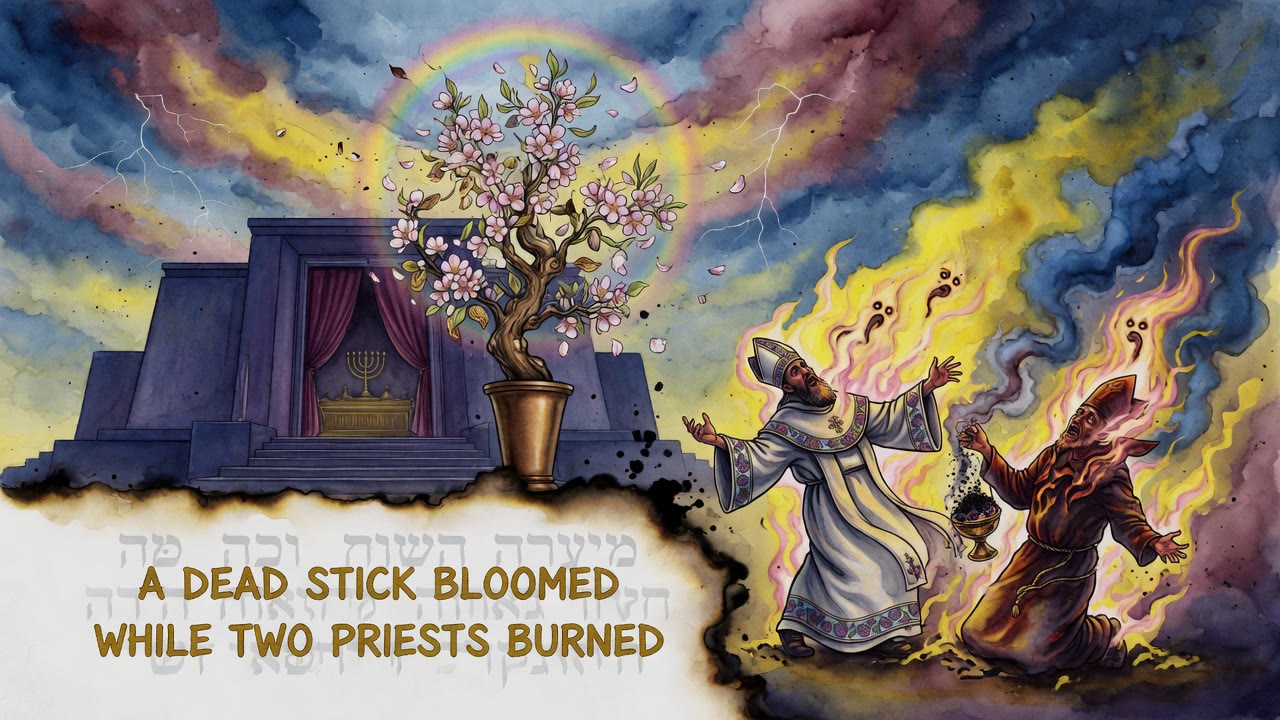
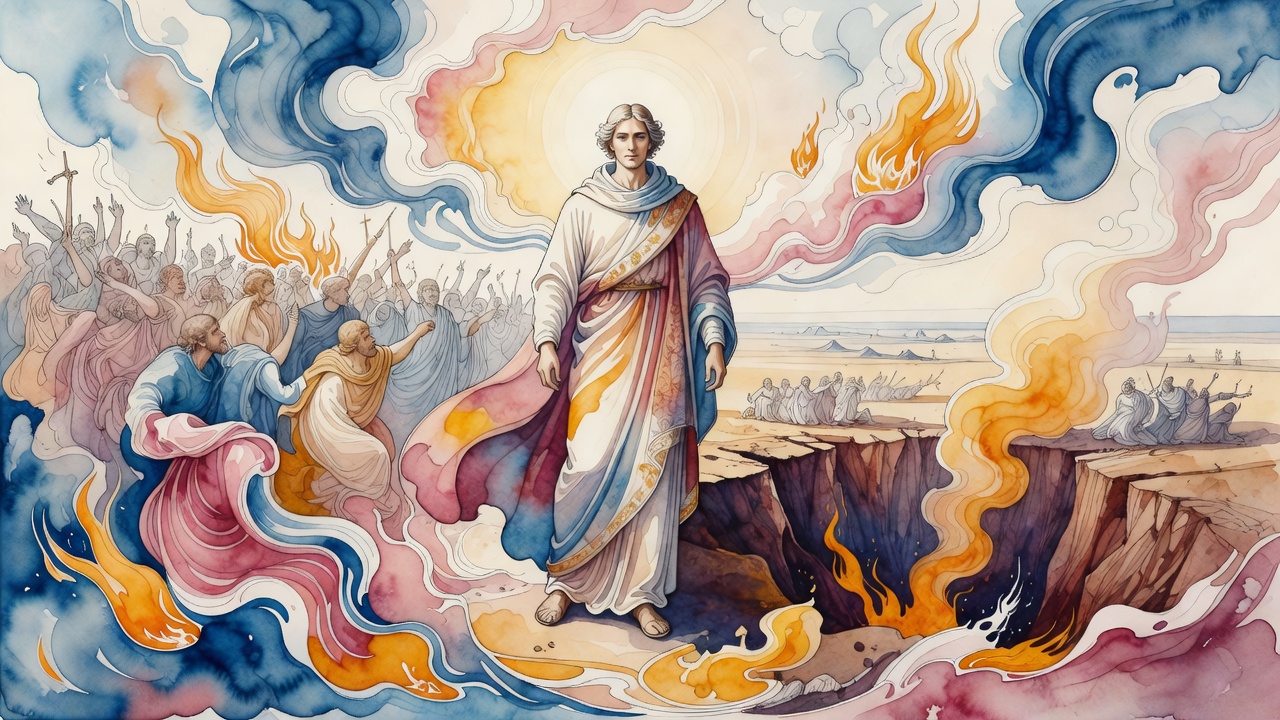
On the Mishkan's eighth day two priests carried their own fire into the Holy of Holies, and a purer flame answered by burning them alive.
Table of Contents
 Click for full size
The Eighth Day and the Fire That Had Not Come
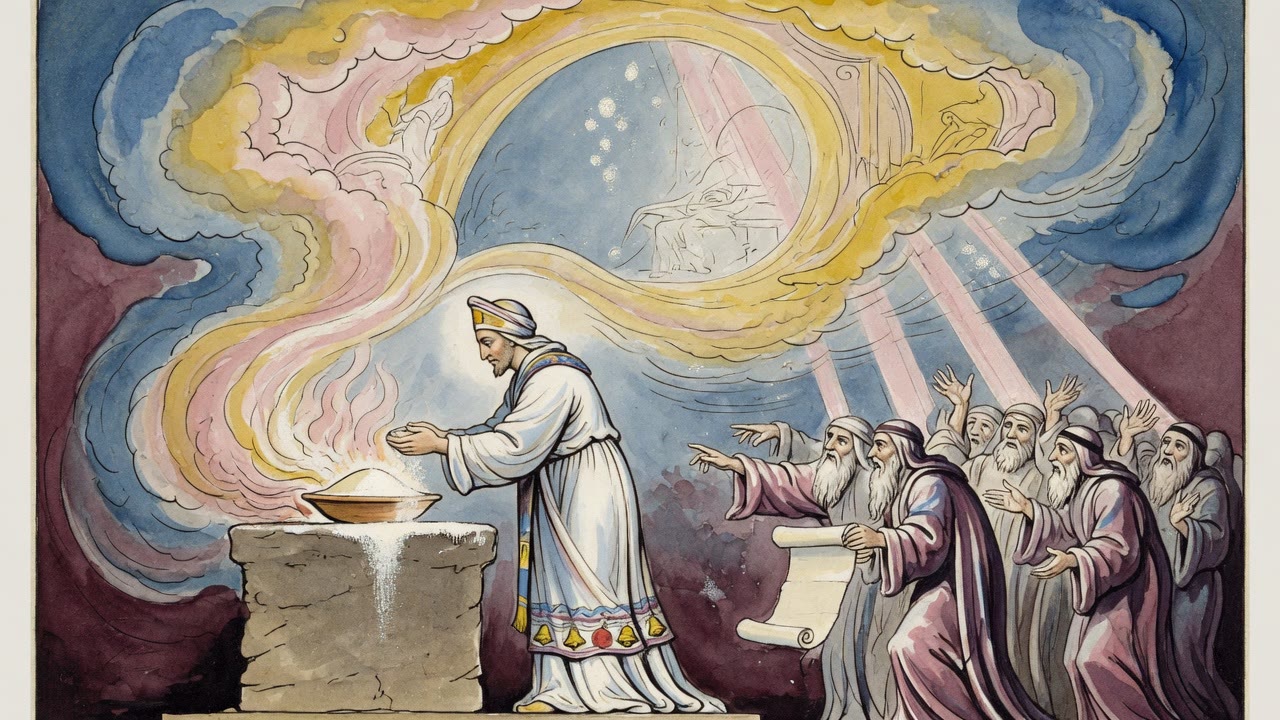
Seven days the Mishkan (the portable sanctuary Israel carried through the wilderness) had stood, and on the eighth the whole camp pressed close to watch. Every offering had been slaughtered. Every rite had been performed exactly as commanded. The altar smoked, and the people waited for the one thing that would prove the Presence had truly come down to dwell among them. Fire from Heaven, leaping onto the sacrifices to swallow them whole.
It did not come.
Nadav and Avihu, the two eldest sons of Aaron, stood near the altar and watched the sky stay shut. The offerings sat there, cooling. And a thought moved through the elder brother that he could not hold back.
Two Brothers Counting the Years of Old Men
The seed of what came next had been planted long before, on the day the nation stood at Sinai. Nadav and Avihu had walked in the great procession then, and they had marked the order of it. Moses first. Aaron beside him. The two brothers behind them, and behind the brothers, all of Israel.
Nadav leaned toward Avihu and said what he had been turning over. "Soon these two old men will die, and you and I will lead the congregation."
An answer came from above, though the brothers never heard it. "We shall see who buries whom. They will bury you, and they will lead the congregation."
No destruction fell that day at the mountain. It waited. It had been waiting on the two of them ever since.
The Coal Pans and the Strange Fire
Now, on the eighth day, with the sacrifices lying unconsumed, Nadav turned to his brother again. His question sounded almost reasonable. "Is there any such thing as cooking a meal without fire?"
If Heaven would not send the flame, they would bring their own.
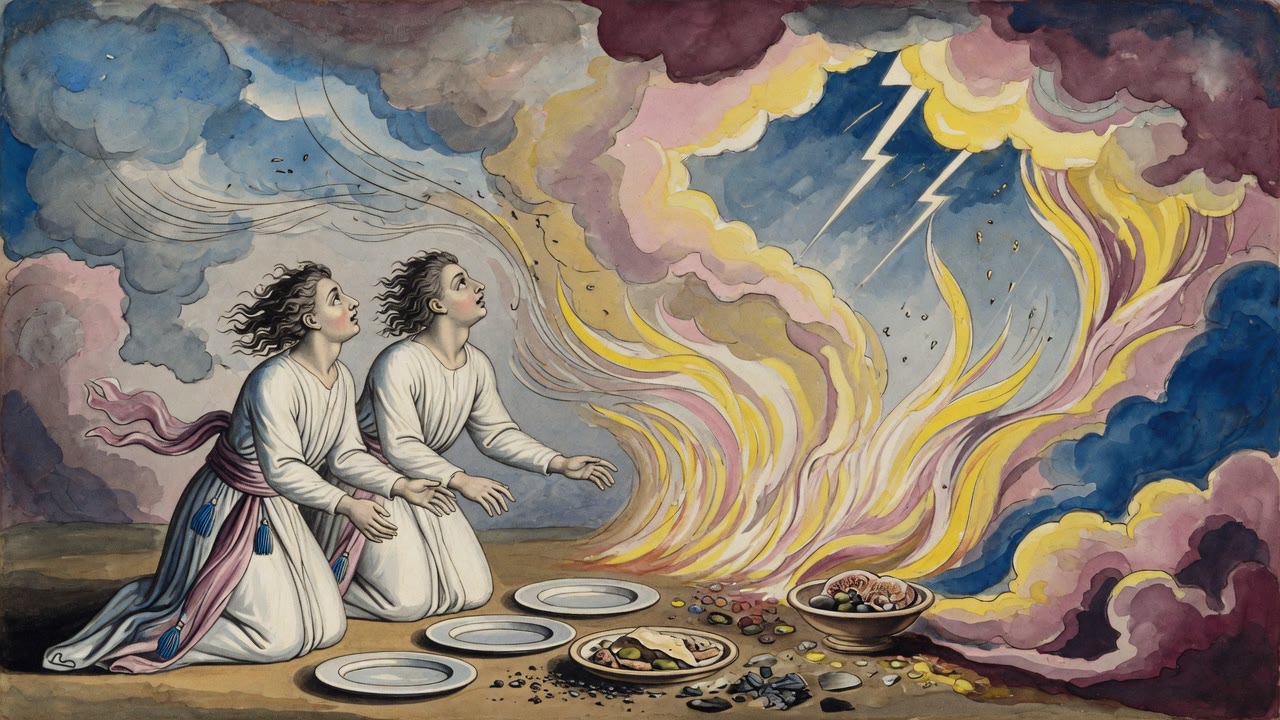
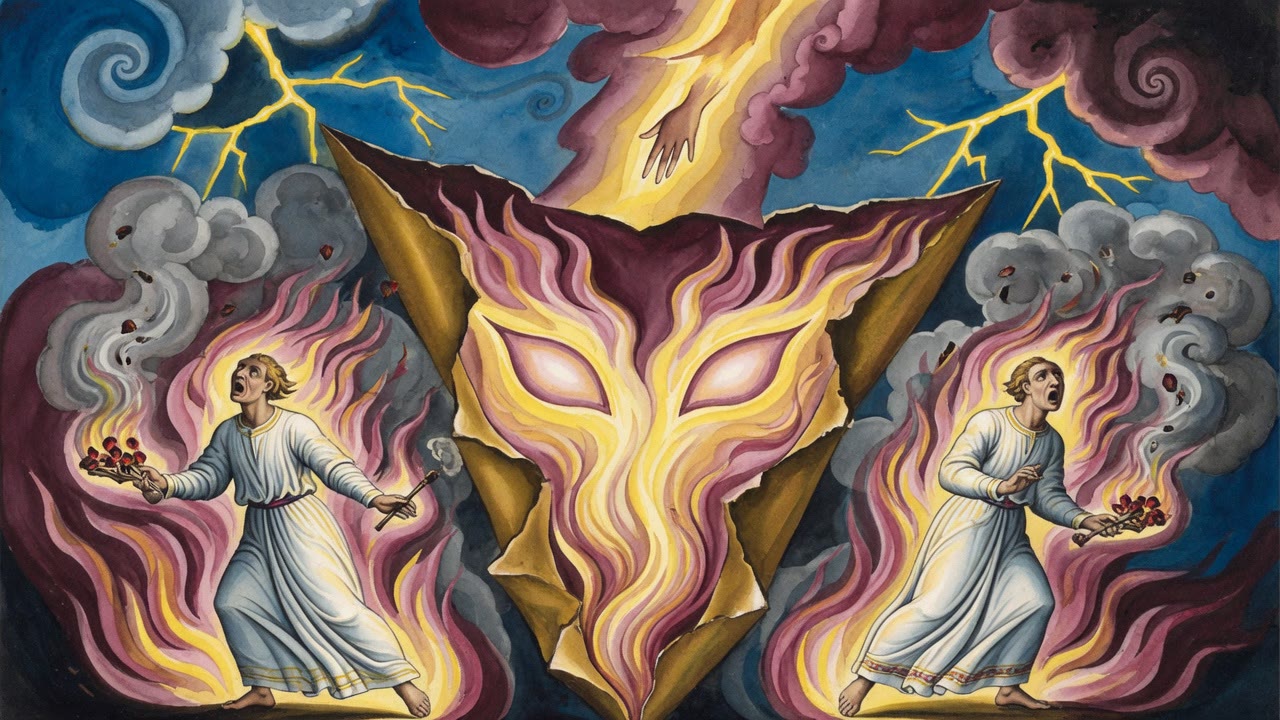
Each brother took up his coal pan. Each filled it with fire, ordinary fire, kindled by human hands and commanded by no one. They laid incense on the coals. And they carried it past a boundary that had never been opened to them, in toward the Holy of Holies, where the Presence sat waiting in the dark. They meant it as service. They were certain of that. They would coax the flame down out of Heaven by offering a flame of their own.
A Pure Fire Answered the Impure One
The fire came then, but not from their coal pans.
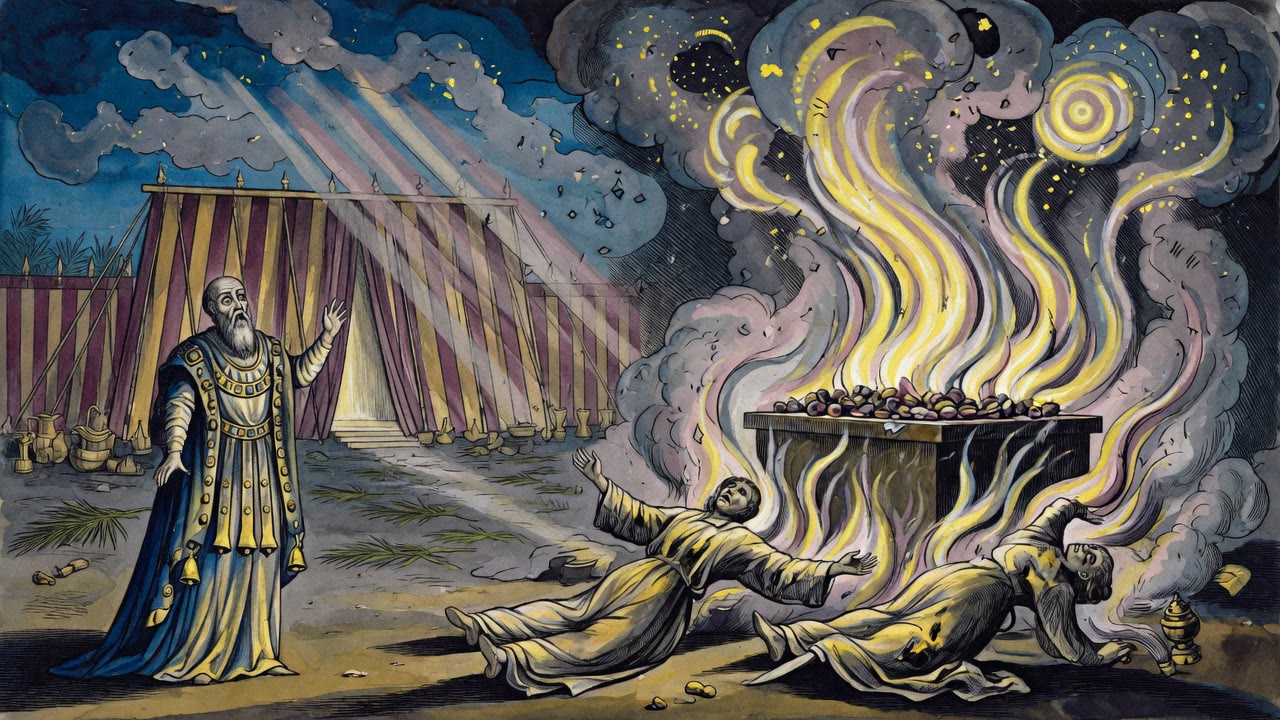
It broke out from before the Presence, and it was nothing like the fire they had carried in. Theirs was strange, kindled in the wrong place out of the wrong hunger. This one was pure. It found the two brothers the way lightning finds the tallest thing standing in a field.
"I will honor you more than you have honored Me," said the Holy One. "You have brought before Me an impure fire. I will burn you with a pure fire."
And so it went. The flame reached into the two of them and drew the life out, and the standing they had counted on, the congregation they had already divided between themselves, was gone in the length of a single breath.
The Tunics That the Flame Would Not Touch
When the brothers fell, something stranger stayed behind.
Their souls had been burned out of them, but their bodies lay whole. Their linen tunics, the priestly white they had put on that morning, were not so much as singed. The pure fire had reached all the way inside them and left the cloth untouched.
Two of Aaron's kinsmen came forward. They took hold of the fallen men and carried them out of the sanctuary still dressed, still covered, and laid them beyond the camp. No one looked on scorched flesh and turned away in disgust. Heaven had guarded the brothers in their dying more carefully than in their living. The men who had pushed in against the divine will, who had angered the very One they came to serve, were carried out clothed and whole, their shame hidden by the same flame that had killed them.
The Silence That Justified the Verdict
Aaron stood where he was, father of the two men now lying outside the camp, and he was not allowed to go to them.
Moses came to him and to his two remaining sons, Elazar and Ithamar, and set a wall against whatever grief was rising in them. They would not go home. They would not tear their garments, or let their hair fall loose, or walk out after the bodies to the place of burial. "From the door of the Tent of Meeting you shall not go out," Moses told them, for the oil of anointing was still on their skin and the service of the eighth day was not yet done.
A father had lost his two eldest sons to fire from the Presence, and he was forbidden the plain rites of a mourner. He could have cried out. He could have demanded to know why the God he served all his days had done this thing.
Aaron said nothing.
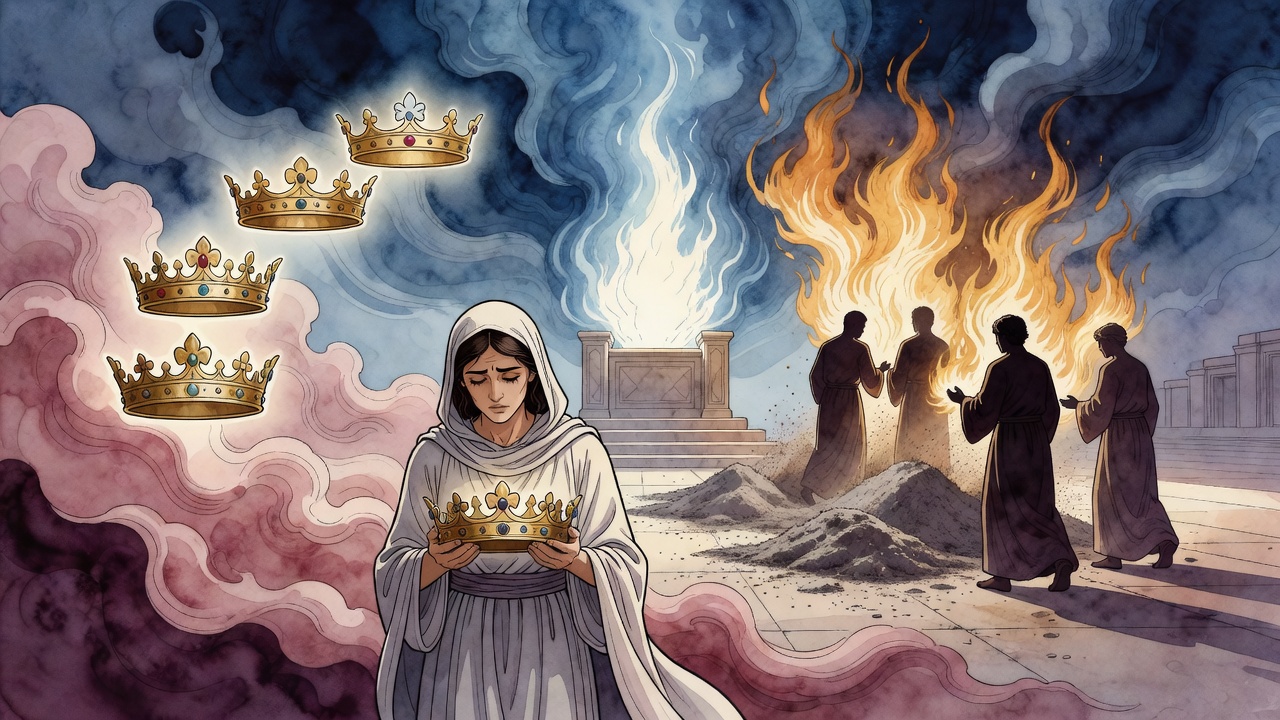
He did according to the word of Moses. He held the judgment to be just, and he kept his mouth shut over it, and that silence, more than any protest, became the thing that spoke for him. The grief that pressed down on the sanctuary that day did not belong to Aaron alone. When righteous children die before their father's living eyes, the pain runs all the way up, and the Presence that had sent the fire grieved the two brothers twice as hard as the man who stood in silence and buried them.
← All myths