5 min read

Students Argued Torah Like Beds of Spices

Rabbi Yannai remembered street debates that smelled of many spices, then saw Moses and Aaron as twin breasts feeding Israel equal glory.

Curated by Arthur · Told by Maggid ·
Table of Contents
  1. The Street Circle
  2. Spice and Growth
  3. Myrrh on the Lips
  4. Twin Breasts of Leadership

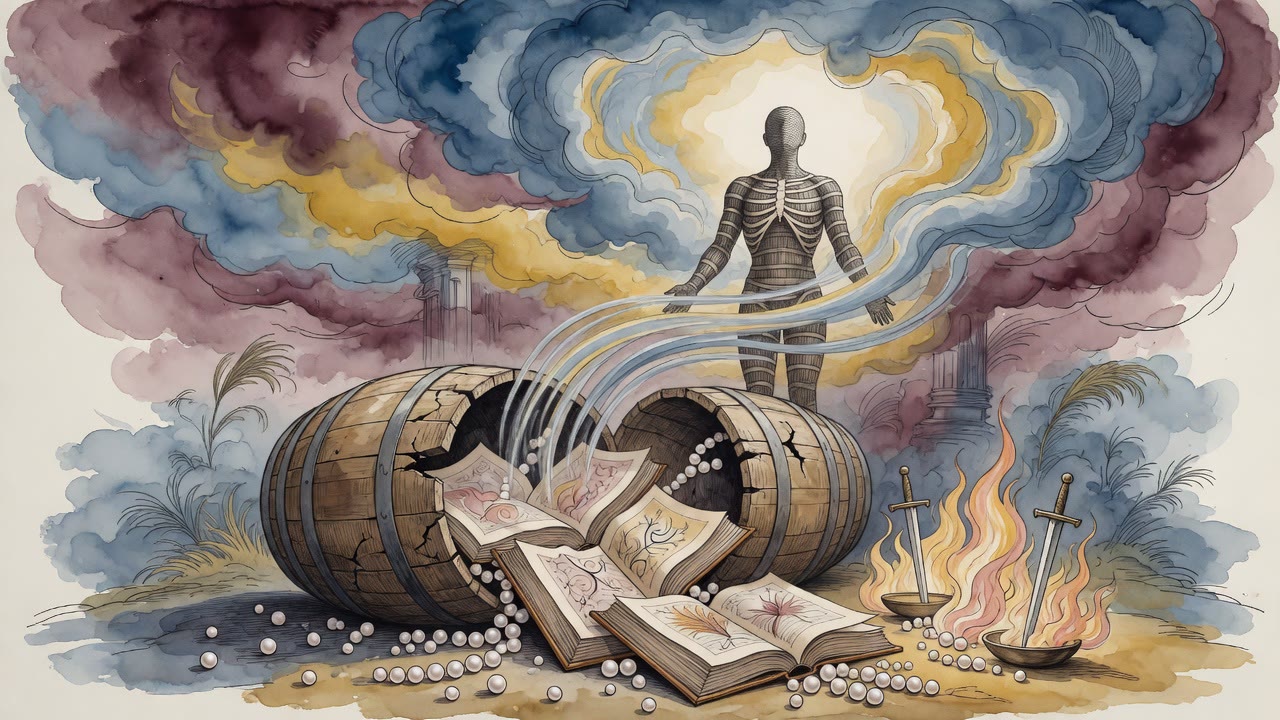
Rabbi Yannai smelled the street before he heard the arguments. Young men claimed a stretch of road for Torah, voices thick as rival spices in a bed. Cumin does not apologize to cinnamon. Each group pushed a different line until the block became a garden of heat and fragrance.
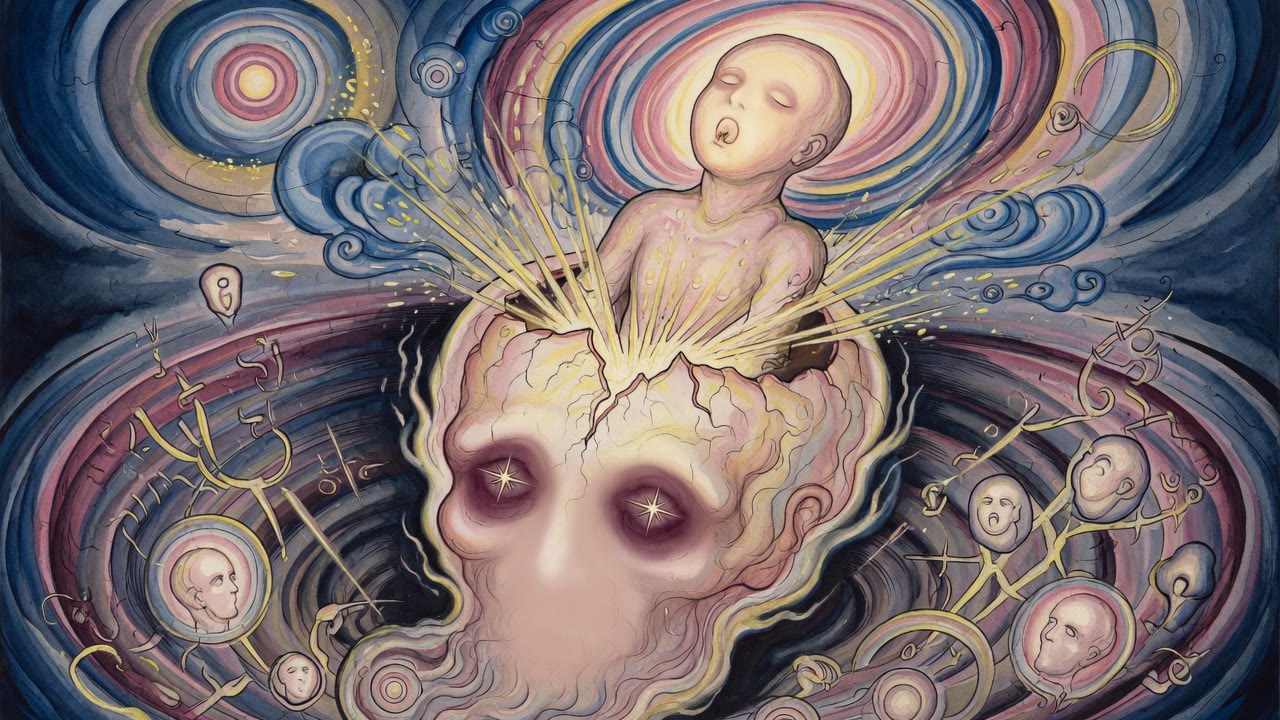
Students Argued Torah Like Beds of Spices Click for full size

He remembered being one of them, wrong in public, forced to answer before the next breath.

The Street Circle

A cart rattled past. No one moved their circle. The road belonged to the dispute until the dispute finished chewing its verse. Agreement was never the point. A single scent is a kitchen. A bed of spices is a market.

Torah that only allows one voice grows thin. Torah that lets groups differ without fleeing the street grows dense and alive.

Spice and Growth

"Growths of spices," the verse adds. A scholar should be stocked like a merchant's shelf, Bible and Mishnah, Talmud and laws, stories and legends. Breadth is moisture that keeps the bed from drying into dust.

A boy who knew only one tractate shouted loudest and learned least when a rival citation arrived from an unexpected book.

Myrrh on the Lips

Lips like lilies dripping myrrh. Fluency alone is the lily. Myrrh that drips is harder, costly, earned by pressure. Some answers arrived polished and light. Others arrived slow and impossible to forget.

A teaching that never costs the teacher anything rarely feeds anyone for long. Myrrh stains. That is part of its honesty.

Twin Breasts of Leadership

The Song's two breasts are Moses and Aaron in the midrash, beauty and milk for Israel, Torah poured into a hungry camp. One breast is not larger than the other. The Torah alternates their names so neither claims the higher shelf.

Difference that stays in conversation nourishes. Difference that silences starves the camp. When evening came, the road became a road again. Rabbi Yannai held both images, fragrant quarrel and twin glory, while a last student sat on a stone still moving his lips.

The pressure did not lift for those standing inside this hour. Someone swallowed. Someone clenched a fist around cloth or staff or coin. The next breath decided more than any later summary would admit. What looked like a small refusal or a small courage became the hinge the whole house turned on. Neighbors would argue the details by morning, but the people inside the moment carried the exact weight in their bones.

The pressure did not lift for those standing inside this hour. A throat tightened. Someone clenched a fist around cloth or staff or coin. The next breath decided more than any later summary would admit. What looked like a small refusal or a small courage became the hinge the whole house turned on. Neighbors would argue the details by morning, but the people inside the moment carried the exact weight in their bones.

The pressure did not lift for those standing inside this hour. A sandal scraped stone. Someone clenched a fist around cloth or staff or coin. The next breath decided more than any later summary would admit. What looked like a small refusal or a small courage became the hinge the whole house turned on. Neighbors would argue the details by morning, but the people inside the moment carried the exact weight in their bones.

The pressure did not lift for those standing inside this hour. A child went still. Someone clenched a fist around cloth or staff or coin. The next breath decided more than any later summary would admit. What looked like a small refusal or a small courage became the hinge the whole house turned on. Neighbors would argue the details by morning, but the people inside the moment carried the exact weight in their bones.

The pressure did not lift for those standing inside this hour. A door latch clicked. Someone clenched a fist around cloth or staff or coin. The next breath decided more than any later summary would admit. What looked like a small refusal or a small courage became the hinge the whole house turned on. Neighbors would argue the details by morning, but the people inside the moment carried the exact weight in their bones.

The pressure did not lift for those standing inside this hour. Oil smoke stung eyes. Someone clenched a fist around cloth or staff or coin. The next breath decided more than any later summary would admit. What looked like a small refusal or a small courage became the hinge the whole house turned on. Neighbors would argue the details by morning, but the people inside the moment carried the exact weight in their bones.

The pressure did not lift for those standing inside this hour. A coin rolled and stopped. Someone clenched a fist around cloth or staff or coin. The next breath decided more than any later summary would admit. What looked like a small refusal or a small courage became the hinge the whole house turned on. Neighbors would argue the details by morning, but the people inside the moment carried the exact weight in their bones.


← All myths
From the tradition

Sources

2 sources

The texts behind this telling. Some cards carry a translation of the source; others are our own retelling of it, and each card says which. Every card links out to the original.

Shir HaShirim Rabbah 5:13Shir HaShirim Rabbah

Retold in our words. Read the original at the link below.The Sefaria Midrash Rabbah, 2022 · CC-BY

Beautiful. But what's it really saying?

The verse begins, "His cheeks are like a bed of spices." Rabbi Yannai offers a fascinating interpretation. He recalls his youth when he and his fellow students would gather in the street to study Torah. But here's the thing: they weren't all in agreement! Different groups would have different lines of reasoning, different perspectives. And that, according to Rabbi Yannai, is the point. Just like a bed of spices contains a variety of aromas and tastes, so too should our engagement with Torah embrace diverse interpretations. As the Etz Yosef commentary explains, different groups of students will naturally see things differently.

Then the verse continues, "Growths of spices." What does that add? The commentary draws a parallel: just as a growth of spices includes all sorts of different scents and flavors, a true Torah scholar must be well-versed in a wide range of Jewish texts. The scholar should be full of Bible, Mishna (the core text of the Oral Torah), Talmud (the rabbinic discussions and debates on the Mishna), halakhot (Jewish laws), and aggadot (stories and legends). It's a holistic picture, a call for breadth and depth in our learning.

The passage even goes a step further, noting that priests and Levites are from Jacob, suggesting that just as there are different kinds of spices, the descendants of Jacob fulfill a variety of roles.

But the verse doesn't end there. It moves on to the lips: "His lips are lilies, dripping with flowing myrrh." Now, this is where it gets really interesting. The commentary distinguishes between two kinds of Torah scholars. "His lips are lilies" refers to a scholar who is fluent, well-versed in their studies. Easy peasy. But what about "dripping with flowing myrrh"? Here, the commentary offers a more nuanced, even challenging, view. It suggests that this describes a scholar who isn't so fluent, whose lips are dripping with myrrh – something bitter, as the Matnot Kehuna points out. Perhaps they make mistakes, or have to work extra hard to arrive at the correct answer. But here's the crucial part: even though it's a struggle, they persevere! They review, they clarify, and ultimately they deepen their understanding.

So, what does this all mean? Perhaps the verse is a reminder that the pursuit of wisdom isn't always easy or uniform. Sometimes, like a bed of spices, it's a complex blend of different perspectives. Sometimes, like a growth of spices, it requires us to cultivate a broad and deep understanding. And sometimes, like lips dripping with myrrh, it involves struggle, perseverance, and a willingness to embrace the bitter challenges that ultimately lead to sweeter understanding.

Maybe the beauty of Torah isn't just in the perfect pronouncements, but in the striving, the questioning, and the diverse voices that enrich our understanding.

Full source
Shir HaShirim Rabbah 5:1Shir HaShirim Rabbah

Retold in our words. Read the original at the link below.The Sefaria Midrash Rabbah, 2022 · CC-BY

Ever read the Song of Songs and thought, "Wait, is this... about breasts?" Well, you’re not wrong! But in the world of Jewish interpretation, things are rarely just what they seem. Take this verse from (Song of Songs 4:5): "Your two breasts are like two fawns, twins of a gazelle, that graze among the lilies." Beautiful imagery. But what does it mean?

Well, Shir HaShirim Rabbah, a classic rabbinic commentary on Song of Songs, takes us on a fascinating journey, connecting this sensual imagery to something far more profound: the leadership of Moses and Aaron.

The commentary states plainly: "Your two breasts – these are Moses and Aaron." Why? Because, it argues, just as breasts are a source of beauty, honor, and nourishment for a woman, so too were Moses and Aaron for the Israelites. Breasts are the "splendor and the glory" of a woman, and Moses and Aaron were the "splendor and the glory of Israel." Breasts are filled with milk, and Moses and Aaron filled Israel with Torah. As it says in (Exodus 4:28), "Moses told Aaron all the words of the Lord." The Rabbis even say that he revealed to him the Shem HaMeforash, the ineffable name of God! They shared the deepest secrets, the most profound wisdom.

Here's a beautiful detail: "Just as the breasts, one of them is not larger than the other, so it was with Moses and Aaron." We find this reflected in the way the Torah phrases their names at times, sometimes saying "Moses and Aaron" (Exodus 6:27), and other times "Aaron and Moses" (Exodus 6:26). Neither was greater than the other in Torah. Rabbi Abba uses the analogy of a king with two perfect pearls, perfectly balanced on a scale. That’s how Moses and Aaron were: equal in their greatness.

Rabbi Ḥanina bar Pappa even declares, "Blessed is the Omnipresent who selected these two brothers, who were created only for the Torah and for the glory of Israel."

Rabbi Yehoshua of Sikhnin, quoting Rabbi Levi, brings an interesting story from Alexandria. Apparently, there were two families of priests, one with a cold body temperature and the other with a hot one. Doctors found that a combination of tissue from both families created a healing ointment. Similarly, Moses and Aaron complemented each other in leading Israel. They brought different strengths to the table, creating a powerful and effective leadership.

Rava, in the name of Rabbi Shimon, shares a powerful idea about divine healing. Usually, we see the wound and then prepare the dressing. But God, in His infinite wisdom, prepares the remedy before the affliction. As (Jeremiah 33:6) says, "Behold I am bringing it a remedy and a cure, and I will heal them…" He prepared the cure for Jerusalem before He struck it. This idea is further reinforced by (Hosea 7:1), which states when God heals Israel, "the iniquity of Ephraim and the evils of Samaria will be revealed." Only after preparing the cure will they be taken to task for their wickedness.

This is contrasted with how God treats other nations, who are struck and then healed. As (Isaiah 19:22) states, "The Lord will strike Egypt, striking and healing." The commentary connects this to Moses and Aaron again, suggesting that the striking came by means of Aaron and the healing by means of Moses.

The passage concludes with a reiteration of the brothers' blessed status. It quotes the prophet Samuel saying, "The Lord who produced Moses and Aaron" (I Samuel 12:6). And then, full circle, back to where we started: "That is 'your two breasts' – these are Moses and Aaron."

It's about the nourishing power of leadership, the importance of balance and complementarity, and the idea that true leaders, like Moses and Aaron, can be a source of glory and healing for an entire nation. That's something worth pondering.

Full source