Parshat Emor5 min read

Sukkot Dawned as First Day After the Debt

A king forgave a province's taxes in stages as crowds met him on the road, mapping Rosh Hashanah to Yom Kippur so Sukkot could open as a true first day.

Curated by Arthur · Told by Maggid ·
Table of Contents
  1. The Road That Becomes a Calendar
  2. The Letter Built Like a Portico
  3. Angels Waiting on a Human Mouth
  4. New Accounting Under Palm and Willow

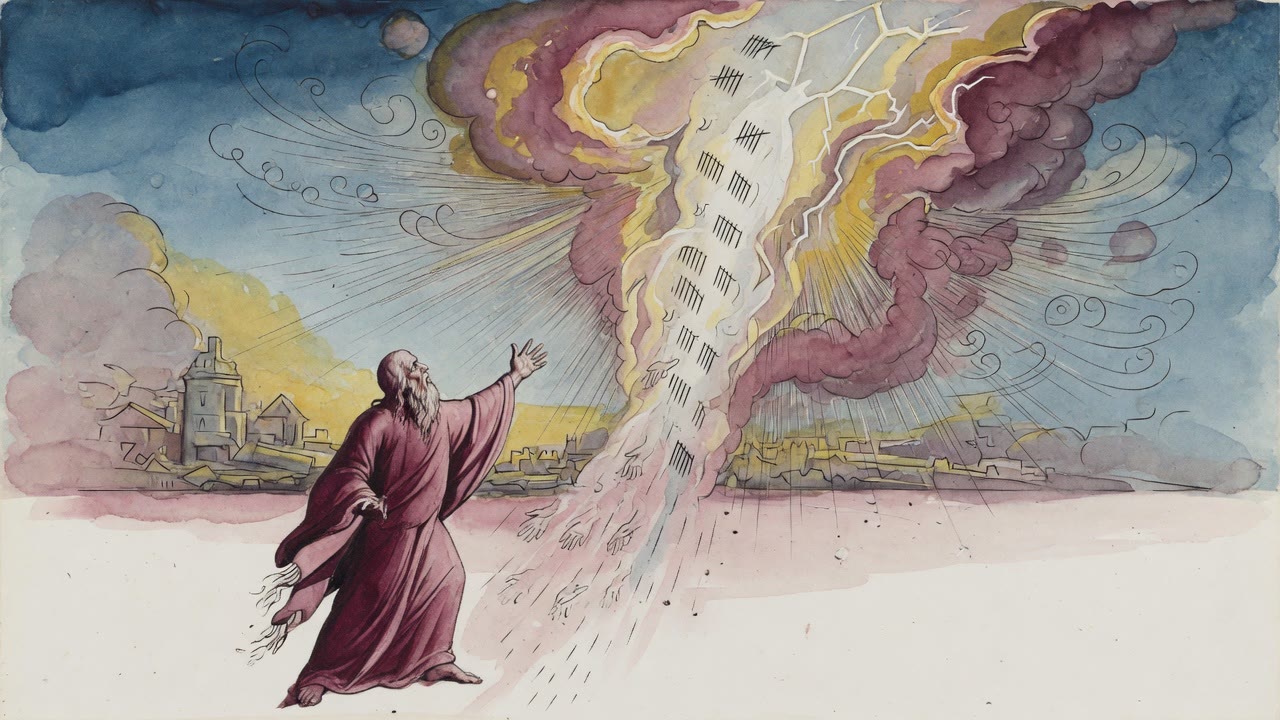
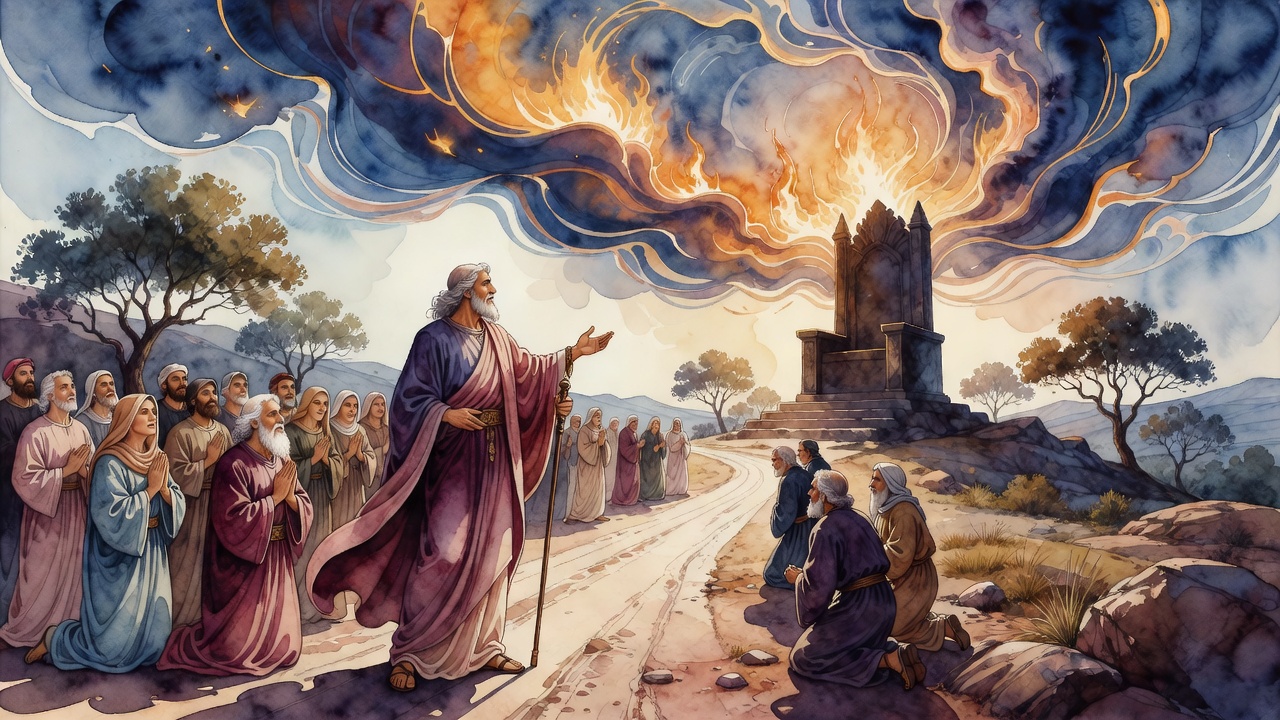
Tax collectors had already written the province off as lost when the king himself took the road. Leading citizens rode out ten miles with praise on their tongues. He forgave a third of the debt. Closer in, chief officials met him and praised again. Another third fell away. At the city gate the whole town poured out, and the king wiped the ledger clean. What is past is past, he said. From here we begin a new accounting. Children who had hidden from collectors came out into the street and stared at a free morning.
Sukkot Dawned as First Day After the Debt Click for full size

The Road That Becomes a Calendar

Rabbi Levi maps that road onto the Days of Awe. On Rosh Hashanah Israel repents and a third of the sins is remitted. Across the Ten Days the devoted fast and more falls away. On Yom Kippur, when the whole people empties itself, the Holy One forgives the rest. Then the Torah calls Sukkot (the autumn festival of temporary huts) the first day, though it falls on the fifteenth. After the debt is gone, the festival is not day fifteen of an old month of guilt. It is day one of a life that can be counted again.

Sit in the sukkah with that map in mind. The roof is thin on purpose. The walls shake in wind. You are not hiding from the king. You are living in the open after the tax has been canceled. Palm and willow in the hand are not toys. They are tools for a body that has been reclassified from debtor to guest.

If you still feel like day fifteen of failure, the midrash invites you to reread the date. Mercy changes the number on the page.

The Letter Built Like a Portico

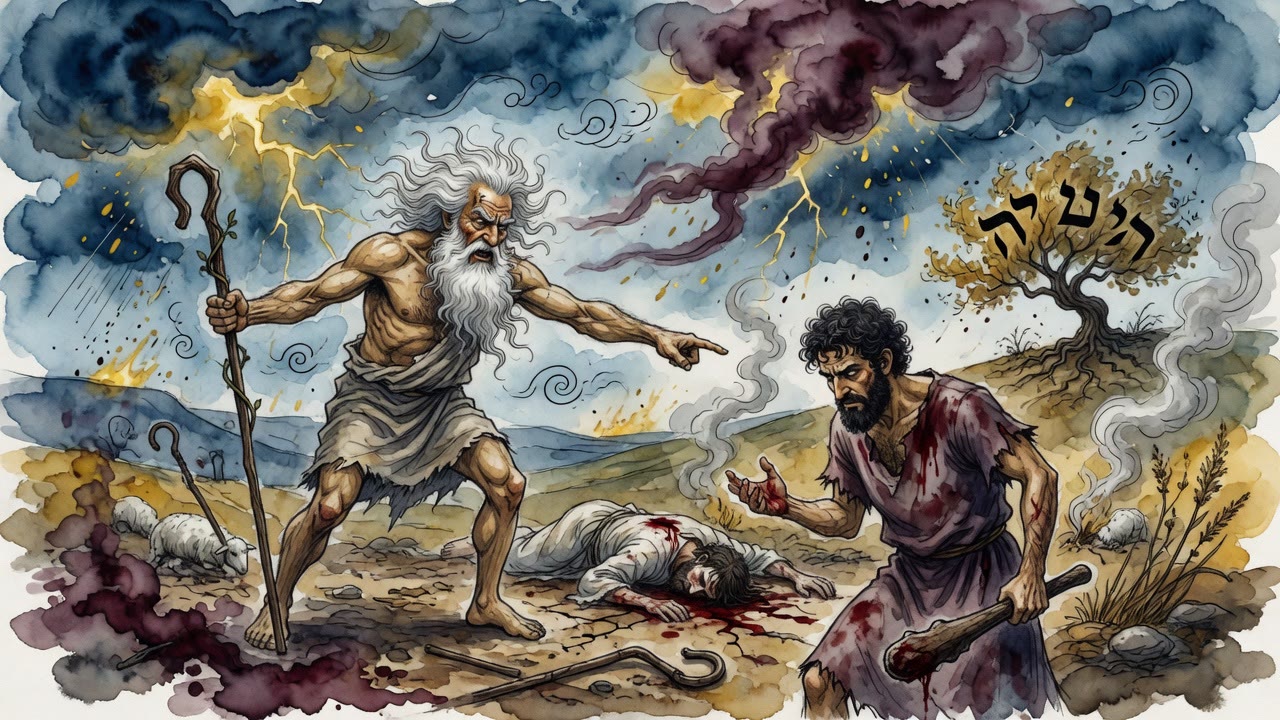
Why is the world shaped, the rabbis ask, like the letter heh, an open hall? Anyone who wishes can walk out. Freedom to leave is real. The left leg of the letter hangs free, not joined to the roof, and through that gap a person who repents can be lifted back inside. Notice the return is not through the bottom door of the exit. The one who comes to be purified receives a fresh opening. The heh even wears a tiny crownlet. If a sinner returns, God says, I will tie a crown for him like My own.

The world to come, by contrast, was made with the small yod, because the truly righteous are few and they bow their heads, knowing no two of their deeds are alike. Justice and mercy stand together in the divine names of the verse. A king had fragile cups. Scalding water cracked them. Icy water shattered them. He tempered hot with cold and the cups held. So the Holy One mingles attributes so the world can survive its own people.

The portico is not permission to wander forever. It is architecture that expects return without humiliation. You do not crawl back through the same mud. You are lifted through a gap cut for homecoming.

Angels Waiting on a Human Mouth

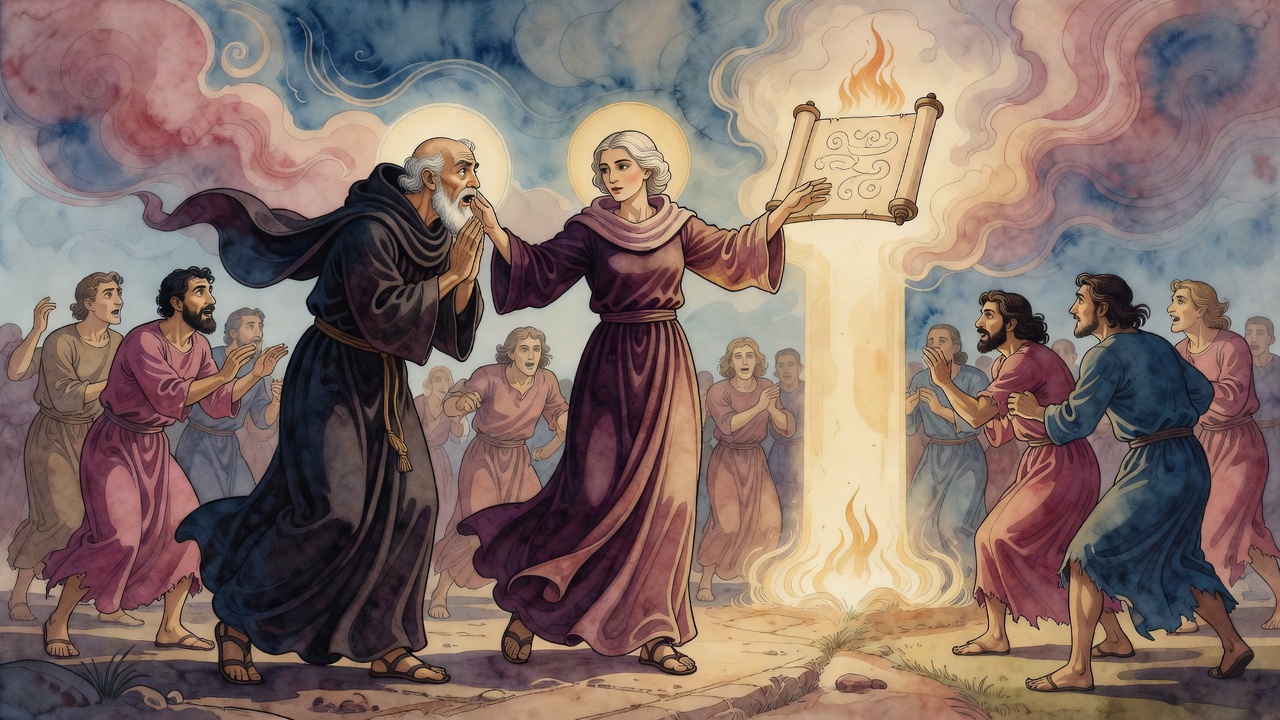
Above, the seraphs do not begin their cry of holy until Israel opens its mouth below. Kedushah rises from earth before it rings in heaven. Angels wait for a voice that has just come through the portico, a voice that has sat in a sukkah on the first day after debt. Stars light the world; Israel lights it with Torah. Only then do the hosts answer.

The sequence matters. Forgiveness is not a nap. It is permission to speak the next holy word without the old ledger choking the throat. Heaven has power enough to start alone. It chooses not to. The myth gives human mouths a terrifying dignity: the upper song holds its breath for you.

If your mouth has been closed by shame, the first day is for opening it. The angels have been patient longer than you think.

New Accounting Under Palm and Willow

Shake the lulav as if shaking dust from clothes you will not wear again. The king is already inside the city. The third and the third and the final wipe have happened. What remains is the first day: meals in a temporary house, guests invited, joy that is not reckless abandon but measured gladness after mercy. Bring someone who still thinks the collectors own the street. Let them hear the new number.

If you walked out through the wide door of the heh, look for the side gap. If you have been forgiven in stages along the road, stop counting yourself as day fifteen of failure. Count yourself as day one of a clean book, and let the angels finally hear their cue.

Build the hut. Thin roof, open walls, full throat. The debt road ends here on purpose.

Festivals after forgiveness are not decorations on guilt. They are proof the books changed. Eat in the hut as a person whose tax was canceled mid-road, not as a person still hiding from collectors in the alleys of last month. Joy under thin branches is part of the accounting, not a break from it.


← All myths
From the tradition

Sources

3 sources

The texts behind this telling. Some cards carry a translation of the source; others are our own retelling of it, and each card says which. Every card links out to the original.

Pesikta DeRav Kahana 27:7Pesikta de-Rav Kahana

Translation of the source text.Pesikta de Rav Kahana according to an Oxford manuscript, Dov Mandelbaum ed., N.Y. 1987 · CC-BY

"On the first day" (Leviticus 23:40). It is the fifteenth of the month, yet Scripture says "on the first day." Rabbi Mani of Sheab and Rabbi Joshua of Sikhnin in the name of Rabbi Levi: it is like a province that owed arrears of taxes to the king, and the king went to collect them. Within ten miles the great men of the province came out and praised him, so the king remitted a third of their tax. Within five miles the leading officials of the province came out and praised him, so the king remitted a third of their tax. And when the king entered the province, all the townspeople came out and praised him, so the king said to them, "What is past is past; from here on it is a new accounting." So too Israel come on Rosh Hashanah and do repentance, and the Holy One remits a third of their sins. They come during the Ten Days of Repentance and the worthy ones fast, and the Holy One remits most of their sins. And when the Day of Atonement comes, all Israel fast, and the Holy One forgives all their sins. Rabbi Aha said: it is written, "For with You is forgiveness" (Psalms 130:4) -- forgiveness is stored up with You from the beginning. And why all this? "That You may be feared" (ibid.) -- so as to place the fear of You upon all Your creatures. From the Day of Atonement until the festival, all Israel are busy with commandments: this one busies himself with his sukkah and that one with his lulav. On the first festival day they take their lulavs and citrons in hand and praise the Holy One, and the Holy One says to them, "I have already pardoned you for what is past; from here on, reckon your sins." Therefore He said "on the first day." What is "on the first day"? The first for reckoning sins, from the first day of the festival.

Full source
Yalkut Shimoni on Torah 19:2Yalkut Shimoni on Torah

Translation of the source text.Torat Emet (Yalkut Shimoni) · CC-BY-NC

For what reason was the world created with the letter heh? Because it resembles a portico [open hall], so that whoever wishes to leave may leave. Why is its leg suspended [not joined to the roof]? Because if one returns in repentance, he is brought back in [through the upper gap]. And let him be brought back in through that same [lower opening through which he left]? The matter does not assist him, in keeping with Resh Lakish: "one who comes to be purified [is assisted]" [and so a new opening is provided]. And this is what is written, "if it concerns the scorners, He scorns them" (Proverbs 3:34). Why does it [the heh] have a crownlet? The Holy One, blessed be He, said: if he returns, I tie a crown for him like My own. The world to come [was made] with the letter yod, because the righteous in it are few; and its head is bent because the righteous bow their heads, since their deeds are not alike one to another. "When they were created" [be-hibaram]: "by the word of the LORD" and already "the heavens were made" (Psalms 33:6). A parable of a king who rebuked his servant, and the servant stood astonished; so "the pillars of heaven tremble and are astonished at His rebuke" (Job 26:11).

It is written, "for in it He rested from all His work which God created to make" (Genesis 2:3); "these are the generations of the heaven": rather, a day enters and a day departs, a Sabbath departs and a Sabbath enters, a month departs and a month enters, a year departs and a year enters, "when they were created." Rabbi Yitzchak and Resh Lakish: Rabbi Yitzchak says, a mortal of flesh and blood stretches a tent of necessity, and over time it sags a little; but here, "can you spread out the skies with Him?" (Job 37:18), and lest you say they are slack, the verse teaches, "strong as a molten mirror" (Job 37:18). Resh Lakish said: a mortal of flesh and blood pours out vessels of necessity, and over time they raise rust; but here, "strong as a molten mirror," they appear as at the hour of their casting, like a firm dome. "On the day the LORD God made earth and heaven" (Genesis 2:4). The House of Shammai say: the thought by night and the deed by day. And the House of Hillel say: the thought and the deed by day. Rabbi Shimon ben Yochai said: I am astonished how the fathers of the world, the House of Shammai and the House of Hillel, disagreed over the creation of heaven and earth; rather, the thought was both by day and by night, and the deed at the dimming of the sun.

"The LORD God" [two names, mercy and justice]. A parable of a king who had empty cups. He said: if I pour hot liquid into them, they crack; cold, they freeze [and shatter]. What did he do? He mixed hot with cold, and they held. So the Holy One, blessed be He, said: if I create the world with the attribute of justice, how can the world endure; with the attribute of mercy [alone], sins would multiply. Rather, behold, I will create it with the attribute of justice and the attribute of mercy, and may it endure. "Earth and heaven" [earth named first]: a parable of a legion that crowned the king first. The king said: since this legion crowned me first, behold, I grant it a privilege that shall never be removed from it. This is what is written, "He founded the earth upon its foundations, that it should not be moved forever and ever" (Psalms 104:5).

Full source
Aleph Bet of Rabbi Akiva, Version B, Part B, VMR Kedushah expositionOtzar Midrashim, Aleph Bet of Rabbi Akiva

Translation of the source text.Hebrew Wikisource transcription of Aleph Bet of Rabbi Akiva, Version B, based on Eisenstein, Otzar Midrashim (CC-BY-SA 4.0) · CC-BY-SA

VMR: Do not read VMR, but "and he said." What is "and he said"? These are the seraphs of flame, the angels of hosts, and the troops of the heavenly abode, who cannot say "Holy" above until Israel first opens its mouth in holiness below and says the threefold Kedushah. Afterward the ministering angels sanctify, as it says, "When the morning stars sang together and all the children of God shouted" (Job 38:7). "The morning stars" are Israel, who are compared to stars, as it says, "Those who turn many to righteousness are like the stars" (Daniel 12:3), and it says, "You are today as numerous as the stars of heaven" (Deuteronomy 1:10). Just as the stars light the world, so Israel lights the lamp of the world with words of Torah that are like them, as it says, "For a commandment is a lamp, and Torah is light" (Proverbs 6:23). And from where do we know that "and he said" refers to the ministering angels? As it says, "This one called to that one and said," and so on (Isaiah 6:2-3).

Full source