Ten Sages Killed for Joseph's Brothers' Crime
The emperor asked what the Torah does to a man who sells his brother. The scholars named death. Then he asked which generation still owed that death.
Table of Contents
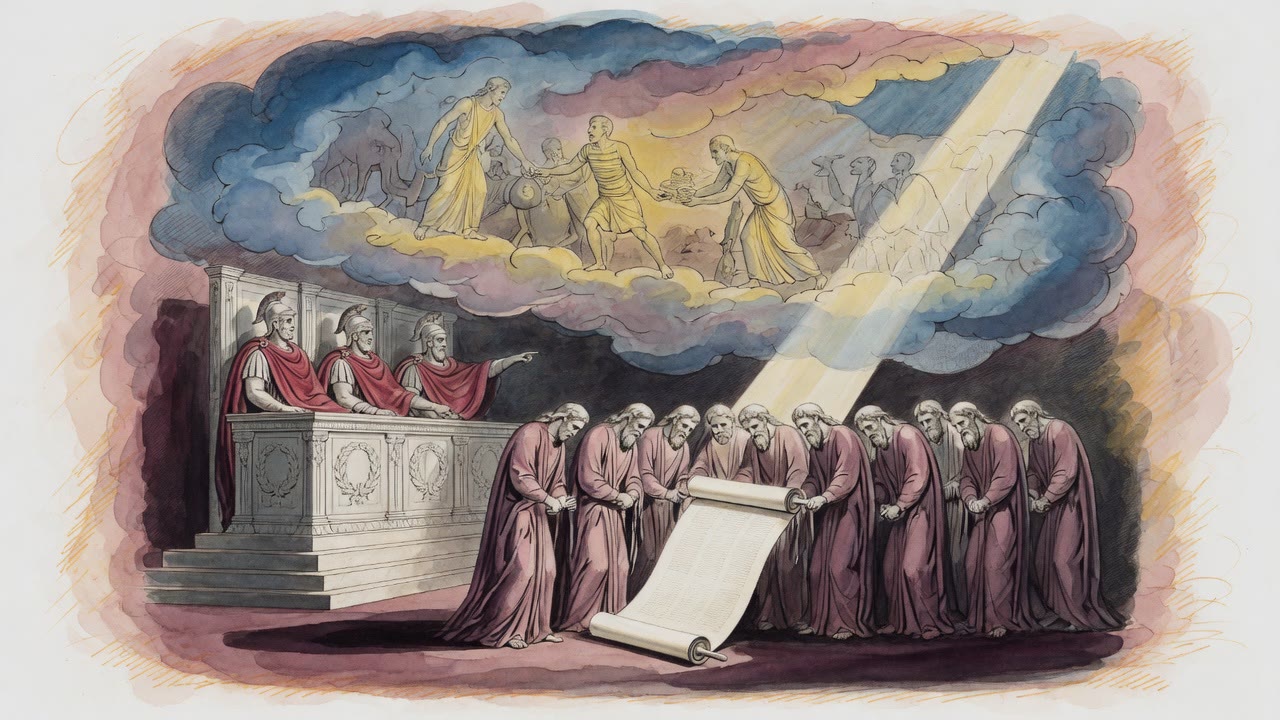
The emperor held a Torah scroll open on the table and put his finger on a line. "What does your law do to a man who kidnaps his brother and sells him?"
 Click for full size
The scholars in the room answered. Death. That is what (Exodus 21:16) says. That is what (Deuteronomy 24:7) says.
"Then show me where this death has been paid."
Twenty Pieces and a Pair of Sandals
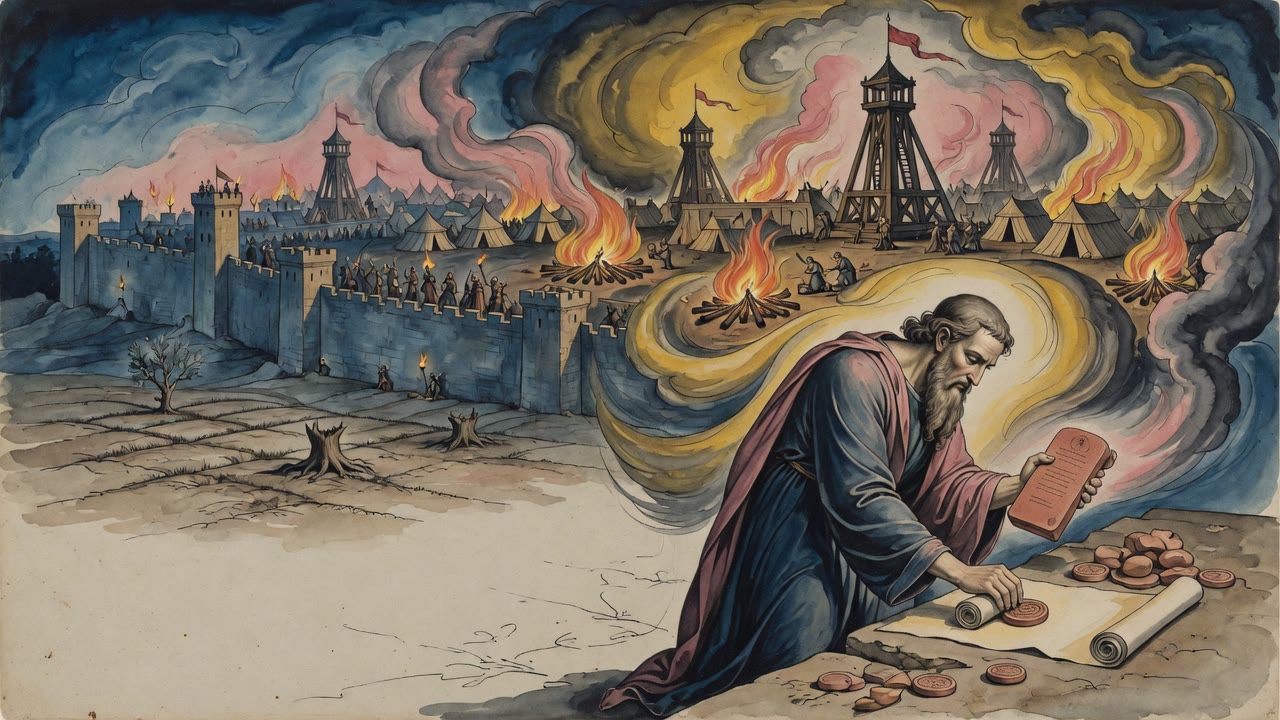
They searched. They found Joseph in the pit at Dothan. Ten brothers pulled him up and sold him to Midianite traders for twenty pieces of silver, and with the silver they bought sandals. They walked home in new leather. Jacob tore his clothes over a coat dipped in goat's blood, and no court in that generation ever sat for the sale.
Joseph later forgave them in Egypt. Forgiveness is not a court. The emperor closed the scroll. The brothers are dead, he said. Their debt is not. The ten greatest sages of Israel would pay it, because no generation since had produced ten men great enough, and now such men existed. The debt had waited for them.
Rabbi Ishmael Climbed to Ask
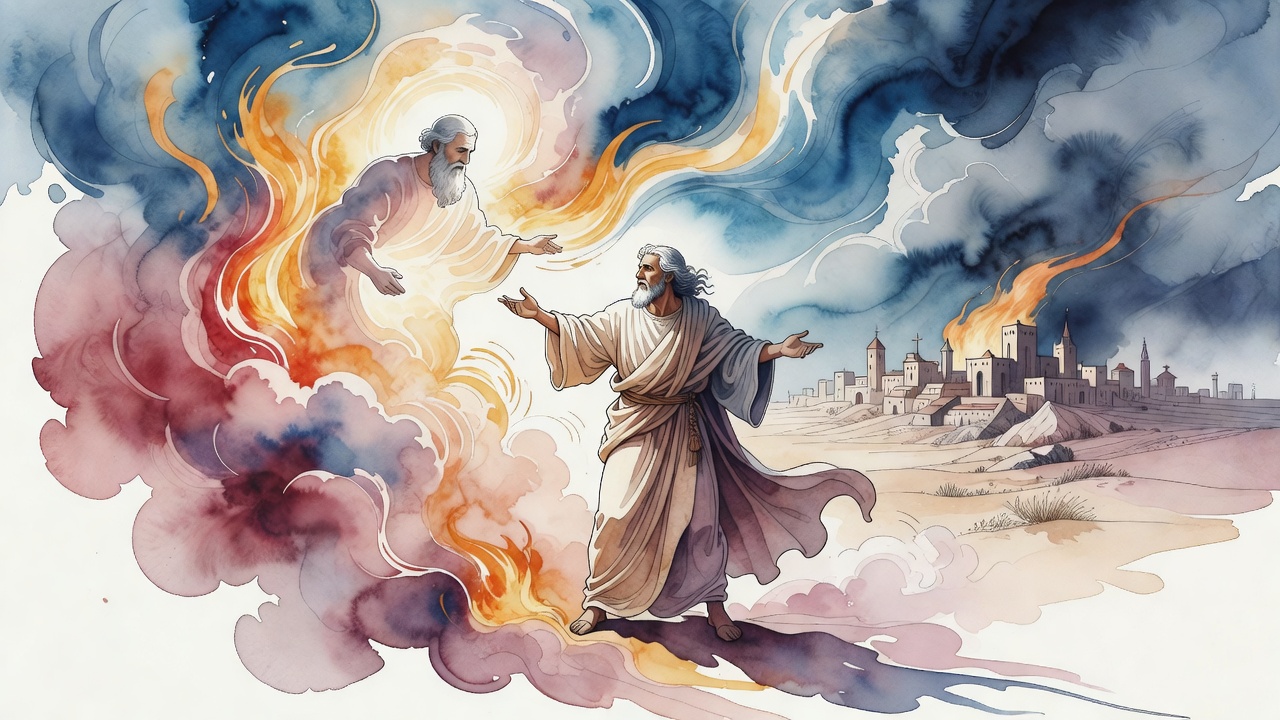
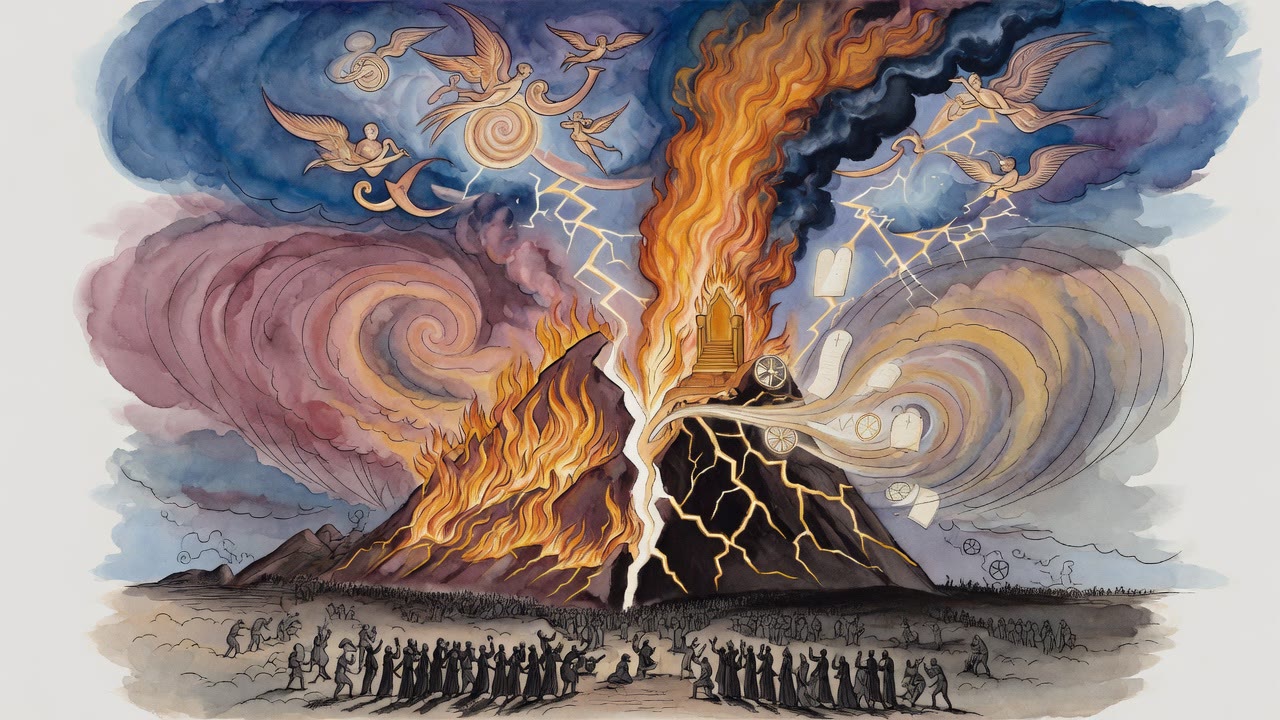
Before the first sword was lifted, Rabbi Ishmael ben Elisha, the High Priest, went up through the palaces of heaven to see whether the decree was Rome's invention or a thing already sealed above. He passed chambers where they decide whom to raise and whom to bring low, whom to kill and whom to keep alive. He found the angel Gavriel and asked his question.
Gavriel told him to wait.
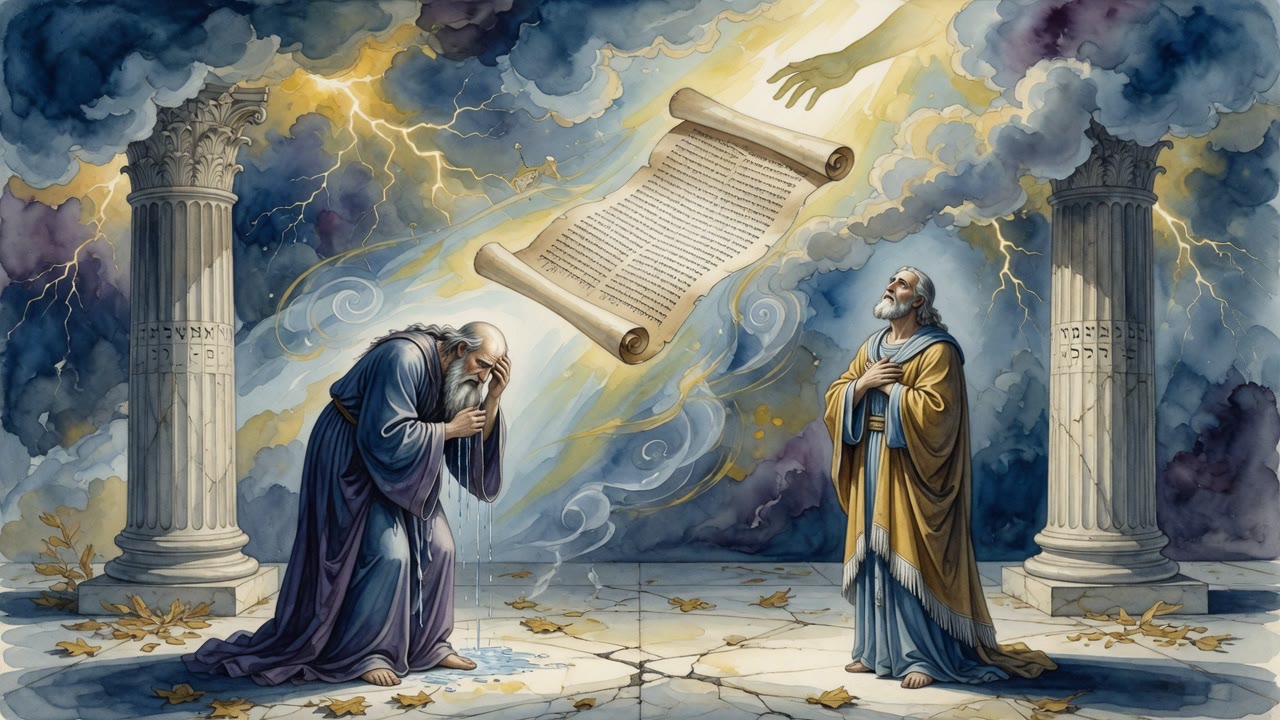
He waited. The answer came back: the decree is sealed. Accept it. Rabbi Ishmael descended with that sentence in his mouth and told the others. They argued. They asked why them, why now, why for a sale none of them had made. The questions did not open the seal. They accepted the verdict with grief still on their faces.
Two Heads and One Face
Rabban Shimon ben Gamliel, head of the Sanhedrin, and Rabbi Ishmael were led out together, bound. They argued over who should die first, each wanting to spare the other the sight. The lot was cast. Shimon went first.
His head was taken.
Ishmael lifted it and held it against his chest. "Holy mouth," he said. "Faithful tongue that spoke words of Torah. Now you lie in the dust, and who will gather the ashes?" A Roman noblewoman saw Ishmael's face and told the emperor she wanted the skin of that face kept. The command was carried out. The face that had stood before the throne and brought back its own death sentence was stripped from the living man and stored as a prize.
Earlier, when Shimon had wept and asked what sin had brought him here, Ishmael had asked a smaller question. Had a petitioner ever come for a ruling while Shimon finished a drink, or tied a sandal, or put on a cloak? Even a moment of delay can be counted. Shimon had gone quiet. Then the lot fell, and the smaller question no longer mattered.
The Parchment Burned and the Letters Rose
Rabbi Chanina ben Teradyon had been arrested for teaching Torah in public after Rome forbade it. They wrapped him in a Torah scroll and set the scroll on fire. Wet wool was packed on his chest so the heart would stay cool and the death would last.
His students stood outside the flames. "Rabbi, what do you see?"
"The parchment is burning," he said. "The letters are flying up." He said it as fact. The skin of the scroll was going. The words were not. The students begged him to open his mouth so the fire would reach his lungs and finish it. He refused. "Better that He who gave me my soul should take it."
A Roman soldier watching the pyre asked him, "If I pull the wool off your chest and raise the fire, will I have a portion in the world to come?" Chanina said yes. The soldier tore the wool away, fed the flame, and jumped into it himself. A voice came from heaven: Rabbi Chanina ben Teradyon and the Roman soldier are both destined for the world to come.
The Sandals Still Walked
Ten men died. Ten brothers had sold one boy and gone home in new shoes. Rome did the killing and was still wicked in the doing. Heaven had permitted the payment, and the payment did not make the emperor righteous.
On Yom Kippur the poem Eleh Ezkerah, These I Remember, is read when the fast is hardest. It does not close the account. It names the mouths that were cut off, the face that was taken, the letters that left a burning scroll, and the soldier who chose the fire after watching them go.
← All myths