5 min read

Ten Strings and Ten Men Guarded the Holy

A priest who sat down to serve had performed no service at all. Nine men were not a quorum. Boaz gathered ten elders at the gate before a sandal came off.

Curated by Arthur · Told by Maggid ·
Table of Contents
  1. East of the Tent
  2. Service Only on the Feet
  3. Weather, Banners, and Strength
  4. When Music and Camp Agree

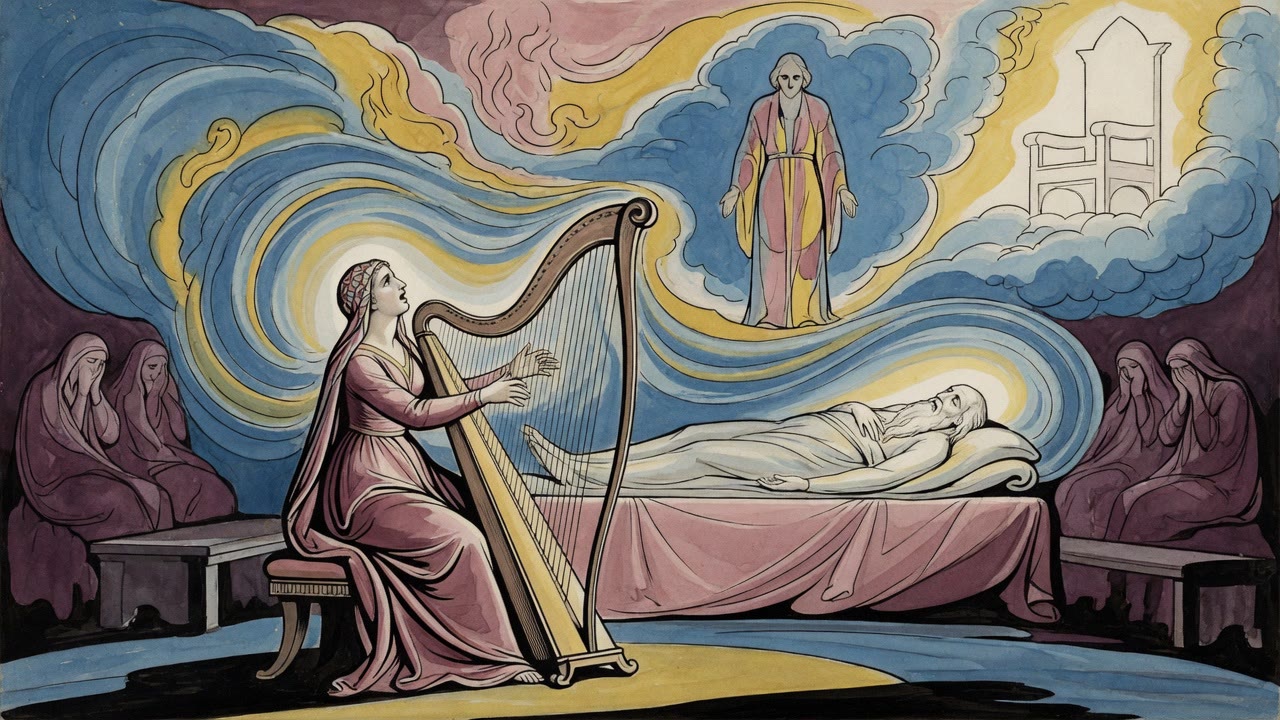
David's fingers found the tenth string and the room changed pitch. The harp was not decoration for a bored king. It was a counting tool for reliability. Ten strings for a music that could carry testimony. Ten men for a quorum that could carry grief, blessing, covenant, and release. The number that ordered his instrument also ordered the public life of Israel.
Ten Strings and Ten Men Guarded the Holy Click for full size

When a body needed burial rites done right, ten. When the Name needed public blessing, ten. When a boy entered the covenant of circumcision under witnesses, ten. When a sandal was removed in the gate for chalitzah, ten elders, as Boaz once gathered at the city gate (Ruth 4:2). The harp and the court shared a spine. What is reliable is what can be held by a full hand of witnesses.

East of the Tent

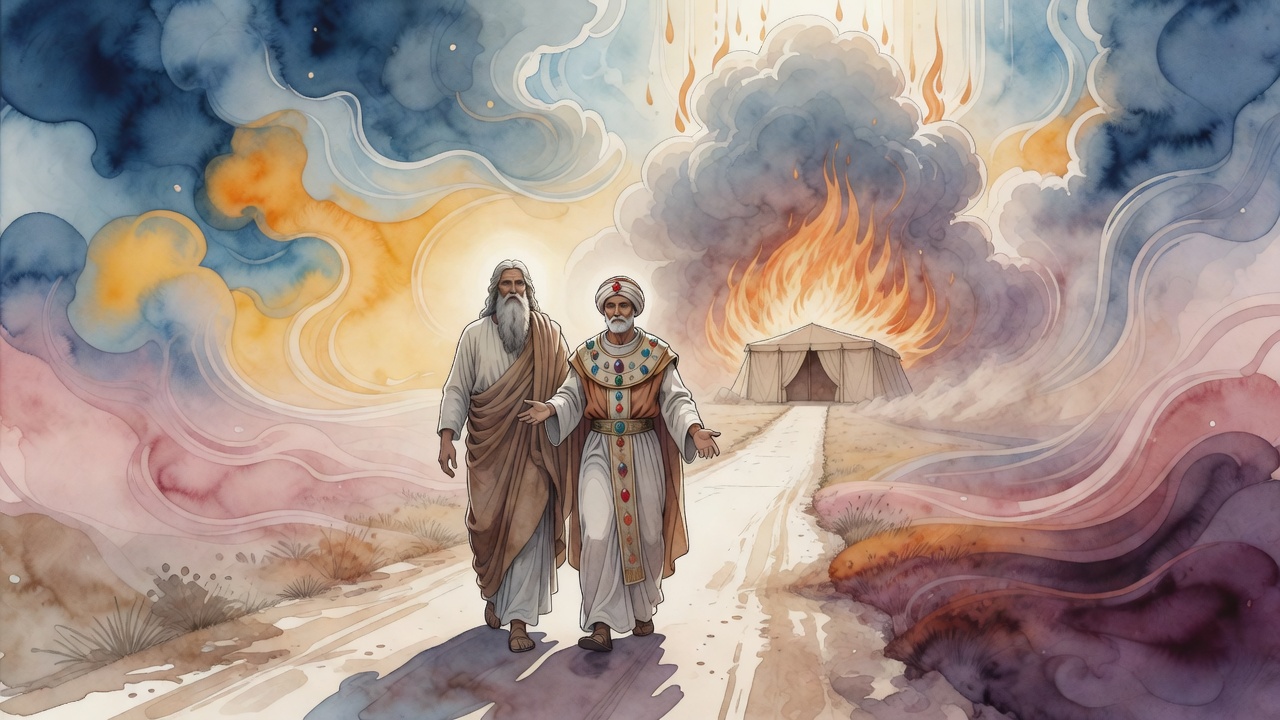
Before kings and harps, the wilderness camp already knew how to place bodies around holiness. To the east, in front of the Tent of Meeting, Moses and Aaron and Aaron's sons kept the charge. The commoner who approached wrong died. Direction was not interior design. It was a border with teeth (Numbers 3:38).

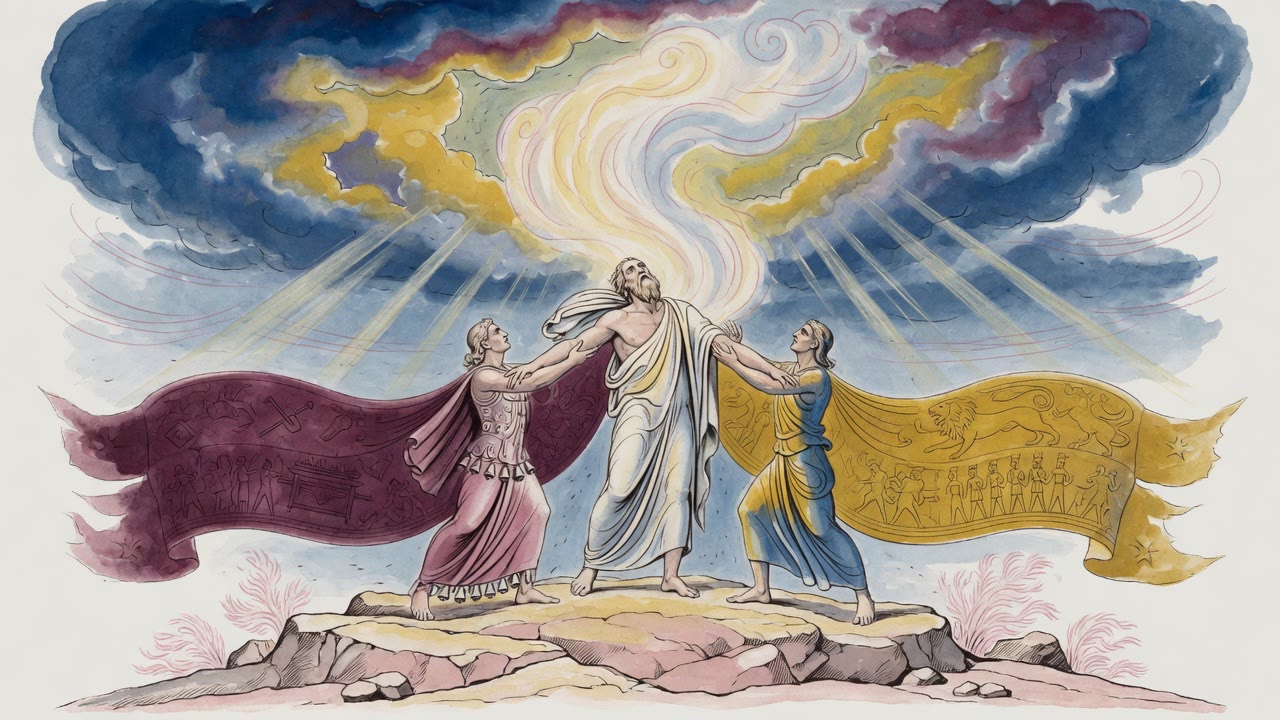
Levi split into four camps for four sides, matching the four banners of Israel. West held storehouses of snow, hail, cold, and heat in the midrashic map of weather, and Gershon camped there because tent, covering, and screen are what stand against storm. South poured dew and rain of blessing, and Kehat camped there with the Ark, because rain depends on Torah. Iron goes blunt, keheh, when statutes are refused, and the name Kehat tastes of that warning (Leviticus 26:3-19) (Ecclesiastes 10:10).

Service Only on the Feet

Inside the sanctuary the priest's body had one legal posture for service. He stands. If he sits and serves, the service is invalid. The verse is spare and absolute: God chose him from the tribes to stand and serve in the Name (Deuteronomy 18:5). Holiness does not accept a casual hip cocked against the altar. The work is upright or it is nothing.

That demand rhymes with David's ten. Both refuse half-measures. A quorum of nine is not a quorum. A seated offering is not an offering. A harp missing a string is a different instrument. The sacred counts, and the count is part of the meaning.

Weather, Banners, and Strength

Ephraim, Benjamin, and Manasseh held the west because might was needed against the storehouses of harsh weather. Reuben the penitent held the south where blessing-rain is born, because repentance and rainfall are braided in the sources. Each banner was a moral claim written in geography. You slept where your story fit the sky.

Kehat's double honor, surrounding on more than one side, came from bearing the Ark. The ones who carry Torah do not get the softest wind. They get the angle where rain and iron warnings meet. Moses and Aaron on the east faced the sunrise and the first approach of anyone who thought the Tent was a tourist stop.

When Music and Camp Agree

Later, when David played before the Ark with all his strength, the old wilderness arithmetic still stood underneath. Holiness is approached by appointed bodies in appointed postures with appointed numbers. Ten strings praise. Ten men witness. Priests stand. Levites hold their sides of the weather. A king can dance, but he cannot invent a new math for the sacred overnight.

The image that remains is double. Night in the camp: a priest on his feet through a long service, knees locked, Name on his mouth. Night in Jerusalem: a harp with ten strings ringing while ten men somewhere else finish a blessing over a grave or a baby. Both scenes keep the same count. Both refuse the shrug that says close enough.

A boy learning the harp is told why the tenth string matters. A young priest is told why his heels may not rest. A community short one man for a funeral feels the missing witness like a missing tooth. Reliability is not a mood. It is a number you can fail.

So the tradition keeps David's instrument and Moses' eastern post in the same family of thought. Guard the holy with full hands. Serve it on your feet. Let the camp's weather and the harp's strings agree that what is true enough to bind a people must be thick enough to count.

A widow waiting for ten men to form a funeral party feels the arithmetic in her throat. Nine is almost. Almost does not bury the dead with full voice. A father counting guests before a circumcision feels the same thinness when the room stalls at eight. David's tenth string is not music theory for specialists. It is the difference between a public act that binds and a private almost that leaves the air unfinished.

On the eastern edge of the camp, a boy once tried to slip close for a look at the Tent and was yanked back by a Levite's fist. The death sentence for the commoner who approaches wrong was not a metaphor in that boy's body. He learned geography as law. Sunrise side meant Moses and Aaron. Curiosity without appointment meant danger. Holiness that can be strolled into is not the holiness this camp carried through sand.


← All myths
From the tradition

Sources

3 sources

The texts behind this telling. Some cards carry a translation of the source; others are our own retelling of it, and each card says which. Every card links out to the original.

Pirkei DeRabbi Eliezer 19:6Pirkei DeRabbi Eliezer

Retold in our words. Read the original at the link below.Pirke de Rabbi Eliezer, trans. Rabbi Gerald Friedlander, London (1916) · CC-BY

Well, Pirkei DeRabbi Eliezer, a fascinating early medieval text filled with aggadic (story-based) interpretations of the Torah, offers a glimpse into the significance of ten in Jewish life. It ties the number ten to something deeply resonant: reliable testimony.

"Upon a ten-stringed instrument and upon the psaltery" (Psalm 92:4), the text begins, quoting scripture. The verse itself speaks of music, of praise, but the Pirkei DeRabbi Eliezer sees something more. It sees a connection between the ten strings of the harp, and the reliability of things that are testified to by ten people. All testimonies reliable to Israel, says the text, are connected to this number. The harp upon which David played, that very instrument of praise and prophecy, had ten strings. This wasn’t just a random number!

It goes further. The testimony for the dead, ensuring proper mourning and respect, requires ten men. The public sanctification of God's name, the kiddush (the sanctification blessing over wine) Hashem, demands a minyan of ten. Even the covenant of circumcision, that foundational act of belonging, has a connection to this number – though not explicitly requiring ten, it highlights the importance of community and witness to this sacred act.

Then there's chalizah, the ceremony of removing the shoe, a ritual related to levirate marriage (Deuteronomy 25:5-10). This ceremony, allowing a widow to avoid marrying her deceased husband's brother, also requires ten men. The text even quotes the Book of Ruth: "And he took ten men of the elders of the city" (Ruth 4:2), solidifying the connection.

Why this emphasis on ten? Perhaps it's about the collective power of witness. Ten people represent a community, a shared understanding, a safeguard against individual bias. Their presence validates and strengthens the significance of these life cycle events and religious obligations. It's more than just a number; it's a statement about the importance of community and reliable witness in Jewish tradition.

So, the next time you're part of a minyan, or hear about a ritual involving ten people, remember the harp of David, the power of collective testimony, and the enduring significance of this number in shaping Jewish life. What other hidden meanings might we uncover in these ancient texts if we just listen closely?

Full source
Bamidbar Rabbah 3:12Bamidbar Rabbah

Retold in our words. Read the original at the link below.The Sefaria Midrash Rabbah, 2022 · CC-BY

It wasn't a random free-for-all. The Book of Numbers gives us a fascinating glimpse into a highly structured encampment around the Mishkan, the Tabernacle. And Bamidbar Rabbah, a classic Midrashic (rabbinic interpretive commentary) text, unpacks the deeper meaning behind that arrangement.

We read in (Numbers 3:38), "These encamped in front of the Tabernacle, to the east, in front of the Tent of Meeting eastward: Moses, and Aaron, and his sons.. and the commoner who approaches shall be put to death.” Bamidbar Rabbah sees so much more in this verse than just logistics. It suggests that the very placement of each tribe and Levitical family held cosmic significance.

The Midrash points out that the family of Kehat from the tribe of Levi, whose job it was to carry the Ark, had a special honor: their descendants surrounded the Tabernacle on two sides! And the entire tribe of Levi, in fact, was divided into four groups to guard the Tabernacle on all four sides, mirroring the four banners of the Israelite tribes. The placement wasn't arbitrary; it was, according to Bamidbar Rabbah, directly related to their roles and even their character.

Let's journey west first. The west, we’re told, is associated with storehouses of snow, hail, cold, and heat. And who encamped there? The banner of Ephraim, Benjamin, and Manasseh, known for their might. They were strategically placed to withstand these harsh forces. Similarly, Gershon and his family, whose sacred service involved the "Tent, its covering, and the screen," were also situated in the west (Numbers 3:25). What better protection against those elements than a tent and covering? The Midrash even connects the name Gershon to the Hebrew words "gar" (reside) and "shen" (ivory), suggesting strength, as ivory is seen as a symbol of resilience, referencing the verse "His belly is like a tablet of ivory" (Song of Songs 5:14).

Now, let’s turn to the south. Ah, the south – a place of blessing, where dews and rains emerge. Here encamped the banner of Reuben, a tribe associated with repentance. Why repentance? Because rain, the life-giving force, is said to fall through the merit of repentance. And who else resided in the south? The sons of Kehat, bearers of the Ark containing the Torah. The Midrash makes a direct link: rain is dependent on Torah observance. As (Leviticus 26:3-4) states, "If you follow My statutes… I will provide your rains…” Conversely, disobedience leads to drought: "I will render your heavens like iron" (Leviticus 26:19). The name Kehat itself is linked to the Hebrew word "keha," meaning blunt, as in "If the iron is blunt [keha]" (Ecclesiastes 10:10), implying that a lack of Torah study can blunt the heavens' ability to bring rain.

Moving to the north, a place from which darkness emerges, we find the tribe of Dan. The Midrash connects Dan to the darkness of the idol crafted by Yerovam. And there too encamped the children of Merari, whose labor involved the "boards of the Tabernacle, and its bars, and its pillars" (Numbers 3:36). The Midrash draws a parallel to (Jeremiah 10:8), which speaks of idols as being nothing more than wood. The name Merari, we're told, is associated with "merur," meaning bitterness, a consequence of idol worship.

Finally, the east, from which light emanates. Here resided Judah, masters of royalty, Torah, and mitzvot (commandments). Moses, Aaron, and his sons also encamped in the east, embodying Torah and good deeds. The Midrash quotes the saying, "Happy is the righteous and happy is his neighbor," highlighting the positive influence of those close to Torah. Judah, Issachar, and Zebulun, all known for their Torah scholarship, were adjacent to Moses and Aaron, reinforcing this idea.

However, the Midrash also warns of the opposite effect. Just as good company elevates, bad company corrupts. It contrasts the blessed tribes in the east with those in the south who were near the rebellious Korah. The Midrash states, "Woe to the wicked, woe to his neighbor." Because Reuben, Simeon, and Gad were close to Korah, they too became entangled in divisiveness.

So, what does it all mean? The Midrash on Numbers isn't just giving us a history lesson. It's teaching us about the interconnectedness of everything. Our actions, our words, our proximity to goodness or, God forbid, negativity, all these things have consequences that ripple outwards. The arrangement around the Tabernacle wasn't just about physical space; it was about spiritual alignment. It was a reflection of the values, the challenges, and the potential of each tribe. And perhaps, it's a mirror reflecting back at us, asking: what kind of space are we creating around ourselves, and what kind of influence are we allowing to shape our lives?

Full source
Sifrei Devarim 167:1Sifrei Devarim

Retold in our words. Read the original at the link below.Sifrei by Rabbi Shraga Silverstein · CC-BY

A reader can imagine the grand spectacle, the soaring prayers, the scent of incense.. but what about the physical posture of the priests, the kohanim?

Well, a fascinating little detail pops up in Sifrei Devarim, a collection of early rabbinic legal interpretations on the Book of Deuteronomy. It highlights a seemingly small, yet incredibly significant, aspect of the kohen (a priest)'s service.

(Deuteronomy 18:5) states: "For in him (the Cohein) did the L-rd your G-d choose from all of your tribes to stand to serve in the name of the L-rd."

What does Sifrei Devarim do with this verse? It offers a very direct and unambiguous reading. It teaches us – get this – that the kohen's service is valid only when he is standing.

That's right. Standing.

If a kohen sat down while performing his duties, according to this interpretation, the service becomes invalid. It's null and void. All that effort, all that intention... undone.

Why is this so important?

It really emphasizes the idea of readiness, of being prepared to act in service of the Divine.: standing implies alertness, attentiveness, a willingness to respond immediately. Sitting, on the other hand, suggests relaxation, perhaps even a lack of urgency.

And maybe it's more than that. Perhaps it’s about the inherent dignity and honor associated with the priestly role. Standing tall, upright, projecting strength and reverence.

This detail, seemingly minor at first glance, reveals a deeper understanding of the meticulousness and dedication required in the Temple service. It highlights the importance of every action, every posture, every moment.

So, next time you read about the Temple service, remember the kohen, standing tall, fully present, offering his service with unwavering dedication. It might just change the way you see the entire picture.

Full source