The African King Who Served Alexander a Plate of Gold
Alexander rode south to plunder Afriki and was sat before a feast he could not eat, then judged by a verdict that exposed his whole empire.
Table of Contents
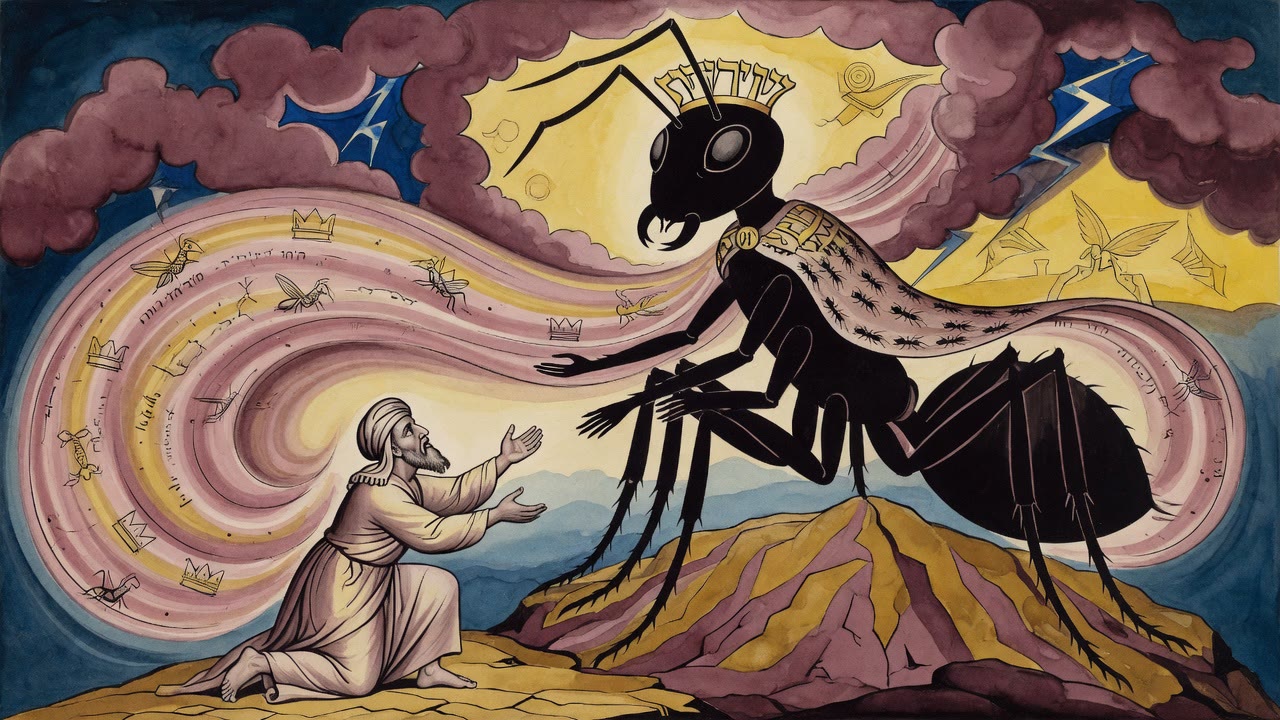
Alexander of Macedon had run out of world. He had taken Persia, taken Egypt, taken everything that fell under a map, and still he rode south, past the last roads, into a country the merchants called Afriki. He did not come for its language or its laws. He came, as he came everywhere, because someone had told him there was gold.
 Click for full size
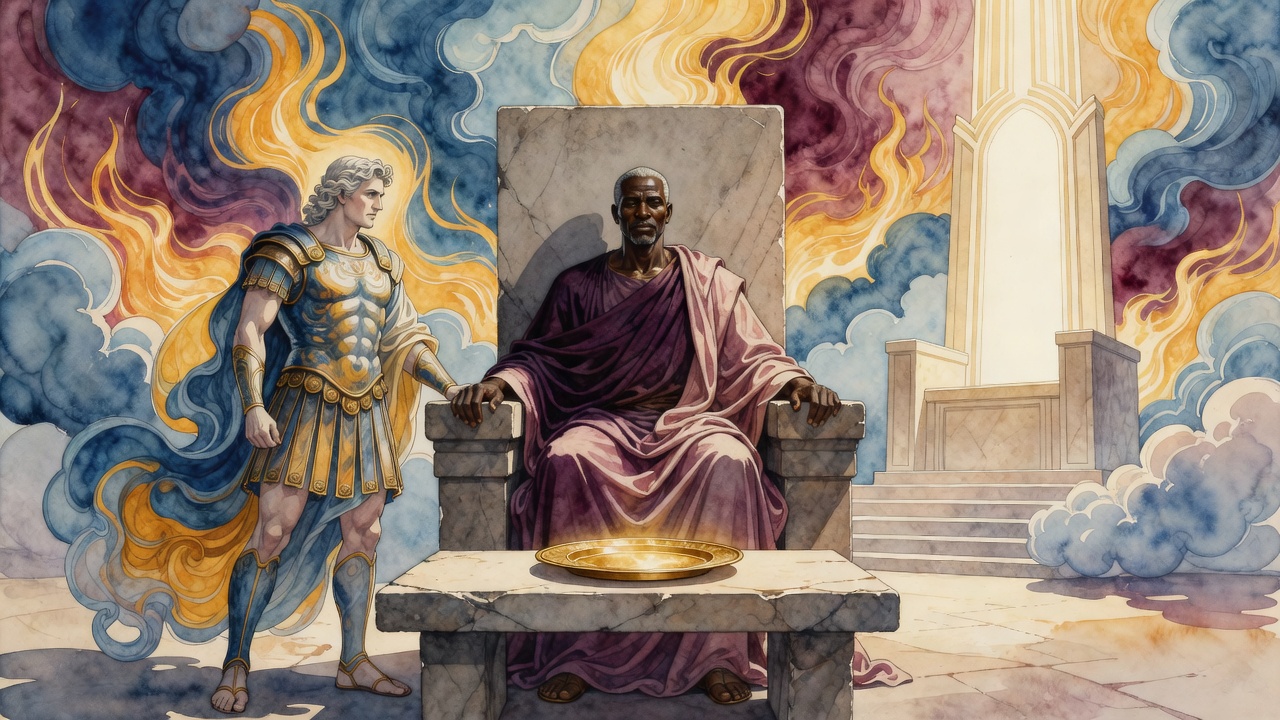
The king of that place met him at the gate and did not flinch. He bowed, he smiled, he ordered a table laid in Alexander's honor. Servants carried in a heaped plate and set it before the conqueror. Bread. A roasted joint. Figs and pomegranates, glinting in the torchlight. Alexander reached, and his fingers closed on cold metal. Every loaf, every fruit, every cut of meat had been cast in gold.
He pulled his hand back.
"Do you expect me to eat gold?" he said.
The king answered without heat. "If you wanted food, you could have stayed and eaten in your own country. I served you what you came for. You crossed the whole world for gold. So I serve you what you crossed it for."
The Field That Hid a Fortune
Alexander was still turning that over when the king's court convened, and he found himself watching a country he had meant only to rob conduct its own ordinary business. Two men were brought in, both flushed, both insisting the other was right.
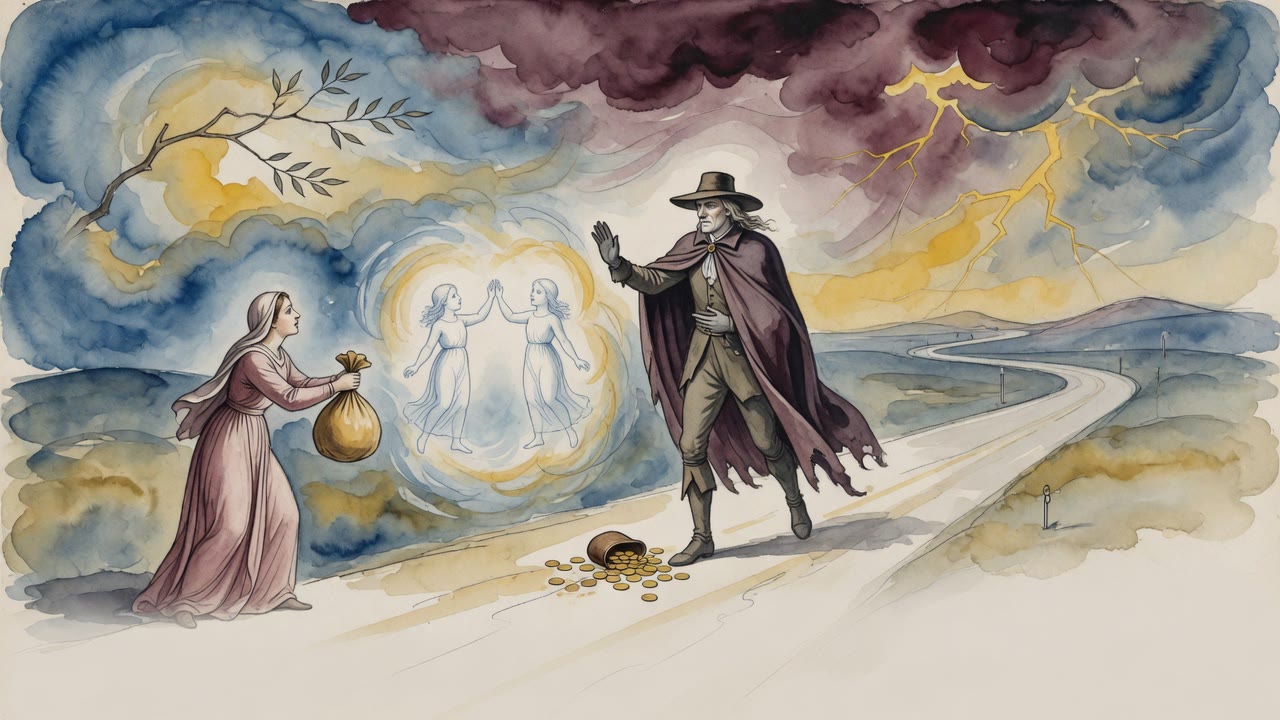
The first had bought a field from the second. Plowing it, he had cut his blade into a buried hoard, coins and vessels, a fortune sleeping under the furrows. He had come to give it back. "I bought the land," he said. "Not this. This was never part of the bargain."
The seller would not take it. "I sold you the field and everything in it. Whatever the ground held, it is yours. I will not touch it."
Two men, each shoving a fortune at the other. The king listened. Then he asked one question of the buyer and one of the seller. The buyer had a son. The seller had a daughter. So let the two be married, the king ruled, and let the buried gold be the bride's dowry. The treasure would stay in both houses. No one would be robbed, and no one would be enriched at another man's loss.
The verdict landed on Alexander like a slap. He could not keep silent.
A Verdict That Indicted an Empire
"In my country," Alexander admitted, "this would have gone differently. The king would have seized the treasure for the crown. And then he would have had both men put to death, so neither could dispute the claim."
He said it plainly, the way a man states a fact he has never once thought to question. In Macedonia that was simply how a buried fortune was settled. The strong took it. The witnesses died.
The African king looked at him for a long moment. He did not argue. He asked a question of his own.
"Does the sun still rise in your country? Does the rain still fall on your fields?"
"Yes," Alexander said.
"Then tell me. Are there animals there? Sheep, cattle, beasts in the hills?"
"Many," Alexander said.
"That explains it," the king said. "The sun rises and the rain falls in your country for the sake of the animals. Not for the sake of its people. A land that murders honest men over a pot of coins has forfeited its share of mercy. Heaven still warms the ground there, but only because the innocent beasts deserve to live."
Alexander, who had crossed the edge of the world to take this kingdom's gold, turned and went home with nothing but the sentence ringing in his ears. He had come to plunder a people and been judged by them instead.
A Ledger Kept on the Open Sea
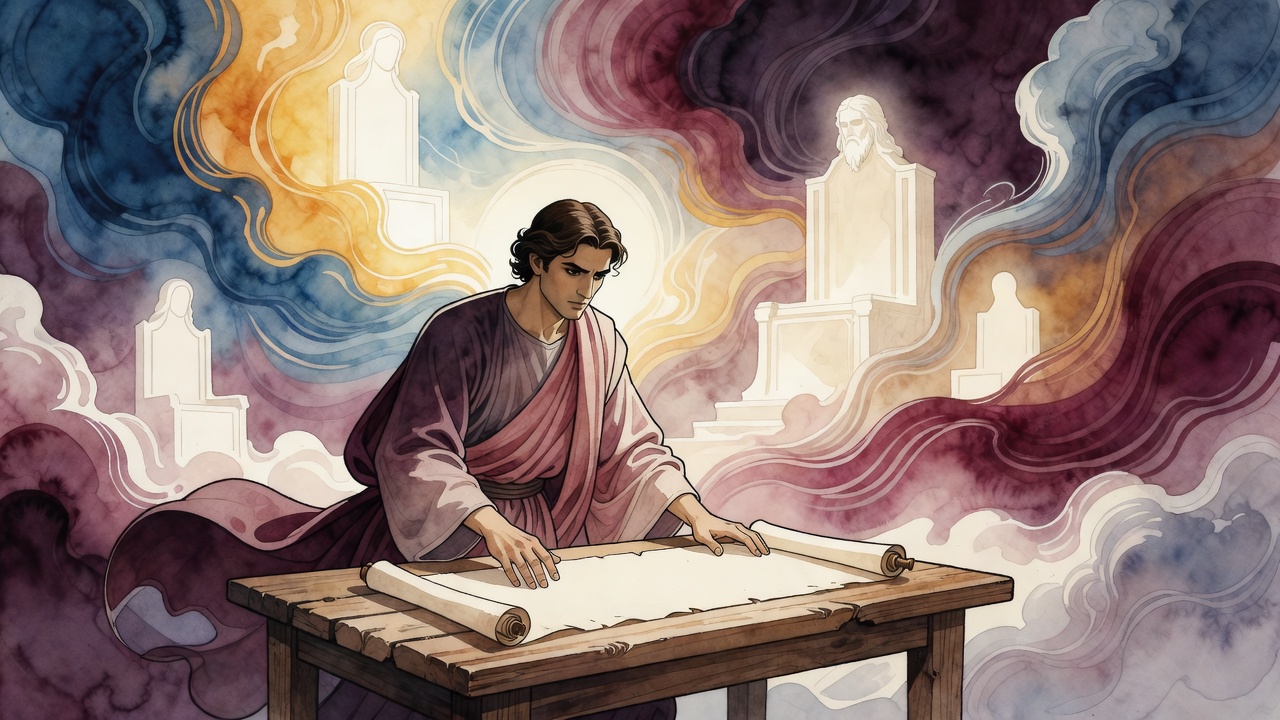
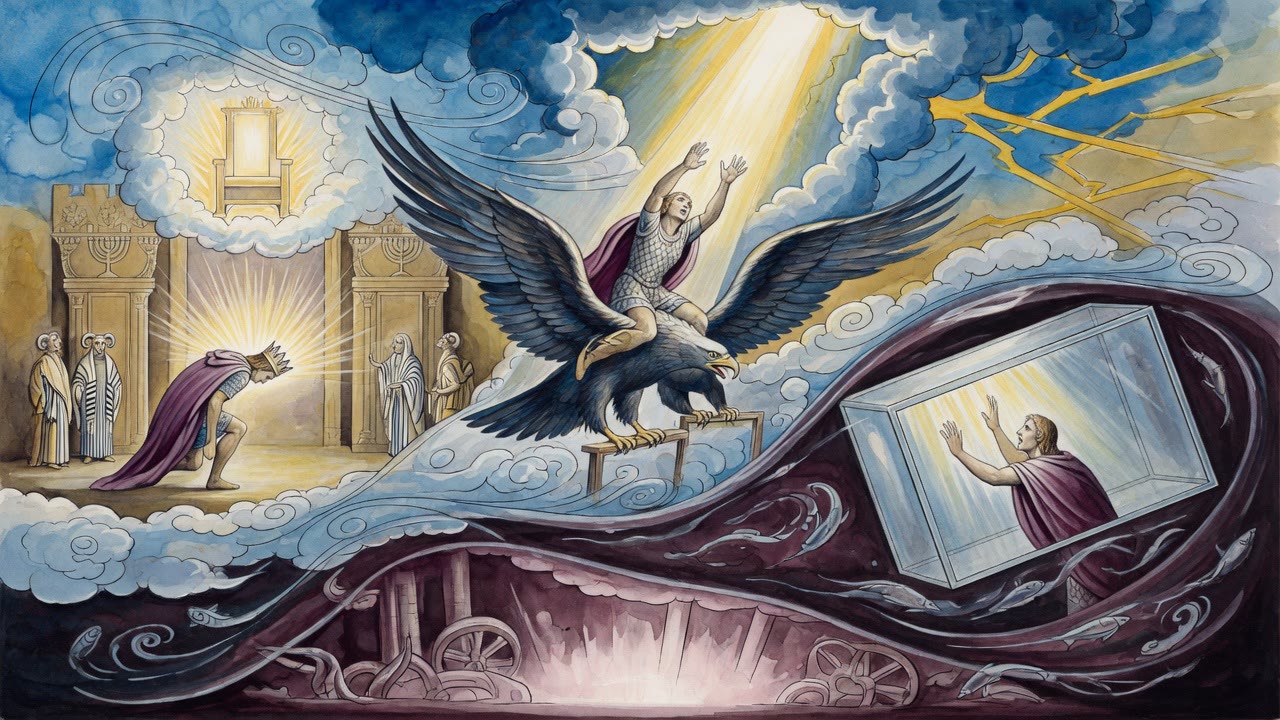
The same shame travels under other skies. Generations later, two of Israel's greatest sages crossed open water in a creaking ship. Rabban Gamliel of Yavneh, head of the Sanhedrin, leader of his people in the gray years after the Temple fell, sailed beside his rival and friend Rabbi Joshua ben Chanania. Gamliel watched the coastline. Joshua watched the stars, reckoning their position from the wheeling heavens, naming the day of landfall before it came, and proving right.
But there were two younger men aboard, Elazar ha-Sama and Yochanan ben Gudgeda, who could read the sky better than Joshua could. They tracked the ship's course more finely than the head of the Sanhedrin's own companion. And they were starving. Their clothes hung thin on them. Their food had run out somewhere over deep water, and no one had thought to ask.
The Hunger Three Benches Away
Gamliel saw it and could not look away. Two of the sharpest minds of the generation, men whose knowledge outran his own, going hungry on the very deck he stood on. He had not noticed until the sea forced his eyes down.
When the ship reached land he did not let it go. He arranged standing positions for both men, posts that would keep bread on their table for the rest of their lives, so that learning like theirs would never again ride out a voyage starving. The name ha-Sama, the ashamed, fastened itself to Elazar from that crossing, though some say the shame was Elazar's own, at his poverty, and some say it was Gamliel's, at his blindness.
Two kings, two ships, one accounting. A buried treasure handed back. A starving scholar finally seen. The sun rises on the just and the unjust alike, the African king had said, and the only question heaven leaves open is which one a kingdom has decided to be.
← All myths