The Angel Wept When Joshua Asked Whose Side
Moses rejected an angel and demanded God walk among Israel. When Joshua later asked the captain whose side he took, the angel wept from his feet.
Table of Contents
 Click for full size
Only You, Not a Messenger
"Behold, I send an angel before thee" (Exodus 23:20). God offered Moses a guardian on the road. Moses refused the gift if it meant distance. "If You send it before me alone, I do not desire it." He wanted the verse he would later force into being: "Let the Lord, I pray Thee, go in the midst of us" (Exodus 34:9).
Early generations, the midrash says, knew how to bargain upward. Moses would take no substitute for Presence. An angel can guard. An angel cannot forgive. "He will not pardon your transgressions," Scripture warns, because a messenger only does what he is sent to do. Pardon stays with the One who lifts countenances.
Moses had seen what happens when the people sin under a mountain. He would not march them under a sinless guard who had no authority to lift a fallen face. Better the danger of nearness to God than the safety of a perfect deputy.
Joshua Falls on His Face
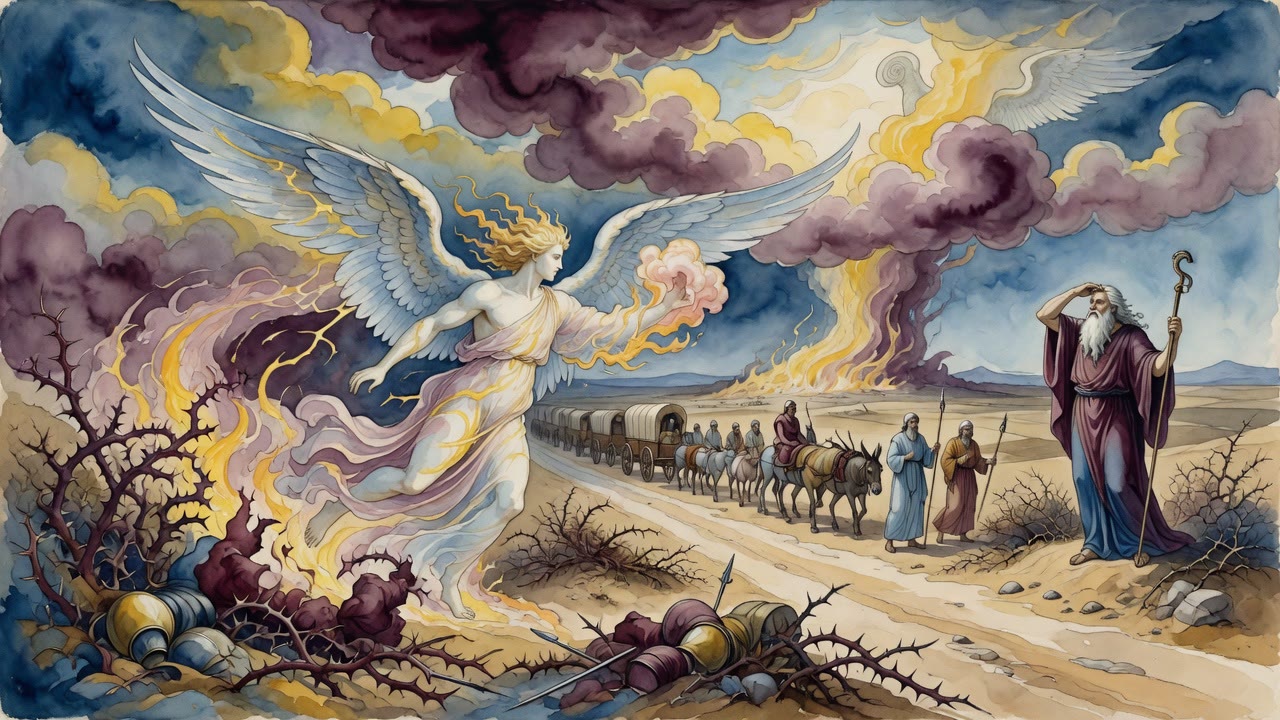
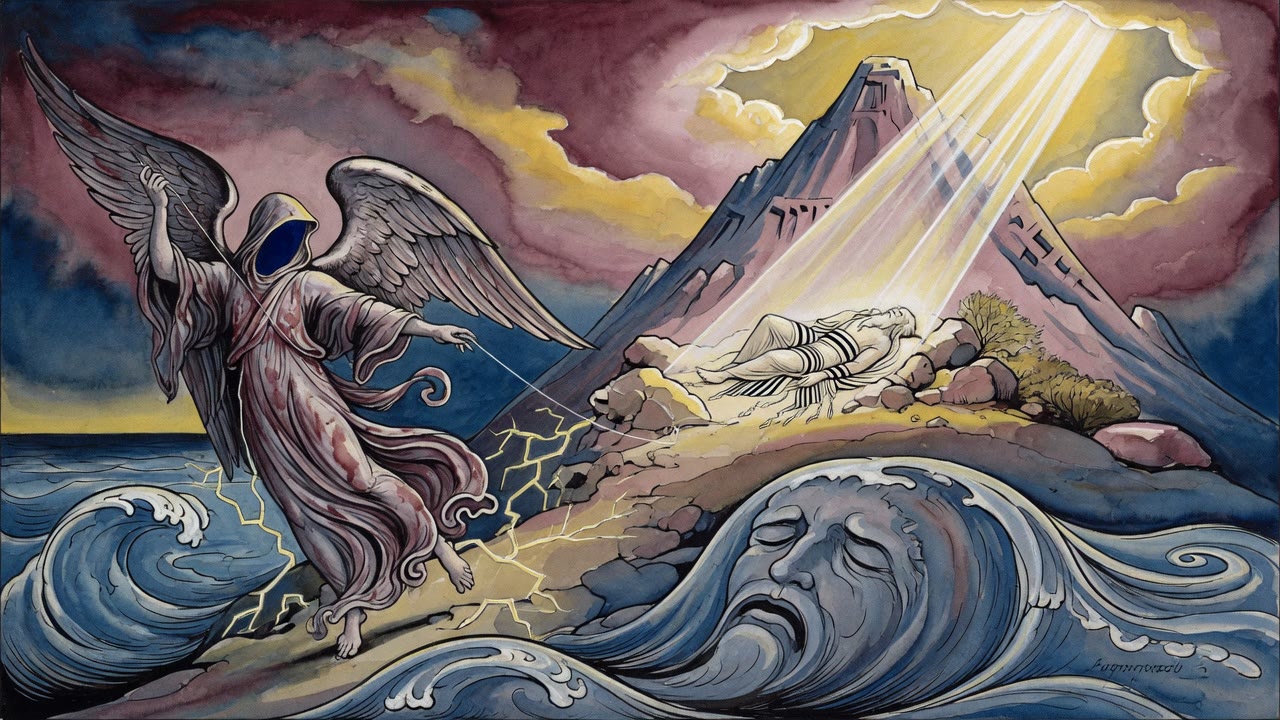
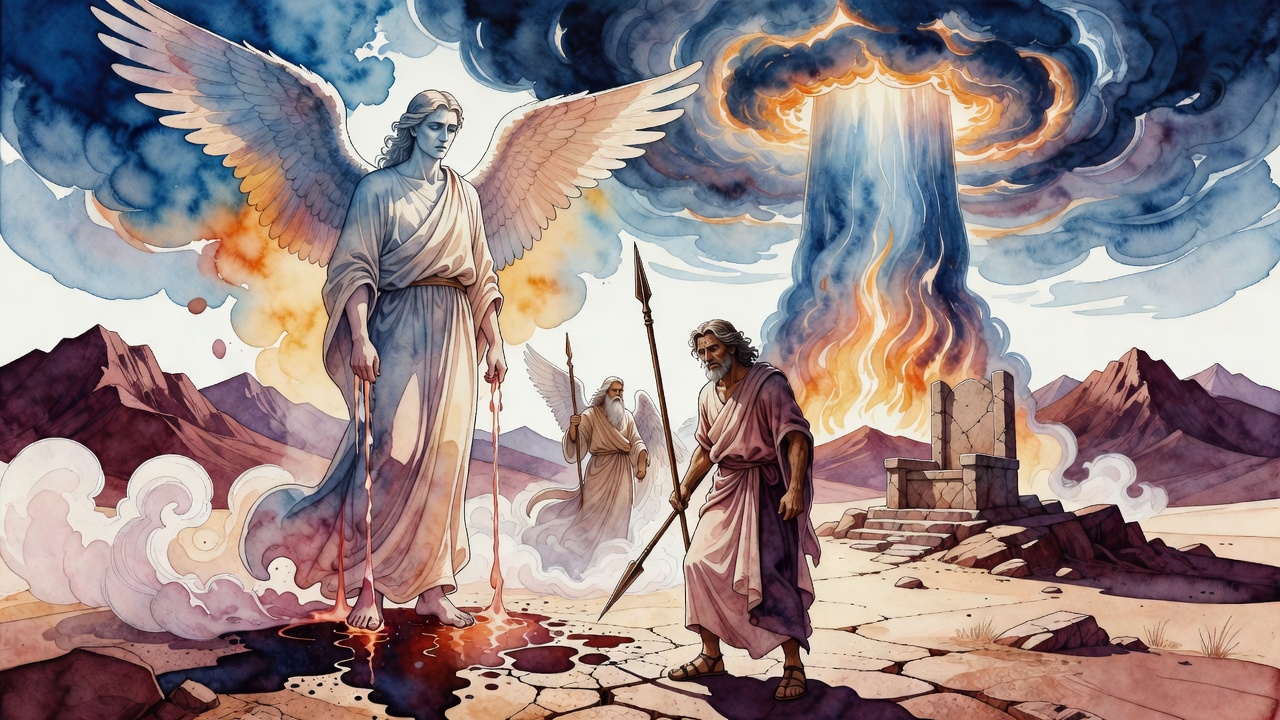
Years later Joshua met a figure with a drawn sword and asked the soldier's question: "Art thou for us, or for our adversaries?" (Joshua 5:13-14). The angel began to cry out from the nails of his feet, weeping as if from the ground up. "Nay, I am captain of the hosts of the Lord; I am now come."
Then the wound in the story opens. "Twice I have come to lead Israel. I am he who came in the days of Moses your master, and he rejected me because he did not wish me to accompany him, and now I have come once again." Joshua hit the earth and asked what his lord would say to his servant. The same captain Moses had waved away now stood over the conquest.
The tears are the detail no general expects. A captain of hosts weeping from his feet because a human asked about sides. The question was too small for the history he carried. Moses had wanted God. Joshua wanted alignment. The angel remembered both meetings in one sob.
Hornets Ahead of the March
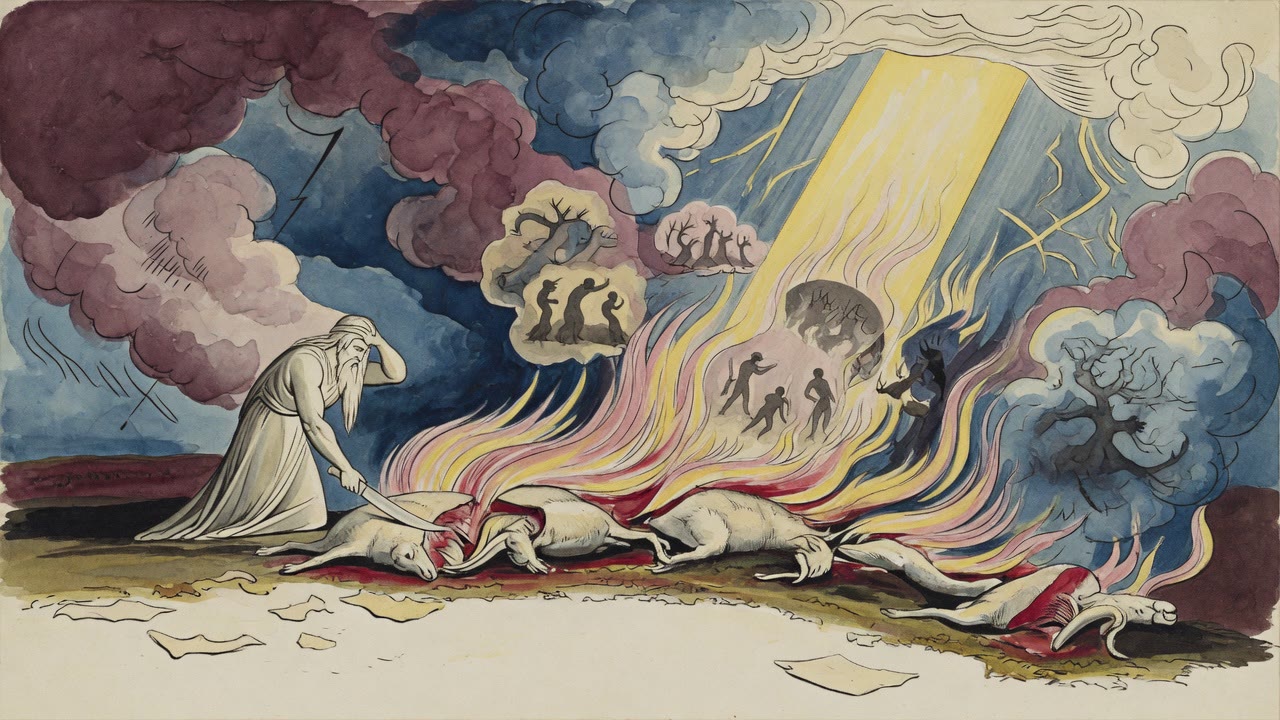
Even after Moses' refusal, God promised other forerunners. Hornets would go before Israel. Rabbi Levi taught that two hornets clung to each angel, pouring poison into Amorite eyes until men fell. Others say bodies trembled, faces blackened like furnace soot, and Israel finished what fear began. Og and his kind were not small. Their height was like cedars, yet fruit above and roots beneath were destroyed, guardian angel and nation alike.
So Moses' demand for God Himself did not leave Israel naked. It left them under a stricter intimacy, with secondary forces still clearing the road when Presence ordered it.
Giant men still fell. Poison still found eyes. The conquest did not wait for a softer theology. It waited for a people who had been taught, by Moses' hunger, that messengers are tools and not replacements.
Abraham's Escort Paid Forward
Why does God walk before Israel at all? Another Tanchuma answers with Abraham. Because Abraham escorted the three ministering angels from his tent, walking them on their way (Genesis 18:16), God repaid the measure by going before Abraham's children forty years in cloud and fire. Because Abraham said, "Let now a little water be fetched" (Genesis 18:4), the well moved with Israel in the desert.
Escort for escort. Water for water. The patriarch's small courtesies became national infrastructure. Moses, standing inside that inheritance, refused to cash it out as mere angelic management. He wanted the Host who had already chosen to walk.
A bowl of water in Mamre becomes a traveling well. A walk to the road becomes a pillar of cloud. Measure for measure is not always punishment. Sometimes it is hospitality scaled to a nation.
Two Leaders, One Captain, Different Hunger
Moses heard "I send an angel" and answered with hunger for God in the camp. Joshua saw the captain and asked about sides like a general checking alliances. The angel wept at the downgrade of the question, then served the conquest anyway. Israel lives between those postures: the demand for Presence, and the need to recognize the messenger when he returns.
David would later cry that if God marked iniquities no one could stand, and that forgiveness itself teaches fear. Moses had already lived that theology by rejecting a sinless guard who cannot pardon. The road into the land still needed captains. The heart of the camp still needed the Name that forgives.
When the cloud moved, it was Abraham's old hospitality coming due. When the angel wept before Joshua, it was Moses' old refusal still echoing. Between them Israel learned that heaven keeps both the escort and the argument.
Stand at Jericho's edge with dust on your tongue and you can feel the whole chain: a patriarch walking guests to the road, a prophet refusing a substitute, a captain crying from his feet, hornets finding Amorite eyes, a nation stepping onto ground prepared by more than swords. The question "whose side?" is too thin for that chain. The better question is Moses': will You go in the midst of us?
← All myths