The Angel Who Had Never Once Had His Turn to Sing
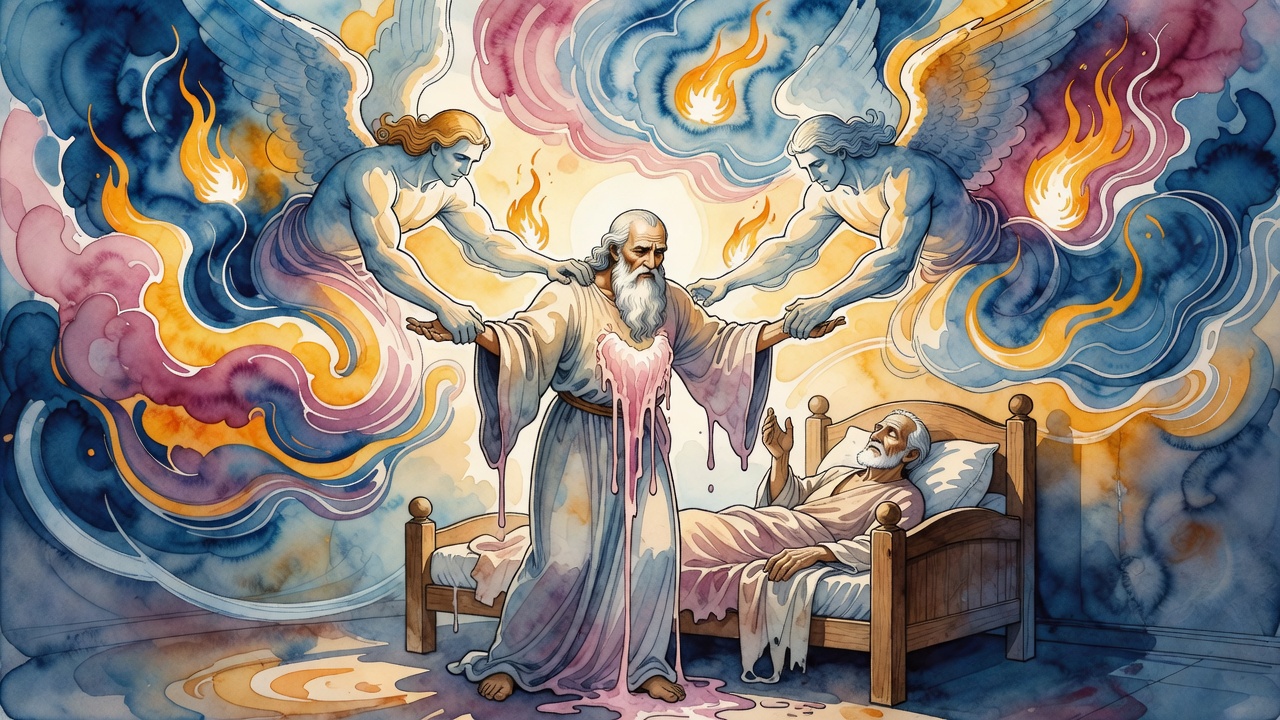
An angel wrestles Jacob all night, then pleads to be released at dawn. He has been waiting since creation for his single turn to sing before God.
Table of Contents
 Click for full size
A Thief Who Fears the Light
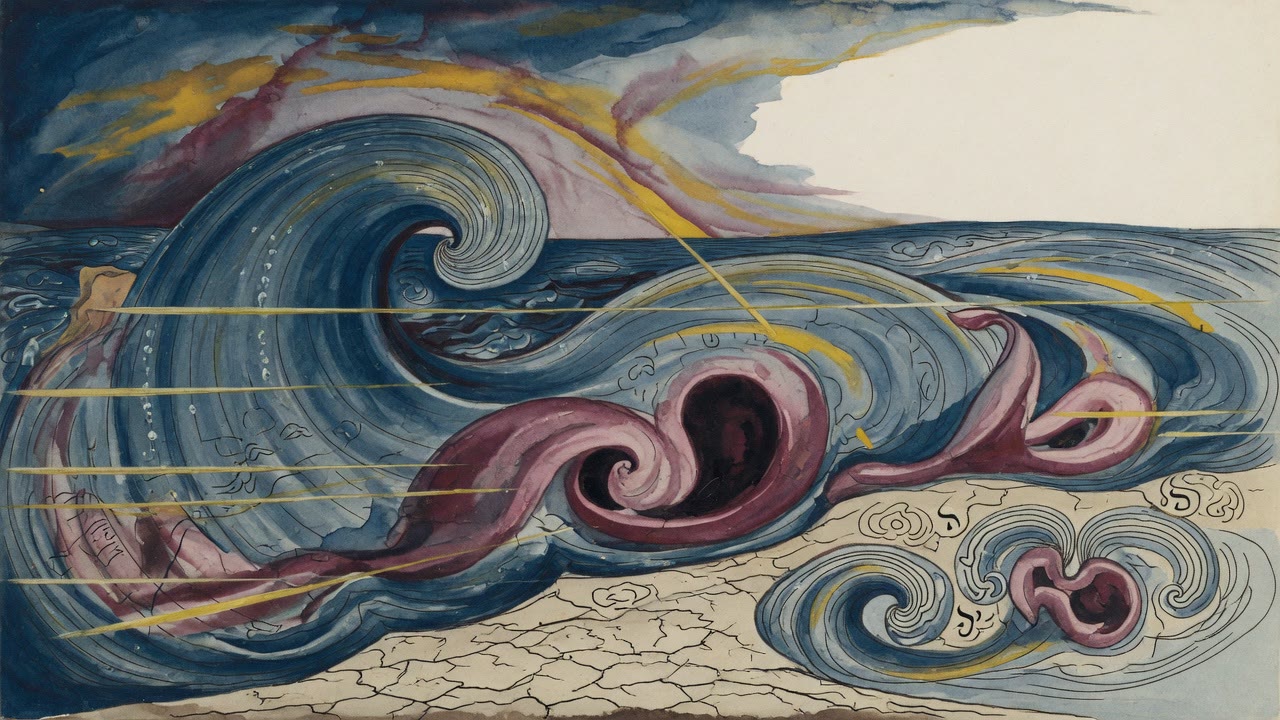
Jacob had him. The stranger was losing, or something in him was loosening, and when the sky began to pale at the edge of the world, the stranger went limp in Jacob's arms and asked to be let go. "Let me go, for the dawn has risen."
Jacob laughed. "Are you a thief," he asked, "that you are afraid of the daylight?" It was the question of a man who had fought all night and won and was not ready to give up his advantage. Whatever he had caught in the dark, he intended to hold until it gave him something.
The answer broke the joke entirely open. "I am the prince of Esau," the stranger said. "And from the day the world was created my turn to sing before the Omnipresent has never once come round. This morning is the first morning that has ever been mine. Let me go to my song."
Midrash Aggadah, the Torah commentary gathered in the Buber recension around the twelfth century, preserved this confession and put it against everything the tradition knew about the celestial choir. The ministering angels take the praises of heaven in shifts. Wave after wave of them, voice after voice, each choir waiting for the one before it to finish, and then their own brief window opens and they pour out what they have been holding since the last time their turn came. For this particular angel, the prince who had been appointed to stand at Esau's back and carry the weight of his nation, no window had ever opened. Not once in all the ages since creation's first morning. He had stood in the queue since the beginning of time and been passed over in every shift.
The Light That Would Destroy Him
The dawn that made him beg was not just a figure of speech. Angels who have a prescribed moment to sing cannot remain past that moment in the world below. The light of morning belongs to a different order of things, and a creature built for the upper world cannot stand in it past his time without suffering something the tradition does not name directly but implies is worse than the wrestling. He was not afraid of Jacob. He was afraid of missing the first window that had ever been his.
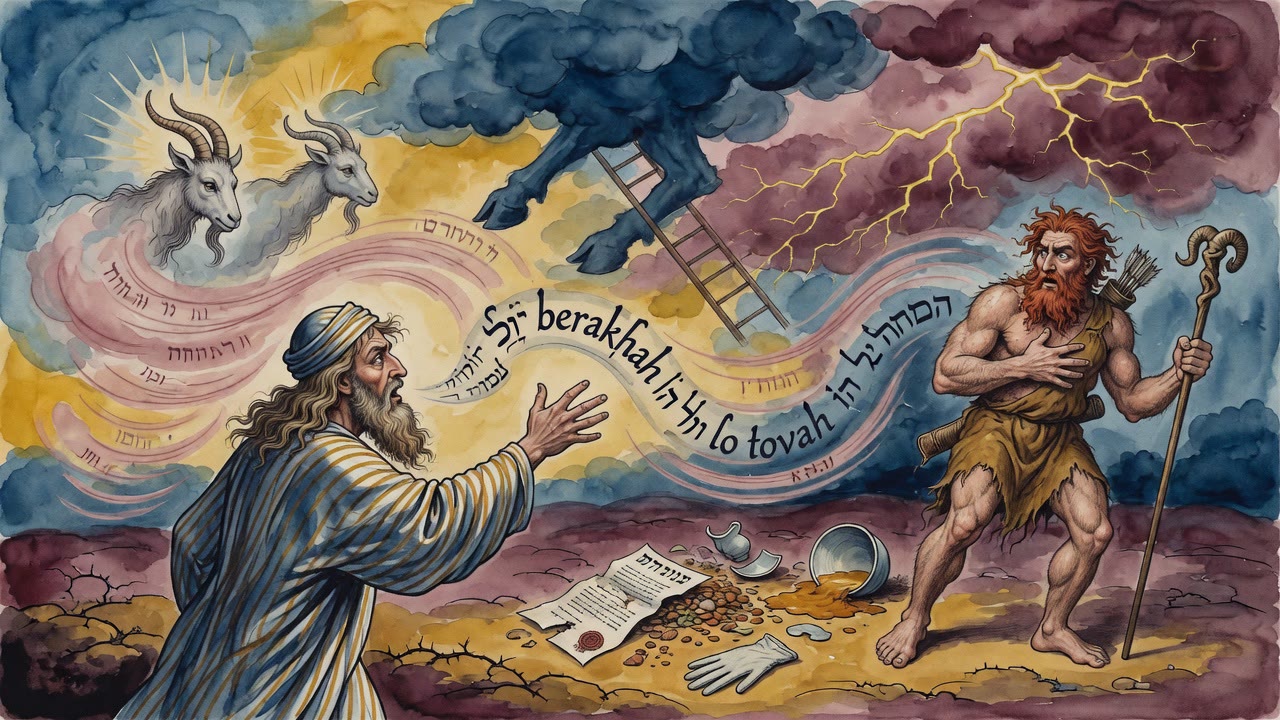
Jacob understood this, eventually. He let the stranger go. But first he extracted the blessing that had been the point of the whole night, the new name that would be his people's name forever. The stranger gave it and disappeared into the morning, and the ford of the Jabbok was left to the river and the stones.
Four Hundred Men Who Never Arrived
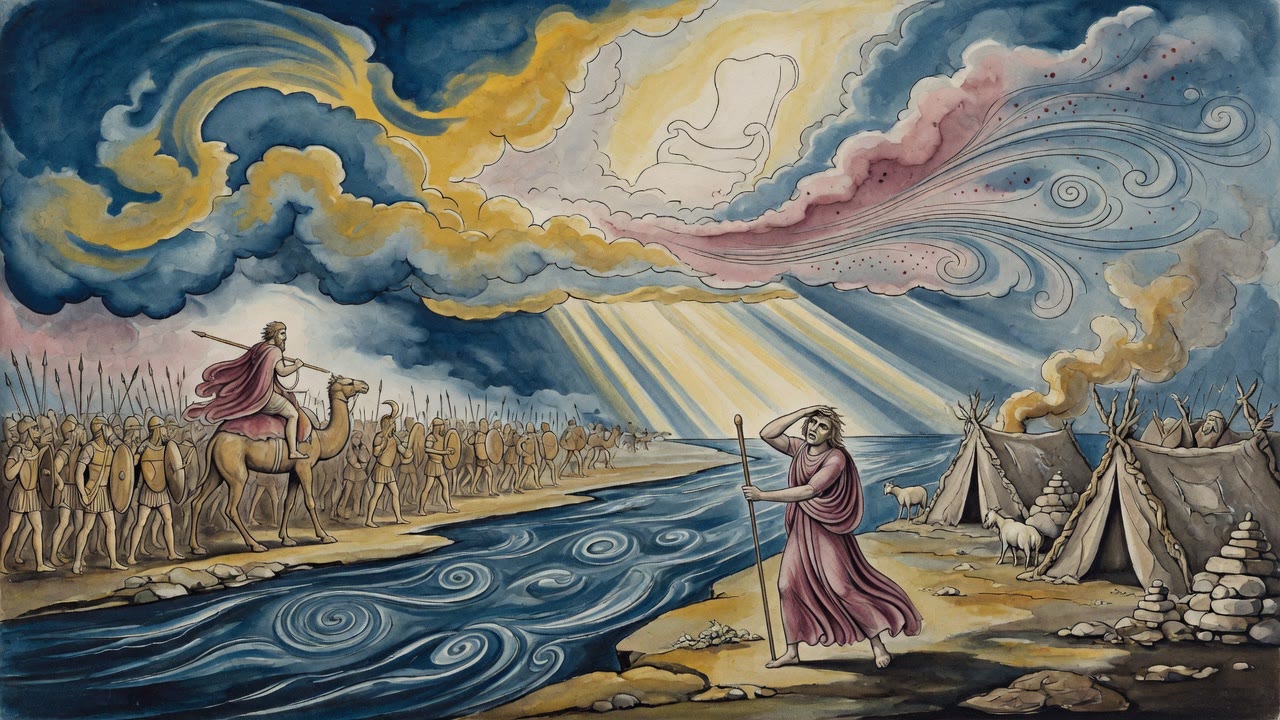
While Jacob had been wrestling the angel through the dark hours, Esau was riding toward him with four hundred armed men. This was not unknown to Jacob. He had sent messengers ahead, had split his household into two camps, had prayed, had arranged gifts in careful progression. He had done everything a man of reasonable intelligence could do to survive the meeting with a brother who had sworn to kill him.
What Jacob had not arranged was the arrival of his guardian angels. Midrash Aggadah says they came anyway, unsent, and scattered through Esau's column as it rode. Each angel took a position in the ranks, invisible among the armed men, and by the time the column reached Jacob and the two brothers met on the road, the four hundred men had been so thoroughly dispersed and distracted that the weapons never came out of their sheaths. The reunion happened, tearful and strange, without a drop of blood.
The angel who had fought Jacob all night and the angels who had ridden with Esau's army were not doing separate jobs. They were the two halves of the same protection: one testing the man who would lead the nation, one protecting the man while he was being tested.
The Place Where the Angel Passed Through
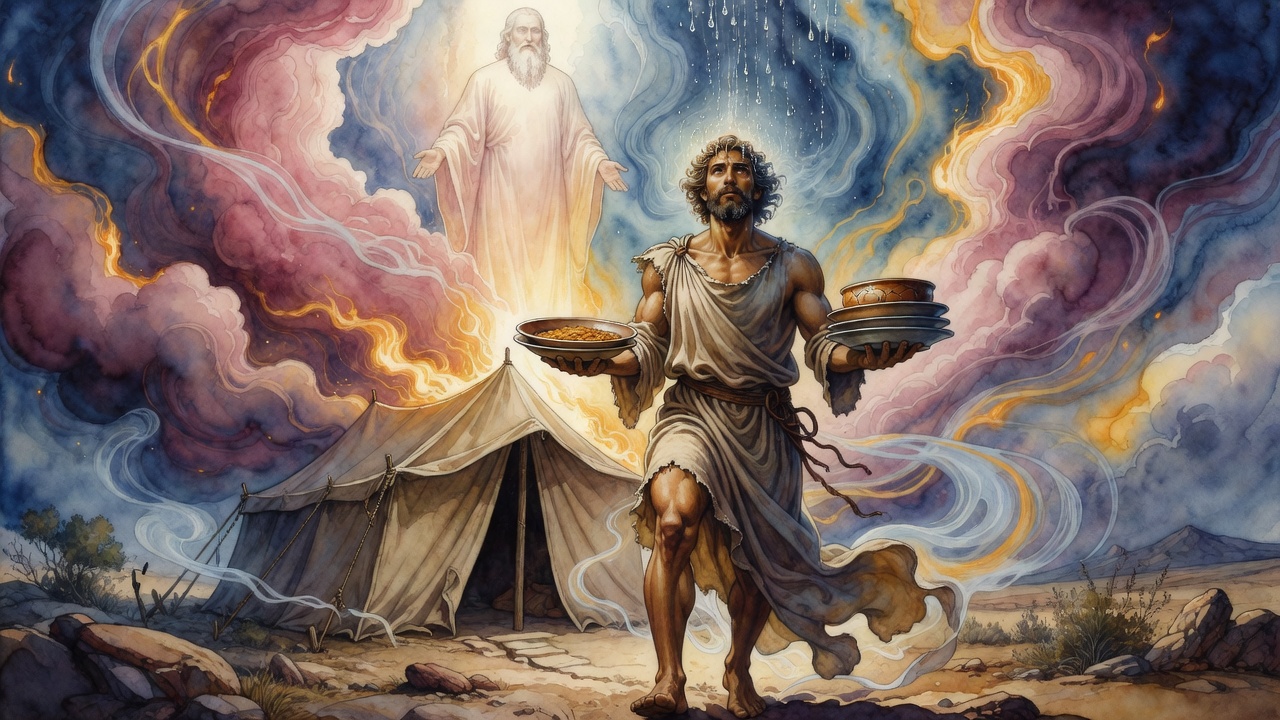
There was a third piece of the tradition, smaller and harder to hold. At a narrow place on Jacob's journey, before the wrestling, an angel had met him in the constriction of the road, a kind of trial run for Jabbok. The sages called this angel the one in the narrow place, and his job was not to harm Jacob but to verify the seed. To confirm that whatever was in Jacob's lineage was genuinely righteous and capable of producing the children who would have to carry the covenant through the centuries of exile that were already visible in God's long sight.
The angel passed through Jacob and found what he was looking for. The verification happened in the narrow place, before the night of wrestling, so that by the time Jacob stood at the Jabbok and held a stranger who was losing, the outcome had already been ratified at a deeper level. The new name Israel was not granted in surprise. It was granted in recognition of something the heavenly court had already confirmed.
← All myths