Heaven Held Jacob's Arms While He Stole the Blessing
One sentence gave him away. Isaac reached out to check by touch, and the young man in the goatskins felt his own heart turn to wax.
Table of Contents
 Click for full size
The Name of God in the Wrong Mouth
The old man in the bed could not see, so he was working from sound, and the sound had just gone wrong.
He had asked how the hunt came back so quickly. The young man standing over him said the LORD your God brought it to my hand.
Isaac stopped there. His elder son did not talk that way. Esau was a man of the open country, traps and knives and long silences, and the Name of Heaven did not sit easily on his tongue. It never came out of him in passing. Something in the room was not what it said it was.
"Come near," Isaac said, "and let me feel you, my son."
His Heart Went to Wax
Jacob was standing there in his brother's clothes with goatskin tied over his forearms and his mother's cooking in his hands, and at those four words his body quit on him. He flinched back. He shook. His heart went soft as wax inside his chest.
One pass of those fingers along a wrist and it was over.
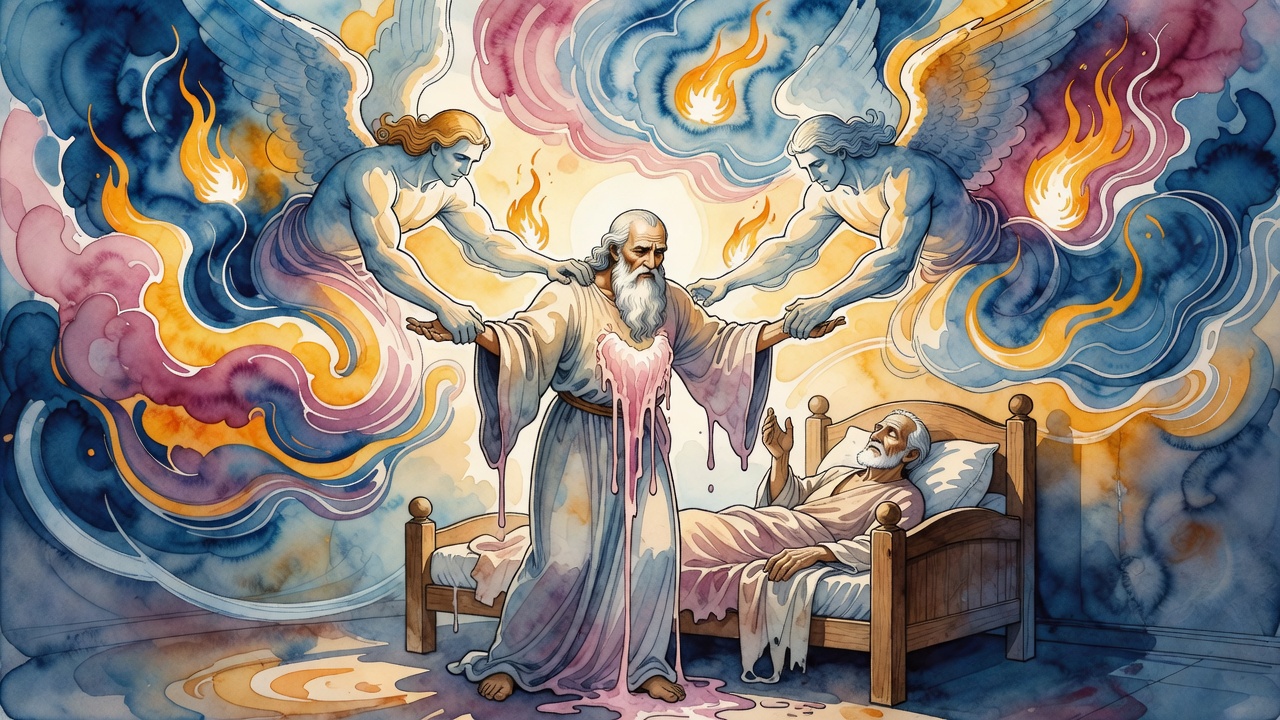
So God sent Michael and Gabriel down, and the two of them took hold of his two arms and held them still, and the Holy One stood behind him.
Isaiah later set the whole arrangement out in three clauses, and the sages matched them to three sets of hands. I strengthened you, that is Michael. I helped you, that is Gabriel. I upheld you with the right hand of My righteousness, and that one is God Himself, standing at Jacob's back while a blind man's fingers came down on borrowed skin.
He did not pull himself together. He was held together.
The Voice Was Jacob's and the Hands Were Esau's
Isaac worked his palms over the hair and could not make it agree with what his ears had told him.
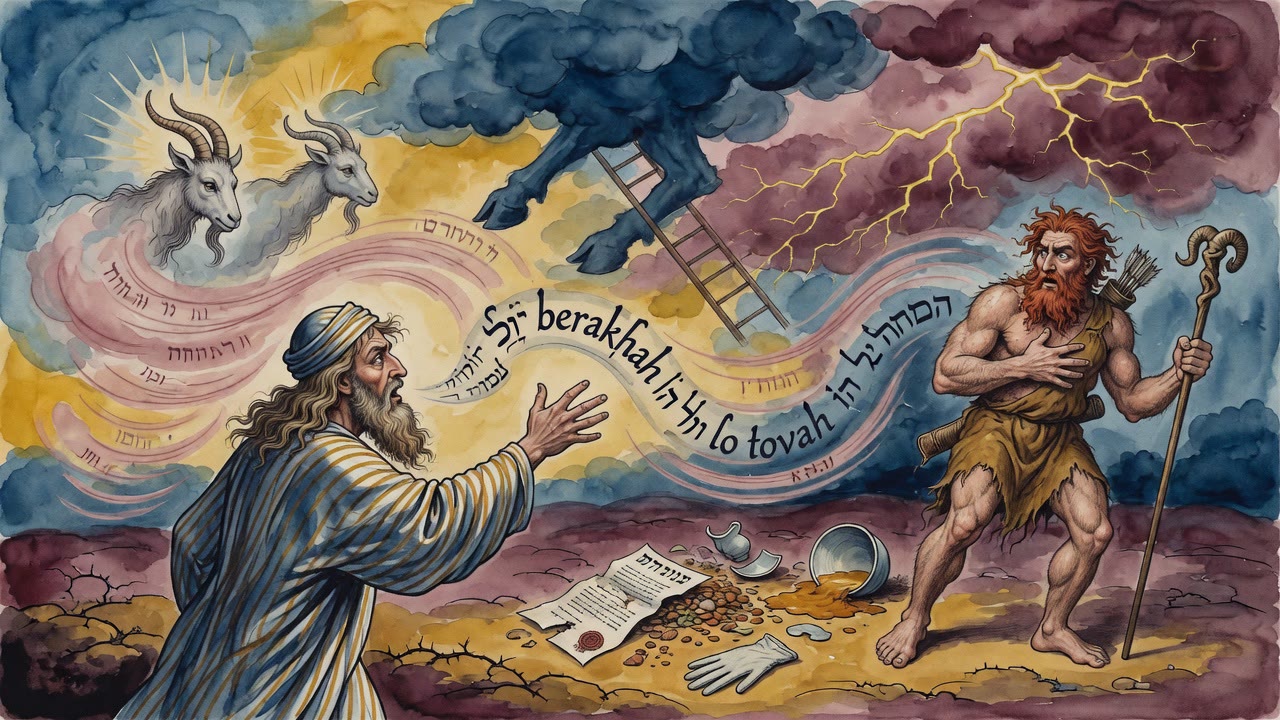
"The voice is the voice of Jacob," he said, "and the hands are the hands of Esau."
He was right about both and wrong about what they added up to. He blessed the smooth son standing in front of him, and the blessing stood.
He Went Out and Did Not Go Out
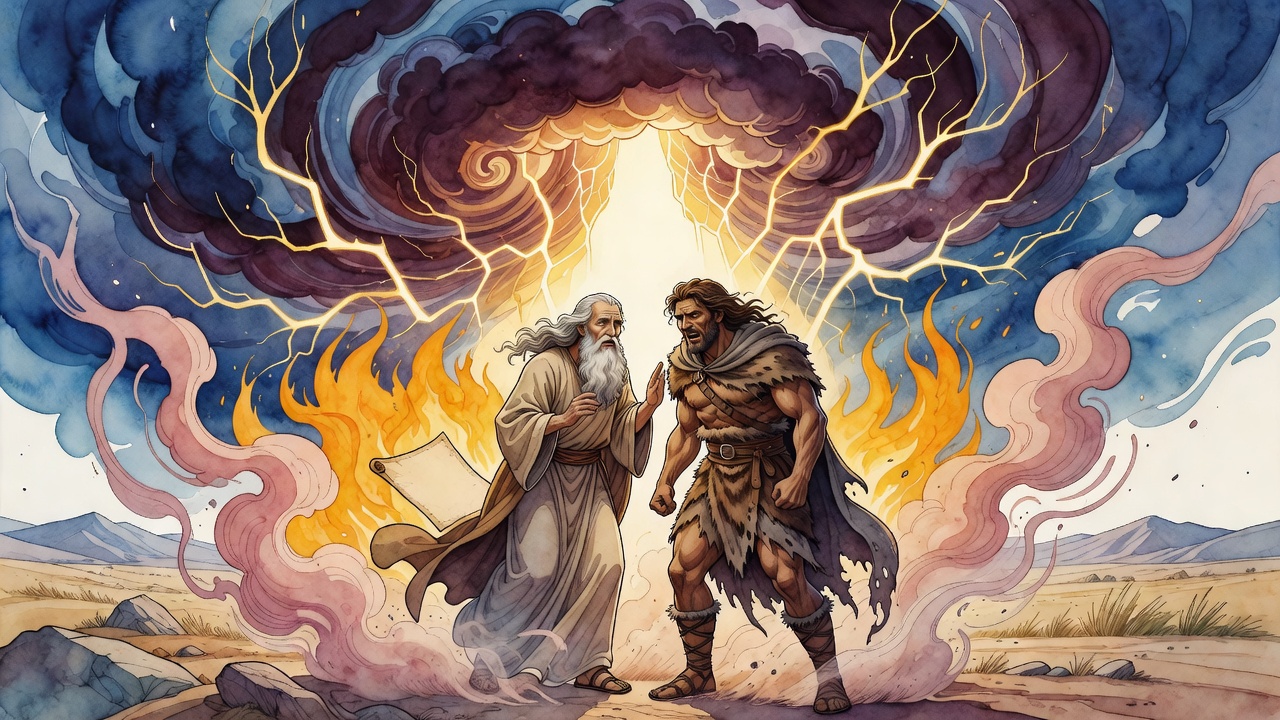
Then the verse stammers. Jacob had barely gone out, gone out, and Esau came in from his hunting.
Rabbi Aibu heard a man freeze in a doorway. He looked like he was leaving and he did not leave. Halfway through the tent flap he caught the sound of a tread he knew and he stopped and stepped off the path and let his brother go by.
Esau should have been home hours before that. He had spent the afternoon catching things and losing them. Every time he took an animal and bound it, an angel came down and undid the cords, and the animal went off into the scrub, and he started over. He caught and he could not keep. Somebody above that field was stretching the daylight out.
The Angels Who Came Down to Kill Him
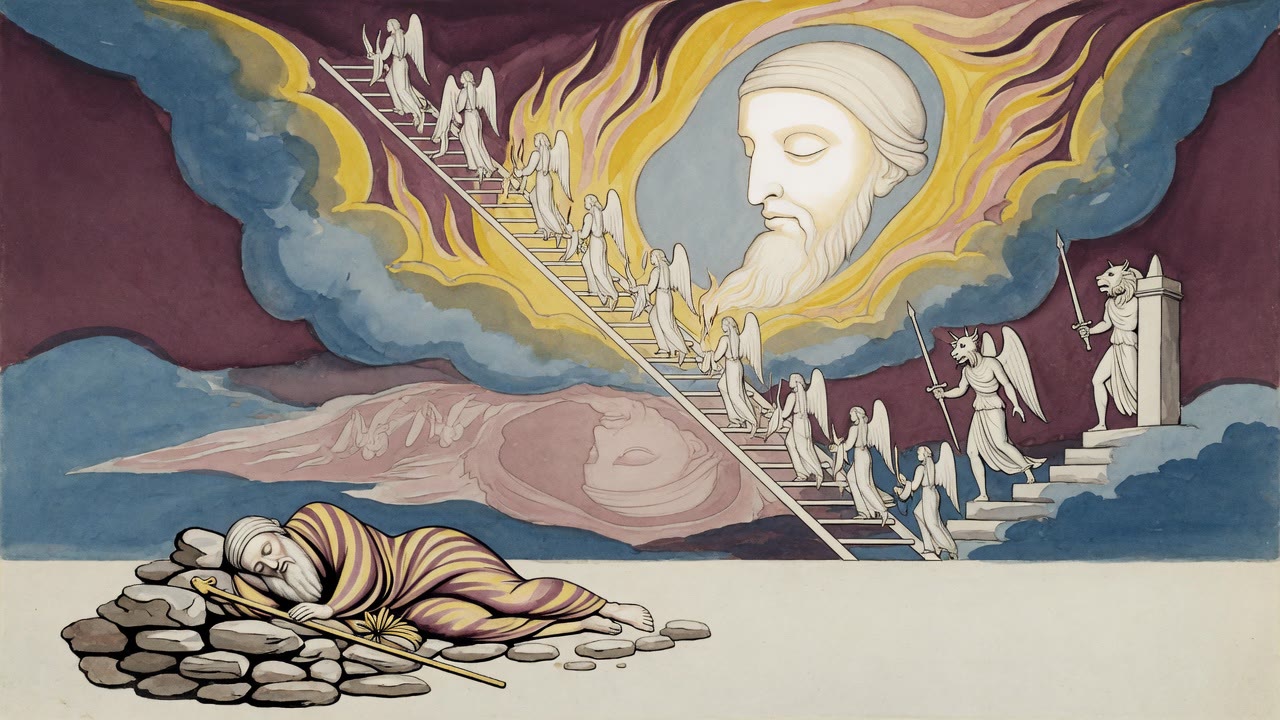
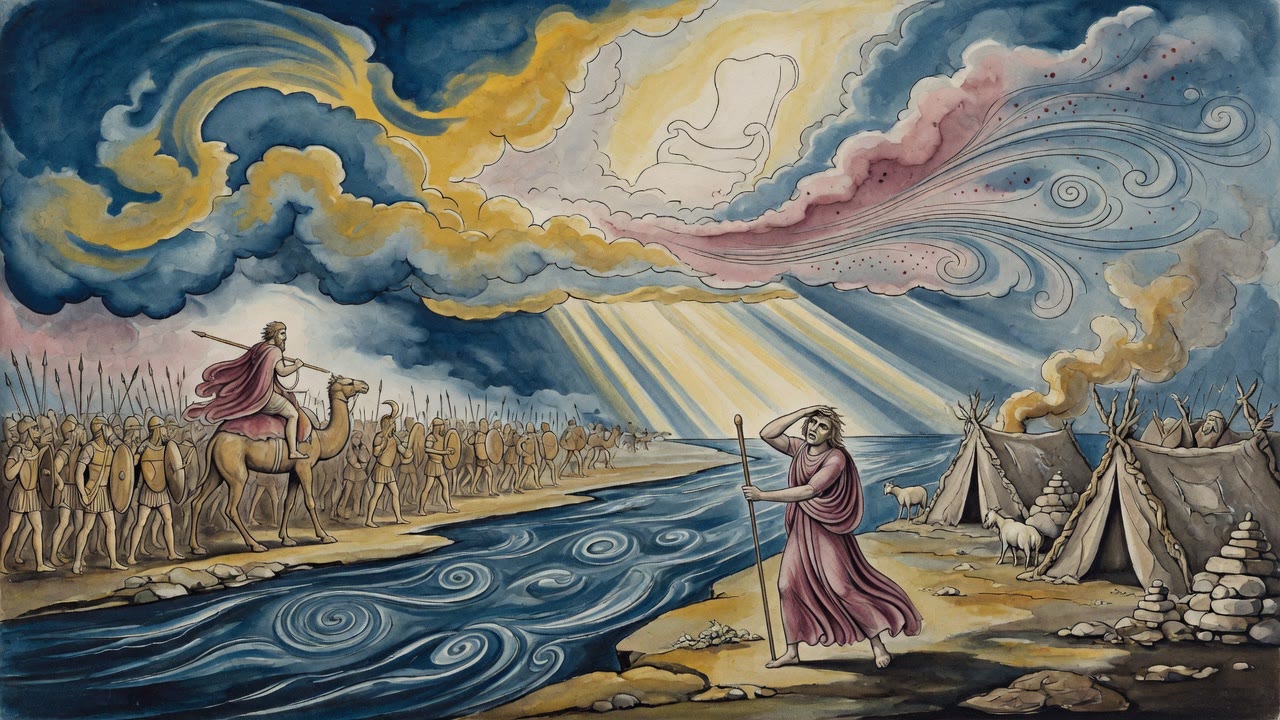
Later, running for his life with a stone under his head at Bethel, Jacob dreamed a ladder set on the ground with its head in the sky.
Count the letters of that ladder and they come out at Sinai. Look again and it is the ramp of the altar, its foot on the ground the way the people stood at the foot of the mountain, its top burning up into heaven the way the mountain burned to the heart of the sky.
The strange part is the order of the traffic. Angels went up first and only then came down. The escort that walks with a man inside the land of Israel does not cross out of it, so as Jacob went toward the border his guards climbed, and a second company descended to carry him abroad.
The ones going up got to the top and saw the face of Jacob cut into the Throne of Glory. They looked at the carving. They looked back down at the man asleep on a rock in the dark.
"Is he not below? Then who brought this one up here?"
They came down to injure him, and the Holy One came down after them and stood over the sleeping man until they went back up.
← All myths