Parshat Shemot6 min read

The Angel Wore Moses's Face at the Block

Pharaoh's men set a knife on Moses's neck. An angel took his face, the blade found the wrong body, and Eliezer's name kept the rescue forever.

Curated by Arthur · Told by Maggid ·
Table of Contents
  1. The Knife at the Neck
  2. Three Ways Out of Egypt
  3. A Name That Remembers Metal
  4. Gripping the Throne
  5. The Sun, the Moon, and a Candle
  6. From Block to Border
The Angel Wore Moses's Face at the Block Click for full size

The Knife at the Neck

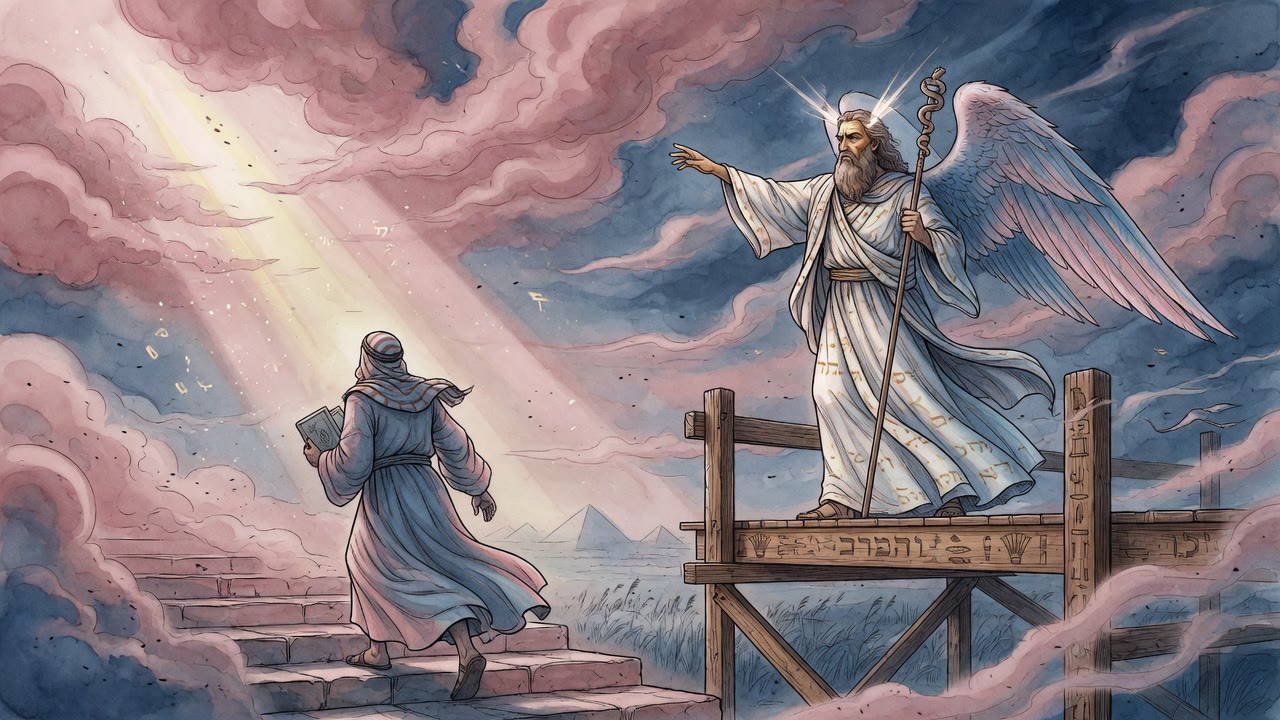
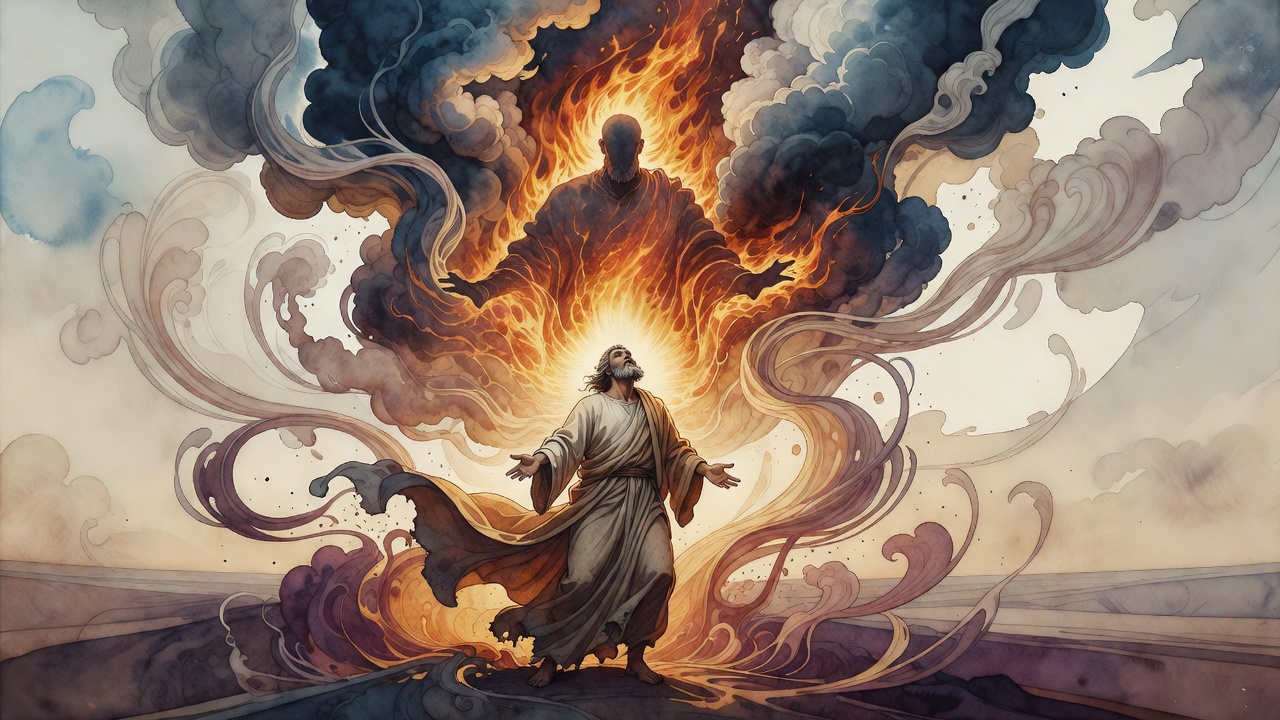
They put the knife on Moses's neck. The Egyptian taskmaster was dead in the sand, the secret had leaked through Dathan's mouth, and the taunt still rang in the air: who made you a man, a ruler, a judge over us? Pharaoh did not need a long trial for that kind of insolence. Guards moved with the confidence of men who had done this before. The platform smelled of pitch and fear. The blade found the angle that ends a life, and the man who would one day split a sea felt cold metal write a line across his skin.

Three Ways Out of Egypt

The sages who reconstructed that hour could not agree on how heaven pulled him off the block, so they kept every version.

Rabbi Yehoshua told it plainly. The taunt exposed him, Pharaoh sought his life, and Moses ran for Midian before the order could close around him. Deliverance can look like dust on a southbound road.

Rabbi Elazar of Modi'in told it as open miracle. The capture was real. Rope tightened on his wrists, the sword lay against his neck, and then an angel descended wearing Moses' face, the same mouth, the same shoulders, a double so exact the executioners lost the thread of which flesh was guilty. Hands seized the angel-shape, and the real Moses stepped sideways into the gap heaven had opened and ran while the scaffold held a body no one could explain.

Rabbi Eliezer told it stranger still. God struck the men who held him according to their senses. The mute could not answer where Moses was. The deaf could not hear the order. The blind could not see him standing in plain light. The God who designs mouths and eyes can withdraw them for a breath (Exodus 4:11).

A Name That Remembers Metal

In Midian, at a priest's table, the rescue became a son. Moses named his second boy Eliezer, "for the God of my father was my help, and He saved me from the sword of Pharaoh" (Exodus 18:4). He did not name the child for general kindness or vague providence. He named him for a specific second when a blade did not finish its cut. Every time someone called Eliezer across the camp, the block flickered again, wood, steel, angel, flight. Memory kept in a name is harder to misplace than memory kept in a scroll.

Gripping the Throne

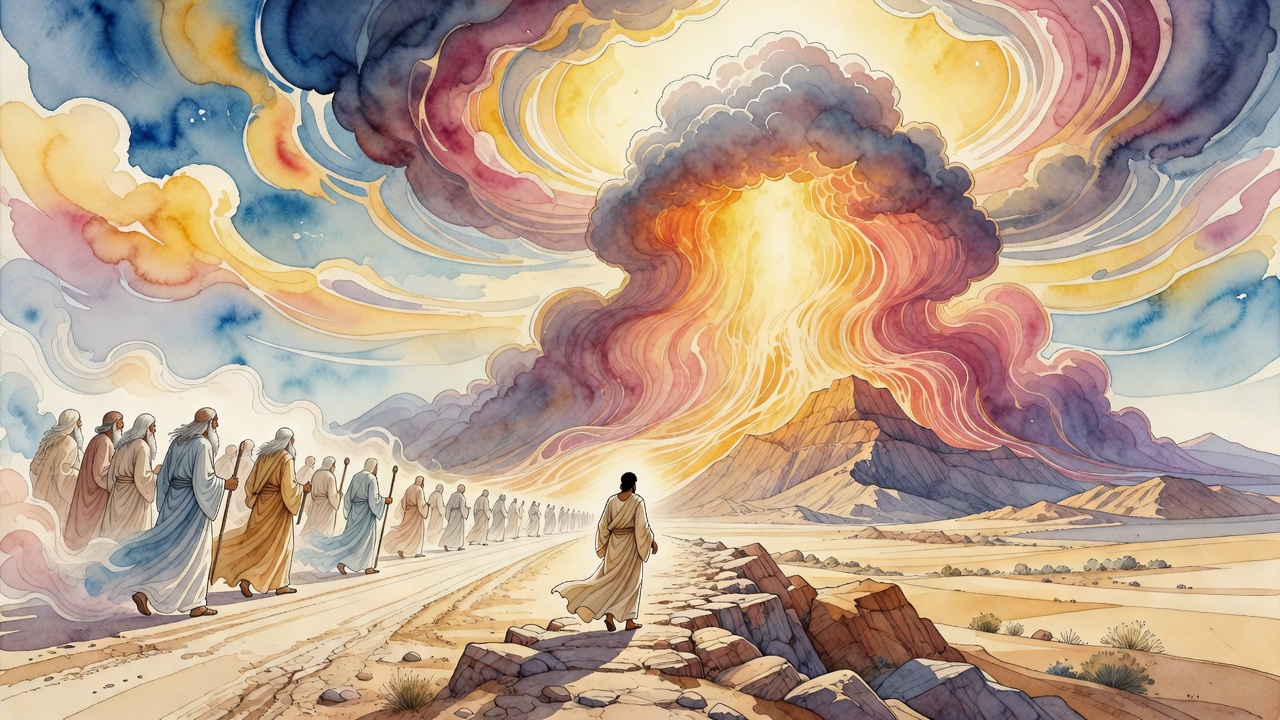
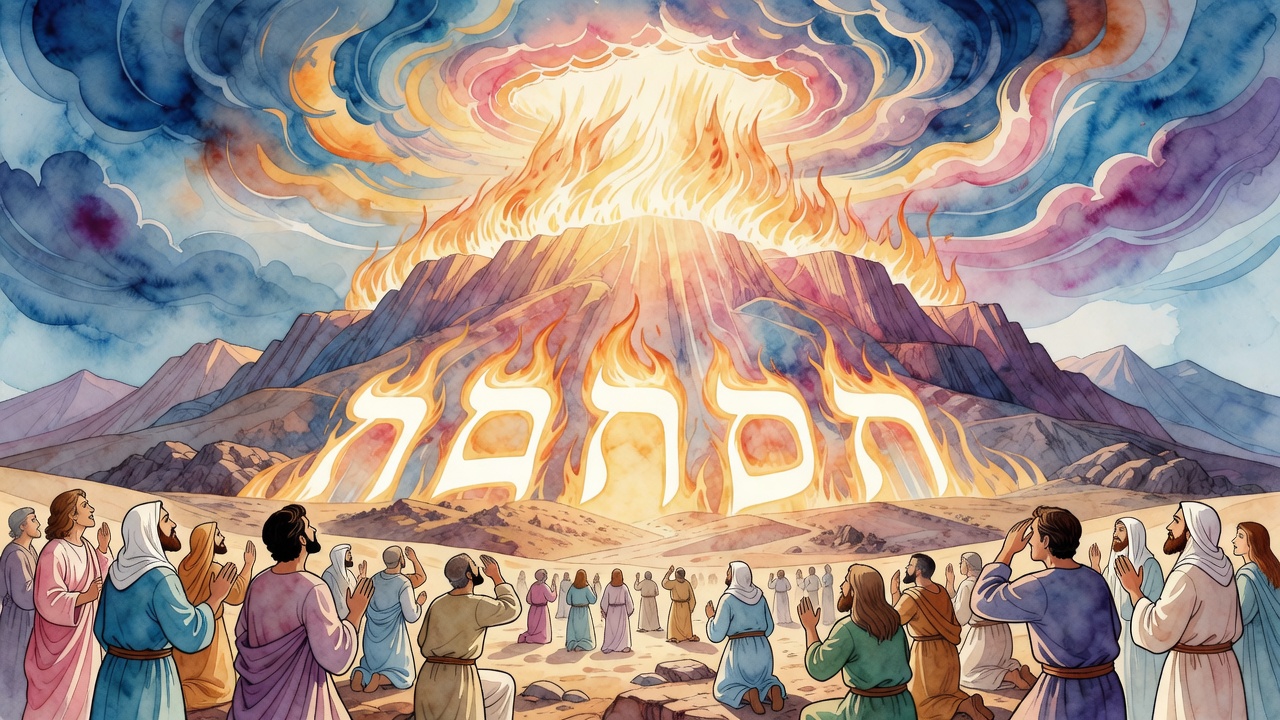
Years turned, and the same neck that had felt Egyptian steel climbed into fire. At Sinai the upper heavens split, a lower tier of heaven came down to rest on the peak, and Moses went up into the doubled air. The ministering angels closed against him like a wall of heat. What is this creature born of a woman doing in our height? He came for the Torah, God answered, and the angels protested. Keep the treasure among us. What business has dust with words written in fire?

Moses pleaded that he could not face them. God told him to take hold of the throne and wrapped him in the radiance of cloud so angelic fire could not scorch a man who had already survived a human sword. Gripping the seat of glory, Moses turned their argument inside out. You want the Torah? What is written in it? No other gods, but do you bow to idols? No false oaths, but do you trade and swear over goods? Do not murder, steal, or commit adultery, but which of you carries those hungers? Honor father and mother, but have you either?

The silence that followed was surrender. Give it to the people below, the angels said, and some crowned him with gifts and secrets. Even the angel of death leaned close and whispered the remedy that would one day stop a plague in the camp: offer incense, and death itself can be held at a distance.

The Sun, the Moon, and a Candle

The house that had sheltered the fugitive got its farewell with honor. After the sea, after judges were appointed at Yitro's counsel so that Moses would not collapse under a nation's every quarrel, Moses tried to keep his father-in-law. "I pray you, do not leave us" (Numbers 10:30). The counsel had been good and beautiful, and God Himself had consented to it. A prophet who had out-argued angels stood asking a Midianite priest to stay.

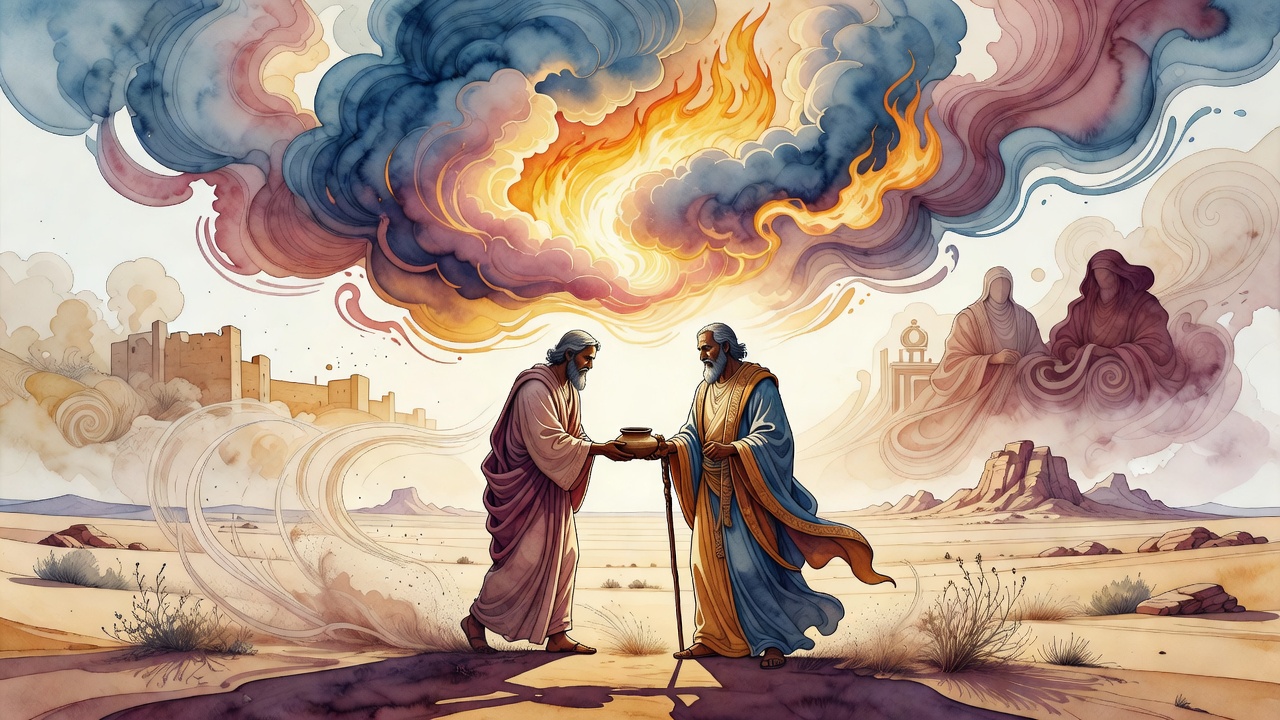
Yitro answered with a parable about light. What use is a candle where the sun and the moon already hang? Moses was the sun, Aaron the moon, and a single flame adds nothing beside that radiance. Let the candle go back to a dark house where one wick still changes a room. So Yitro turned homeward, not rejecting Israel but carrying fire toward Midian, to bring his countrymen under the wings of the Shekhinah (שכינה), the sheltering Presence, and into the study of Torah.

From Block to Border

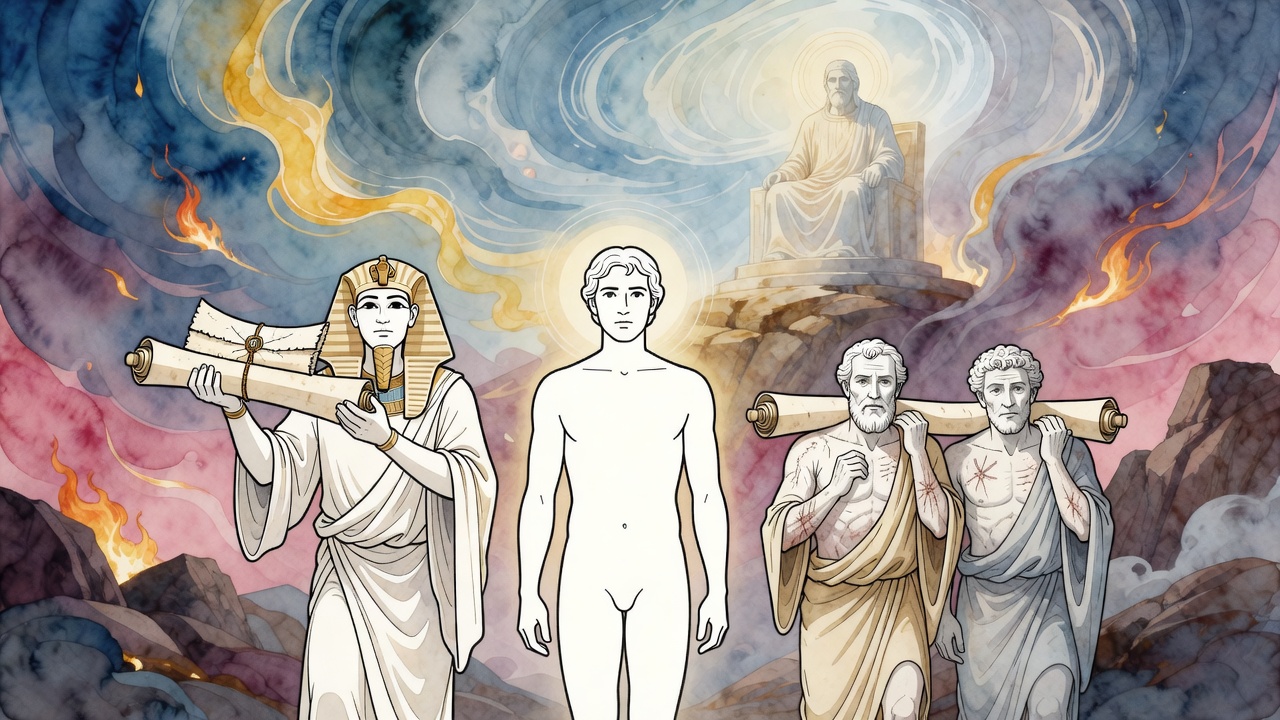
A young Moses almost dies under Egyptian steel and lives because heaven wears his face for a moment, or blinds the hands that held him. An older Moses grips the throne of glory while angels try to keep the Torah upstairs, and wins it for people who sweat, marry, and bury. Between the two moments stands a boy named Eliezer, growing up inside a word that means his father almost ended before the burning bush ever spoke. Help is not a single hour. Help is the long habit of a God who pulls a prophet out of ropes, steadies him against angelic fire, and then teaches him to let a helper leave for a country still in the dark.


← All myths

From the tradition

Sources

4 sources

The texts behind this telling. Some cards carry a translation of the source; others are our own retelling of it, and each card says which. Every card links out to the original.

Mekhilta Tractate Amalek 3:26Mekhilta DeRabbi Yishmael

Retold in our words. Read the original at the link below.Mechilta, translated by Rabbi Shraga Silverstein · CC-BY

This teaching from the Mekhilta DeRabbi Yishmael explains the name Moses gave his second son. Commenting on (Exodus 18:4) "and the name of the second, Eliezer, for the God of my father was my help, ezri, and He saved me from the sword of Pharaoh," the rabbis ask when exactly God rescued Moses from Pharaoh's sword. R. Yehoshua locates the deliverance in the days after Moses killed the Egyptian taskmaster. When Dathan said to him (Exodus 2:14) "Who made you a man, an officer and a judge over us?" the deed became known. Pharaoh heard of it and gave the order: "Seize Moses and bring him up to the block," the place of execution.

The midrash then recounts the miracle that the name Eliezer commemorates. They placed the knife upon Moses's neck, but at that moment an angel descended in the very guise of Moses, taking on his appearance. In the confusion the executioners seized the angel and let go of Moses, who slipped free and fled toward Midian. By this account the name Eliezer, "my God is my help," preserves the memory of the moment when Heaven intervened at the executioner's block and turned the blade away, saving Moses so that he might one day return to confront Pharaoh and lead Israel out of bondage.

Full source
Mekhilta Tractate Amalek 4:26Mekhilta DeRabbi Yishmael

Retold in our words. Read the original at the link below.Mechilta, translated by Rabbi Shraga Silverstein · CC-BY

R. Elazar Hamodai describes the parting of Moses and his father-in-law Yithro, insisting that Moses sent him off with all the honor in the world. The proof lies in Moses' own plea recorded in Scripture, "I pray you, do not leave us" (Numbers 10:30). Moses urged Yithro to stay, telling him that he had given the people good and beautiful counsel, the advice to appoint judges and share the burden of leadership, and that the Lord Himself had consented to those words. Such a man, whose wisdom God had endorsed, was one Moses did not wish to lose.

Yithro answered with a humble parable. Is a candle of any benefit, he asked, except in a place of darkness? Can the sun and the moon draw any advantage from a small flame? Israel already had its great luminaries: Moses was the sun and his brother Aaron the moon, and beside such radiance a single candle could add nothing. Therefore, Yithro said, let him return to his own land, where he could do real good. There he would convert all his countrymen, bring them to the study of Torah, and lead them under the wings of the Shechinah, the sheltering presence of God. The midrash thus turns Yithro's departure not into a rejection of Israel but into a mission, sending the Midianite priest home to spread the knowledge of the one God among his people.

Full source
Mekhilta DeRabbi Shimon Ben Yochai 18:4Mekhilta DeRabbi Shimon Ben Yochai

Translation of the source text.Mechilta de-Rabbi Simon b. Jochai, ed. D. Hoffmann, Frankfurt 1905 · Public Domain

"And the name of the other was Eliezer, for 'the God of my father was my help and delivered me from the sword of Pharaoh'" (Exodus 18:4). When did the Omnipresent deliver him? Rabbi Yehoshua said: At the time when Dathan said to him, "Who made you a man, a ruler and a judge over us?" (Exodus 2:14). Rabbi Elazar of Modi'in says: They seized Moses and brought him up to the platform, bound him, and set a sword upon his neck. An angel came down from heaven in the likeness of Moses; they seized the angel and released Moses.

Rabbi Eliezer says: The men who had seized Moses - the Omnipresent made them into groups, mute, deaf, and blind. They would say to the mute ones, "Where is Moses?" and they could not speak; to the deaf, and they could not hear; to the blind, and they could not see. And so it says (Exodus 4:11): "Who gives a mouth to man?"

Full source
Mekhilta DeRabbi Shimon Ben Yochai 19:20Mekhilta DeRabbi Shimon Ben Yochai

Translation of the source text.Mechilta de-Rabbi Simon b. Jochai, ed. D. Hoffmann, Frankfurt 1905 · Public Domain

"And the LORD descended upon Mount Sinai, to the top of the mountain" (Exodus 19:20). One might think He actually descended; Scripture says, "for from heaven I spoke with you" (Exodus 20:22). Why then does it say, "And the LORD descended upon Mount Sinai"? Say from now on: the heavens of the upper heavens were split, and permission was given to fire to scorch the waters, as it says, "as when fire kindles the brushwood, the fire makes water boil" (Isaiah 64:1). The lower tier descended and stood upon Mount Sinai, and He spoke with them from the heavens, these are the heavens that are above Mount Sinai.

"And the LORD called Moses to the top of the mountain, and Moses went up." When Moses ascended to the firmament, the ministering angels joined against him and said before the Holy One, blessed be He, "Master of the universe, what is one born of woman doing here?" He said to them, "He has come to receive the Torah." They said before the Holy One, blessed be He, "Master of the universe, be content with the upper beings, as it says, 'LORD our Lord, how majestic is Your name in all the earth, You who have set Your glory above the heavens' (Psalms 8:2). It is fitting; what have You to do with dwellers in the dust?" The Holy One, blessed be He, said to Moses, "Son of Amram, return them an answer." He said before Him, "Master of the universe, can I answer Your angels?" He said to him, "Take hold of the throne and return them an answer." This is what is written, "He grasps the face of the throne and spreads His cloud over him" (Job 26:9). This teaches that He took hold of the throne and spread over him from the radiance of His cloud and shielded him, so the angels would not scorch him with their fire. And so it says, "and I will cover you with My palm until I have passed by" (Exodus 33:22).

When he took hold of the throne, he said to them, "You say, be content with the upper beings. And what need have you of it?" They said to him, "What is written in it?" He said to them, "It is written in it, 'You shall have no other gods before Me' (Exodus 20:3). Are there idolaters among you? It is written in it, 'You shall not take the name of the LORD your God in vain' (Exodus 20:7). Is there commerce among you where one swears? It is written in it, 'You shall not murder, you shall not commit adultery, you shall not steal' (Exodus 20:13). Are there any of these traits among you? It is written in it, 'Honor your father and your mother' (Exodus 20:12). Do you have a father and a mother?" When they heard this, they said, "Master of the universe, give it to him, so that the lower beings may be content with it, for the upper beings have no need of it." This is what is written, "LORD our Lord, how majestic is Your name in all the earth" (Psalms 8:10).

And when the ministering angels saw that the Holy One, blessed be He, had given him the Torah, they too crowned him and revealed to him their secrets. This is what is written, "You ascended on high, You led captivity captive, You received gifts among men" (Psalms 68:19). And even the angel of death, when he saw that all the angels revealed their secrets to him, he too revealed his secret to him. He said to him, "At the time the plague comes, offer incense and it is held back." When the plague began, what does it say? "And Moses said to Aaron, 'Take the firepan and put fire on it from the altar and place incense'" (Numbers 17:11). And it says, "and he stood between the dead and the living, and the plague was held back." And so it says, "they shall put incense before You" (Deuteronomy 33:10).

Full source