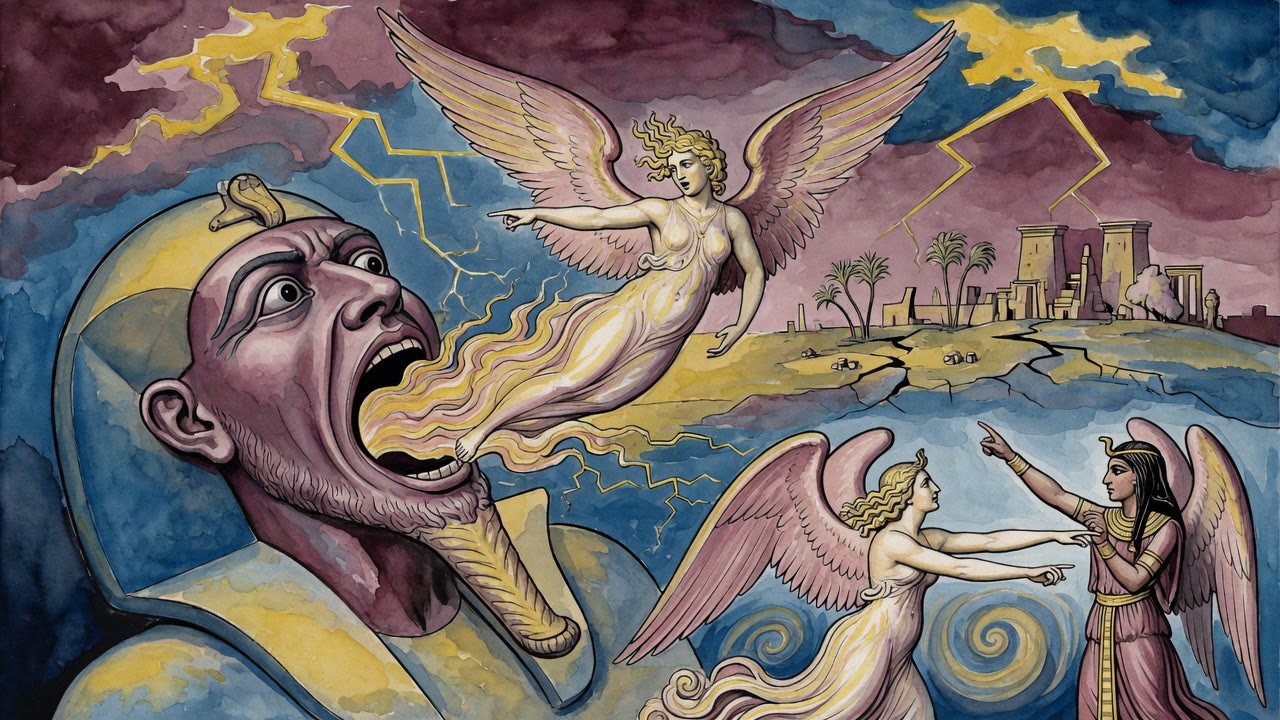
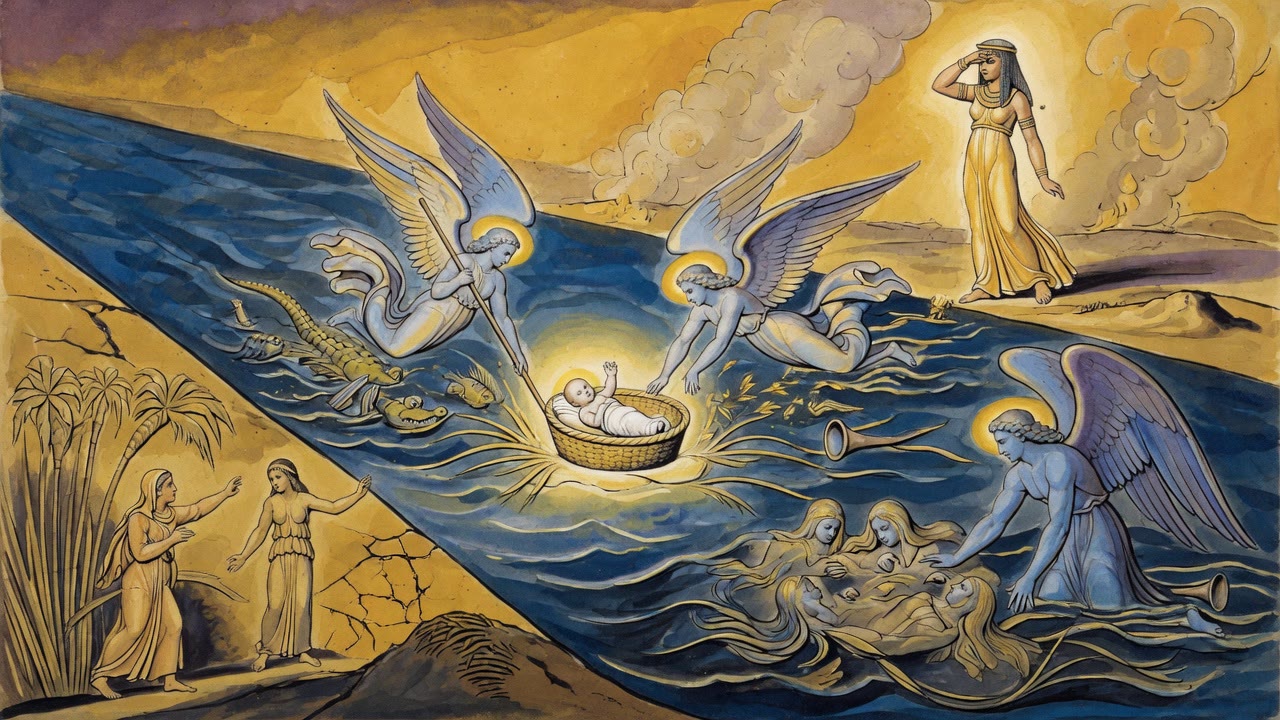
The Chained Lions Fawned at the Feet of Moses
The lions chained at Pharaoh's gate broke loose only to fawn at Moses's feet, and one staff swallowed the sorcerers before a single plague fell.
Table of Contents
 Click for full size
The Lions No One Passed Without the King's Word
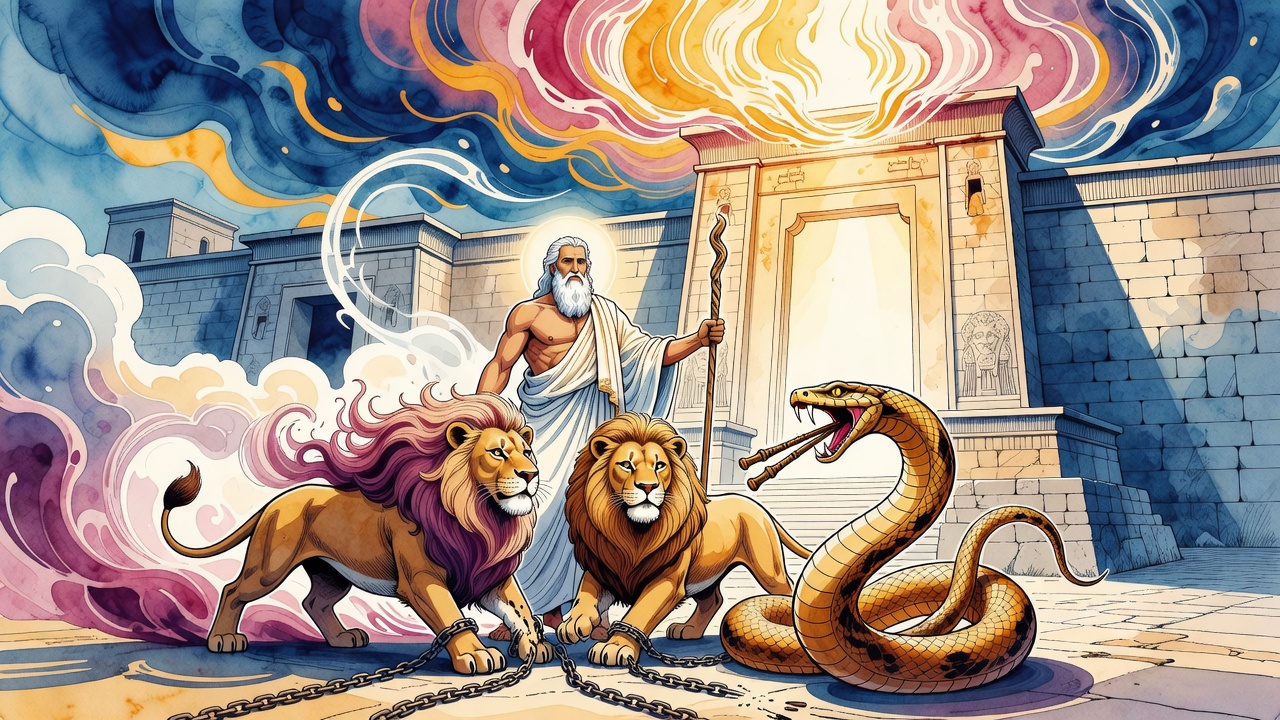
Two young lions stood chained at the gate of Pharaoh's house, one to each post, iron links running from their collars into the stone. They were not old and slow. They were young, which meant they were fast, and hungry in the way young beasts are always hungry. No man walked through that gate on his own feet. The handlers came first. They knelt close to the lions' ears and whispered to them, some craft of sound that laid the animals down, and only then was a visitor led between them into the palace. No one crossed except the man the king himself named aloud. Before a man reached Pharaoh, he had already learned at that gate that Pharaoh alone chose who passed and who was torn.
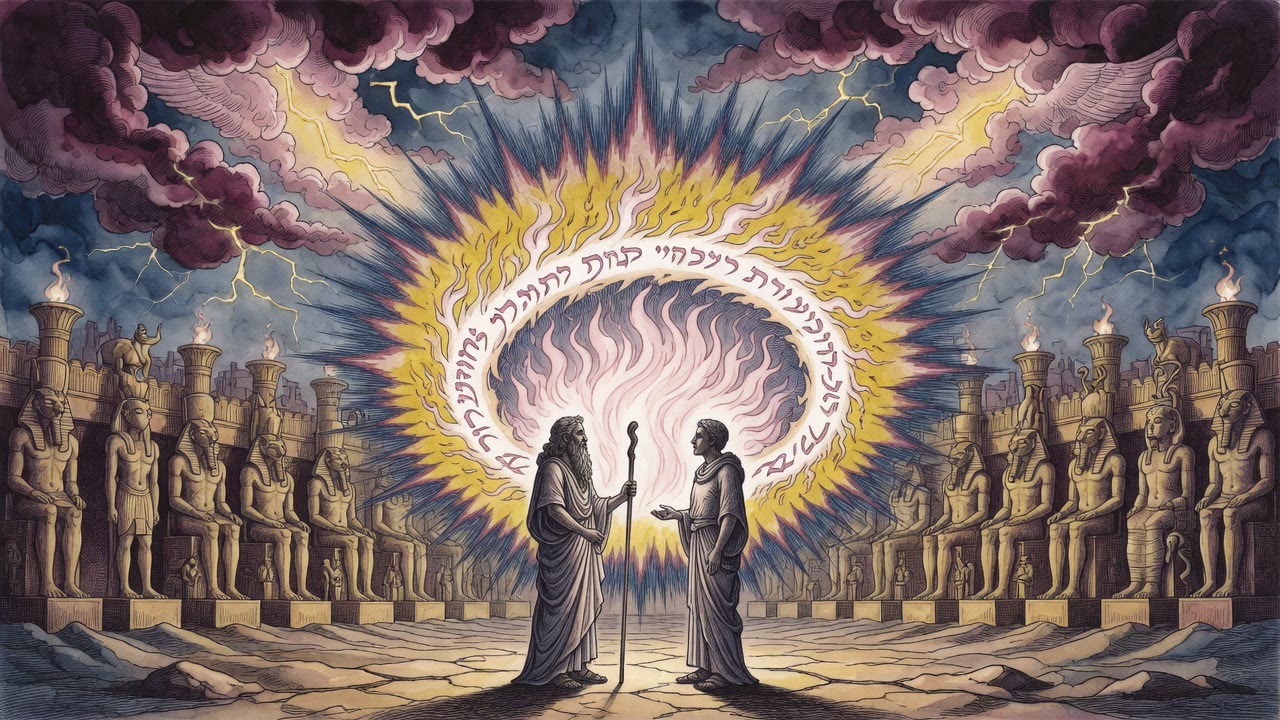
Moses and Aaron came to the gate. The handlers moved toward the lions, mouths already shaping the whisper that muzzled them. Moses did not wait for them. He lifted his staff over the two beasts, and the iron went slack.
The lions came off their chains. They did not spring at the men's throats. They dropped their heads and pressed against Moses's legs and Aaron's legs, and their tails moved like the tail of a dog that has heard its master at the edge of the field. They followed the brothers through the gate, across the courtyard, up toward the hall, fawning the whole way, glad, as if these were the two men they had waited their short lives to greet.
The Men Whose Faces Frightened the Throne
Pharaoh looked up and saw his lions, the terror of his own gate, walking at heel behind two strangers, and his stomach turned. It was not only the lions. It was the men. Their faces were not the faces of slaves come to beg. Their appearance was like the appearance of the sons of God, and a king who has spent his life being the most frightening thing in every room knows at once when something worse has walked into it.
He held his voice level. "What do you want?" he said.
They answered without softening it. "The LORD, God of the Hebrews, has sent us to you, saying: Send out My people that they may serve Me."
He was afraid of them. He did not show it as fear. He showed it as delay. "Go today and come tomorrow," he told them, and they turned and went, and the gate was quiet again.
Pharaoh Sends for Balaam and the Sorcerers
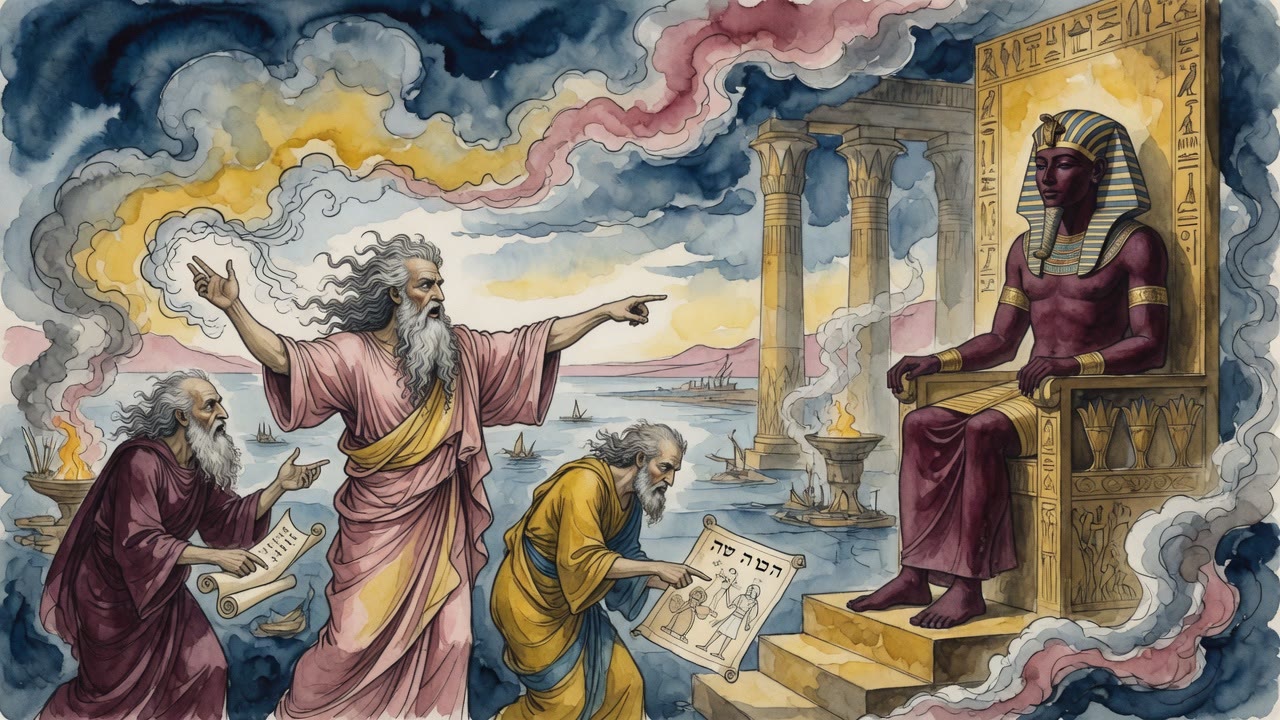
The moment they were gone, Pharaoh sent for his experts. He called Balaam the soothsayer, and Jannes and Jambres his sons, and every magician in Egypt, and a kingdom's worth of sorcery filed into the throne room. He told them what the two Hebrews had demanded, and he told them how the men had come in.
That last part held the magicians more than the demand did. "How did these men come to you past the lions?" they asked. It was the professional question. Egypt was full of men who could make a stick look like a snake. It was not full of men who could walk two chained lions to heel.
Pharaoh told them. The strangers waved a staff over the beasts, the chains fell, and the lions came to them like dogs and rejoiced. Balaam listened and was unimpressed, or made himself look unimpressed, which is the sorcerer's whole trade. "These are nothing but sorcerers like ourselves," he said. "Now send for them and let them come, and we will test them." The king liked the answer. It made the strangers small again. He sent for them.
The Rod That Ate the Magicians' Rods
When Moses and Aaron stood before him again, Pharaoh gave the order every sorcerer at his court expected. "Produce a wonder for yourselves," he said. He wanted a contest. He wanted to watch the Hebrews do their trick so his own men could do it bigger.
Aaron cast his staff to the floor.
Pharaoh laughed. A fool empties his whole spirit at once, and Pharaoh emptied his. "Why do you imagine you have come to make sport of me?" he said. "I am not afraid of these things. All of Egypt is full of sorcery. You are bringing straw to Ofarayim and gold to Rekem." He was so pleased with himself that he turned and called his wife in to watch. "See how the Jews have come to make sport of me!"
Then the staff on the floor, which had become a serpent, opened its mouth. The magicians threw down their own rods and their rods became serpents too, a whole floor of writhing Egyptian craft. And Aaron's staff swallowed them. Not one of the sorcerers' serpents was left. The rod ate every rod in the room, and where a moment before there had been a contest there was now a single staff lying on the stone, and a king who had called his wife in to laugh.
Moses said nothing. He had held his spirit back while Pharaoh spent all of his, and the quiet man with the swallowing staff had not yet reached his first plague.
← All myths