The Day Joseph Stood Before Pharaoh, Isaac Died
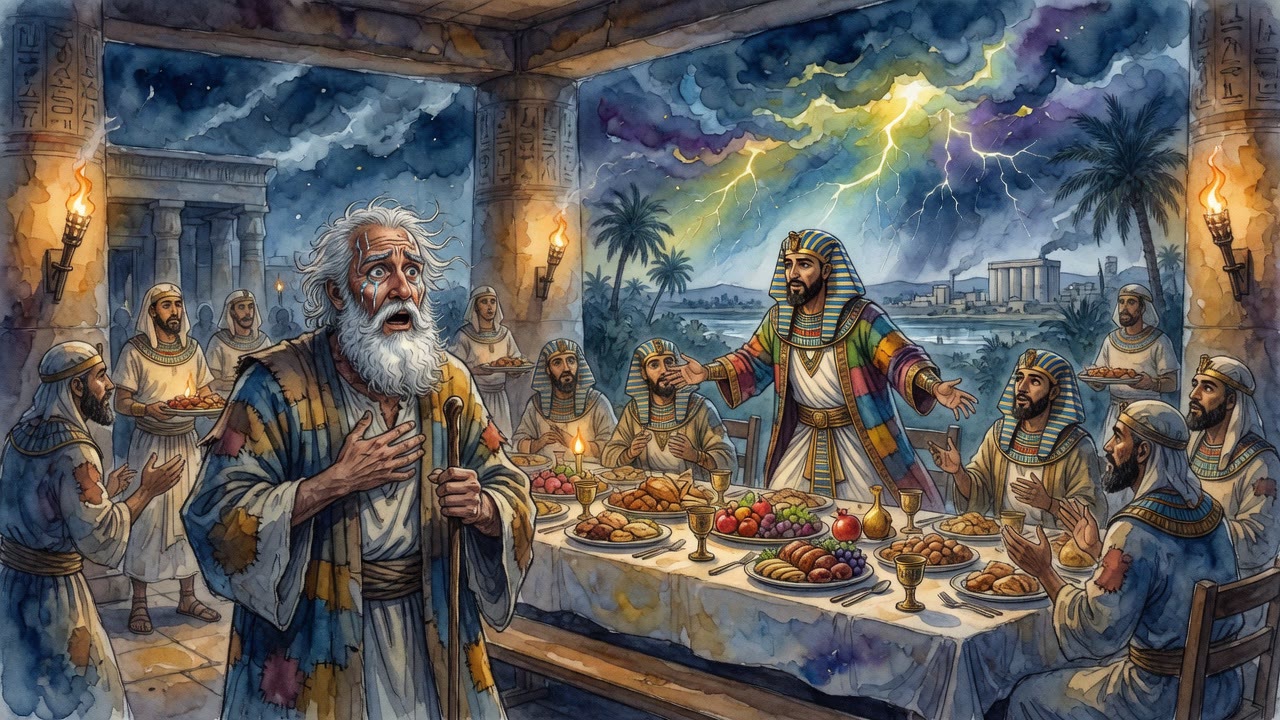
Joseph left the cell in borrowed clothes to stand before Pharaoh. In Hebron that same day, Isaac's eyes closed. The grandfather never saw the throne.
Table of Contents
He was still wearing the jailer's clothes when they pushed him through the doors. Joseph was thirty. He had been a slave for eleven years and a prisoner for some of that, and now he stood before the most powerful man in the known world because two dreams had kept Pharaoh awake.
 Click for full size
The magicians had already failed. The jailer had already cut his hair and changed his garments. Joseph walked in anyway with the cell still on him.
Seven Fat Years, Then Seven Thin
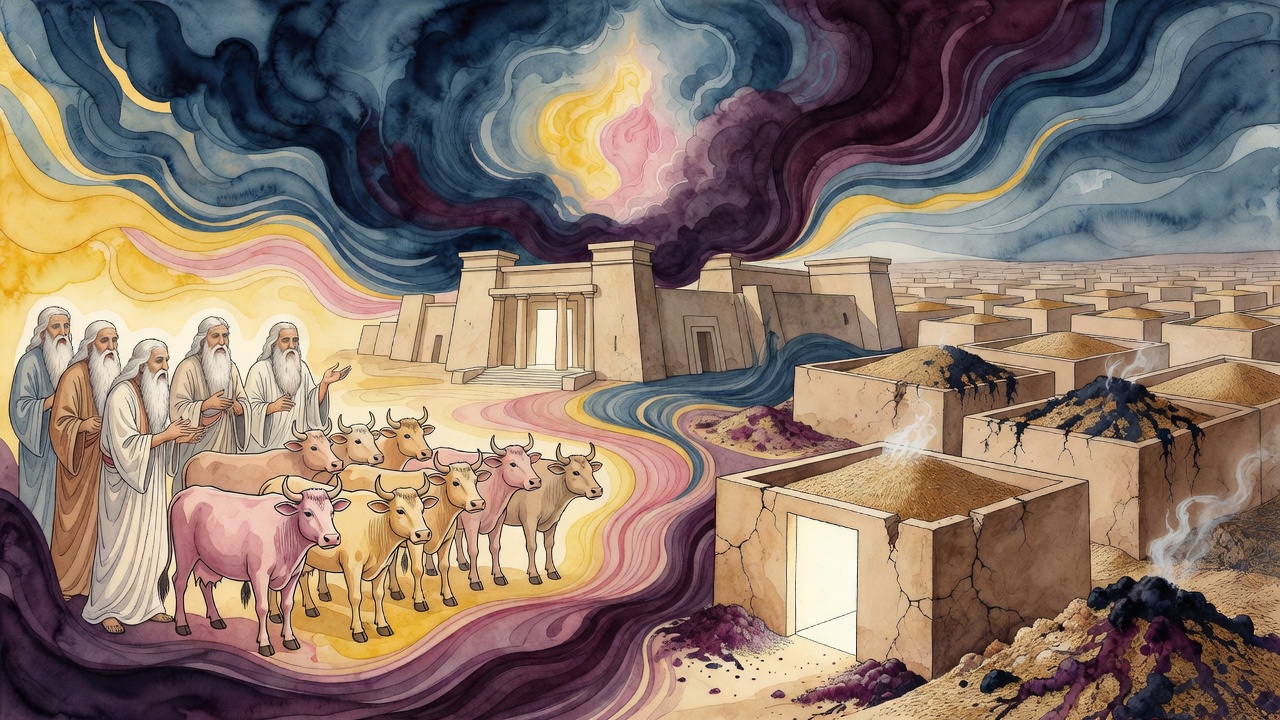
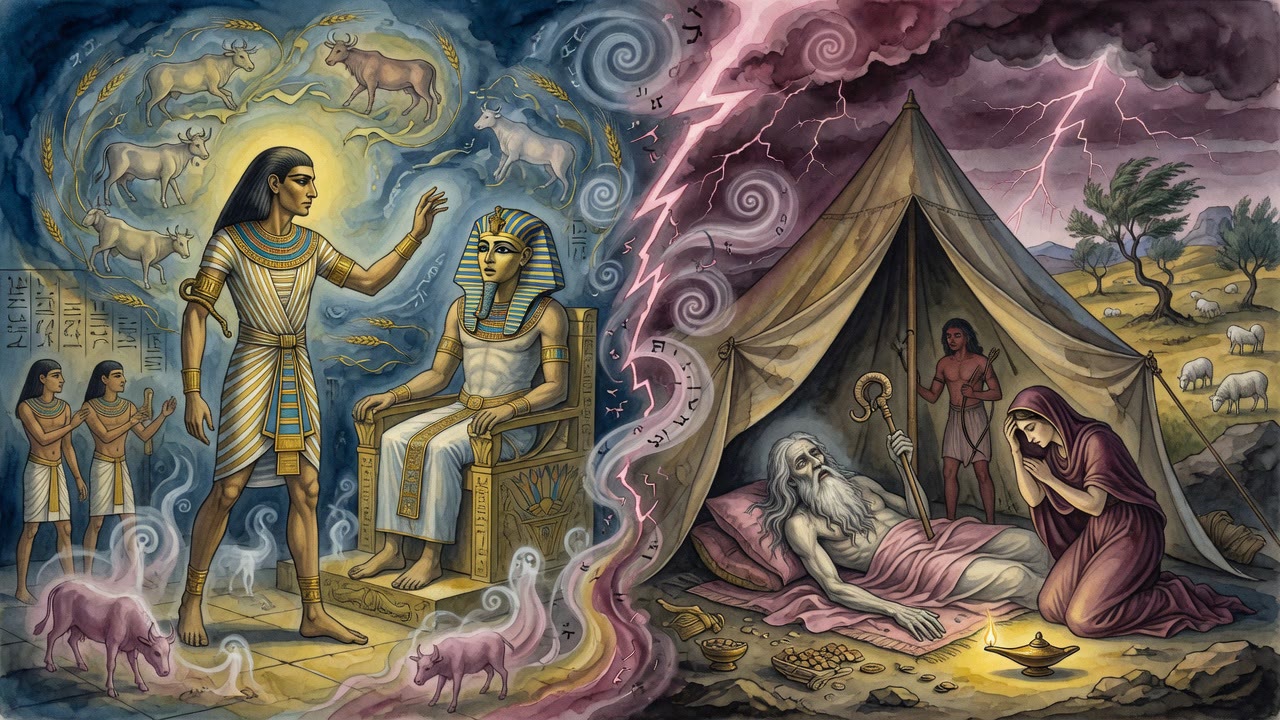
Pharaoh told the dreams. Seven fat cows swallowed by seven thin cows. Seven full ears swallowed by seven thin. Joseph did not soften the news. Seven years of abundance. Then seven years of famine. The doubling meant the matter was fixed. God would bring it quickly.
He gave the interpretation, then, without being asked, told Pharaoh what to do. Find a discerning and wise man. Appoint supervisors over the land. Store one-fifth of everything during the years of plenty. Have it ready for the years of want.
Pharaoh looked at him and said, "Can we find anyone like this man, in whom the spirit of God is?"
Then Pharaoh set him over all of Egypt. Second to Pharaoh alone. A ring went onto Joseph's hand. Linen went onto his back. A gold chain went onto his neck. He left the hall as the man who would feed a nation, still feeling the weight of the cell in his knees.
Isaac Died in Hebron That Same Day
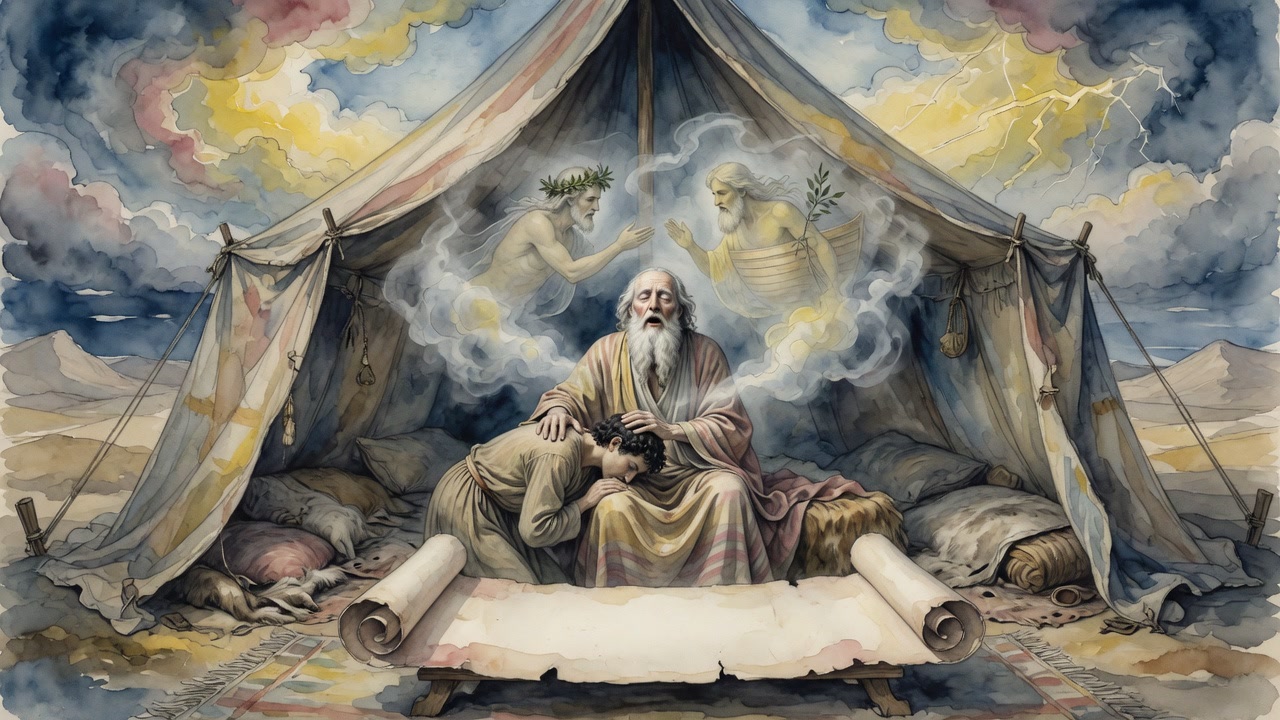
In Hebron that same day, Isaac closed his eyes.
Not the year before. Not the year after. The same day Joseph stood before Pharaoh, his grandfather died. Jacob's house tore garments. They carried Isaac to the cave. Joseph did not stand at that grave. He was in a different country, with a ring on his hand, and he did not yet know the old man was gone.
Isaac had been the bridge between Abraham's generation and Jacob's. He had lived long enough to see Jacob's sons grow up. He had outlived the sale of Joseph, the years of slavery, the grief of Jacob who thought his favorite son was dead. He did not live to see Joseph's face again. On the day the exile in Egypt turned, the patriarch's eyes shut in Hebron.
Joseph rose. Isaac fell. One hour held both.
Pharaoh's Firstborn Died Before Night
Joseph had barely left Pharaoh's presence when a messenger arrived with other news. Pharaoh's firstborn son, newly born, had died. Joy of a birth and grief of a death arrived so close together that the messengers must have nearly collided on the steps of the palace.
Pharaoh was shaken. He summoned his advisors. "You heard this Hebrew. You watched what happened. Can any of you tell me his interpretation was wrong?"
They could not. "Then help me save Egypt," he said. They could not do that either.
Pharaoh turned back to Joseph. The man he had just elevated was the only one in the room who had proven that his knowledge worked. A dead child in the palace and a dead grandfather in Hebron and a living Hebrew in borrowed clothes, all on the same clock.
He Had Already Run a House
Before any of this, while Joseph was still in Potiphar's house, the same capacity had already been tested. Potiphar appointed him overseer and placed everything in his charge. Then God blessed the Egyptian's house for Joseph's sake, the blessing visible in the house and in the field, in everything Potiphar owned. The Egyptian did not have to think about anything, because Joseph was thinking about it.
The same quality that organized Potiphar's house organized Egypt. The scale was different. The capacity was the same. Give him a household, and it ran. Give him a nation, and it would run. The pit, the jail, and the years of invisibility had not taken that from him. They had stored it.
The day he received the largest charge, his grandfather's eyes closed in Hebron. Joseph stood in linen he had not owned that morning. Isaac was already in the cave. They never stood in one room again.
← All myths