The Four Roads Even Solomon Could Not Walk
He could name every herb from cedar to hyssop. Four roads left no mark. He set the tablet down and said he did not know.
Table of Contents
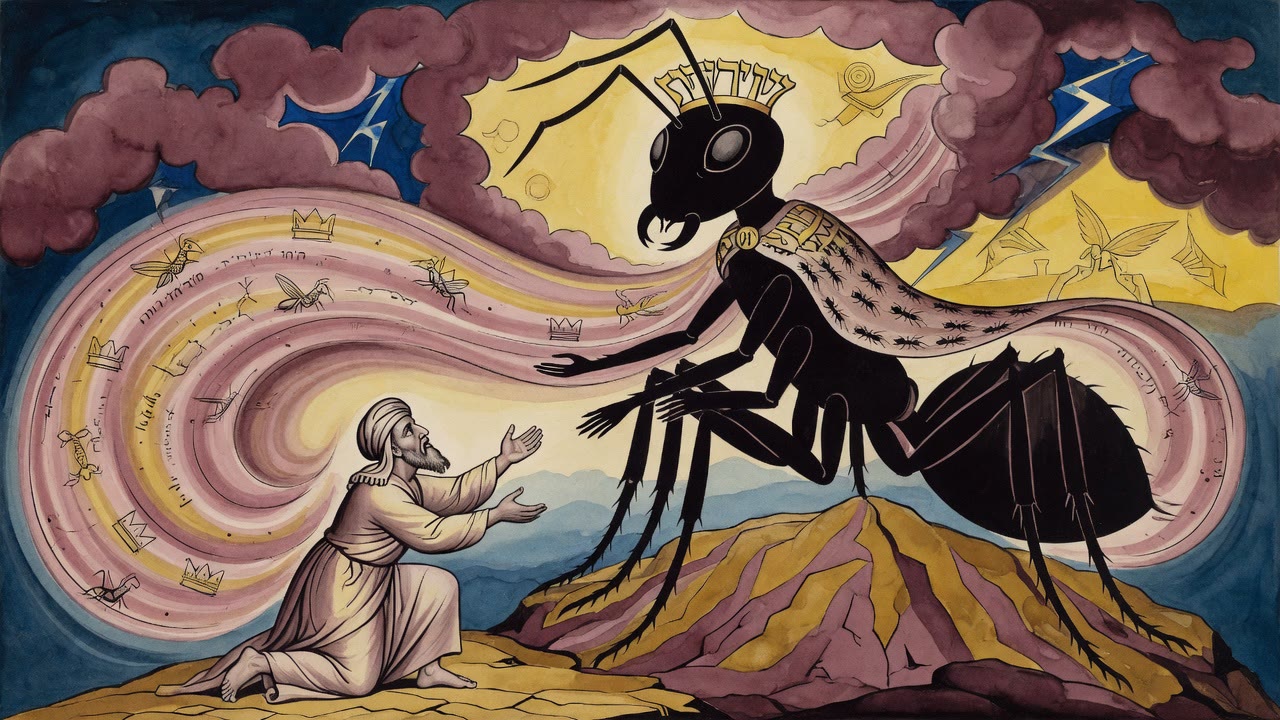
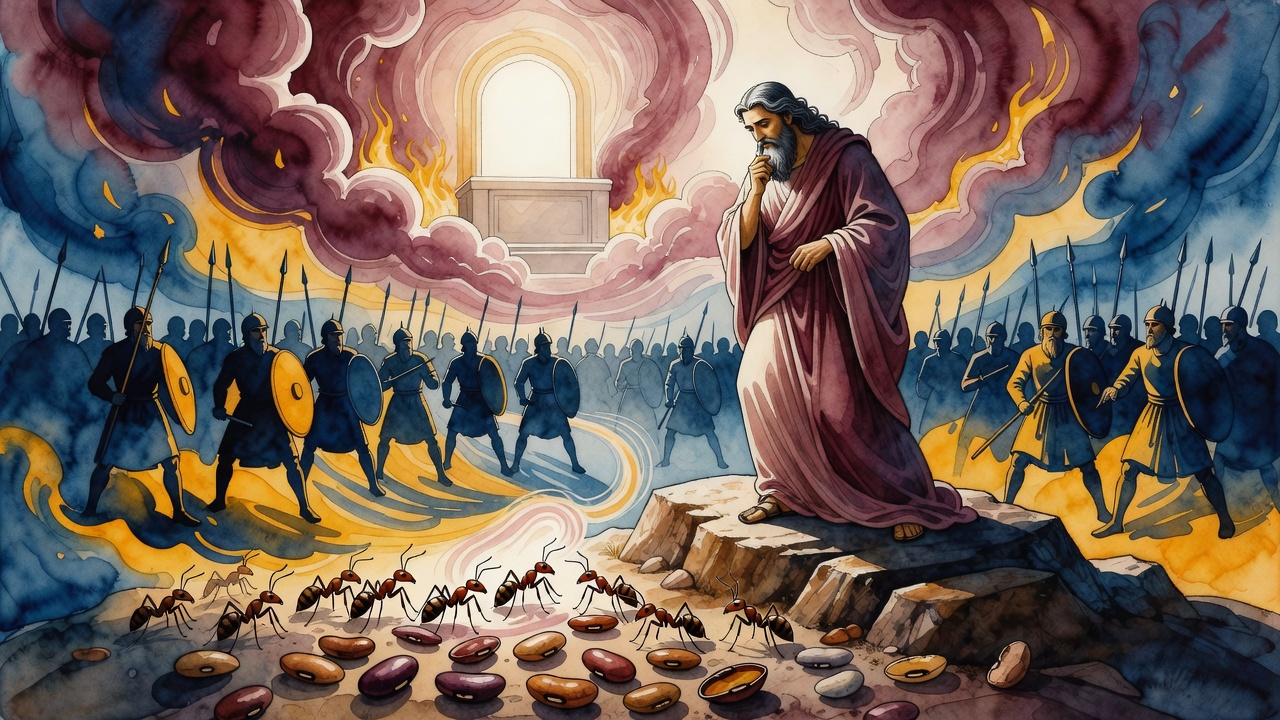
The wisest man in the world sat with a tablet on his knee and could not finish a sentence. Solomon had measured the depths of the sea and named the herbs that grew between the cedar and the hyssop on the wall. He had spoken with the ant in the field and the eagle on the wind. Four roads still stopped him.
 Click for full size
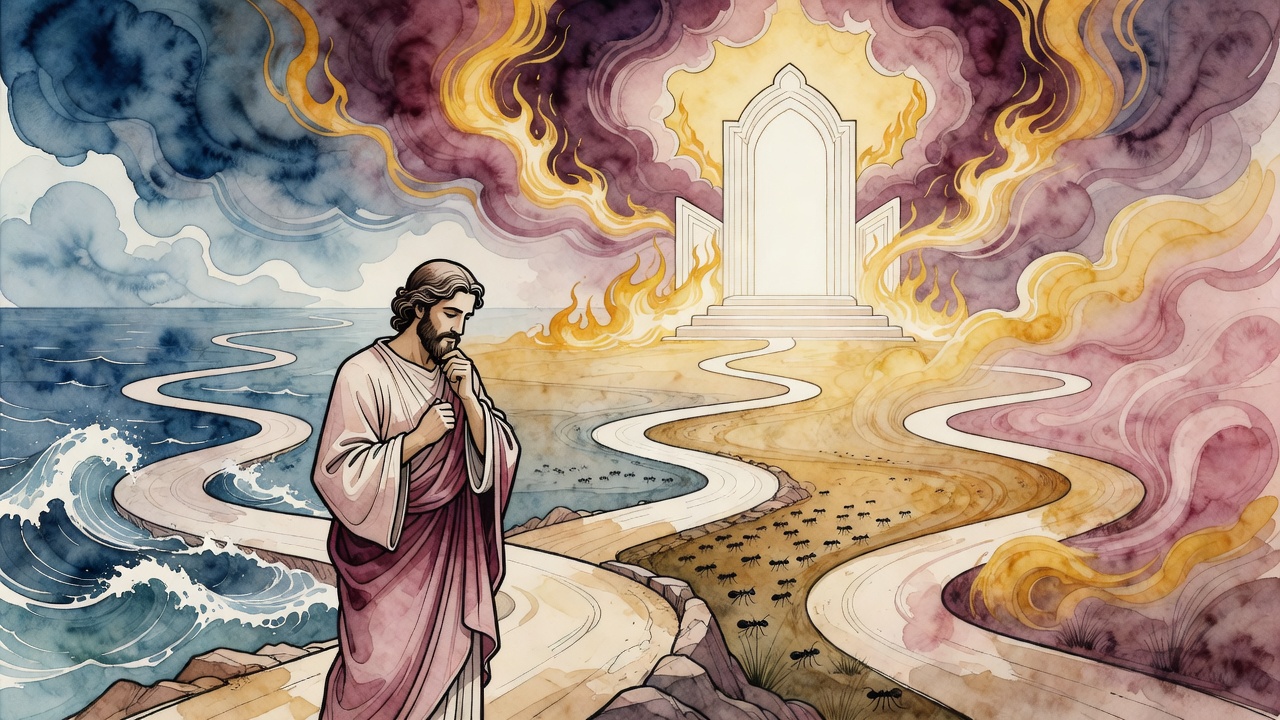
"Three things are too wonderful for me," he wrote, "and four I do not know."
Four Roads With No Marker
The eagle came first. Solomon had watched it leave the cliff at dawn and climb until the blue swallowed it. When it was gone there was nothing behind it. No furrow in the air. No bruise on the sky to say a great bird had torn through. A man could follow a fox by its prints and a fish by the silver it stirred. The eagle left the world exactly as it found it.
Then the serpent. Solomon knelt by the bare stone where a snake had crossed and ran his palm over the rock. Smooth. Cold. Dry. On sand the serpent dragged a long signature behind it. On the rock it wrote nothing. It passed over a hard place and left the hard place innocent. He could not say where it had touched and where it had only seemed to.
Then the ship. He stood on the shore at Etzion-Geber and watched a vessel slide out toward Ophir. The water closed behind it like a curtain drawn shut. The keel cut a white seam into the swell and the swell forgot the seam at once. He could send a fleet to the ends of the earth, and the sea would keep no account of where it had gone.
The Fourth Road Was a Rooster
The fourth he could not even hold in his hand. The way of a man with a maiden. He wrote it and stared at it and the meaning slid out from under the words.
Later, in the study hall, Rabbi Yochanan refused to let the line mean the obvious thing. "This," he said, "is the rooster." No one recognizes its seed. The bird treads the hen in the open dust of the yard, in plain sight of anyone with eyes, and still no man can point to the egg and say which treading made it. The most exposed act in the barnyard was as sealed as the eagle's vanished road.
Four roads with no marker on them. The wisest king alive had walked to the lip of each and turned back with empty hands.
Gold or Three Sayings
His wisdom undid people in stranger ways than this. Three young men came to his court and stayed three years. At the end of it they stood before the throne disappointed. They had seen marvels. They believed they had learned nothing they could carry home.
Solomon offered them a choice. A hundred gold pieces each, or three wise sayings each. They went off to confer and came back for the gold, three hundred coins split between them, and started down the road.
The youngest stopped before the gate was out of sight. Something in the king's face had told him he had chosen wrong. He turned and walked back and asked for the sayings instead. Solomon gave them plainly. "Begin your journey at dawn and stop at nightfall. Do not try to cross a swollen river. Wait for the waters to fall. And never hand your secret to any woman, not even your wife."
His brothers laughed when he caught up to them and would not say what he had bought. They pressed on into the dark while he made his fire and slept. A snowstorm came in the night and froze them where they walked. He found them in the morning, buried them, and took their share of the gold.
The River Took the Servants
The river ahead had risen into a brown torrent. He waited on the bank. Two of Solomon's own servants came riding with horses laden in gold and spurred them into the flood, and the flood took them down. When the water dropped he gathered what it left and went home rich.
He bought land and raised palaces. When his wife asked where the fortune came from he held his tongue, remembering the third saying. The silence sat between them until they quarreled, and she screamed in the street that the man who had murdered his two brothers now meant to murder her. The widows of the drowned servants heard it. They denounced him to the king. He was arrested and condemned to die.
Before the sentence fell he begged a word with Solomon and told the whole tale from the beginning. The king listened to a story built entirely out of his own three sentences and recognized the boy who had turned back at the gate. The gold had gone into graves. The three quiet sayings had bought a life. Solomon set him free.
The King Who Had Been Simple
The man who confessed four roads he could not walk had another confession underneath it. He had written a whole book to give prudence to the simple and knowledge to the young. The sages asked how the wisest man alive knew what the simple needed.
Solomon answered without flinching. "I was simple," he said, "and the Holy One gave me prudence. I was a youth, and He gave me discretion." The king who could read the eagle's mind and the ant's grievance had once been a boy who knew nothing, and he never pretended otherwise.
His wisdom was a gift handed to a simple man. He had not mined it himself. That was why he could still see the four roads with no markers and say, without shame, that he could not walk them. The tablet stayed unfinished. The youngest apprentice went home alive. Both facts belonged to the same king.
← All myths