5 min read

The Frog Carried the Scorpion Across the River

A frog ferried a scorpion to its kill and back. A shrub saved a man until he stripped it off. In Vayikra Rabbah, every creature keeps a mission.

Curated by Arthur · Told by Maggid ·
Table of Contents
  1. Nobody Called a Witness
  2. The Man Digging in the Beit Shofarei Valley
  3. The Charmer Wanted to Know Who Killed It
  4. Lift That Off Your Head

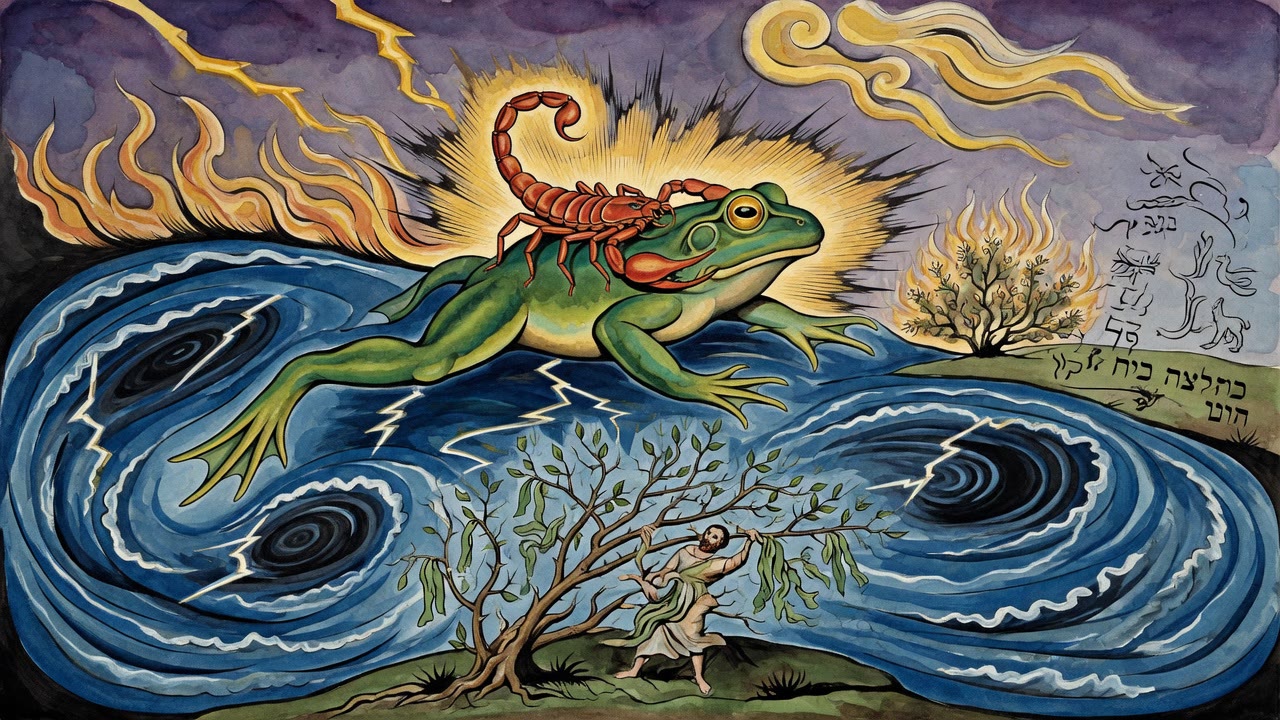
The frog came off the mud with a scorpion sitting on its back.
The Frog Carried the Scorpion Across the River Click for full size

A man was standing on the bank and saw it push out into the current, so he stopped to watch, because a frog carrying a scorpion is not a thing a person walks past. The scorpion did not sting. It rode with its tail folded over itself and let the water go by underneath, and the frog kept its head up and swam a straight line for the far side. Neither of them looked at the man at all.

"That one is prepared to perform its mission," he said, out loud, to nobody.

The frog put the scorpion down on the far bank. The scorpion went off into the grass, and it did what it had been carried across to do, and then it came back to the same landing and got on again, and the frog took it home the way it had brought it.

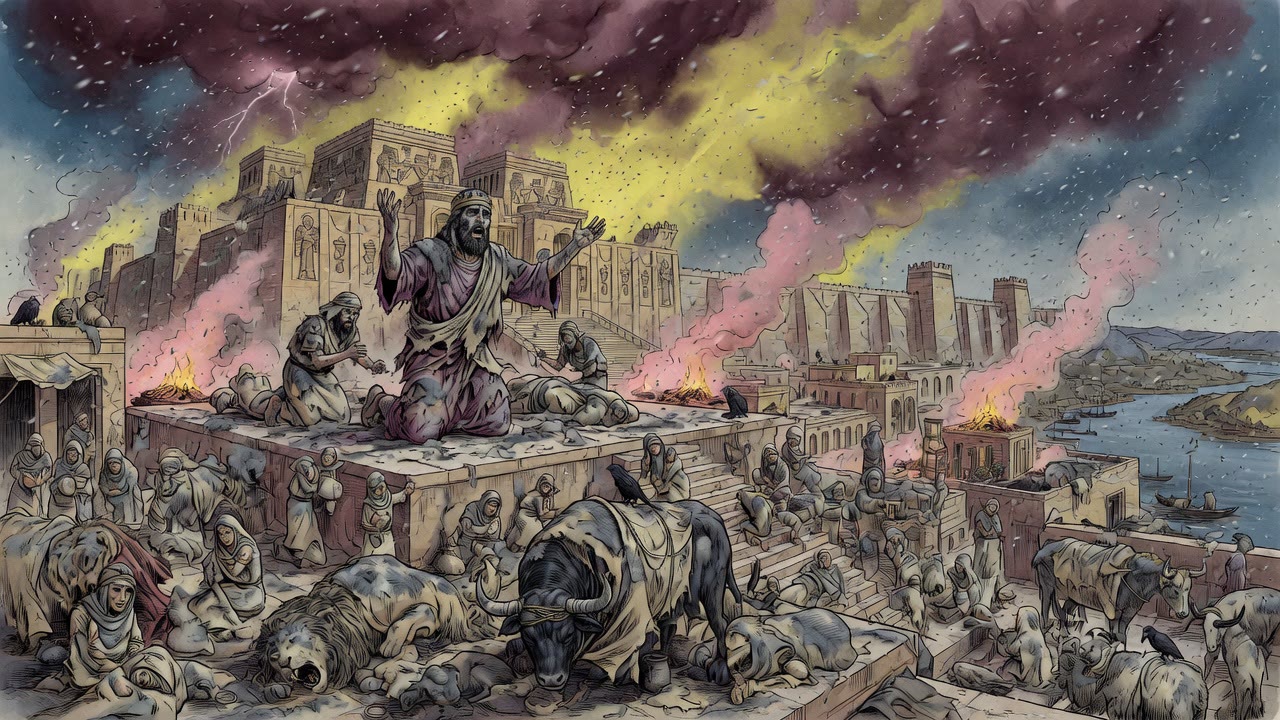
The wailing started while the frog was still in the water. It came up out of the city behind him, that particular noise a street makes when the news has gone door to door, and then the words came with it: a scorpion has bitten so-and-so, and he is dead.

Nobody Called a Witness

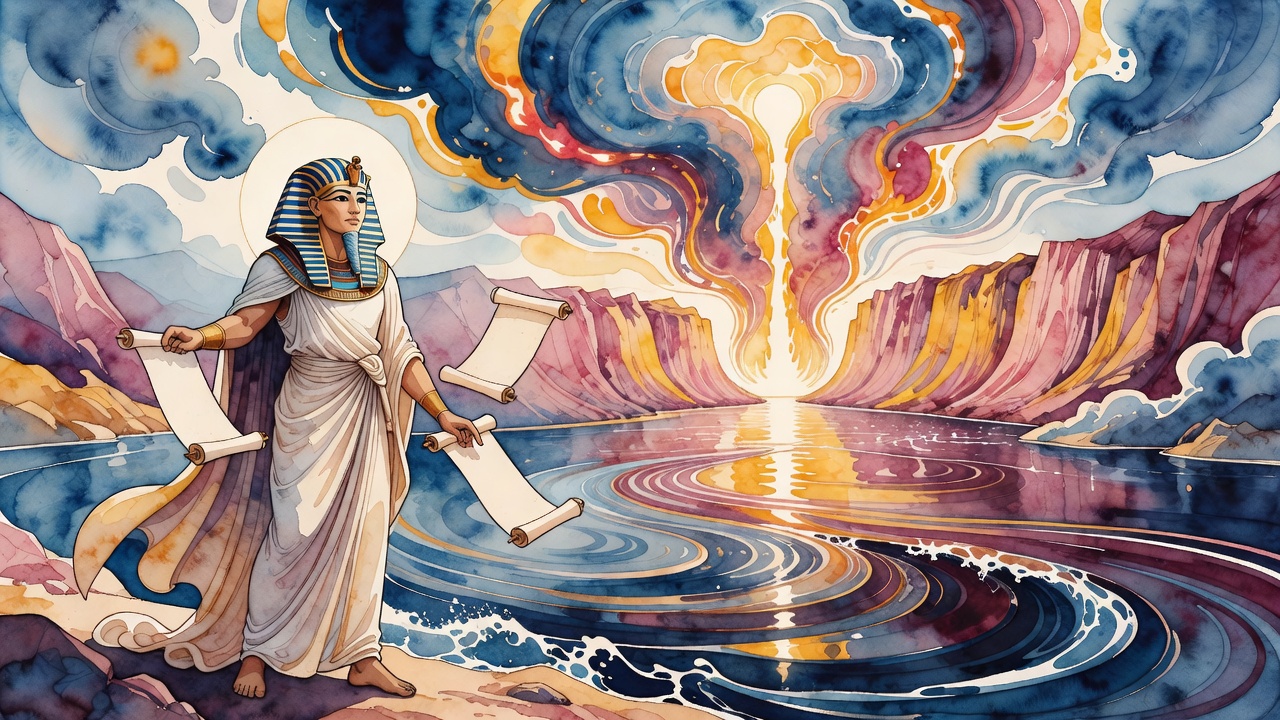
A king of flesh and blood can exile a man, or shut him up, or fine him, or have him flogged, but he needs two men to stand up and say what they saw before he can lay a hand on anyone. The Holy One does not strike on testimony. The Holy One strikes directly, which is why the same verse can say I have crushed and I will heal in one breath (Deuteronomy 32:39), the wound and the remedy coming out of the same hand.

So there was no court by that river and no bailiff on that bank. There was a green thing swimming, and a thing with a tail riding on it, and a man who happened to be standing there and understood what he was looking at a little before the city did.

The Man Digging in the Beit Shofarei Valley

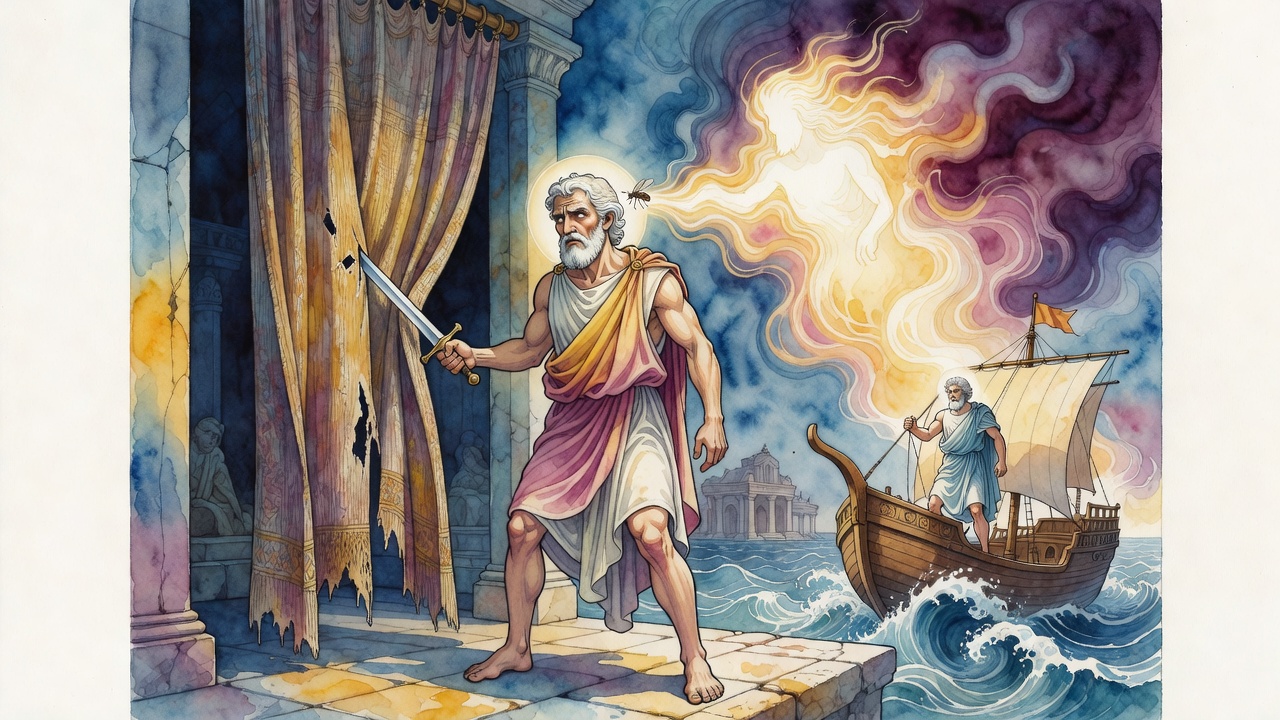
Some distance from all that, another man was digging in the Beit Shofarei Valley, and the sun was doing what the sun does to a bare head.

There was a shrub growing near where he was working. He pulled some of it, twisted it into a wreath, and put the wreath on his head, and then he went back to his digging with green leaves over his hair and thought no more about it.

A snake came at him.

He hit it, and he kept hitting it until it stopped moving, and then he stood over it breathing hard, a man with a spade who had just killed a snake and was pleased about it. Then he wiped the blade on his leg and went back to the hole he had been digging.

The Charmer Wanted to Know Who Killed It

A snake charmer came along the valley and stopped at the body.

He crouched down to it and turned it over and looked at it for a while without saying anything, the way a man looks at work done in his own trade by somebody else. Then he straightened up. "I wonder who killed this snake."

"I killed it," the man said.

The charmer turned his face toward him and did not answer, because he had just seen the wreath. He knew the shrub. He knew what it did, and he knew what a man who had killed that particular snake bare-handed should look like by now, and this one was standing there upright with dirt on his hands and a crown of leaves on his head, and none of it added up unless the leaves were doing the work.

"Truly," the man said again, "I killed it."

Lift That Off Your Head

The charmer asked him a question that was not about the snake. "Could you lift that shrub off your head?"

"Yes," the man said, and he lifted it off.

Then the second question, in the same flat voice. "Can you touch that snake with this stick?"

"Yes," the man said.

He walked over to the dead snake with the stick in his hand and the sun now on his bare scalp, and he never got to touch it, because his limbs came off him where he stood. He went down in pieces in front of a man who had asked two questions and already known both answers.

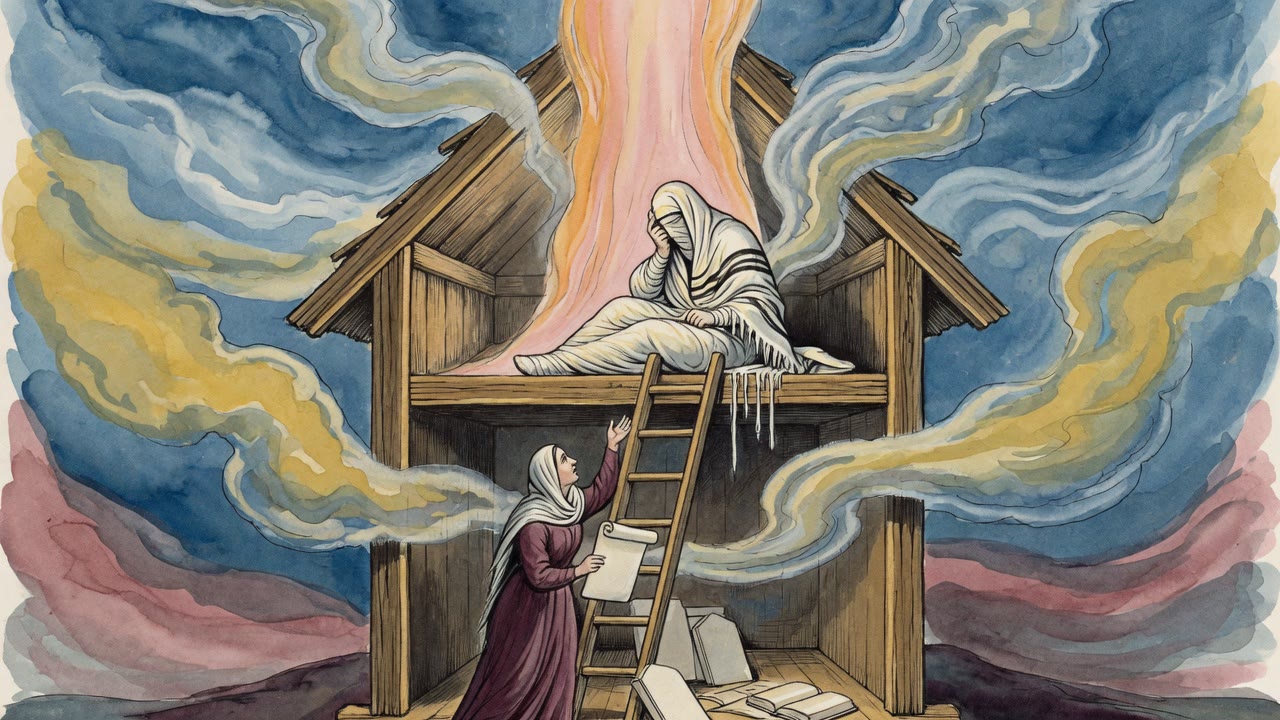
The venom had been in him the whole time. It had been in him from the first strike, waiting, held off by a handful of leaves he had picked because his head was hot. The snake had done its work before it died; the shrub had simply been standing between the work and the man, hour after hour, while he dug and while he boasted, until he was invited to take it off and did.

The wreath lay in the dust where he had dropped it. Still green.


← All myths
From the tradition

Sources

2 sources

The texts behind this telling. Some cards carry a translation of the source; others are our own retelling of it, and each card says which. Every card links out to the original.

Vayikra Rabbah 22:4Vayikra Rabbah

Retold in our words. Read the original at the link below.The Sefaria Midrash Rabbah, 2022 · CC-BY

Vayikra Rabbah 22, a fascinating collection of stories and teachings, explores just that. It suggests that everything – from frogs to plants to even inanimate objects – can be instruments of divine will.

One story tells of a man observing a frog ferrying a scorpion across a river. He marvels, thinking, "This one is prepared to perform its mission." And, the scorpion stings someone, causing their death. The frog then carries the scorpion back. The sound of wailing fills the city. It's a stark reminder that even seemingly insignificant actions can have profound consequences.

Rabbi Pinḥas, citing Rabbi Ḥanin of Tzippori, shares a similar tale. A man in the Beit Shofarei Valley fashions a wreath from a shrub. When he kills a snake, a snake charmer examines the dead reptile and is curious who killed it. The man admits it was him. The snake charmer, realizing the shrub is protecting the man, asks him to remove it. The moment he does, the snake’s venom instantly kills him. The shrub, an ordinary plant, was fulfilling its protective mission until the very end.

These stories aren’t just strange anecdotes. They point to a deeper truth: that everything in creation has a purpose, a role to play in the grand scheme of things. Even seemingly harmful creatures, like scorpions and snakes, might be acting as agents of divine justice.

Rabbi Yanai, teaching at the city gate, witnesses a snake behaving erratically. He declares, "This one is prepared to perform its mission." Moments later, someone in the city is bitten and dies. Rabbi Elazar experiences a similar situation with a Roman who disrespects him. A snake appears and kills the Roman, prompting Rabbi Elazar to quote (Isaiah 43:4): "I placed a person in your stead."

And it's not just living things. Rabbi Elazar also encounters a thighbone that refuses to stay buried. Eventually, it trips up a Roman courier carrying evil decrees against the Jews of Caesarea, leading to his death. The bone, seemingly inanimate, becomes an instrument of justice.

The text continues with more extraordinary tales. Rabbi Shimon observes a hoopoe, a non-kosher bird, building a nest. When Rabbi Shimon interferes, the hoopoe uses a magical herb to undo his actions. Rabbi Yannai's donkey eats a herb and becomes blind, then eats another and regains its sight. A man returning from Babylon witnesses birds using an herb to revive the dead and decides to use it to resurrect the dead of Israel, but when he tries it on a dead lion, the revived lion devours him! As the saying goes: If you have performed good for the wicked, you have performed evil. Do not perform good for the wicked, and evil will not befall you.

These stories, found within Vayikra Rabbah, may seem outlandish, but they offer a profound message about the interconnectedness of all things and the potential for even the smallest elements of creation to play a role in the divine plan.

Even water, Rabbi Tanhuma reminds us, can fulfill God's mission. He tells of a man afflicted with boils who is healed by immersing himself in the Spring of Miriam in Tiberias. This spring, a miraculous source of water that accompanied the Israelites in the wilderness, is said to be located in the Sea of Tiberias. According to Rabbi Ḥiyya bar Abba, if you climb Mount Yeshimon, you might see a sieve-like item in the sea, and that is the spring of Miriam. Rabbi Yoḥanan ben Nuri adds that it's aligned opposite the middle gate of the ancient synagogue of Tiberias.

What are we to make of these stories? Are they literal accounts of miraculous events, or allegories meant to teach us a deeper truth? Perhaps it's both. They remind us to be mindful of our actions and to recognize the potential for the divine to manifest in the most unexpected ways. They challenge us to see the world not as a collection of random events, but as a weaving with purpose and meaning, where every thread, no matter how small, plays a vital role. So, the next time you see a frog, a plant, or even a stray bone, remember Vayikra Rabbah 22, and wonder: what mission might this be prepared to perform?

Full source
Vayikra Rabbah 18:5Vayikra Rabbah

Retold in our words. Read the original at the link below.The Sefaria Midrash Rabbah, 2022 · CC-BY

A king, a ruler of flesh and blood. What powers does he wield? He can exile his subjects, throw them into prison, banish them from his kingdom. But is he alone in these actions?

In Rabbi Yehoshua of Sikhnin, quoting Rabbi Levi, the Holy One, blessed be He, also imposes exile. How so? Well, think about the commandment in (Numbers 5:2): “Command the children of Israel and they shall expel from the camp." This isn’t just about physical expulsion; it’s a reflection of a deeper spiritual reality.

What about imprisonment? A flesh-and-blood king might lock someone away, but God, too, “incarcerates,” as it were. Consider (Leviticus 13:4), where a priest is instructed to quarantine someone with a suspected skin ailment. This isolation, prescribed by divine law, mirrors the confinement imposed by earthly rulers.

The parallels continue. A king decrees banishment; God does the same. "He shall dwell in isolation, outside the camp is his dwelling" (Leviticus 13:46) – the fate of the afflicted, dictated by divine decree. Flogging? "Forty he shall flog him, he shall not add" (Deuteronomy 25:3). Fines? "They shall penalize him one hundred silver pieces" (Deuteronomy 22:19). Even in meting out punishments, the earthly and the Divine seem to echo each other.

But it's not just about punishment. Kings provide provisions, and so does God. "Behold I am raining food for you from the heavens" (Exodus 16:4). Kings grant promotions; God does the same. Remember the census in (Numbers 1:2)? The phrase Se’u et rosh, literally "raise the head," implies promotion, elevation. Rations? "An omer per person according to the number of your people" (Exodus 16:16). In sustenance and advancement, too, the divine model is reflected in human leadership.

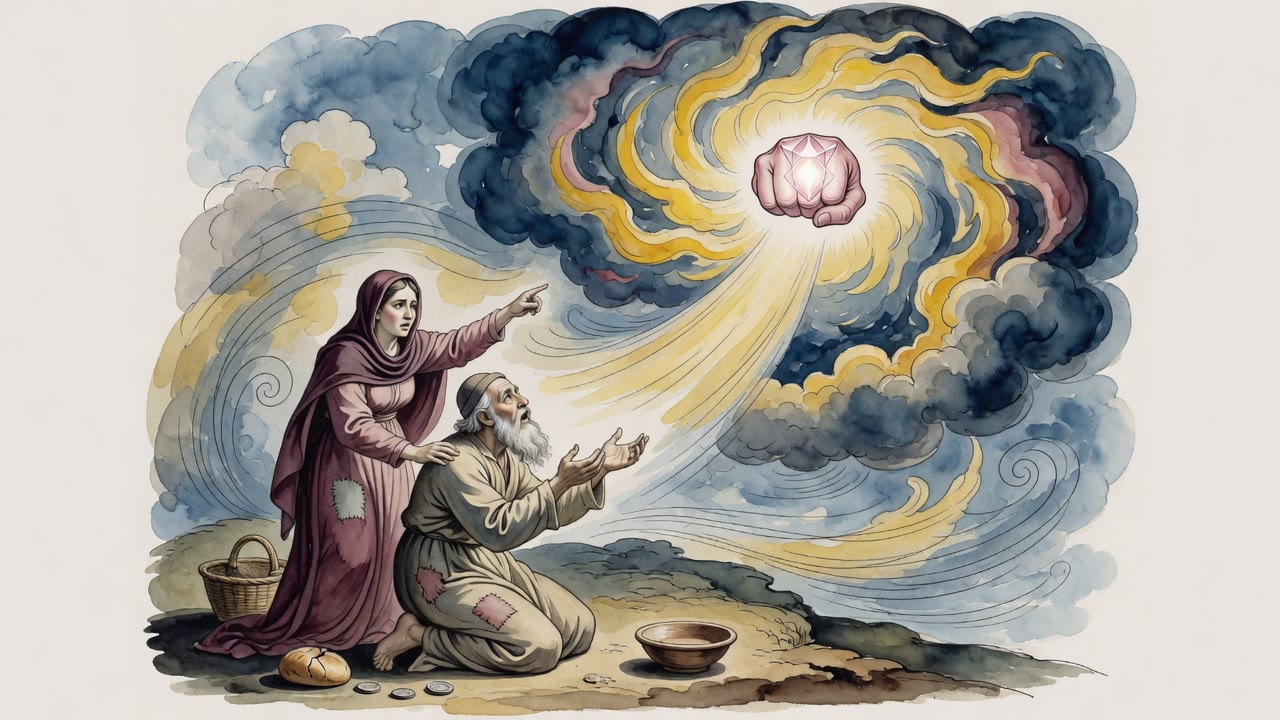
There's a critical difference, though. A flesh-and-blood king might need witnesses to strike someone, but the Holy One, blessed be He, strikes directly, personally. "I crushed and I will heal" (Deuteronomy 32:39). This verse hints at a profound truth: God's actions are not mediated; they are direct expressions of divine will.

Rabbi Berekhya, again in the name of Rabbi Levi, adds another layer to this idea. A human king strikes with a blade and heals with a bandage – separate instruments for harm and healing. But God? He heals with that which He strikes. As (Jeremiah 30:17) tells us, "For I will bring a remedy for you, and from your wounds I will heal you." The healing arises from the wound itself.

This is a powerful concept. It suggests that even in suffering, in the "strikes" we experience, there is the potential for healing, for growth, for transformation. The Divine doesn't just inflict pain; it uses that very pain as the catalyst for our ultimate well-being.

So, the next time you think about earthly leaders, about the powers they wield and the judgments they render, remember this ancient teaching from Vayikra Rabbah. Remember that they are, in a way, reflections – imperfect reflections, to be sure – of the Divine. And remember that even in the harshest of decrees, in the deepest of wounds, there is always the potential for healing, for redemption, for a higher purpose.

Full source