Rome Swaddled Its Marble While a Man Froze Under Reeds
Rabbi Joshua ben Levi found two marble pillars wrapped against the cold in Rome, and a living man a few steps away under reed mats.
Table of Contents
 Click for full size
The Marble Wore Coverings
Two pillars of marble stood in a street in Rome, and someone had wrapped each of them in soft coverings the way a nurse wraps a newborn. Rabbi Joshua ben Levi stopped and put his hand against the cloth. Thick stuff, tucked under the base and drawn up the shaft so no seam of stone met the weather. In the scorching heat the marble would not crack. In the cold it would not freeze and split. Somebody in that city held the office of keeping two columns comfortable, and somebody paid him on time.
He walked on about a dozen paces.
A man lay against the wall there, one reed mat under him and one reed mat over him, and nothing else between his body and the same weather the stone had been protected from. The top mat rose and fell with his breathing. A cart went by and the corner of the mat lifted and settled.
Joshua ben Levi stood where both were in view and said a verse aloud in two halves, because the verse had already split itself to fit what Rome had arranged along thirty feet of pavement. "Your righteousness is like the mighty mountains," he said, and his head turned back toward the coverings. Wherever God gives, God gives in a flood, mountain heaped on mountain, more than anyone asked for. Then he looked down. "And Your judgments are like the great deep" (Psalms 36:7). Wherever God strikes, the measuring is exact to the last grain, and the deep has no floor for a man to stand on.
Greek and Latin and Aramaic had gone by over that man's head for years and none of it had ever arrived with bread.
Rabbi Banna'ah Opened With an Object
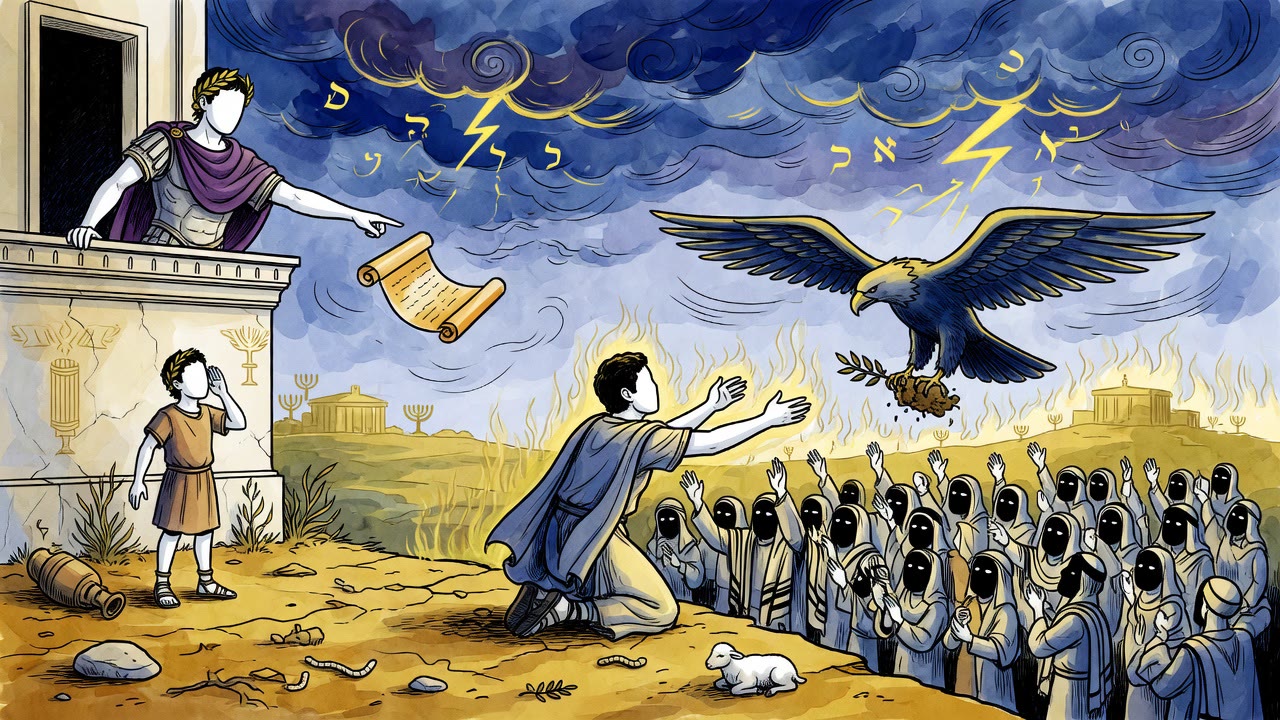
In a study house whose doors stood open to the market, Rabbi Banna'ah began his discourse by naming something a person could pick up. "Fraudulent scales are an abomination to the LORD," he said (Proverbs 11:1).
Outside, the scales he meant were working. A bronze pan swinging on three chains, a box of weights with the lid propped, a shopkeeper's thumb resting on the rim where a thumb has no business resting. Banna'ah told his students how to read an entire civilization out of that box. "If you see a generation whose measures are false," he said, "know that the malkhut (מלכות), the empire, is already being sent to provoke that generation." The shaved weight comes first. The soldiers come afterward, because of it.
Then he read the verse standing immediately after. "When insolence comes, then comes disgrace" (Proverbs 11:2). An ounce filed off the bottom of a bronze weight does not stay an ounce. It is the first insolence, and disgrace walks in behind it wearing armor and asking where the grain is stored.
The Wicked Gnawed Their Own Hands
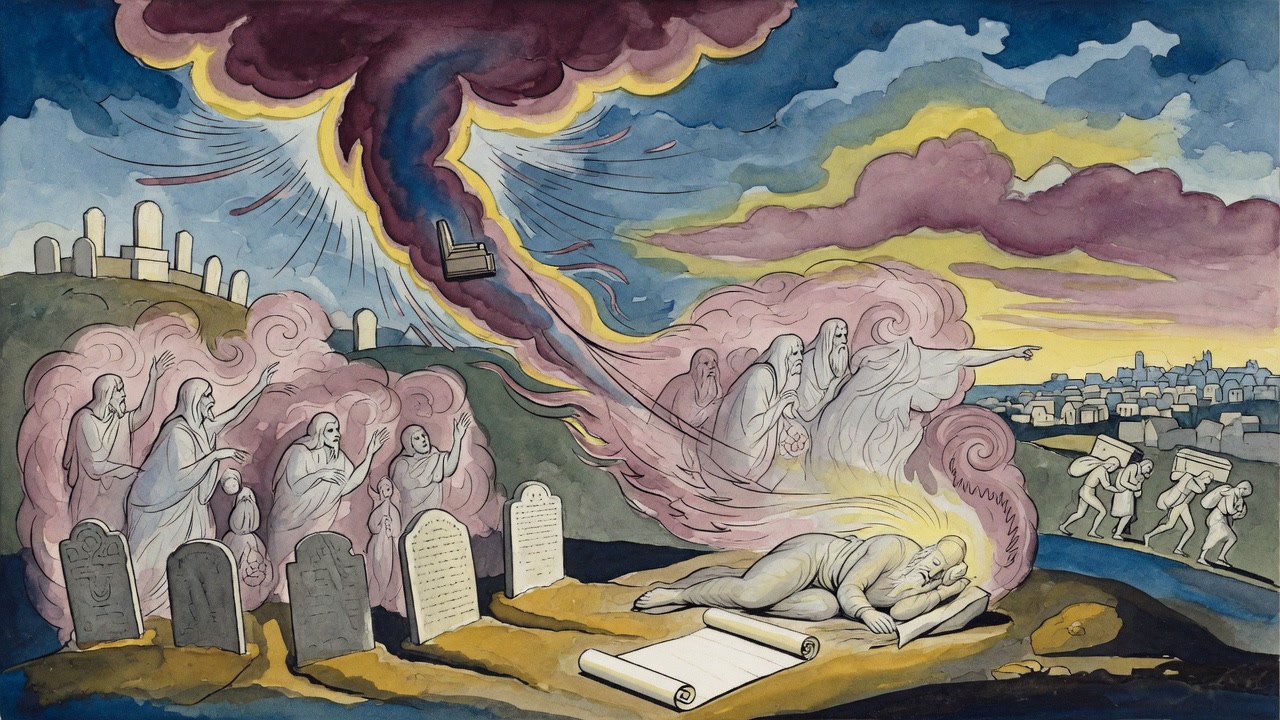
In this world the arrangement holds. The wicked have the money. They sleep without waking, their households run in tranquility and serenity, and the righteous man counts what is left in the jar and decides which of his children eats tonight.
There is a room after this one.
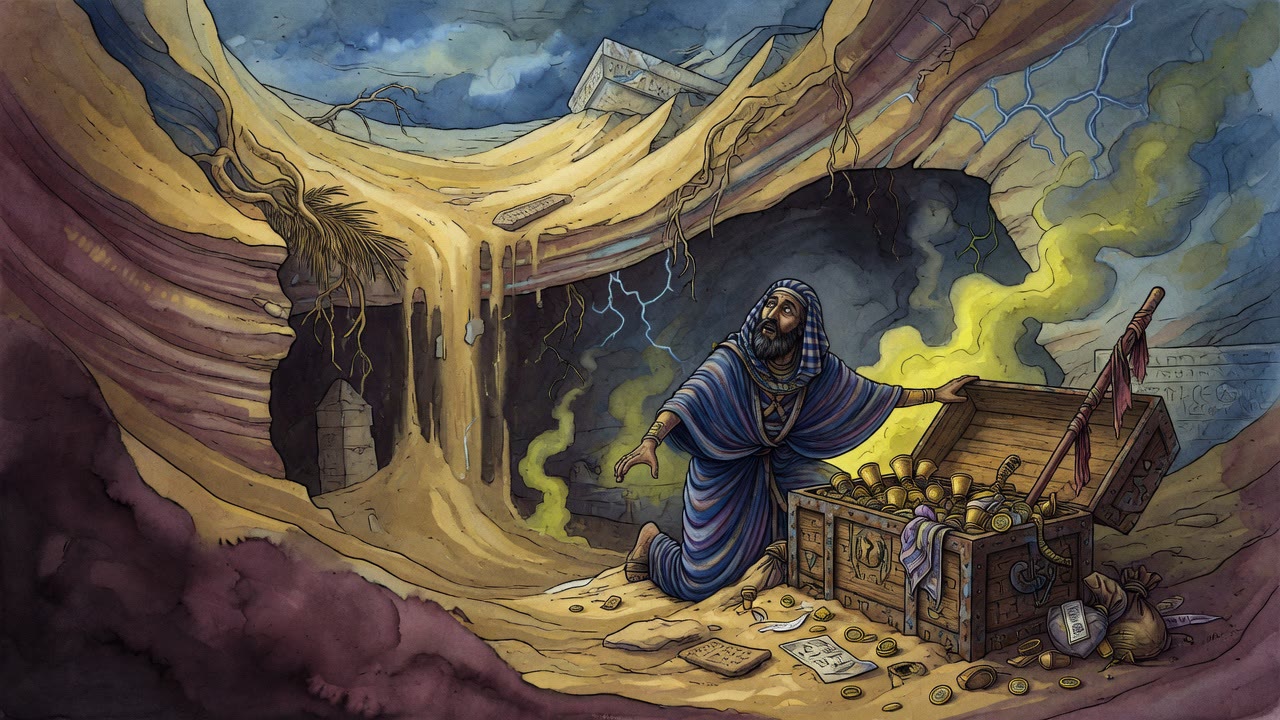
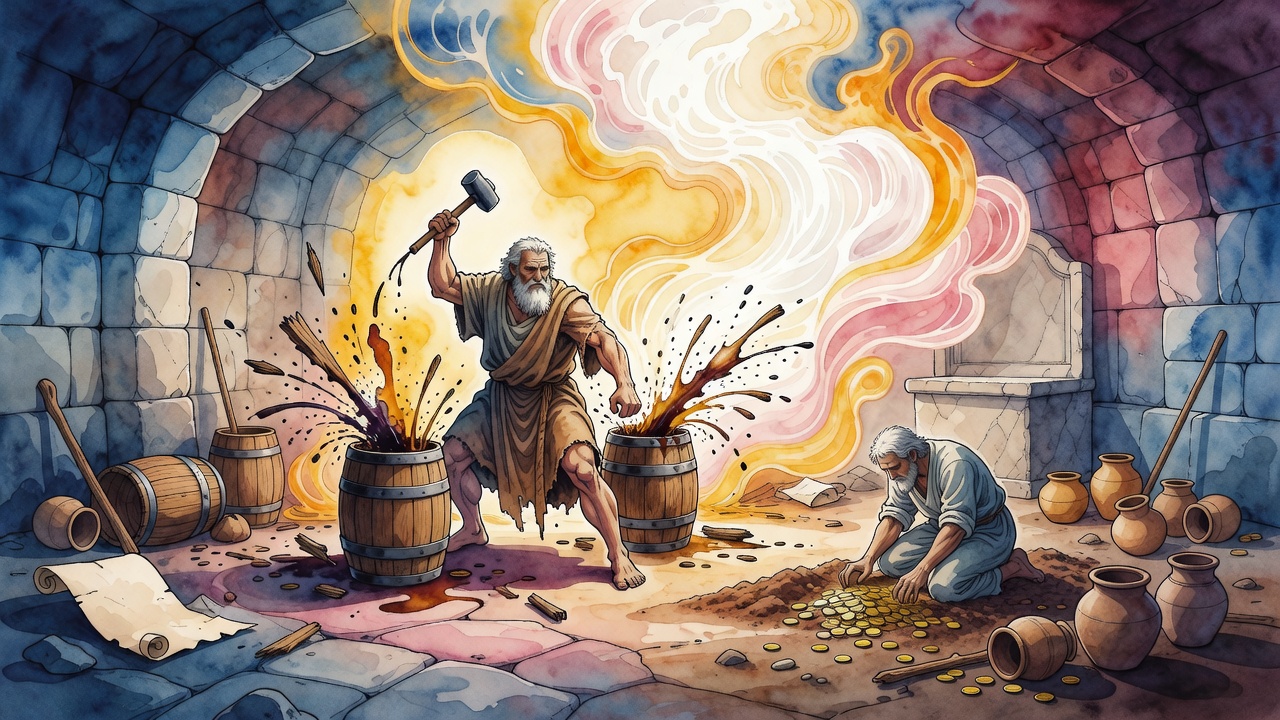
The men who had lived on neshekh (נשך), the bite, and on interest piled onto interest sat in that room with their teeth in their own flesh, gnawing their own hands. Nothing they had taken was there to be eaten. Only themselves. They cried out the same two sentences over and over. "If only we had been laborers." "If only we had been slaves." Men who had never carried a sack in their lives were begging for calluses.
The fool folds his hands and eats his own flesh, and a handful of tranquility is better than two handfuls of toil and herding wind (Ecclesiastes 4:5-6). Those men had gathered both hands full. In that room the wind came out of their fists and there was nothing behind it.
God Answered the Question About His People
Israel put the question directly, the way a child asks a father to name a favorite. "Who are Your people?"
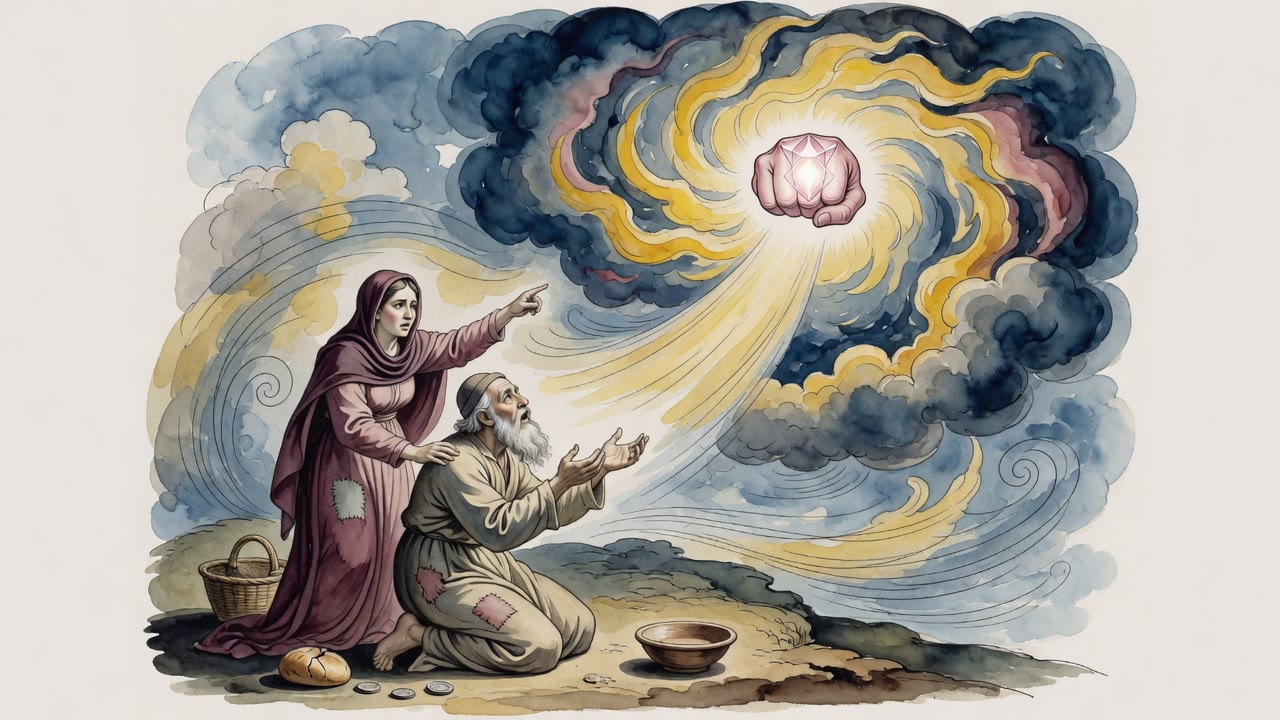
The answer came back plain. "The poor." For the LORD has comforted His people and He will be merciful to His poor (Isaiah 49:13). Not the men who fund the study house, not the men whose barns are full. The ones on the mats.
A man with money sees his own brother coming up the road in a torn cloak and finds a reason to be elsewhere, because all the brethren of the poor hate him (Proverbs 19:7). Whereas the wealth and the honor are from before You (I Chronicles 29:12), and the one thing sheltered in Zion is the poor of His people (Isaiah 14:32). A whole city to roof, and He builds over the man with nothing under him but reeds.
David Asked for a World That Would Hold
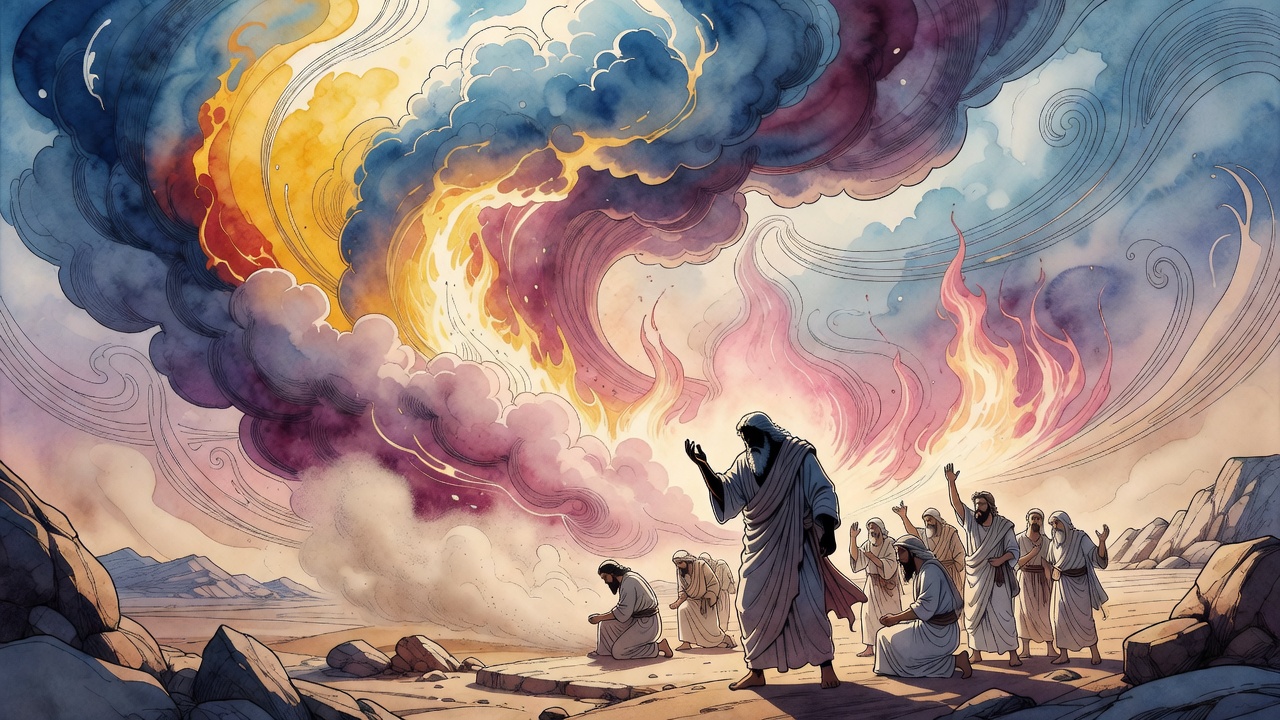
David asked for the simplest thing a king can ask for. "Master of the universe, let Your world be settled in peace" (Psalms 61:8). Level it. Even the pans. Give every household the same weight of grain and let the whole arrangement sit still.
The answer was that the world stands on kindness and truth.
Which meant no. Even the pans tonight and by morning kindness has nothing left to do with its hands. So the world stays uneven, held up by two things that only work while somebody is short.
In Rome the sun came up on the street where Joshua ben Levi had stopped walking. A servant knelt at the base of the nearer column, worked the covering back into place where the night wind had pulled it loose, and smoothed it flat. Thirty feet up the pavement the two reed mats were still there. He did not look that way.
← All myths