5 min read

The Golden Cord on the High Priest's Ankle

Once a year he walked nine steps into the Holy of Holies with a gold cord on his foot, in case the Presence struck him dead and no one else could enter.

Curated by Arthur · Told by Maggid ·
Table of Contents
  1. The Cord They Tied Before He Walked
  2. Wings, Then Silence, Then Light
  3. The Names God Uses for Her
  4. Nine Steps and a Nation Holding Its Breath
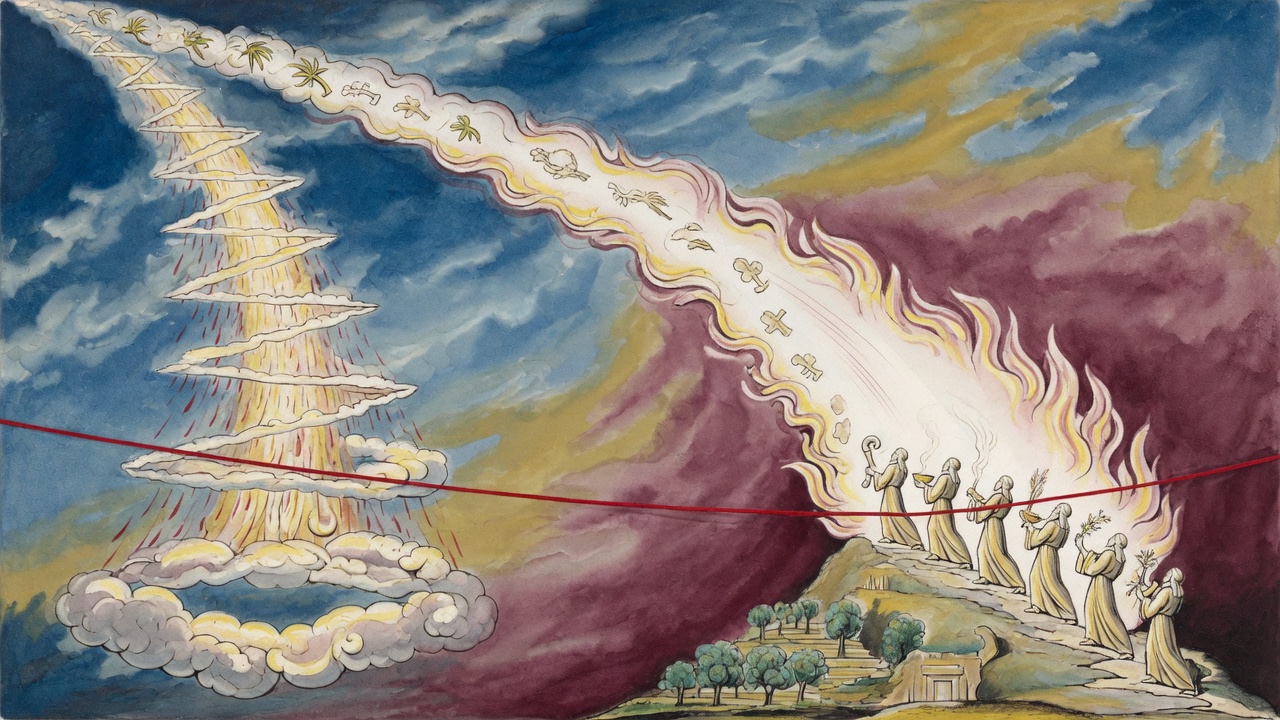
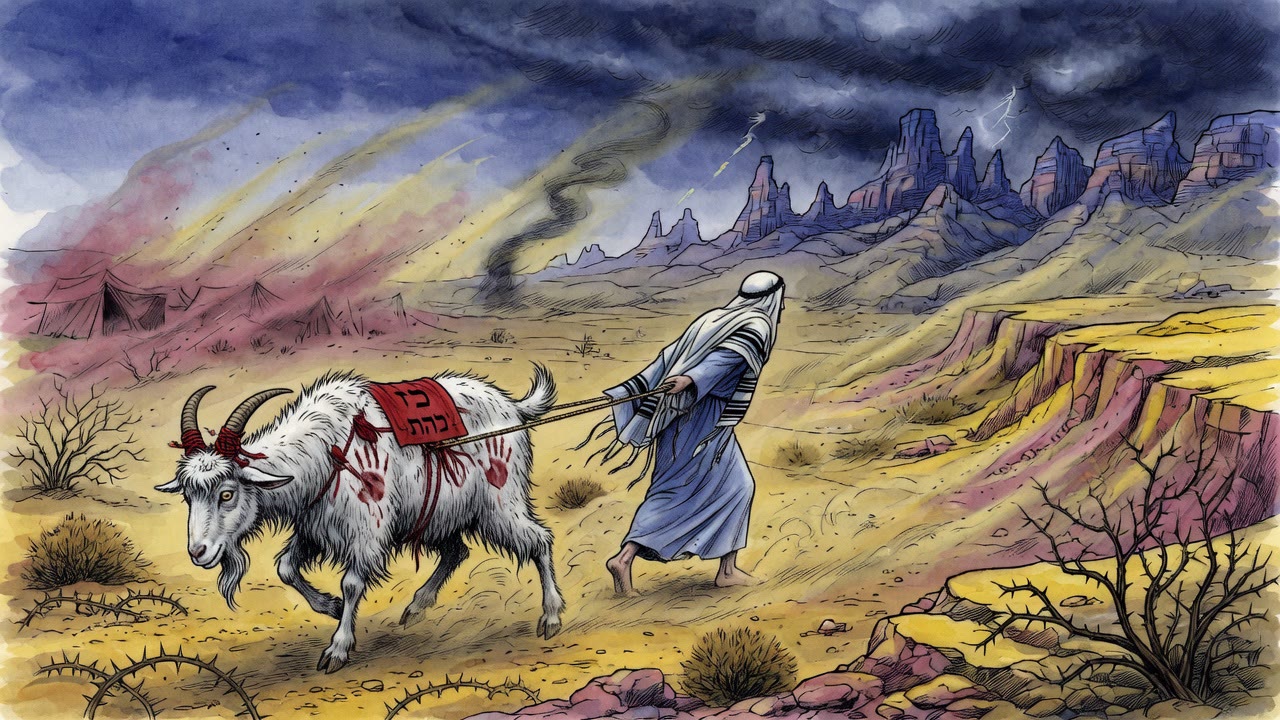
The Golden Cord on the High Priest's Ankle Click for full size

The Cord They Tied Before He Walked

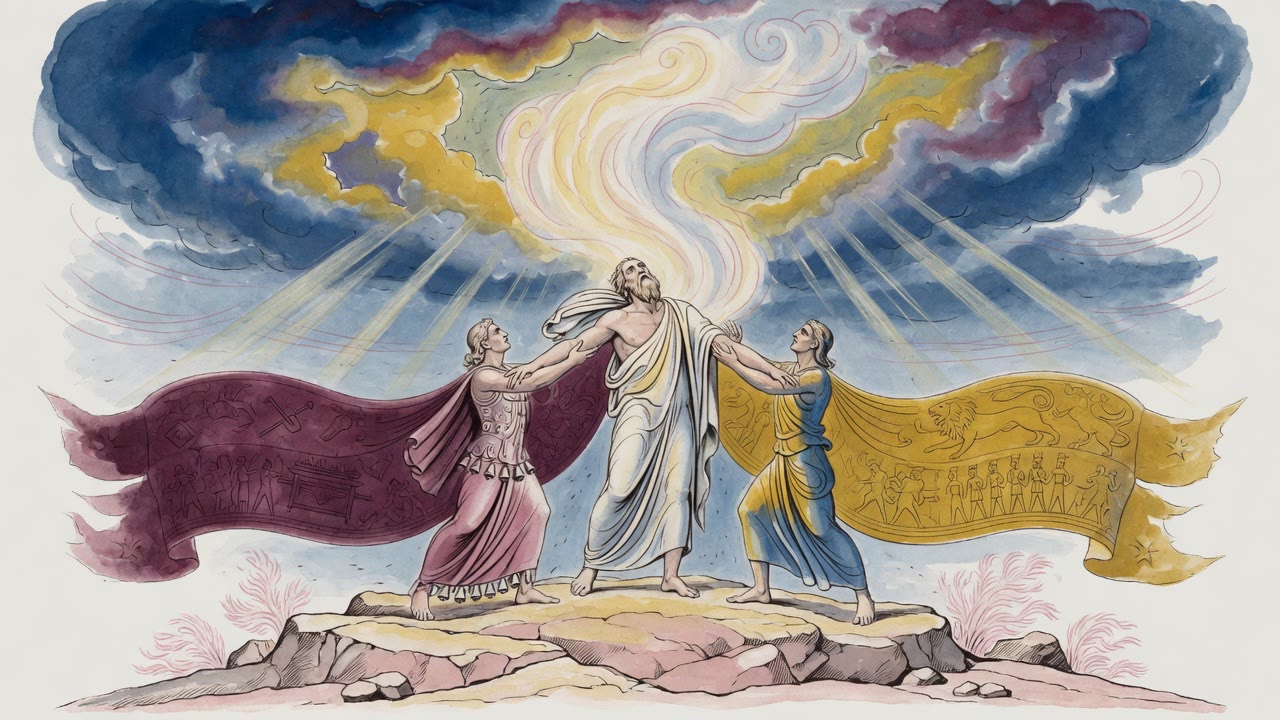
They blessed him until the air thickened. Priests. Levites. The whole assembly pressing hope into one man's shoulders as if hope were a garment that could be layered. Then someone knelt at his feet and fastened a golden cord around the High Priest's ankle. The metal was cool. The knot was sure. The meaning was older than the metal.

If he died inside, no second man could go in after him. The Presence that accepted him would not accept a rescue party. They would drag him out by the cord, a body returning from a room that only the living name of the day could enter. That was the safety. That was also the verdict on how thin the line ran between atonement and ash.

He took three steps. Three more. Three again. Nine steps into the place where the Shekhinah (the Divine Presence) (שכינה) densed itself between the staves of the ark. No one followed. The cord paid out behind him like a thin gold argument with death.

Wings, Then Silence, Then Light

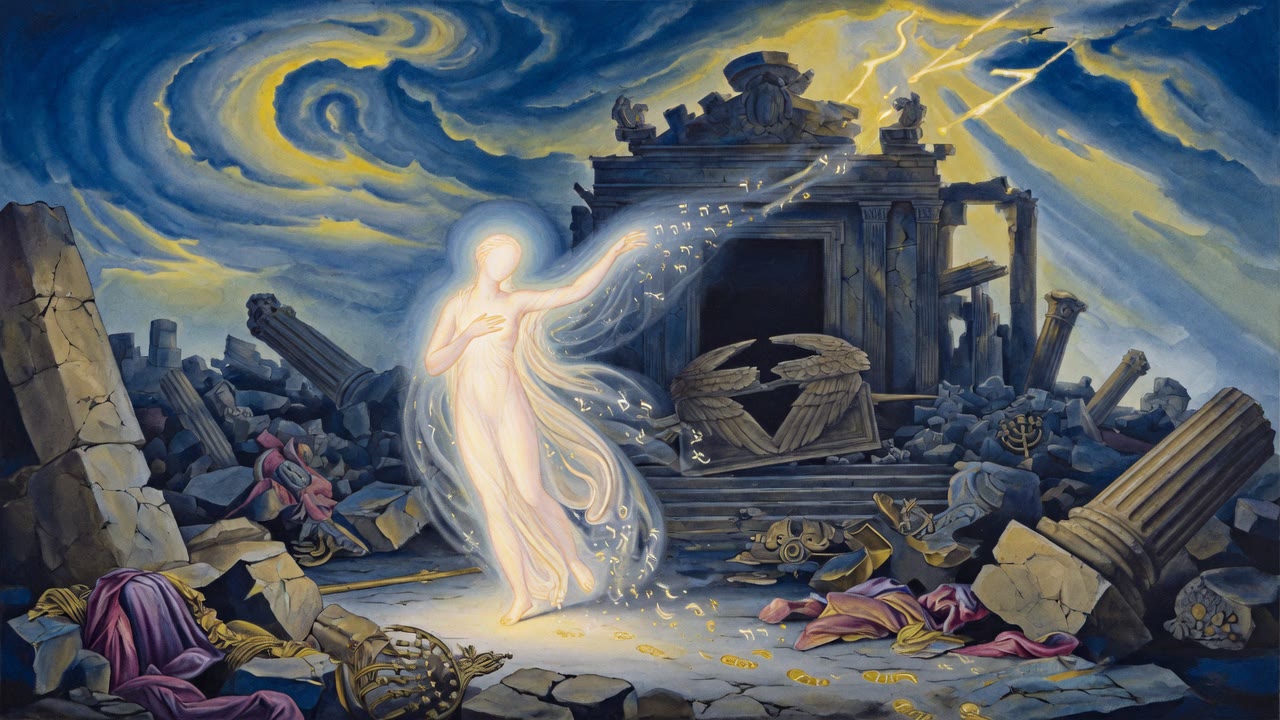
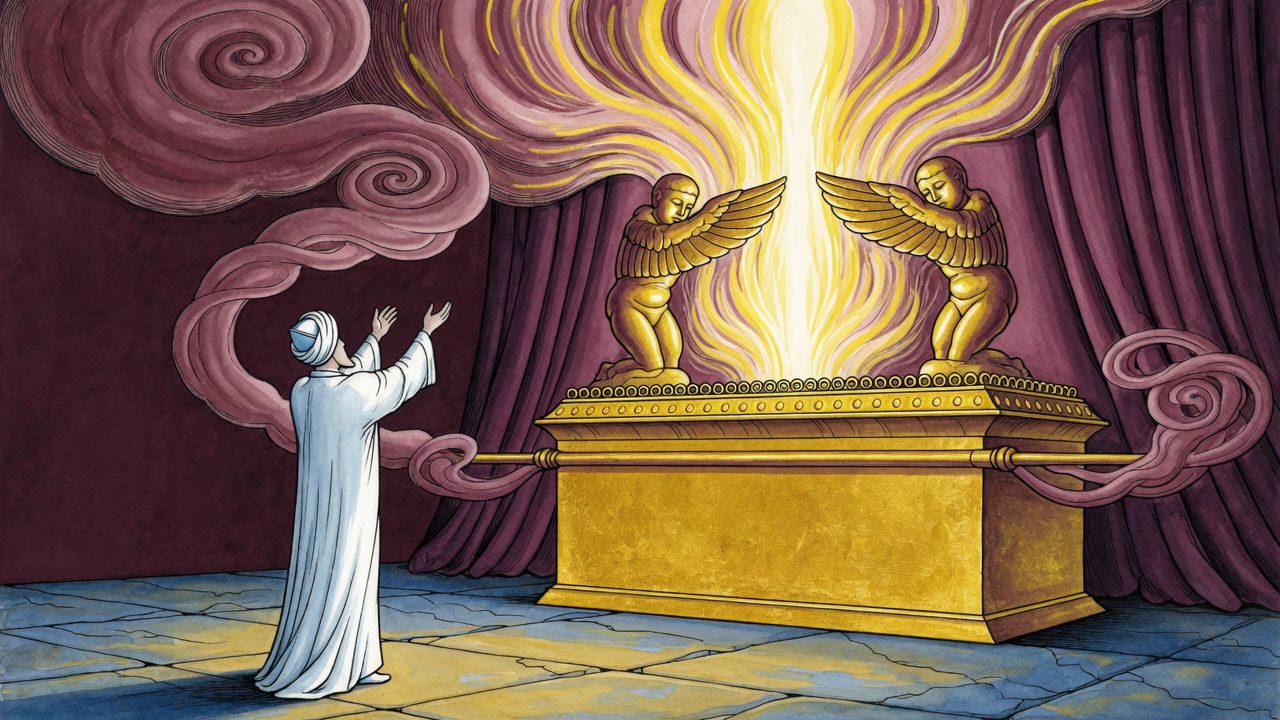
Inside he heard the cherubim. Wings beating. A music that was not for the courtyard and not for the curious. He set incense on the fire. Smoke climbed in a column that knew where it was going. The wing-sound fell away into a silence so complete it felt like another kind of noise, a pressure on the eardrums of the soul.

A ray of light cut through, carrying the scent of pure balsam. In that light the Accuser had no standing. No file. No claim. No clever count of Israel's failures. Only the connection the day was built for, raw and unmediated. The High Priest opened his mouth and poured the nation's life into words: mercy, forgiveness, continuance, rain, children, a year that would not break them.

When he finished, the cherubim lifted their wings and sang again. He knew the prayer had been taken. Joy above. Joy below. He turned back toward the cord and the living, smoke still in the folds of his white linen, the sound of wings following him like a verdict of peace.

The Names God Uses for Her

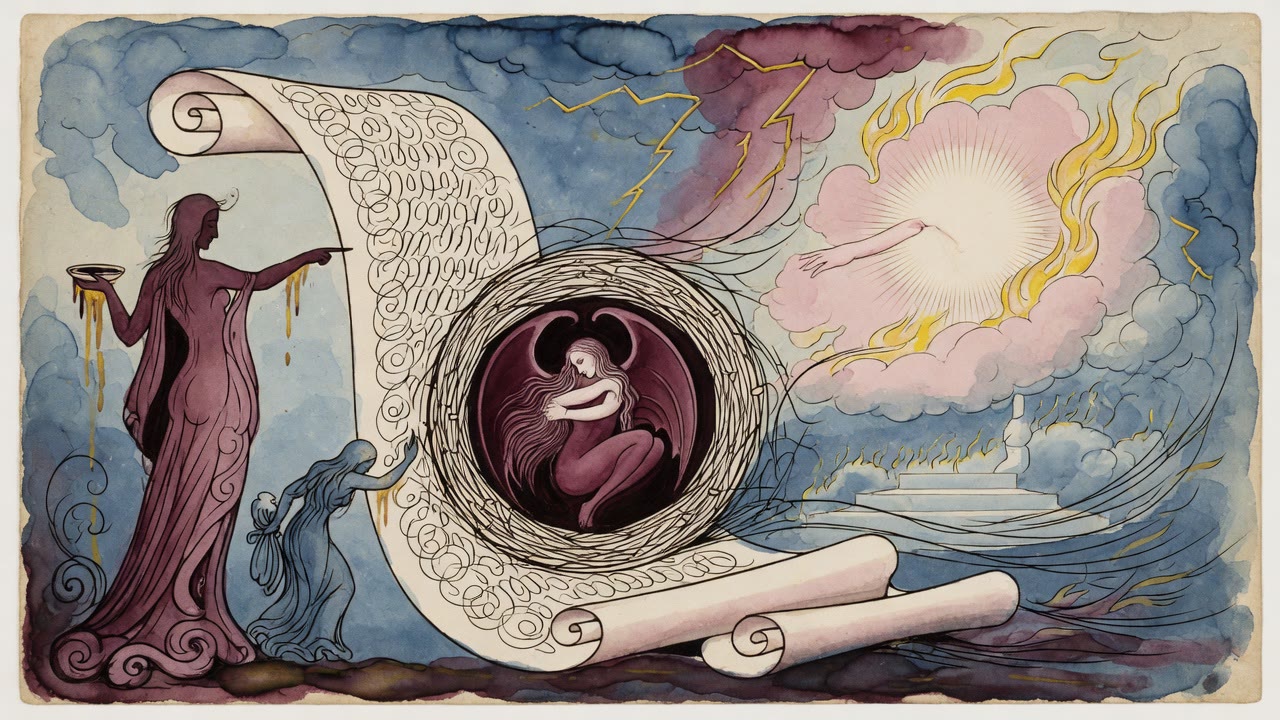
The presence he entered was not a blank force. In the old mystical speech God calls the Shekhinah sister, daughter, mother, the whole range of nearness a mouth can hold without lying. Abraham saying of Sarah, "She is my sister," was heard by some as a man speaking also of the Presence that clung to her tent and traveled with her danger. The High Priest did not invent that intimacy. He walked into it once a year with blood and smoke and a rope on his foot, a husband of the people approaching a Presence that wears every family name.

She dwells "in them," not only among them. The verse about the sanctuary was read as a claim on every interior. Exile of the Shekhinah is not only geography and broken walls. It is the dullness that keeps a people from noticing who shares their breath on ordinary Tuesdays. Yom Kippur's entry is the public opposite of that dullness. One man, one room, one day, and the whole nation's inner rooms are represented in his trembling.

Nine Steps and a Nation Holding Its Breath

Some counted the minutes by the pulse in their own throats. Others watched the slack gold line as if it were a second horizon. A priest near the front had prepared words for disaster and found he could not remember them. The day demanded a different vocabulary: wait, and do not invent endings.

Outside, no one moved. A child started to speak and was hushed. The cord lay slack across the threshold. If it jerked, the day would break open into mourning and the white clothes would mean something else. If it stayed quiet, Israel would eat at evening with a year rewritten and sins dropped behind them like a garment left at a river.

He came out. Light still behind his eyes. The cord was untied by hands that had not needed to pull. For one more year the innermost room had accepted a human being and sent him back. The assembly exhaled as one body. Somewhere a Levite found his voice again and it cracked on the first note of praise.

The golden cord went into storage until the next year. Everyone hoped it would stay ornamental. Everyone knew why it existed, and no one wanted to need it.


← All myths
From the tradition

Sources

3 sources

The texts behind this telling. Some cards carry a translation of the source; others are our own retelling of it, and each card says which. Every card links out to the original.

Zohar 3:67aZohar

Retold in our words. Read the original at the link below.Sefaria-hosted English translation · CC-BY

Zohar turns to The High Priest Enters The Holy Of Holies.

Our focus? The High Priest, his heart pounding, preparing to enter the Kodesh HaKodashim, the Holy of Holies, the innermost sanctuary of the Temple in Jerusalem. This wasn't just a room; it was believed to be the dwelling place of God's presence on earth.

Before he even takes a step, the air crackles with energy. The priests, the Levites, the entire congregation, they shower him with blessings, fervent prayers for his well-being. He is, in that moment, the embodiment of their hopes, their fears, their collective plea for forgiveness.

Then comes a detail that chills you to the bone: a golden cord is tied to his foot. Why? Because if he were to die within the Holy of Holies – overcome by the sheer power of the divine presence – no one else could enter to retrieve him. They would have to drag him out. A stark reminder of the stakes.

He takes three steps. then three more. and then another three. Nine steps into eternity. And all remain where they are. They do not follow.

The Zohar, that mystical foundation of Jewish tradition, paints a vivid picture of what happens next. As he enters, the High Priest hears the sound of the wings of the cherubim, celestial beings, singing and beating. It's a harmony of the divine, a sound that fills the very air with holiness.

He burns incense, and as the smoke rises, something extraordinary happens. The sound of the cherubim’s wings subsides, and a silence descends – a silence so profound it’s almost deafening. Then, a ray of light pierces through, accompanied by the scent of pure balsam, filling the Holy of Holies with an otherworldly glow. The Zohar (3:67a) tells us of this moment.

In that instant, the Accuser, the force that seeks to find fault and bring judgment, has no power. There is no room for negativity, only pure, unadulterated connection to the Divine.

The High Priest opens his mouth and pours out his heart in prayer, filled with devotion and joy. It’s a prayer for forgiveness, for mercy, for the well-being of the entire nation of Israel.

And when he is finished, the cherubim lift their wings and begin to sing again. A sign. A confirmation. The High Priest knows that his prayer has been accepted, that there is joy both above and below. God has decided to show mercy.

The Holy of Holies, accessible only once a year, only to one man. It highlights the immense responsibility placed upon the High Priest, the fear and trembling that accompanied his every move. Any misstep, any error, could have fatal consequences. As we find in countless stories of the Temple, the line between life and death felt razor thin.

What spaces, physical or metaphorical, require us to approach with such reverence and humility? And what "golden cord" – what safety net – do we rely on when we dare to venture into those sacred spaces? Perhaps it is prayer, community, or the lessons of our ancestors. Whatever it may be, may we approach it with the same intention and awe as the High Priest on Yom Kippur.

Full source
Sefer ha-Bahir 63Sefer HaBahir

Translation of the source text.Torat Emet Sefer HaBahir · Public Domain

And what is His heart? He said to him: If so, Ben Zoma is on the outside, and you are with him. "The heart" (ha-lev) is thirty-two, for they were hidden, and with them the world was created. What is "32"? He said to him: thirty-two paths. A parable of a king who was in the innermost chambers, and the number of the chambers was thirty-two, and to each chamber there was a path. Is it fitting for this king that everyone enter his chamber by way of his paths? You said: No. Is it fitting for him to reveal his pearls, his settings, his hidden things, his treasures, and his precious things? You said: No. What did he do? He touched the daughter and included in her all the paths and in her garment, and whoever wishes to enter within, let him look here. And he married her to the king, and he also gave her to him as a gift. Sometimes, in his love for her, he calls her "my sister," for they were from one place; and sometimes he calls her "his daughter," for she is his daughter; and sometimes he calls her "my mother."

Full source
Sippurei Ma'asiyotSippurei Maasiyot (Rabbi Nachman)

Retold in our words. Read the original at the link below.Sefaria-hosted English translation · CC-BY-SA

The Shekhinah (שְׁכִינָה) is often described as the feminine aspect of God, a divine presence that dwells among us, even within us. It's a concept that's both intimate and awe-inspiring. And according to our tradition, it resides in each and every Jew.

As it says in (Exodus 25:8), "I shall dwell in them." Not just among them, but in them. This idea transforms our understanding of the divine. It's not just "out there," but also "in here."

So, what does it mean to have the Shekhinah dwelling within? It means, according to some teachings, that each of us has a responsibility. A mission, even. We are called to "raise up the Shekhinah from Her exile," to liberate Her from the Sitra Ahra (סִטְרָא אַחֲרָא), "the Other Side," the forces of negativity that seek to keep her hidden, as explained in Sh'nei Luhot ha-B'rit, Masekhta, Ta'anit.

Think of it like this: the Shekhinah, in a way, is trapped in the mundane, the everyday struggles and distractions that keep us from connecting with the divine. It's our job to elevate our consciousness, to purify our actions, and in doing so, to uplift the Shekhinah within us.

This idea of an interior Shekhinah is beautifully illustrated in the concept of the neshamah (the higher soul) yeterah (נְשָׁמָה יְתֵרָה), the "extra soul" that every Jew is said to receive on the Sabbath. The arrival of the Sabbath Queen, which is another name for the Shekhinah, and the arrival of this extra soul are simultaneous. And, poignantly, their departure at the end of Havdalah, the Sabbath closing ceremony, is also simultaneous. This parallel, mentioned in "The Second Soul," p. 310, suggests a deep connection between the Shekhinah and our own spiritual capacity.

The internal nature of the Shekhinah is particularly associated with Rabbi Nachman of Bratslav and his scribe, Rabbi Nathan of Nemirov. Rabbi Nachman's story "The Lost Princess" (Sippurei Ma'asiyot) is often interpreted as an allegory about the search for the exiled Shekhinah. Rabbi Nathan commented on this, as found in Likutei Moharan 94, stating that "Everyone of Israel must raise up the Shekhinah from her exile," making it a personal as well as a collective task. It's not just a grand, cosmic mission, but a daily, personal one.

The notion of the internal Shekhinah seems to parallel Carl Jung's later concept of the anima, the feminine aspect of a man, who likewise dwells within. Both concepts point to the importance of integrating the feminine principle within ourselves for wholeness and spiritual well-being.

The Tanya 52 further explores these ideas.

So, where does this leave us? It leaves us with a powerful and profound understanding of our own potential. We are not just passive observers in the world, but active participants in the unfolding of the divine. We have the power to elevate the Shekhinah within ourselves, and in doing so, to bring more light and holiness into the world.

What if, by seeking the divine within, we not only find God, but also find ourselves?

Full source