The Handmaid Saw More Than Isaiah at the Sea
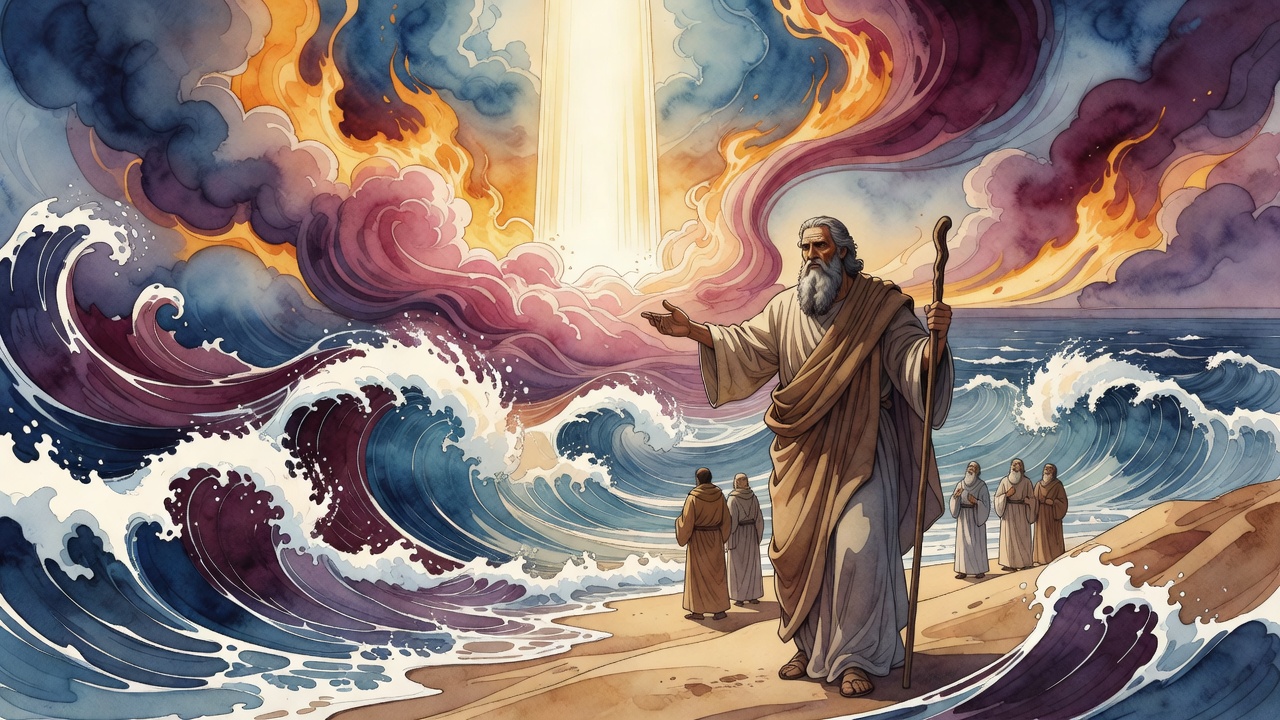
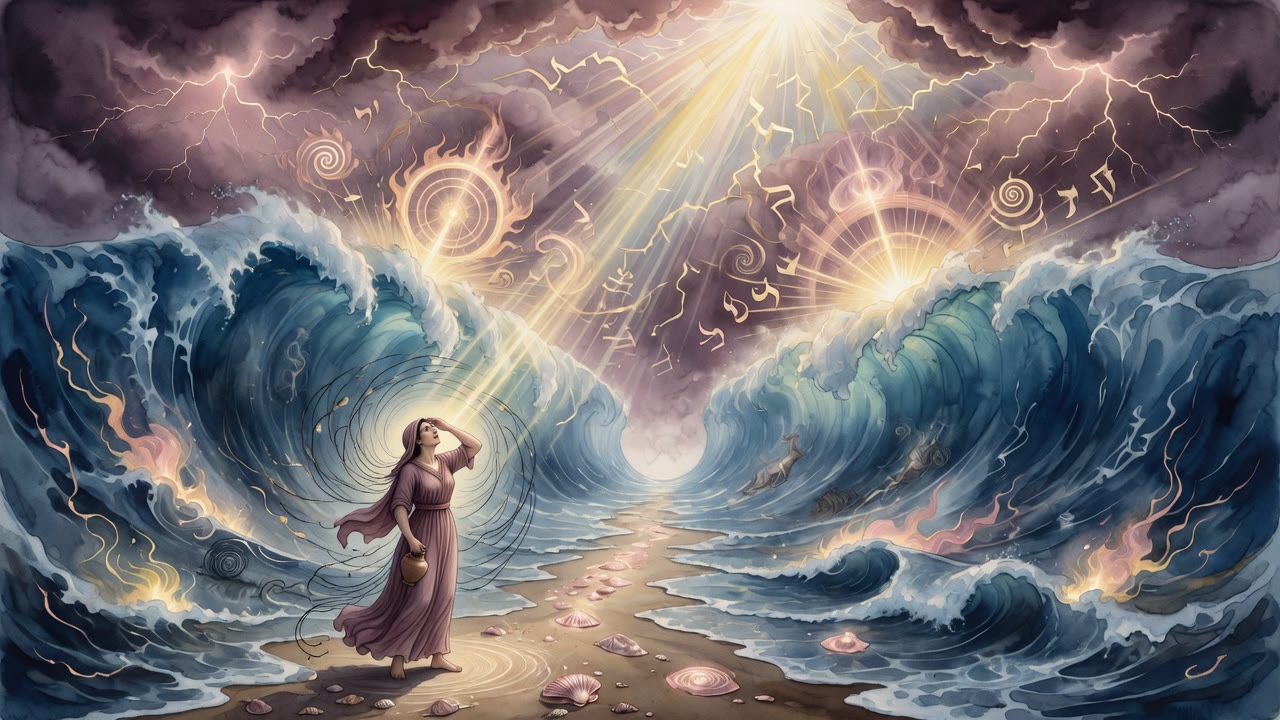
Salt water dried on her ankles. She pointed at the standing sea and named God, and no one in the camp had to ask which figure He was.
Table of Contents
Salt water was still on her ankles when she pointed.
 Click for full size
"This is my God," she said.
No one in the camp asked which figure she meant. An earthly king arrives with horns and troops, and the street has to guess which man is the king. When God passed over the sea, every mouth knew. A handmaid saw what Isaiah and Ezekiel would later strain toward in chambers of language, and she saw it without a title.
Strength and Song in One Breath
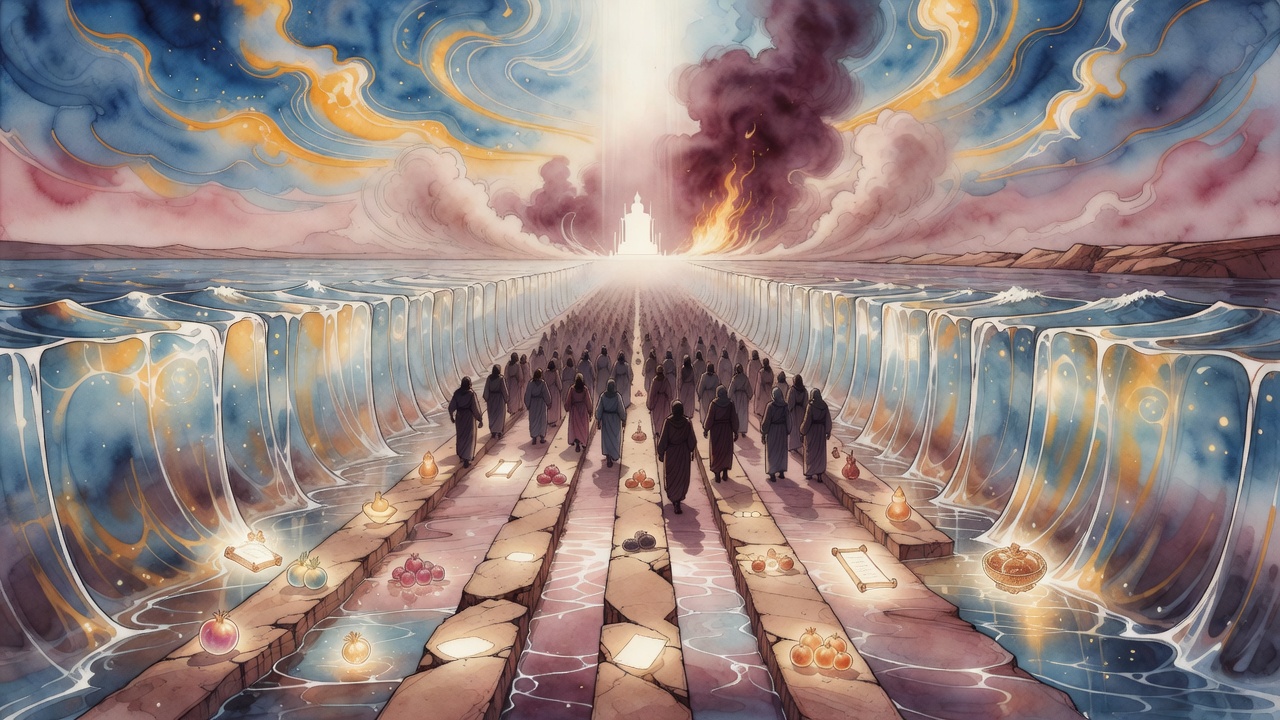
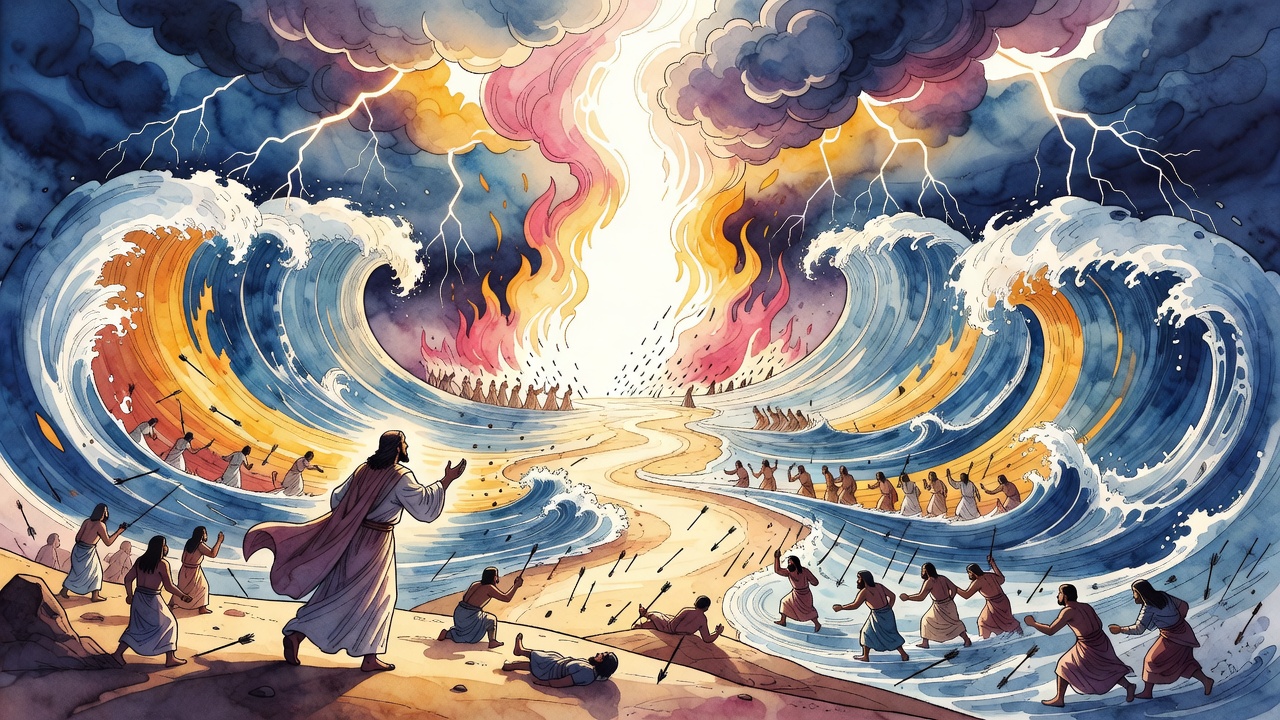
"The LORD is my strength and my song," she sang, with mud between her toes and a wall of water at her shoulder. Strength was not a schoolroom word that morning. It was the helper who had just split a sea and left a road on the bottom. The song was in her mouth while her legs were still wet.
The nations also praise the Maker of the world. Israel's praise left the shore as fact, not as borrowed poetry. She did not need a scroll to know she had been seen by the One she was seeing. God was the helper of everyone who lives, and of the one singing most of all, there, with salt drying on her skin.
Isaiah would describe thrones. Ezekiel would describe wheels and a sapphire floor. She had a floor of seabed and walls of water, and the Presence did not wait for a temple blueprint to arrive.
The Warrior Who Needed No Costume
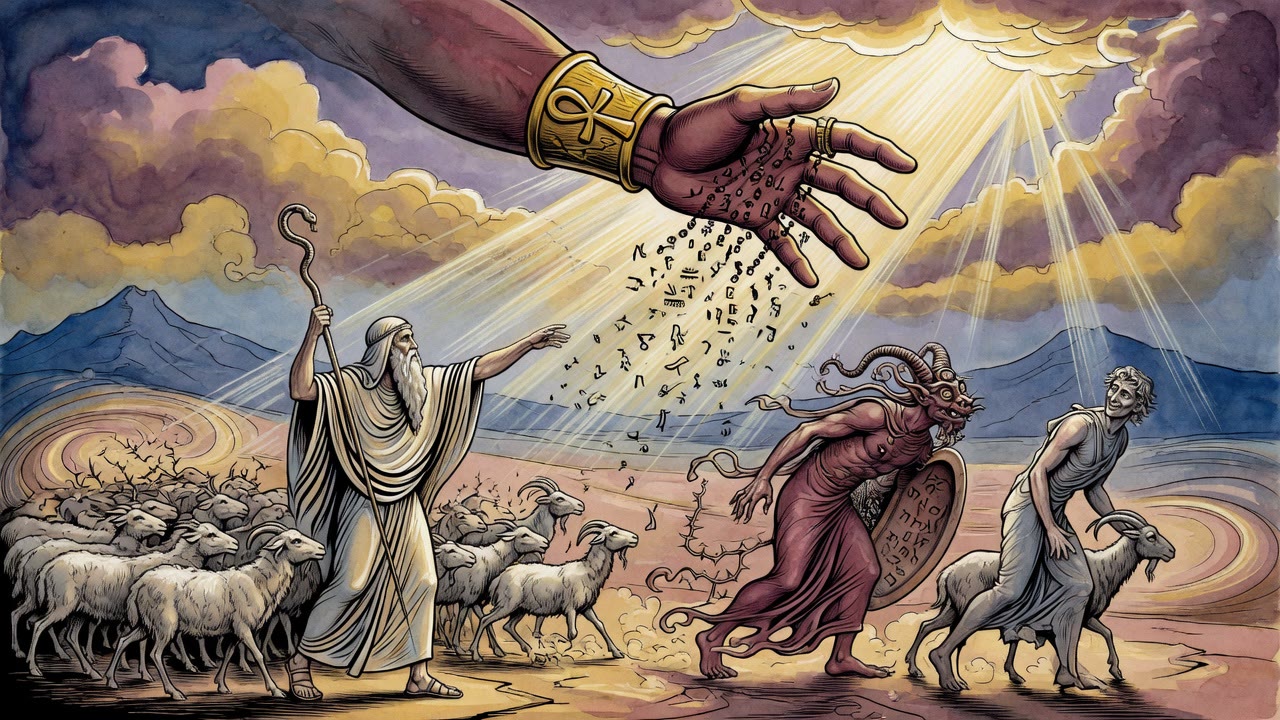
There is a warrior in a province, dressed in every weapon of war: sword, shield, bow, spear, armor polished until it blinds the street. He looks complete. He lacks the things that actually win battles. Power. Strength. Stratagem. The wisdom of war. Hardware without force is costume.
God is the opposite figure. When He goes out as a man of war at the sea, the weapons are not strapped on. They are identical with His will. Egypt's chariots did not fall to a better spear. They fell to a Commander who does not empty a scabbard, because the sea itself becomes the edge.
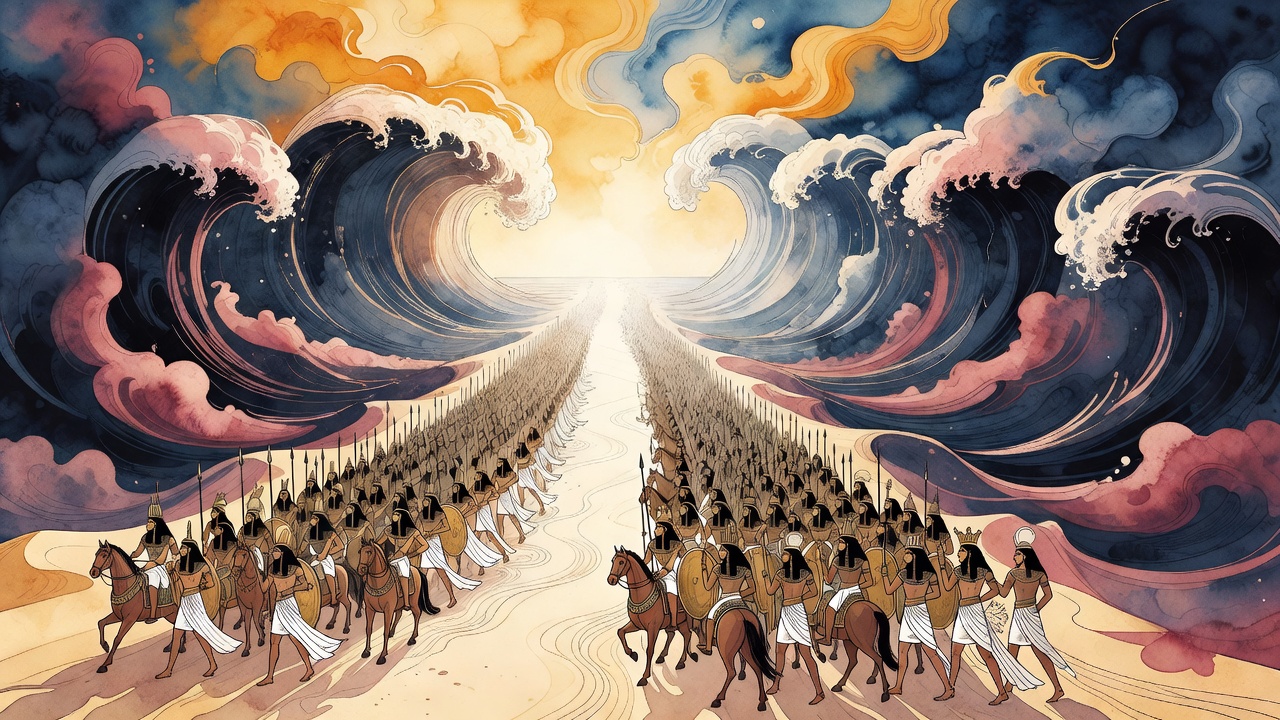
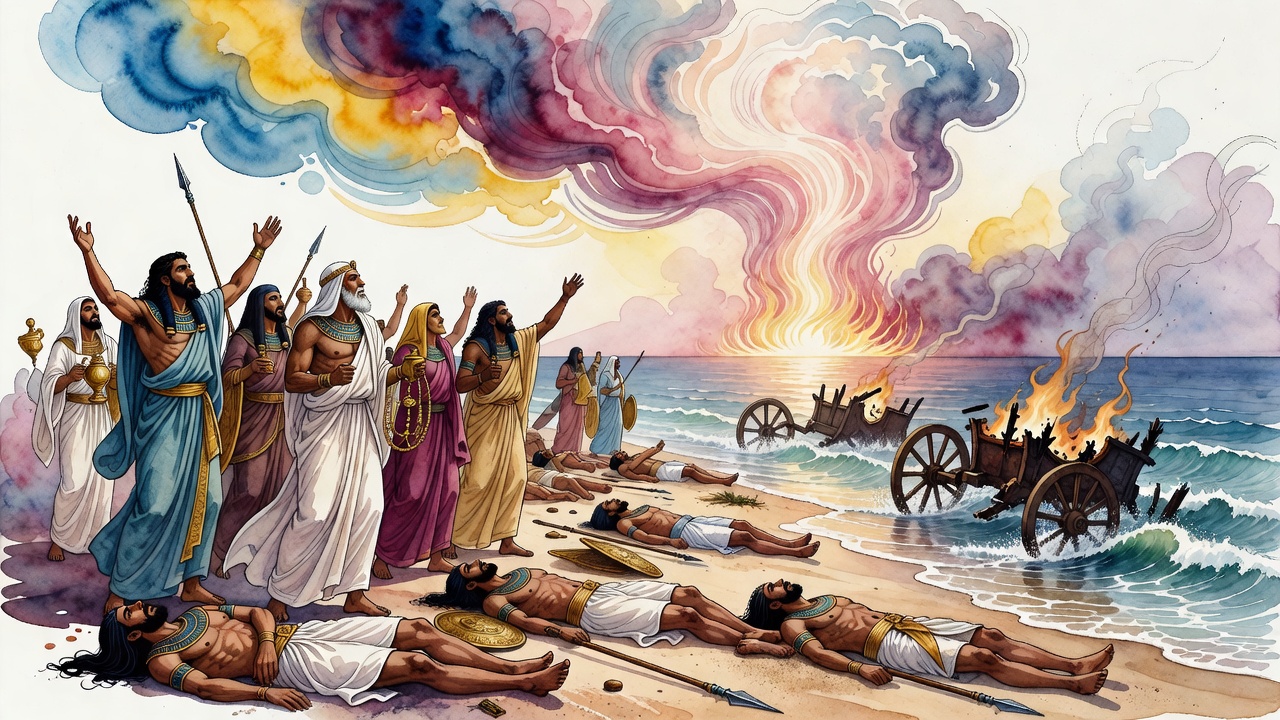
Pharaoh trusted bronze and horseflesh. The province warrior would have understood Pharaoh perfectly. Both men confuse equipment with victory. Both men learn the difference too late for the horses. Behind Israel, wheels broke in water that had been a road an hour earlier.
The East Wind Had Done This Work Before
The wind that finished Egypt had a memory. A strong east wind had already judged the generation of the flood and the people of Sodom. One breath for the drowned world. One for the cities of the plain. The same breath later for Pharaoh's army.
Judgment did not invent a new tool. It reached for a wind it had used before. "By the breath of God they go lost, and by the wind of His wrath they perish" (Job 4:9). The first half had already spent itself on Noah's generation. The second half had already spent itself on Sodom. At the sea the pattern closed.
The waters that opened for Israel closed as a weapon. The handmaid saw the opening. The chariots learned the closing. Between those two motions a people learned how to sing while their legs were still wet. Old sins ride the same wind into new centuries. The flood's weather is not retired. It is reassigned.
She Did Not Need a Temple Blueprint
She did not carry a scroll of ranks and chambers. She carried an image the sages would later set above later visions: God near enough to be strength and song in the same breath. Prophets would climb toward harder lights. She had stood where the floor was seabed, and the Presence had not required office or ordination to be recognized.
That is why her pointing stays. Not to demote Isaiah. To keep the hour. Revelation is not always rationed by rank. Sometimes it pours over a shore, and whoever is standing there with open eyes receives what academies spend centuries trying to name without drowning.
Israel walked forward on ground that had been deep water an hour earlier. Behind them the province warrior's costume floated among broken wheels. Ahead of them waited desert, thirst, and the long argument with the One who had just saved them. The handmaid's vision did not make the road easy. It made the road undeniable.
Years later, when prophets climb toward harder lights, the shore still holds the simpler proof. A worker saw. A wind judged. A warrior without props won. A people sang with mud between their toes.
← All myths