Moses Prayed and Aaron Lost Two Sons Instead of Four
A woman drank dust and ink at the tent door to prove she was faithful. The same bitter water had already gone down the throat of a whole nation.
Table of Contents
 Click for full size
The Priest Took the Dust From the Floor
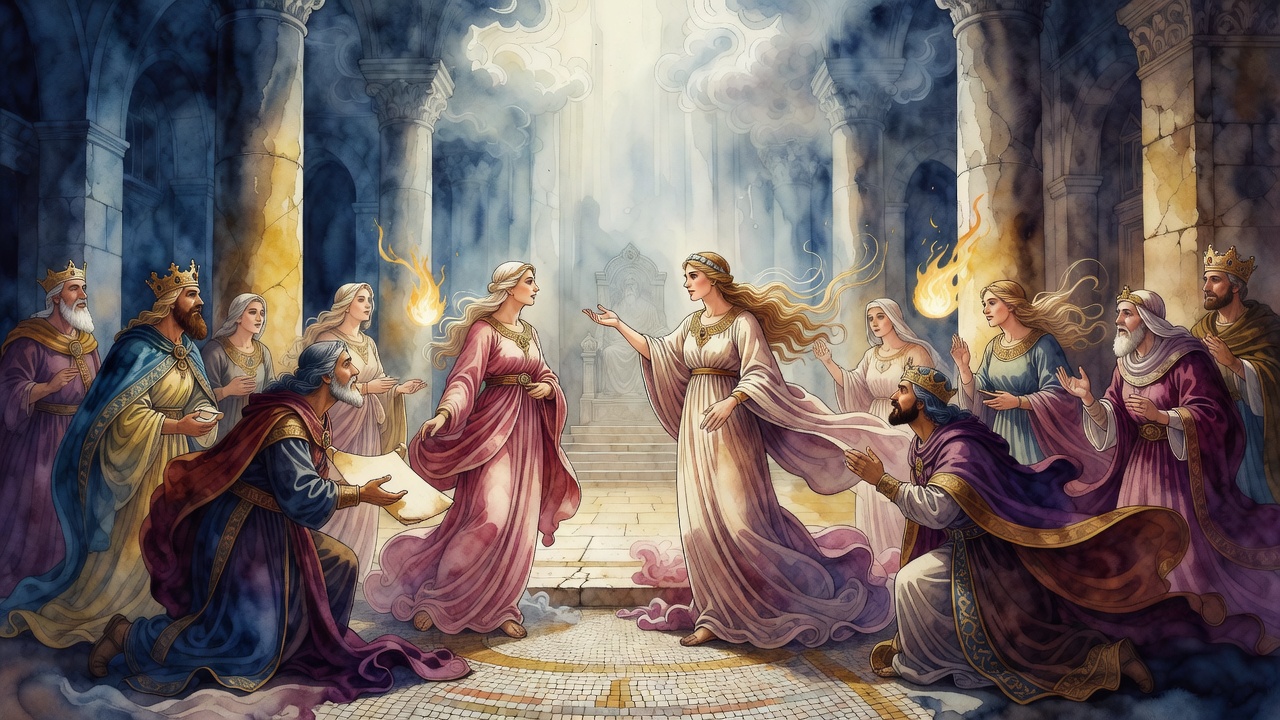
They brought her to the gate of the tent with her hair uncovered. The priest took hold of her clothes and pulled, and whatever tore, tore, and whatever came apart at the seam came apart, and nobody stopped him.
He filled an earthen cup with water. He crouched and scraped up dust from the floor of the Tabernacle and shook it into the cup. Then he wrote God's name on a strip and washed the ink off into the same water until the letters were gone and the water was cloudy with them.
"If no man has lain with you," he said, "be clear of this bitter water."
"Amen," she said. "Amen."
She drank. Her eyes swelled in her head while the cup was still in her hand.
Simeon Carried a Sword and His Son Carried a Dish
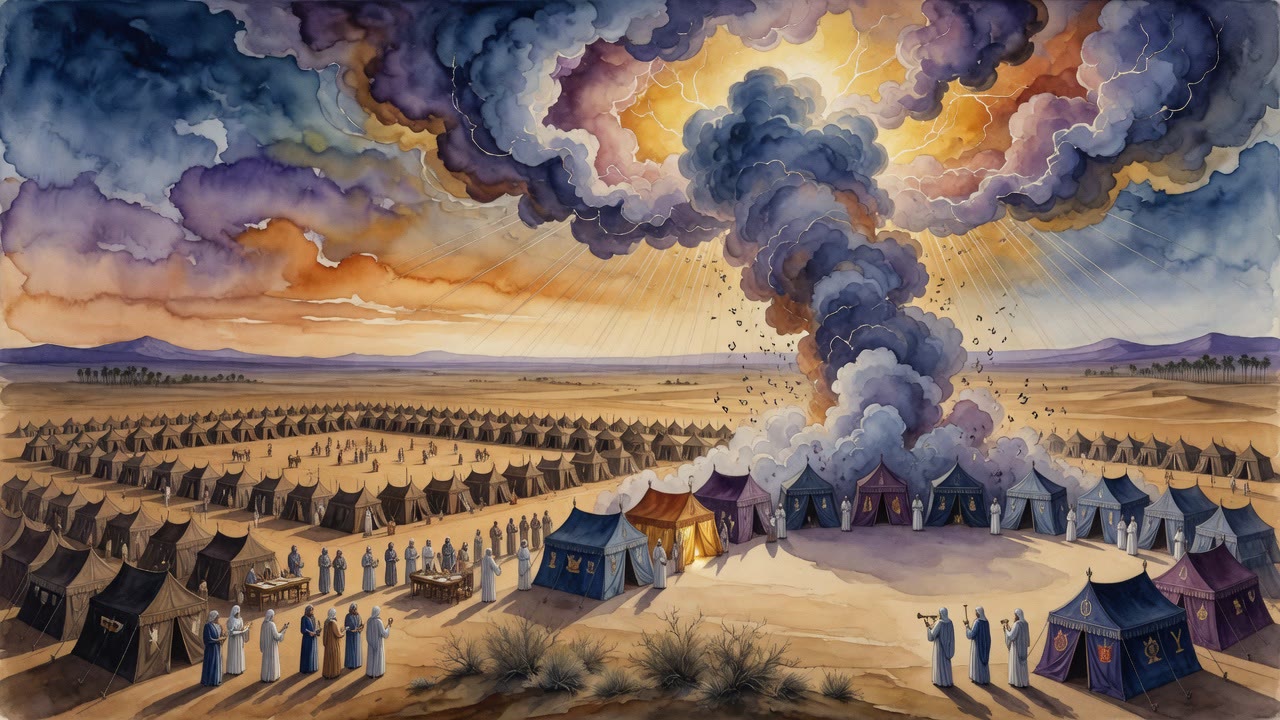
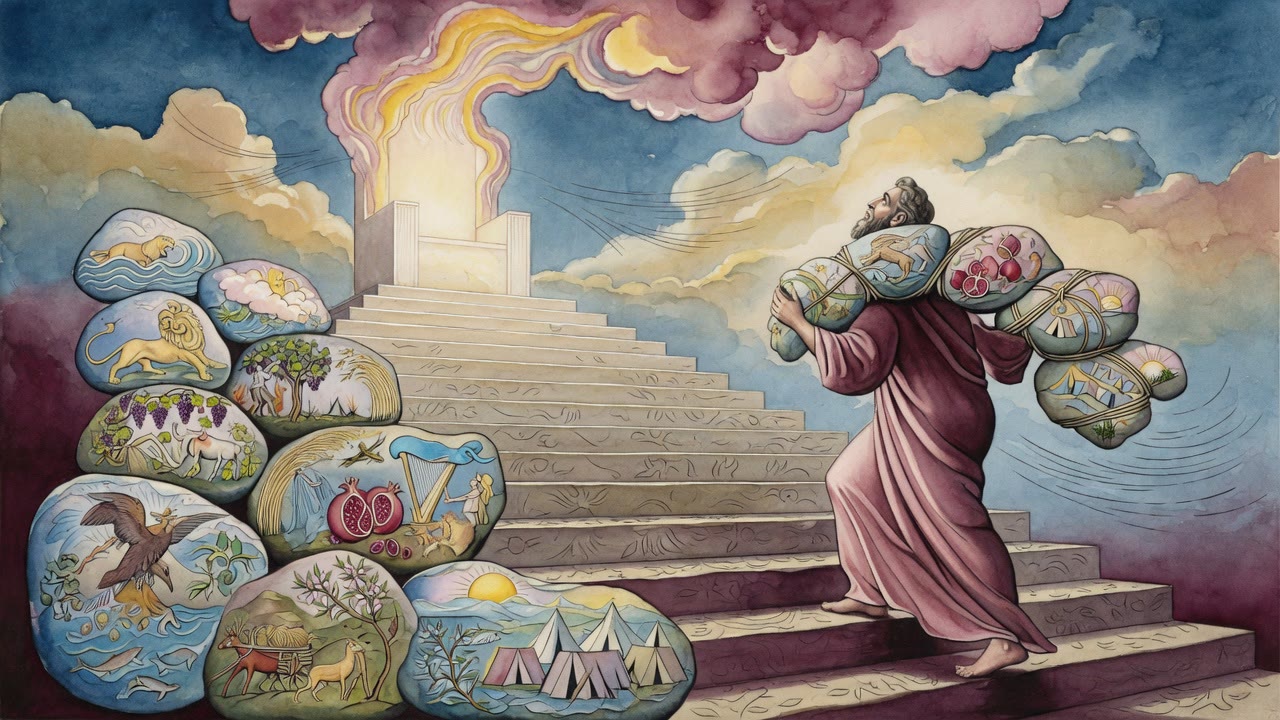
On the fifth day of the dedication offerings, Shelumiel son of Zurishaddai, prince of Simeon, came forward with a silver dish and a silver basin and a gold ladle full of incense, and every weight of it matched some measurement of the tent itself. The dish weighed as much as the courtyard was long. The basin weighed seventy, for the seventy pillars standing around that courtyard.
His tribe had a memory to answer for. Their forefather Simeon had gone into Shechem with a sword over his sister Dinah and come out having killed every man in it. Now his descendant laid the Tabernacle out in silver on the ground, because the tent was going to do that same work without anyone drawing a blade. The water would find the adulterers. God saw the offering and praised it by name.
The Nation Had Already Drunk From a Cup Like That
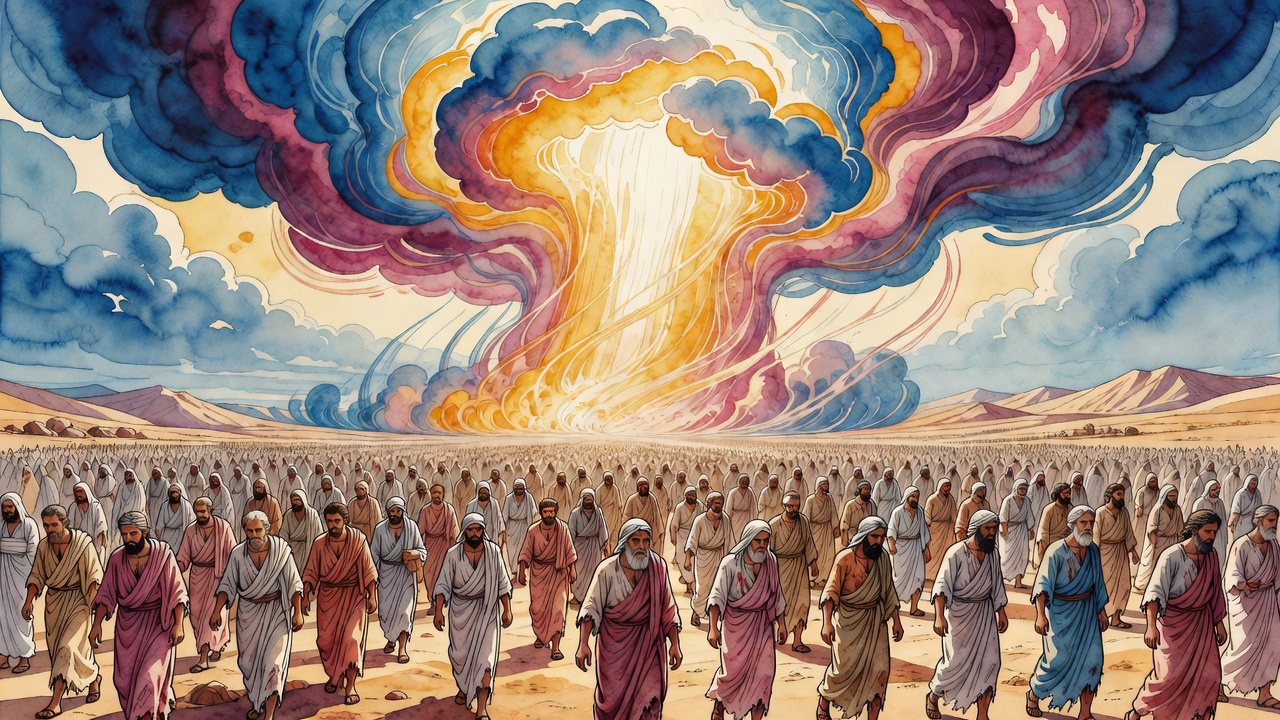
There was another bitter water, and Israel had swallowed it standing in the open at the foot of a mountain.
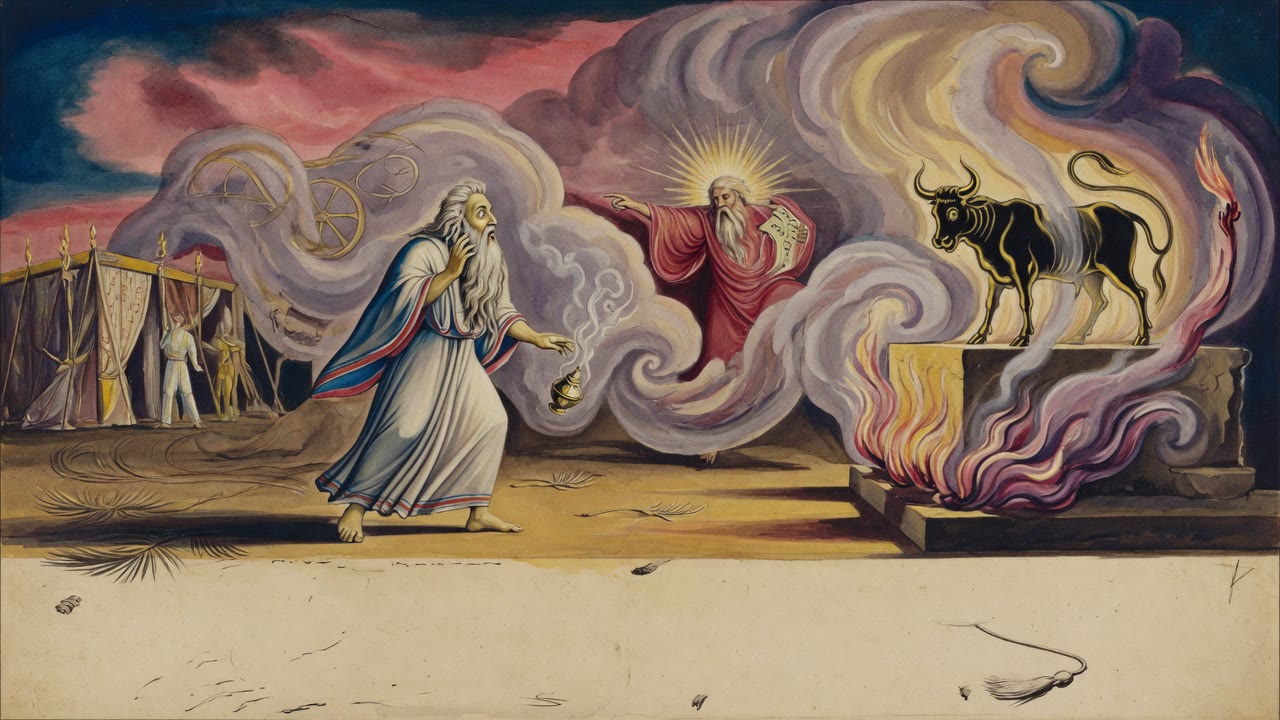
Moses had come down and found them dancing. He burned the calf, ground the gold into powder, scattered it across the brook and made every one of them drink it, and he put them under oath by everything they had accepted at Sinai that the water would go through them and sort them out.
Set the priest's oath beside that brook and it stops being about one woman in a torn dress. If no man has lain with you means you did not sacrifice to the calf. If you did not stray means you burned no incense to it. If you were defiled means you poured no wine out before it. And a man has lain with you means you looked at a gold animal and said out loud, "You are my god."
Three times the oath says the water will enter. Three sentences fell on the men who made the calf: the sword, the water, and the plague.
The Brother Who Was Named as the Lover
Which leaves the man in the case, because a woman does not commit adultery alone.
Aaron had taken the gold. Aaron had shaped it. Aaron had built the altar in front of it and called a feast for the next morning. The verse says God was incensed with Aaron, to destroy him, and to destroy a man in that language does not mean the man. It means his fruit. It means his children.
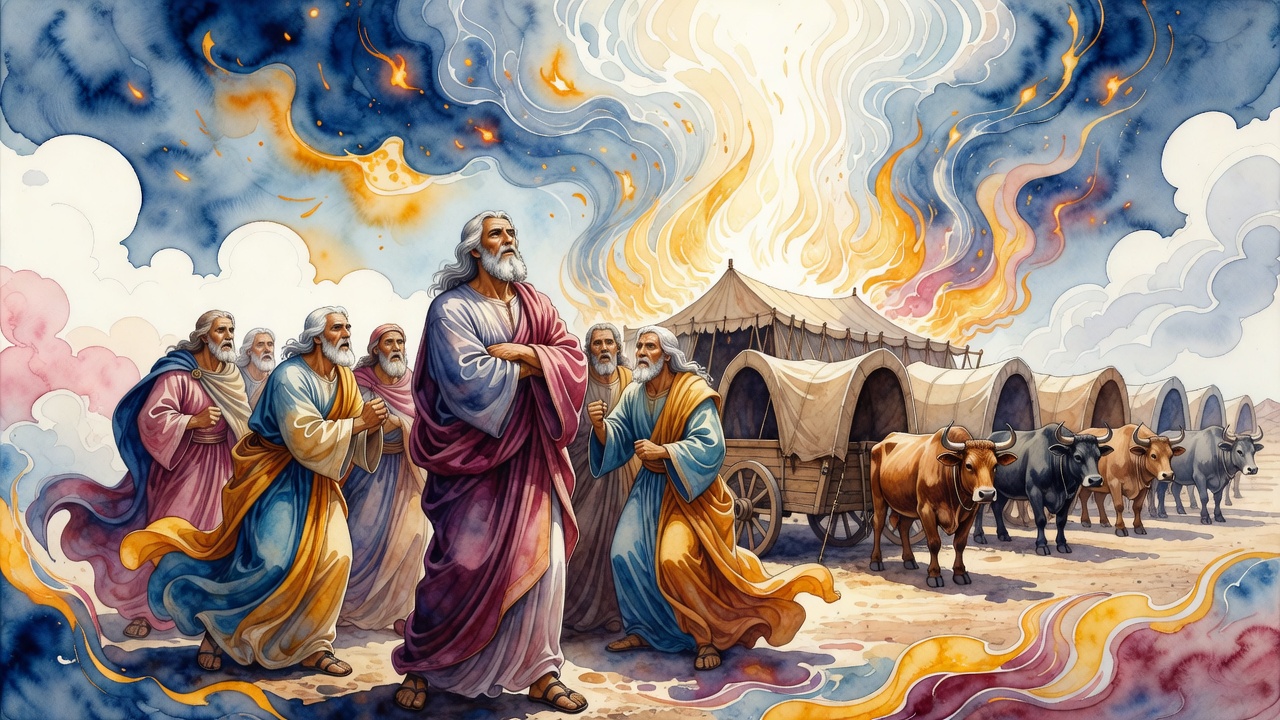
Four sons stood behind him at the tent: Nadab, Abihu, Eleazar and Ithamar. All four were fit to die. Moses prayed for his brother, and the prayer held two of them back, and the other two were the price. Belly and thigh, the two curses in the oath, two sons out of four. Whoever loses something entrusted to him pays double to his companion, and Aaron paid two boys to the God who is called the companion of Israel.
They went into the tent with fire in their pans and did not walk out.
Amen, and Amen Again
Aaron had lost half the sons he started with, and he stood at the altar afterward with the two who were left, and there was no arithmetic that made the ledger come out even. The water had not been magic. It had been a bill.
Wine was what made it easy. The eyes find the thing, the heart turns it over, and the cup makes both of them brave, which is why the law of the man who swears off wine comes immediately after the law of the woman at the gate. Whoever stood in the crowd and watched her drink was meant to walk home and empty his own jar into the sand.
Far later, on the other side of the wilderness, the tribes stood on two mountains and the curses were called across the valley between them, and the first curse of all was for the man who makes a carved image in secret. The people answered the way she had answered at the tent door, and they said it twice. Once for the curse they could name. Once for the curse they could not.
← All myths