6 min read

The King Whose Sin Outran Language and the Son Who Kept It

Ahab ruled two hundred and fifty-two kingdoms and denied God on his own gates, yet clutched the Torah. His son Joram kept only the ruin.

Curated by Arthur · Told by Maggid ·
Table of Contents
  1. The Gates of Samaria Bore His Denial
  2. The One Thing He Would Not Surrender
  3. He Saddled His Own Warhorse
  4. The Son Who Charged Interest on Piety
  5. The Arrow Between His Arms
  6. A Sun Worshipper Puts His Heir on the Altar
The King Whose Sin Outran Language and the Son Who Kept It Click for full size

The Gates of Samaria Bore His Denial

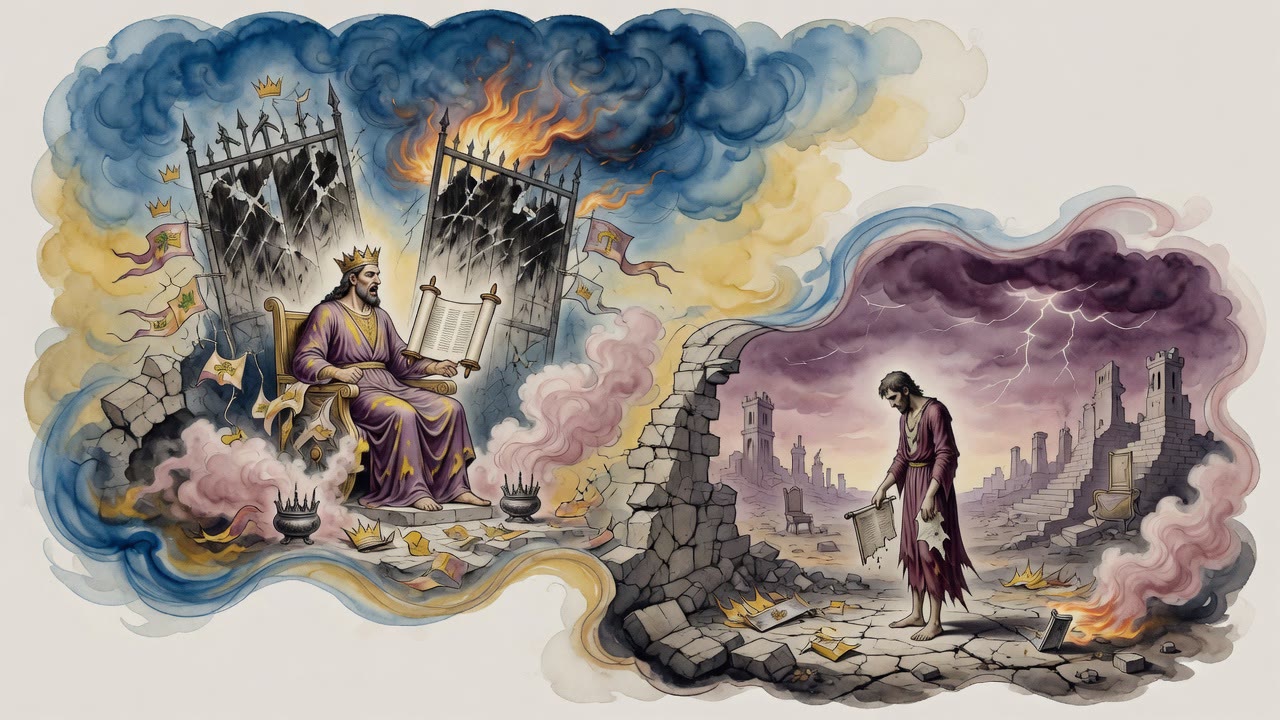
The gates of Samaria carried an inscription no other king would dare cut into his own city. Five words, hammered into the stone above the road: "Ahab denies the God of Israel." Ahab passed under them every time he rode out, and he had ordered them there himself.

He could afford the arrogance. Two hundred and fifty-two kingdoms answered to him, more than his ally Jehoshaphat ever held, and his wealth outran any accounting. Each of his hundred and forty children lived in ivory, a palace for the summer heat and another for the winter cold.

The sages who remembered him did not dwell on the kingdoms or the ivory. They dwelled on the sin, because the sin was larger than the empire. Set beside Ahab, they said, the transgressions of Jeroboam looked like small mistakes. His wife Jezebel had turned his heart to idols, and he had followed her so far down that road that no word in the language could hold the whole of what he had done.

The One Thing He Would Not Surrender

And yet the same man kept a scroll he would not let go of.

Ahab was generous to scholars, and stranger still, he loved the Torah, the five books of Moses. He studied it with a hunger that did not match the gates of his city. When Ben-hadad of Aram sent word demanding everything Ahab owned, his silver, his gold, his wives, his children, Ahab agreed. All of it. Take the wives, take the children, take the treasure.

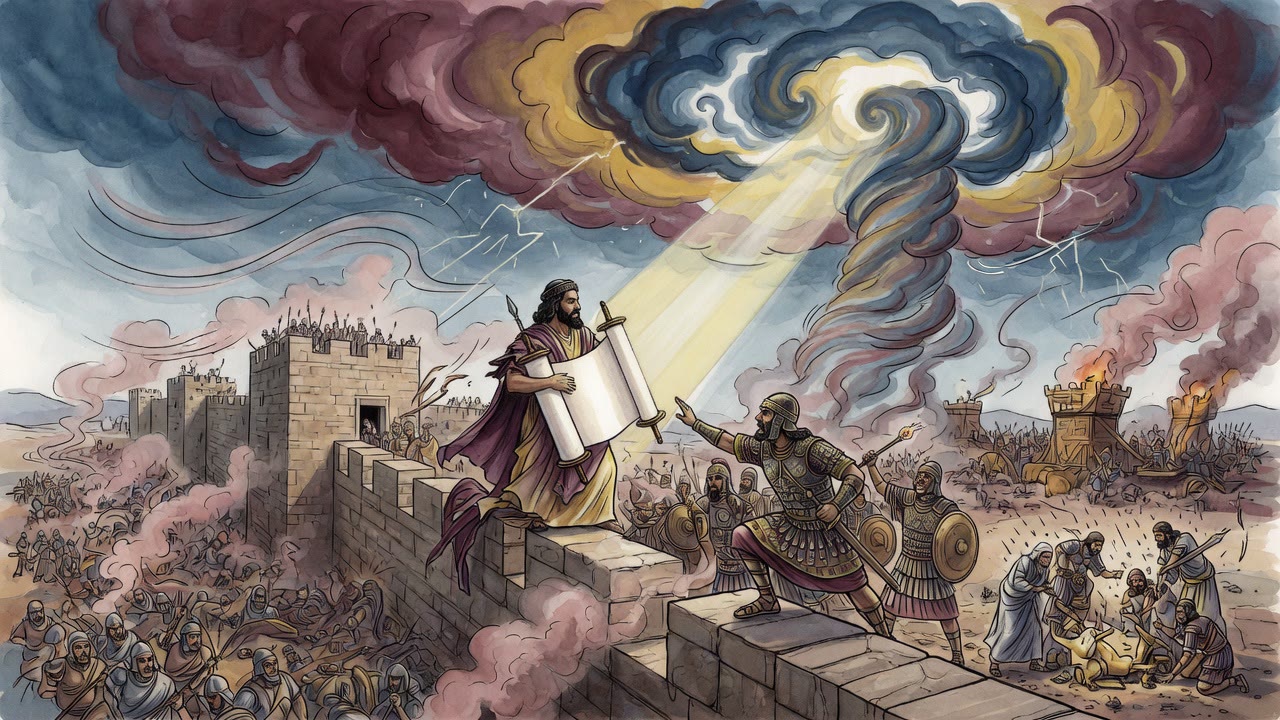
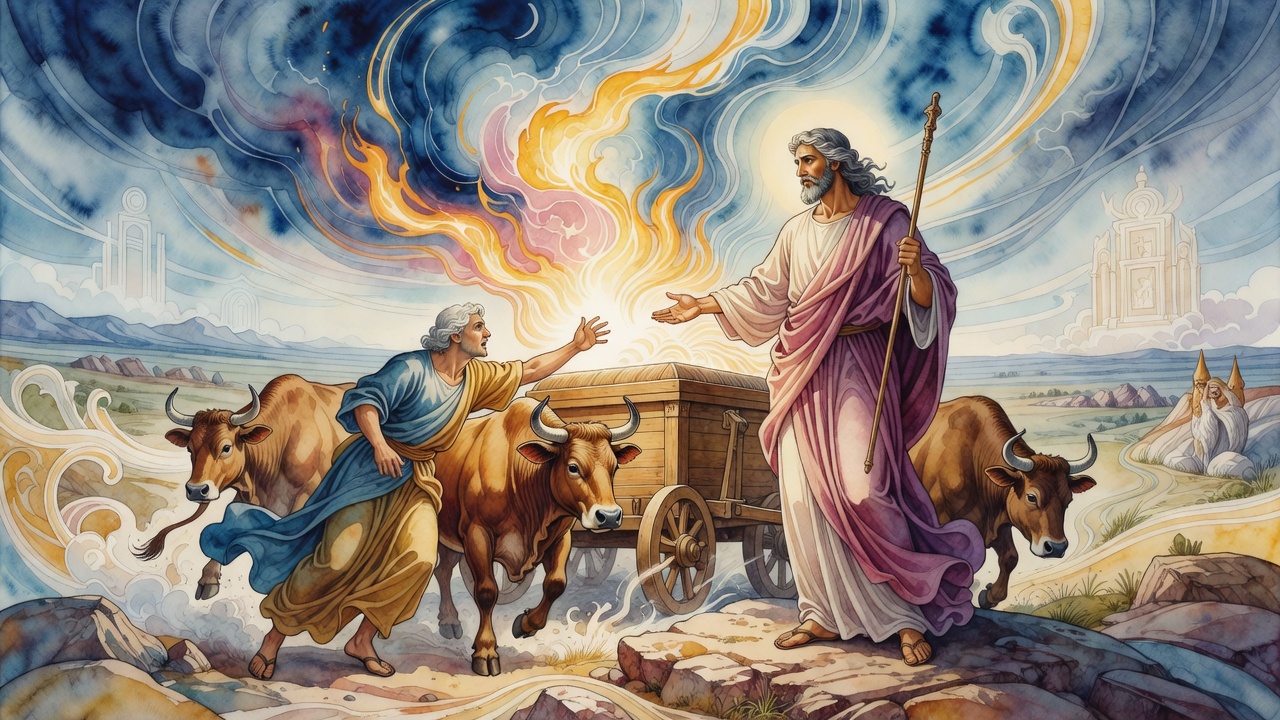
Then Ben-hadad sent a second demand, for the scroll. There Ahab stopped. The king who had denied God on his own gates would not put the words of God into a foreigner's hand. That refusal meant war.

He Saddled His Own Warhorse

Ahab's fury at the Aramean's arrogance ran so hot that he did not wait for a servant to prepare his mount. He saddled his own warhorse and rode out at the head of his army. Heaven noticed the zeal. God gave him a victory so complete that a hundred thousand Syrians fell in a single day, exactly as the prophet Micaiah had foretold.

But Micaiah carried a second word, and it was a warning. Ben-hadad was not to be spared. "Know," God had said, "that I had to set many a pitfall and trap to deliver him into thy hand. If thou lettest him escape, thy life will be forfeit for his." Ahab let him escape. The trap had been sprung for nothing, and the price of that mercy was marked against the king who had shown it.

The Son Who Charged Interest on Piety

Ahab died, and his son Joram took the throne carrying every one of his father's flaws and none of his father's virtues.

Whatever softness Ahab had shown to scholars, whatever reverence he had kept for the scroll, died with him. Joram inherited the idolatry and the denial and added a meanness his father never had. Ahab had been generous. Joram was a moneylender. When the prophets of God needed support, the same prophets Obadiah had once hidden in caves and fed with bread and water at the risk of his own neck, Joram saw an opening. He lent the money for their keeping and charged interest on it. He grew rich on other men's piety and squeezed profit from the very mercy his house should have shown for free.

The Arrow Between His Arms

The account came due on a battlefield.

An arrow found Joram, and it found him with a strange precision. It struck between his arms and drove through until the point came out at his heart. He had stretched those arms out to receive usury. He had hardened that heart against the poor. Now the arrow passed through both, the reaching arms and the closed heart, and read his whole reign back to him in the single second it took him to fall.

A Sun Worshipper Puts His Heir on the Altar

One campaign in Joram's reign was worth remembering, and it did not end the way his court expected.

Joram marched against Moab with the kings of Judah and Edom beside him, and the three of them won. It was a real victory. Israel walked away from it exactly as rebellious as it had marched in. They learned nothing. They disobeyed as before.

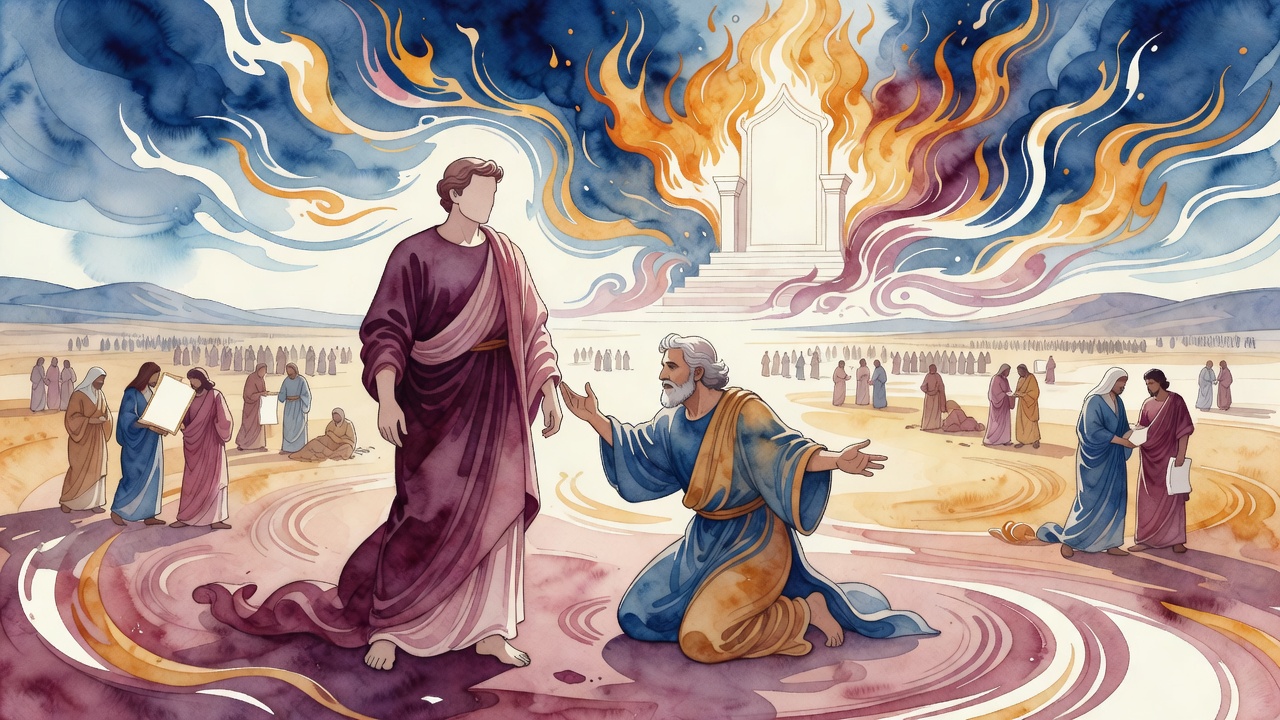
The king of Moab learned something instead. Beaten and desperate, he called his astrologers and asked why Israel kept the upper hand. They gave him an answer out of the deep past. God favored Israel, they said, because their father Abraham had once been willing to lay his son Isaac on an altar and lift the knife. The Moabite king, a worshipper of the sun who had never served the God of Israel, followed that logic to its horror. If a man was rewarded so richly for the mere willingness, he reasoned, how much more for the deed itself. He took his own son, the heir to his throne, and offered him up to the God of Israel on the wall of his besieged city.

The offering did not please heaven the way he hoped, and it brought down no fire either. God's answer was aimed past Moab entirely, at Israel. "The heathen do not know Me," God said, "and their wrong-doing arises from ignorance. But you, Israelites, know Me, and yet you act rebelliously toward Me." A sun worshipper had burned his firstborn to reach a God he could not name, while the house of Ahab and Joram, who knew exactly whose gates they were defacing, went on defacing them.


← All myths

From the tradition

Sources

2 sources

The texts behind this telling. Some cards carry a translation of the source; others are our own retelling of it, and each card says which. Every card links out to the original.

Legends of the Jews 6:22Legends of the Jews

Retold in our words. Read the original at the link below.The Legends of the Jews by Louis Ginzberg (1909) · Public Domain

There's another king whose story is, well, complicated. A king whose reign was marked by both incredible power and profound sin. I'm talking about Ahab, king of Samaria.

Ahab, according to Ginzberg's Legends of the Jews, surpassed even his friend Jehoshaphat in both power and wealth. That's the kind of dominion Ahab held! And his wealth? It was legendary. Each of his hundred and forty children had multiple ivory palaces, with separate residences for summer and winter.

Here’s the thing: Ahab's prominence isn’t because of his vast empire or his overflowing coffers. It's because of his sinful conduct. In fact, Ginzberg tells us that Ahab made the transgressions of Jeroboam look like minor mistakes. At Ahab’s command, the very gates of Samaria were inscribed with the words: "Ahab denies the God of Israel." He was deeply devoted to idolatry, led astray by his infamous wife, Jezebel. The fields of Palestine,

So, was Ahab all bad? No. The story gets even more complex. He possessed some redeeming qualities. He was generous toward scholars, and, surprisingly, showed great reverence for the Torah, the sacred scroll containing the five books of Moses. He studied it zealously.

There's a fascinating story about how even Ahab's respect for the Torah played out. When Ben-hadad demanded everything Ahab possessed – his wealth, his wives, his children – Ahab conceded. Everything, that is, except the Torah. That, he refused to surrender.

This refusal led to war with the Syrians. And here's where Ahab's character takes another surprising turn. He was so indignant at the arrogance of this Aramean upstart that he personally saddled his warhorse for battle! According to Legends of the Jews, God rewarded this zeal with a brilliant victory. The prophet Micaiah had even foretold the victory, where a hundred thousand Syrians were slain.

But Micaiah also warned Ahab not to show leniency toward Ben-hadad. God's message was clear: "Know that I had to set many a pitfall and trap to deliver him into thy hand. If thou lettest him escape, thy life will be forfeit for his." We see here the complex interplay of free will and divine decree, a common theme in Jewish tradition.

What do we make of Ahab? He was a king of immense power and wealth, yet also a deeply flawed individual. He denied God, embraced idolatry, yet also revered the Torah and showed generosity to scholars. He was a paradox, a mix of good and evil, strength and weakness. His story reminds us that even the most powerful figures are not immune to temptation, and that even those who stray from the path can possess redeeming qualities.

Full source
Legends of the Jews 6:29Legends of the Jews

Retold in our words. Read the original at the link below.The Legends of the Jews by Louis Ginzberg (1909) · Public Domain

That’s kind of what we’re dealing with in the story of Joram, son of Ahab.

Ahab wasn't exactly winning any "Father of the Year" awards. But according to Legends of the Jews, Joram managed to inherit all of his father's flaws, while somehow skipping the good parts. Ahab, at least, was known for being generous. Joram? Not so much. In fact, he was downright stingy.

Get this – he did it to Obadiah! Yes, that Obadiah, the one who risked his neck to hide and feed the prophets. Joram was basically profiting off the piety of others. The text says he extracted a high rate of interest on the money needed for their support.

The result? A pretty grim end. At his death he fell pierced between his arms, the arrow going out at his heart. A pretty poetic justice. He had stretched out his arms to receive usury, and had hardened his heart against compassion. Ouch.

Now, one event did happen during Joram's reign: a campaign against Moab. He teamed up with the kings of Judah and Edom, and they actually won a pretty impressive victory. But did Joram and his people learn anything from it? Nope. According to Legends of the Jews, their disobedience to God’s commands went on as before. Business as usual, unfortunately.

But here’s where things get really interesting. The king of Moab, on the other hand, had a… unique reaction to the war. He wanted to understand why the Israelites seemed to have a leg up. So, he calls in his astrologers. They tell him that God favors Israel because their ancestor, Abraham, was willing to sacrifice his son, Isaac.

And here’s where it takes a dark turn. The Moabite king figures, "Hey, if God values intention so much, imagine how much He'll value the real deal!" So, this guy, who was normally a sun worshipper, decides to sacrifice his own son, the heir to the throne, to the God of Israel. Talk about extreme!

What was God’s reaction to all this? Not exactly pleased. The text presents God as saying, "The heathen do not know Me, and their wrong-doing arises from ignorance; but you, Israelites, know Me, and yet you act rebelliously toward Me."

The Moabite king, in his own twisted way, is trying to connect with the divine. Meanwhile, the Israelites, who should know better, are just going through the motions, their hearts far from God. Something to consider.

Full source