Parshat Tzav6 min read

The Kingdom That Climbed the Altar Ramp Toward a Throne

One of the delegates at the gate held a boy by the wrist. Rams, jars of oil, a firstborn son if that was the price. The boy was looking at the fire.

Curated by Arthur · Told by Maggid ·
Table of Contents
  1. The Eagle That Set Its Nest Among the Stars
  2. The Bargain of Rams and Rivers of Oil
  3. Of You and Not of Them
  4. The Sword That Ate
  5. The Slaughter at Botzrah
  6. Two Tables, Both Arranged Long Ago
The Kingdom That Climbed the Altar Ramp Toward a Throne Click for full size

The Eagle That Set Its Nest Among the Stars

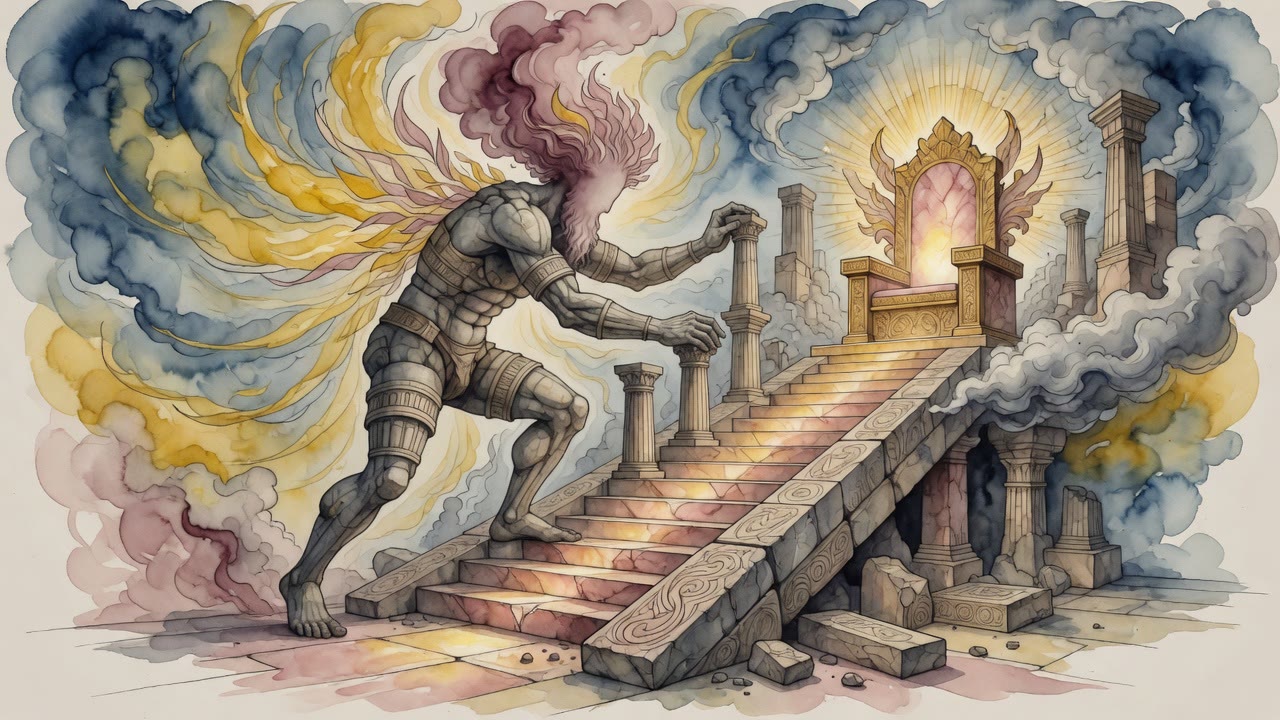
The kingdom climbed, and the stone under its feet was already warm.

Edom had built high and then higher, hammering its house into rock where nothing else could reach, and from that height it saw only the tops of things, crowns and towers and the smoke of smaller kingdoms. Eagles nested lower than this.

A voice met it in the open air. "Though you soar high like the eagle, and though you set your nest among the stars, I will bring you down from there."

The kingdom kept walking. It had been climbing toward a throne for as long as it could remember, and up was the direction it knew.

It had never looked closely at what it climbed. The slope was gentle and unstepped, wide enough for a procession, built so that whatever walked it would never lift its feet. At the top was a hearth, and on it a fire fed all night and still hungry at dawn.

The Bargain of Rams and Rivers of Oil

While it climbed, the nations came to the gate below with a proposal.

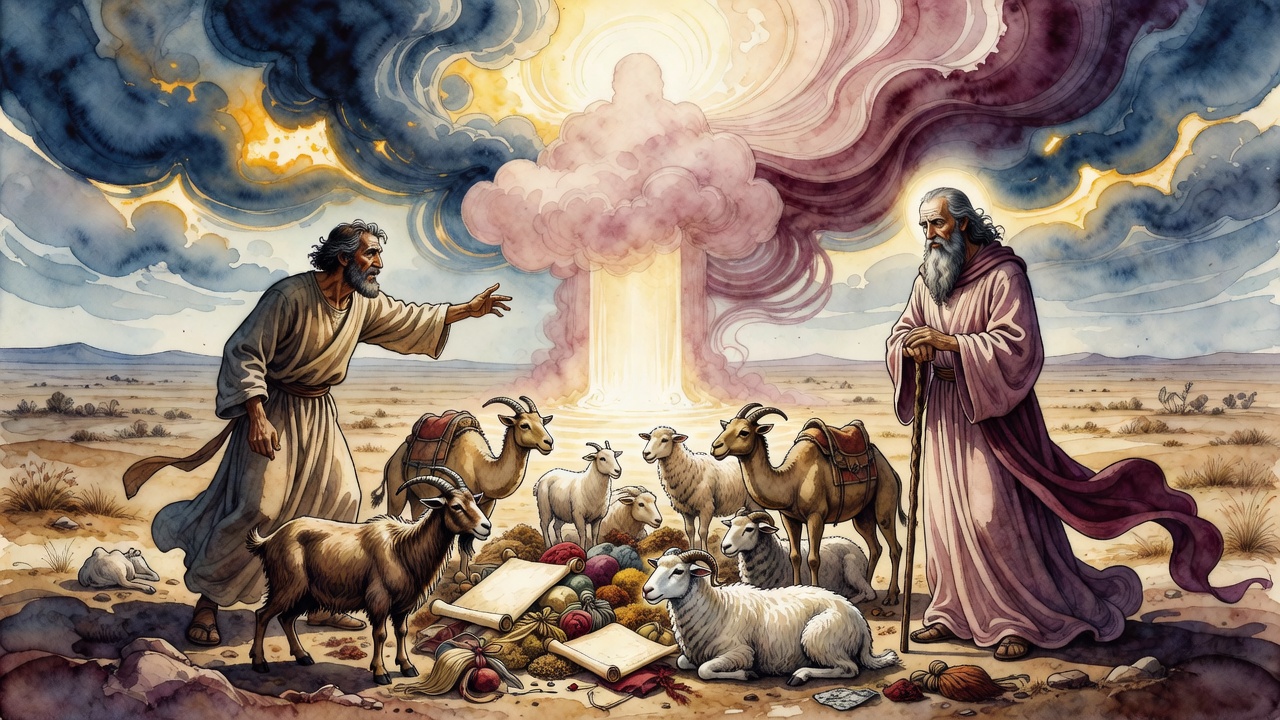
They had brought stock. Rams by the thousand, penned and bleating and shouldering each other against the rails, and oil in stacked jars, ten thousand rivers of it. One of the delegates held a boy by the wrist.

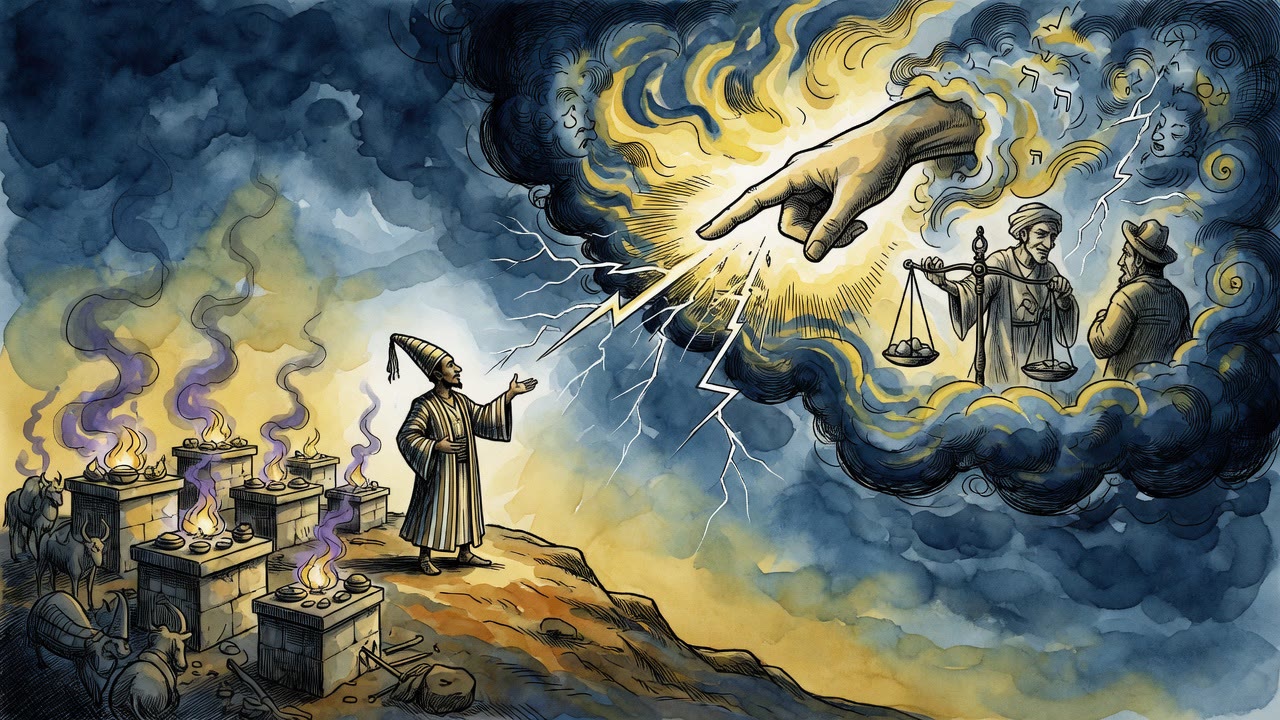
Their spokesman lifted his head toward the smoke. "With what shall I come before the LORD? Will the LORD be pleased with thousands of rams, with ten thousand rivers of oil? Shall I give my firstborn for my transgression, the fruit of my belly for the sin of my soul?"

The boy was looking at the fire.

God answered from above the ramp, fast, without weighing anything.

"It is your sons that you seek to offer before Me."

The rams went on bleating. Nobody moved.

"Neither your sons nor your sacrifices do I seek."

They stood in the gate with the ropes slack in their hands, and the grip on the boy's wrist lost its purpose.

Of You and Not of Them

Inside the court, a man was doing something much smaller.

He said the words aloud, because a vow only counts when the mouth makes it plain, and what he said was that he owed a valuation of lives to the LORD. Then he laid his hand flat on his own head, naming himself as the thing weighed. A priest wrote down the shekels. Not much silver.

God had opened the whole book of offerings narrowly. When a man of you brings an offering. Of you, and not of the nations.

"Better is the little that the righteous has."

The man lowered his hand. What that silver bought had been promised to Jacob's children long before he walked in. "If you bring before Me your valuations, I credit it to you as though you had offered your own lives before Me."

The Sword That Ate

Far from the altar, in a country of scattered bones, a man was ordered to summon birds.

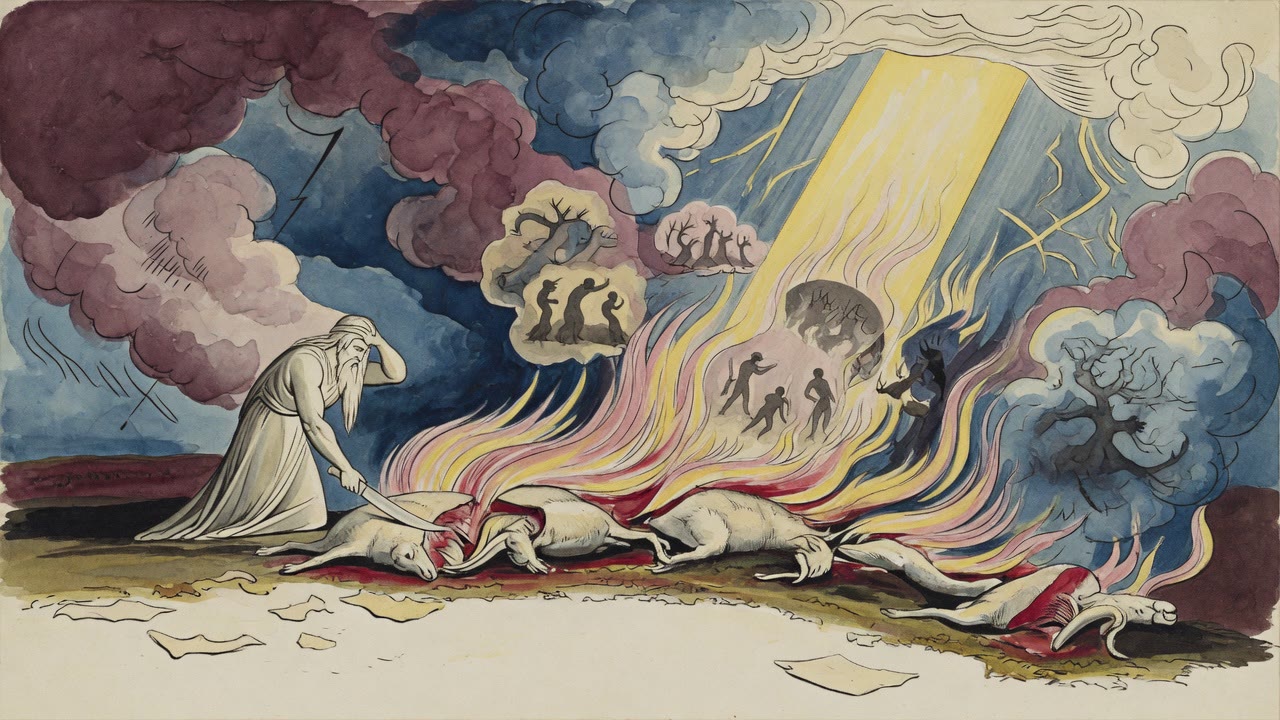
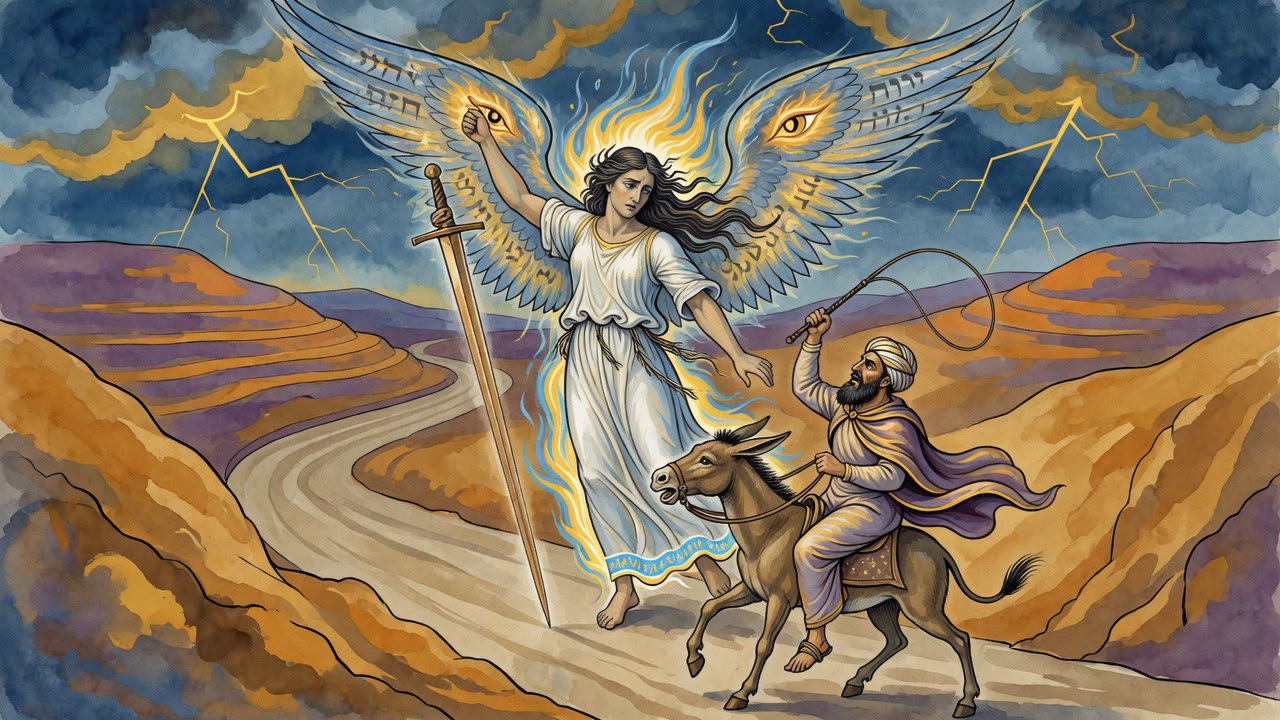
Ezekiel stood where he was put and called out over the empty air. "Son of man, say to every winged bird and to every beast of the field. Assemble and come, gather together from all around for the feast that I slaughter for you."

They came. Vultures dropping in slow spirals, jackals at a trot, everything that eats what armies leave.

"And you will eat flesh and you will drink blood. You will eat the flesh of warriors, and you will drink the blood of the princes of the land. You will eat fats to satiety and you will drink blood to drunkenness, and you will be sated at My table."

A sword does not eat. A sword opens, and other mouths finish the sentence. The birds had been invited before the battle, which settled it.

The Slaughter at Botzrah

Isaiah saw the blade after the work. "The sword of the LORD is full of blood, greased with fats." Slick to the grip, the way a butcher's knife goes slick.

He knew the address. A sacrifice for the LORD in Botzrah, a great slaughter in the land of Edom, and the word for it was the courtyard word, the one used for whatever a man leads up the ramp on a rope.

Higher up, a court sat with its books open. A beast with iron teeth was still boasting when the sentence came down. The boasting stopped mid-word, and the body went into the burning fire.

Ages earlier, at the door of the tent, God had put a line into Moses' hand about the offering that stays on its hearth all night until morning. It had taken this long to arrive.

"The house of Jacob shall be a fire, and the house of Joseph a flame, and the house of Esau for stubble."

Stubble is what stands after everything worth keeping is carried off. It never needs lighting twice.

Two Tables, Both Arranged Long Ago

Topheth had been arranged from of old, its pit deep and its wood stacked, and no one needed to be told who it was for.

The other arrangement was a table.

David sat at it while his enemies watched him eat, near enough to count his cups. A hand set the dishes down without hurrying, poured oil over his head until it ran into his beard, and kept pouring after the cup at his place had filled and gone on spilling across the wood.

Ten thousand rivers had been offered at the gate and refused. One jar on one man's head, and it did not stop.

Up on Mount Zion the deliverers were climbing to judge the mountain of Esau, and the kingdom passed into other hands.

Behind them, on the hearth, the fire had what it came for.


← All myths
From the tradition

Sources

3 sources

The texts behind this telling. Some cards carry a translation of the source; others are our own retelling of it, and each card says which. Every card links out to the original.

Midrash Tanchuma Buber, Tzav 4:1Midrash Tanchuma Buber, Tzav

Translation of the source text.Midrash Tanchuma (Buber), Public Domain, on Sefaria · CC-BY-SA

[This is the burnt offering upon its hearth (Leviticus 6:2).] This is the wicked kingdom, which exalted itself, as it is said: "Though you soar high like the eagle, and though you set your nest among the stars, [I will bring you down from there, says the LORD]" (Obadiah 1:4). And they were sentenced to fire, as it is said: "I beheld until the beast was slain [and its body destroyed and given over to the burning fire]" (Daniel 7:11). The Holy One, blessed be He, said: "And the house of Jacob shall be a fire, and the house of Joseph a flame, [and the house of Esau for stubble,] etc., for the LORD has spoken" (Obadiah 1:18). And what did He speak by the hand of Moses? This is the burnt offering upon its hearth. And afterward: "And saviors shall ascend upon Mount Zion to judge the mountain of Esau, and the kingdom shall be the LORD's" (Obadiah 1:21).

Full source
Sifrei Devarim 332:2Sifrei Devarim

Retold in our words. Read the original at the link below.Sifrei by Rabbi Shraga Silverstein · CC-BY

Sifrei Devarim turns to Edom Before the Altar.

So, what's going on when we read, as we do in Sifrei Devarim, "and My sword shall eat flesh"?

The text immediately acknowledges the strangeness of the image. How is it possible for a sword to eat flesh? The answer given isn't a literal one, of course. Instead, it offers an interpretation: "I shall make others eat from what My sword does." It shifts the focus from the sword itself to the consequences of its actions. The sword is simply an instrument. It's the aftermath, the feasting, that's truly significant.

To illustrate this, the text brings in powerful imagery from the prophets Ezekiel and Isaiah. (Ezekiel 39:17-20) paints a vivid, almost grotesque picture: "Son of man, thus says the L-rd G-d: Say to every winged bird and to every beast of the field: Assemble and come, gather together from all around for the feast that I slaughter for you. And you will eat flesh and you will drink blood. You will eat the flesh of warriors, and you will drink the blood of the princes of the land… And you will eat fats to satiety and you will drink blood to drunkenness… and you will be sated at My table."

Wow. That's intense. It's a scene of total devastation, a victory so complete that even the scavengers are glutted.

And (Isaiah 34:6) echoes this: "The sword of the L-rd is full of blood, greased with fats." Why? Because "there is a sacrifice for the L-rd in Batzrah, a great slaughter in the land of Edom." Edom, of course, is often used as a symbolic representation of Israel's enemies.

So, what's the takeaway here? It's not about God wielding a literal sword and chowing down on the battlefield. It's about the consequences of divine judgment. It's about the complete and utter triumph over those who oppose God. The "eating" is a metaphor for the consumption of the defeated, a stark representation of the spoils of war.

But there’s also something deeper here, isn’t there? These images are unsettling, even disturbing. They force us to confront the violence inherent in some religious texts and to confront the complex relationship between divine power and human suffering.

Perhaps the real question isn't just "how can a sword eat flesh?" but "what does it mean when we use such visceral language to describe God's actions?" That, I think, is something worth pondering.

Full source
Midrash Tanchuma Buber, Bechukotai 8:1Midrash Tanchuma Buber, Bechukotai

Translation of the source text.Midrash Tanchuma (Buber), Public Domain, on Sefaria · CC-BY-SA

[Another interpretation of] (Leviticus 27:2) "When a man explicitly utters a vow." The nations say (Micah 6:6-7), "With what shall I come before the LORD, and bow myself before God on high? [...] Will the LORD be pleased with thousands of rams [...? Shall I give my firstborn for my transgression, the fruit of my belly for the sin of my soul?]" The Holy One, blessed be He, said to them: It is your sons that you seek to offer before Me. Neither your sons nor your sacrifices do I seek. To My children I gave the section of valuations and the section of offerings, for their offerings are beloved before Me. And so it says (Psalm 37:16), "Better is the little that the righteous has."

Know this for yourself: the beginning of the book is "Speak to the children of Israel [and say to them]: When a man brings of you [an offering]" (Leviticus 1:2), "of you" and not of the nations. And the end of the book is "Speak to the children of Israel and say to them: When a man explicitly utters a vow" (Leviticus 27:2). And it says (Psalm 147:19), "He declares His words to Jacob [...]."

The Holy One, blessed be He, said to Israel: If you bring before Me your valuations, I credit it to you as though you had offered your own lives before Me. Therefore it is said (Leviticus 27:2), "When a man explicitly utters a vow, the valuation of lives to the LORD [...]." The Holy One, blessed be He, said: By the merit of the valuations (ne'erakhim) I deliver you from the arrangement (arikhah) of Gehinnom, of which it is written (Isaiah 30:33), "For Topheth is arranged from of old"; and I will arrange before you a table, as David said (Psalm 23:5), "You arrange a table before me in the presence of my adversaries; You anoint my head with oil; my cup overflows."

Full source