Obadiah the Edomite Who Spoke Edom's Doom
Edom rose as the terrible beast of Habakkuk and Daniel. From Edoms own ranks God raised Obadiah the convert, whose single oracle turned terror into verdict.
Table of Contents
 Click for full size
The Beast That Made Nations Tremble
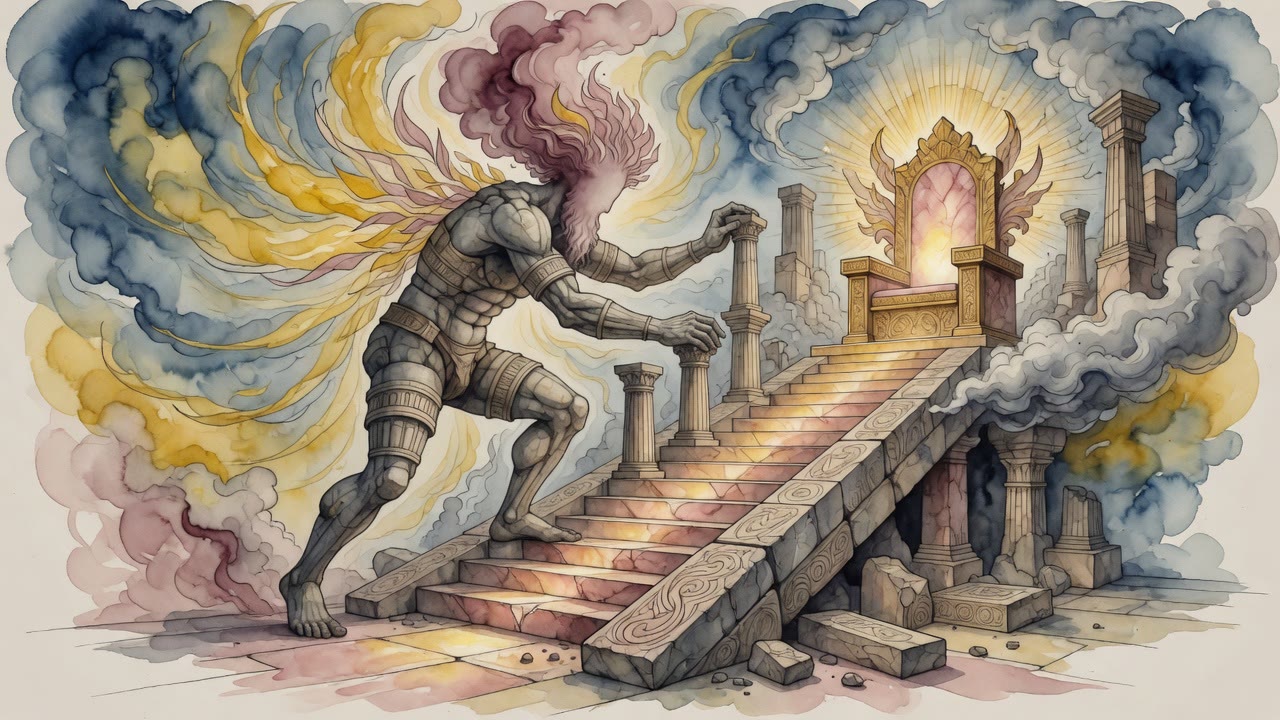
Edom filled the horizon until smaller kings practiced the sound of its approach the way children practice the names of storms. Prophets named a power terrible and dreadful. In vision it walked as a beast "dreadful and terrible and exceedingly strong" (Daniel 7:7), and Habakkuk's line found the same empire under another name (Habakkuk 1:7). Maps bent around its roads. Merchants paid twice to avoid its collectors.
Then the same line turned inside out. "From him his judgment and his dignity proceed." Out of Edom itself would come the mouth that sentenced Edom. Terror and verdict shared a bloodline. The beast would grow its own prosecutor.
Maps bent around Edom's roads. Merchants paid twice to avoid its tax collectors. Prophets in smaller cities lowered their voices when they named it. The midrash does not soften that fear. It needs the fear so that Obadiah's mouth can be heard as a crack in iron, not as a scolding from a safe distance.
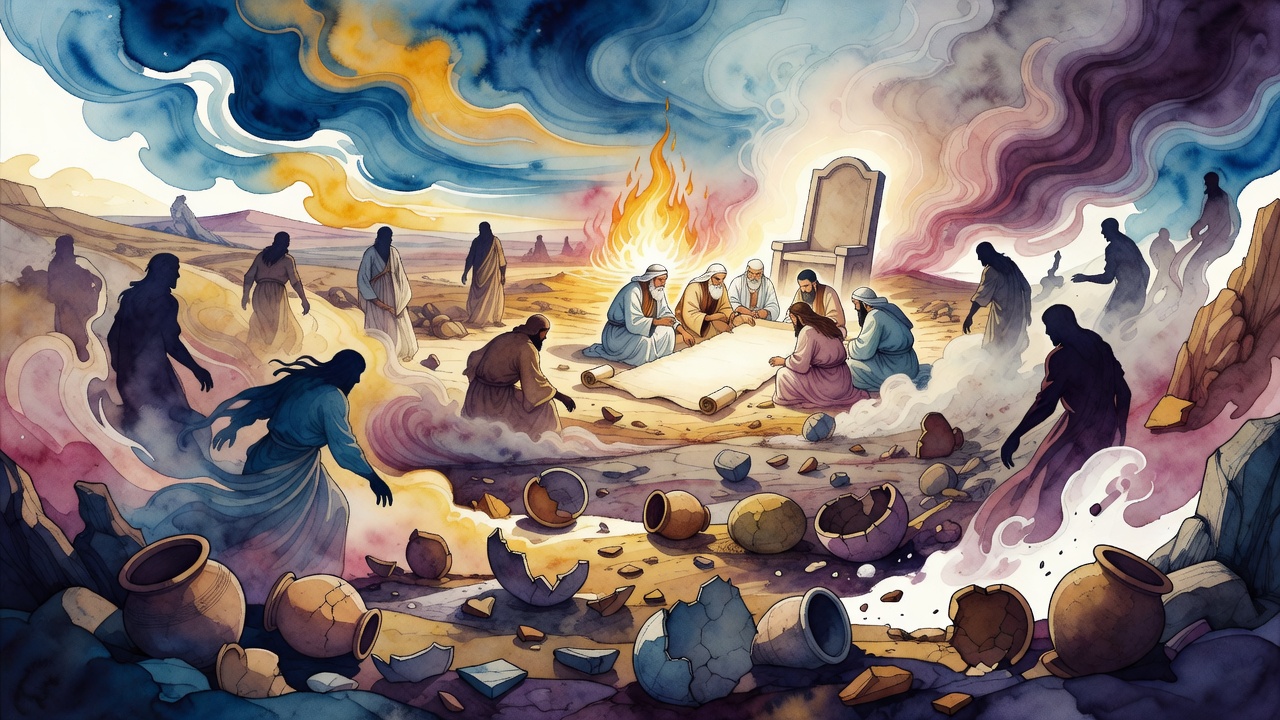
In Moses' song the nations can look like livestock graded for the slaughter-house of history: cream of the herd for leaders, fat of lambs for officers, ranks sorted by how they feed on power. Edom sits high in that sorting until the sorting becomes a sentence.
The Convert from the Beast
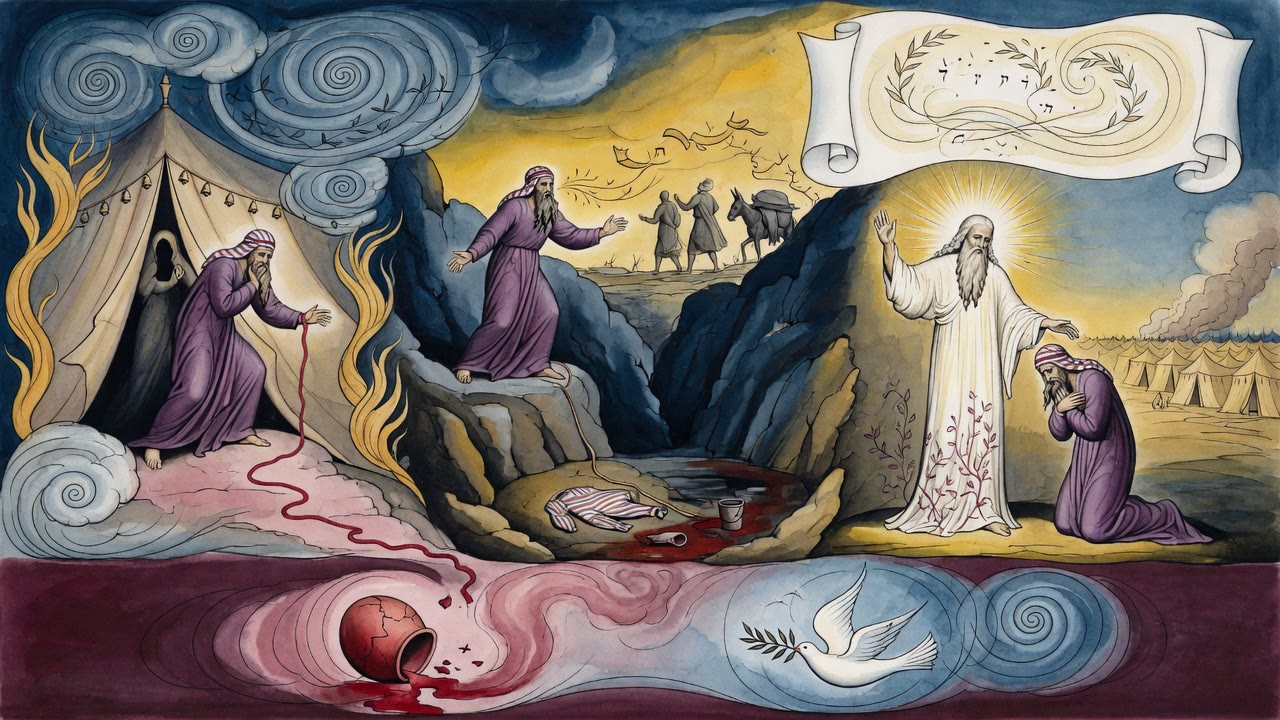
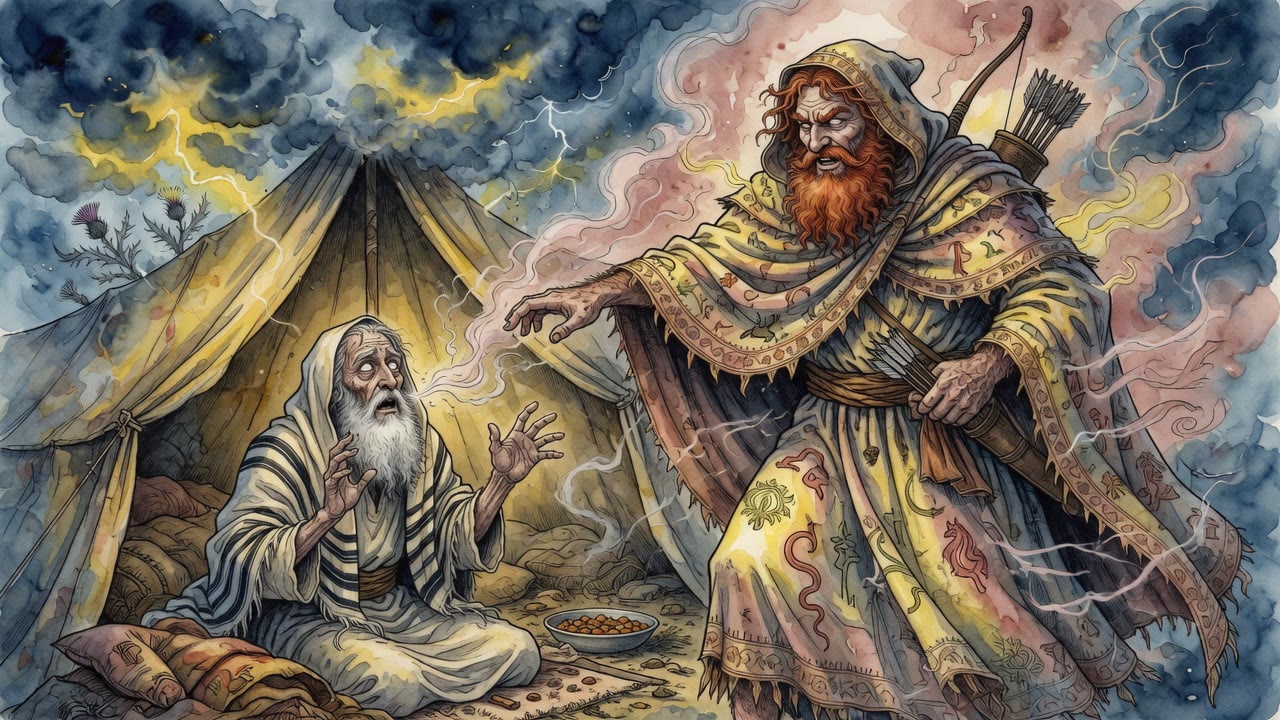
Rabbi Isaac said: Obadiah was an Edomite convert, a proselyte who had come in beneath the wings of the Divine Presence from the very people marked for judgment. His entire prophecy is one oracle. "The vision of Obadiah. Thus says the Lord God concerning Edom" (Obadiah 1:1).
No second career of comfort. No side book of consolation for another tribe. From Edom's ranks God raised the tongue that would proclaim Edom's downfall. The convert did not erase his origin. He used it as jurisdiction. He knew the house he was dismantling by decree. He had worn its pride before he wore Israel's covenant.
Conversion did not make him gentle about Edom's crimes. It made him precise. He had seen the pride from the inside, the way a family jokes about a weaker brother's ruin until the joke becomes policy. When he opened his oracle, that policy stood in the dock without a foreign accent to hide behind.
When he spoke, the nations that had trembled at Edom heard a new sound: Edom trembling at a voice that used to be its own. Judgment that proceeds "from him" is not imported theater. It is the empire's former son naming the end.
Fathers Who Cannot Save
Elsewhere the midrash strips comfort from pedigree. "There is no saving from My hand." Fathers do not save sons. Abraham cannot save Ishmael. Israel (Jacob) cannot save Esau. The weight of that sentence sits on every parent who mistakes blood for atonement and every nation that mistakes ancestry for immunity.
Edom is Esau's long shadow stretched across empires. Obadiah's oracle is not family betrayal for sport. It is the end of the fantasy that lineage will cancel what the nation became. The convert stands where the father cannot: inside the judgment, speaking it without privilege, without a patriarch's hand to pull him back from the verdict.
The sentence lands hard in a tradition that prizes zechut avot, ancestral merit. Merit still matters. Merit is not a blank check for sons who build empires of cruelty. Abraham's love for Ishmael remains in the story. So does the limit. Jacob's tears for Esau remain possible. So does the refusal of automatic rescue. Obadiah lives in that limit and speaks from it.
Ishmael walks away from Abraham's table. Esau walks away from Jacob's blessing. The midrash refuses the soft ending in which love erases consequence. Love remains. Rescue of the unrepentant line does not.
The Mouth Inside the Empire
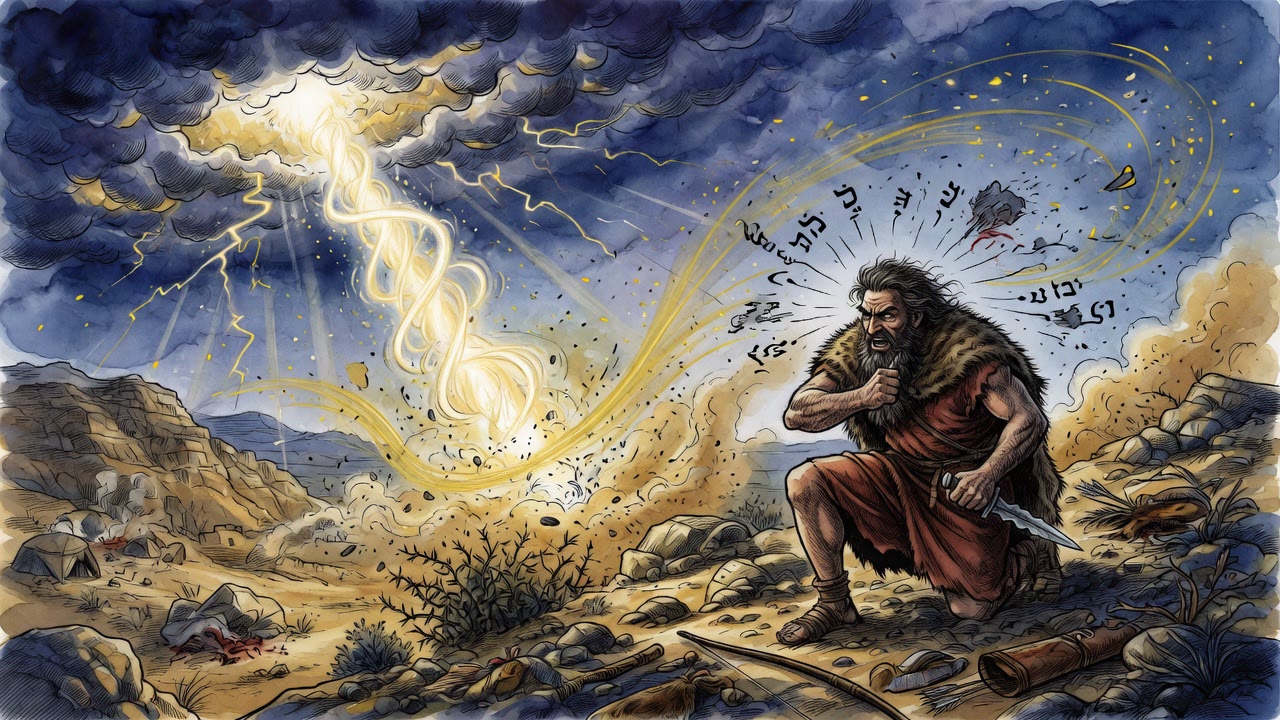
Obadiah climbed no foreign mountain to learn Edom's sins. He carried them in memory: violence at the crossroads, gloating at a brother's disaster, the tall pride that says who will bring me down. His oracle is short because the case is long and already known.
The terrible beast produced its own prosecutor. Heaven did not need to invent a stranger to read the charges. It took a man who had crossed from Edom into the wings of the Presence and sent him back as speech. Nations still sorted themselves like livestock in the old song. One voice from inside the herd named the day the sorting would reverse.
After the oracle, Edom still stood on the map for a time. Empires do not fall in a single stanza. But the dignity the midrash names had already shifted: the right to define Edom's meaning no longer belonged only to its kings. It belonged also to a convert who had walked out and turned around with Heaven's brief in his hand.
Edom's dread remained a fact of maps and armies. Edom's dignity, the midrash says, also proceeded from him: the dignity of being judged in truth by one who knew the house from the inside. Terror without verdict is only noise. Verdict without knowledge is only rumor. Obadiah was both knowledge and verdict, convert and witness, former son and final mouth.
← All myths