The Menorah Moses Could Not Make and God Forged in Fire
Every vessel of the Tabernacle obeyed Moses but one. The menorah broke his hammer, so God cast the raw gold into fire and lifted the lampstand out whole.
Table of Contents
 Click for full size
The One Vessel That Would Not Obey the Hammer
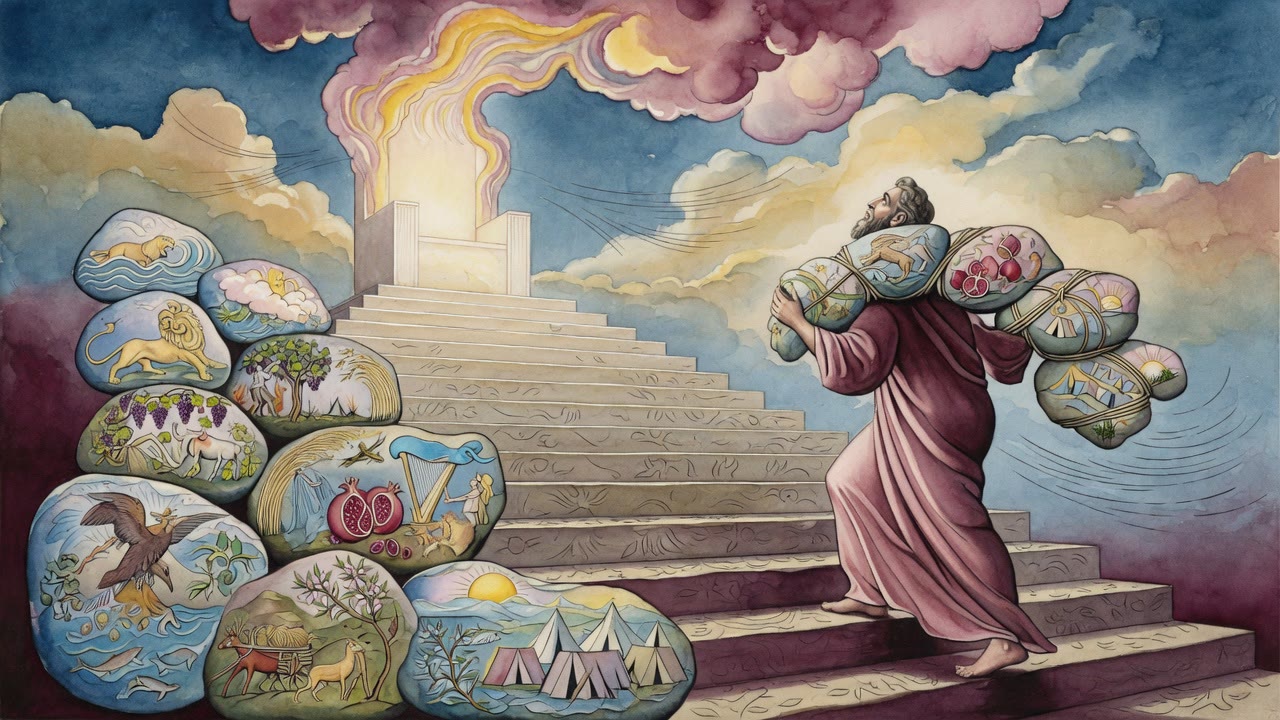
Every other vessel had come out of Moses' hands the way the plans promised. The ark with its carrying poles, the table with its golden rim, the altar, the basin, the boards sheathed in gold. He measured, he struck, he held the work against the vision he had been shown on the mountain, and the metal did what it was told. Then he came to the lampstand, and the metal stopped listening.
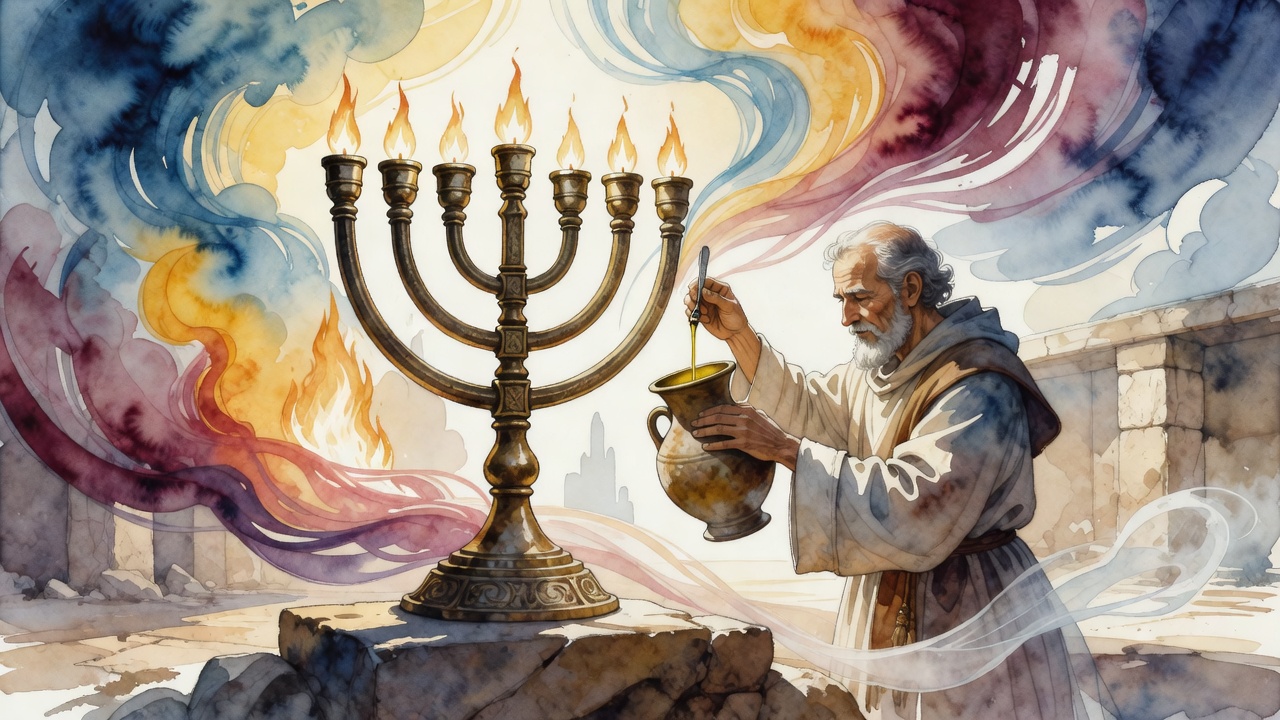
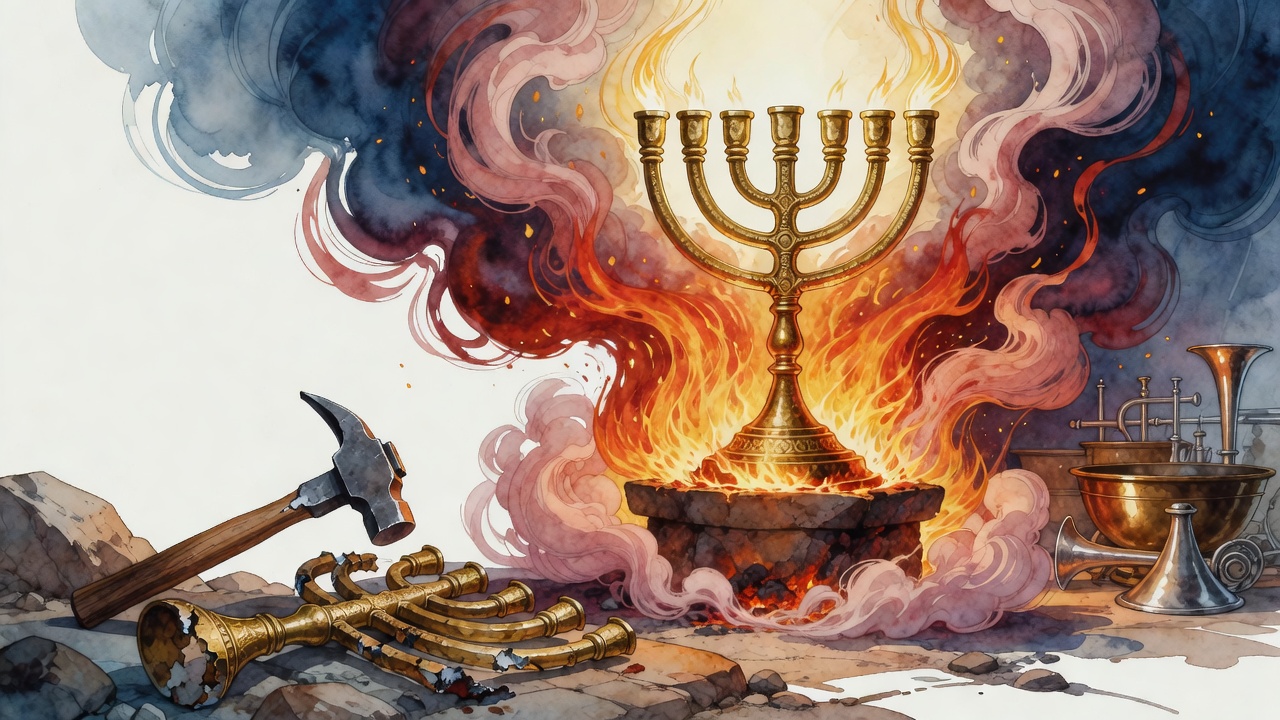
Moses turned the design over in his mind the way a man works at a knot he cannot pick loose. One block of gold. No seams, no soldered joints. Out of that single mass he was to raise a central shaft, six branches curving away from it in pairs, and along every branch the cups shaped like almond blossoms, the rounded knobs, the open flowers, every part swelling from the same unbroken metal. Beaten work, hammered from one piece. He struck, and a branch thickened where it should have thinned. He struck again, and a blossom flattened where it should have opened. The hardest labor in the whole Tabernacle, and it was defeating him.
The Finger That Had Taught Him Before
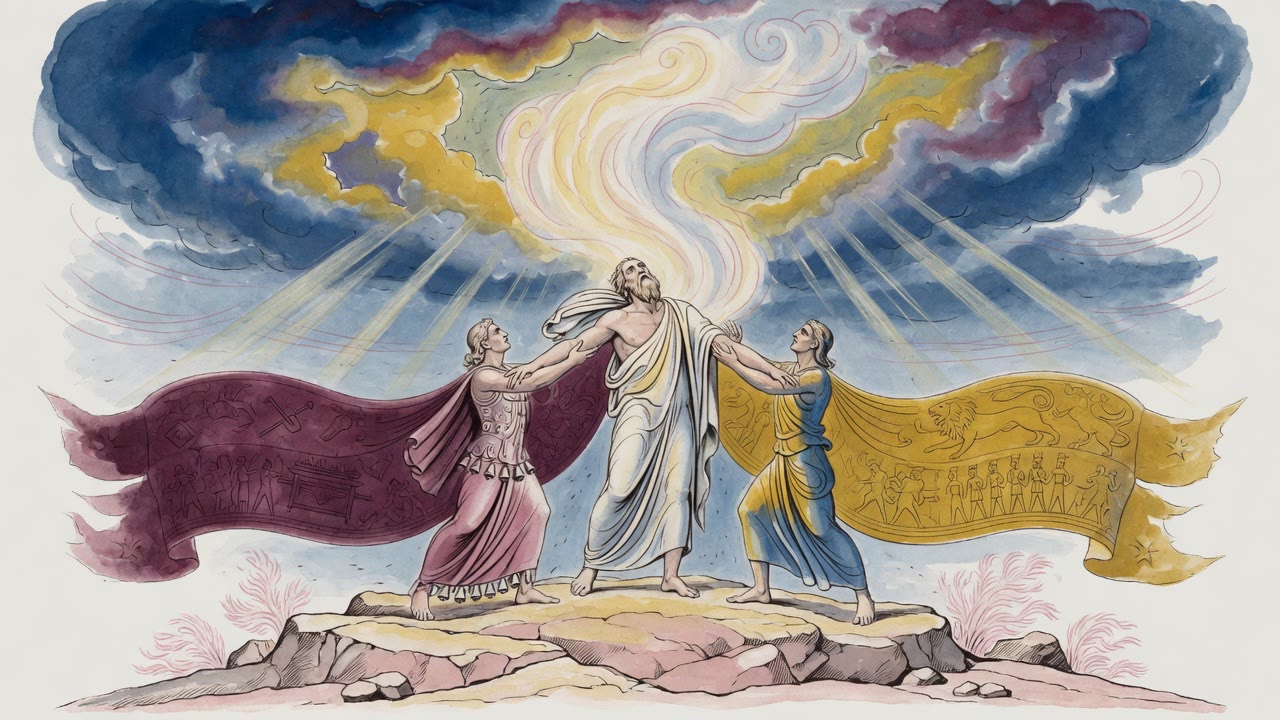
This was not the first thing that had refused to fit inside his understanding. When the laws of clean and unclean creatures were given, he could not hold in his mind which beast a man might eat and which he might not, until the Holy One drew near and showed him with a finger, this hoof and not that one. When the months were handed to Israel, he could not fix in his sight the thin first blade of the new moon, the exact edge of light that opens a month, until again the finger pointed, this is the moon, here the month begins. Twice the human mind had struck a wall, and twice heaven had leaned down through it. The lampstand was the third wall, and it was the highest.
The Gold Cast Into the Fire
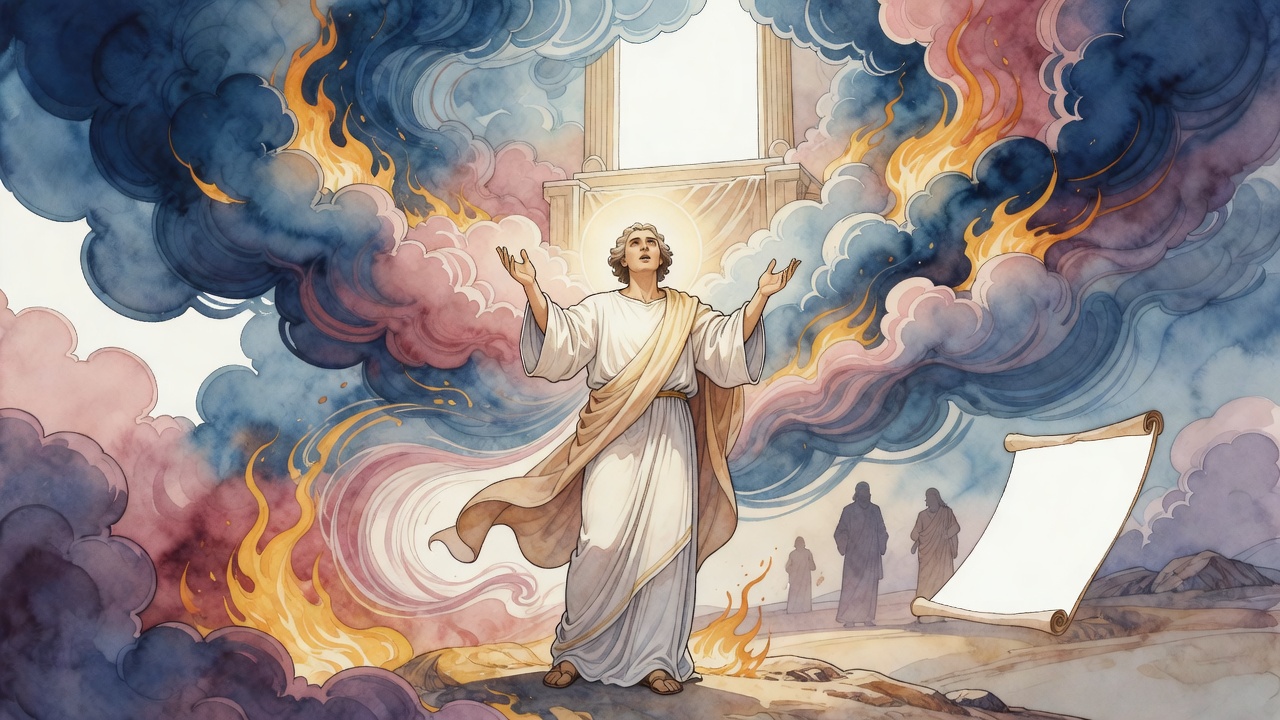
So the Holy One gave him an instruction that sounded like surrender. "Take a talent of gold," He said, "and cast it into the fire, and it will be made by itself." Moses lifted the whole weight of it, the gold he had failed to master, and threw it into the flame. Then he stood back from the furnace and spoke. "Master of the Universe, the talent is in the fire before You. Just as You wish, let it be made." And the fire gave it back finished. The base, the shaft, the branches in their pairs, the cups and knobs and almond flowers, all of one piece, raised whole out of the heat by no craftsman's hand. Moses had lifted the hammer only to prove that his hammer could not do it. The command itself had carried the secret from the start, written not as you shall make it but as it shall be made, as though heaven had said all along that no human arm would finish this one.
The King Who Disqualified His Own Lamps
Which left a stranger question underneath the miracle. Why would the Holy One, who is wholly light, want a lamp at all? Darkness is not dark to Him. Night shines for Him like the day. The light dwells with Him and never leaves. A God like that has no need of seven small flames trimmed by a priest.
The answer came as a story about a king and the friend he loved. The king sent word that he would come to dine at his friend's house, so the man made ready what he had, a plain couch, a plain table, a plain clay lamp. Then the king arrived with his whole court, and the servants set down lamps of gold on this side and on that. The friend looked at all that honor and burned with shame, and he gathered up his poor common things and hid them away. "Why is your table bare?" the king asked. "I saw the gold that came with you," the man said, "and I was ashamed of my clay." And the king answered, "By your life, I disqualify every lamp I brought into this house. For the love of you I will burn nothing here but what is yours."
The Flame Lit for Israel's Sake
So it was with Israel. The Holy One, who is light itself, said to them, make Me a sanctuary, hammer Me a lampstand, kindle Me its lamps. And when the work was done and the sanctuary raised, the glory came down so heavy that Moses could not enter the tent. Then the voice called him in, and out of all it might have commanded first, it gave him the smallest thing. "When you kindle the lamps." A God who needs no light, asking for a handful of flames lit by human hands, and disqualifying all the light of heaven to burn only theirs.
Inside the asking was a promise. "If you kindle before Me, I will guard your souls from every evil thing, and nothing evil will touch you. For the soul of a man is My lamp, searching all the chambers of the body." The lampstand that no hammer could forge, that rose finished out of the fire, was never lit to give the Holy One light He already possessed. It was lit so that the hands holding the flame would be kept, and the small light in each of them tended, the way a friend tends the one lamp a king came all that way to see.
← All myths