The Merchant Whose Only Cargo Was the Torah
The merchants laughed at a scholar with no crate. After customs took every bale, they found him teaching Torah in the synagogue and asked him to plead.
Table of Contents
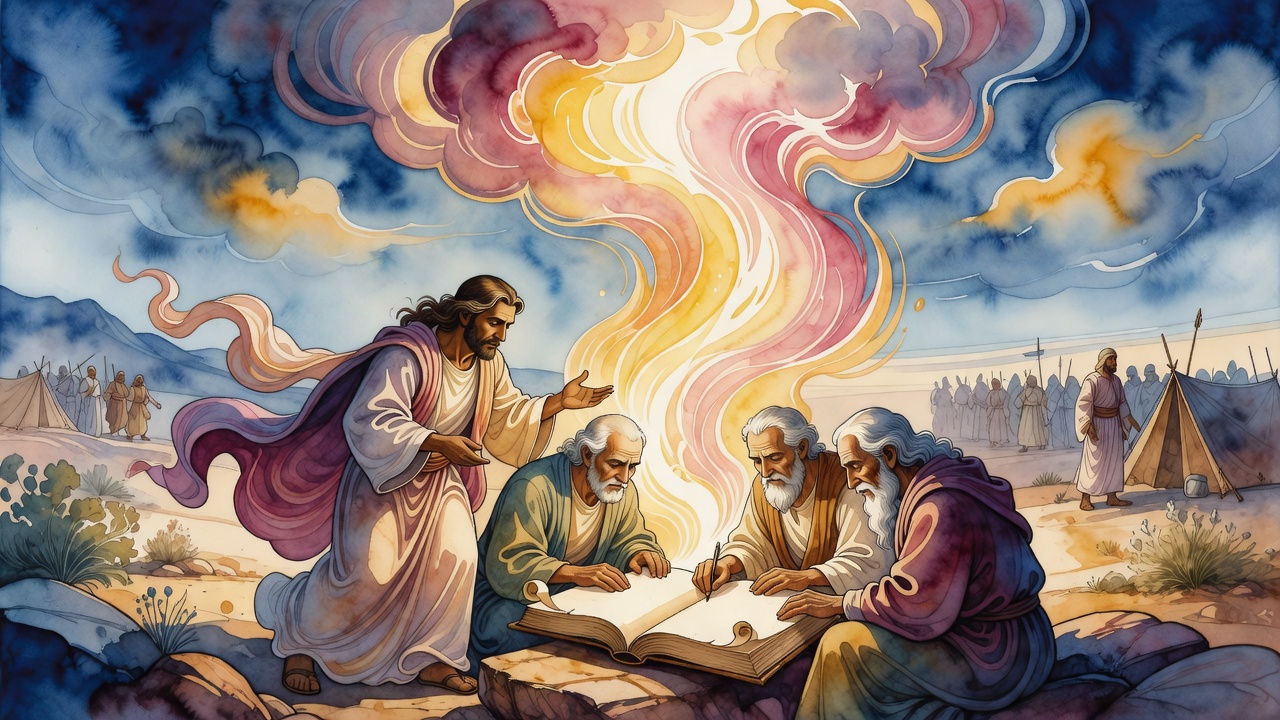
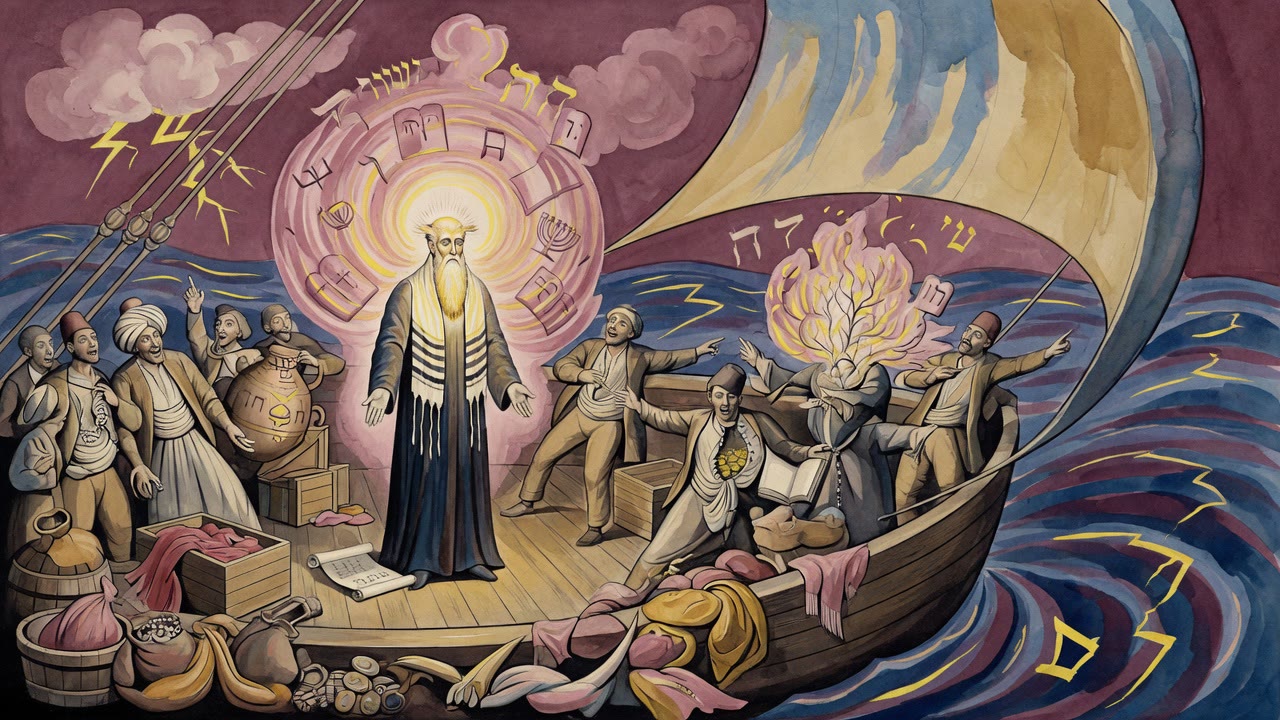
A merchant on the crowded deck kicked the empty space at the scholar's feet. Wool, oil, and spice filled the hold. Every other man had a crate to sit on. This one had none.
 Click for full size
"What is your merchandise?" the merchant asked.
The haver (חבר), a scholar, kept his hands in his lap. "It is hidden away."
They leaned in. A man who hides goods on a packed ship is a fool or the richest passenger aboard.
"Why will you not show it?"
"When I enter the province," he said, "I will show it to you." He closed his mouth after that. The ship went on, low in the water, and the joke about the man with invisible wares started before the first night watch.
They Tore Up His Corner
Merchants trust weight. While he slept they went down into the hold with a lamp. They shifted the planks near his place. They felt along the ribs of the ship for a strongbox, a sealed sack, a false floor. One of them put his whole arm into a gap and drew it back wet.
Rope. Bilge. Their own cargo. Nothing of his.
They came back up laughing loud enough to wake him. He did not sit up. A trader whose fortune fit inside his own boasting. They said that in daylight too, and he answered none of it, and the coast came closer.
The Officers Took the Rings
The ship put in. Officers of the customs came over the rail and went to work. They took the bales. They took the jars. They pulled coats off backs. One merchant had slid a ring under his tongue. An officer saw the bulge and took that too.
When the officers left, the merchants had nothing to eat and nothing to wear. They walked into the strange harbor town with empty hands, the same men who had counted their fortunes twice a night. The haver walked ashore beside them. He still carried nothing any eye could see.
The Benches Filled Around Him
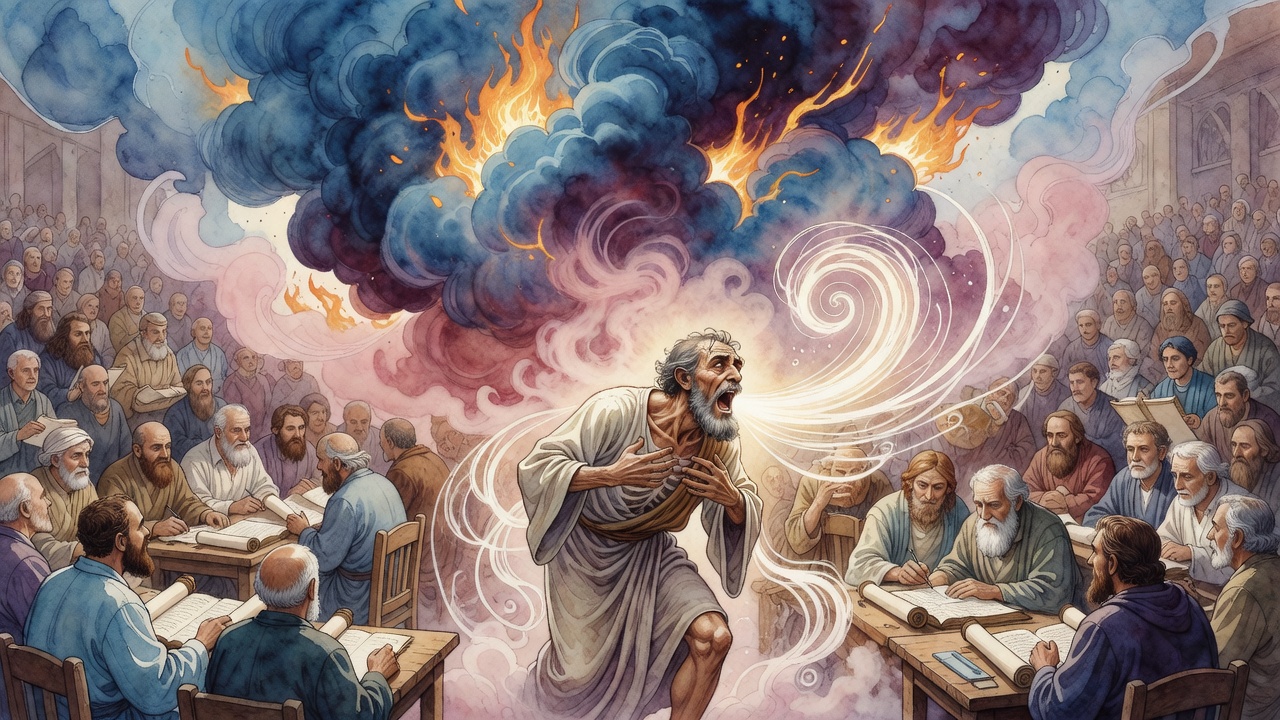
The merchants scattered to beg in doorways. The haver walked straight to the synagogue, sat down among strangers, and opened a verse.
Talk in the back of the room died. A man who can pry a hard line apart does not stay unknown in a sea town. The benches filled. Elders leaned in until their beards nearly touched the table. By dark they were pressing bread on him, a bed, a seat, as if a caravan of gold had come off the ship behind him. Nothing had. What he carried sat behind his ribs.
He taught them about trade that night, because they were merchants and the tide ran the town.
"Two dealers in silk," he said. "One bought his silk raw, metaxa, straight off the spool. The other bought it finished, holoserikon, dyed and woven. They meet in the market. One says, 'Shall we make an exchange?' They trade, hand for hand. Count the bolts. One in this man's arms, one in that man's. The market holds exactly what it held before."
He let the room sit with that.
"But say I have learned the Order of Seeds, and you have learned the Order of Damages. Teach me your Damages and I will teach you my Seeds. We trade the way those two silk men traded. When we finish you carry Seeds and Damages both, and I carry Damages and Seeds both. Two in your arms, two in mine, and nothing was taken from either of us. Where is there a bargain like it?"
The good acquisition, he called it, the leqach (לקח) a man does not lose in the trading of it (Proverbs 4:2).
They Would Not Cross the Threshold
The men from the ship heard where he was. They came to the study house in the clothes the officers had left them. They stopped in the doorway. The same hands that had hunted his strongbox now hung empty.
"You know us," they said. "We sailed with you. Plead our cause. Speak for us to these people."
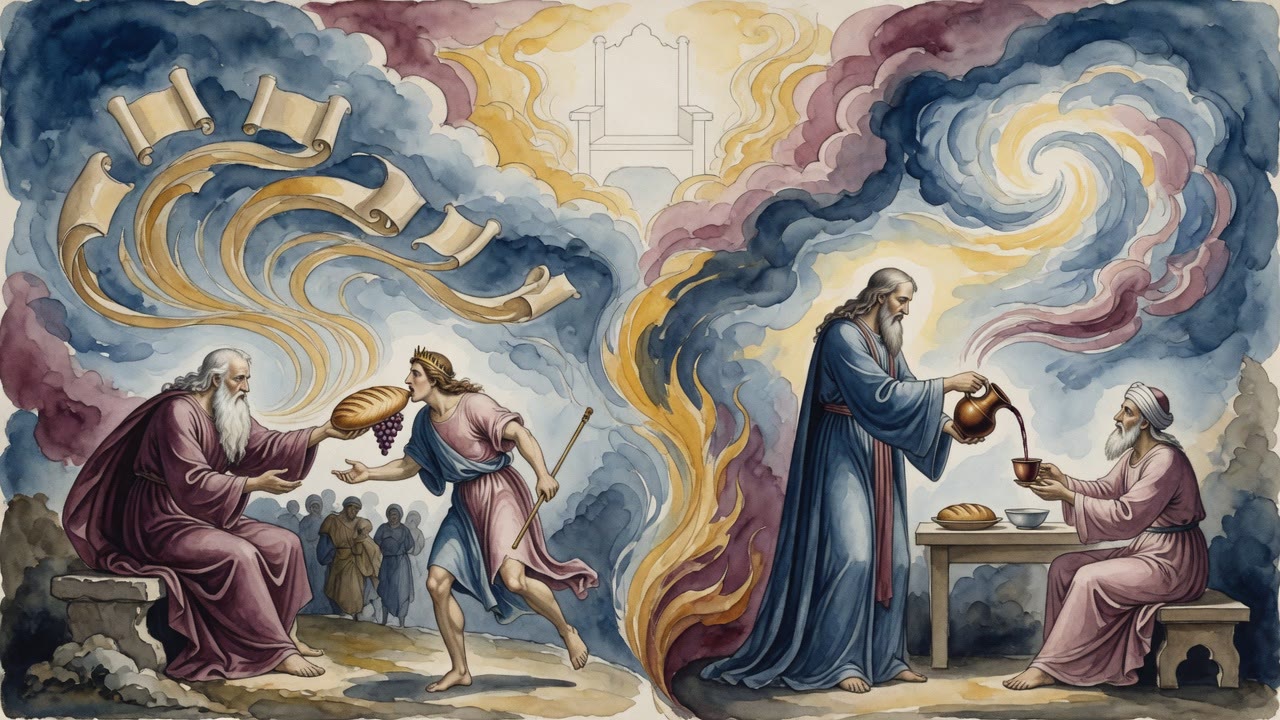
He looked at them long enough that a few of them dropped their eyes. Then he spoke for them. The town that fed him fed them for his sake. Bread that had been his by night became theirs because he asked.
They ate in a room they would not have entered on the ship. The one cargo the officers had not known to seize sat where it had sat the whole voyage, folded behind the scholar's ribs, where no search reaches and no seizing hand can go.
← All myths