6 min read

The Messiah Whose Name Waited Before the First Light

Before light or sea, the name and spirit of the King Messiah waited among God's treasures, sealed until the age when he judges the poor with righteousness.

Curated by Arthur · Told by Maggid ·
Table of Contents
  1. The Pledge Sealed in David
  2. The King Whom the Grave Could Not Touch
  3. When the Courts of the Earth Fail
  4. Rain on the Mown Grass
  5. Light for the World to Come

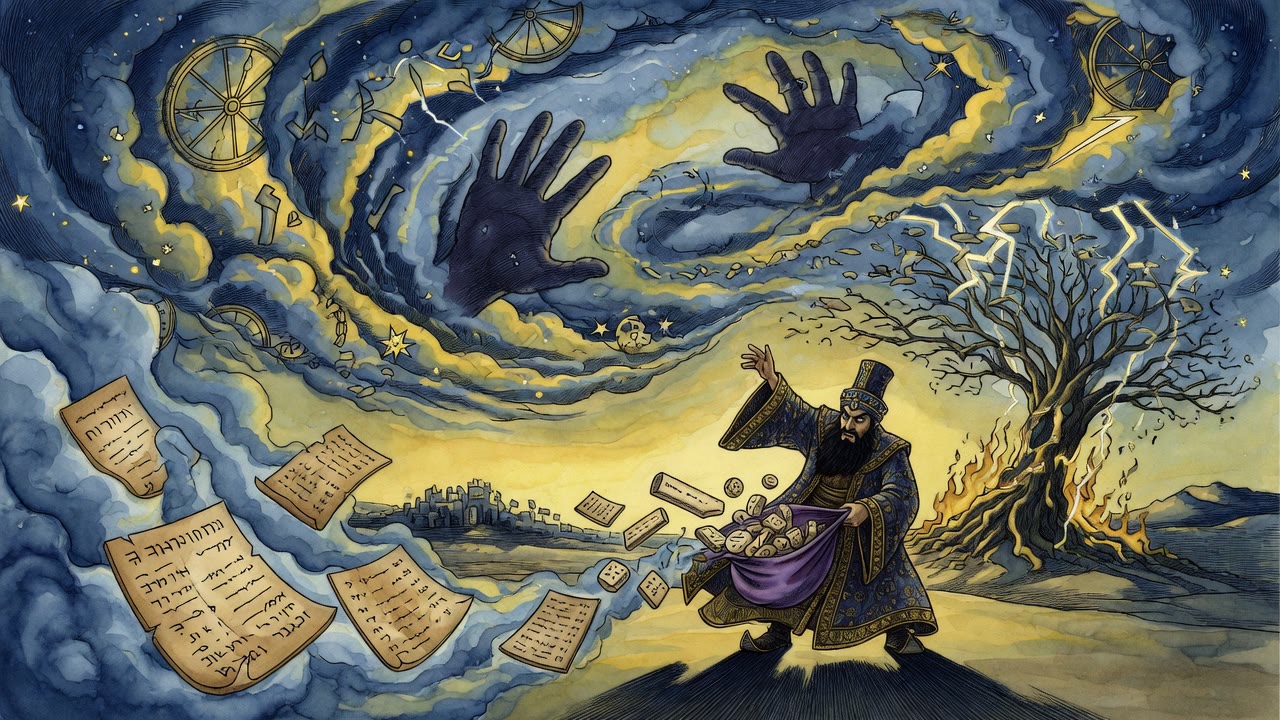
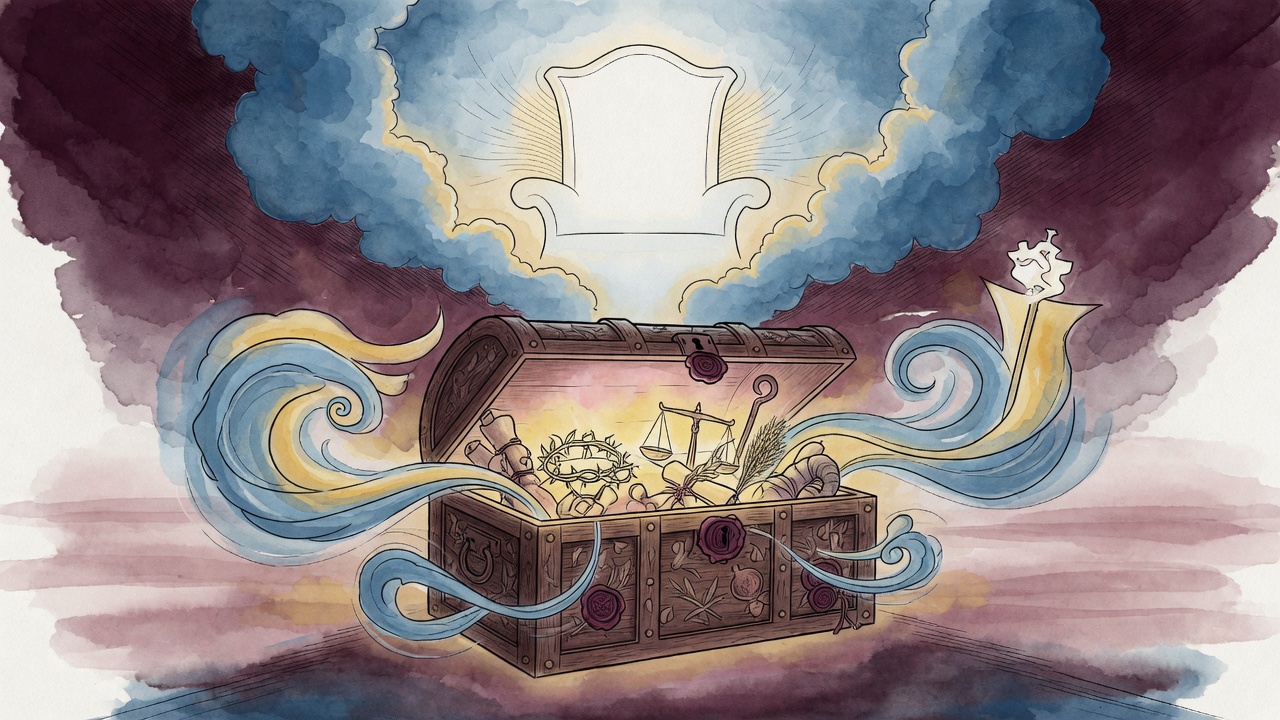
Before there was light to see by, before the sea had a shore or the sky a floor, God stood over the nothing and reached for the things He had already made. He had made them before the world, and He kept them close, the way a builder keeps the drawing before the first stone is cut. Among them a name lay folded, and a spirit lay beside it, and both belonged to a king who had not been born and would not be born for a hundred generations.
The Messiah Whose Name Waited Before the First Light Click for full size

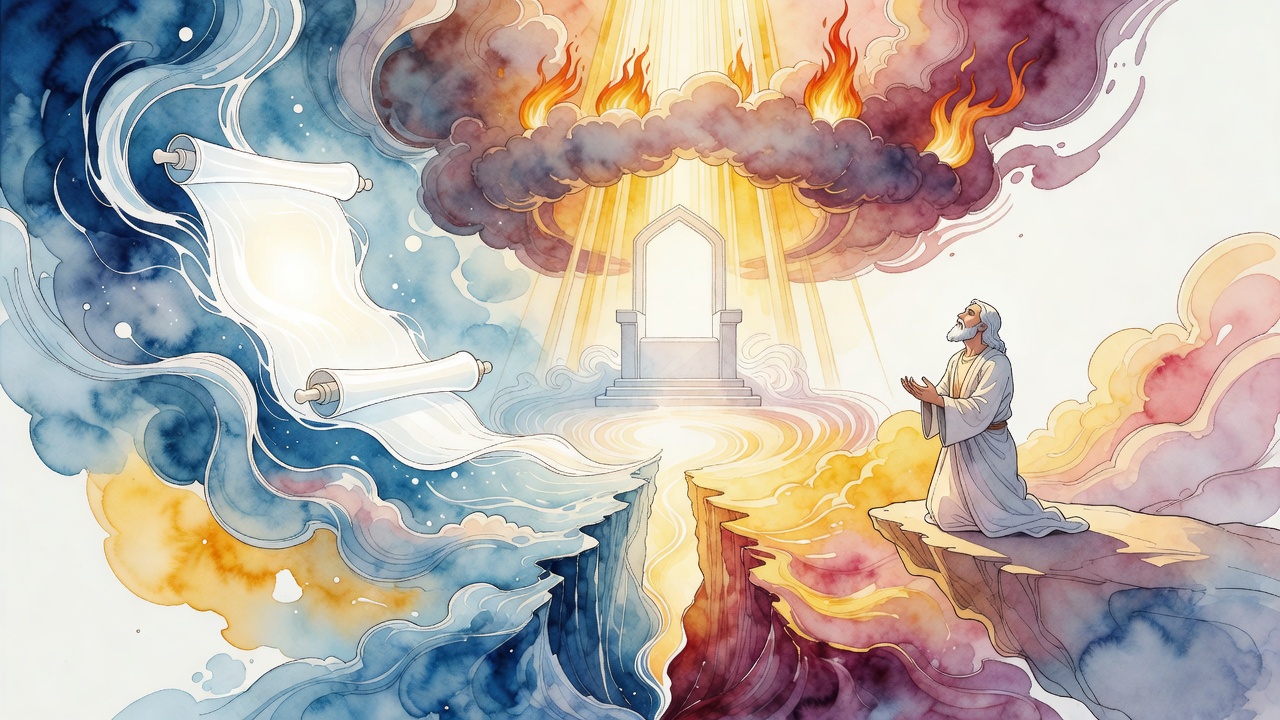
The spirit hovered at the threshold of creation the way a wind hovers over deep water, near and restless. It was the spirit of the King Messiah. When the light was finally called out of the dark, the name did not rush out with it into the running of days and years. It stayed sealed among the treasures, waiting for a mouth that could speak it and a throne that could hold it.

The Pledge Sealed in David

Long after, in a lamplit room in Jerusalem, David the son of Jesse bent over the words of the Torah, and his heart would not stop rejoicing. He had been a shepherd, then a fugitive, then a king. He had buried sons and outlived his own rebellions. Still the joy rose in him, because he had been let in on the secret the treasures kept.

"My honor shall be revealed in the King Messiah who will come from me," he said. He meant the pledge God had sealed into his own line, that the hidden king, the one whose name waited before the light, would rise from the house of David. Over every glory a covering would be spread, a canopy set above the honor so that no eye could wither it. And David was promised something stranger still. His own flesh, he was told, would rest in safety even after death.

The King Whom the Grave Could Not Touch

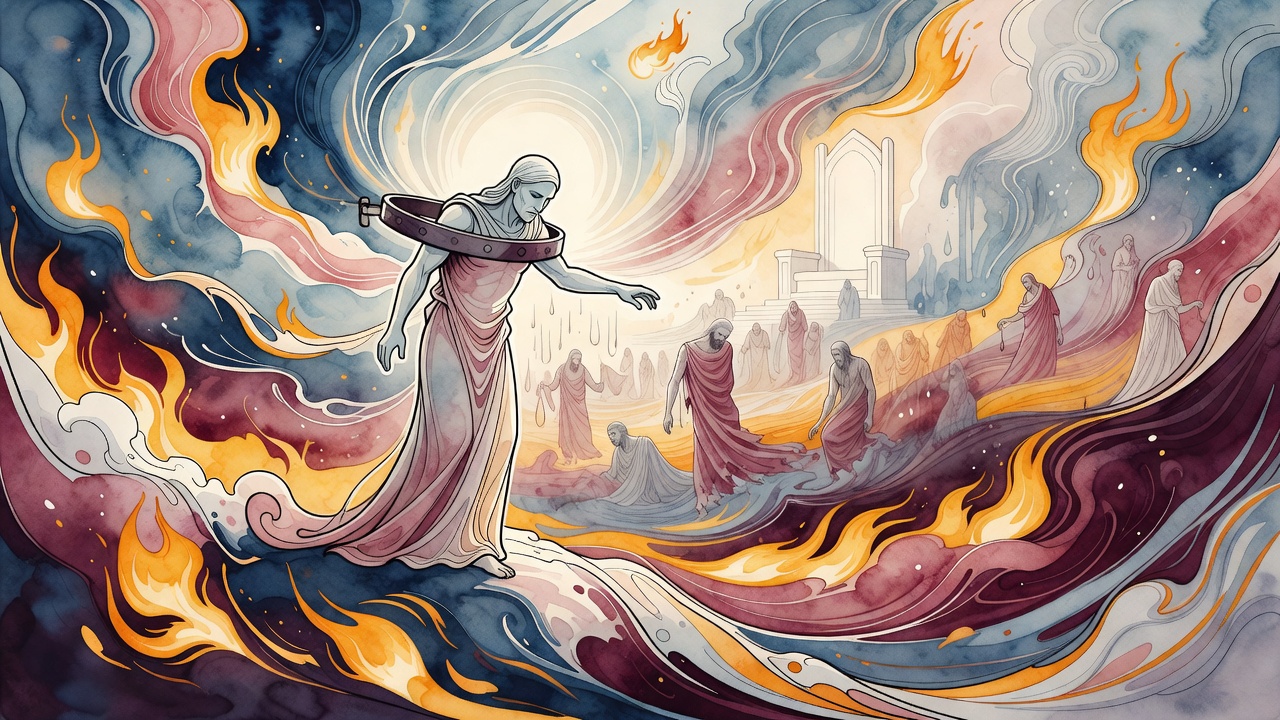
When David died they carried him into the earth, and the earth reached for him the way it reaches for every king. The worm came to his body and found nothing to take. The rot that unmakes the strongest men turned back at his skin. What lay in the ground stayed whole, a sealed pledge in the dark, because the promise fastened to David's line could not be allowed to decay with the man who carried it.

So the covenant slept in the earth as whole as the hour it was spoken. The king who was coming stood behind an uncorrupted body, and the grave, which argues with every claim of eternity, had no argument to make.

When the Courts of the Earth Fail

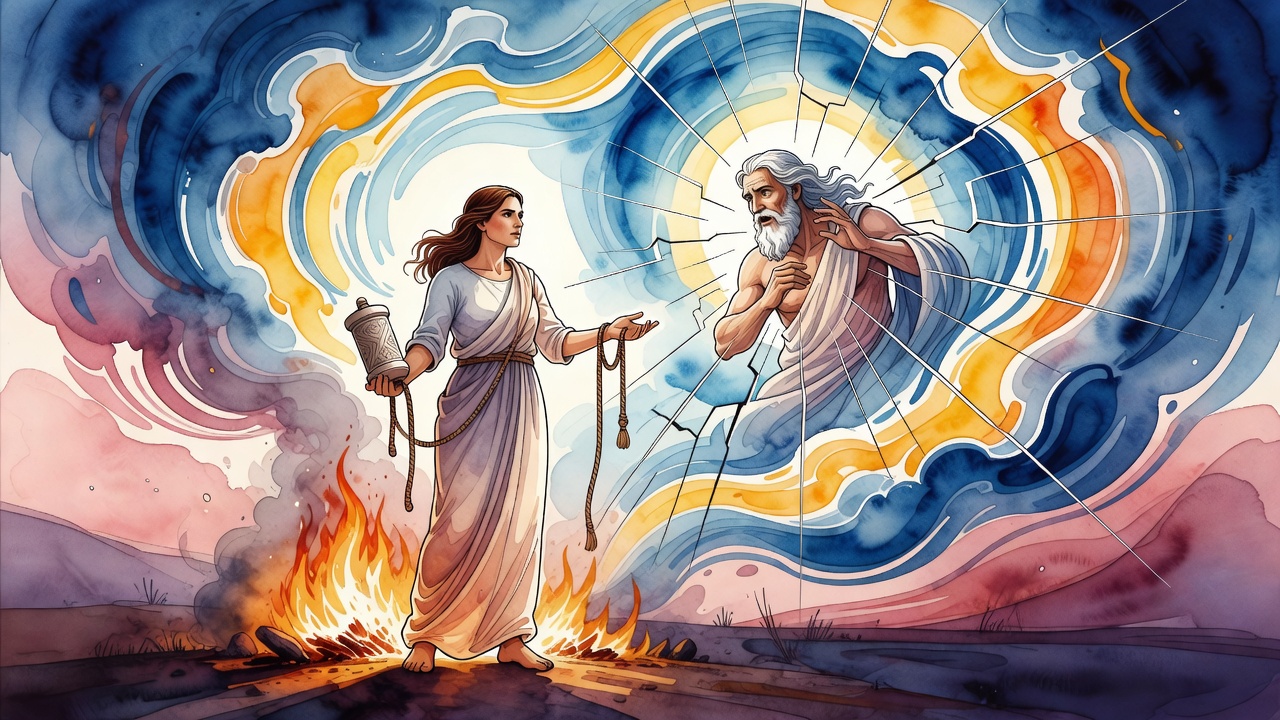
Above the sleeping king, the living kept failing the poor. Judges took the bribe and called it a fee. Widows watched their one field pass to men with better lawyers. The weak cried in the gate and no one turned a head. A rule held over all of it, older than the courts and harder than their corruption. Where there is no justice below, justice will still come, and where there is honest justice below, the higher court may hold its hand.

When a human court judges truly, God lets the ruling stand and leaves the work in mortal hands. When the court is crooked and the needy are robbed, the higher court opens its doors, and God Himself repays what was stolen. A promise was set against that day. A shoot would break from the cut stump of Jesse, a green branch from roots everyone had counted dead. The stump looked like firewood. From it the branch was already pushing toward the light.

Rain on the Mown Grass

The hidden king comes at last, and he comes down like rain on mown grass, like the soft showers that soak a cut field until it stands again. He does not arrive as a storm. He judges the poor with righteousness and rescues the children of the needy. He breaks the man who grinds them and lifts the ones who were bent double under him.

In his days the righteous flourish, and peace runs as long as the moon keeps its place in the sky. He belongs to a generation that has no generation after it, the last and highest of all the ages, the one every age before it had been leaning toward without knowing the name of what it wanted.

Light for the World to Come

Then the righteous rise like trees that were planted for this. They flourish like the palm and stand like the cedar of Lebanon, roots driven so deep that no wind in the world can shift them from their place. Torn out of an unclean land, they are lifted whole and set again in a pure one, planted in the house of God, and even in old age they are heavy with fruit.

And they turn to light. As the sun and the moon pour their brightness over this world, the righteous pour brightness over the world to come, and the nations walk toward that shining, and kings come to the dawn of it. The name that waited before the first light is waiting still, folded among the treasures, until the mouth is ready to speak it and the throne is ready to hold the king.


← All myths
From the tradition

Sources

4 sources

The texts behind this telling. Some cards carry a translation of the source; others are our own retelling of it, and each card says which. Every card links out to the original.

Midrash Tehillim 92:8Midrash Tehillim

Retold in our words. Read the original at the link below.Rabbi Mike Feuer, Jerusalem Anthology · CC-BY

Midrash Tehillim, a collection of homiletic interpretations of the Book of Psalms, uses the image of the palm tree in Psalm 92 to unlock a fascinating perspective on the righteous, the people of Israel, and our relationship with the Divine.

"The righteous will flourish like a palm tree," the psalm sings. But what does that mean? The Midrash (rabbinic interpretive commentary) doesn't leave us hanging. It paints a picture: this palm tree is beautiful, and its fruits are sweet. Just so, it suggests, the Messiah, the son of David, will be beautiful in appearance, and his actions will be pleasing to God.

The Midrash doesn't stop there. Rabbi Yitzhak bar Ada offers a poignant observation: "Just as the shade of the palm tree is far from it, so too is the reward of the righteous far from them until the World to Come." It's a reminder that sometimes, the fruits of our labor, the true reward for righteous living, might not be immediately apparent. We have to trust, as (Deuteronomy 7:12) and 7:9 remind us, that God keeps His commandments "unto a thousand generations."

The Midrash then shifts, offering another interpretation: the palm tree is never lacking in its produce. Similarly, Israel is never lacking in righteous individuals. Think of Abraham, Isaac, and Jacob – the patriarchs. Or Hananiah, Mishael, and Azariah, who bravely faced the fiery furnace. These figures, throughout history, embody the unwavering spirit of the Jewish people.

And what about the practical uses of the palm tree? It provides the lulav for Sukkot (the Festival of Tabernacles), branches for kindling, strength, and even guidance. In the same way, Israel provides righteous individuals, knowledgeable in Torah, who perform acts of kindness. Even among the unlearned, the Midrash assures us, there are those with "choice fruits," as (Song of Songs 4:13) puts it.

There's a fascinating idea here about nurturing wisdom. The Midrash compares the palm tree to a wise student, urging caution with their "embers, so as not to be burnt." What does this mean? It's a call to handle knowledge and responsibility with care, because, as (Genesis 12:17) reminds us through the story of Pharaoh's plagues, those who are not careful will face consequences. Israel, the Midrash continues, is filled with those knowledgeable in Torah, Mishnah (the earliest code of rabbinic law), Talmud, and Aggadah – the breadth of Jewish learning.

The Midrash continues, "This palm tree's heart faces upward, so too do the hearts of Israel face their Father in Heaven." It’s a beautiful image of constant yearning, of a connection to something higher. The palm tree, it says, has desires, and so too does Israel desire the Lord.

Our rabbis tell a story of a palm tree in a hot spring that wouldn’t bear fruit. It longed for the fragrance of the miriacho (a spice). Once brought, it immediately bore fruit. This illustrates a powerful truth: Israel's deepest desire is for the Holy One, blessed be He.

Then comes an interesting comparison. The Midrash notes that utensils aren't made from the palm tree. Similarly, it suggests, Israel… isn’t either? This seems contradictory, but it sets up a comparison with the cedar. Rabbi Tanchuma even recounts asking Rabbi Huna about the cedar, and being told that in Babylon, cedars were used to make utensils. The cedar, unlike the date palm, doesn't bear fruit. So, the Midrash reasons, Israel is like both: sometimes like the cedar, sometimes like the date palm.

The Midrash lands on a powerful image: "Like a cedar in Lebanon, whose roots are numerous below the ground… they do not move it from its place, so too Israel, who are planted in the house of God." Despite all the winds of the world, all the challenges and persecutions, the Jewish people remain steadfast, rooted in their faith.

Like a garden planted row by row, Israel will be replanted from an unclean land to a pure land, "planted in the house of the Lord," as the psalm says. "They shall flourish in the courts of our God. They will still bring forth fruit in old age; they shall be fat and flourishing." Even in old age, they will show forth the Lord's good works.

Remember the strength, the resilience, the yearning, and the unwavering faith it represents. It's more than just a tree; it's a symbol of the enduring spirit of the Jewish people, forever reaching towards the Divine.

Full source
Midrash Tehillim 16:8Midrash Tehillim

Retold in our words. Read the original at the link below.Rabbi Mike Feuer, Jerusalem Anthology · CC-BY

It's a fascinating little passage, packed with layers of meaning.

The verse A simple enough statement. But the Rabbis of the Midrash (rabbinic interpretive commentary) see so much more beneath the surface.

Rabbi Abbahu offers a rather cryptic interpretation: "Honor is exiled when children make use of it." What does that even mean? Perhaps he’s suggesting that true honor isn't something inherited or exploited, but something earned. Or maybe it's a commentary on the responsibilities that come with a royal lineage.

Then the Midrash shifts gears. “Therefore my heart rejoices in the words of the Torah, and my honor shall be revealed in the King Messiah who will come from me, as it is said, 'For on every glory there shall be a covering' (Isaiah 4:5). Even my flesh shall dwell in safety, after death.” Now we're talking about something bigger – messianic hope! David's rejoicing isn't just personal; it's tied to the future, to the coming of the Messiah, who, according to tradition, will be a descendant of David. And that verse from Isaiah? It hints at a divine protection, a sheltering presence that surrounds true glory. connection for a moment. David's life, his struggles, his triumphs – they all foreshadow the coming of the Messiah. His "flesh dwelling in safety after death" becomes a symbol of the enduring hope for redemption.

And then we get to Rabbi Isaac's incredible statement: "This teaches that the worm and the maggot did not have power over King David's body."

Whoa.

In a world where death and decay are inevitable realities, the idea that David's body was somehow immune to them is astonishing. Is this meant to be taken literally? Perhaps. Or is it a symbolic representation of David's enduring legacy, his spiritual immortality?

The Rabbis of the Midrash weren't afraid to explore the boundaries of belief, to confront the mysteries of life and death. They saw scripture as a living text, a source of endless inspiration and interpretation.

So, what do we take away from this little snippet of Midrash? Maybe it's a reminder that even in death, there is hope. Maybe it's a meditation on the nature of honor and legacy. Or maybe, just maybe, it's a glimpse into the extraordinary destiny of a king whose story continues to resonate across millennia. Whatever it is, it certainly gives us something to think about.

Full source
Midrash Tehillim 72:2Midrash Tehillim

Retold in our words. Read the original at the link below.Rabbi Mike Feuer, Jerusalem Anthology · CC-BY

It’s a feeling as old as time, and it's something the ancient sages grappled with too. Midrash Tehillim, a collection of rabbinic interpretations on the Book of Psalms, dives headfirst into this very question.

The central idea? The King Messiah will rule over everything. This is beautifully captured in (Isaiah 11:1): "And there shall come forth a shoot from the stump of Jesse, and a branch from his roots shall bear fruit." A promise of renewal, of ultimate fairness. But what about right now?

Rabbi Eliezer offers a fascinating perspective. He says, "Wherever there is no justice, there will eventually be justice, and wherever there is justice, there may not necessarily be justice.

The Midrash (rabbinic interpretive commentary) explains that when earthly courts fail – when human beings mess up the administration of justice – the Heavenly court steps in. God becomes the ultimate judge, ensuring that things are set right. He will repay accordingly. It's a powerful thought, a comforting thought, especially when we see injustice around us.

However – and this is crucial – when there is a functioning, fair earthly court, God might not intervene. Why? Because we, as humans, are responsible for administering justice ourselves! We have a job to do.

It reminds me of the verse in (Jeremiah 50:7): "For the Lord is a God of justice; blessed are all those who wait for him." Waiting isn't passive. It’s about striving for justice in the here and now, knowing that God is the ultimate source of that justice.

And then there's (Leviticus 26:3): "If you walk in my statutes and observe my commandments and do them…" This verse is often interpreted as meaning that God expects us to uphold justice, to follow His laws. If we fail, there will be consequences. But if we act justly, we’ll be blessed with abundance and prosperity. It’s a clear call to action.

So, what's the takeaway? It's not just about waiting for some future Messianic age. It's about actively participating in creating a just world, right here, right now. It's about striving to be fair in our dealings with others, knowing that our actions matter. Because according to the Midrash, the pursuit of justice isn't just a nice thing to do; it’s a fundamental part of our relationship with God and with each other. And maybe, just maybe, by striving for justice ourselves, we bring that Messianic age a little bit closer.

Full source
Midrash Tehillim 72:6Midrash Tehillim

Retold in our words. Read the original at the link below.Rabbi Mike Feuer, Jerusalem Anthology · CC-BY

The verse promises that the leader will "judge the poor with righteousness and save the children of the needy." A powerful image. It's not just about dispensing justice, but about actively protecting the vulnerable. About ensuring their well-being.

The text continues: "They shall fear you as long as the sun and the moon endure, throughout all generations." This evokes a sense of lasting impact, a legacy that stretches beyond a single lifetime. But what does it mean when it asks, "What is the meaning of 'David, for all generations'?" The Midrash (rabbinic interpretive commentary) offers a profound answer: "It refers to a generation that has no other generation after it." It's talking about a time so perfected, so complete, that it represents the culmination of all generations. A final, ideal state.

The imagery becomes even more beautiful as it unfolds: "He shall come down like rain upon the mown grass, like showers that water the earth." This is such a tender metaphor. It evokes a gentle, life-giving presence. Not a forceful storm, but a nurturing rain that allows growth and renewal.

What will be the result of this righteous leadership? "In his days shall the righteous flourish, and abundance of peace so long as the moon endureth." Flourishing, abundance, peace.. these are the hallmarks of a society guided by true righteousness. The Midrash Tehillim then directs us to (Psalm 92:13-14), "The righteous shall flourish like the palm-tree; he shall grow like a cedar in Lebanon. They are planted in the house of the Lord; they shall flourish in the courts of our God. They shall still bring forth fruit in old age; they shall be full of sap and richness." What vivid imagery! The palm and the cedar, symbols of strength and longevity, planted firmly in the house of God.

The text draws a parallel between the physical world and the spiritual realm. "Just as the sun and the moon give light to this world, so shall the righteous give light to the world to come, as it is said, 'And nations shall walk at thy light, and kings at the brightness of thy rising' (Isaiah 60:3)."

It’s a stunning connection. The righteous, like the sun and moon, become beacons of hope and guidance, illuminating the path for others, even in the world to come. They aren't just leaders; they're sources of light, guiding nations and kings alike.

So, what does this all mean for us today? Are we judging with righteousness? Are we protecting the vulnerable? Are we striving to be sources of light for those around us? It's a high bar, no doubt. But it’s a vision worth striving for, a vision of a world where righteousness flourishes and peace abounds. A world where the light of the righteous shines as brightly as the sun and the moon.

Full source