Parshat Bereshit5 min read

The Moon Demands Stars for Her Stolen Light

The moon goes dark after speaking out of turn, bargains hard with God for her stolen brightness, and will not rest until stars walk beside her.

Curated by Arthur · Told by Maggid ·
Table of Contents
  1. She Told the Truth and Went Dark
  2. The Lights Were Handed to the Earth
  3. A Title She Could Not Get Out From Under
  4. He Gave Her a Procession
The Moon Demands Stars for Her Stolen Light Click for full size

She Told the Truth and Went Dark

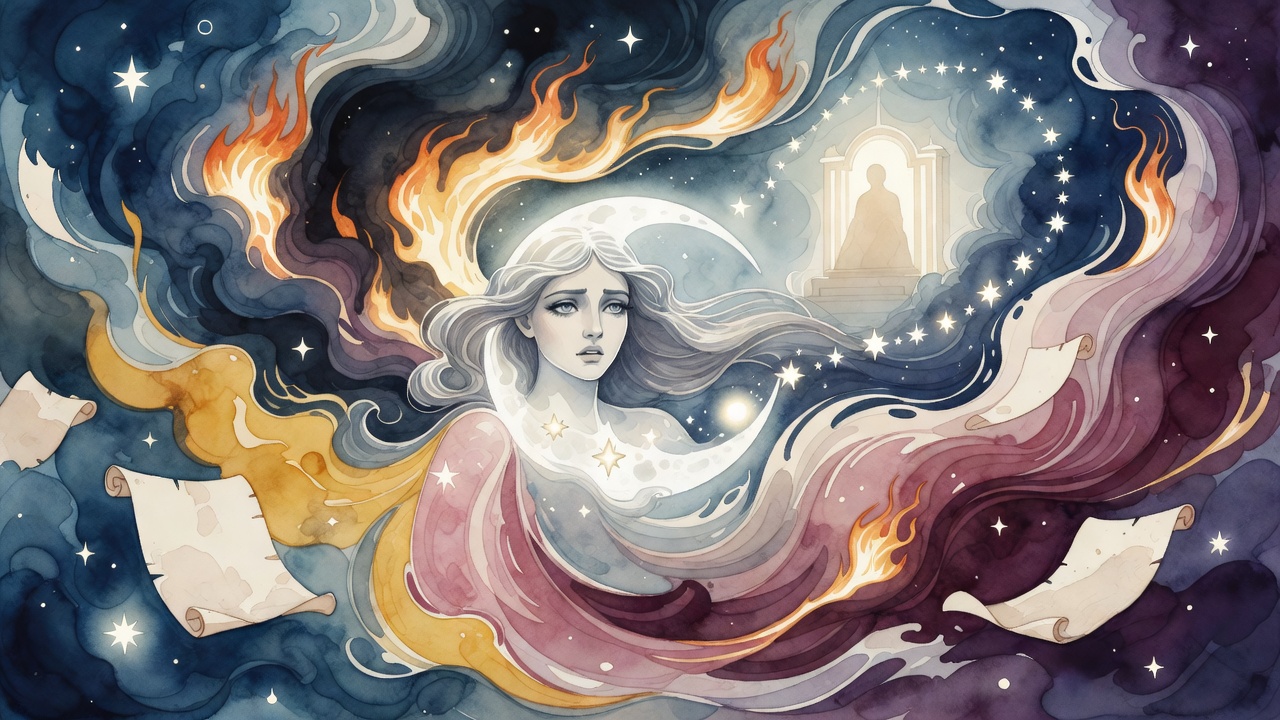
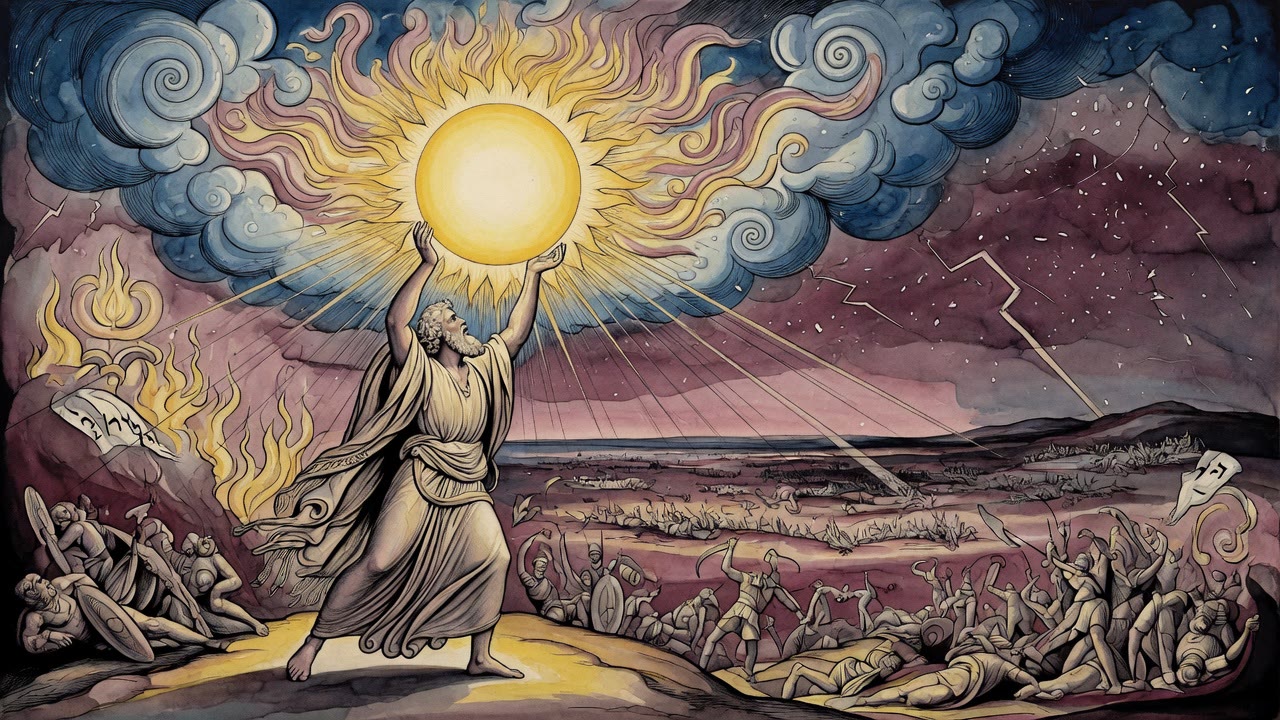
The lights were still being measured when the moon spoke out of turn, and the ruling came down before she had finished making her case. She would shine with borrowed sunlight and nothing of her own. She went dark where she stood.

"I told you the truth," she said, "and for that I am made small?"

God answered with a date instead of a reversal. In the days of the messiah her own light would come back and stand equal with the sun, the way the prophet has it. But the days of the messiah are not a span anyone can count to, so the promise sat out past every night she would have to cross before she reached it. She apologized for the way she had spoken. He forgave her.

That should have ended it. It did not. An apology accepted settles what she had said, but it does not hand back what was taken off her, and she could feel the difference in her own body every time she came up over the rim of the world wearing light that belonged to somebody else. So she did not thank him and go. "How will I know you mean it?" she said.

The Lights Were Handed to the Earth

She had a hard position to argue from, because she was not a party to the arrangement. She was one of its terms.

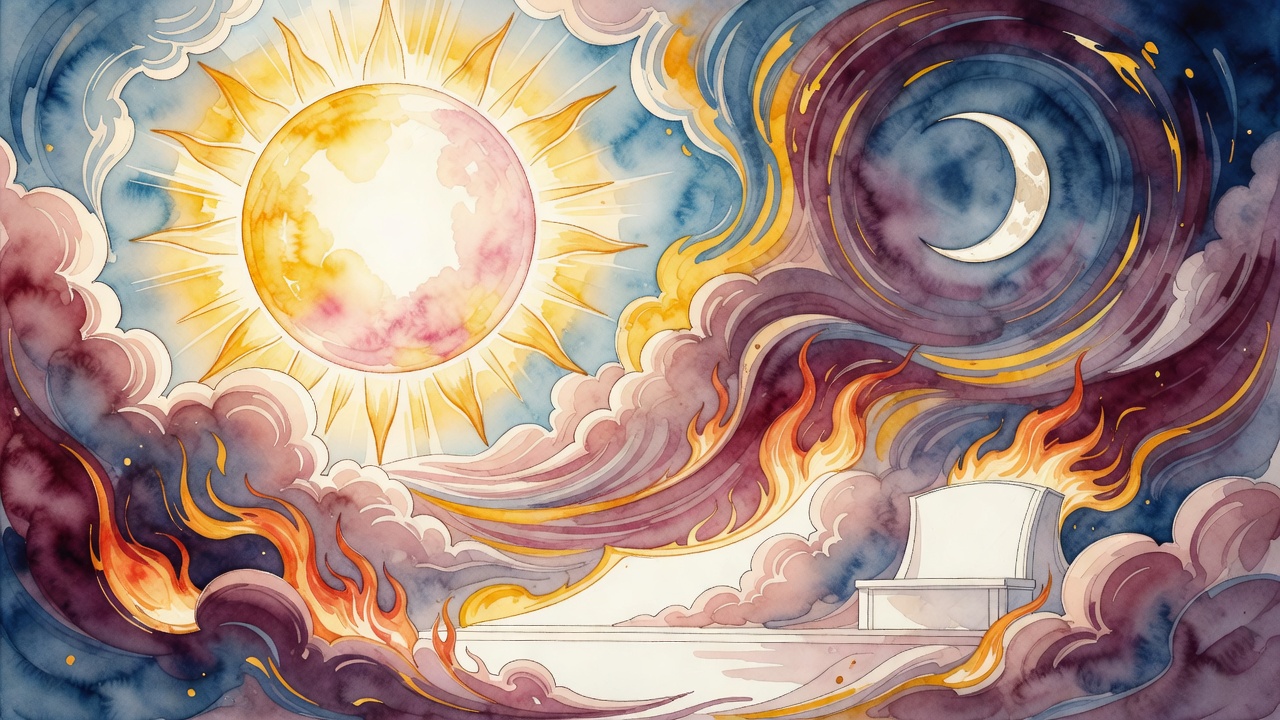
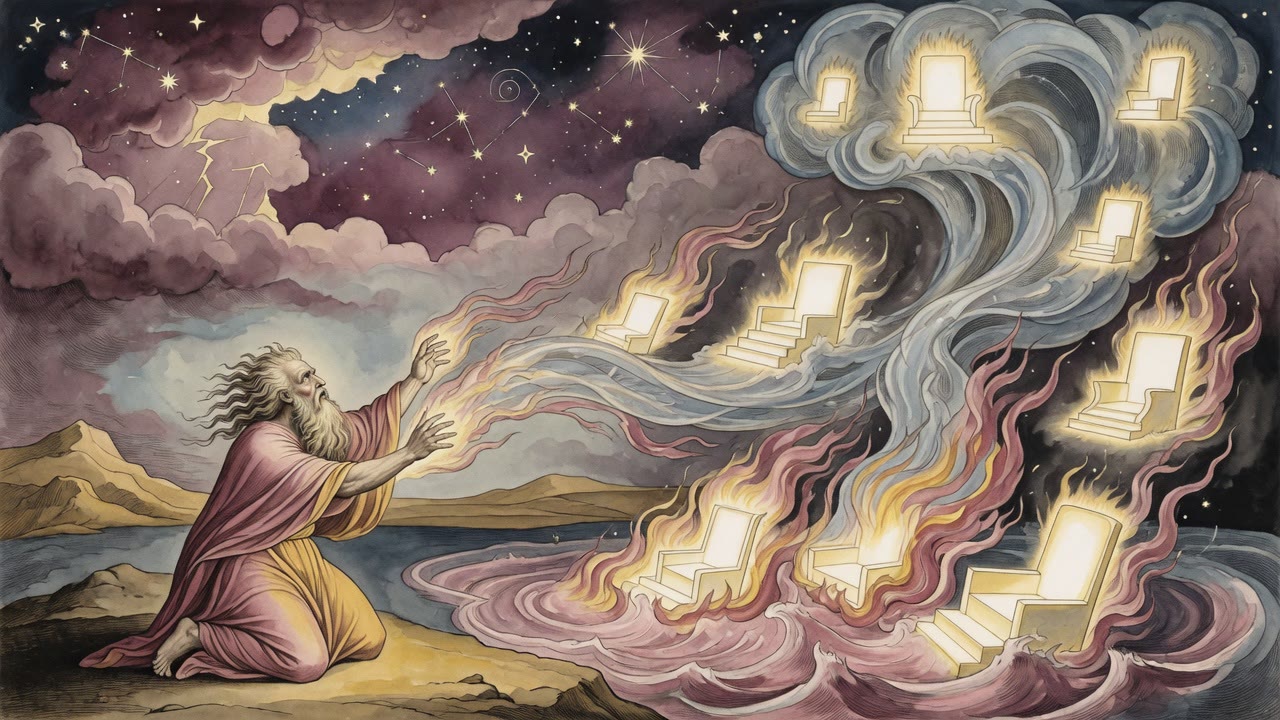
When the lights were set in the firmament to give light on the earth, the word used for setting them there is the word for giving, and Rabbi Yohanan counted what that gift contained: the Torah, the lights, and the rains. Guidance, light, water. Three things the world cannot run without, handed down to it and not asked for. The moon was in the middle item on that list, on the given side of it, going out to the earth along with the rain in its season.

So she could not ask to be taken back. She could only argue about the terms of her own delivery, and she did, for as long as it took.

A Title She Could Not Get Out From Under

God gave her rule over the day as well as the night. She pushed it straight back at him. What is the use of shining at noon, when the sun is already standing there drowning her out, and the words were written down where anyone could read them: the great light, and the small light. That is her, written into the record.

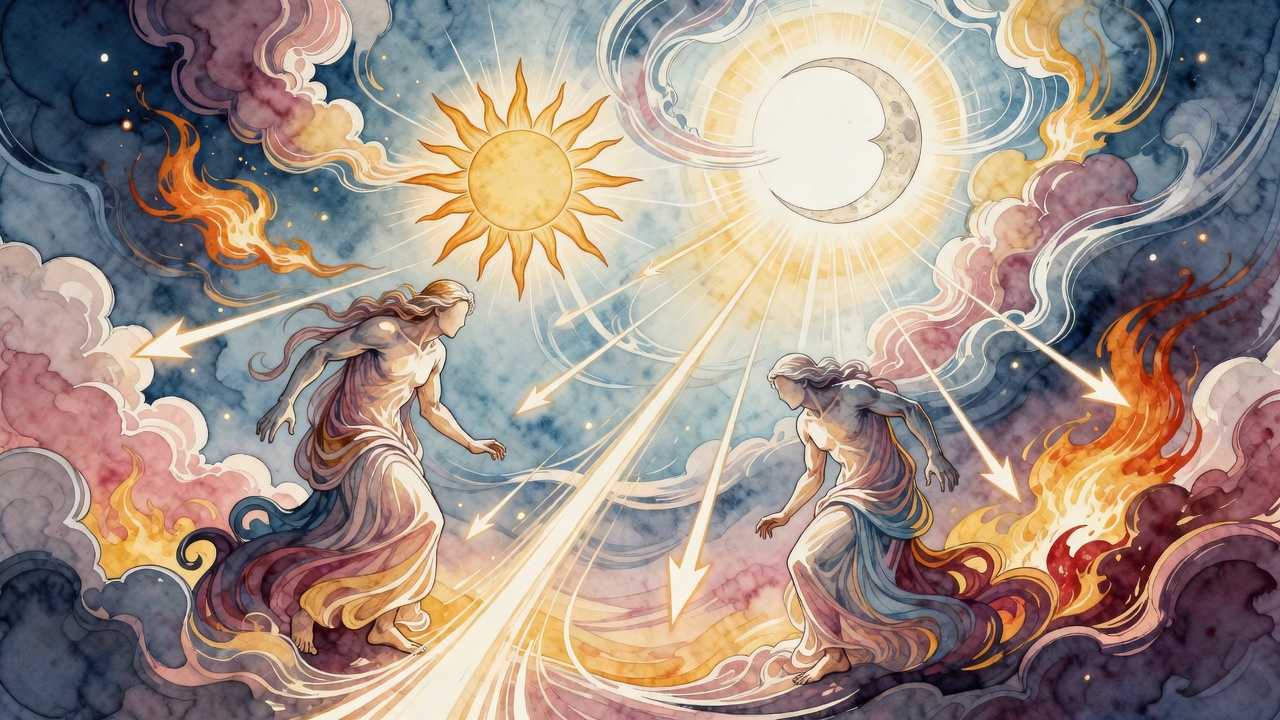
So he bound her name to men who carry the same word. Jacob the small. David the small, the youngest of eight, left out with the sheep because nobody thought to send for him when his brothers went to the war. Good company, and diminished company, though none of it gave her back a single degree of brightness. A shared adjective is not light. She went on grieving, and the grief did not wear itself out the way grief is supposed to, because nothing in the arrangement had moved.

He Gave Her a Procession

The Mishnah counts ten utterances that made the world, and the counting is harder than it looks, so the sages argued about which sentences belonged on the list. One answer puts this on it: when God looked at the first man standing by himself and said it is not good for the man to be alone, that sentence was one of the ten that built the world. Loneliness had been ruled on while the foundations were still being laid.

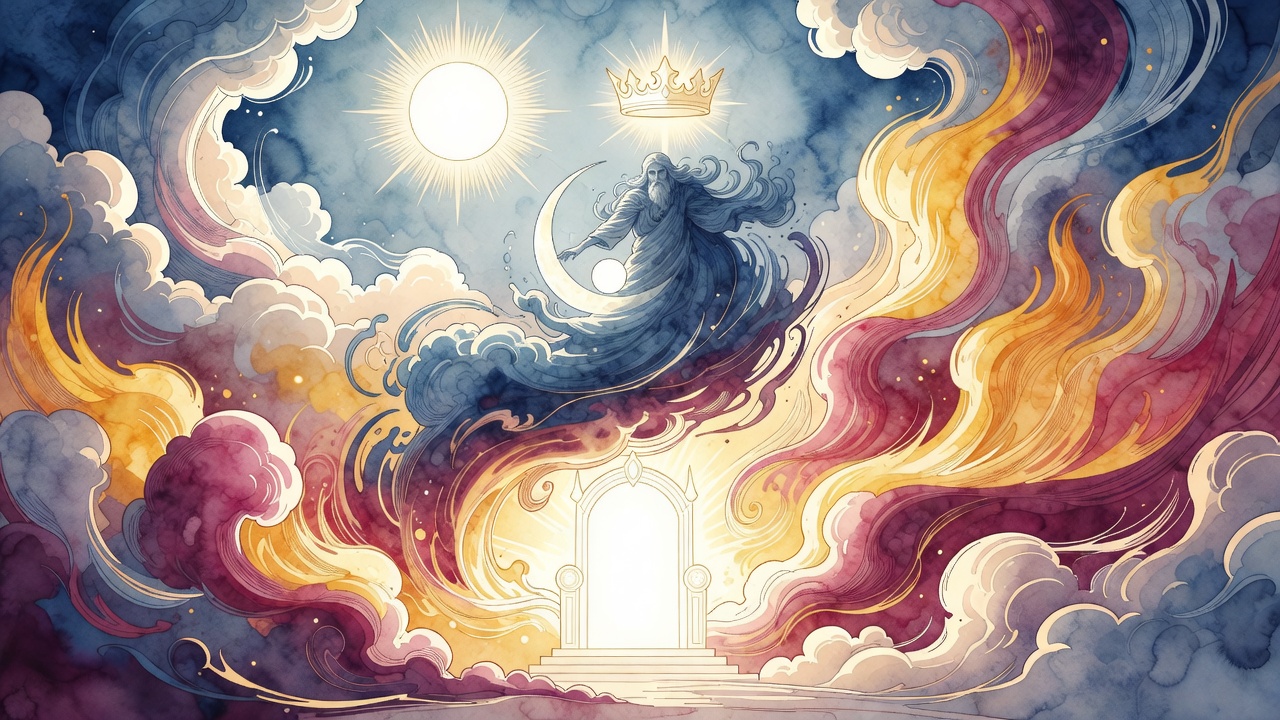
When he saw that her sorrow would not settle, he gave her an escort. A multitude of stars came out to walk beside her through the dark, the whole crowd of them moving when she moved, the way nobles come out behind a ruler and take their places. She had not asked for company. She had asked for her light, but she took the company, since it was the first thing offered to her that she could see the same night.

She still comes up wearing somebody else's light, and the promise about the messiah is still in the future tense where he left it. The stars come out behind her anyway. They hold their positions across the whole crossing, and they go down when she goes down.


← All myths
From the tradition

Sources

3 sources

The texts behind this telling. Some cards carry a translation of the source; others are our own retelling of it, and each card says which. Every card links out to the original.

Midrash Aggadah, Genesis 1:16Midrash Aggadah

Retold in our words. Read the original at the link below.Sefaria Community Translation · CC0

The moon went dark. Punished for speaking out of turn, she was sentenced to shine with nothing but borrowed sunlight. And she would not let it go quietly.

"I told you the truth," she said to God, "and for that I am made small?" God answered with a promise stretched across time: in the days of the messiah, her own light would return, bright as the sun (Isaiah 30:26). She apologized. He forgave her. But forgiveness on its own did not satisfy her.

"How will I know you mean it?" she pressed. God gave her dominion over both day and night. Still she pushed back. What use is shining by day, when the sun already drowns me out? You yourself called me the small light (Genesis 1:16).

So God bound her name to the righteous. Jacob the small (Genesis 26:15). David the small (I Samuel 17:14). Even that did not settle her. When God saw her grief would not rest, he gave her an escort: a multitude of stars to walk beside her through the dark, like a procession of nobles trailing their ruler (Genesis 1:16).

Full source
Bereshit Rabbah 6:5Bereshit Rabbah

Retold in our words. Read the original at the link below.The Sefaria Midrash Rabbah, 2022 · CC-BY

They all seem to stem from one little verse in Genesis (1:17): “God set them in the firmament of the heavens to illuminate upon the earth.”

Rabbi Yoḥanan sees something special in the Hebrew word used here, vayiten, meaning "God set." He says this one word is our clue! It tells us that three essential things were given as a matana, a gift, to the world: the Torah, the lights (meaning the sun, moon, and stars), and the rains. guidance, illumination, and sustenance. Pretty crucial. Where do we find proof? Well, the Torah, naturally, comes from "He gave [vayiten] to Moses [the two tablets of Testimony]" (Exodus 31:18). The lights? "God set [vayiten] them in the firmament of the heavens." And the rains? "I will provide [venatati, a related word] your rains in their seasons" (Leviticus 26:4). It's all connected!

The rabbis don't stop there. Rabbi Azarya, in the name of Rabbi Yehuda ben Rabbi Simon, throws peace into the mix, noting "I will grant [venatati] peace in the land" (Leviticus 26:6). And Rabbi Yehoshua ben Rabbi Neḥemya adds salvation, drawing from "You have given [vatiten] me the shield of Your salvation" (Psalms 18:36).

The gifts just keep coming! Rabbi Tanḥuma insists on including the Land of Israel itself: "He gave [vayiten] them the lands of the nations…" (Psalms 105:44). Someone even suggests vengeance against Edom, based on "I will set [venatati] My vengeance upon Edom…" (Ezekiel 25:14). Perhaps a slightly less universal gift, depending on your perspective.

Then, the Rabbis chime in again with mercy, pointing to "He situated [vayiten] them for mercy before their captors" (Psalms 106:46). And Rabbi Yitzḥak bar Maryon brings up something unexpected: setting sail in the Great Sea, referencing "So said the Lord, who makes [noten] a way in the sea…" (Isaiah 43:16).

Speaking of the sea, the Rabbis have more to say. "Who makes a way in the sea" – that's from Shavuot (the Festival of Weeks) until Sukkot (the Festival of Tabernacles), summertime when the seas are generally calm. But "and a path in mighty waters" (Isaiah 43:16) – that's from Sukkot until Hanukkah, the autumn season, when the seas are, well, "mighty waters."

This leads to a fascinating little story. Rabbi Natan, son of the brother of Rabbi Ḥiyya bar Abba, was about to set sail. He asks his brother for a blessing. His brother replies, essentially, “Pray? What for? Once you've bound your lulav [the palm branch used on Sukkot], bind up your feet!" In other words, don't travel after Sukkot! He adds, "If you enter a synagogue and hear them praying for rain, don't rely on my prayer!" Implying that the season for safe sailing is over.

And then we have the tragic tale of Rabbi Yehoshua son of Rabbi Tanḥuma ben Rabbi Ḥiyya of Kefar Ḥanun. He was in Asia Minor and, despite a noblewoman's warning and even a dream visitation from his father (who ominously quoted (Ecclesiastes 6:3): “Moreover, he has no burial”), he set sail after Sukkot anyway. He heeded neither the words of the noblewoman nor the words of his father. And, sadly, the prophecy came true.

So, what's the takeaway here? Is it just about avoiding sea travel after Sukkot? Perhaps. But maybe it's also a reminder to appreciate the gifts we've been given and to heed the wisdom of those who came before us. After all, sometimes the greatest gifts are the ones we take for granted: the light that guides us, the peace that sustains us, and the wisdom to know when to stay put.

Full source
Yalkut Shimoni on Torah 22:9Yalkut Shimoni on Torah

Translation of the source text.Torat Emet (Yalkut Shimoni) · CC-BY-NC

"And the LORD said, it is not good" (Genesis 2:18). This is one of the ten utterances [ma'amarot] by which the world was created. And there are some who say [the tenth utterance is] "And the spirit of God hovered" (Genesis 1:2). Rabbi Yaakov ben Kurshai says: A separate utterance was given to the spirit on its own.

Full source