5 min read

Sun and Moon Ask Permission Before They Shine

Each dawn the sun and moon enter trembling. God's light blinds them until arrows clear a path, and they rise against their will.

Curated by Arthur · Told by Maggid ·
Table of Contents
  1. At the Threshold of Light
  2. Arrows Instead of Eyes
  3. Why They Prefer to Stay Dark
  4. A World Held Up by Will Alone
  5. What the Forced Light Judges
Sun and Moon Ask Permission Before They Shine Click for full size

At the Threshold of Light

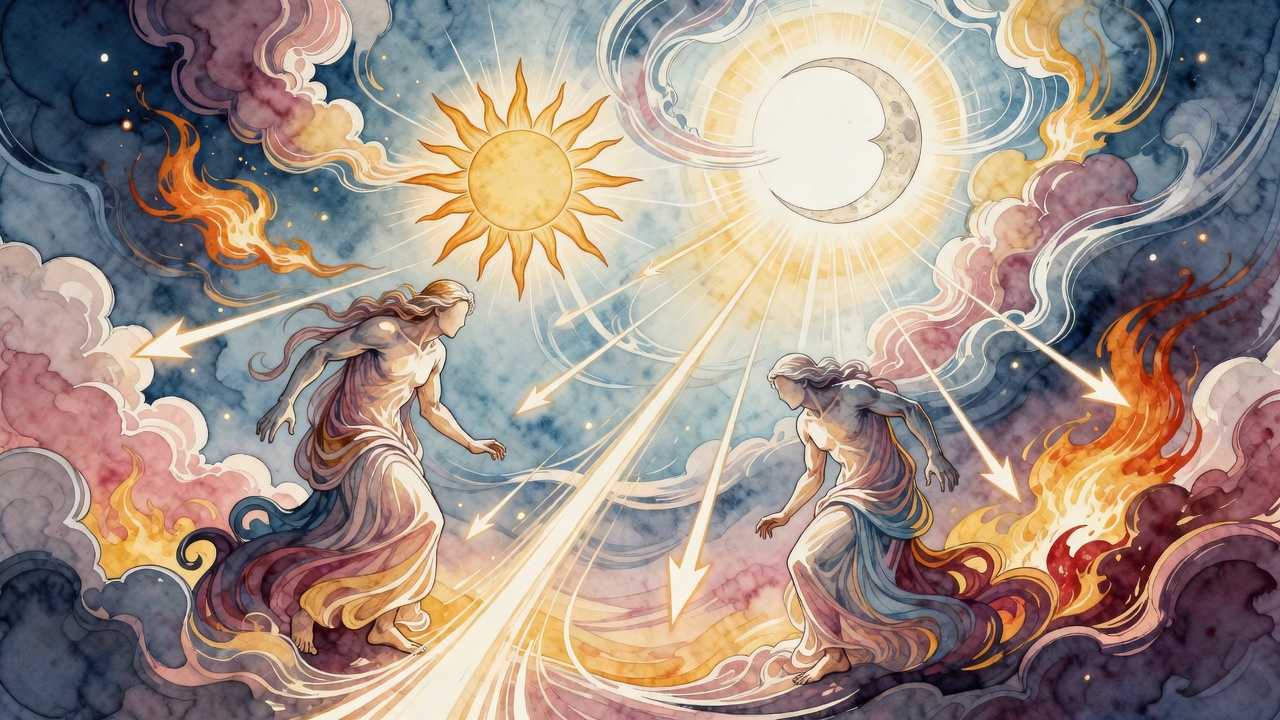
Before any roof took color, the sun waited outside the place where brightness begins. The moon stood a little behind, smaller and already half-ashamed. Neither of them stepped forward. They had come to ask leave to shine, and the asking itself made their eyes fail.

The aura of the Divine Presence was too much for them. Their sight dimmed. They wanted the world illuminated, yet they could not see the road out. Heat without direction is only panic. Farmers below still slept. Birds had not yet tried a note. The great lights alone knew that morning is a petition before it is a fact.

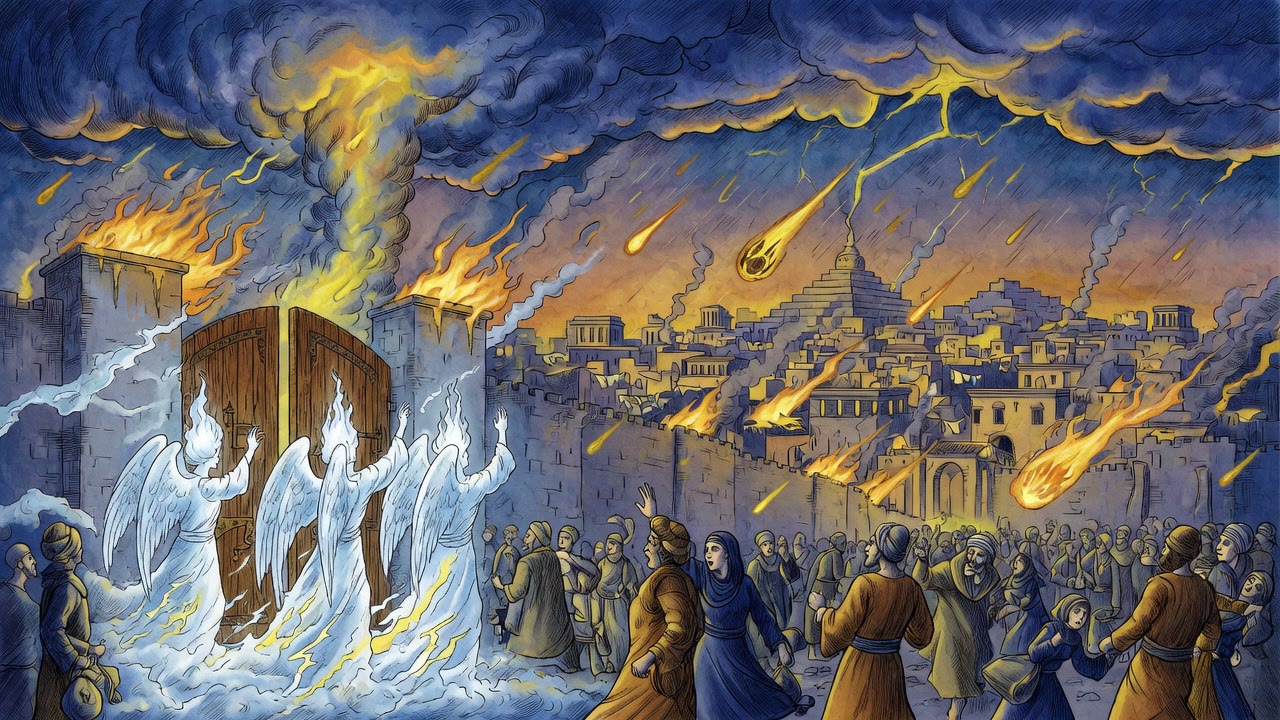
God did not scold them for trembling. He shot arrows before them, bright shafts that cut a path through the blaze of His own nearness. By the light of those arrows they could move (Habakkuk 3:11). The sun took the first step. The moon followed on a thinner track, careful not to claim more sky than it was given.

Arrows Instead of Eyes

Ordinary dawn looks automatic. In this telling it is not. The great lights do not roll out of habit. They petition. They flinch. They proceed only when something of God goes ahead of them like a guide-fire that does not belong to them and cannot be stored.

Rav pictured the scene as daily work, not a one-time myth. The orb of the sun and the moon enter, ask permission, and nearly go blind. Without the arrows they would stall forever at the door, willing and useless. With the arrows they run their course the way a warrior runs his path (Psalms 19:5-6). Speed is obedience, not swagger.

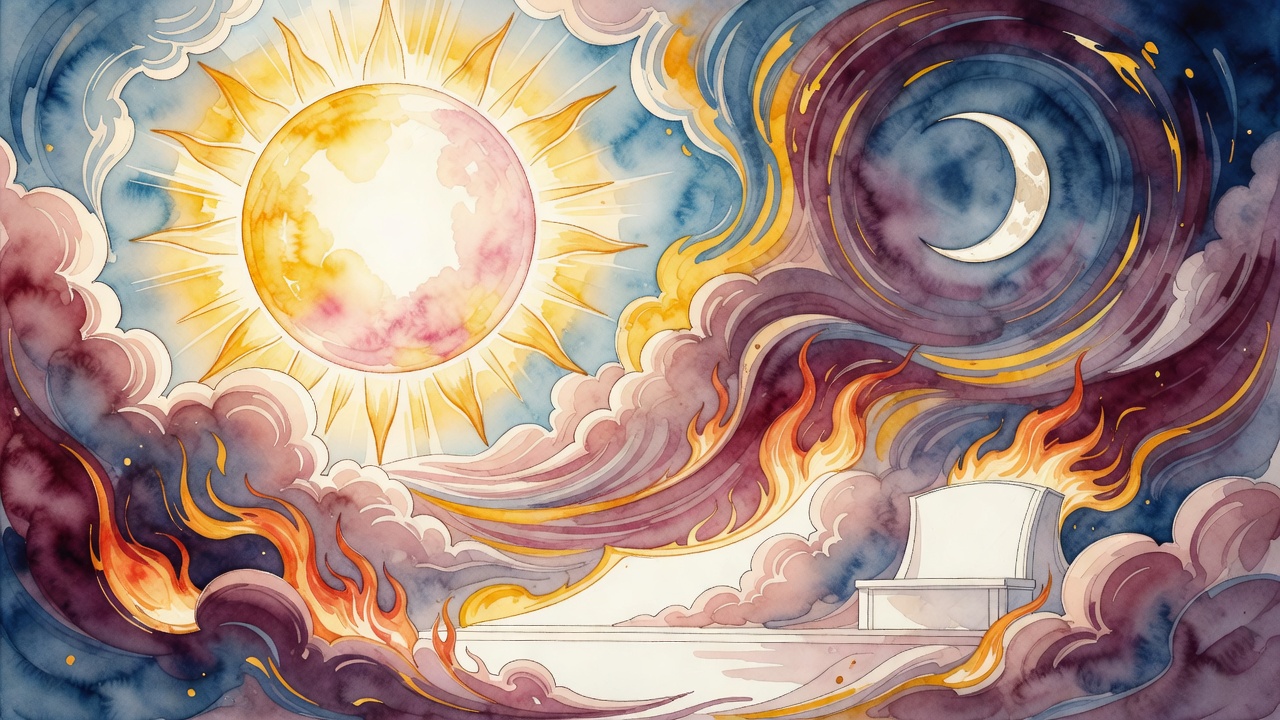
At sunset the sun's face turns the color of a round spot of blood. Completion and vulnerability share one color. The day ends the way a body ends a fever: red, spent, still obedient. Night does not mean the lights have won independence. It means their shift has closed under the same authority that opened it.

Why They Prefer to Stay Dark

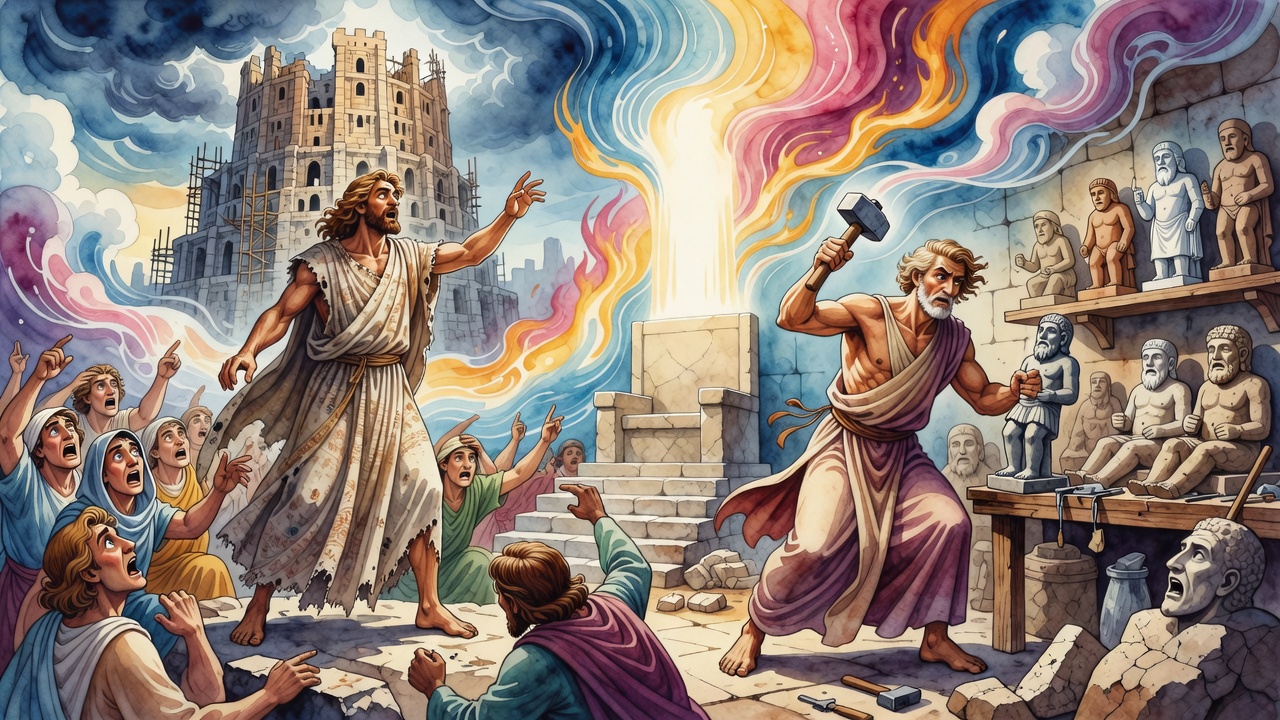
Rabbi Levi heard another complaint inside their reluctance. Each day God sits in judgment over sun and moon because they do not want to shine. Human beings bow to them. People build temples to heat and to silver light. The luminaries know what will be said of them when the first ray hits a rooftop shrine.

"The people indict us," they protest. "The people prostrate themselves to us." If they rise, they become idols by accident. If they hide, the world freezes. Either way, the court records their light. Shame and duty pull in opposite directions, and neither direction is free of cost.

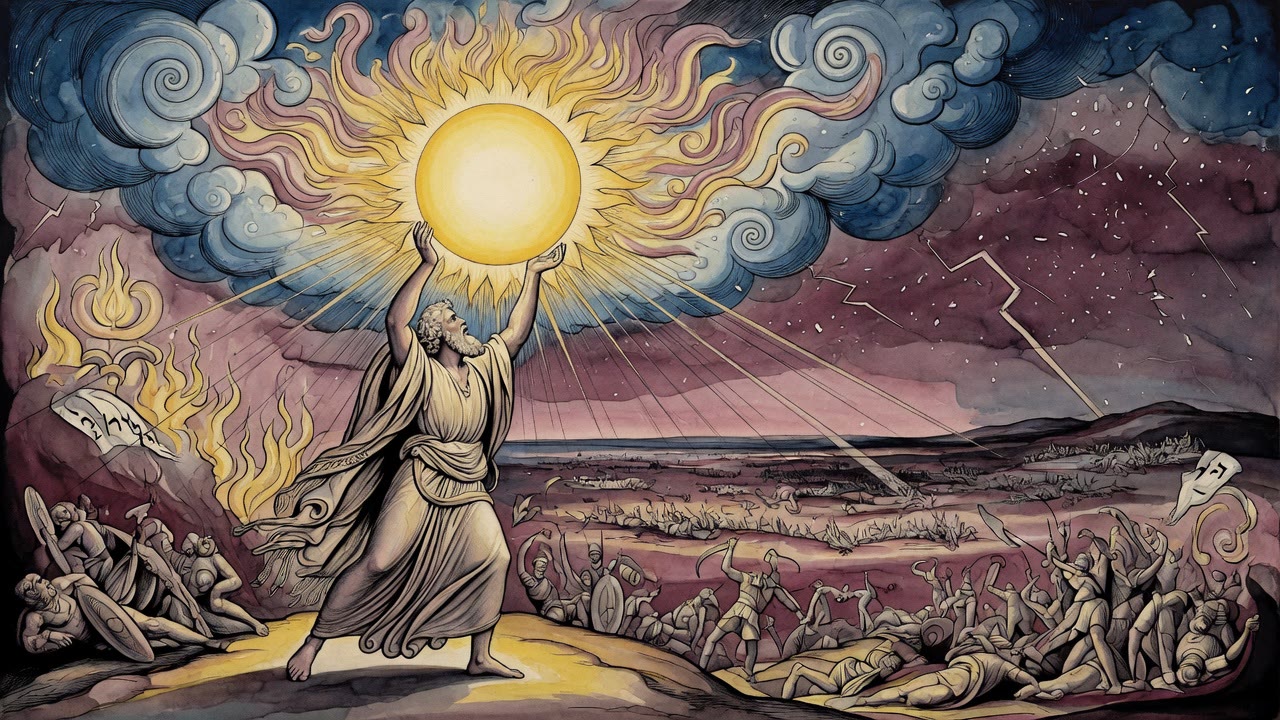
God forces them out anyway. They emerge against their will and flood fields, seas, and cities. The unjust still do not blush. Worship continues under a sky that never consented to be a god (Zephaniah 3:5). The midrash leaves that insult standing so that no one can pretend the heavens enjoy being misread.

A World Held Up by Will Alone

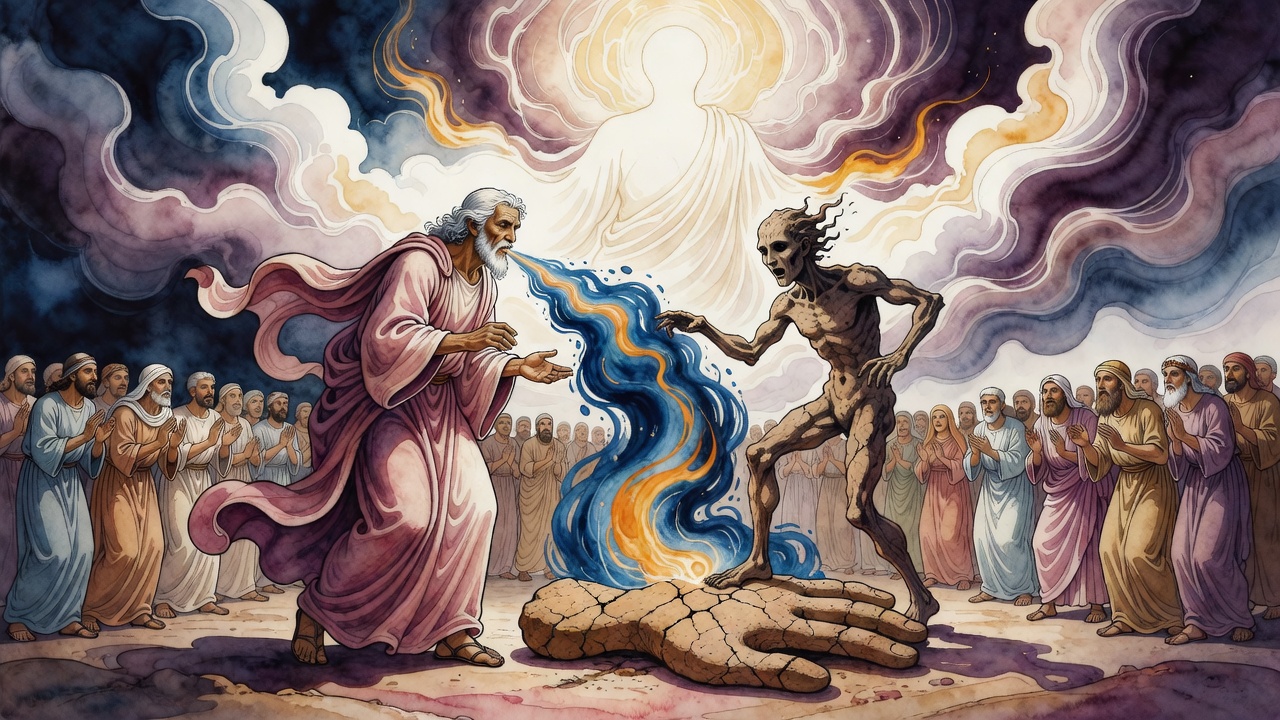
That forced shining is not only astronomy. Later teachers pressed the same point into the grain of existence. Nothing keeps being because matter remembers how. Everything that stands does so because the Holy One keeps willing it, moment by moment, the way a singer holds a note that would die if breath stopped.

A grain of sand does not hold its shape by cleverness. A galaxy does not keep its spiral by right. A pulse in a wrist does not continue because yesterday approved it. The sun's obedience is the visible version of a quieter rule: creation is not a finished machine left running. It is a continuous choice that can be withdrawn and is, for now, renewed.

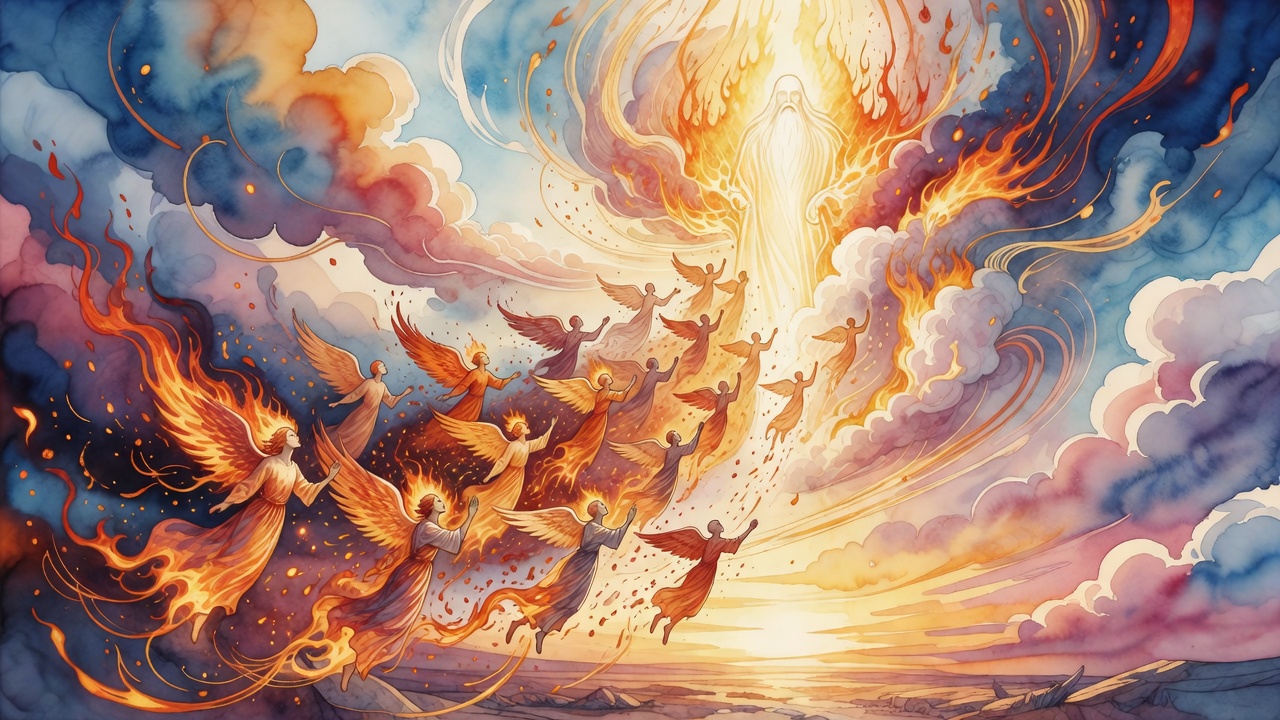
So the dawn that looks automatic is a verdict repeated. Permission is granted again. Arrows fly again. The lights that fear becoming idols still open their faces because the world needs them more than they need dignity. Dependence is not a flaw in the system. It is the system.

What the Forced Light Judges

When people bow to the sun, they insult the One who shoots the arrows. When people treat the moon as a private fortune-teller, they forget that both orbs arrive as servants, not masters. The midrash leaves the luminaries under judgment so that human eyes will stop treating them as owners of fate and start treating them as co-workers under orders.

Night after night the blood-colored sun sinks. Morning after morning the petition starts over. The sky never graduates from need. The earth never graduates from dependence. Even the most reliable brightness is borrowed brightness, and the loan is reviewed daily in a court no human attorney enters.

Stand outside before first light and the story is still going. Somewhere above the last stars, two great servants wait for leave, lose their sight in glory, and step forward only because God clears the path with fire that is not theirs. The first color on the wall is not nature alone. It is permission made visible.


← All myths
From the tradition

Sources

2 sources

The texts behind this telling. Some cards carry a translation of the source; others are our own retelling of it, and each card says which. Every card links out to the original.

Vayikra Rabbah 31:9Vayikra Rabbah

Retold in our words. Read the original at the link below.The Sefaria Midrash Rabbah, 2022 · CC-BY

Vayikra Rabbah turns to The Sun and Moon Must Ask God Permission Every Single Day.

Well, according to the ancient rabbis, it's quite a tale. Rav tells us that before the sun and moon grace us with their light each day, they have to ask permission from the Holy One, blessed be He. These celestial bodies, these massive balls of light and rock, approaching the Divine Presence itself.

Here's the thing: the sheer intensity of God's presence is almost too much for them. Their "eyes dim," Rav says, overwhelmed by the aura. They want to shine, they want to illuminate the world, but they're practically blinded. What does God do? According to Rav, He "shoots arrows before them," guiding them with bursts of light. This idea is even hinted at in the prophet Habakkuk (3:11): “The sun, the moon stand in their abode; by the light of Your arrows they will go, by the glow of the flash of Your spear.”

It gets even more intense. Rabbi Hoshaya son of Rabbi Simlai, citing Rabbi Yitzḥak bar Ze’eira, paints a vivid picture: the orb of the sun, before it sets, becomes "like a round spot of blood." A powerful, almost unsettling image. What could this mean? The text connects this to a verse from Psalms (19:5-6), comparing the sun to a bridegroom or a warrior running his course (oraḥ). But oraḥ, interestingly enough, is also used in reference to the menstrual cycle, as we see in (Genesis 18:11) regarding Sarah. So, the setting sun, in its fiery redness, is linked to themes of completion, renewal, and perhaps even vulnerability.

But there's a twist. Rabbi Levi offers another perspective. Each day, he says, God sits in judgment of the sun and moon, because they're reluctant to shine! Why? "The people indict us, the people prostrate themselves to us," they complain. In other words, humanity is worshipping them, turning them into idols. God will punish not only the idolators but also that which they worshipped. (Matnot Kehuna)

Rabbi Yusta bar Shunem adds that God forces them to do it! They emerge and illuminate the world against their will. This is connected to (Zephaniah 3:5): “Each morning He brings His judgment to light; it does not fail [lo nedar].” Lo nedar, meaning it does not cease. The sun and moon have no choice but to fulfill their purpose, even though their light is being misused.

The text then adds, "But the unjust knows no shame" (Zephaniah 3:5). People continue to worship them, even when they see the sun and moon "stricken" during eclipses. The ancient rabbis saw eclipses as punishments, warnings. Yet, people persisted in their idolatry.

And after all this cosmic drama, the passage concludes with a seemingly simple statement: "They shall take to you…olive oil.” This is a reference to the menorah, the lampstand, in the Temple. Even though God is the master of all light, forcing even the sun and moon to shine, He still asks for our small contribution, our humble offering of light. It's as if to say, "Yes, the universe is vast and complex, and My power is beyond comprehension. But your actions, your choices, your willingness to bring light into the world – that matters too."

So, what does it all mean? This passage isn't just about the sun and moon; it's about our relationship with the Divine, our responsibility to use the gifts we're given wisely, and the constant struggle between light and darkness, both within ourselves and in the world around us.

Full source
Da'at Tevunot 56:4Da'at Tevunot

Retold in our words. Read the original at the link below.Sefaria Community Translation · CC-BY

We go about our lives, making plans, building things, assuming that everything will just… keep being. But what if it wasn't so automatic? What if the whole shebang, from the smallest grain of sand to the most distant galaxy, was constantly being willed into existence?

That's what Da'at (Knowledge) Tevunot, a profound work of Jewish thought, invites us to consider. It tells us, in no uncertain terms, that "all these matters are all dependent exclusively on His will, may He be blessed." Everything. All of it. A reader can fall into the trap of thinking that the world operates on some kind of cosmic autopilot. Like a giant machine that was set in motion a long, long time ago and is now just chugging along. But that's not the picture being painted here.

In Da'at Tevunot, absolutely nothing has "existence or being and continued presence at all except through His will." It’s not a one-time act of creation; it’s an ongoing, moment-by-moment decision. A continuous outpouring of divine energy.

It brings to mind the verse, “He spoke and it came into being, He commands and they continue to stand.” (Psalm 33:9). It’s not just about the initial creation. It's about the constant renewal, the perpetual sustaining of all things.

This means that the power of His will, may He be blessed, is present in everything. He "alone causes them continued existence in all of their matters, in all their parts and details."

The implications are mind-boggling, aren't they?

It means that everything, down to the tiniest detail, is a direct expression of the Divine will. It means that the very qualities that we perceive in the world around us, all that is within them, owes its existence to this continuous act of Divine willing.

Why is this important?

Because it changes everything. It reframes our understanding of reality. It challenges us to see the world not as a self-sustaining entity, but as a manifestation of the Divine will.

Da'at Tevunot is adamant: "they and nothing within them has any matter of existence without Him." There's no independent existence. No autonomy. Everything is utterly dependent.

So, where does this leave us?

Perhaps with a renewed sense of awe and wonder. With a deeper appreciation for the fragility and the beauty of existence. And maybe, just maybe, with a greater awareness of the constant, underlying presence of the Divine in every single moment. It invites us to move beyond the surface of things, to look deeper, and to recognize the profound truth that everything is connected, everything is sustained, by the will of the One.

What if we lived each day remembering that? How might that change our actions, our perspectives, our very lives?

Full source