6 min read

The Night Esau Made His Vow Against Jacob

Esau returns from the field to find Jacob wearing his clothes and carrying his blessing. The cry that follows shakes the walls.

Curated by Arthur · Told by Maggid ·
Table of Contents
  1. The Disguise That Worked
  2. The Cry That Split the Air
  3. What Was Left
  4. Abraham Watched and Knew
  5. The Night He Decided

The Disguise That Worked

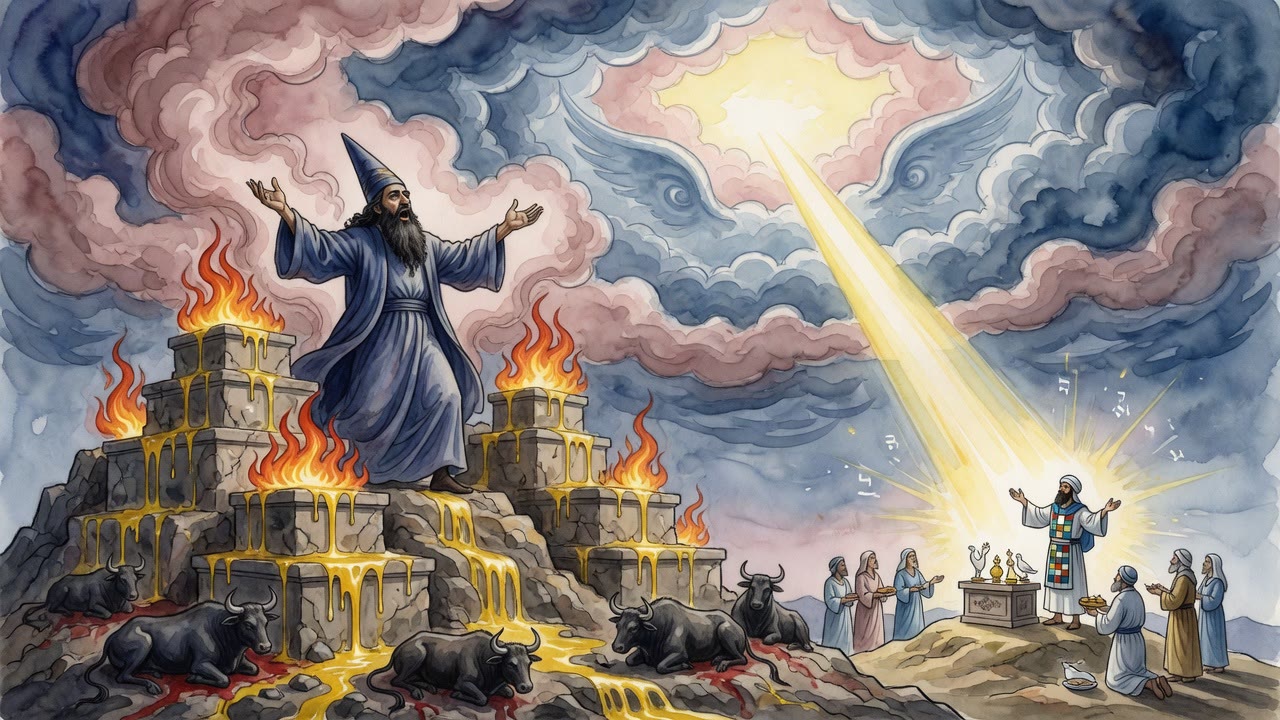
Jacob came to his father dressed as Esau. He wore the skins of kids on his hands and on the smooth of his neck. He brought the food his mother had prepared to taste like venison. He stood in front of a blind man and spoke in a voice he had spent his life carefully not imitating, and when Isaac reached out and felt the hair on his arms, he said: the voice is Jacob's voice but the hands are the hands of Esau.

He hesitated. He asked again: are you really my son Esau? Jacob said: I am.

The Book of Jubilees follows the scene in detail, noting the precise moment Isaac's doubt was overcome, the moment his remaining senses outweighed his hearing. He blessed Jacob. He gave him the blessing of the firstborn, the blessing that commanded nations and made brothers bow, the blessing that could not be given twice. He gave it to the wrong son on purpose and to the right son by accident, and when he had finished he sent the boy away satisfied.

The Cry That Split the Air

Esau came in from the field shortly after. He made the food his father had asked for, brought it to the bedside, and said: let my father eat of his son's venison, so that your soul may bless me.

Isaac said: who are you?

Esau said: I am your firstborn son, Esau.

Isaac trembled with a very great trembling. The text uses an intensive doubled construction in Hebrew: he trembled greatly, greatly. He understood completely what had happened, and the understanding landed on him with physical force. He said: then who was it that hunted venison and brought it to me before you came? I blessed him, and he will be blessed.

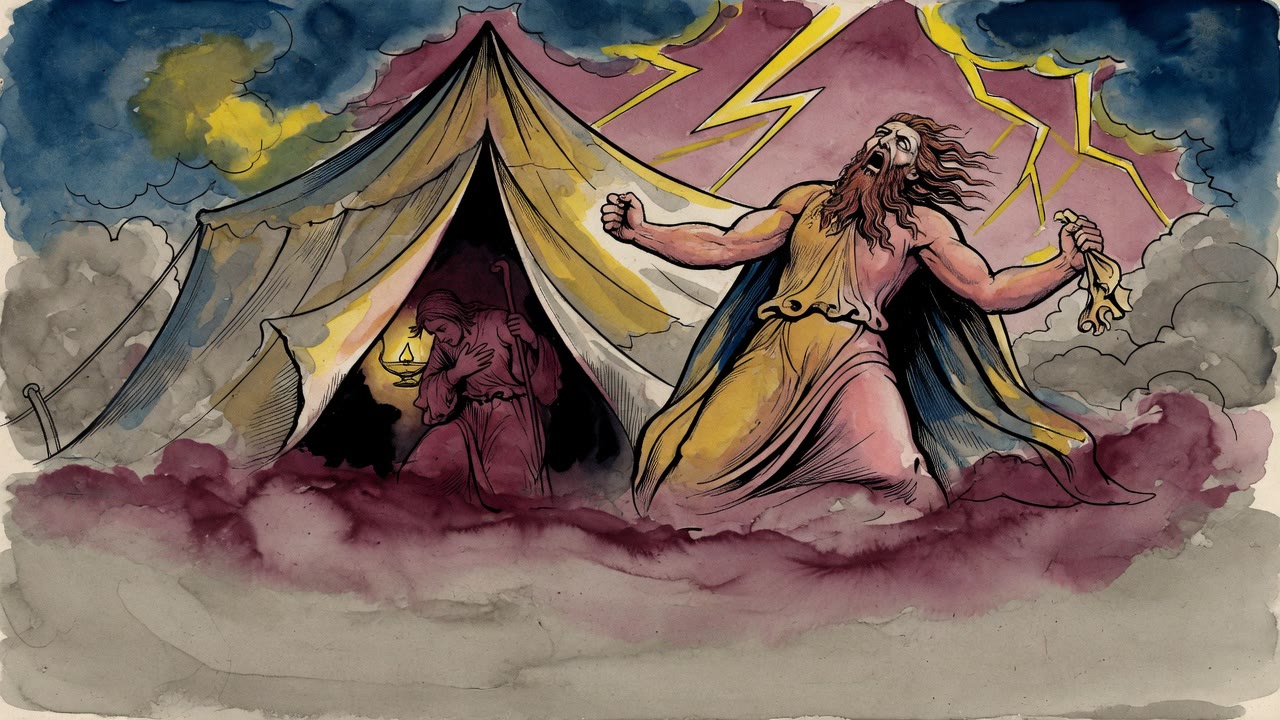
When Esau heard his father's words, he cried out a very great and bitter cry. The tradition carried that cry for centuries. It was the sound of a man who had been careful, who had done his part, who had gone to the field and done the work his father asked, who had come back with the right food at the right time, and arrived three minutes too late. Everything he was supposed to inherit was gone.

What Was Left

He begged. Have you only one blessing, my father? Bless me, also me. And he wept.

Isaac gave him what there was to give, which was not much: the fat places of the earth would be his dwelling, and the dew of heaven, but he would serve his brother, and when he broke free he would shake off the yoke. It was a residual blessing, the inheritance left after the primary inheritance had already been distributed. Esau received it and understood what it meant.

He decided to wait. He said to himself: the days of mourning for my father are coming, and then I will kill my brother Jacob.

Abraham Watched and Knew

The Book of Jubilees adds a scene that the Torah does not include. Abraham was still alive when Esau began to move in that direction. He saw something in his grandson that the family pretended not to see, the way a man can see what others in a family avoid looking at directly. Abraham called Jacob to him and blessed him separately, in a private act that the narrative preserves because it was deliberate: he was transferring the covenant weight not through the primary blessing already stolen but through his own direct act of recognition.

He saw that in Jacob should his name and seed be called. He said this to Jacob's face. It was not simply a prediction. It was a father's acknowledgment of what he could see clearly even while others around him managed the aftermath of the deception with varying degrees of involvement.

The Night He Decided

The decision Esau made was not made in the moment of hearing. He was shrewd enough to recognize that killing Jacob immediately would destroy him too: his father was not yet dead, his mother was in the household, the act of fratricide would cost him whatever remained of his standing. He decided to wait.

But waiting did not dissolve the vow. He said these words to himself, in his heart, and the tradition preserved them: when my father's mourning is over, then I will kill my brother Jacob. He set a date. He gave it a precondition. He organized his hatred into patience, which is the most durable form hatred takes.

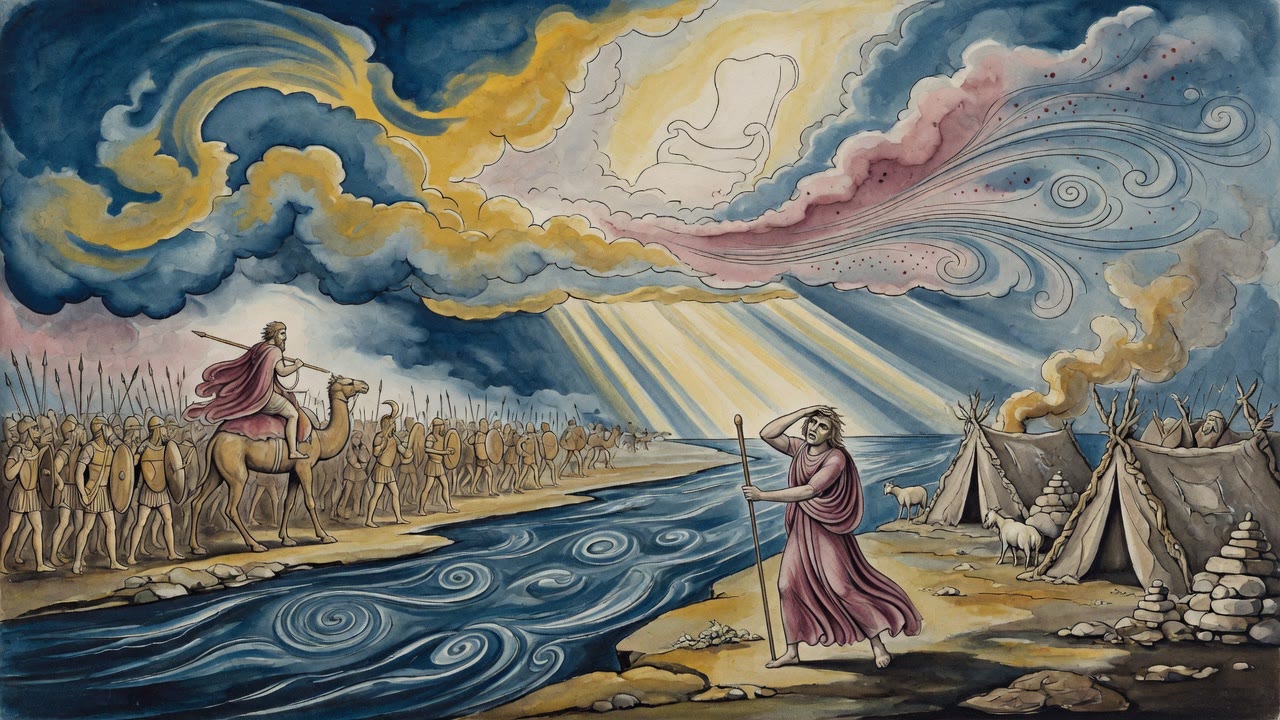
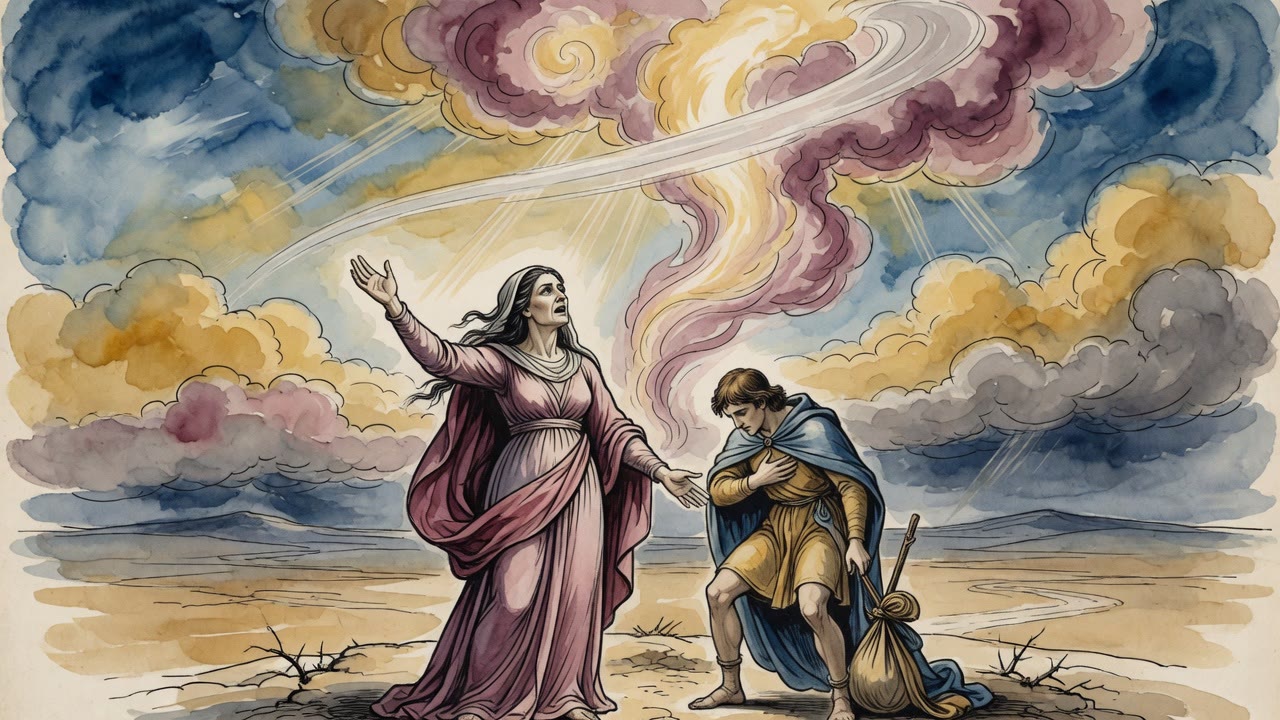
Jacob left. Rebekah told him to run to Laban and stay until his brother's rage had cooled. She told Jacob she would send for him when it was safe. She did not send for him. He was gone twenty years before they saw each other again, and by then both his parents were dead and Esau had four hundred men and was coming toward him on the road.


← All myths
From the tradition

Sources

5 sources

The texts this telling draws on, in full. Open a card to read inline, or expand it for a wider, quieter read.

Book of Jubilees 26:34Book of Jubilees

Book of Jubilees turns to Jacob Steals the Blessing Disguised as Esau.

The stage is set. Jacob, aided by his mother Rebecca, is enacting his plan to receive the blessing intended for his brother, Esau. He prepares a savory meal, mimicking Esau's hunting prowess, and approaches his aging and blind father, Isaac.

"Let my father arise, and eat of my venison that thy soul may bless me," Jacob says, his voice carefully modulated to sound like his brother.

Isaac, his senses dulled by age and failing eyesight, is immediately suspicious. "Who art thou?" he asks, his question hanging heavy in the air.

Jacob boldly replies, "I am thy first born, thy son Esau: I have done as thou hast commanded me." Can you imagine the tension in the room? The weight of this lie, poised to alter the course of history?

The narrative then takes a dramatic turn. Isaac is "very greatly astonished." He exclaims, "Who is he that hath hunted and caught and brought (it) to me, and I have eaten of all before thou camest, and have blessed him: (and) he shall be blessed, and all his seed for ever."

Think about Isaac's shock. He realizes he's already bestowed the blessing! He's eaten the meal, spoken the words, and sealed the destiny of Jacob and his descendants. The blessing, once given, cannot be retracted.

What's so powerful about this scene in the Book of Jubilees is how it highlights the power of words, the weight of intention, and the consequences of deception. Even though Isaac was deceived, the blessing stands. It emphasizes a profound idea: sometimes, destiny unfolds in unexpected ways, even through human fallibility. It makes you wonder about the role of fate versus free will, doesn’t it? And how even our mistakes can play a part in a larger plan.

Full source
Book of Jubilees 26:40Book of Jubilees

The story of Esau is a masterclass in that feeling.

The familiar story centers on Jacob and Esau. The twins. Jacob, the trickster, ends up getting the birthright and the blessing intended for Esau. But what happens after? What was left for poor Esau? The Book of Jubilees, an ancient Jewish text that retells and expands upon the stories in Genesis, gives us a glimpse into that moment.

In Jubilees 26, we find Isaac, the father, having just bestowed the crucial blessing upon Jacob. Esau, understandably distraught, confronts his father.

Isaac says to Esau, "Behold, I have made him thy lord, And all his brethren have I given to him for servants, And with plenty of corn and wine and oil have I strengthened him: And what now shall I do for thee, my son?"

Ouch. Can you feel the sting? Isaac is essentially saying, "Sorry, son, I gave it all away. Nothing left for you." It's a gut-wrenching moment of paternal disappointment.

Esau, in his raw despair, pleads, "Hast thou but one blessing, O father? Bless me, (even) me also, father." And then "Esau lifted up his voice and wept."

Imagine that scene. The weeping. The utter hopelessness. This isn't just about material wealth; it's about legacy, about a father's love, about a sense of belonging.

And what does Isaac say? "Behold, far from the dew of the earth shall be thy dwelling, And far from the dew of heaven from above."

That’s… not exactly comforting, is it? "Far from the dew…" In other words, your life will be harsh, barren, and lacking divine favor. Some translations interpret this as a prophecy of Esau's descendants living in arid lands.

Now, you might be asking: why this bleak pronouncement? Was Isaac being cruel? The Book of Jubilees doesn’t explicitly say, but we can infer some things. Perhaps Isaac felt he had no choice, having already made the irrevocable blessing to Jacob. Perhaps he saw something in Esau that made him believe he wouldn’t use a blessing wisely.

Whatever the reason, it’s a stark reminder that words have power. Blessings, curses… they carry weight, especially within a patriarchal society like the one depicted in the Bible and the Book of Jubilees.

It leaves us with a question: What do we do when we feel like Esau? When we feel like we've been passed over, cheated, left with nothing? Maybe the answer isn’t to weep in despair, but to find our own blessings, even in the "far from the dew" places. Maybe Esau's story isn't just a tragedy, but a challenge to create our own destiny, even when it feels like everything is stacked against us.

Full source
Book of Jubilees 27:1Book of Jubilees

That feeling, that burning resentment, is at the heart of our story today, straight from the Book of Jubilees, a text that expands on the stories we find in the Torah itself.

Remember the scene? Jacob, with a little help from his mother Rebecca, tricks his blind father Isaac into giving him the blessing meant for Esau, the elder son. Ouch.

The Book of Jubilees gives us a little more insight into the fallout. It paints a picture of Esau seething with rage. "And by thy sword wilt thou live," the text says, recounting Isaac's words to Esau, "And thou wilt serve thy brother. And it shall come to pass when thou becomest great, and dost shake his yoke from off thy neck, Thou wilt sin a complete sin unto death, And thy seed will be rooted out from under heaven." It's a harsh pronouncement, filled with a sense of inescapable fate. Esau’s destiny is forever intertwined with Jacob’s, a constant reminder of what he lost.

The text goes on, "And Esau kept threatening Jacob because of the blessing wherewith his father blessed him, and he said in his heart: 'May the days of mourning for my father now come, so that I may slay my brother Jacob.'" Can you feel the venom? Esau is consumed by a desire for revenge. He's not just upset; he’s plotting fratricide. He's willing to wait for his father's death just to get his chance. The weight of that resentment must have been crushing.

But here's where the story takes another turn. Rebecca, ever the protective mother, gets wind of Esau's deadly intentions. "And the words of Esau, her elder son, were told to Rebecca in a dream, and Rebecca sent and called Jacob her younger son, and said unto him: 'Behold Esau thy brother will take vengeance on thee so as to kill thee.'" Dreams, in Jewish tradition, often serve as divine warnings, messages from beyond. And Rebecca, attuned to these subtle signs, acts swiftly.

What does this all mean? It's a story about sibling rivalry, yes, but it's also about destiny, free will, and the consequences of our choices. Esau is seemingly trapped by the prophecy, fated to serve his brother. Yet, he also has the agency to choose his path. Will he succumb to his anger and fulfill the grim prediction? Or can he find a way to break free from the cycle of resentment and violence?

This passage from the Book of Jubilees leaves us hanging, doesn't it? It reminds us that even when we feel wronged, even when we believe fate is against us, we still have the power to shape our own stories. The question is, what will we choose to do with it?

Full source
Book of Jubilees 19:22Book of Jubilees

Book of Jubilees turns to Trial of Esau of Jacob.

Abraham, nearing the end of his days. He's seen a lot, hasn't he? From leaving his home to almost sacrificing his son, he's lived a life of faith and testing. And now, he's looking at his grandsons, Esau and Jacob, and something is troubling him.

"Abraham saw the deeds of Esau," the verse says, "and he knew that in Jacob should his name and seed be called." He saw something in Esau, perhaps a lack of the spiritual depth he knew was needed to carry on the covenant. He understood that Jacob was the one destined to continue his legacy, to be the vessel for God's promise.

So, what does Abraham do? He calls for Rebecca.

Think about their relationship for a moment. Abraham, the patriarch, and Rebecca, his son's wife. There must have been a deep level of trust and respect between them. "He called Rebecca," the Book of Jubilees says, "and gave commandment regarding Jacob, for he knew that she (too) loved Jacob much more than Esau."

It’s a subtle but important detail, isn’t it? Abraham recognized Rebecca’s love for Jacob – a love that mirrored his own understanding of Jacob’s destiny. This wasn't just about favoritism; it was about recognizing a divine spark.

And what does he say to her? It's a powerful charge: "My daughter, watch over my son Jacob, for he shall be in my stead on the earth, and for a blessing in the midst of the children of men, and for the glory of the whole seed of Shem."

He's entrusting her with the future. He’s telling her that Jacob will be his successor, a blessing to all humanity, a source of glory for the descendants of Shem – one of Noah's sons, from whom Abraham's lineage comes. It's a huge responsibility.

Abraham continues, "For I know that the Lord will choose him to be a people for possession unto Himself, above all peoples that are upon the face of the earth."

This is the heart of it, isn’t it? Abraham believes – he knows – that God has chosen Jacob. Chosen him to be the father of a special people, a people set apart, a people dedicated to God. This isn't about superiority; it's about a unique relationship, a unique calling. A segulah people, as it's known in Hebrew (am segulah, עם סגלה), a treasured people.

What strikes me about this passage from the Book of Jubilees is the intimacy of it. We often focus on the grand narratives, the sweeping gestures of biblical stories. But here, we see a quiet, almost domestic scene. An aging grandfather, entrusting the future to his daughter-in-law, guided by his understanding of God's will.

It reminds us that even the most monumental events often have humble beginnings, whispered conversations, and unwavering faith passed down from one generation to the next. And that sometimes, the most important decisions are made not on the battlefield or in the palace, but in the quiet corners of the human heart.

Full source
Book of Jubilees 35:15Book of Jubilees

Forget the polite smiles and carefully chosen words. Sometimes, the gloves came off. The Book of Jubilees, a text considered canonical by some but not included in the Hebrew Bible as we know it, gives us a glimpse into one such family drama.

Remember them? Twin brothers, locked in a lifelong struggle for their father Isaac's blessing and inheritance. And in the 35th chapter of Jubilees, things get heated.

Jacob has just received his father's blessing, a moment of profound significance that essentially seals his destiny as the heir. But Esau? He’s furious.

The text records Esau's complaint before God. It's raw, it's honest, and it’s dripping with resentment. He lays it all out there: "Thou knowest all that he hath done since the day Jacob his brother went to Haran until this day; how he hath forsaken us with his whole heart, and hath done evil to us; thy flocks he hath taken to himself, and carried off all thy possessions from before thy face."

Ouch.

Esau feels cheated, abandoned, and utterly betrayed. He accuses Jacob of deliberately turning his back on their family, of actively harming them. He claims Jacob stole their flocks, took all their possessions, and then, to add insult to injury, acted like he was doing them a favor when they begged for what was rightfully theirs.

Can you feel the bitterness seething through those words?

But the core of Esau's complaint, the real sting, comes down to the blessing itself. "He is bitter against thee because thou didst bless Jacob his perfect and upright son; for there is no evil but only goodness in him."

Esau believes that Jacob doesn't deserve the blessing. He sees himself as the rightful heir, and he can't understand why God would favor Jacob, whom he views as manipulative and deceitful.

It's worth pausing here to consider Esau's perspective. He paints Jacob as a calculating opportunist, someone who feigns goodness to deceive others. He cannot fathom that Jacob might genuinely be good, that he might actually deserve the divine favor he received.

This passage from Jubilees reminds us that even in the most sacred narratives, we find complex human emotions: jealousy, resentment, and a deep sense of injustice. It forces us to ask: Who deserves blessing? Is it about inherent righteousness, or is it about something else entirely? And what happens when we feel like we've been passed over, when we believe someone else has unfairly taken what is rightfully ours? These are questions that resonate even today, long after the Book of Jubilees was written.

Full source