5 min read

The Night of Vigil That Cooled the Furnace

On the night God keeps watch, three friends walk into Nebuchadnezzar's fire while the same vigil that once split Egypt still holds the dark.

Curated by Arthur · Told by Maggid ·
Table of Contents
  1. The King Who Fed the Fire
  2. One Night, Many Rooms
  3. Egypt's Template in the Flames
  4. Cries That Arrive Together

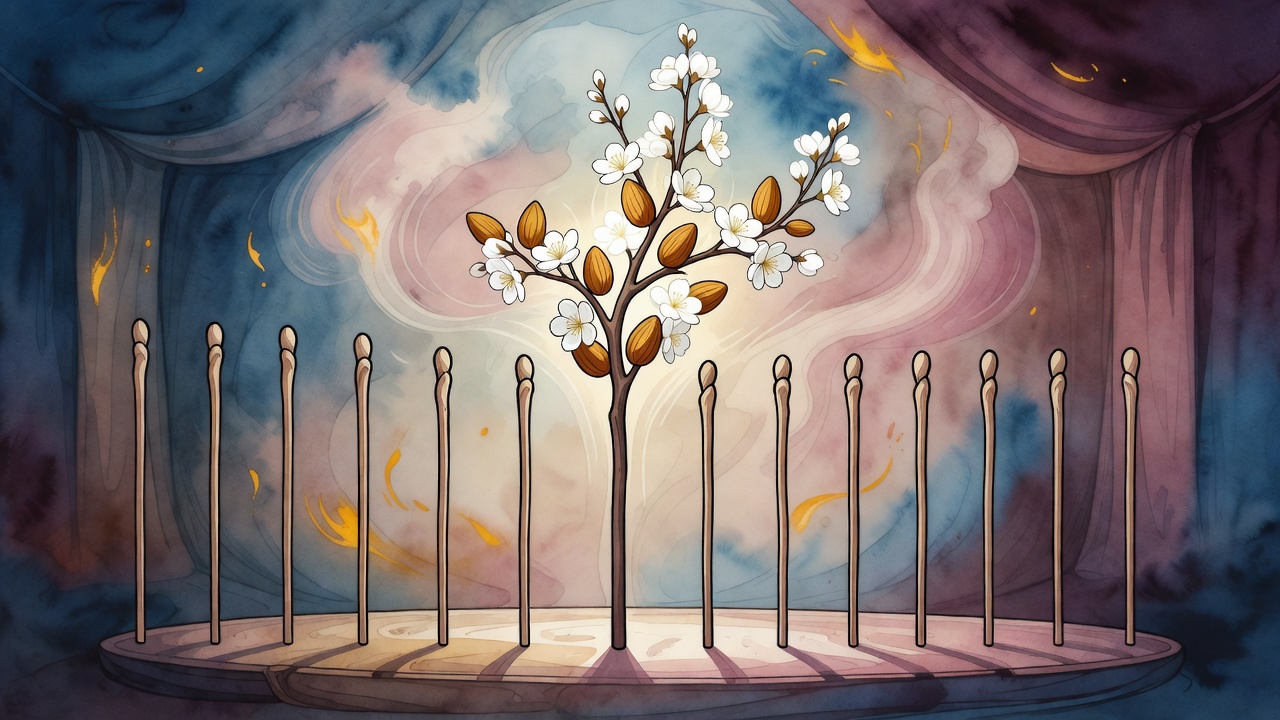
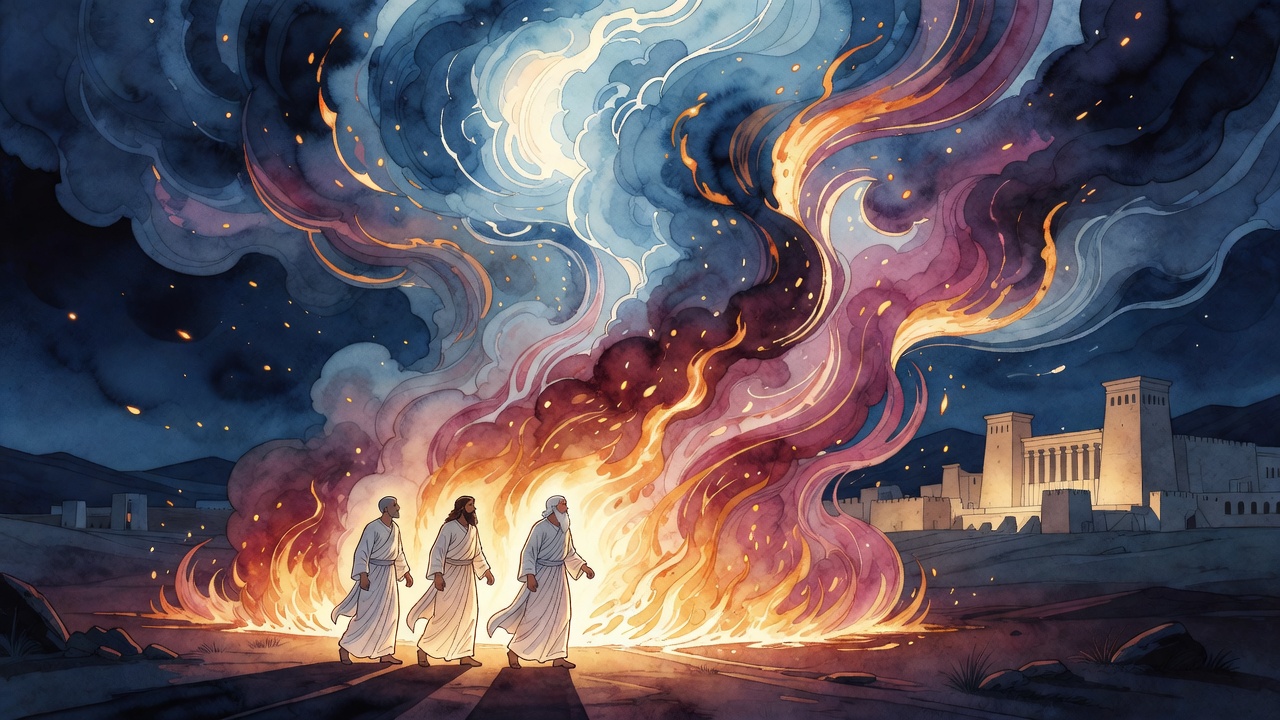
The furnace door opened on a night already claimed. Hananya, Mishael, and Azariah felt heat slap their faces before the guards shoved them forward. Below them, the fire had been fed until the air above the pit shimmered. Above them, somewhere past the king's banners, a older appointment kept its hour: the night the Torah calls a night of vigil, leil shimurim (Exodus 12:42).
The Night of Vigil That Cooled the Furnace Click for full size

They did not know the midrashic calendar by that name. They knew only that they would not bend to the image in the plain, and that the king of Babylon had answered refusal with flame.

The King Who Fed the Fire

Nebuchadnezzar stood far enough back that his beard did not singe. He had built the furnace as theater. The music had played. The nations had fallen on their faces. Three Judeans had remained upright like posts in a flood.

"Heat it seven times more," he ordered.

Soldiers who bound the three staggered from the mouth of the pit. The ropes blackened. The king expected screams that would teach the province. Instead the three walked as men walk into a hard wind, shoulders set, mouths moving on the Name.

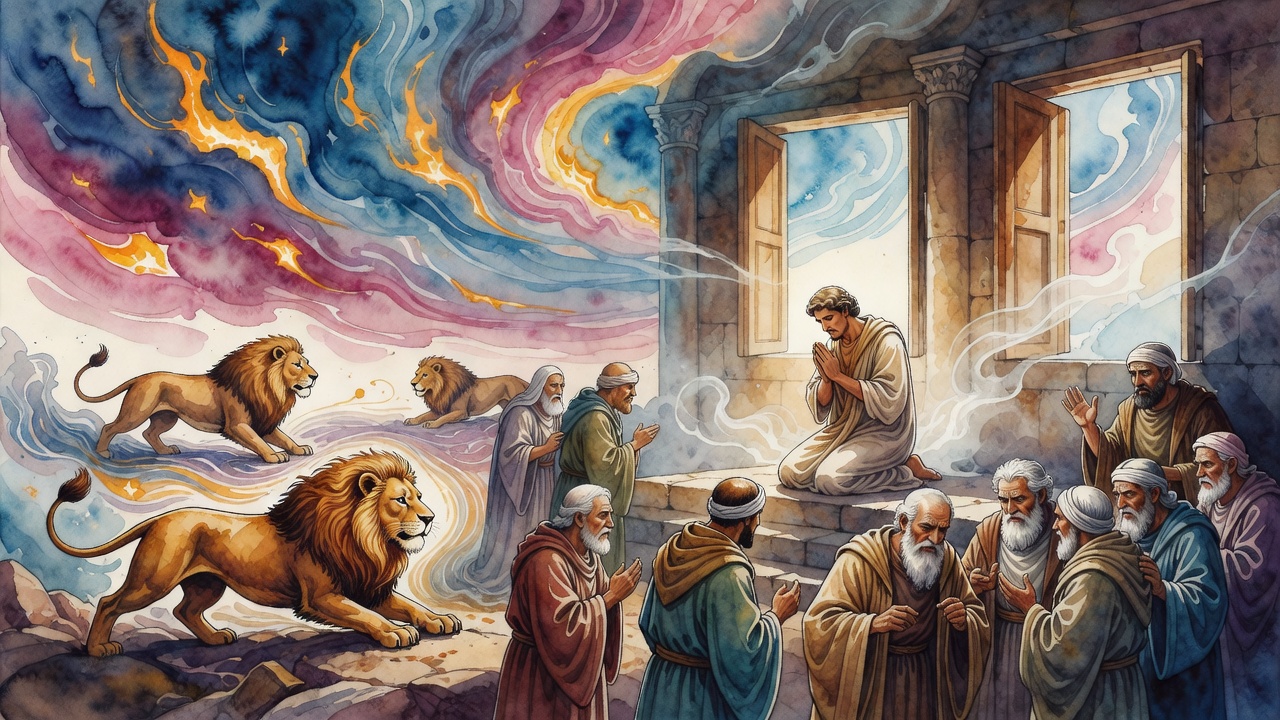
On other nights of the same watch, other bodies had also been under knives and jaws. Daniel would later sit among lions while the stone sealed the den. Hezekiah had once lain in a palace bed while an empire's threat pressed the walls of Jerusalem. The vigil did not belong to one generation. It kept returning to the same hours, the way a guard returns to the same gate.

One Night, Many Rooms

God does not stand in a single room at a time. While the furnace roared in Babylon, the same hearing took in every cry that rose that hour: a woman in labor, a prisoner counting stones, a child afraid of the dark, a remnant whispering psalms with cracked lips. Dust becomes a person and returns to dust in the same continuous act. Light and darkness are formed together (Isaiah 45:7). Blood that once filled Egypt's channels was restored to water in the same divine simultaneity that now cooled three men in flame.

Hananya's sleeve should have caught. It did not. Mishael stumbled on a coal and found the coal no hotter than river stone at evening. Azariah opened his mouth for a last breath and tasted air that did not scorch his throat.

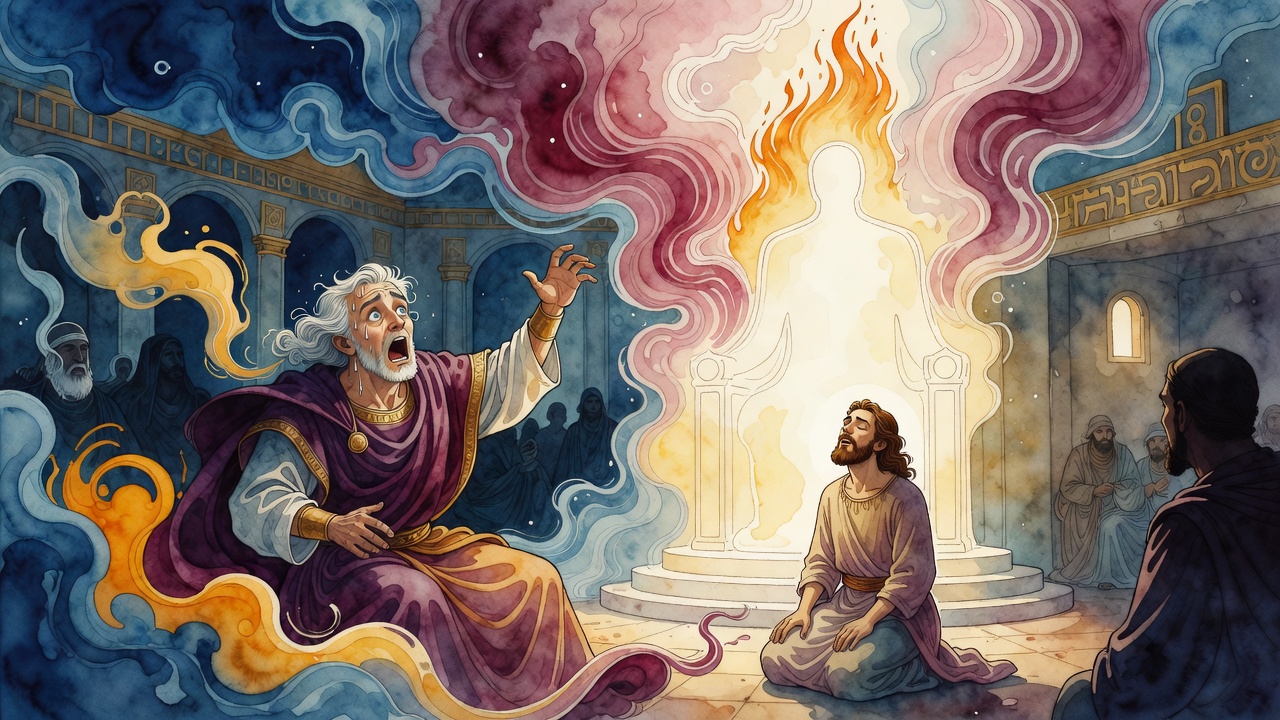
A fourth figure moved in the brightness, and the king's posture changed. The theater had failed. The fire had become a room where the watched and the Watcher met.

Egypt's Template in the Flames

Long before Babylon, that same night had been the hinge of Egypt. Blood on doorposts. A departure at midnight. A promise that the hour of first salvation would remain a sign for later ones. God speaks to Israel the way a traveler speaks to the wife who waits by the shore: when you see this sign, know I am near. The sign is the date itself. On the night of the first rescue, watch for the next.

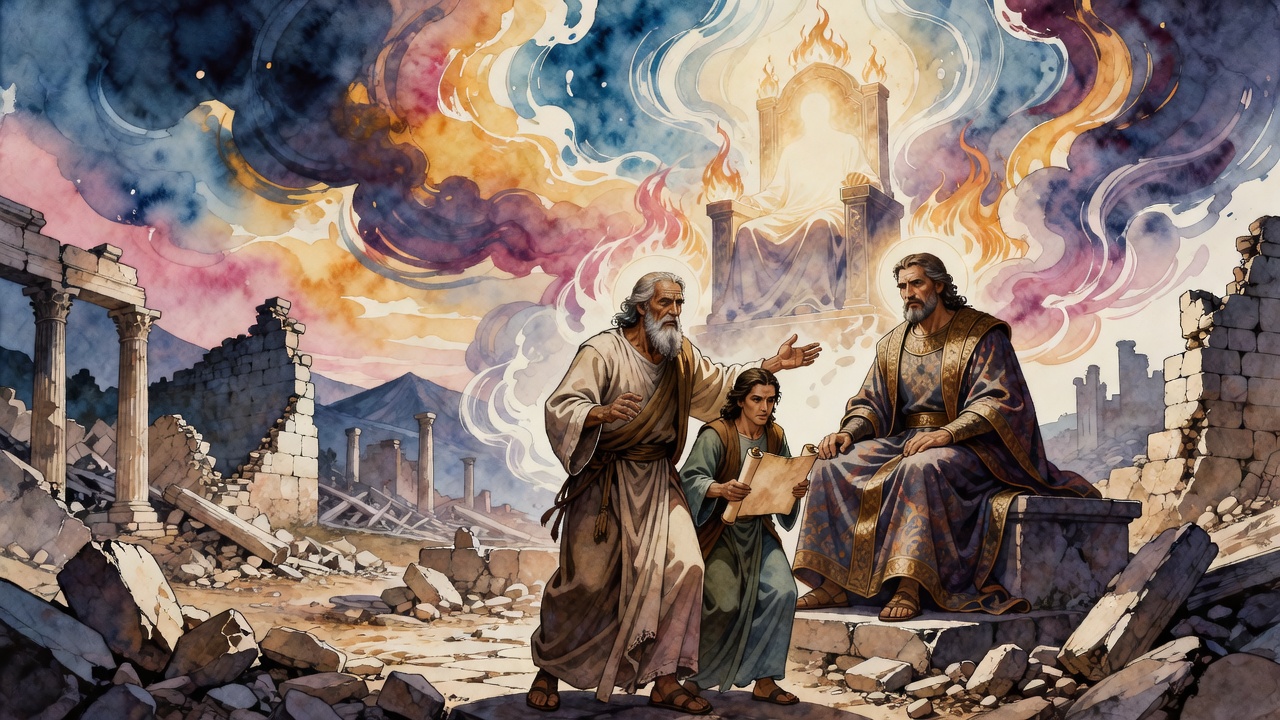
So the three in the furnace were not improvising a private miracle. They stepped into an appointment older than Nebuchadnezzar's gold statue. The night was already on duty. Angels already knew the hour. When Messiah and Elijah are spoken of for that same watch in later hope, the claim is continuous: the vigil is not nostalgia. It is a standing order.

Nebuchadnezzar shouted for them to come out. They walked from the pit without the smell of smoke on their hair. Officials touched their cloaks and pulled hands back as if expecting ash. There was none.

Cries That Arrive Together

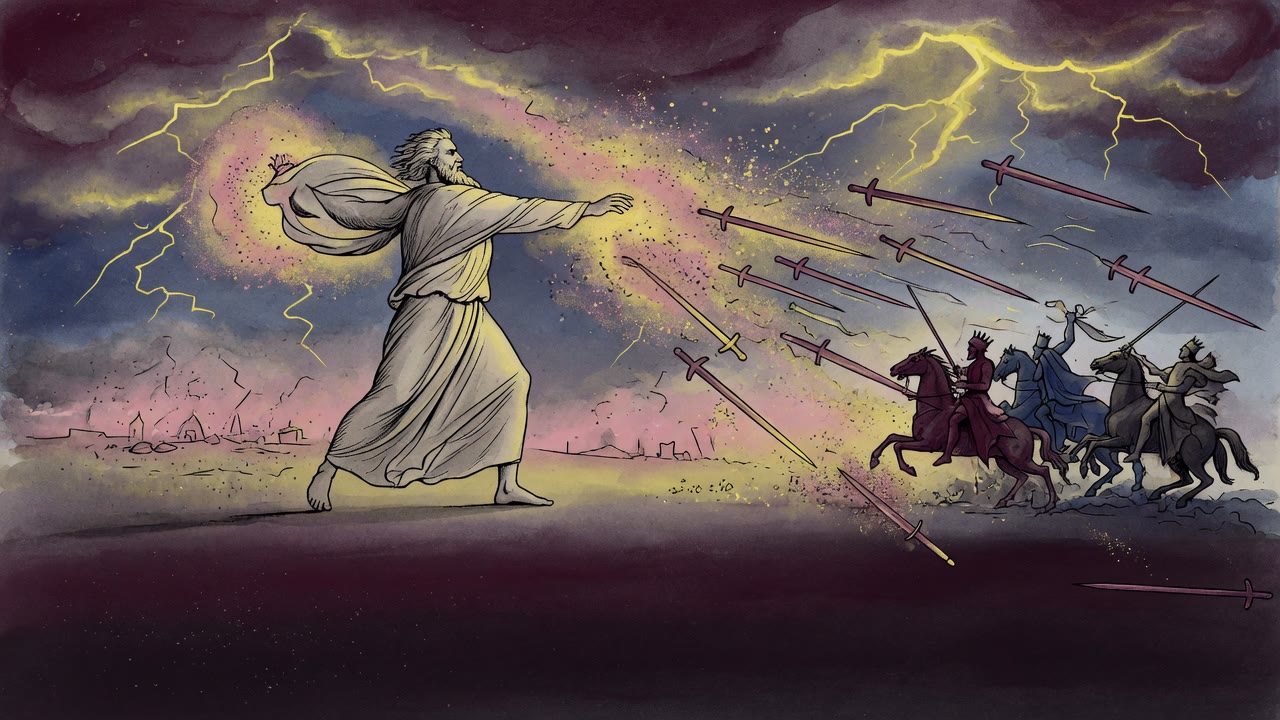
In the same instant the three drew clean air, other pleas reached the same ear without queue or favoritism of volume. God strikes and heals without taking turns. Moses' hand once turned leprous and whole again in a single demonstration (Exodus 4:6-7). The staff became a serpent and a staff again. The sea stood as walls and fell as water. None of it required the world to pause one act so another could begin.

Hananya looked at his brothers. No sermon. Only the fact of skin that still held them. Mishael laughed once, short, disbelieving, alive. Azariah turned his face toward the dark sky over Babylon and did not bow to the statue on the plain.

The king issued new decrees with a shaking voice. The three walked back toward the province of the exiles under a night that had kept its post since Egypt. Far from the furnace, other watches continued: dens, sickbeds, locked gates, futures still unopened. The vigil did not clock out when the fire failed.

Morning would come, and also night, as the watchman said (Isaiah 21:12). Until then the dark remained staffed.


← All myths
From the tradition

Sources

2 sources

The texts behind this telling. Some cards carry a translation of the source; others are our own retelling of it, and each card says which. Every card links out to the original.

Shemot Rabbah 18:12Shemot Rabbah

Retold in our words. Read the original at the link below.The Sefaria Midrash Rabbah, 2022 · CC-BY

The Torah itself calls it a "night of vigil" – leil shimurim (Exodus 12:42). But what exactly does that mean? What is God watching over?

In Shemot Rabbah, a classic collection of Midrash (rabbinic interpretive commentary), it's a night when God performs extraordinary acts for the righteous. Like a stage set, prepared for miracles.

The Midrash doesn't just leave it there. It gives us examples, powerful stories woven into the fabric of Jewish history. Remember Hezekiah, the righteous king of Judah? He was saved on this very night. And what about Hananya, Mishael, and Azariah, thrown into the fiery furnace by Nebuchadnezzar? Rescued on this night. Even Daniel, in the lions’ den, found salvation on this night.

The story doesn't end in the past. It stretches into the future. The Midrash boldly declares that on this same night, Messiah and Elijah the prophet will be exalted. It all comes back to that promise, that vigil, that divine attention focused on this particular time. As Isaiah (21:12) puts it, "The watchman said: The morning comes, and also the night." Both dawn and dusk are key.

The Midrash then uses a beautiful analogy. He tells her, "When you see this sign, know that I am coming, and I am coming soon." This is how God speaks to Israel, who have been waiting for redemption since the rise of Edom (often associated with Rome) and the destruction of the Second Temple.

God says, "This sign will be for you: On the day that I performed salvation for you [in Egypt], know that on that same night I will redeem you. If not, do not believe." In other words, the Exodus serves as a template, a promise of future redemption mirroring the past.

But there's a catch. "If you see possible indications of the redemption but not on the aforementioned date, do not believe that they are real indications of redemption, as the time has not yet come." It's a reminder that while we should always be hopeful, we must also trust in God's timing. As Isaiah (60:22) says, "I, the Lord, in its time, I will hasten it."

The prophecies continue, echoing with both hope and a hint of cosmic upheaval. "Another one, it is in a little while, and I will shake the heavens, and the earth…I will overthrow the thrones of kingdoms…" (Haggai 2:6, 22). Just as God overthrew Egypt, so too will God overthrow the idolaters. "The nations will be devastated" (Isaiah 60:12), and God will "take hold of the ends of the earth [and shake the wicked out of it]" (Job 38:13).

So, what does this all mean for us today? It means that the Seder night isn't just a historical reenactment. It's a potent moment, a time of divine vigilance, a reminder of past miracles and a promise of future redemption. It's a call to hope, a call to faith, and a call to recognize the signs of redemption when they truly appear, in their proper time.

Full source
Shemot Rabbah 28:4Shemot Rabbah

Retold in our words. Read the original at the link below.The Sefaria Midrash Rabbah, 2022 · CC-BY

Shemot Rabbah, a collection of rabbinic interpretations on the Book of Exodus, tells us that God hears them all concurrently. In fact, God does everything concurrently.

That God kills and revives, strikes and heals, all at the same time. As (Isaiah 45:7) says, "I form light and create darkness." It's not a linear process. It’s all interwoven, a constant dance of creation and destruction.

The Midrash (rabbinic interpretive commentary) illustrates this with powerful images. Dust transforms into a person, and then returns to dust. As (Amos 5:8) puts it, God "transforms the shadow of death into morning." But what does "into morning" really mean? The Midrash clarifies: it’s a return to the original state. Remember the plague in Egypt? The water turned to blood, and then, miraculously, the blood was restored to water. Life into death, and death back into life.

We see this pattern throughout the Torah. Remember when Moses' hand turned leprous and then was healed? (Exodus 4:6-7). Or when his staff transformed into a serpent and then back again? (Exodus 4:2-4). Even the sea itself, parting to become dry land and then returning to its watery depths, echoes this simultaneous action. As (Amos 5:8) also says, "He calls for the waters of the sea…"

But it’s not just about physical transformations. It extends to the realm of mitzvot (commandments), commandments, as well. The Midrash points out seemingly contradictory commands given at the same time. "Remember the Shabbat (the Sabbath) day to sanctify it" (Exodus 20:8), yet on Shabbat, two lambs must be sacrificed (Numbers 28:9), an act that involves work normally prohibited on the day of rest. How can these seemingly opposing commands coexist?

Similarly, we are told "You shall not reveal the nakedness of your brother’s wife" (Leviticus 18:16), a clear prohibition against marrying your brother's wife. But then, we have the law of yibbum, levirate marriage, described in (Deuteronomy 25:5), which commands a man to marry his childless brother's widow. Yibbum creates an exception to the general rule. These seemingly conflicting commands were, according to the Midrash, all given concurrently.

So, what does it all mean? Why this emphasis on simultaneity? The verse that ties it all together is (Exodus 20:1): "God spoke all these matters, saying." It's right there in the text. God's word isn’t a series of isolated pronouncements, but a unified whole, a weaving with threads of seemingly opposing forces. It suggests that reality itself isn’t a simple, linear progression, but a complex interplay of contrasting energies.

Perhaps this ancient wisdom offers us a new perspective on our own lives. Maybe the chaos and contradictions we experience aren’t signs of disorder, but rather integral parts of a larger, divinely orchestrated harmony. Maybe, just maybe, God

Full source