The Oath Isaac Made Esau Swear Rebounded as His Own Doom
Rebecca knew she would be buried before the year turned. She sent for Esau and asked that he never raise his hand against Jacob. He gave her his word.
Table of Contents
 Click for full size
Rebecca's Last Petition to Her Firstborn
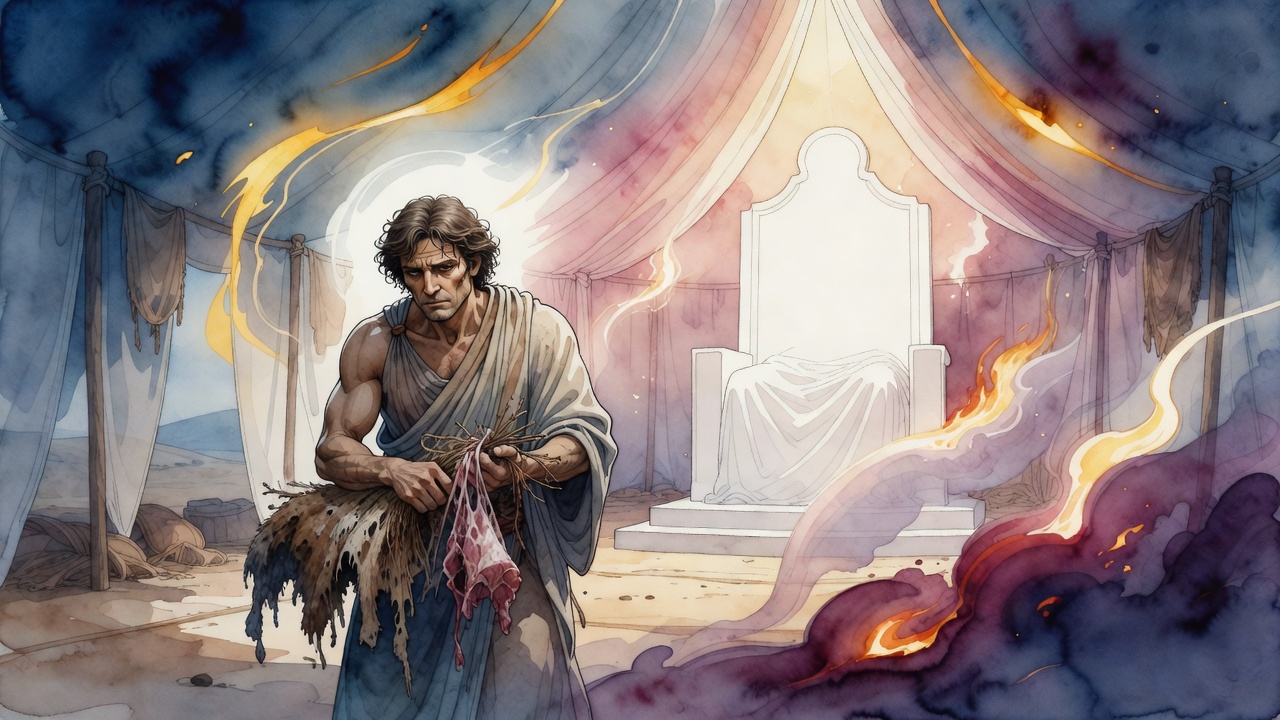
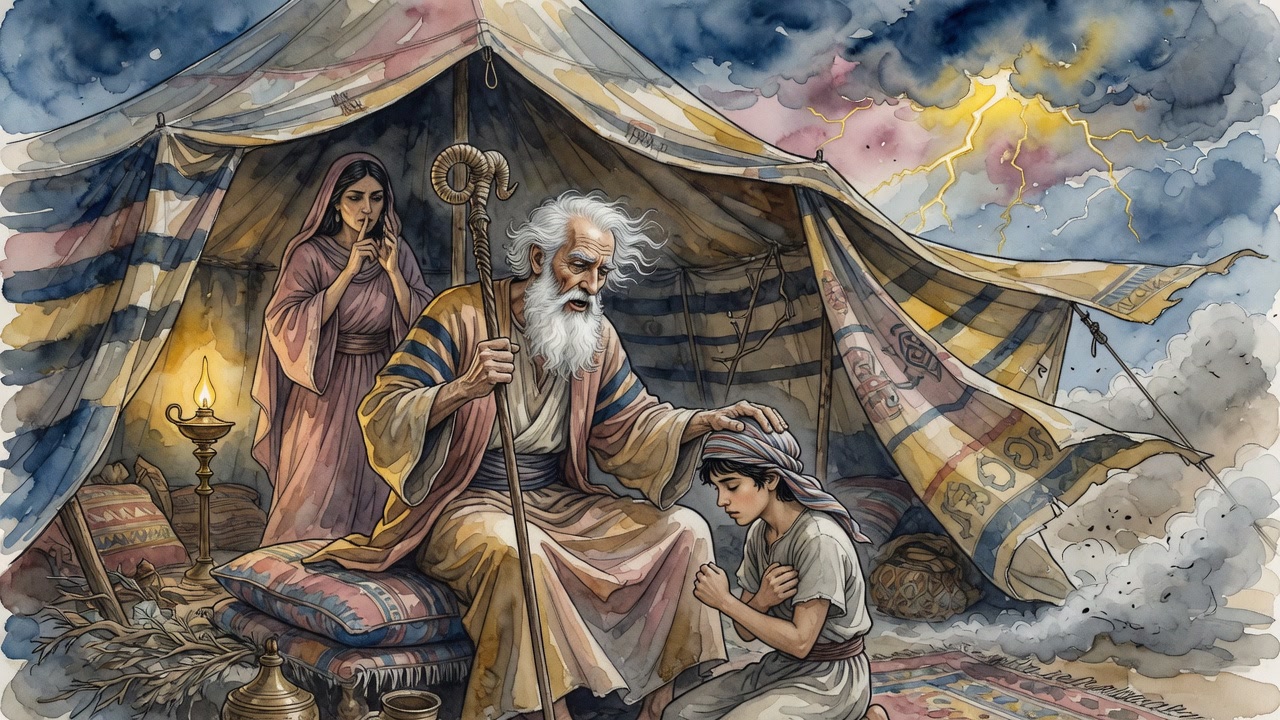
Rebecca knew she would be buried before the year turned, and she could not go into the ground with the quarrel between her sons still open. So she sent for her elder boy. Old grievance sat in Esau like a swallowed stone. The birthright gone. The blessing gone. His younger brother returned from a far country with flocks and camels and a caravan of sons, richer than the father who had blessed him. But she was his mother, and when she said, "I have a petition, my son, to make unto thee, and do thou promise to do it, my son," he softened. "I will do everything that thou sayest unto me," he answered, "and I will not refuse thy petition."
She asked for the one thing that could keep her children from killing each other. That he hold peace with Jacob. That he cultivate love toward his brother and never let his hand rise against him. And Esau, perhaps trusting his mother more than he trusted himself, gave her his word.
The Guardians Above the Struggle
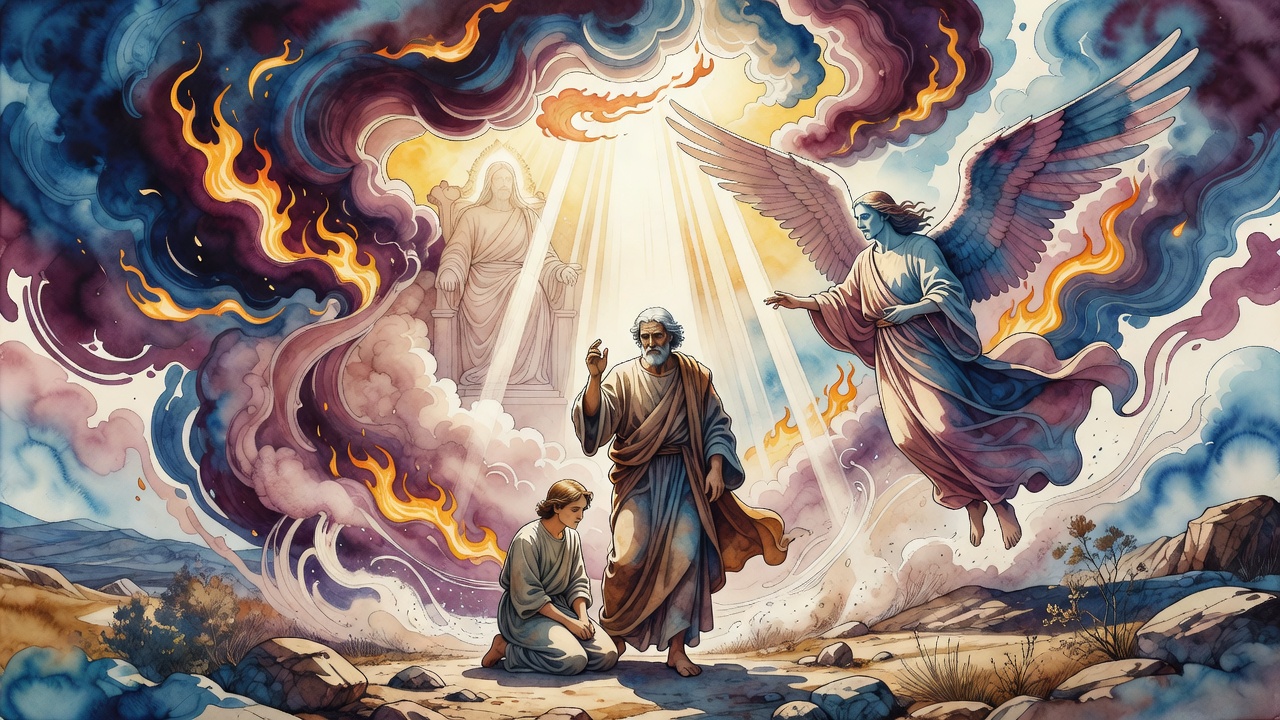
Rebecca did not tremble the way a mother about to leave two feuding sons should tremble, and there was a reason. Word had reached her that ran deeper than any promise Esau could make. "But if he desireth to slay Jacob, his brother, into Jacob's hands will he be given, and he will not escape from his hands." The struggle was already decided. Whichever way Esau turned, the outcome bent against him.
Since the two boys had wrestled inside her, an unseen watcher had stood over each. "And fear thou not on account of Jacob," she had been told, "for the guardian of Jacob is great and powerful and honoured, and praised more than the guardian of Esau." Two celestial powers hovered over the lifelong contest of the twins, and they were not evenly matched. Esau could plot in the dark all he wished. The heavier weight in heaven leaned toward his brother.
Isaac's Deathbed and the Oath He Did Not Trust
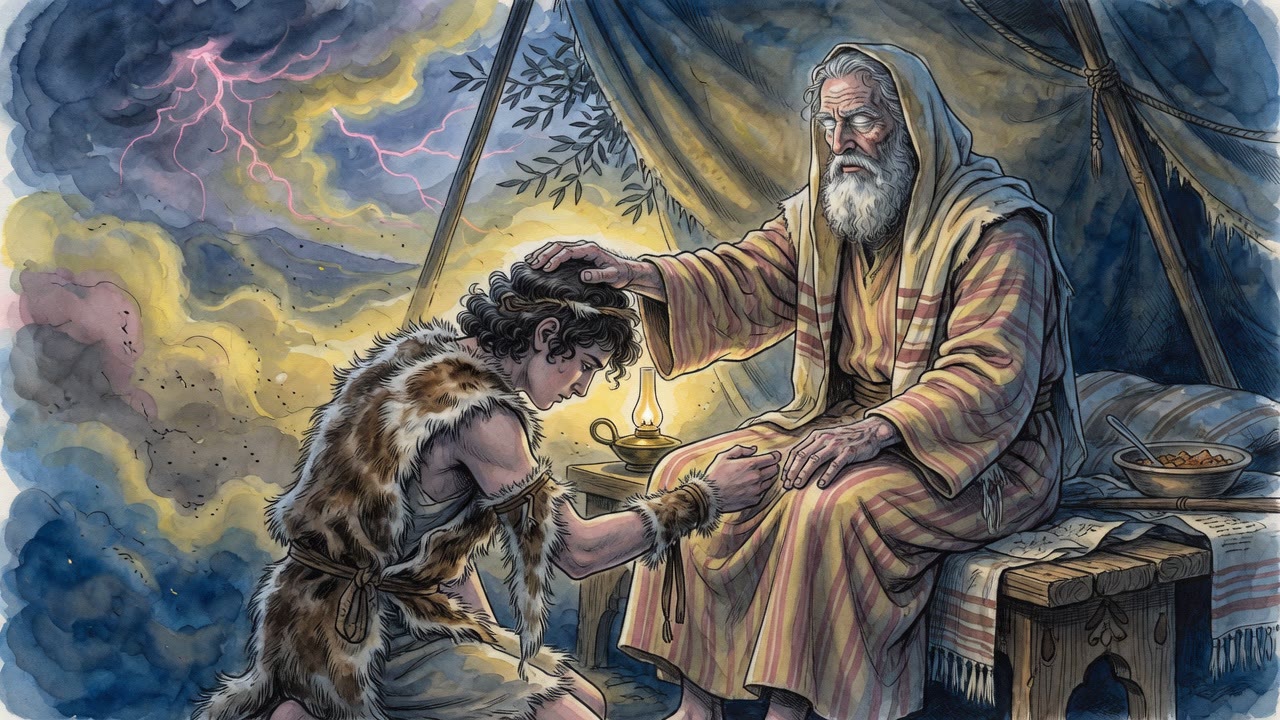
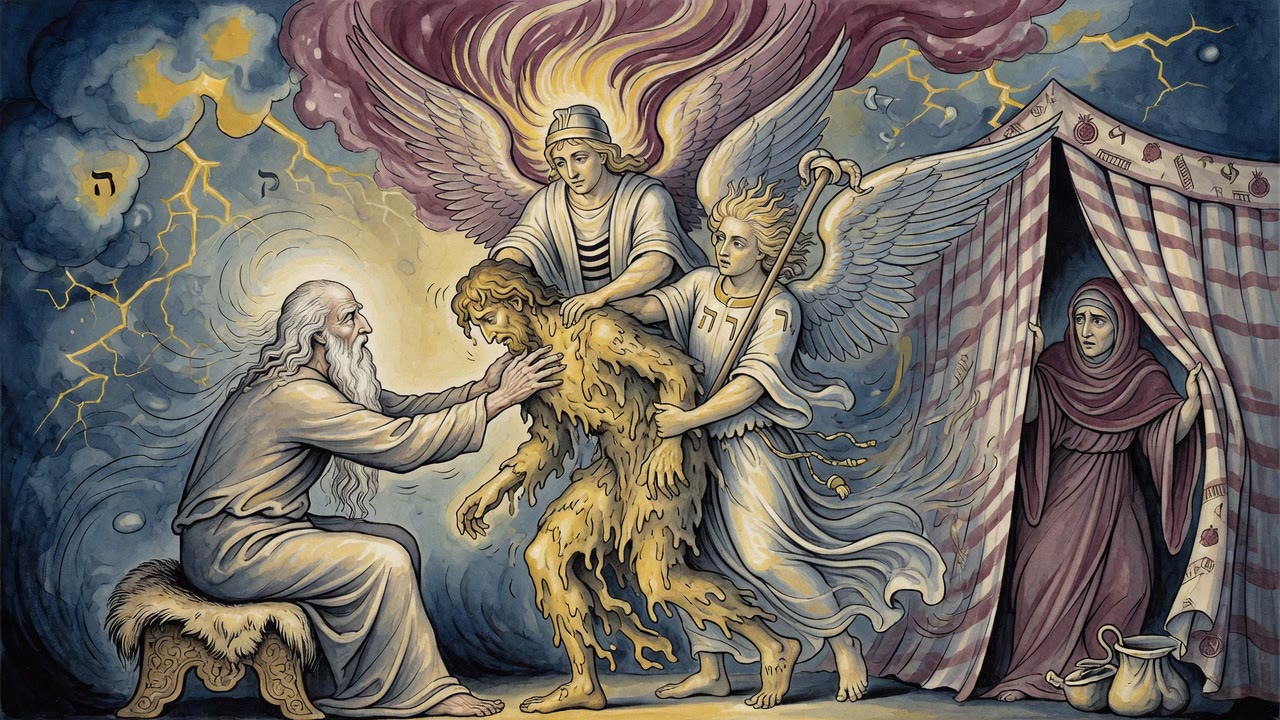
Blind now, and near the end, Isaac lay troubled over the same son. His fear was not for a season but for a lineage. "Neither he nor his seed is to be saved," the old man grieved, "for they are those who will be destroyed from the earth, and who will be rooted out from under heaven." Esau had forsaken the God of Abraham. He had gone after his wives and after their uncleanness and after their error, he and his children with him, and Isaac could see no floor beneath the fall.
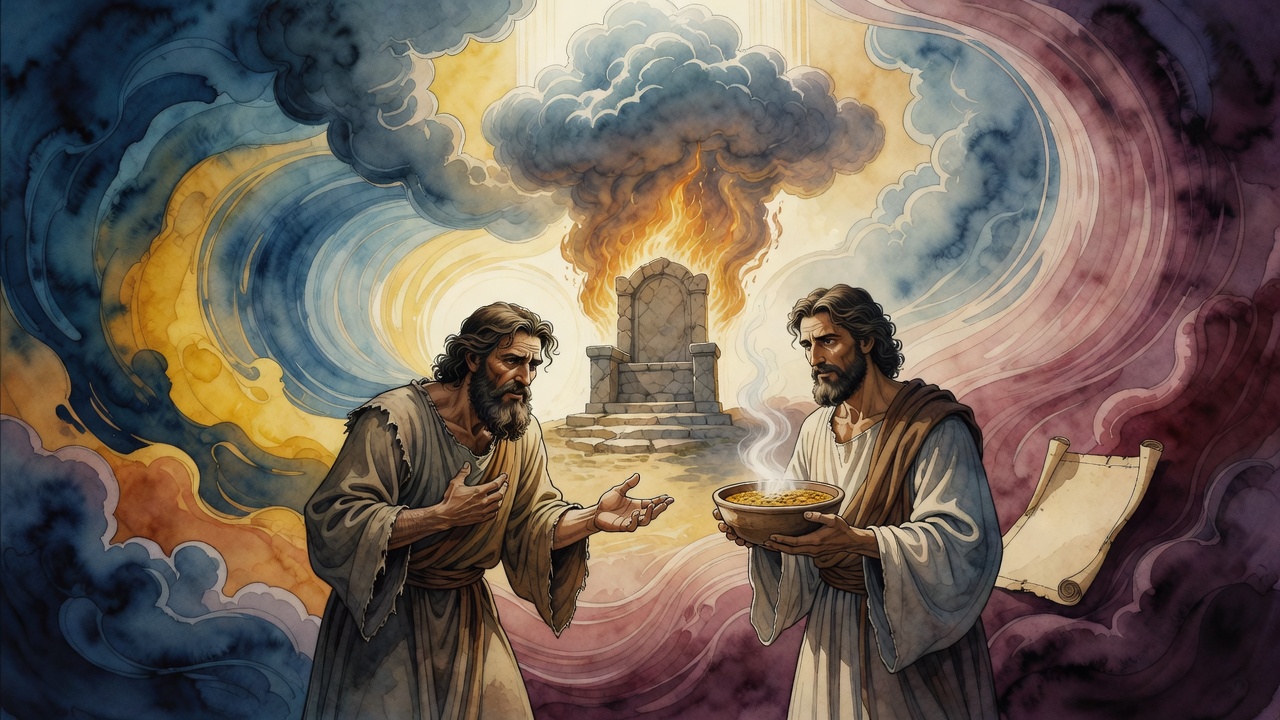
The command came to make Esau swear he would never kill his brother. Isaac obeyed, but he obeyed without hope. He knew his son. "Even if he swear he will not abide by his oath," Isaac said, "and he will not do good but evil only." A father administering an oath he already believed worthless. Still he called both sons to his bed and bound them with words that carried their own teeth. Whoever devised evil against his brother, Isaac warned, "will fall into his hand, and will be rooted out of the land of the living, and his seed will be destroyed from under heaven." He conjured the fire that fell on Sodom, the flaming and devouring fire, and said the same would burn the land and the city and everything of the one who broke faith. Such a man would be blotted out of the book of the discipline of the children of men and not be recorded in the book of life. Both brothers swore it over the dying man. Then Isaac died, and the oath stood watching.
The Sons Who Would Not Let the Birthright Rest
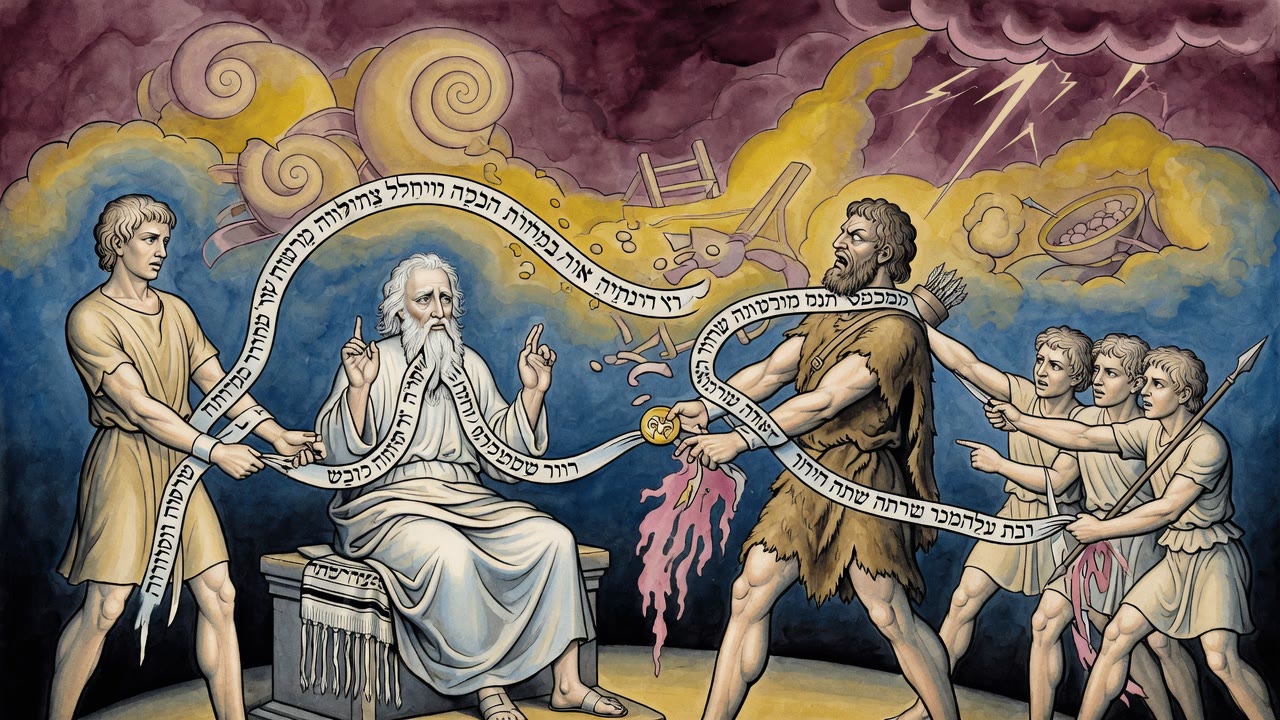
Esau's sons had no patience for their grandfather's oaths. They cornered their father with the grievance that had curdled in them since boyhood. "Why hath thy father given Jacob the portion of the elder and passed over thee," they demanded, "although thou art the elder and Jacob the younger?" The accusation hung in the air. You were robbed, they were telling him. Your inheritance was stolen, and you sit here and swallow it.
Esau did not deny a word of it. "Because I sold my birthright to Jacob for a small mess of lentils," he admitted. And there was more, and he told them that too. "On the day my father sent me to hunt and catch and bring him something that he should eat and bless me, he came with guile and brought my father food and drink, and my father blessed him and put me under his hand." A bowl of lentils and a plate of stolen venison. That was the price of everything his sons now wanted back.
He tried, once, to hold the line. "Our father hath caused us to swear, me and him," he said, "that we shall not mutually devise evil, either against his brother, and that we shall continue in love and in peace each with his brother and not make our ways corrupt." An oath. A wall against exactly this. But his sons pushed against the wall, and the old man's grievance pushed with them, and the vow that Isaac had never trusted began to give.
The Curse Turns Back on the One Who Swore It
The reconciliation Rebecca had begged for and Isaac had extracted came apart in a single generation. Esau let his sons harden his heart. He took up arms against his brother, and in the taking up he undid every oath he had made, to his mother at her request, to his father over the deathbed. He had sworn that whoever devised evil against his brother would fall into his hand. Now he was that man.
The words came back around exactly as spoken. The one who lifted his hand against Jacob would be given into Jacob's hands and would not escape them. The guardian of the younger brother was the stronger, and it had been the stronger since the womb. Esau had bound himself under a curse and then walked straight into its terms, and the doom he had once agreed to was no longer a warning. It was a description of what was coming for him.
← All myths