6 min read

The Partner Who Changed at a Rope-Dragged Grave

Two thieves share one life until ropes drag one to a grave. The survivor turns. After death the stubborn one begs to return and finds the gate sealed shut.

Curated by Arthur · Told by Maggid ·
Table of Contents
  1. Both Souls Went Up
  2. We Stole Together
  3. Let Me Go Back
  4. He Asked Only to Look

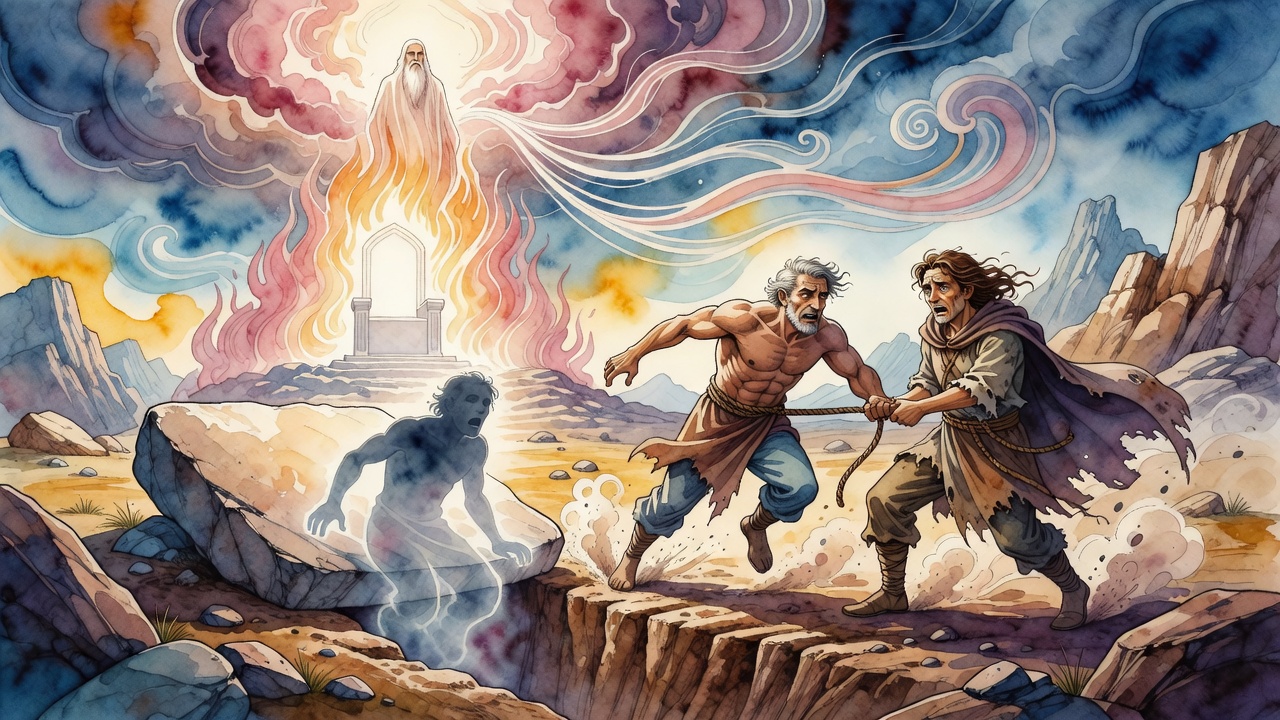
They tied the rope at his ankles because nobody in that street would pay for a coffin, and the two men who pulled him did not slow down for stones. The body came off a curb and turned half over, but neither man broke stride. Behind it the dust took two long lines, and because nobody swept that street a cart crossed them before evening.
The Partner Who Changed at a Rope-Dragged Grave Click for full size

His partner watched from the mouth of the alley where the pair of them had waited so many nights, one at the corner and one at the latch. He had expected grief, or something like it. What came instead was his stomach turning over, because the man on the end of that rope had been his own age and his own trade, and the pit at the end of the street smelled of lime.

He went home and did not go out that night. When the old knock came at his shutter he lay still until it stopped, and when it came again a week later he lay still again. Before the year turned he carried a stolen cloak back to the house he had taken it from, and although the door was shut in his face he left the bundle on the step anyway. He never touched the thin iron again.

Both Souls Went Up

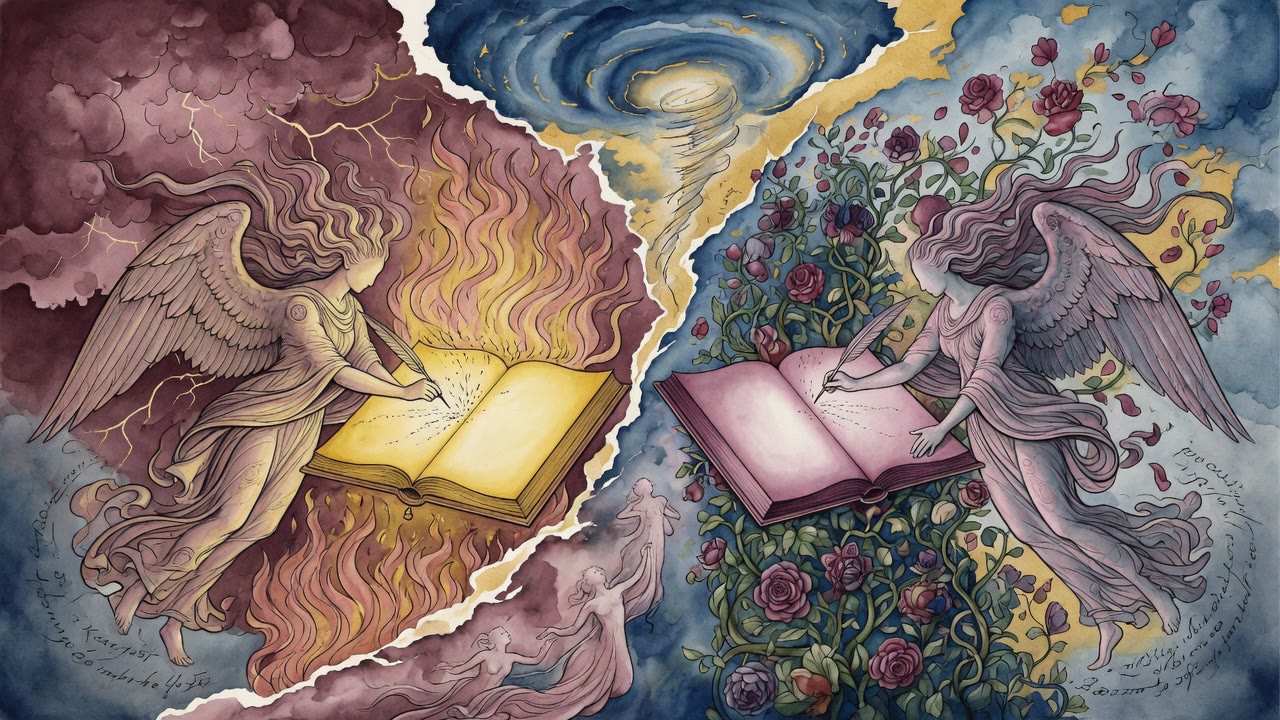
The dead thief did not stay under the lime. The wicked do not slide off into some private hole at the first breath after death; righteous and wicked both rise, and he rose with the rest of that season's dead, still carrying the reflexes of a man who had always talked his way out of a room.

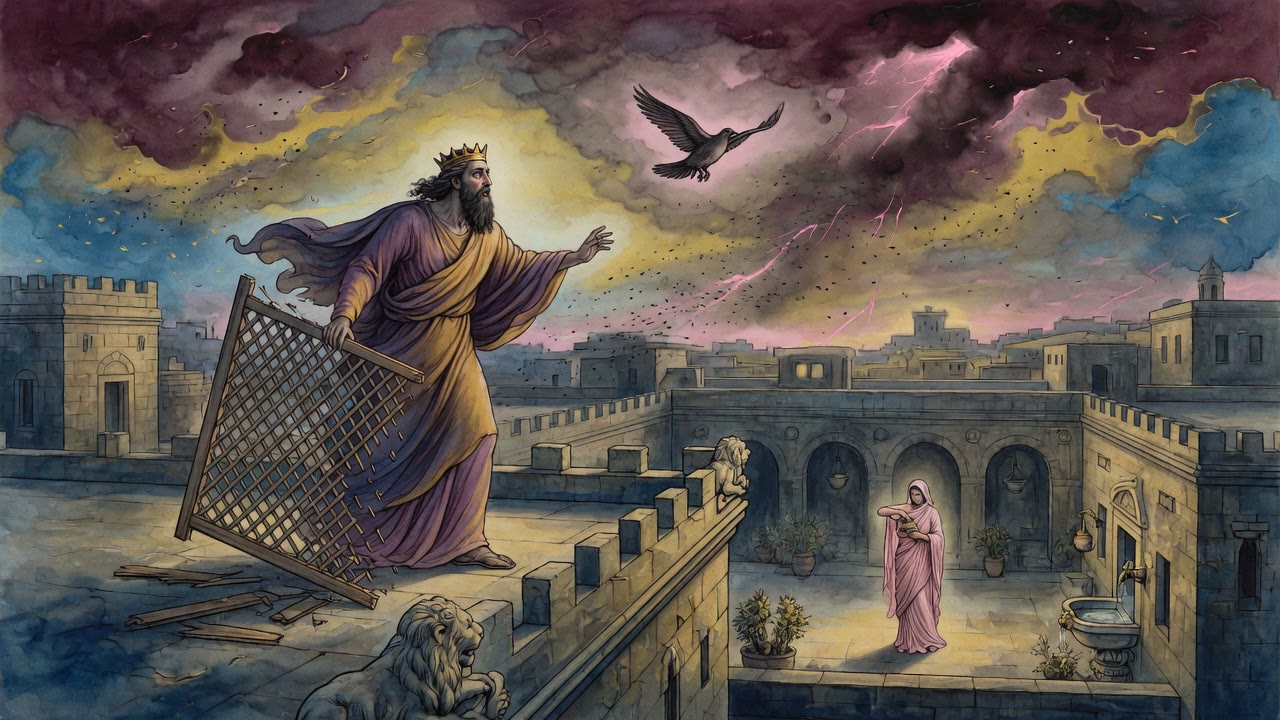
Above, the souls of the righteous were being set into a treasury, the way a jeweler sets stones in a locked room and knows every one of them by weight. Avigail had put the thing plainly to David once, on the road, with her loaves and her wineskins still strapped to the donkeys behind her while she argued for the lives of her household. May the soul of my lord be bound in the bond of life. Bound, she said. Tied to something that does not let go.

Then she had said the other half of it, and the other half was his. May He sling out the souls of your enemies from the hollow of a sling. No shelf, no weighing, no name written down. The stone leaves the pouch, and the hand that threw it does not stay to watch where it comes down.

He came down among the wicked, where the heat had no wind in it and nobody turned to look at him, since a new arrival there was worth nothing to anyone.

We Stole Together

He had no way to count the years after that, though years went by on the other side of the wall. Then the light over there moved, the way light moves when a gate has been opened for somebody, and he heard a walk he knew. His partner. Grayer, slower, whole, going in.

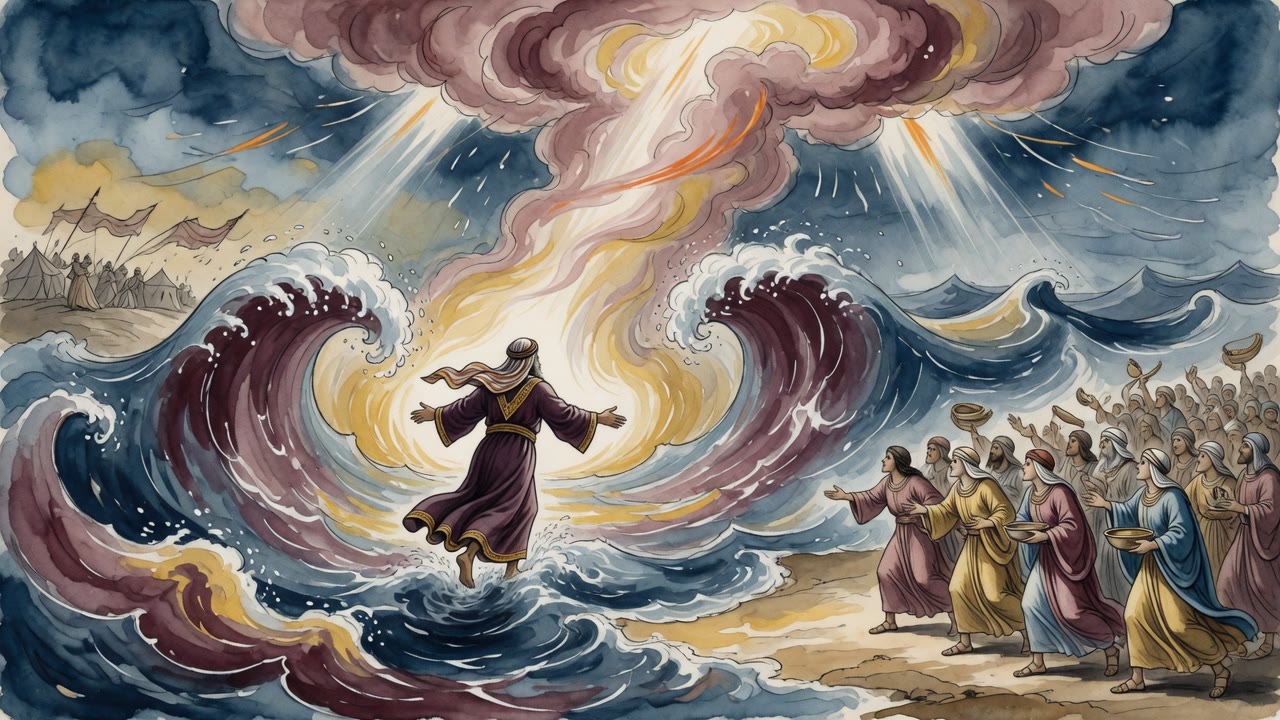
He shouted across the gap. "We were partners! We stole together, we schemed together! How is he with the righteous and I am not?"

The answer came back with nothing soft in it. "Fool. Your death was repulsive. No coffin. They dragged you to your grave on ropes. Your friend stood in the road and watched the end of you, and he could not keep it down, so he swore off the trade before the week was out. He turned while there was still breath in him. You had the same road under your feet. You did not take it."

The arithmetic came to him while they were still talking, and it was worse than the sentence. His own body had done the work. The maggot spread under him and the worms that covered him had been the whole sermon, and every word of it had been preached over a man who could not hear it. He had been the lesson. He had never once been the student.

Let Me Go Back

So he begged for a year, and when that got no answer he begged for a month. Let him go down and pull straight what he had warped, he said, and afterward they could put him back wherever they liked.

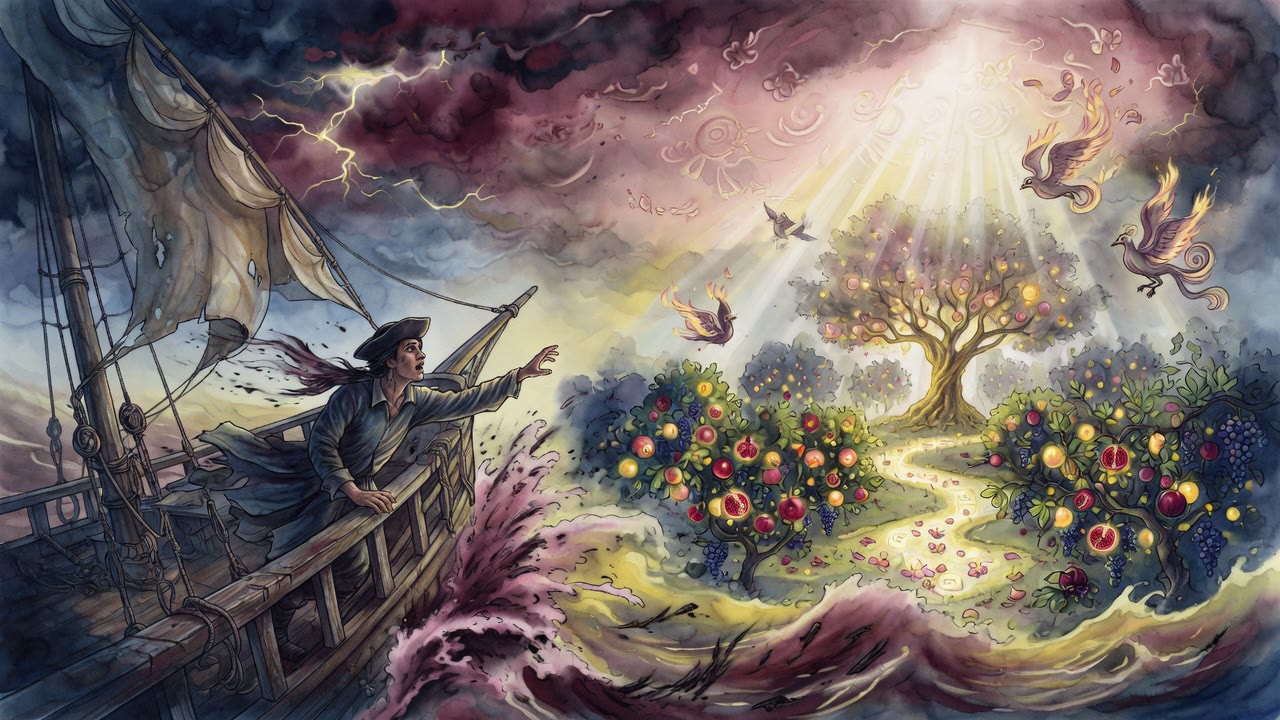
The refusal came in kitchen language, because heaven argues like a householder when it wants to be understood. "This world is the day before Shabbat, and where you are standing is Shabbat itself. A man who cooks nothing on Friday, what does he eat on Saturday? That world is dry land and this one is open sea. A man who loads no bread on the shore starves out on the water. That world is a settled place with markets in it, and this one is wilderness, and whoever bought nothing in the settlement dies in the sand."

He had been given a whole Friday. He had spent it on other people's latches.

What is warped can be pulled straight while a body still breathes, and what is missing can still be made up. After that the warp sets. He had heard the verse read a hundred times in the street without ever once thinking it had his name in it.

He Asked Only to Look

Then he asked for something smaller. Not to return. Only to see his friend's glory, one look across at the man he had split coin with on a low wall for years. That was refused too, because the gate of the Lord is the gate the righteous walk through, and the wicked do not get to stand in the doorway and watch them go.

He tore his clothes at the neck and kept tearing until there was nothing left worth tearing. He pulled hair out of his head with both hands and then looked at what had come away in them. Then he set his teeth into his own arm and bit down, and there was nothing else there to eat.


← All myths
From the tradition

Sources

2 sources

The texts behind this telling. Some cards carry a translation of the source; others are our own retelling of it, and each card says which. Every card links out to the original.

Kohelet Rabbah 1:15Kohelet Rabbah

Retold in our words. Read the original at the link below.The Sefaria Midrash Rabbah, 2022 · CC-BY

The book of Ecclesiastes, or Kohelet as it's known in Hebrew, touches on this very feeling. Specifically, there's a line in (Ecclesiastes 1:15) that says, "That which is warped cannot be straightened, and that which is lacking cannot be counted." But what does that really mean?

Well, Kohelet Rabbah, a Midrashic (rabbinic interpretive commentary) commentary on Ecclesiastes, digs deep into this verse. And it offers a fascinating, and frankly, chilling perspective. It suggests that in this world, the world we inhabit right now, there’s still hope. A warped character can be straightened out, and what is lacking can be made whole. But in the world to come? That's where things get serious. In that future reality, what’s warped stays warped, and what’s missing remains so for eternity.

Two wicked friends, thick as thieves, wreaking havoc together. But one of them has a moment of clarity, a teshuvah, a turning. He repents, changes his ways before his death. The other, though? He remains stuck in his wickedness.

What happens to them after they die?

The one who repented gets to hang out with the righteous, basking in the divine light. The other? He's stuck with the wicked. "Hey!" he cries out, according to Kohelet Rabbah. "We were partners! We stole together, we schemed together! How is it that he’s with the righteous and I’m not?"

The response is brutal. "Fool!" they tell him. "Your death was repulsive. No coffin, dragged to your grave with ropes. Your friend saw your end and was so disgusted he vowed to change! He repented and earned his place. You had the same chance! You could have turned back, but you didn't!" The imagery here is striking, drawing from (Isaiah 14:11), "The maggot is spread under you and worms cover you."

Desperate, the unrepentant soul begs for another chance. “Let me go back! Let me repent!”

But it's too late.

He’s reminded that this world is like the day before Shabbat, the day of preparation. The next world is like Shabbat itself, a day of rest, but also a day where the preparations must already be complete. If you don’t prepare your food before Shabbat, what will you eat on Shabbat? Similarly, he’s told, this world is dry land; the next is the sea. If you don’t prepare on dry land, what will you eat at sea? This world is a settlement, the next a wilderness. No preparation in the settlement means starvation in the wilderness. The Rabbis weren't messing around with these metaphors!

Consumed with regret, he "grits his teeth and eats his flesh," a vivid image taken from (Ecclesiastes 4:5), "The fool folds his hands, and eats his flesh." He then asks to see his friend’s glory, but even that is denied. We learn that there's a strict separation between the righteous and the wicked. As (Psalm 118:20) says, "This is the gate of the Lord, the righteous will enter it."

His rage and despair are complete. He tears his clothes, pulls out his hair, fulfilling the prophecy in (Psalms 112:10), "The wicked will see and be angered."

This Midrash isn't just a spooky story. It's a powerful reminder about the choices we make now. It's a call to action. We have the power to shape our destinies, to straighten what's warped, to fill what's lacking.

The message is clear: Don't wait. Don't assume there will always be another chance. The time to act, to repent, to become the person you want to be, is now. Because as Kohelet Rabbah makes abundantly clear, the future is not a given. It's something we create, one choice at a time.

Full source
Kohelet Rabbah 3:21Kohelet Rabbah

Retold in our words. Read the original at the link below.The Sefaria Midrash Rabbah, 2022 · CC-BY

A passage from Kohelet Rabbah, a collection of rabbinic interpretations on the Book of Ecclesiastes, to explore what it has to say about the ultimate fate of our souls.

The verse that sparks this discussion comes from (Ecclesiastes 3:21): "Who knows the spirit of the sons of man? Does it go upward? And the spirit of the animal, does it go downward to the earth?" It's a question of direction, of destiny. Where do our souls go when we leave this earthly realm?

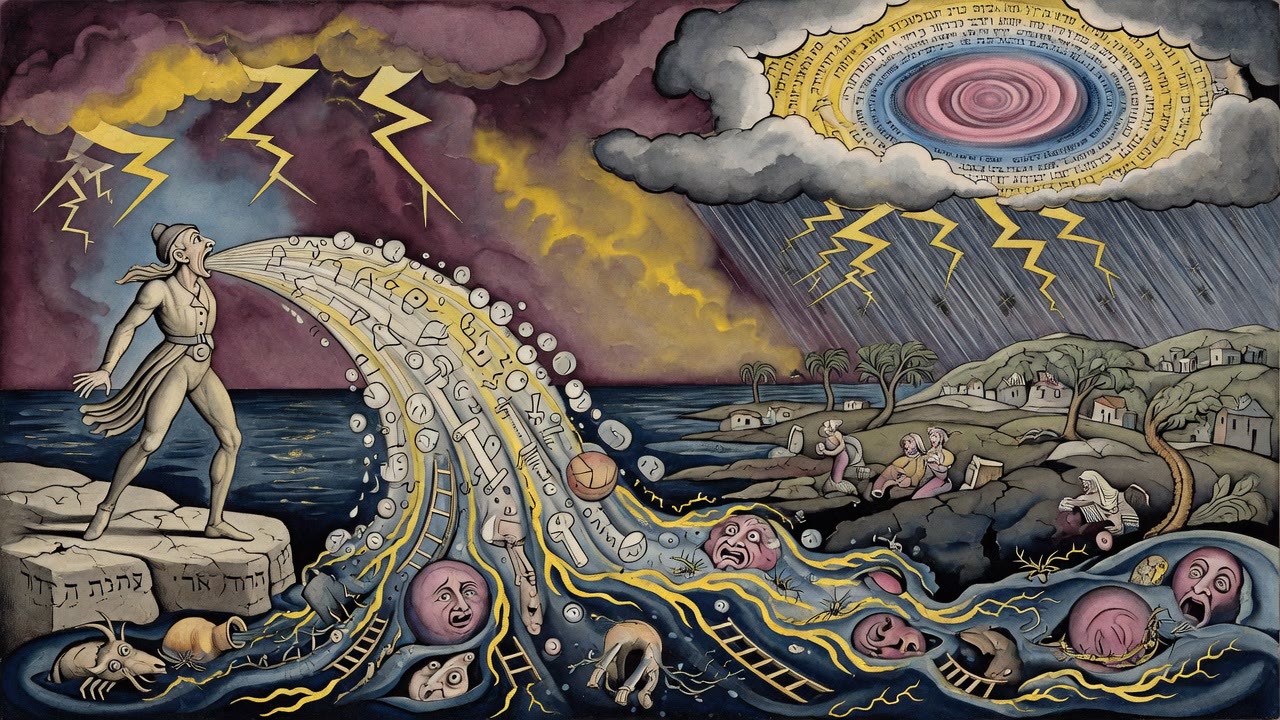
The souls of both the righteous and the wicked ascend on High. But here's the twist: not all souls are treated the same upon arrival. The souls of the righteous, it says, are placed in the treasury, a concept that evokes images of precious jewels carefully stored.

To illustrate this, Kohelet Rabbah draws upon the words of Avigail to King David in (1 (Samuel 25:2)9): “May the soul of my lord be bound in the bond of life.” This idea of being “bound in the bond of life” suggests a sense of eternal connection and safekeeping for the righteous.

But what about the wicked? Do they, too, find such solace? The text makes a sharp distinction. Again quoting from Avigail's plea to David, it states: “And may He cast the souls of your enemies as from the hollow of a slingshot” (1 (Samuel 25:2)9). Instead of being gently placed in a treasury, the souls of the wicked are flung away, cast out with force.

The text recounts a conversation between a noblewoman and Rabbi Yosei ben Ḥalafta on this very verse. The noblewoman, clearly intrigued, presses Rabbi Yosei for clarification on Ecclesiastes. Rabbi Yosei repeats the same distinction: the righteous are bound in the bond of life, while the wicked are cast away like stones from a slingshot.

Then the noblewoman asks about the second part of the verse: "And the spirit of the animal, does it go downward to the earth?" Rabbi Yosei explains that these represent the souls of the wicked, destined to descend to Gehenna – often translated as hell, but perhaps more accurately understood as a place of purification or consequence. He then cites (Ezekiel 31:15): "On the day of his descent to the netherworld I caused mourning, I covered the depths because of him."

So, what are we to make of all this? This passage from Kohelet Rabbah presents a stark vision of the afterlife. It’s a world where our actions in this life have profound consequences for our eternal destiny. The righteous find a place of safekeeping, while the wicked face a less pleasant fate.

It's important to remember that Jewish tradition offers a spectrum of views on the afterlife, and this is just one interpretation. But it’s a powerful reminder that our choices matter, not just in the here and now, but perhaps for eternity. It prompts us to consider: what kind of soul are we cultivating? And what kind of destiny are we creating for ourselves?

Full source